
Introduction
- Shareholder Rights through Securities Litigation: Are a pivotal mechanism for maintaining the integrity of financial markets and safeguarding the interests of investors. Securities class action lawsuits arise when there is a significant breach in securities laws, often involving allegations of misrepresentation, fraud, or insider trading by corporations or their executives, harming shareholder rights.
- Securities Litigation: An essential tool for rectifying these breaches. They not only provide a pathway for compensation for those who have been wronged but also act as a deterrent against future misconduct. The threat of such lawsuits encourages companies to maintain transparency and uphold robust governance practices, thereby fostering a healthier investment environment.
- Investor Protection: The foundation of shareholder rights lies in the principle that investors should be able to rely on accurate and honest information when making investment decisions. When companies fail to meet these standards, either through deliberate deception or negligent behavior, they violate the trust placed in them by their investors.
- Internal Controls: Public companies are expected to maintain robust internal control over financial reporting (ICFR), effective disclosure controls and procedures (DCP), and corporate governance mechanisms that identify and escalate risk before it becomes a public crisis. When those expectations are not met, securities litigation often follows, anchored in the argument that investors were misled because the company’s control environment did not support reliable reporting or timely disclosure.

- Maximixing Compensation: Law firms proacticing in securities litigation have become instrumental in guiding shareholders through these complex cases, leveraging their skill to maximize outcomes for investors.
- Evolving Legal landscape: Securities litigation continues to evolve, it is imperative for shareholders to stay informed about their rights and the legal remedies available to them.
- Transparance and Robust Legal Frameworks: zand vigilant enforcement, securities class actions will continue to play a critical role in shaping fair and transparent financial markets.
- Complexities of securities class actions requires a thorough understanding of both legal and financial intricacies. These lawsuits typically involve intricate fact patterns and require substantial evidence to prove that a company’s actions directly led to financial harm for its shareholders.
If you suffered substantial losses and wish to serve as lead plaintiff in a securities class action, or just general questions about your rights as a shareholder, please contact attorney Timothy L. Miles of the Law Offices of Timothy L. Miles, at no cost, by calling 855/846-6529 or via e-mail at [email protected]. (24/7/365).
Shareholder Bill of Rights
Shareholder rights and the right to access to information
- Inspecting Books and Records: Shareholders can inspect corporate books and records, including meeting minutes, bylaws, and financial reports.
- Receiving Annual Reports: Companies must provide shareholders with regular reports and audited financial statements.
- Requesting Information For a Legal Purpose: Shareholders can request information for a specific purpose related to their investment, which companies must comply with unless the request is improper.
Shareholder rights and transfering ownership
- Liquidity: This right provides liquidity, especially for publicly traded stocks, allowing investors to sell their shares for cash on an exchange.
- Private Company Restrictions: In private companies, this right may be restricted by a shareholder agreement that dictates how shares are sold and to whom.
Financial rights of shareholders
- Receive dividends: Shareholders are entitled to receive dividends when the board of directors declares them, as a share of the company’s profits.
- Claim remaining assets in liquidation: If a company liquidates, shareholders have a claim on the remaining assets after creditors and bondholders have been paid.
- Appraisal rights: In certain corporate actions, like a merger, a dissenting shareholder may demand a judicial appraisal of their shares to ensure fair value.
Voting rights of shareholders

- Electing Directors: Shareholders elect the members of the board of directors who oversee the company’s management
- Approving Major Actions: They vote on fundamental changes such as mergers and acquisitions, amendments to the articles of incorporation, and company dissolution.
- Say-on-Pay: At publicly traded companies, shareholders have a non-binding advisory vote on executive compensation.
The Bedrock of Investor Protection: Shareholder rights and legal rights
- Class Action Lawsuits: Shareholders can participate in class action lawsuits when they suffer harm as a group due to securities fraud or other illegal acts.
- Derivative Lawsuits: Shareholders can bring a derivative lawsuit on behalf of the corporation when directors or officers commit misconduct, like breach of fiduciary duty.
- Petitioning for Dissolution: In extreme cases of fraud, mismanagement, or oppression, a shareholder may petition a court to dissolve the business.
Enhanced shareholder rights for certain shareholders
- Preemptive Rights: In some cases, shareholders have the right to buy newly issued shares before they are offered to the public, protecting their ownership percentage from being diluted.
- Minority Protections: Legal protections are in place to prevent majority shareholders from unfairly oppressing or freezing out minority shareholders.
- Right to Call Special Meetings: In some companies, shareholders holding a certain percentage of stock can demand a special meeting to address specific issues.
Overview of Securities Class Actions
Securities class actions are a powerful tool for enforcing corporate accountability, offering investors a means to address grievances related to financial misrepresentation, fraud, and other violations of securities laws.
- Financial Loss: Securities litigation typically involves legal actions taken by shareholders against a company or its executives for alleged wrongdoing that results in financial loss. These lawsuits can arise from a variety of issues, including accounting fraud, insider trading, or misleading statements about a company’s financial health.
- Complex: The process of securities litigation is complex and multifaceted, often involving multiple stakeholders, including investors, regulatory bodies, and legal experts. At the heart of these cases is the need to prove that the company in question knowingly engaged in deceptive practices that misled investors.
- Compensation: Successful securities class action lawsuits can result in significant financial compensation for affected shareholders, as well as reforms within the company to prevent future misconduct. While these legal battles can be protracted and costly, they serve as a critical mechanism for holding corporations accountable and ensuring market integrity.
Comprehending Securities Fraud and Its Vital Protection for Investors
- Securities Fraud: Represents a significant threat to the integrity of financial markets. As an investor, understanding the nuances of securities fraud is crucial not only to protect your investments but also to maintain confidence in the financial system. These fraudulent activities can take many forms, including insider trading, false information dissemination, and Ponzi schemes, each designed to manipulate financial markets and deceive investors.
- Implications: The implications of securities fraud extend beyond individual losses. Companies found guilty of such practices often face severe penalties, including fines and legal repercussions, which can cripple their financial stability. Furthermore, the reputational damage incurred can be far more devastating, leading to a loss of shareholder trust and a decline in stock value. For investors, the financial losses can be substantial, eroding retirement savings and personal wealth.
- Broader Economy: Understanding securities fraud also involves recognizing its ripple effects on the broader economy. When fraudulent activities go unchecked, they undermine the efficiency of financial markets, leading to distorted pricing of securities and inefficient allocation of resources. This erosion of trust can have long-term consequences, affecting everything from interest rates to foreign investment levels.
THE SECURITIES CLASS ACTIONS PROCESS
|
Filing the Complaint |
A lead plaintiff files a lawsuit on behalf of similarly affected shareholders, detailing the allegations against the company. |
| Motion to Dismiss | Defendants typically file a motion to dismiss, arguing that the complaint lacks sufficient claims. |
| Discovery | If the motion to dismiss is denied, both parties gather evidence, documents, emails, and witness testimonies. This phase can be extensive. |
| Motion for Class Certification | Plaintiffs request that the court to certify the lawsuit as a class action. The court assesses factors like the number of plaintiffs, commonality of claims, typicality of claims, and the adequacy of the proposed class representation. |
| Summary Judgment and Trial | Once the class is certified, the parties may file motions for summary judgment. If the case is not settled, it proceeds to trial, which is rare for securities class actions. |
| Settlement Negotiations and Approval | Most cases are resolved through settlements, negotiated between the parties, often with the help of a mediator. The court must review and grant preliminary approval to ensure the settlement is fair, adequate, and reasonable. |
| Class Notice | If the court grants preliminary approval, notice of the settlement is sent to all class members, often by mail, informing them about the terms and how to file a claim. |
| Final Approval Hearing | The court conducts a final hearing to review any objections and grant final approval of the settlement. |
| Claims Administration and Distribution | A court-appointed claims administrator manages the process of sending notices, processing claims from eligible class members, and distributing the settlement funds. The distribution is typically on a pro-rata basis based on recognized losses. |
Cognizing the Indispensable Role of Securities Litigation

Securities Litigation Objective:
Understanding securities litigation helps:
- Companies manage risk
- Investors protect rights
- Boards improve oversight
- Management strengthen controls
- Stakeholders ensure compliance
Companies: For companies, securities litigation underscores the critical importance of maintaining robust transparency and strict compliance with financial regulations. Organizations must recognize that inadequate internal controls and misleading financial disclosures can trigger devastating legal consequences, including costly securities class actions that can severely impact shareholder value. Companies need to prioritize:
- Comprehensive financial reporting controls
- Regular internal audit programs
- Detailed documentation procedures
- Proactive compliance monitoring
- Transparent stakeholder communications
This heightened focus on transparency helps organizations:
- Reduce litigation exposure
- Build investor confidence
- Strengthen market position
- Maintain regulatory compliance
- Protect shareholder interests
Investors: For investors, securities litigation serves as a powerful reminder of the critical need for enhanced vigilance and thorough due diligence when assessing potential investments’ financial health. By understanding and leveraging securities litigation mechanisms, stakeholders can:
- Protect their investment interests
- Recover fraudulent losses
- Hold wrongdoers accountable
- Support market integrity
- Strengthen corporate governance
Effective investor due diligence includes:
- Detailed financial statement analysis
- Thorough governance review
- Comprehensive risk assessment
- Regular portfolio monitoring
- Active shareholder engagement
The Bedrock Federal Securities Laws
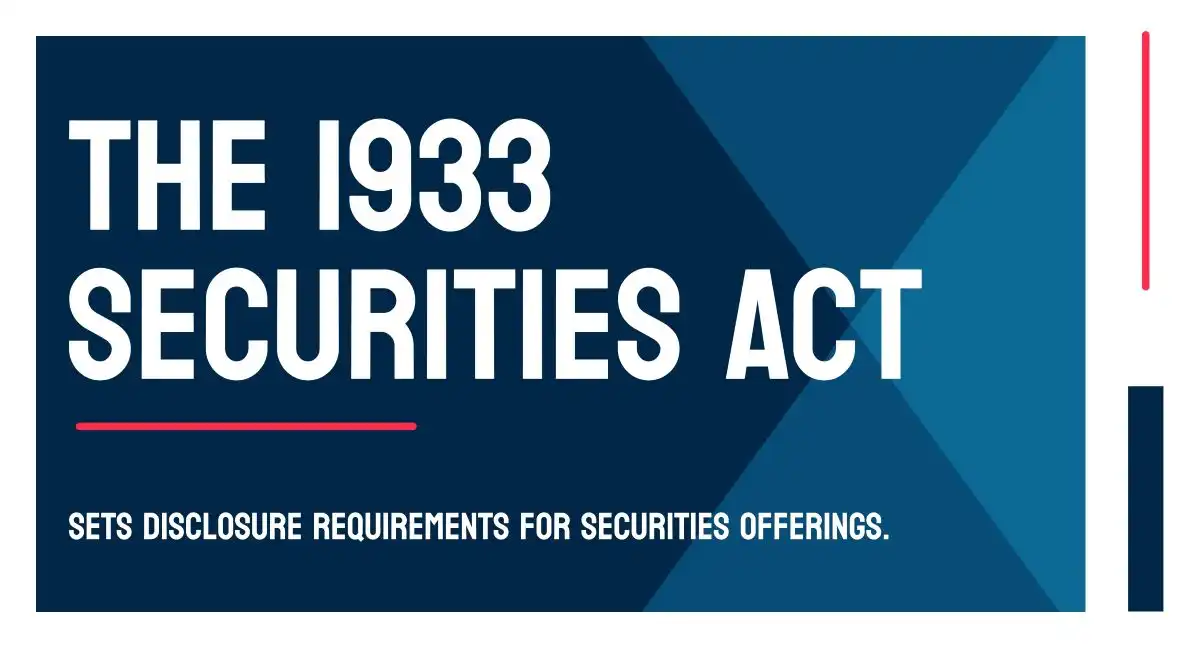
- The Securities Act of 1933 serves as the cornerstone of investor protection, establishing the principle that transparency must govern all public securities offerings.
- This landmark legislation requires comprehensive registration of securities with the SEC and mandates that issuers provide full and fair disclosure of all material information.
- The Act’s anti-fraud provisions create a strict liability framework for material misstatements in registration statements, providing investors with powerful remedies when companies fail to meet disclosure obligations.
- Building upon this foundation, the Securities Exchange Act of 1934 established the SEC as the primary federal regulator and granted it broad authority to oversee secondary market trading.
- This Act addresses critical issues including insider trading, market manipulation, and ongoing reporting requirements for publicly traded companies.
- Most significantly for class action litigation, the Exchange Act provides the statutory basis for Rule 10b-5, which has become the primary vehicle for private securities fraud litigation.
- Rule 10b-5 prohibits fraudulent activities “in connection with the purchase or sale of any security,” creating a broad anti-fraud provision that encompasses material misrepresentations, omissions of material facts, and manipulative trading practices.
- This rule serves as the cornerstone for the majority of securities class actions, allowing investors to seek redress when companies make false or misleading statements that artificially inflate stock prices.
Securities Litigation Issues Broken Down by Issue
| Category | Key Elements | Practical Implications | Recent Developments |
| Deterrant | |||
| Corporate Financial Impact | • Legal fees and defense costs • Settlement payments • Penalties and fines • Remediation expenses |
• Direct reduction in profitability • Potential stock price decline • Impact on shareholder value • Financial statement disclosures |
• Average settlement amounts for Dollar Disclosure Loss was highest on record in 2025 • Defense costs typically range from $2-8M per case |
| Operational Disruption | • Management distraction • Document production burden • Internal investigation requirements • Testimony preparation |
• Reduced focus on core business • Resource reallocation • Strategic initiative delays • Compliance program overhauls |
• Companies now spend average of 1,200+ hours on litigation response • Over 60% of executives report significant operational impact |
| Investor Recovery Mechanism | • Class action procedures • Out-of-pocket damages • Lead plaintiff selection • Claims administration |
• Financial loss compensation • Transaction-based calculations • Pro-rata distribution • Claims filing requirements |
• Institutional investors recover higher percentages |
| Market Confidence Effects | • Transparency enhancement • Accountability mechanisms • Governance improvements • Disclosure quality |
• Investor trust restoration • Market participation incentives • Capital formation support • Information reliability |
• Post-litigation governance reforms implemented in numerous of settled cases • Measurable improvements in disclosure quality |
| Current Trends | |||
| Individual Accountability Focus | • Officer and director liability • Personal financial consequences • Clawback provisions • D&O insurance implications |
• Executive behavior modification • Personal risk assessment • Compliance prioritization • Leadership accountability |
• increase in named individual defendants • Personal contributions to settlements up 28% |
| Technology-Enhanced Detection | • AI-powered surveillance • Advanced analytics • Pattern recognition • Anomaly detection |
• Increased violation detection • Stronger evidence collection • More sophisticated cases • Higher success rates |
• SEC using machine learning to identify disclosure anomalies • new cases involve technology-detected violations |
| Litigation Process Modernization | • E-discovery platforms • Digital evidence management • Virtual proceedings • Automated document review |
• Faster case processing • Cost efficiency improvements • Enhanced evidence organization • Remote participation |
• reduction in document review time • decrease in litigation costs through technology |
| Cross-Border Complexity | • Jurisdictional challenges • Regulatory differences • Enforcement coordination • International evidence gathering |
• Multi-jurisdiction compliance • Global risk assessment • Harmonized defense strategies • International settlement considerations |
• filings in 2025 involve cross-border elements increased • International regulatory cooperation agreements expanded |
| Legal Frameworks | |||
| Pleading Standards | • PSLRA requirements • Scienter (intent) showing • Particularity in allegations • Strong inference threshold |
• Higher dismissal rates • Front-loaded case investment • Detailed complaint preparation • Expert involvement earlier |
• Macquarie Infrastructure Corp. v. Moab Partners (2024) reshaped omission standards • Motion to dismiss success rate at 47% |
| Loss Causation Elements | • Corrective disclosure • Price impact evidence • Economic analysis • Event studies |
• Causal chain demonstration • Market efficiency proof • Expert testimony requirements • Damages limitation |
• Dura Pharmaceuticals v. Broudo remains controlling precedent • Increasing sophistication in economic analyses |
| Damages Calculation | • Out-of-pocket methodology • Inflation per share • 90-day lookback period • Transaction-based approach |
• Expert-driven calculations • Trading pattern importance • Holding period considerations • Proportional recovery |
• Forensic accounting techniques increasingly sophisticated • Competing damages models in a high percent of cases |
| Class Certification | • Commonality requirements • Typicality standards • Adequacy of representation • Predominance of common issues |
• Class definition strategies • Lead plaintiff selection • Institutional investor preference • Certification challenges |
• Institutional investors serve as lead plaintiffs in 39% of cases • Class certification contested in 17% of cases |
| Investor Considerations | |||
| Participation Decision Factors | • Loss threshold assessment • Lead plaintiff potential • Litigation timeline • Cost-benefit analysis |
• Active vs. passive participation • Resource commitment evaluation • Recovery expectations • Reputational considerations |
• Minimum loss threshold for lead plaintiff typically $100K+ • Average case duration now 3.2 years |
| Recovery Optimization | • Claims filing procedures • Documentation requirements • Deadline adherence • Distribution mechanics |
• Proof of transaction needs • Claims administrator interaction • Recovery maximization strategies • Tax implications |
• Only 35% of eligible investors file claims • Electronic claim filing now standard |
| Governance Implications | • Board oversight duties • Disclosure controls • Risk management systems • Compliance programs |
• Director liability concerns • Committee responsibilities • Reporting procedures • Documentation practices |
• Board-level disclosure committees now present in 78% of public companies • Director education programs expanded |
| Future Participation Rights | • Opt-out considerations • Individual action potential • Settlement objection rights • Appeal possibilities |
• Strategic participation choices • Large loss alternative approaches • Settlement evaluation • Ongoing case monitoring |
• Opt-out actions by large investors increased • Settlement objections successful in only 3% of cases |
Investor Protection through Regulation: The Mission of the U.S. Securities and Exchange Commission
- Enforcing Securities Laws: By enforcing federal securities laws, the SEC serves as a critical watchdog that protects investors from fraudulent activities, market manipulation, and misleading corporate disclosures.
- Regulatory Oversight: Through its expansive regulatory oversight, the Commission mandates rigorous disclosure requirements that ensure corporations provide timely, accurate, and comprehensive information to the public.
- Promotes Transparancy: These mandates force companies to be transparent about their financial health, business operations, and risk factors, thereby empowering investors to make informed decisions based on reliable data.
- Monitoring Conduct: The SEC actively monitors corporate conduct to ensure that internal governance structures—such as board oversight, audit committees, and executive compensation policies—align with the best interests of shareholders.
- Enforcement Actions: When corporations fail to adhere to these standards, the SEC utilizes its enforcement authority to investigate potential violations, impose significant penalties, and seek corrective actions that hold management accountable.
- Indispensible Role: By continuously evolving its rules to reflect the complexities of modern financial markets, the SEC plays an indispensable role in upholding the integrity of the capital markets and fostering a climate of accountability that discourages misconduct and promotes long-term corporate health
The Significance of Internal Controls in the War against Fraud
- Internal Controls: Are the mechanisms, rules, and procedures implemented by a company to ensure the integrity of financial and accounting information, promote accountability, and prevent fraud. As an organization, implementing strong internal controls is your first line of defense against securities fraud. These controls help in mitigating risks and ensuring compliance with laws and regulations.
- Defect Fraud: By establishing robust internal controls, you can protect your company from potential fraud. These systems are designed to detect irregularities and prevent unauthorized transactions, thereby safeguarding assets and financial data. They play a critical role in maintaining the integrity of financial reporting, which is essential for investor confidence and market stability.
- Proactive Approach: Moreover, internal controls are not just about prevention; they are also about detection. Effective controls provide timely alerts to management about irregularities, allowing for quick corrective actions. This proactive approach is vital for maintaining a fraud-resistant environment, ensuring that you can address potential issues before they escalate into significant problems.
SARBANEX-OXLEY AUDITOR CHECKLIST
| Breaches | Systems should be able to detect unusual activity, respond quickly, and defend against threats like ransomware and phishing attacks. Software and systems should be updated with security patches. DLP systems should be in place to prevent sensitive financial data from being leaked, shared, or stolen. |
| Checklist | Systems should be able to detect unusual activity, respond quickly, and defend against threats like ransomware and phishing attacks. Software and systems should be updated with security patches. DLP systems should be in place to prevent sensitive financial data from being leaked, shared, or stolen. |
| Storage | Sensitive data must be stored securely. It should be encrypted and organized so it can be indexed, searchable, and easily retrieved. This applies to on-premise as well as cloud environments. SOX compliance also requires companies to retain data for specific periods, so data retention should not be taken easy. |
| Access | Each user should have unique credentials, with session tracking and role-based permissions to prevent unauthorized activity. Companies should regularly review the list of users who have access to critical systems, and readily remove access for employees who leave or change roles. |
| Logs | Split up responsibilities so that no one person manages a process from start to finish. Strengthen it with system checks and employee training. |
| Segregation of Duties | Split up responsibilities so that no one person manages a process from start to finish. Strengthen it with system checks and employee training. |
| Audit Trail | Keep records of every transaction or system change with timestamps. |
| Backup Systems | Backup procedures should be documented, and data restore procedures should be tested as per compliance standards. |
| Third-Party Vendors | Verify that service providers, such as cloud platforms, follow proper security and compliance practices, since their inadequacies can negatively impact your controls. |
The Function of Corporate Governance in the Battle Against Fraud
- Corporate Governance: Is the system by which companies are directed and controlled. It plays a vital role in fraud prevention by establishing a framework of practices and rules to ensure accountability and transparency in a company’s operations.
- Strong Board of Directors: Effective corporate governance involves the establishment of a strong board of directors that oversees the management of the organization. The board should include independent members who can provide unbiased oversight and hold the management accountable for their actions. This oversight is crucial in preventing fraudulent activities and ensuring that management operates in the best interest of shareholders.
- Policies and Procedure: Additionally, corporate governance requires clear policies and procedures that guide decision-making and risk management. This includes setting ethical standards and codes of conduct for employees, which are essential in fostering a corporate culture that prioritizes integrity and honesty. By promoting ethical behavior and accountability, corporate governance acts as a deterrent to fraudulent activities.
- Essential for Preventing Securities Fraud: In conclusion, strong corporate governance structures are essential for preventing securities fraud. By ensuring transparency, accountability, and ethical behavior, you can create an environment that minimizes the risk of fraud and protects the interests of all stakeholders.
Board Independence Is a Vitally Important Governance Mechanism
- Board Independence: An independent director is a non-executive board member with no material or financial ties to the company or its executives. Their primary role is to provide objective oversight, protect shareholder interests, ensure transparent corporate governance, and prevent conflicts of interest.
- Reduce Excessive Risk-Taking: Executive are expected to act in the best interest of the shareholders and only take risks that maximize shareholde value. However, they rmay adopt inadequate internal and other controls that allows for too much risk due to their human and monetary nvestment in the compant. They may take risk that would benefits themselves rather than that maximize shareholder, and even take risk that could bankrupt the company.
- Board’s Duty Is to Make Sure Risk Level Is in the Best Interest of Shareholders: A truely indepensent Board is far more objective than directors who are also insiders. Indeed, the Sarbanes-Oxley Act of 2002 (SOX) requires boards to have a majority of independent directors. An independent board is far more likely to align the degree of risk-taking that maximizes shareholder wealth.
The Importance of independent directors cannot be understated
- Role of Independent Directors: Independent directors play a vital role in modern corporate governance by bringing objectivity and impartial oversight to the boardroom.
- Unbiased Decision-Making: Because they are not involved in day-to-day operations or tied by significant relationships within the company, independent directors can make decisions without personal bias or conflicts of interest.
- Oversight and Monitoring: They serve as neutral monitors of management activities and financial reporting, helping to identify issues early and hold executives accountable.
- Promoting Transparency and Ethics: Their presence encourages transparency, ethical behavior, and adherence to best practices—core elements that foster trust among stakeholders.
- Boosting Investor Confidence: By ensuring fair oversight and strong governance, independent directors enhance the company’s credibility and reassure investors about the integrity of its leadership and reporting.
Key Responsibilities of an Independent Board of Directors
- Unbiased Oversight: Because they do not work for the company and have no vested interest, independent directors impartially review strategies, audit processes, and executive performance.
- Committee Leadership: They typically chair or form the majority on critical board committees—such as the Audit, Compensation, and Nominating Committees—to ensure fairness and objectivity.
- Challenging Management: They serve as a vital check and balance, asking tough questions, stress-testing projections, and evaluating executive succession planning.
- Stakeholder Protection: They ensure that the company’s actions and financial reports are transparent, ethical, and aligned with the best interests of all stakeholders, not just insiders.
Warning Signs and Red Flags for Financial Fraud
- Warning Signs and Red Flags for Financial Fraud: Detecting financial statement fraud begins with spotting accounting anomalies. As fraud techniques evolve alongside technology, it’s crucial to look deeper than surface-level figures. Recognizing these red flags is the strongest defense against deception.
- Weak Internal Controls: Companies lacking proper checks and balances or exhibiting poor governance are at greater risk for fraud. Strong internal controls help prevent opportunities for fraudulent activities.
- Inconsistent Sales Growth: Unusually steady or rapid sales growth—especially during industry slumps or economic downturns—should be compared to industry benchmarks. If results don’t align with broader trends, further scrutiny is warranted.
- Delayed Financial Reporting: Unexplained delays in releasing financial statements may signal problems within an organization. Resistance to audits or transparency adds to suspicions of possible fraud.
- Sudden Changes in Financial Ratios: Abrupt fluctuations in key ratios like debt-to-equity or profit margins can indicate manipulation or irregularities. Comparing historical data helps uncover inconsistencies.
- Unusual or Related Party Transactions: Large, complex, or poorly disclosed transactions involving related parties require careful examination as they may be used to conceal fraudulent activity.
- Overreliance on One-Time Gains: If a company’s strong results stem mainly from non-recurring events—such as asset sales or tax windfalls—it could be masking underlying weaknesses.
- Suspicious Business Practices: Watch out for last-minute revenue spikes, excessive inventory, or vague disclosures in financial footnotes, all of which are classic signs of potential fraud.
Financial Statement Fraud Detection Tools and Techniques:
- Benford’s Law: This mathematical principle helps identify unusual patterns in numerical data that may suggest manipulation.
- Forensic Accounting and Internal Audits: Regular, detailed reviews by forensic accountants can uncover hidden issues and reduce the risk of undetected fraud.
- Financial Ratio Analysis: Comparing a company’s ratios (like gross margin, inventory turnover) to industry averages can highlight discrepancies that warrant further investigation.
- Formal Fraud Reporting Systems and Whistleblower Policies: Encouraging employees to report suspicious activity through hotlines or anonymous systems helps detect fraud early.
- Horizontal and Vertical Analysis: Examining percentage relationships (vertical) within statements and tracking trends over time (horizontal) reveals unusual shifts that could signal trouble.
- AI and Data Analytics: Automated tools can flag abnormal patterns and duplicate transactions quickly. Using ERP software enhances internal controls by separating duties and restricting unauthorized access.
Laws Against Corporate Fraud:
Regulations such as the Sarbanes-Oxley Act mandate strict corporate governance, robust internal controls, executive accountability, and severe penalties for those who commit financial statement fraud. These laws are designed to protect investors and maintain trust in financial markets.
Best Practices for Enhancing Internal Controls
Strengthening internal controls is crucial for bolstering corporate governance and maintaining the accuracy of financial reporting. By adopting proven best practices, organizations can fortify their control systems and better protect their assets.
- Segregation of Duties: Dividing key responsibilities among different employees minimizes the risk of mistakes or fraudulent activity. Ensuring that no single person oversees an entire transaction process increases accountability and helps prevent conflicts of interest.
- Routine Audits and Inspections: Regularly auditing and inspecting internal processes allows companies to pinpoint weaknesses in their controls and address them proactively. Involving independent auditors provides an objective evaluation, helping organizations take corrective measures when necessary.
- Ongoing Monitoring and Assessment: Establishing continuous monitoring systems enables organizations to detect irregularities and potential risks more efficiently. Leveraging technology and data analytics, along with periodic reviews, ensures that control activities remain effective over time.
- Employee Training and Open Communication: Equipping staff with proper training ensures everyone understands their role in maintaining robust controls. Creating clear communication channels also helps ensure all employees are informed about relevant policies and procedures.
By putting these best practices into action, organizations can strengthen their internal controls, reduce fraud risk, and elevate the overall quality of their governance framework.
Understanding Accounting Fraud and Its Impact on Securities Litigation
- Accounting fraud: Poses a significant threat to any organization and is a common trigger for securities fraud litigation. When financial statements are manipulated, whether through inflating revenues or understating liabilities, the consequences can be dire. For investors and regulators, accounting fraud represents a breach of trust, leading to legal action and substantial financial penalties.
- Reputational Damages: The impact of accounting fraud extends beyond immediate legal repercussions. It can severely damage your company’s reputation, making it difficult to regain investor confidence and secure future funding. Moreover, the resources required to resolve litigation can divert focus from core business activities, hindering growth and innovation.
- Mitigating Risk: To mitigate these risks, it’s crucial to implement stringent internal controls and conduct regular audits. By fostering a culture of transparency and accountability, you can prevent fraudulent activities and maintain the integrity of your financial reporting. This proactive approach not only protects against litigation but also reinforces stakeholder trust and confidence in your organization.
The Importance of Assuring Corporate Accountability
Corporate governance is the framework of rules, practices, and processes by which a company is directed and controlled. It plays a crucial role in ensuring accountability and protecting shareholder interests.
- Aligns Interests: Good governance involves a set of checks and balances that align the interests of management with those of shareholders and other stakeholders. It encompasses everything from board composition and executive compensation to risk management and corporate social responsibility.
- Ethical Behavior and Transparency: Effective corporate governance is essential for fostering a culture of transparency and ethical behavior within companies. A robust governance structure ensures that decisions are made in the best interests of the company and its stakeholders, reducing the risk of fraud and financial mismanagement through risk managemen.
- Enhanced Reputation: Companies with strong governance practices are more likely to attract investors, as they are perceived as less risky and more committed to sustainable business practices. Moreover, good governance enhances a company’s reputation, which can translate to improved market performance and shareholder value.
- Preventative Measure: In the context of securities fraud litigation, corporate governance serves as a preventative measure against potential legal issues. Companies with clear, well-enforced governance policies are better equipped to identify and address problems before they lead to litigation.
For investors, assessing a company’s governance structure is a critical step in the due diligence process. By understanding how a company is governed, investors can gauge its commitment to accountability and make more informed investment decisions. As we proceed, the key regulations impacting investors will further illustrate the importance of governance in maintaining corporate integrity.
Inadequate Internal Control
Poor internal controls have become a bigger trigger for securities litigation since the Sarbanes-Oxley Act of 20022 came into effect:
- Executive certification requirements: CEOs and CFOs must sign off on financial statements. They need to verify they have reviewed reports and confirm these documents tell the truth. Executives who knowingly approve incorrect financial reports face USD 1.00 million fines and possible 10-year prison terms.
- Prevalence in litigation: Internal control claims and restateement cases made up 14% of securities class action cases in 2025, leading to accounting violations which accounted for another 16% of federal securities class actions in 2025,
- Common control deficiencies: Problems often stem from poor staffing and technical expertise, weak review processes, bad account reconciliation, loose controls over quarterly provisions, and simply not having robust corporate governance controls.
Studies show that auditors who issue adverse internal control opinions might reduce their legal risk in shareholder lawsuits. Companies might benefit from spotting and sharing control weaknesses instead of hiding them.

Why Control Failures Become Securities Lawsuits
Internal control deficiencies, on their own, do not automatically create private liability. The litigation risk emerges when control problems intersect with market-facing statements, such as earnings releases, SEC filings, investor presentations, and public guidance. Control failures are used in complaints as evidence of one or more of the following:
- False or misleading statements about financial results, operational metrics, or business performance.
- Misleading statements about risk, including “risk factors” that describe a threat as hypothetical when it is already materializing.
- Misleading statements about compliance, particularly when a company claims to maintain strong controls, high integrity, or robust governance.
- Scienter or recklessness, meaning the company and its executives knew, or were reckless in not knowing, that statements were inaccurate.
Control allegations also serve a strategic pleading purpose. Plaintiffs may not initially have access to internal documents. Control failures, restatements, auditor changes, and late filings are public signals that can support an inference that management lacked a reasonable basis for its statements.
Repetition matters. If a company repeatedly discloses control deficiencies, repeatedly delays remediation, or repeatedly reports “progress” that does not translate into measurable improvement, the narrative becomes one of governance failure rather than isolated error.
Such scenarios often lead to securities litigation, which serves as a vital mechanism for investor protection against corporate misconduct.
From Control Weakness to Misleading Statement

To understand why internal controls are central in securities litigation, it helps to understand how plaintiffs connect controls to disclosure.
Misrepresentation by Financial Reporting
- If a company issues financial statements that later require correction, plaintiffs may argue that the original statements were materially false.
- A restatement is not proof of fraud, but it can strengthen allegations that the company lacked a reasonable basis for its reporting.
- This is where having [top internal controls for fraud prevention](https://classactionlawyertn.com/top-internal-controls-for-fraud-prevention/) becomes crucial.
Best Practices for Investor Protections
- Conduct Thorough Due Diligence:
- Verify sources: Do not rely on unsolicited tips or social media hype for investment advice.
- Research fundamentals: Before investing, research a company’s financial health, recent news, and filings from reputable sources, its corporate governance structure, investor protections and more..
- Assess management: Evaluate key executives and their track records to identify potential ethical or legal risks.
- Diversify Your Investments:
- Mitigate risk :Spread investments across different asset classes (stocks, bonds, etc.), sectors, and geographic regions to reduce exposure to a single stock or market.
- Minimize volatility: Diversification helps cushion against portfolio volatility caused by targeted manipulation.
- Be Aware and Skeptical:
- Recognize red flags: Be wary of promises that seem “too good to be true,” pressure to invest immediately, or “risk-free” investment opportunities.
- Monitor your account: Regularly review your account activity and report any suspicious transactions.
- Avoid certain stocks: Exercise extreme caution with low-volume stocks, microcap stocks, and penny stocks, as they are easier to manipulate.
- Use Defensive Trading Strategies:
- Limit orders: Use limit orders instead of market orders to control the maximum execution price you are willing to pay.
- Use stop-loss orders: Implement stop-loss orders to limit potential downside.
- Avoid emotional investing: Stick to a long-term strategy, as most market manipulation is short-term and disproportionately impacts day traders.
- Leverage Professional Guidance:
- Consult advisors: Work with reputable and registered financial professionals to navigate complex markets.
- Report suspicions: If you suspect manipulation, contact an experienced securities litigation attorney to discuss your options.
- Continuously Educate Yourself:
- Stay informed: Keep abreast of market trends, regulatory changes from regulatory bodies, and new manipulative tactics.
- Participate in education: Utilize investor education programs to improve your understanding of market mechanisms.
Key changes introduced by the Private Securities Litigation Feform Act
- Heightened pleading standards: Plaintiffs must state their claims with much more specificity, detailing which statements were misleading and why, and alleging that the defendants acted with the requisite state of mind (scienter).
- “Lead Plaintiff” provision: Instead of the first person to file a complaint controlling the litigation, courts now appoint a “lead plaintiff”—the investor or group with the largest financial stake—to represent the class. This was intended to empower institutional investors and ensure the class’s interests are vigorously represented.
- Stay of discovery: The PSLRA mandates an automatic stay on discovery—the gathering of evidence—while a motion to dismiss is pending. This prevents plaintiffs from using the expensive discovery process to pressure companies into a quick settlement.
- Limitations on damages: The Act caps damages in many fraud-on-the-market cases to account for stock price drops that may be unrelated to the alleged fraud.
Conclusion: Transparency and Ethics Will Always Win the War Against Fraud
- In conclusion, building a fraud-resistant organization requires a holistic approach that combines strong internal controls, effective corporate governance, and the latest tools and technologies
- By understanding the nuances of securities fraud and implementing best practices for prevention, you can protect your organization from the financial and reputational damage associated with fraudulent activities.
- As you work towards strengthening your internal controls, remember the importance of fostering a culture of transparency and accountability within your organization.
- Encourage open communication and empower employees to report suspicious activities without fear of retaliation. By promoting ethical behavior and integrity, you can create an environment where fraud is less likely to occur.
- Finally, staying informed about the latest trends in securities litigation and fraud prevention is crucial. By keeping up-to-date with regulatory changes and emerging technologies, you can ensure that your organization remains resilient in the face of evolving threats.
- Take proactive steps today to enhance your internal controls and protect your organization from securities fraud. By doing so, you can build a stronger, more resilient organization that inspires confidence and trust among stakeholders.
