
Introduction to Enhancing Transparency in Securities Litigation
Enhancing transparency in securities litigation has become a major topic in securities class actions, particularly in the emerging world of technology. Securities litigation tied to artificial intelligence has surged dramatically over the last several years. AI-related securities class actions more than doubled in 2024 compared to 2023. Nine cases were filed in the first half of 2025. This trend explains why companies need better transparency in securities litigation, especially when they blend AI technologies into their operations and marketing.
Both investors and companies face high stakes. AI-related cases survive motions to dismiss 30%-50% more often than traditional securities claims. This creates bigger financial and reputation risks. Total settlement dollars hit $3.8 billion in 2024, and the top 10 settlements made up about 60% of this huge sum. These numbers show why in securities litigation increasing transparency matters so much to everyone in financial markets.
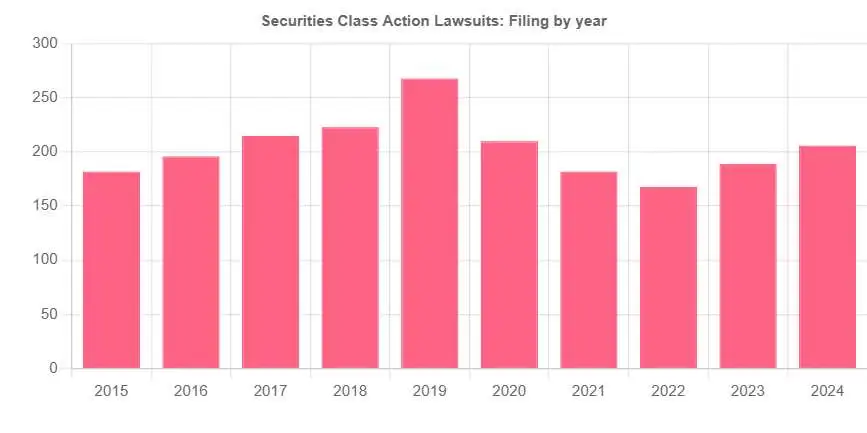
The securities litigation scene has changed completely. Digital assets, ESG disclosures, and artificial intelligence have led this change. Case resolutions jumped 17% with 217 cases solved in 2024, breaking a six-year downward trend. Close examination of AI, new regulations, tech advances, and market responses prove that clear and open AI disclosures help reduce legal risks.
This piece will explore how to solve the problems of enhancing transparency in securities litigation. We will look at best practices and regulations that matter in 2025’s evolving AI world.


The Rise of Challenges in Enhancing Transparency in Securities Litigation
Companies rushing to capitalize on artificial intelligence (AI) trends have pushed transparency challenges in securities litigation to unprecedented levels. The ever-changing digital world has created perfect conditions for deceptive practices. This situation leaves investors vulnerable to heavy losses while exposing companies to regulatory scrutiny.
AI-washing and exaggerated claims in public filings
“AI-washing” describes a concerning pattern where companies make false or overstated claims about their AI capabilities in public AI disclosures. Regulatory findings show this deceptive marketing tactic has grown as businesses try to catch investor attention by highlighting their tech advances. The Securities and Exchange Commission (SEC) has raised serious concerns about these practices and stepped up its examination of companies that make unproven AI claims.
Several patterns of AI-washing have become common:
- False claims about AI integration in decision-making processes
- Overstated sophistication of existing AI technologies
- Manual processes disguised as AI-powered automation
- Claims of proprietary AI development while using third-party solutions
The SEC has taken strong action against these practices. The commission settled charges with two investment advisers who misled investors about their AI usage in March 2024. Delphia made false advertisements about using client data and AI to make investment decisions “more robust and accurate” without ever developing such capabilities. Global Predictions also made false claims about “expert AI-driven forecasts” and called itself the “first regulated AI financial advisor”.
Public fascination with AI has triggered a flood of AI disclosures from businesses eager to attract investors. This situation mirrors the dot-com bubble of the late 1990s when tech companies with little revenue reached massive valuations before the market crashed. A potential “AI bubble” burst could trigger a wave of securities fraud class actions.
Investor losses from misleading AI disclosures
AI-washing has caused major financial damage. Stock prices often crash when the truth about exaggerated AI capabilities comes out. To cite an instance, Innodata’s stock dropped approximately 30% after allegations surfaced about misrepresented AI capabilities. The complaint stated that Innodata falsely told investors about using AI-powered operations for data preparation while actually relying on offshore manual labor.
AI-related securities class action filings in 2024 reached more than double the 2023 numbers, with 15 cases compared to seven. These securities class actions typically follow big stock price drops after AI misrepresentation revelations. Eight cases came from the technology sector, four from communications, two from industrial, and one from consumer.
Courts resolve AI-related securities cases 30%-50% less often on motions to dismiss compared to other securities class actions. Many companies now face longer litigation periods, higher settlement costs, and lasting reputation damage.
Courts have ruled that vague, optimistic statements about AI capabilities count as non-actionable “puffery.” However, claims about specific AI advantages that can be verified become actionable if proven false. The court in one case decided that calling an AI model a “fairly magical thing” was harmless puffery, but claims about “significant advantage” over traditional models could lead to legal action.
The SEC maintains a clear enforcement message: AI claims must be accurate and supported by evidence. Former SEC Chair Gary Gensler stressed how false AI claims damage investors and market integrity, stating directly: “If you claim to use AI in your investment processes, you need to ensure that your representations are not false or misleading”.
-
Stricter Judicial Scrutiny:Judges are treating AI disclosures with a higher level of seriousness, and are applying stricter scrutiny to ensure transparency and accuracy.
-
Complexity and Novelty:The rapidly evolving and often opaque nature of AI technology can make it difficult for courts to definitively dismiss cases without further factual investigation.
-
Increased Transparency Requirements:There is an emphasis on accurate and transparent AI disclosures to mitigate legal risks, and any missteps are being met with heightened attention from the courts.
-
Event-Driven Nature:Many AI-related cases arise from widely reported data security issues, regulatory inquiries, or missed public financial projections, providing a clear basis for litigation.
-
More Cases Progress:A higher percentage of AI-related securities lawsuits are advancing beyond the initial dismissal phase, leading to more settlements or ongoing litigation.
-
Increased Legal Risk for Companies:Companies involved in AI development and deployment face a higher likelihood of prolonged legal challenges related to their disclosures.
-
Focus on Disclosure:The trends highlight the critical importance for companies to be transparent and meticulous in their public statements regarding AI capabilities and associated risks.
AI-Related Lawsuits and Their Implications
| Basic problem | Resulting legal issues | Company risks | Investor implications |
|---|---|---|---|
| Algorithmic bias | Discrimination lawsuits: AI systems trained on skewed data produce discriminatory outcomes in areas like hiring and lending. | Legal liability for civil rights violations; Class-action lawsuits. | Investment uncertainty: Biased outcomes can lead to brand damage, regulatory fines, and costly litigation. |
| Data privacy violations | Illegal data scraping: Training AI models on illegally obtained personal data, such as images from the internet. | Regulatory fines and privacy lawsuits for violations of acts like BIPA. | Compliance costs: Heavy expenses for legal settlements and establishing robust data privacy and security measures. |
| Intellectual property infringement | Copyright disputes: Using copyrighted material for training AI without permission or compensation. | Lawsuits for infringement: Legal challenges from content creators, publishers, and artists. | Valuation risk: AI models reliant on copyrighted material may face future royalties, licensing fees, or legal restrictions, affecting valuation. |
| Lack of transparency | Product liability claims: When AI-powered systems cause harm, companies can be held liable for their opaque decision-making. | Regulatory scrutiny: Government agencies demand more transparency in AI and can impose stricter regulations. | Poor governance indicators: A lack of transparency signals high governance and ethical risks. |
| Security vulnerabilities | Trade secret theft: Unauthorized access to proprietary data through “prompt injection” or other attacks. | Loss of market edge: Exposure of proprietary information can compromise competitive advantage. | Data security costs: Investing in security measures to protect AI systems and training data from unauthorized access. |
Key Drivers Behind Transparency Failures
Companies face lawsuits about AI because of basic problems that lead to failures in being transparent. Companies need to understand these key issues to reduce their legal risks. This knowledge also helps investors make better decisions in today’s digital world.
Lack of internal controls over AI-related statements
Poor internal control systems make it hard for companies to be transparent about their AI work. Many companies have quickly adopted AI technologies but have not set up proper controls. These controls help ensure that company communications are accurate and trustworthy.
Internal audits play a vital role in AI governance, yet companies often overlook them. Organizations should verify their AI claims through thorough internal audits before sharing information with investors. All the same, many companies make claims about AI without proper checks, which puts them at risk of lawsuits. Outside auditors add extra protection by checking AI capabilities, which builds trust with regulators and investors.
The SEC plans to hold individuals responsible for AI-related disclosure failures, just like they do with cybersecurity issues. They will check if executives knew about misleading statements. Companies need strong oversight across departments. Good AI governance has these key parts:
- AI-specific policies and procedures
- Clear oversight responsibilities
- Well-defined reporting structures
- Special internal controls
Companies might need data checks, algorithm testing, performance reviews, and human supervision based on their AI use. Most companies still don’t have a complete control system. This gap raises concerns as accounting and auditing errors have increased recently, showing the need for better controls.

Inconsistent definitions of AI across corporate materials
Companies use different AI terms in their documents, which creates another major transparency problem. The SEC sees this as a serious issue. They asked about 61% of companies to explain how they use AI and what risks it brings. The SEC also questioned 17% of companies about unclear AI terms and definitions in their SEC comments.
The lack of one standard definition creates regulatory gaps. Different regions and regulators define AI in their own ways. This makes it unclear what companies should say about AI in their reports. Companies often use different definitions in their materials, which creates gaps between marketing claims and official filings.
SEC officials call AI “the most revolutionary technology today” but warn companies not to oversell their AI capabilities. The SEC hasn’t provided a clear definition, which makes it harder to follow rules. Debates about what “intelligence” means add to this problem by making most definitions unclear.
The SEC insists that companies must have good reasons for their AI claims and share these with investors. Companies must keep their AI messages consistent across all channels. This includes SEC filings, investor presentations, earnings calls, marketing, websites, news releases, and social media.
Teams across the company must work together to manage this broad scope. This includes management, communications, marketing, investor relations, and tech departments. Legal teams with tech knowledge should review AI claims to ensure they match real capabilities rather than just goals.
Companies Should Focus on a Multi-Faceted Approach
- Establish a responsible AI framework: Implement a formal governance structure that defines principles and policies for the ethical use of AI. This includes assigning clear roles and responsibilities for AI outcomes. The framework should align with emerging regulations like the EU AI Act and NIST’s AI Risk Management Framework.
- Document everything: Maintain detailed records throughout the AI lifecycle, from data sources and preprocessing steps to model architectures and evaluation metrics. This practice, known as data provenance, allows for traceability and fosters accountability.
- Conduct regular audits: Institute regular internal and external audits of AI systems to monitor performance, detect and mitigate biases, and ensure compliance with ethical and legal standards.
- Engage stakeholders: Involve a diverse group of stakeholders, including non-technical employees and end-users, in the design, development, and deployment process. Engaging with diverse perspectives helps identify potential biases and misinterpretations early on.
- Implement a feedback loop: Provide users with a clear channel to contest or report incorrect AI outputs. This feedback can then be used to retrain and improve the model, aligning its behavior more closely with human expectations.
- Use explainable AI (XAI) techniques: Instead of treating AI models as opaque “black boxes,” apply techniques that generate human-understandable explanations for their decisions.
-
- Feature importance: Highlight the specific input variables that were most influential in a particular decision.
-
- Local and global methods: Use local methods like LIME or SHAP to explain a single prediction, or global methods to explain the model’s overall decision-making process.
-
- Model visualizations: For simpler models like decision trees, use visual representations to illustrate the entire decision-making process.
- Prioritize data transparency: Disclose critical information about the data used to train the AI model.
-
- Sources and collection methods: Clearly state where the training data comes from.
-
- Inclusions and exclusions: Explain which types of data were intentionally included or excluded and provide a justification for those decisions.
-
- Bias mitigation efforts: Communicate the steps taken to prevent and address inherent biases in the training data.
- Label AI-generated content: Clearly indicate when content, text, or decisions are generated by an AI. For example, a chatbot should identify itself as an AI assistant. This sets realistic user expectations and avoids deception.
- Communicate AI capabilities and limitations: Be transparent with users and customers about what the AI system is designed to do and what it cannot do. Explain the context in which the AI is operating to help users understand its capabilities.
- Provide tiered explanations: Offer different levels of explanation for different audiences.
-
- For end-users, provide a simple, jargon-free explanation.
-
- For regulators and technical experts, provide access to more granular details like model performance metrics and bias reports.
- Disclose data usage plainly: Draft clear and easy-to-understand privacy policies that explain how customer data is collected, stored, and used by the AI system. This builds trust by obtaining explicit consent for data use.
- Publish transparency reports: Release periodic reports detailing the AI system’s performance, usage, identified risks, and impact. This demonstrates a proactive commitment to transparency and public accountability.

AI-Related Securities Class Actions in 2024–2025
Securities class action lawsuits about artificial intelligence claims saw a sharp rise in 2024-2025. These cases mostly involved companies accused of misrepresenting their AI capabilities, also known as “AI-washing.” The numbers tell an interesting story – 13 suits with AI-related claims were filed by mid-2025, which could surpass the 16 suits filed in 2024. These cases help us learn about AI-related securities litigation.
Super Micro and the Hindenburg Report Allegations
Super Micro Computer, which makes servers and storage solutions for AI technology companies, faced securities litigation after Hindenburg Research released a damaging report in August 2024. The short-seller spent three months investigating and found several concerning practices:
- Accounting manipulation and improper revenue recognition
- Undisclosed related-party transactions with the CEO’s brothers’ entities
- Export control violations through product shipments to Russia after the Ukraine invasion
- Channel stuffing by shipping partial or defective products near quarter-end
Super Micro’s shares dropped about 19% after it delayed its annual report to review “its internal controls over financial reporting”. The company’s stock had already dropped more than 63% from its peak of over $1200 per share in mid-March. Super Micro denied the claims and called the report’s statements “false or inaccurate”. The U.S. Department of Justice later started an investigation.
Innodata’s Misrepresentation of AI Capabilities
Innodata, which claimed to “deliver the promise of AI to many of the world’s most prestigious companies,” faced a securities fraud class action from May 2019 through February 2024. Wolfpack Research published a report that sparked the lawsuit by revealing Innodata’s alleged misrepresentation of its business operations.
The lawsuit claimed that Innodata lacked viable AI technology during this period. Their Goldengate AI platform was just simple software created by a few employees, not the sophisticated system they advertised. The company also failed to invest properly in AI research and development. Wolfpack Research called Innodata’s AI claims “smoke and mirrors” and revealed that the company relied on thousands of low-wage offshore workers instead of actual AI technology.
This news hit Innodata hard – its stock price fell by roughly 30.5% from $12.26 to $8.52 per share between February 14 and 15, 2024. SEC Chair Gary Gensler had warned about potential securities law consequences for AI washing.
Oddity Tech’s IPO and AI Questionnaire Controversy
Oddity Tech runs the direct-to-consumer brands Il Makiage and SpoiledChild as an AI-driven beauty and wellness platform. The company faced securities litigation after its July 2023 IPO, with claims citing violations of Section 10(b) of the Exchange Act and Section 11 of the Securities Act.
Short-seller Ningi Research released a report in May 2024 that sparked controversy. The report claimed Oddity’s AI technology was just “nothing but a questionnaire”. Former employees reportedly said the company’s AI-powered technology was a simple algorithm that used customer questionnaire responses to make recommendations. The lawsuit also pointed out that Oddity’s high “repeat purchase rates” came from customers who didn’t know they were signing up for non-cancelable plans.
The lawsuit states that Oddity misled investors about its AI technology’s capabilities and role in driving sales. They also downplayed ongoing civil litigation. Though Oddity strongly rejected these claims as “purely false”, its stock initially dropped about 4% after the report came out.
These cases show a growing trend in securities litigation targeting companies that might overstate their AI capabilities. This trend makes accurate technology disclosures crucial in today’s investment world.
Regulatory Focus on AI Disclosures and Transparency
Federal regulators have stepped up their review of AI-related corporate disclosures. The SEC and Department of Justice (DOJ) are taking firm action against misleading statements. This regulatory oversight has become the life-blood to improve transparency in securities litigation. Authorities are responding to the growing problem of “AI-washing” across public markets.
SEC enforcement under Rule 10b-5 for AI disclosures and misstatements
The SEC actively uses Rule 10b-5 under Section 10(b) of the Exchange Act to curb deceptive AI disclosures. This life-blood anti-fraud provision bans material misrepresentations and misleading omissions linked to securities transactions. Rule 10b-5 violations need proof of scienter – intent to deceive, manipulate, or defraud. Courts have determined that reckless conduct meets this requirement.
The SEC launched several enforcement actions during 2024-2025 against companies that allegedly made false or misleading statements about their AI capabilities. To name just one example, see the SEC’s January 2025 settlement with a consumer technology company. The company falsely claimed its AI technology eliminated human intervention in order processing. The reality showed most customer orders needed human handling.
The SEC has also charged investment advisory firms that misrepresented AI’s role in their investment decisions. These cases highlight materiality as a key factor. A misrepresentation becomes material if it would likely affect a reasonable investor’s decisions.
Former SEC Chair Gary Gensler pointed out during compliance conferences that the agency handles individual liability in AI cases much like cybersecurity disclosure failures. The SEC looks at whether executives knew or should have known about misrepresentations. They also review what actions these leaders took or failed to take to prevent misleading disclosures. Leaders who work in good faith and take reasonable steps to ensure accurate coverage face lower risks of personal liability.
DOJ involvement in deceptive AI marketing cases
The DOJ has started pursuing criminal charges in serious cases of AI-related fraud, going beyond SEC’s civil enforcement. The first major “AI-washing” enforcement case under the Trump Administration came on April 9, 2025. The DOJ and SEC filed parallel actions against Albert Saniger, who founded and served as former CEO of Nate, Inc.
Prosecutors claimed in this landmark case that Saniger fraudulently raised over $42 million. He misrepresented how Nate used artificial intelligence in its mobile shopping application. The DOJ charged that Saniger claimed the platform used AI to complete merchandise orders automatically with success rates above 90%. The truth revealed that human workers in the Philippines and Romania manually processed these transactions.
The DOJ’s criminal indictment included securities fraud and wire fraud charges. Each charge carries a maximum sentence of 20 years in prison. Acting U.S. Attorney Matthew Podolsky stressed that this deception “not only victimizes innocent investors, it diverts capital from legitimate startups, makes investors skeptical of real breakthroughs, and ended up impeding the progress of AI development”.
This case shows how lying about AI capabilities can trigger parallel enforcement actions with serious consequences. The SEC and DOJ chase different yet complementary goals. The SEC wants injunctive relief, civil penalties, and profit disgorgement. The DOJ seeks criminal sanctions including imprisonment, forfeiture, and restitution.
These enforcement actions help regulators set clear boundaries for AI disclosures. They signal that existing anti-fraud frameworks apply fully to emerging technologies, despite their novelty and complexity.

Corporate Governance Structures to Ensure Transparency
Good governance is the life-blood of transparency in AI-related corporate disclosures. Companies that use sophisticated technologies need resilient oversight mechanisms to reduce securities litigation risks.
AI ethics committees with cross-functional oversight
Cross-functional AI ethics committees form the base of good governance frameworks. These specialized bodies watch over how AI systems are developed, deployed, and monitored. The committees usually include:
- Legal and compliance teams that evaluate regulatory risks
- Data scientists and AI experts who provide technical expertise
- Human resources professionals who address workforce effects
- Product and engineering teams that arrange governance with development
- Executive sponsors who provide strategic vision and organizational support
These committees make sure AI technologies match ethical standards, regulatory needs, and company values. Companies risk turning AI governance into a mere compliance exercise without the right incentives and cross-team participation. Even worse, they might do “governance washing” where they talk about responsible AI but don’t really follow through.
The Mayo Clinic shows this approach well with its detailed AI governance structure that focuses on patient safety and ethics. Their framework helps them safely use AI for medical imaging analysis while keeping their excellent reputation and trust. Companies with dedicated AI governance teams are 44% more likely to successfully scale AI and keep proper controls.
Board-level review of AI risk disclosures
Board involvement in AI oversight has grown high. The number of S&P 500 companies that mention board oversight or AI skills in their proxy statements jumped 84% between 2023 and 2024, and more than 150% from 2022 to 2024. Now, 31.6% of S&P 500 companies report board oversight of AI, which means specific committee oversight, director expertise in AI, or an AI ethics board.
Boards must choose oversight structures based on how their company uses AI. Three main approaches have emerged:
- Whole-board oversight with AI as a regular agenda item—good for smaller companies where AI affects every committee
- Expanded scope of an existing committee—usually Audit (controls and disclosures) or Risk (systemic hazards and resilience)
- Dedicated Technology or AI committee—mainly in data-heavy sectors where AI is strategic and complex
Most companies used to give AI oversight to audit and risk committees. But in 2024, the full board became the top choice. This change suggests companies see the need for broader, higher-level oversight or risks beyond cybersecurity.
Boards should work closely with cross-functional leaders, especially those who manage technical teams along with risk-management and legal experts. These different points of view help evaluate how governance affects innovation efforts. This leads to better AI solutions and deeper understanding of risks.
Few companies openly disclose full board or committee oversight of AI – just 11% of S&P 500 companies do so. Among S&P 500 companies that report board-level AI oversight, Utilities sector leads at 19%, up from just 3% in 2022 and 2023.
Charters need clear AI duties, information requirements, and meeting schedules. Minutes should show directors’ challenging questions to prove effective monitoring. Companies should also confirm that management has built an internal governance framework with one executive owner. This could be the chief information officer, chief digital officer, or chief AI officer who’s responsible for AI strategy and risk.
Best Practices for Transparent AI Disclosures
Companies must establish clear processes to represent their AI capabilities accurately in public communications. This represents a crucial step to reduce securities litigation risks.
Defining AI capabilities consistently across filings
A precise definition forms the foundation of transparent AI disclosures. Companies should clearly explain what “artificial intelligence” means for their business. They need to specify whether they use machine learning algorithms, predictive models, or other AI forms. Such clarity helps investors grasp the actual scope and nature of the discussed technology.
The SEC has asked companies to make AI-related terms clearer in their filings. About 17% of SEC comments focus on problematic AI definitions. Organizations can address these concerns when they:
- Define terms like “generative AI” or “machine learning” based on their operations
- Make a clear distinction between current capabilities and future goals
- Set clear boundaries between their own AI development and external solutions
- Keep their definitions consistent in all public communications
Companies must avoid “AI-washing” – making exaggerated claims about AI’s capabilities that mislead investors. This practice has grown as 72% of Fortune 500 companies added AI technologies in 2024. Companies should provide specific details about their AI applications and how they support business goals.
Disclosing data sources, limitations, and risks
Companies must be open about their AI systems’ operation. The SEC often asks them to explain if they use public data, third-party datasets, or internal information.
A company’s disclosures should cover:
- The data types and amounts used to train algorithms
- Their data sharing practices with external parties
- The security measures and privacy safeguards
- The risks of algorithmic bias and discrimination
- Their compliance with new regulations
Companies should also explain their dependence on external providers, as this accounts for 34% of SEC comments. These explanations should assess what happens if a provider ends the relationship and whether such risks need disclosure.
Regular validation processes help create optimal transparency. The SEC looks for details about how companies validate their AI models. This includes validation frequency and the model’s commercial history. Companies build investor trust when they explain these limitations openly.
A company’s AI disclosures show how its leaders make decisions. Investors examine governance practices as value indicators. They place high importance on complete disclosures about oversight, risk management, controls, and ethics. Companies can control their AI narrative by addressing these elements before regulators or litigants do it for them.

Investor Due Diligence in the Age of AI-Driven Litigation
AI-related securities litigation is on the rise. This creates new challenges for investors who need better due diligence when they look at companies making AI claims. The investment world keeps changing, and the old ways of analysis don’t deal very well with today’s tech complexities.
Evaluating AI claims in earnings calls and filings
Smart investors need to look closely at how companies talk about their AI capabilities in every communication. They should check if companies explain what “artificial intelligence” means in their business. Companies should clarify if they mean machine learning algorithms, predictive models, or other AI tools. These definitions need to stay consistent in earnings calls, marketing materials, and regulatory filings.
The mood around AI mentions in corporate disclosures became more balanced in 2024. We saw negative mentions rise quite a bit. Companies started to recognize AI-related risks more openly. Investors should look for balanced discussions of both opportunities and risks. One-sided positive stories might point to “AI-washing.”
Studies show that useful AI disclosures with clear implementation plans boost company valuations. Random or irrelevant AI mentions don’t affect anything. So investors need to spot the difference between real AI projects and empty marketing talk.
Assessing governance frameworks for risk mitigation
Good due diligence means looking at a company’s AI governance setup. Investors should check if companies have AI ethics committees that bring together legal, technical, and business teams. They need to see board members involved in AI oversight too. Right now, 31.6% of S&P 500 companies say their boards watch over AI.
The NIST AI Risk Management Framework works as a good standard to judge corporate AI governance. Another helpful tool is the “red light, yellow light, and green light” system that shows how risky a company’s AI projects are. Red-light cases are banned uses like watching people all the time in public spaces. Yellow-light cases are high-risk projects that need strong oversight.
Companies with solid AI governance tend to do better over time and face fewer lawsuits. This kind of careful evaluation helps investors make smart choices as AI-driven securities litigation gets more complex.
Lessons from High-Profile Securities Litigation Cases
Recent high-profile cases are a great way to get knowledge about the growing risks of AI-related securities litigation. Major technology companies now face heavy shareholder backlash over alleged misrepresentations.
CrowdStrike’s AI software failure and stock drop
CrowdStrike’s reputation took a massive hit in July 2024 when a faulty software update crashed 8.5 million Microsoft Windows computers worldwide. The company’s market value dropped by $25 billion as its stock price fell 32% in just 12 days. Shareholders filed a class action lawsuit in Texas federal court and claimed CrowdStrike made “false and misleading” statements about its software testing procedures. The lawsuit pointed to CEO George Kurtz’s March statement that the firm’s software was “validated, tested and certified”. Delta Air Lines suffered $500 million in losses and planned legal action. CEO Ed Bastian stated clearly: “You’ve got to test the stuff. You can’t come into a mission critical 24/7 operation and tell us we have a bug”.
GitLab’s missed projections tied to AI overpromises
GitLab also faced securities litigation after allegedly overselling its artificial intelligence capabilities before releasing disappointing financial projections. Investors claimed GitLab’s executives repeatedly “touted the capabilities of the company’s artificial intelligence features driving market demand” while raising Premium tier pricing by 53%. GitLab’s stock fell 21% after announcing slower-than-expected 26% revenue growth for fiscal 2025. Judge Eumi K. Lee ended up dismissing the case and ruled many alleged misrepresentations were merely “forward-looking or corporate puffery“. This ruling set a key judicial precedent about what makes AI claims actionable versus acceptable marketing optimism.
Conclusion
AI-related securities litigation has skyrocketed between 2024-2025, sending a stark warning to companies that use artificial intelligence. Securities class actions have doubled. Most cases target companies that made false or overblown claims about their AI capabilities. This “AI-washing” trend mirrors the dot-com bubble when tech promises exceeded what companies could deliver.
Companies face legal risks because they lack two key elements. They don not have strong internal controls over AI-related statements. Their AI definitions differ across corporate documents. Without proper verification systems, companies become vulnerable to lawsuits. Different AI terms in various communications create gaps that regulators spot quickly.
Legal fallout can be devastating. High-profile cases involving Super Micro Computer, Innodata, and Oddity Tech prove this point. These companies saw their stock prices crash after their exaggerated AI claims came to light. Investors lost big money. The SEC and DOJ stepped up their investigations and now pursue both civil and criminal cases against misleading AI disclosures.
Strong governance structures protect companies best. AI ethics committees that work across departments ensure proper oversight. Board members who review AI risk disclosures show they take transparency seriously. Companies need consistent AI definitions in all filings. They should fully disclose their data sources, limitations and risks.
Investors need new ways to check companies thoroughly. They should examine AI claims in earnings calls and regulatory filings carefully. Looking at governance frameworks helps spot companies that might face lawsuits later.
Recent cases teach us one thing: companies must match their tech enthusiasm with honest representation. Companies that build strong governance structures, keep their definitions consistent, and stay transparent will succeed in this tricky digital world. Those that engage in AI-washing will face serious legal and money problems. Transparency stands as the bedrock of responsible AI adoption in today’s securities market.
Key Takeaways
AI-related securities litigation has surged dramatically, with companies facing severe consequences for misleading investors about their artificial intelligence capabilities and implementation.
• AI-related securities class actions more than doubled in 2024, with cases 30-50% more likely to survive dismissal motions than traditional securities claims.
• “AI-washing” – exaggerating or falsely claiming AI capabilities – triggers SEC enforcement under Rule 10b-5 and DOJ criminal charges in severe cases.
• Companies must establish cross-functional AI ethics committees and board-level oversight to ensure consistent, accurate AI disclosures across all materials.
• Investors should scrutinize AI claims in earnings calls and filings, distinguishing between substantive implementations and opportunistic marketing signals.
• Transparent AI disclosures require clearly defining capabilities, disclosing data sources and limitations, and maintaining consistent terminology across all communications.
The stakes are exceptionally high – with settlement dollars reaching $3.8 billion in 2024 and stock prices plummeting up to 30% when AI misrepresentations are exposed. Companies that balance technological enthusiasm with accurate representation through robust governance structures will successfully navigate this challenging landscape, while those engaging in AI-washing face mounting legal and financial consequences.
FAQs
Q1. How has AI impacted securities litigation in recent years? AI-related securities class actions more than doubled in 2024 compared to 2023, with cases 30-50% more likely to survive dismissal motions than traditional securities claims. This surge is largely due to companies exaggerating or falsely claiming AI capabilities, a practice known as “AI-washing.”
Q2. What are the key regulatory bodies involved in AI-related securities enforcement? The Securities and Exchange Commission (SEC) and the Department of Justice (DOJ) are the primary regulatory bodies involved. The SEC brings civil actions under Rule 10b-5 for misleading AI disclosures, while the DOJ pursues criminal charges in severe cases of AI-related fraud.
Q3. What governance structures can companies implement to ensure AI transparency? Companies should establish cross-functional AI ethics committees with representation from legal, technical, and business teams. Additionally, board-level oversight of AI risk disclosures is crucial, with 31.6% of S&P 500 companies now disclosing such oversight.
Q4. How can investors evaluate a company’s AI claims? Investors should scrutinize AI claims in earnings calls, marketing materials, and regulatory filings, ensuring consistent definitions across all communications. They should also assess the company’s AI governance framework and distinguish between substantive AI initiatives and opportunistic marketing signals.
Q5. What are the potential consequences for companies that engage in “AI-washing”? Companies found to be engaging in AI-washing face severe consequences, including significant stock price drops (up to 30% in some cases), securities class action lawsuits, and regulatory enforcement actions. Total settlement dollars reached $3.8 billion in 2024 for AI-related cases.
Visit Our Extensive Investor Hub: Learning for Informed Investors
