Introduction
- Improper Financial Reporting and Securities Litigation: Improper financial reporting occurs when companies manipulate financial data to artificially inflate earnings, misclassify revenue, or overstate assets. This practice frequently triggers severe consequences, including U.S. Securities and Exchange Commission (SEC) investigations and private Securities Class Action Lawsuits brought by shareholders who suffered financial losses after the fraud was exposed,
- False and Misleading Financial Statements: Because the company’s financial statements include maniplated data, they are materially false and misleading yet unsuspecting shareholders purchase the stock at this artificially inflated prices.
- Understanding Securities Litigation: Often arises when there are allegations of misrepresentation or omission of critical information by a corporation, leading to financial losses for investors. As such, implementing strong governance frameworks is paramount in preempting these legal challenges and safeguarding the interests of shareholders.

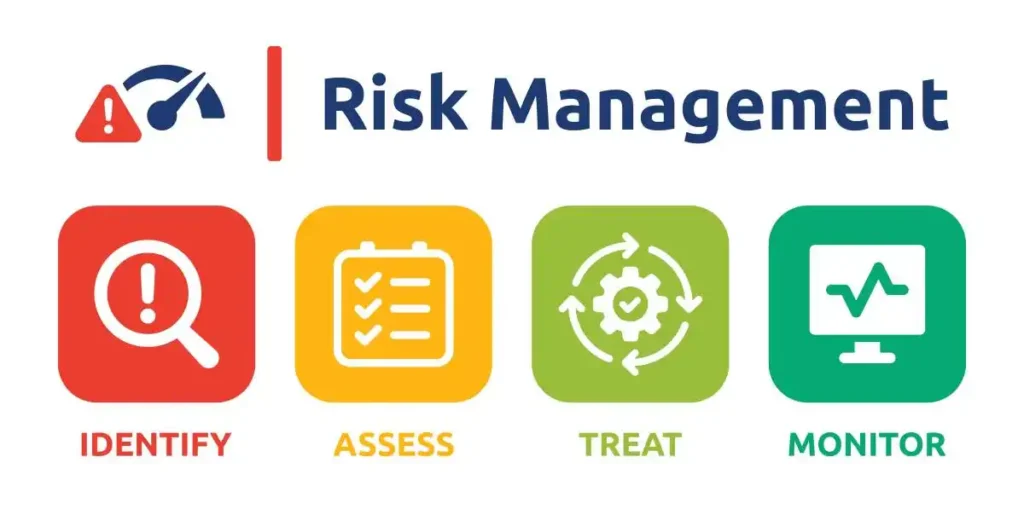
- Internal Controls: Public companies are expected to maintain robust internal control over financial reporting (ICFR), effective disclosure controls and procedures (DCP), and corporate governance mechanisms that identify and escalate risk before it becomes a public crisis. When those expectations are not met, securities litigation often follows, anchored in the argument that investors were misled because the company’s control environment did not support reliable reporting or timely disclosure.
- Investor Best Practices: Individual investors can protect themselves by doing their own research and learning to recognize common warning signs.
If you suffered substantial losses and wish to serve as lead plaintiff in a securities class action, or just general questions about your rights as a shareholder, please contact attorney Timothy L. Miles of the Law Offices of Timothy L. Miles, at no cost, by calling 855/846-6529 or via e-mail at [email protected]. (24/7/365).
Definition of Financial Reporting
Financial reporting involves sharing a company’s financial information with both external and internal audiences. This process centers around essential documents such as quarterly and annual income statements, balance sheets, and statements of cash flows.
- Purpose for External Stakeholders:
Investors, shareholders, and creditors rely on financial reports to assess a company’s financial stability and creditworthiness. In addition, regulatory bodies like the IRS and Securities and Exchange Commission (SEC) require these reports for compliance and oversight purposes.
- Use by Internal Stakeholders:
Company leaders—including the CEO and executive management—use financial reporting to measure business performance, guide strategic decisions, and lay the groundwork for budgets and forecasts.
- Compliance with Accounting Standards:
All financial data presented—whether for internal analysis or external disclosure—must adhere to established accounting frameworks such as Generally Accepted Accounting Principles (GAAP) in the United States, or International Financial Reporting Standards (IFRS) internationally.
- Regulations for External Reporting:
When companies prepare financial statements for external parties, they must follow strict rules set by regulatory agencies and comply with GAAP or IFRS requirements. These rules also govern supplementary schedules and disclosures submitted alongside core statements.
- Flexibility in Internal Reporting:
Internal reports usually include the main financial statements but may be tailored to address specific information needs of managers or other internal users within the organization.
Why Is Accurate Financial Reporting So Important?
- Crucial for Informed Decision-Making:
Accurate financial reporting is essential because both internal and external stakeholders depend on reliable data to make informed choices about the company’s future.
- Investor Confidence:
Investors rely on precise financial information to evaluate a company’s financial stability and determine whether to invest—and how much capital to commit—based on the company’s reported performance.
- Lender and Creditor Analysis:
Creditors, including banks, the SBA, and credit card issuers, use accurate reports to assess an organization’s creditworthiness and set appropriate lending terms or credit limits.
- Guidance for Management:
CEOs and top executives depend on trustworthy internal financial reports for everyday operational decisions, such as inventory management or pricing strategies. These reports also play a key role in shaping long-term business strategy.
- Timeliness Matters:
Financial data must be not only accurate but also timely. Outdated or delayed information can hinder effective decision-making, regardless of its reliability.
- Regulatory Compliance:
External financial reporting must adhere to regulatory deadlines set by authorities, ensuring that all required disclosures are made promptly and accurately.

Causes of Inaccurate Financial Reporting
- Insufficient Staff Training:
Employees who lack proper training or expertise may inadvertently introduce errors into financial records. For instance, mistakes by warehouse staff in inventory counts or errors in expense reporting by sales personnel can directly impact the accuracy of accounting data.
- Outdated Knowledge of Accounting Standards:
If accounting team members are not current with evolving standards and regulations—such as changes to GAAP, SEC rules, or recent updates like ASC 842 for lease accounting and the Tax Cuts and Jobs Act (TCJA)—they can unintentionally apply outdated methods, leading to inaccuracies.
- Manual Data Entry and Processes:
Human error is more likely when financial information is entered manually. Mistakes such as transposed numbers, misplaced decimal points, duplicate entries, or missing transactions frequently occur without automated controls.
- Breakdowns in Communication:
Misunderstandings between policy makers and those executing accounting procedures can result in errors. For example, a lack of clarity on how to estimate allowances for doubtful accounts may cause inconsistent application across teams.
- Disjointed Financial Systems:
Poor integration between various financial platforms can create mismatches and require manual corrections, increasing the risk of mistakes due to improper data mapping or workflow disruptions.
- Weak Review and Oversight Processes:
Without thorough review mechanisms, errors like intercompany imbalances may go unnoticed. These lapses often stem from time constraints, limited resources, or competing priorities within the organization.
- Inconsistent Accounting Practices:
Variations in accounting methodologies across departments or subsidiaries—such as differences in inventory valuation techniques or revenue recognition—can result in conflicting figures on consolidated financial statements.
- Improper Use of Chart of Accounts:
Errors such as miscoding invoices or misclassifying expenses as revenue can distort the true picture of a company’s financial health and obscure critical information from stakeholders.
- Deliberate Fraud:
While rare compared to unintentional mistakes, intentional acts of fraud—where employees falsify or omit important details from financial reports—represent the most financially damaging type of reporting issue an organization can face.
Impact of Inaccurate Financial Reporting
- Wasted Time and Resources:
Organizations often expend significant effort tracking down and correcting financial reporting mistakes. This process can be frustrating for staff, strain professional relationships, and lead to decreased job satisfaction.
- Poor Decision-Making:
When internal reports contain inaccuracies, leaders risk making misguided business decisions—such as setting inappropriate product prices or making flawed hiring and firing choices—because they are relying on faulty data.
- Cash Flow Issues:
Overstating cash flow may leave a company unable to cover bills or payroll when actual funds fall short. Conversely, understating available cash could mean missing valuable investment or interest-earning opportunities.
- Regulatory Fines and Penalties:
Inaccurate or late financial reports can trigger fines from the IRS or other authorities. If an audit reveals underpaid taxes due to errors, companies must pay both penalties and accrued interest in addition to their outstanding tax liability.
- Reputational Damage and Loss of Credibility:
Even unintentional reporting errors can erode trust among lenders, investors, and other stakeholders. Companies with a history of inaccuracies may face higher borrowing costs or have difficulty securing financing, as well as increased scrutiny from potential investors.
- Negative Impact on Stock Prices:
The market tends to react swiftly when companies revise or restate financial reports. Share prices often drop—sometimes dramatically—when reporting errors come to light or deadlines are missed due to the need for corrections.
- Bankruptcy Risk Due to Fraud:
Intentional misrepresentation of financial results can have catastrophic consequences. Regulatory investigations may result in hefty fines, criminal prosecution of executives, loss of investor confidence, plummeting stock prices, and—ultimately—bankruptcy. Notably, in high-profile fraud cases like that of a major energy company, executives faced imprisonment while employees lost substantial portions of their pension savings.

How to Keep Financial Reporting Accurate
- Internal Accounting Controls:
Internal controls are company policies and procedures designed to minimize the risk of errors or misstatements in financial reporting. While not foolproof—particularly against collusion or intentional fraud—these measures provide reasonable assurance that the company’s financial records are reliable. The Sarbanes-Oxley Act underscores their importance by requiring public companies to issue an Internal Controls Report that demonstrates the existence and effectiveness of these safeguards.
- Types of Controls:
- Preventive Controls:
These are proactive measures intended to stop mistakes before they happen. Typical examples include separating job duties among employees, restricting access to accounting systems, physically protecting assets, implementing multi-level approval processes for purchases and payments, and conducting thorough employee training and background checks. - Detective Controls:
These controls operate after transactions have occurred, aiming to uncover errors or irregularities so they can be investigated and resolved promptly. Common detective controls include account reconciliations (e.g., matching internal ledgers to external bank statements), comparing actual results to budgets or forecasts, performing inventory counts, ongoing internal audits, and scheduled external audits.
- Preventive Controls:
- Timeliness of Detect Controls:
Since detective controls identify issues after the fact, it is crucial these reviews are performed regularly and without delay to catch problems before they escalate.
- External Audits:
Engaging independent auditors is a widely recognized best practice for verifying the accuracy of financial statements—and is mandatory for public companies. However, an audit does not guarantee flawless reporting; instead, auditors issue a written opinion based on Generally Accepted Auditing Standards (GAAS). The most favorable outcome is an “unqualified” or “clean” opinion, confirming that the reports are free from material misstatement. If there are unresolved concerns, auditors may issue a “qualified” or “modified” opinion. In rare cases where significant issues persist, a “disclaimed” or “adverse” opinion may be rendered—signaling serious problems with the company’s financial reporting.
- Responsibility for Financial Statements:
Ultimately, management—not the auditors—is responsible for preparing accurate financial statements and maintaining robust internal controls.
Common Types of Financial Statement Fraud
- Payroll Fraud:
Involves fabricating nonexistent employees or inflating employee compensation to divert funds fraudulently. - Overstated Net Income:
Entails manipulating records to exaggerate revenue figures or minimize reported expenses, thereby boosting reported profits. - Improper Disclosures:
Consists of concealing significant transactions or failing to report liabilities, which distorts the true financial position of the company. - Aggressive Revenue Recognition:
Occurs when sales are recorded before they are actually earned, artificially increasing reported revenue for a given period. - Unscrupulous Accounting Practices:
Refers to deliberately adjusting asset values or reserves in a way that misrepresents the company’s actual financial health. - Improper Asset Valuation:
Involves overstating the value of assets such as property, inventory, or investments to present a stronger net worth than actually exists.
Even though these types of financial statement fraud may seem straightforward, each can seriously undermine a company’s financial integrity and mislead anyone relying on its financial statements.
Asset Overstatement Through Non-Standard Exclusions
- Sophisticated manipulation schemes involve overstating assets through non-standard exclusions in non-GAAP reporting. DXC Technology exemplified this practice by excluding amortization of acquired intangible assets from non-GAAP measures while continuing to include revenue associated with those same assets. This created fundamental inconsistencies that misrepresented the company’s actual financial health.
- SEC enforcement action followed predictably. Regulators charged DXC with providing materially misleading statements regarding non-GAAP performance measures, finding the company artificially inflated metrics by improperly classifying expenses as non-GAAP adjustments. These misclassifications resulted in non-GAAP net income overstatements of at least $29 million, $30 million, and $24 million across three different quarters.
- Impairment charge manipulation represents another common abuse. Energy companies routinely adjust their non-GAAP earnings to exclude asset impairment charges resulting from declining oil prices—essentially attempting to dismiss legitimate business losses. These exclusions create fundamentally misleading financial narratives since impairments reflect real economic costs.
- The scale of distortion proves staggering. FTSE 100 companies consistently reported non-IFRS net income exceeding IFRS figures every year from 2008 through 2014, reaching 144%, 140%, and 148% of actual IFRS results in 2012, 2013, and 2014 respectively. These dramatic differences demonstrate how non-standard exclusions fundamentally distort major corporations’ perceived financial performance.
THE SECURITIES CLASS ACTIONS PROCESS
|
Filing the Complaint |
A lead plaintiff files a lawsuit on behalf of similarly affected shareholders, detailing the allegations against the company. |
| Motion to Dismiss | Defendants typically file a motion to dismiss, arguing that the complaint lacks sufficient claims. |
| Discovery | If the motion to dismiss is denied, both parties gather evidence, documents, emails, and witness testimonies. This phase can be extensive. |
| Motion for Class Certification | Plaintiffs request that the court to certify the lawsuit as a class action. The court assesses factors like the number of plaintiffs, commonality of claims, typicality of claims, and the adequacy of the proposed class representation. |
| Summary Judgment and Trial | Once the class is certified, the parties may file motions for summary judgment. If the case is not settled, it proceeds to trial, which is rare for securities class actions. |
| Settlement Negotiations and Approval | Most cases are resolved through settlements, negotiated between the parties, often with the help of a mediator. The court must review and grant preliminary approval to ensure the settlement is fair, adequate, and reasonable. |
| Class Notice | If the court grants preliminary approval, notice of the settlement is sent to all class members, often by mail, informing them about the terms and how to file a claim. |
| Final Approval Hearing | The court conducts a final hearing to review any objections and grant final approval of the settlement. |
| Claims Administration and Distribution |
A court-appointed claims administrator manages the process of sending notices, processing claims from eligible class members, and distributing the settlement funds. The distribution is typically on a pro-rata basis based on recognized losses. |
Understanding Securities Litigation: An Overview
Foundational role in market regulation: Securities litigation serves as a crucial enforcement mechanism that:
Understanding Securites Class Action Lawsuits
Securities class action lawsuits are a legal mechanism that allows investors to collectively pursue claims against a corporation for securities fraud or other financial misconduct.
- Mislead: Securities litigation typically arise when shareholders believe they have been misled by a company’s management, resulting in significant financial losses.
- Efficiency: Securities class action lawsuits are designed to improve efficiency and reduce legal costs by consolidating numerous individual claims into a single action.
- Level Playing Field: This collective approach also helps level the playing field for smaller investors who might otherwise lack the resources to challenge large corporations independently.
- Investror Confidence: Understanding securities class action lawsuits involves recognizing their critical role in maintaining market integrity and investor confidence.
- Deterrent: By holding companies accountable for fraudulent activities, these lawsuits deter future misconduct and promote transparency in corporate governance.
- Misleading Statments: Key elements of securities class action lawsuits include proving that the company made false or misleading statements, demonstrating that these statements were material, and showing a direct connection between the misrepresentation and the investors’ losses.
- Process: The litigation process typically begins with the filing of a complaint, followed by class certification, discovery, and potentially settlement or trial.
- Complexity: Effective management of securities class action lawsuits necessitates a deep comprehension of both legal principles and financial intricacies.
Overall, securities class action lawsuits play a pivotal role in safeguarding investor interests and ensuring ethical conduct within the financial markets.Purposes of Securities Class Actions

The Unique Value of Class Actions in the Legal System
- Streamlining Legal Proceedings
- Courts and legal scholars agree: class actions are a powerhouse for making litigation more efficient.
- Instead of slogging through countless copycat lawsuits, courts can handle similar claims together, saving everyone significant time and resources.
- Leveling the Playing Field for Small Claims
- The Supreme Court points out that class actions are often the only practical way for individuals with small claims to seek justice.
- When lots of people suffer minor harm from a defendant’s actions, it usually isn’t worth it (financially) for one person to sue—but pooling those claims makes it viable.
- Making Legal Action Economically Feasible
- Combining many small claims into one lawsuit means that legal costs get spread across all participants.
- This collective approach creates a larger potential payout, which encourages lawyers to take on cases they otherwise couldn’t afford to pursue.
- Ensuring Accountability & Deterrence
- Class actions don’t just compensate victims—they also hold defendants accountable when their conduct harms many people.
- By making it harder for wrongdoers to dodge responsibility, class actions help discourage future misconduct.
- Promoting Consistency & Closure
- Resolving all similar claims at once leads to uniform outcomes—no risk of different courts reaching conflicting decisions on the same issue.
- Defendants benefit too: a single judgment binds all members of the class, bringing comprehensive closure instead of endless piecemeal litigation.
Requirements for Class Certification
Before a class action can be certified as a class, it must meet each of the four prerequisites listed in Rule 23(a):
- Numerosity—The proposed class must be so large that it would be “impracticable” for all the class members to be joined in a single proceeding. There is not a strict numerical cutoff, but courts have observed that a class of more than 40 members generally satisfies the numerosity requirement.
- Commonality—There must be “questions of law or fact common to the class.” The Supreme Court has explained that commonality requires that the class members “have suffered the same injury” and that there is at least one common question central to the claims and “apt to drive the resolution of the litigation.”
- Typicality—The “certified as a class.” This helps ensure that the class representatives’ interests are aligned with the whole class by requiring sufficient similarity between the legal and factual bases of their claims.
- Adequacy of Representation—The named plaintiff(s) must show that “the representative parties will fairly and adequately protect the interests of the class.” This rule focuses on potential conflicts of interest between the representative parties and the other class members, as well as on class counsel’s competency and potential conflicts of interest.
If a class action meets all the requirements of Rule 23(a) also must fall into at least one of the categories of class actions permitted under Rule 23(b):
- Rule 23(b)(1) permits class actions where separate lawsuits would risk “inconsistent or varying adjudications” that impose “incompatible standards of conduct for the party opposing the class” (Rule 23(b)(1)(A)), or would “as a practical matter be dispositive of the interests” of absent class members or “substantially impair or impede their ability to protect their interests”
- Rule 23(b)(2) permits class actions for injunctive or declaratory relief where “the party opposing the class has acted or refused to act on grounds that apply generally to the class” as a whole. Examples include civil rights class actions against defendants alleged to have engaged in class-based discrimination.
- Rule 23(b)(3) permits class actions in which “questions of law or fact common to class members predominate over any questions affecting only individual members,” and proceeding as a class action “is superior to other available methods for fairly and efficiently adjudicating the controversy.” This is the most common type of class action and is used primarily in lawsuits seeking money
- Damages. Rule 23(b)(3)’s “predominance” requirement focuses on whether the proposed class is “sufficiently cohesive” to ensure that litigating on a representative basis will be beneficial. The “superiority” requirement focuses on comparing the advantages and disadvantages of proceeding as a class action to other types of litigation the class members could pursue. Additionally, unlike class actions under Rules 23(b)(1) and (2), class actions under Rule 23(b)(3) require providing notice to absent class members, and class members have the right to affirmatively opt out of the class action if they choose.

The Role of Regulatory Bodies in Securities Litigation
- Securities and Exchange Commission (SEC):
- Primary Regulator in the U.S. for overseeing securities markets.
- Investigates and prosecutes violations, including market manipulation schemes.
- Enforces regulations and imposes penalties like fines and officer/director bans.
- Financial Industry Regulatory Authority (FINRA):
- Self-Regulatory Organization (SRO) overseeing brokerage firms and exchange markets.
- Conducts market surveillance to detect potential violations and imposes disciplinary actions.
- Works alongside the SEC and other regulatory bodies to ensure market integrity and protect investors.
- International Regulatory Bodies:
- European Securities and Markets Authority (ESMA): Oversees securities markets in the EU.
- Australian Securities and Investments Commission (ASIC): The equivalent body in Australia.
- Cooperate internationally with organizations like IOSCO to harmonize regulations and address cross-border issues.
- Collaboration and Coordination:
- The combined and coordinated efforts of these regulatory bodies are crucial for effective enforcement actions in a globalized financial market.
- This ensures that manipulators cannot simply move their activities to less-regulated jurisdictions.
Investor Protection
Implications for long-term value
| Feature | Description |
|---|---|
| Reduced risk and cost | Effective corporate governance reduces financial, legal, and operational risks. For a company emerging from a lawsuit, these reforms signal to investors that future misconduct is less likely, lowering the perceived risk. This can lead to a lower cost of capital, making it less expensive to raise money in the future. |
| Better investor confidence | Transparent and ethical governance attracts investment. Investors are more willing to support a company that demonstrates sound management and a commitment to protecting shareholder interests. This can lead to higher valuations and a more stable, long-term investor base. |
| More profits | Studies show that securities litigation can reduce profitability and increase operational expenses for a company. By addressing the underlying issues through governance reform, a company can increase its operational efficiency and focus on a more sustainable, long-term business strategy, potentially leading to improved financial performance. |
| Deterrence of future securities litigation | Proactively implementing governance reforms can help prevent future legal challenges and regulatory scrutiny. By addressing the root causes of prior issues, a company reduces its exposure to future securities litigation, protecting both its financial resources and its reputation. |
Consequences of Improper Financial Reporting
- Consequences: The consequences of Improper Financial Reporting are far-reaching, affecting not only the investors but also the broader financial market.
- Erodes Investor Trust: When fraudulent activities are uncovered, they can lead to drastic declines in stock prices, erode investor confidence, and trigger regulatory investigations.
- Severe Penalties: Companies implicated in accounting fraud may face severe penalties, including fines, sanctions, and reputational damage, which can have long-term impacts on their operations and market standing.
- Securities Litigation: Therefore, addressing accounting fraud is a critical component of securities litigation, with legal proceedings often focusing on uncovering and rectifying these deceptive practices.
- Securities Litigation and Accounting Fraud: To combat accounting fraud, regulatory bodies have implemented stringent reporting standards and compliance requirements.
Inadequate Internal Controls Exposes a Company to Massive Liability
Poor internal controls have become a bigger trigger for securities litigation since the Sarbanes-Oxley Act of 20022 came into effect:
- Executive certification requirements: CEOs and CFOs must sign off on financial statements. They need to verify they have reviewed reports and confirm these documents tell the truth. Executives who knowingly approve incorrect financial reports face USD 1.00 million fines and possible 10-year prison terms.
- Prevalence in litigation: Internal control claims and restateement cases made up 14% of securities class action cases in 2025, leading to accounting violations which accounted for another 16% of federal securities class actions in 2025,
- Common control deficiencies: Problems often stem from poor staffing and technical expertise, weak review processes, bad account reconciliation, loose controls over quarterly provisions, and simply not having robust corporate governance controls.
Conclusion
- In an ever-evolving financial landscape, the threat of fraud remains a persistent and formidable challenge. The various types of fraud, from Ponzi schemes to insider trading, underscore the need for vigilance and proactive measures to protect investments and maintain market integrity.
- Securities class actions serve as a critical tool in this endeavor, providing a mechanism for investors to seek justice and hold wrongdoers accountable.
- By understanding the dynamics of fraud and the legal recourse available, investors can navigate the complexities of the financial markets with greater confidence and security.
