
Introduction to Financial Statement Fraud Red Flags
- Red Flags in Financial Statement Fraud: Represent critical warning indicators that appear across approximately 10% of publicly traded companies according to comprehensive research from a University of Toronto finance professor.
- Catastrophic Financial Impact: When financial statement fraud occurs, organizations experience median losses exceeding $954,000 per incident, establishing these schemes as the most costly category of corporate crime.
- SEC Enforcement Patterns: Reveal the most prevalent violations: improper revenue recognition (43%), operational reserves manipulation (24%), inventory misstatement (11%), and loan impairment issues (11%).
- Financial Statement Fraud: Encompasses the deliberate misstatement or misrepresentation of organizational financial statements designed to deceive stakeholders. Risk Factor Analysis identifies three critical conditions that create environments conducive to fraudulent activities: intense pressure from maSCnagement or external stakeholders to achieve financial targets, inadequate internal controls that enable exploitation of system vulnerabilities, and adverse economic conditions that motivate organizations toward deceptive practices.
- Control Deficiencies: Nearly one-third of all fraud cases stem from weak internal controls. Geographic Concentration proves particularly concerning—approximately half of all globally reported fraud occurs within the United States and Canada, representing 895 documented cases or 46% of worldwide incidents.
- Executive Incentive Conflicts: Financial statement fraud frequently originates from compensation structures that directly tie executive rewards to company performance metrics. Companies recognizing their inability to meet projected results often resort to fabricated year-end transactions designed to inflate reported sales figures and enhance financial presentations to stakeholders.
- Investor Protection: Understanding these fraud red flags becomes essential for safeguarding investments and preserving market integrity. Comprehensive Analysis: The following sections examine the specific warning indicators that enable detection of potential financial statement fraud before these schemes inflict substantial damage on investor portfolios and broader market confidence.
Implausible Revenue Growth

Revenue Manipulation: Represents the foundation upon which most financial statement fraud schemes operate, with research demonstrating that 41% of companies deliberately misrepresent their financial reports.
Implausible Revenue Growth: Emerges as perhaps the most detectable warning signal that sophisticated investors and forensic auditors must monitor with exceptional vigilance.
Critical Detection Priority: This particular fraud red flag warrants immediate investigation because it typically precedes the more sophisticated accounting manipulations that can devastate investor portfolios. Companies engaging in revenue manipulation create artificial growth patterns that experienced analysts can identify before these schemes trigger catastrophic securities litigation and investor losses.
Implausible Revenue Growth: The Foundation of Most Securities Cases
Revenue Manipulation Schemes
- Implausible revenue growth occurs when companies report revenue increases that deviate significantly from industry norms or historical performance patterns without legitimate business justification. Artificial Revenue Inflation typically involves sophisticated manipulation designed to create false impressions of profitability and financial health that deceive investors and stakeholders.
- SEC Enforcement Priority: The Securities and Exchange Commission identifies improper revenue recognition as the most prevalent form of financial statement fraud, consistently dominating enforcement actions from 2014-2019. Companies engaging in these deceptive schemes employ several sophisticated techniques that directly violate fundamental accounting principles requiring revenue recognition only when realized and earned.
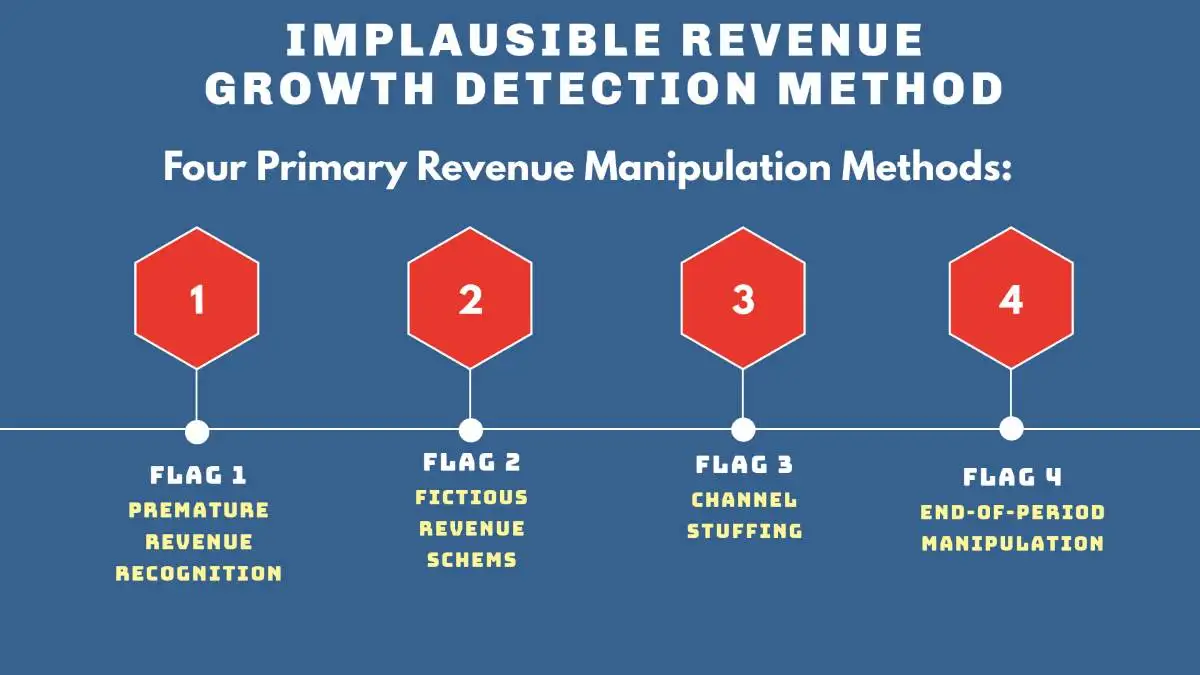
- Four Primary Revenue Manipulation Methods:
-
- Premature Revenue Recognition: Recording revenue before completing services or shipping products, creating artificial revenue spikes that mislead investors about actual business performance.
-
- Fictitious Revenue Schemes: Creating completely fabricated sales that never occurred or misclassifying loan proceeds as operational revenue.
-
- Channel Stuffing: Forcing distributors to accept excessive inventory at period-end to inflate quarterly sales figures.
-
- End-of-Period Manipulation: Engineering unusual revenue spikes specifically at quarter or year-end reporting periods.
- Violate Federal Securities Laws: These practices directly violate federal securities laws and create substantial liability for securities class action lawsuits when investors suffer losses due to reliance on false financial statements.
Devastating Corporate Scandals
China Evergrande
- China’s Evergrande Group exemplifies the catastrophic consequences of revenue manipulation. Chinese regulators revealed that the property developer inflated revenues by USD 78 billion, representing mainland China’s largest securities fraud case.
- Fabricated Sales Figures: Included 214 billion yuan (USD 30 billion) in false 2019 sales and 350 billion yuan (USD 48.6 billion) in fictitious 2020 sales.
- Complete Corporate Destruction resulted when Hong Kong courts ordered fforced liquidation in January 2024 following the fraud disclosure.
Luckin Coffee
- Luckin Coffee: Demonstrates how rapidly revenue fraud can unravel investor confidence. The company’s stock price rocketed from USD 20 at IPO in May 2019 to over USD 50 by January 2020 before internal investigations revealed approximately USD 310 million in fabricated 2019 sales.
- Sophisticated Fraud Scheme: That involved selling coffee vouchers in bulk to companies connected with management while creating fictitious employees to purchase USD 140 million in raw materials.
- Market Devastation: Followed when shares collapsed to USD 1.39 within twelve months of the fraud revelation and the company settled with the SEC for $180 million.
Advanced Detection and Prevention Strategies
- Financial Ratio Analysis provides the first line of defense against revenue manipulation schemes. Critical Assessment Methods include comparing revenue growth against historical patterns, industry benchmarks, and economic conditions. Revenue-Cost Relationship Analysis examines whether sales and cost of goods sold move together as expected in legitimate business operations. Accounts Receivable Monitoring tracks rising ratios that indicate insufficient allowance for questionable accounts or fictitious sales.
- Industry Performance Benchmarking serves as the most reliable fraud indicator according to research demonstrating that companies reporting growth rates substantially exceeding industry averages during economic downturns warrant immediate scrutiny.
- Cash Flow Verification represents perhaps the most effective detection method. Revenue Without Cash Flow Growth often reveals earnings manipulation since companies can manipulate accounting entries but cannot easily fabricate actual cash generation. Cash Flow to Earnings Ratios consistently below 1 signal heavy use of accrual accounting that may conceal manipulation.
- External Data Verification employs innovative approaches including Google search volume analysis. Companies whose quarterly search volume ranks in the bottom quartile while reported revenue growth ranks in the top quartile exhibit 165% higher odds of subsequently restating their initial reported revenue
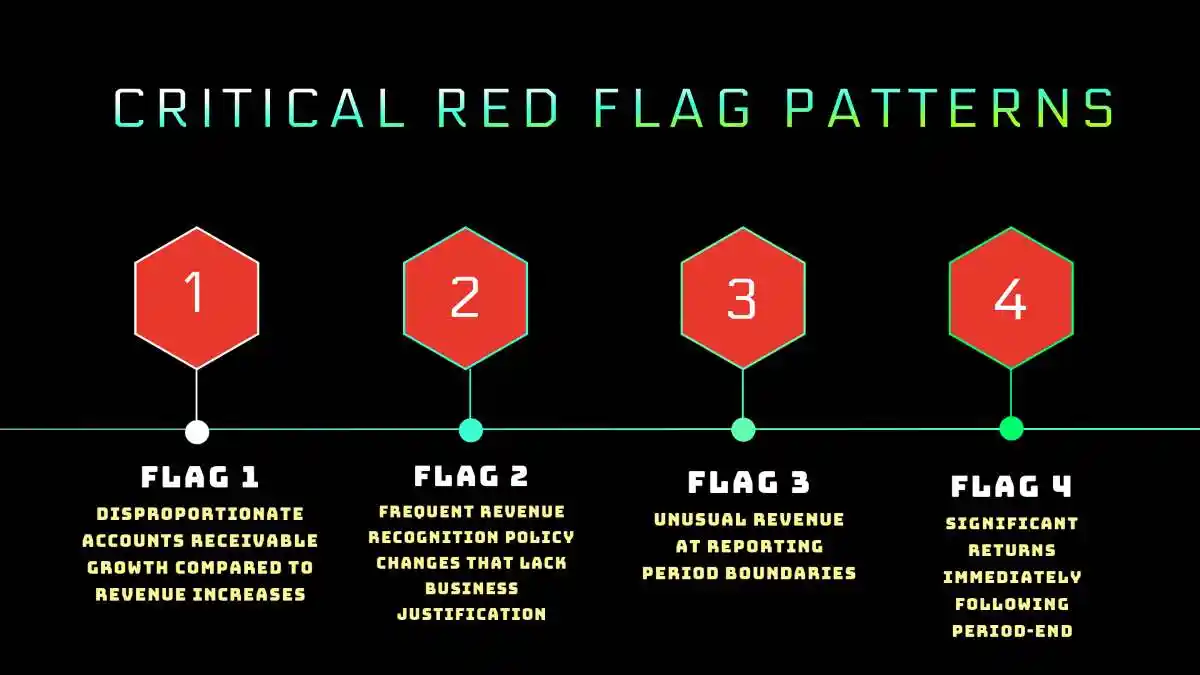
- Critical Red Flag Patterns require immediate investigation:
-
- Disproportionate Accounts Receivable Growth compared to revenue increases.
- Frequent Revenue Recognition Policy Changes that lack clear business justification.
- Unusual Revenue Spikes at reporting period boundaries.
- Significant Returns immediately following period-end that suggest artificial sales.
- Advanced Technology Solutions incorporate artificial intelligence and machine learning capabilities. Natural language processing algorithms analyze financial statements, including notes and MD&A sections, to identify unusual language patterns indicating fraudulent activity. Enhanced Detection Capabilities through classification algorithms like random forests, decision trees, and neural networks can predict fraudulent financial statements based on various ratios and indicators.
- These systematic approaches significantly enhance fraud detection capabilities while providing essential protection against the devastating consequences of revenue manipulation schemes.
Reserve Manipulation: The Hidden Threat to Financial Statement Integrity
- Reserve Manipulation: Represents one of the most sophisticated financial statement fraud techniques that consistently evades detection through traditional oversight mechanisms.
- SEC Anti-Fraud Collaboration: Data demonstrates that reserve manipulation accounts for 24% of all enforcement actions involving financial statements, establishing this deceptive practice as the second most prevalent violation after improper revenue recognition. Financial Distortions: These schemes create substantial distortions that systematically mask companies’ genuine financial health while misleading stakeholders who depend on accurate reporting.
- Sophisticated Deception Mechanisms
-
- Reserve Manipulation: Encompasses the intentional modification of amounts allocated for prospective liabilities or losses, producing inaccurate financial disclosures that distort fundamental financial statements. Fraudulent Execution occurs through four primary methodologies that enable systematic deception:
-
- Cookie Jar Accounting: Companies performing unexpectedly well during economic downturns deliberately withhold sales and revenue to establish reserves for future deployment when struggling to achieve earnings targets.
-
- Earnings Smoothing: This practice artificially smooths earnings across reporting periods, creating false impressions of consistent financial performance.
-
- Pension Plan Exploitation: Struggling organizations frequently target pension plans as their initial reserve manipulation opportunity.
-
- Executive Manipulation: Management optimistically projects pension plan investment growth while simultaneously reducing contributions to artificially decrease reported expenses.
-
- Postponed Obligations: This approach merely delays rather than eliminates financial obligations, creating future liability concentrations.
-
- Operational Reserve Adjustments: Organizations systematically adjust reserves and provisions to control reported earnings, typically aligning results with investor expectations or enhancing stock price performance.
-
- False Presentations: These adjustments enable financial statements to present substantially more optimistic conditions than actual circumstances warrant.
-
- Timing Manipulation: Companies manipulate actual revenue recognition timing by shifting transactions between periods to smooth earnings patterns. Period Distortions: This frequently involves improper period cut-offs or recording transactions occurring after accounting period conclusions.
Devastating Corporate Consequences
- WorldCom Scandal: WorldCom exemplifies how reserve manipulation triggers catastrophic financial consequences across entire market sectors. Whistleblower Discovery: The fraud emerged when Cynthia Cooper, vice president of internal audit, and Gene Morse, another auditor, identified multiple financial record inconsistencies.
- Investigation Revelations exposed systematic fraudulent practices:
-
- Reserve manipulation to artificially boost company income
- Questionable capital expenditures lacking business justification
- Complex accounting terminology designed to disguise capital movement
- Missing evidence for substantial financial transactions, including a $500 million capital expenditure
- Financial Deception Scale: WorldCom concealed declining financial performance by improperly recording expenses as investments, exaggerating income by $3.8 billion—including $3.06 billion in 2001 and $797 million in the first quarter of 2002. False Reporting: This manipulation enabled WorldCom to report net profit of $1.38 billion instead of the substantial net loss that accurate accounting would have revealed.
- Commercial Mortgage-Backed Securities: Whistleblower Complaints revealed that major financial institutions including Wells Fargo and Deutsche Bank engaged in systematic fraud through commercial property financial data manipulation. Profit Inflation: Examination of six loans demonstrated historical profits reported as much as 30% higher than previously stated for identical buildings and years. Debt Magnification: Minor profit increases enabled approval for substantially larger mortgages, potentially creating unsustainable borrower debt obligations.
Advanced Detection Strategies
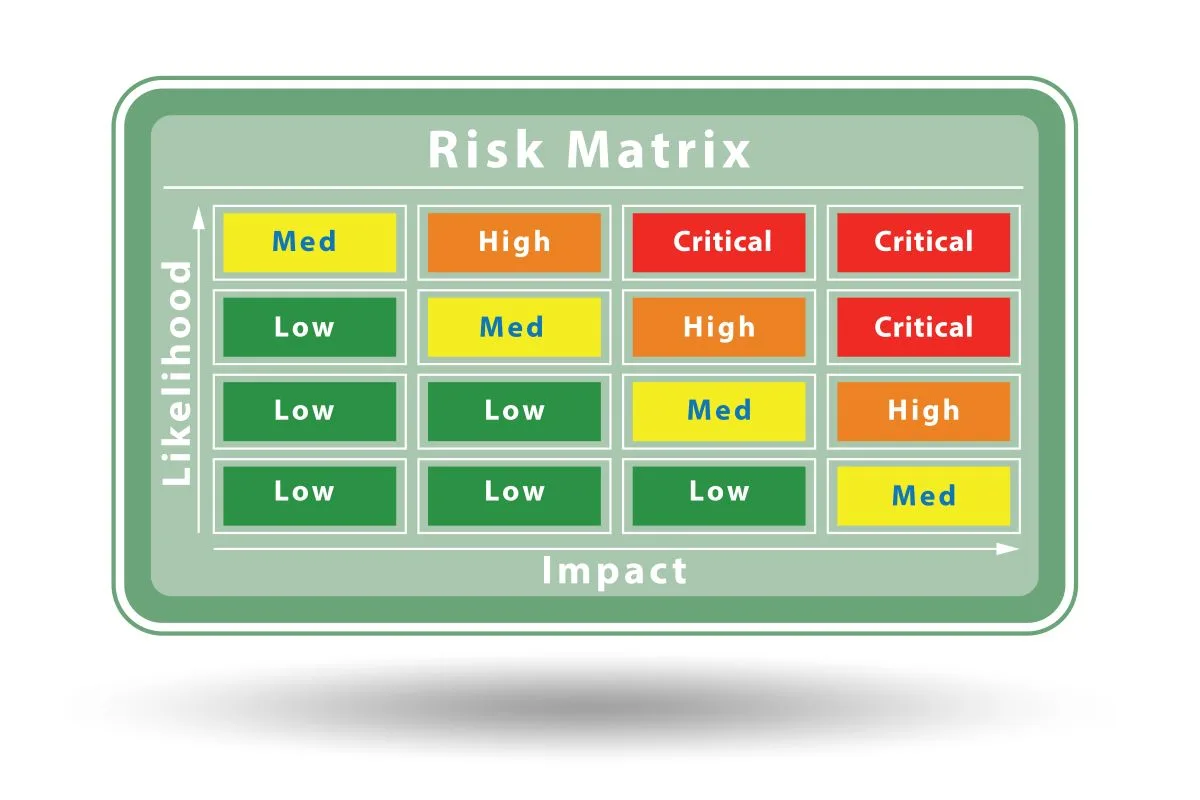
- Reserve Manipulation Detection: Requires systematic analytical approaches that examine patterns beyond surface-level financial reporting. Professional Analysis: Experienced analysts employ multiple methodical techniques to identify sophisticated deception schemes:
-
- Temporal Pattern Analysis: Comparative examination of financial ratios across consecutive periods identifies anomalies lacking reasonable business justification. Reserve-Specific Indicators: Monitor sudden changes in reserve levels without corresponding business activity, unusual patterns between reserves and related expenses, and inconsistent reserve adjustments at period conclusions.
-
- Industry Benchmarking Analysis: Systematic comparison of company financial ratios against industry peers identifies statistical outliers signaling potential irregularities. Comparative Indicators: Reserve-to-revenue ratios significantly different from industry norms, unusual provision patterns for bad debts compared to competitors, and atypical reserve release timing relative to industry standards.
-
- Financial Ratio Examination: Specific ratios highlight potential manipulation including sudden debt-to-equity ratio increases unexplained by operational activities, significant divergence between operating cash flow and sales revenue, and difficulty covering interest expenses potentially masked by income manipulation.
-
- Behavioral Pattern Recognition: Management behaviors frequently accompany reserve manipulation including executives living beyond their means (39% of fraud cases), financial difficulties among key personnel (25% of cases), unusual closeness with vendors or customers (20% of cases), and control issues with unwillingness to share duties (13% of cases).
-
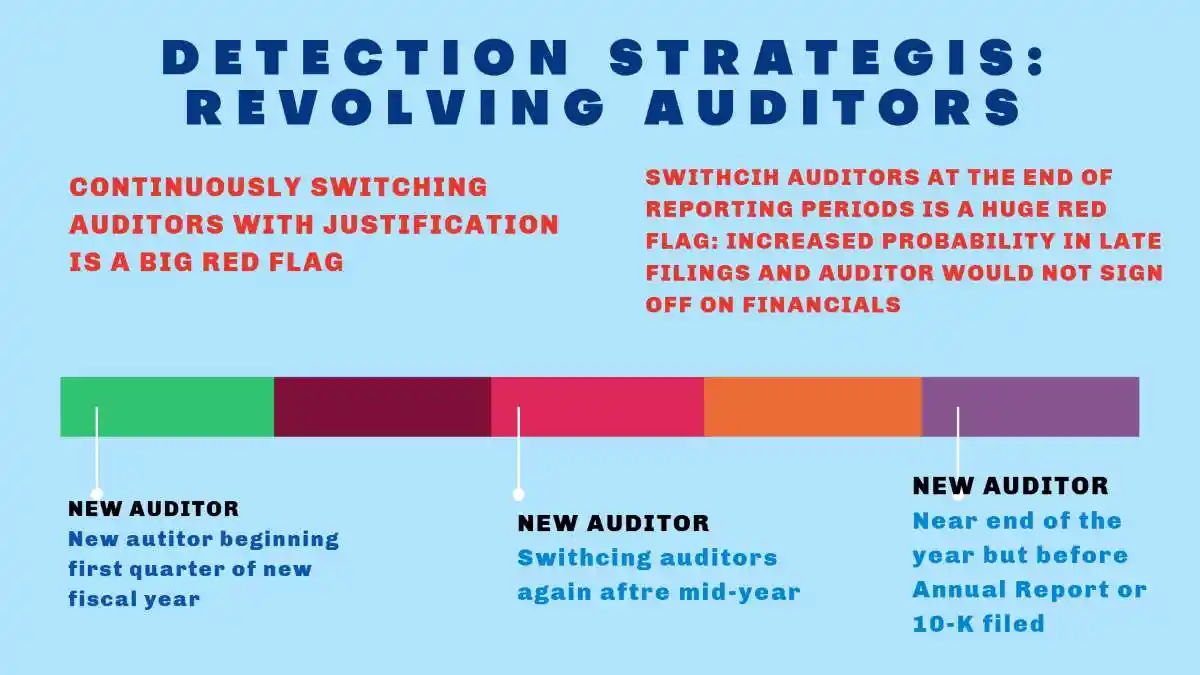
- Auditor Oversight Assessment: Frequent auditor changes potentially indicate attempts to avoid scrutiny of questionable accounting practices. Manipulation Response: Companies engaged in reserve manipulation may seek less rigorous oversight when auditors raise concerns about reserve accounting practices.
-
- Substantial Threat: Reserve manipulation creates fundamental threats to financial statement integrity.
-
- Prevention Strategy: Careful analysis of unusual patterns, inconsistent accounting treatments, and behavioral indicators enables stakeholders to identify deceptive practices before they inflict significant financial damage on investment portfolios and market confidence.
Frequent Changes in Auditors: Warning Signals of Management Deception
Auditor Switching Patterns: Serve as critical warning signals for potential financial statement fraud. Unlike direct financial manipulation indicators, this red flag reveals organizational behavior patterns designed to avoid scrutiny of questionable accounting practices or underlying financial issues.
Companies that change auditors frequently: Particularly without clear business justification, often attempt to circumvent oversight of problematic financial reporting practices.
Auditor Change Categories: Legitimate versus Concerning Motivations
- Frequent auditor changes: Refer to multiple switches in external auditors within relatively short periods. Primary Concern: Companies may engage in “opinion shopping”—seeking audit firms willing to provide favorable opinions on questionable accounting practices.
- Legitimate Business Reasons:
- Need for specialized industry knowledge
- Seeking improved service quality
- Requirements for better geographical coverage
- Cost considerations and competitive fee structures
- Concerning Motivations:
- Conflicts with previous auditors over accounting methods
- Previous auditors issuing qualified opinions
- Attempts to conceal material financial misstatements
- Management disputes with audit firms over findings
- Statistical Evidence: Research reveals that 1,322 U.S. public companies changed independent auditors in 2006 alone, with 66 companies changing auditors at least twice within the same year. Three-Year Analysis: During 2004-2006, approximately 3,673 U.S. public companies (29% of all public companies) changed accounting firms at least once.
- Client-Auditor Dynamics: When clients perceive auditors as insufficiently available, switching likelihood increases substantially. Companies changing auditors following financial restatements may indicate dissatisfaction with previous audit quality rather than legitimate business needs.

Market Evidence: Investor Recognition of Auditor Change Risks
- Last-Minute Auditor Changes: Research on Chinese capital markets demonstrates that investors respond significantly negatively to companies making last-minute changes to signing auditors. Market Interpretation: Investors associate this behavior with negative implications for financial statement reliability.
- Empirical Validation: Cross-sectional analysis confirms investor perceptions prove justified—last-minute auditor changes significantly impair financial statement quality, validating external investors’ rational assessment of these warning signals.
- Filing Delays: Companies changing auditors demonstrate substantially higher likelihood of late quarterly or annual report filings. Going-Concern Opinions: 563 companies (40% of those changing auditors) disclosed that former auditors had modified reports to include going-concern opinions, suggesting companies switch auditors to avoid unfavorable assessmen
- Audit Quality Implications: Frequent switching behavior—particularly among non-Big 4 firms—correlates directly with decreased audit quality and efficiency. Companies switching repeatedly between non-Big 4 auditors face higher fees, longer audit opinion delays, and increased probability of late filings.
Detection Strategies: Systematic Monitoring Approaches
- Systematic Detection: Requires methodical monitoring approaches that identify problematic patterns before they enable financial statement fraud.
- Frequency Analysis: Track auditor changes within rolling five-year periods. Multiple changes within this timeframe warrant immediate investigation.
- Timing Assessment: Monitor changes coinciding with significant accounting issues, switches occurring before financial restatements, and last-minute changes before filing deadlines.
- Directional Analysis: Red Flag Patterns:
-
- Switching from larger, established firms to smaller, less-known entities
- Moving from firms with industry expertise to those lacking relevant specialization
- Changing from auditors who issued qualified opinions to new firms
- Disclosure Evaluation: Warning Indicators:
-
- Vague or limited disclosure about change reasons
- Absence of clear business justification
- Missing information about disagreements with previous auditors
- Contextual Review: Consider changes alongside recent financial restatements, material weakness disclosures in internal controls, and going-concern opinions from previous auditors.
- Regulatory Concerns: Regulators express ongoing concerns about opinion shopping’s detrimental impact on audit market integrity. Research Confirmation: More frequent auditor switching correlates with worse audit quality, though this effect diminishes when stronger internal controls and external monitoring mechanisms exist.
- Regulatory Compliance: The Sarbanes-Oxley Act mandates audit partner rotation every five years for public companies. Routine changes at this interval represent regulatory compliance rather than fraud indicators.
- Comprehensive Assessment: Frequent auditor changes require evaluation within broader contexts. While legitimate reasons exist for changing audit firms, patterns of repeated changes—particularly without clear business justification—warrant heightened scrutiny as potential indicators of financial statement fraud designed to circumvent proper oversight and accountability.
Related-Party Transactions: Concealed Conflicts That Enable Securities Fraud
Related-Party Transactions represent dangerous pathways to financial statement fraud precisely because they circumvent conventional arm’s-length business dealings. Deceptive Relationships: These transactions occur between entities maintaining existing relationships, creating substantial opportunities for financial manipulation that evade standard oversight mechanisms and ultimately trigger securities class action lawsuits.
Related-Party Transactions Description
Related-Party Transactions: Encompass transfers of resources, services, or obligations between related parties regardless of whether compensation changes hands. Connected Entities typically include:
Corporate Relationships:
-
- Affiliates and subsidiaries of the company
- Principal owners and their immediate families
- Management personnel and their immediate families
- Entities with common ownership or control structures
- Fraud Risk Creation: While many such transactions serve legitimate business purposes, they create elevated
- fraud risk factors because they eliminate the negotiated fairness inherent in arm’s-length dealings. financial information within financial statements, ultimately creating conditions that lead to securities litigation.
- Primary Manipulation Mechanisms:
- Insider Benefit Schemes: Conflicts of interest that prioritize insider benefits over shareholder value creation
- Profit Transfer Arrangements: Systematic transferring of profits or losses between entities designed to benefit insiders
- Economic Substance Concealment: Deliberate concealment of the true economic substance underlying transactions
- Fund Siphoning Operations: Complex ownership structures that facilitate unauthorized fund transfers
- Market Valuation Impact: Companies engaging more frequently in connected transactions consistently receive lower market valuations, demonstrating investor recognition of these fraud risk factors.
- Related-Party Transactions Real-world Example
- Sinar Mas Group Scandal: Demonstrates how related-party transactions enable substantial financial statement fraud with devastating consequences. Following recapitalization of Bank Internasional Indonesia (owned 89% by the Widjaja family), auditors discovered USD 1.2 billion in outstanding loans to Sinar Mas Group subsidiaries, representing 52% of total bank loans.
- South Jersey Extended Care Investigation: The SJEC nursing home case revealed that virtually all major vendors constituted undisclosed related parties on state and federal filings. Fraudulent Operations included:
-
- Approving USD 1.30 million in distributions during operational losses
- Executing inflated contracts with their own entities
- Paying themselves millions for undelivered services
- Enron Special-Purpose Entities: The most notorious example involved Enron’s utilization of related-party transactions with special-purpose entities to conceal billions in debt from failed ventures. Devastating Consequences included bankruptcy, executive prison sentences, pension fund losses, and the collapse of auditor Arthur Andersen.
- Suspicious Transaction Pattern Analysis Warning Indicators include:
- Systematic Detection of problematic related-party transactions requires methodical analytical approaches designed to identify securities fraud before it inflicts substantial damage:
- Disclosure Integrity Assessment Critical Examination of related-party disclosures within financial statements must verify:
-
- Complete nature of related party relationships
- Comprehensive transaction descriptions
- Accurate dollar amounts and outstanding balances
- Suspicious Transaction Pattern Analysis Warning Indicators include:
- Pricing ignificantly divergent from market rates
- Unusual terms including atypical return rights
- Interest-free loans lacking fixed repayment schedules
- Nonmonetary transactions without commercial substance
- Ownership Structure Investigation Comprehensive Analysis examines:
-
- Investment types and structures the company maintains
- Entity financing and structural arrangements
- Trust relationships involving directors or employees
- Advanced Verification Procedures Enhanced Detection Methods:
-
- Data analytics identifying unusual transaction patterns
- Arm’s-length pricing verification testing
- Field-based verification procedures
- Fraud Prevention: These detection methodologies must integrate with broader corporate governance frameworks to evaluate both transaction propriety and disclosure accuracy, ultimately protecting investors from the devastating consequences of securities class action lawsuits triggered by related-party fraud schemes.

Unusual End-of-Year Adjustments: Critical Fourth Quarter Fraud Indicators
- Fourth Quarter Manipulations: Represent the most dangerous vulnerability in financial reporting cycles, creating the final window for fraudulent schemes before statements reach investors and regulatory enforcement agencies. These unusual end-of-year adjustments constitute a pervasive fraud pattern demanding heightened scrutiny from market participants seeking to protect their investments from devastating securities litigation consequences.
- Deceptive Period-End Schemes: Mechanisms of Financial Manipulation
- Unusual end-of-year adjustments: Encompass significant journal entries recorded at period-end designed to artificially enhance financial performance without legitimate economic justification. Management Pressure: These manipulations typically emerge during fourth quarter reporting periods when executives face intense pressure to achieve performance targets tied directly to compensation structures.
- Fraudulent Entry Patterns: Companies engaging in these deceptive practices employ several sophisticated techniques designed to escape detection:
- End-of-Period Clustering: Represents surge in adjusting entries recorded immediately before reporting deadlines, creating artificial revenue spikes that deceive investors about actual business performance.
-
- Round Number Manipulation: Involves entries utilizing convenient figures such as $50,000 or $100,000 that lack detailed transaction support or legitimate business documentation.
-
- Documentation Concealment: Encompasses adjustments recorded without proper authorization or supporting evidence, designed to obscure the fraudulent nature of transactions.
-
- Complex Transaction Timing: Creates sophisticated arrangements completed strategically before reporting deadlines, often involving related parties to disguise the manipulative intent.
-
- Compensation Incentives: Executive motivation behind these schemes frequently stems from bonus qualification requirements that directly tie personal compensation to achieving specific financial targets. Desperate Measures: Companies recognizing their inability to meet projected results resort to fabricated transactions designed to inflate reported sales and create false impressions of financial stability.

Corporate Fraud Cases: The Reality of Period-End Manipulation
- Fourth-Quarter Anomalies: Multiple documented cases reveal companies achieving results exceeding consensus expectations specifically during fourth quarter periods despite lacking obvious seasonal business drivers. Market Deception: These patterns create artificial performance metrics that mislead investors about sustainable business operations and future prospects.
- Revenue Reversal Patterns: Extensive analysis reveals businesses reporting substantial revenue increases at year-end followed by significant reversals occurring early in subsequent reporting periods. Economic Substance: These reversals—frequently disguised as returns, discounts, or routine adjustments—demonstrate that original transactions lacked genuine economic substance and constituted pure financial manipulation.
- Forensic Accounting Analysis: Professional investigations across multiple industries identify unusual year-end transaction volumes as primary indicators of potential accounting fraud. Performance Pressures: These fraudulent activities consistently correlate with executive compensation structures that create powerful incentives for financial manipulation.
Detection Strategies: Systematic Approaches for Identifying Fraudulent Adjustments
- Comprehensive Analysis: Detecting suspicious end-of-year adjustments requires methodical examination of financial records and transaction patterns that reveal manipulative behavior before it triggers securities class action lawsuits.
- Trial Balance Examination: Following completion of all closing entries, conduct thorough analysis ensuring accounts balance properly while investigating unusual patterns or unexplained trends.
- Reconciliation Verification: Confirm that balance sheet accounts and key trial balance components reconcile accurately with supporting documentation, particularly focusing on accounts receivable and payable balances.
- Journal Entry Scrutiny: Red Flag Identification requires focused attention on entries exhibiting these characteristics:
-
- Late-Year Timing: Entries recorded during final reporting periods or as post-closing adjustments lacking adequate explanation.
-
- Unusual Account Usage: Transactions recorded to seldom-used accounts that typically remain dormant during normal business operations.
-
- Authorization Irregularities:Entries created by individuals who ordinarily lack journal entry responsibilities.
-
- Forced Balancing: Adjustments designed to force account reconciliation without proper supporting procedures.
-
- Pattern Recognition: Clustering Analysis focuses on identifying transaction concentration at period-end, particularly those involving round-number amounts that suggest artificial manipulation rather than legitimate business activity.
- Documentation Assessment: Examine entries lacking proper supporting documentation or authorization, especially those affecting fair value calculations that could significantly impact reported financial performance.
-
- Regulatory Standards: The Public Company Accounting Oversight Board emphasizes evaluating whether significant unusual transactions appear designed specifically to facilitate fraudulent financial reporting. PCAOB Requirements: Auditors must scrutinize transaction timing, complexity, and apparent purpose to determine whether arrangements enable companies to achieve artificial financial targets.
-
- Effective Prevention: Comprehensive documentation review, timing assessment, and consistency evaluation across reporting periods remain essential for identifying manipulative adjustments before they result in significant investor losses and subsequent securities litigation.
Fraud Detection Reference Framework
Systematic Analysis: The following reference framework consolidates the essential financial statement fraud indicators into a structured format designed to facilitate rapid assessment of potential risks. Detection Methodology: This analytical tool enables investors and analysts to identify patterns that consistently precede major securities litigation and devastating market losses.
| Fraud Indicator | Primary Characteristics | Detection Approach | Notable Case Study | Market Impact Data |
|---|---|---|---|---|
| Implausible Revenue Growth | Revenue increases significantly deviating from industry benchmarks without legitimate business drivers | Financial ratio analysis combined with industry benchmarking, cash flow verification, and external data validation | Evergrande Group fabricated USD 78 billion in revenues through falsified sales transactions across 2019-2020 reporting periods | Research confirms 41% of fraudulent companies manipulate revenue figures to deceive stakeholders |
| Reserve Manipulation | Intentional modification of liability provisions designed to artificially smooth earnings across reporting periods | Trend analysis examining reserve patterns, cross-sectional benchmarking against industry peers, and behavioral indicator monitoring | WorldCom concealed USD 3.80 billion in losses through improper expense capitalization and reserve adjustments | Represents 24% of all SEC enforcement actions targeting financial statement fraud |
| Frequent Auditor Changes | Multiple external auditor switches within compressed timeframes indicating potential “opinion shopping” behavior | Frequency tracking within rolling five-year periods, timing correlation with accounting issues, and disclosure adequacy assessment | Chinese capital markets research demonstrates last-minute auditor changes correlate with impaired financial statement quality | Statistical analysis reveals 29% of U.S. public companies changed accounting firms during 2004-2006 period |
| Related-Party Transactions | Resource transfers between connected entities that circumvent arm’s-length business dealings and create conflicts of interest | Disclosure analysis of relationship completeness, transaction pattern examination, and relationship mapping techniques | Sinar Mas Group investigation uncovered USD 1.2 billion in undisclosed related-party loans representing 52% of total bank lending | Companies engaging in extensive connected transactions consistently receive lower market valuations |
| End-of-Year Adjustments | Significant period-end journal entries designed to enhance financial performance without legitimate economic substance | Trial balance examination, reconciliation verification procedures, and journal entry pattern recognition | Multiple documented cases show companies achieving consensus-beating results specifically in fourth quarters despite lacking seasonal business drivers | Strong correlation exists between executive bonus structures and suspicious year-end transaction clustering |
Comprehensive Assessment: Financial statement fraud detection requires simultaneous evaluation of multiple indicators rather than reliance on individual warning signs. Risk Mitigation: Companies exhibiting multiple red flags create substantially higher probability of eventual disclosure events that trigger catastrophic stock price declines and securities class action lawsuits.
Analytical Framework: This reference tool empowers investors to conduct systematic fraud risk assessments while maintaining the vigilance necessary to protect investment portfolios from the devastating consequences of corporate deception.
Conclusion: Empowering Investors Through Fraud Detection Knowledge
- Financial Statement Fraud: Represents a fundamental threat to market integrity that demands constant vigilance from all market participants. Critical Warning Indicators: The five essential fraud red flags examined throughout this analysis provide investors with the analytical tools necessary to identify deceptive practices before they result in catastrophic portfolio losses.
- Essential Protection Strategies: These warning indicators serve distinct purposes in detecting financial statement fraud:
-
- Revenue Manipulation: Serves as the foundation for most fraudulent schemes, requiring systematic analysis of growth patterns against industry benchmarks and cash flow verification.
-
- Reserve Manipulation: Creates sophisticated distortions that mask genuine financial health through timing manipulations and artificial earnings smoothing.
-
- Auditor Relationship Changes: Signal potential attempts to avoid scrutiny of questionable accounting practices, particularly when companies switch from established firms to less rigorous oversight.
- Related-Party Transactions: Enable conflicts of interest that prioritize insider benefits over shareholder value through non-arm’s-length arrangements.
-
- Period-End Adjustments: Represent final opportunities for fraudulent manipulation through suspicious journal entries lacking legitimate business justification.
-
- Detection Methodology: The systematic analytical approaches outlined for each indicator—financial ratio analysis, trend examination, pattern recognition, and disclosure review—provide experienced investors with practical frameworks for identifying potential manipulation schemes.
-
- Multiple Indicator Analysis: Companies engaged in financial statement fraud typically exhibit several warning signs simultaneously. Comprehensive Vigilance: Monitoring multiple indicators substantially increases detection probability and reduces exposure to fraudulent investment schemes.
-
- Investor Empowerment: Understanding these detection methodologies enables investors to scrutinize corporate financial statements with enhanced analytical capabilities. Reference Framework: The comparison analysis provides a systematic approach for monitoring these critical warning indicators across investment portfolios.
-
- Ongoing Vigilance Requirements: Financial statement fraud detection requires continuous education and analytical refinement. Adaptive Fraudulent Practices: Detection techniques must evolve alongside increasingly sophisticated fraudulent practices. Analytical Defense: Maintaining analytical skepticism while applying these systematic frameworks provides the most effective defense against investment losses resulting from financial statement fraud.
-
- Market Integrity: Investors who recognize these warning signs and understand their implications contribute to stronger, more transparent capital markets that benefit all participants while protecting their own financial interests from the devastating effects of corporate deception.
Key Takeaways
Financial statement fraud affects 10% of publicly traded companies and causes median losses of $954,000, making detection crucial for protecting investments and maintaining market integrity.
• Revenue manipulation dominates fraud cases – 41% of fraudulent companies misrepresent revenue through premature recognition, fictitious sales, or channel stuffing tactics.
• Reserve manipulation masks true financial health – Accounting for 24% of SEC enforcement actions, companies use “cookie jar” reserves and pension plan adjustments to artificially smooth earnings.
• Frequent auditor changes signal potential problems – Multiple switches within short periods, especially from larger to smaller firms, often indicate attempts to avoid scrutiny of questionable practices and weak internal controls and corporate governance.
• Related-party transactions bypass normal oversight – These arrangements between connected entities create conflicts of interest and opportunities to transfer value away from shareholders and lack of transparency.
• End-of-year adjustments require heightened scrutiny – Suspicious journal entries clustered at period-end, particularly with round numbers or missing documentation, often indicate last-minute manipulation attempts.
• Multiple red flags appear together in fraud cases – Companies engaged in fraudulent reporting typically exhibit several warning signs simultaneously, making comprehensive analysis essential for effective detection.
Systematic detection methods including financial ratio analysis, trend examination, and cash flow verification provide practical tools for identifying these manipulative practices before they cause significant financial damage to investors and stakeholders.

FAQs
Q1. What are the most common red flags for financial statement fraud? The most common red flags include implausible revenue growth, aggressive accounting, manipulation of reserves, excessive debt, weak internal controls, corporate governance, non regulatory compliance, not having a whistleblower policy and lack of transparency, in addition to frequent changes in auditors, suspicious related-party transactions, and unusual end-of-year adjustments. These warning signs often appear together in fraudulent cases.
Q2. How prevalent is financial statement fraud among public companies? Financial statement fraud affects approximately 10% of publicly traded companies due to aggressive accounting, weak internal controls, corporate governance and lack of transparency. While it’s the least common type of corporate fraud, it’s also the most financially devastating, with a median loss of $954,000 per case.
Q3. What detection methods can help identify potential financial statement fraud? Key detection methods for from financial statement fraud include financial ratio analysis, trend examination, cash flow verification, and scrutiny of disclosures. Advanced techniques also incorporate artificial intelligence and machine learning to analyze patterns and language in financial reports.
Q4. Why are related-party transactions considered a red flag in accounting fraud? Related-party transactions bypass conventional arm’s-length business dealings, creating opportunities for conflicts of interest. They can be used to transfer profits or losses between entities, conceal true economic substance, or siphon funds through complex ownership structures.
Q5. How can investors protect themselves from financial statement fraud? Investors can protect themselves from financial statement fraud by maintaining healthy skepticism, thoroughly analyzing financial statements, watching for multiple red flags simultaneously, and staying informed about evolving fraudulent practices and detection techniques. Regular monitoring of key financial ratios and benchmarking against industry norms is also crucial.
