Key Hair Dye Lawsuit Updates: Hair Dye Lawsuits allege that frequent exposure to hair dye products in professional hair dyes causes cancers, particularly bladder cancer, in hair stylists and salon professionals. Major manufacturers like L’Oréal, Kao Lawsuits allege that chronic exposure to chemicals in professional hair dyes causes cancers, particularly bladder cancer, in hair stylists and salon professionals.
Major manufacturers like L’Oréal, Kao USA, and Henkel face litigation for allegedly failing to warn of cancer risks from ingredients, despite long-known research.
Key Hair Dye Lawsuit Updates
Updates: Hair dye cancer litigation is in its early stages with no formal settlements or jury verdicts to date. Recent Hair Dye Lawsuits target major manufacturers like L’Oréal, Redken, and Clairol, focusing heavily on occupational bladder cancer risks for salon workers and stylists exposed to permanent dyes.
Current Litigation Status
- Early Stages: No global settlements, largest-scale payouts, or official jury verdicts have occurred to date nor has multidistrict litigation related to Hair Dye Lawsuits.
- Focus on Salon Workers: Recent individual lawsuits (filed by long-term cosmetologists and hairdressers) center on decades of occupational exposure to permanent dye chemicals.
- Distinction from Hair Relaxers: Hair dye claims are distinct from the massive federal Hair Relaxer MDL (which targets uterine and ovarian cancer risks from chemical straightening products), though legal teams often overlap).
- Target Audience: Hair dye lawsuits currently focus on hairdressers, cosmetologists, and salon workers with regular, long-term occupational exposure to permanent dye.
Core Allegations
- Carcinogenic Ingredients: Hair Dye Lawsuits point to aromatic amines like 4-aminobiphenyl (4-ABP) and ortho-toluidine found in permanent hair coloring.
- Failure to Warn: Complaints allege manufacturers knew about potential cancer links for professionals handling chemicals daily but failed to provide proper safety or ventilation warnings.
Potential Claims & Diagnoses
- Primary Focus: Bladder cancer, particularly among career hairdressers and salon staff.
- Other Studied Risks: Investigations also look into links with breast cancer, leukemia, and non-Hodgkin’s lymphoma from long-term and frequent exposure to Hair Dye Products.
Required Documentation to File
- Medical Proof: Confirmed cancer diagnosis and treatment history.
- Exposure History: Detailed logs or lists of specific hair dye brands and product types used.
- Employment Records: Salons worked at and duration of professional styling career (if an occupational case).
- Additional Information: If you believe you are eligible for a Hair Dye Lawsuit, you can find a wealth of additional information about the types of evidence to be collecting for a products liabilty lawsuit in this authoritiative legal guide.
Specific Illnesses Linked to Claims
- Bladder Cancer: The strongest association found in medical studies; this is the focal point of the majority of current occupational lawsuits.
- Breast Cancer Research: Studies are highlighting a potential link between the long-term use of permanent hair dyes and an increased risk of breast cancer.
- Other Cancers: Lawsuits and epidemiological research have also investigated links to ovarian cancer, thyroid cancer, non-Hodgkin’s lymphoma, and leukemia.
Key Brands Named in Litigation
- Clairol
- Redken
Ongoing Status of the Lawsuits
- Coordination: Because thousands of individuals have been diagnosed with illnesses after long-term exposure, many of these cases have been consolidated. For instance, a major consolidated mass tort litigation is proceeding in California state court (Los Angeles) to streamline the discovery and pre-trial phases.
- No Major Settlements Yet: This wave of litigation is in its relatively early stages. As of 2026, there have been no large publicly reported class-action settlements or major jury verdicts. The outcomes of early, lead “bellwether” trials will help determine the trajectory of the litigation.
- Multidistrict Litigation and Bellwether Trials: This authoritative legal guide is a very helpful resource to learn more about mass torts and multidistrict litigation, as will this explication of Bellwether trials which will give you a much better understanding of the entire process.
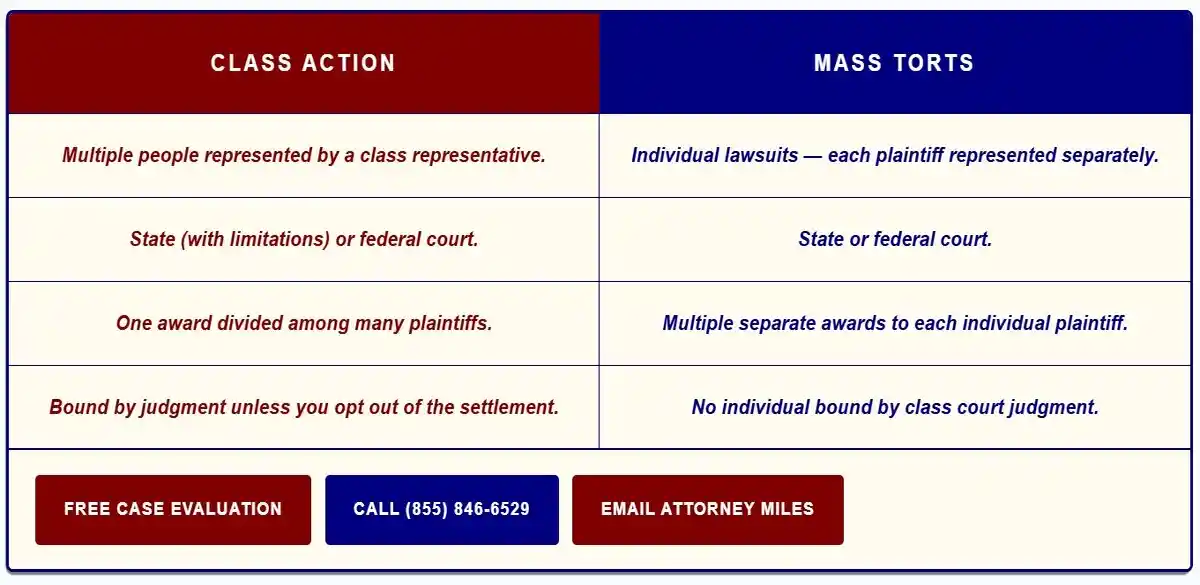
- Common Issues: Plaintiffs’ lawyers consolidate cases pursuant to 28 U.S.C. § 1407 (often in Multidistrict Litigation – MDL) to prove common facts exist amount a large group of individuals resulting from the same defendants (e.g., the product is dangerous).
- Advantage: Main advantage is that it provides strength in numbers. Because claims are consolidated into one lawsuit for pretrial discovery in mass torts, the plaintiff may have more success when facing a large and well-funded defendant like a drug manufacturer or a chemical company. Additionally, mass torts saves plaintiffs time and money in litigation due to the fact they are usually consolidated for pretrial discovery and proceeding by the Judicial Panel on Multidistrict Litigation.
- Discovery & Bellwethers: Evidence is gathered, and a few “bellwether” trials occur to test claims and gauge potential jury awards.
- Bellwether Trials: Are test cases that are chosen out of the thousands of claims in a mass tort action to go to trial. The outcome of the bellwether trials gives the parties an idea of what will happen if an individual claim goes to trial, the strength and weaknesses of their evidence, and can expedite settlement negotiations.
- Settlement Matrix: A formula is created, factoring in injury severity, medical bills, lost wages, and other damages.
- Individual Claims: Each claimant submits a Plaintiff Fact Sheet, plugged into the matrix for a personalized offer.
- Negotiation & Payout: Defendants often offer large global settlements after bellwether losses, leading to payouts that can take years.

Mass torts arise from varying factual background but cause by a single source causes that cause injury to many individuals. Frequent categories involve:
- Dangerous Drugs: Usually arising in cases where a drug has severe side effects, which were known by the manufacturer, but not disclosed to healthcare providers or patients- afailure to warn. Ongoing dangerous drug cases include Zepbound, Wegovy, Trulicity, Ozempic, Saxenda, Victoza, Mounjaro, Depo-Provera and Dupixent.
- Defective Medical Devices: Such as hip implants or surgical tools that fail, pacemakers can be defective and causing injury to a large number of individuals and often lead to mass torts. These cases focus on holding companies accountable for products that were not adequately tested or whose risks were concealed. When such defective products malfunction or fail and cause harm, they often affect thousands of individuals across the country. One ongoing defective medical device case is the Dexcom lawsuit. Another on-going products liability action includes the Defective GM Transmission Lawsuit.
- Toxic Environmental Exposure: Exposure to toxic substances, chemicals, pollutants and other harmful substances can cause severe injuries and significant health issues to a large group of individuals and can lead to cancers, respiratory diseases after long-term exposure. Two ongoing toxic exposure lawsuits includes the Silicosis lawsuit and the Aerotoxic Syndrome Lawsuit.
- Natural Disasters: These mass torts claims involves natural disasters such as hurricanes, earthquakes, avalanches or tornadoes that cause substantial injury to individuals as well as property damages. While no corporate entity is directly responsible for the disaster, insurance companies who fail to pay out claims following natural disasters can be held accountable through a mass tort lawsuit. This is a frequent occurrence in the case of hurricanes.
- Large-Scale Catastrophes: Unlike natural disasters, these disasters are man-made such as fire or explosion at a work plant causing injuries to numerous individuals. While they may suffer varying injuries, the injuries are all caused by the same entity. In such cases, individuals can form a mass tort for compensation for their individual claim.
How Do I Know if I Qualify for a Hair Dye Lawsuit?

- It does not cost anything to hire an Hair Dye Lawsuit Lawyer if you are eligible for a lawsuit.
- We take all cases on a contingency basis which means we do not get paid unless we win or settle your case.
- A Hair Dye Lawsuit Lawyer can explain the process of an Hair Dye Lawsuit and answer any questions you may have free of charge.
The call is free and so is the fee unless we will or settle your case, so call Hair Dye Lawsuit Lawyer Timothy L. Miles today to see if you may be entitled to significant compensation in a hair dye lawsuit or if you just have general question. (855) 846–6529 or tmiles@timmileslaw.com.
Freqently Asked Questions about a Hair Dye Lawsuit
What is the connection between hair dye and cancer risk?
Recent studies suggest a potential link between frequent exposure to hair dye products and an increased risk of certain cancers, such as breast cancer and non-Hodgkin lymphoma. If you’ve been diagnosed with cancer and suspect your illness may be related to prolonged use of hair dye, you may be eligible for a Hair Dye Lawsuit.
Who qualifies for a Hair Dye Lawsuit?
You may qualify for a Hair Dye Lawsuit if you have a history of regular hair dye use and have been diagnosed with cancer believed to be connected to those products. Evidence such as medical records, purchase receipts, or proof of frequent exposure will strengthen your eligibility. Consulting a Hair Dye Lawyer or a Nashville Hair Dye Lawyer can help determine your specific situation.
How do I file a Hair Dye Lawsuit?
To file a Hair Dye Lawsuit, first consult with an experienced Hair Dye Lawsuit Lawyer who can evaluate your case. The process typically involves gathering evidence of your diagnosis, establishing the link between your cancer and hair dye usage, and submitting legal documents within the required time frame.
What evidence is needed for a Hair Dye Lawsuit?
Evidence needed for a hair dye lawsuit usually includes proof of cancer diagnosis, documentation of frequent hair dye use (such as receipts or salon records), and any scientific literature linking hair dye exposure to your type of cancer. A skilled Hair Dye Lawyer can guide you through collecting the necessary documentation.
What compensation amounts are available in Hair Dye Lawsuits?
Hair Dye Lawsuit Compensation Amounts vary based on factors like severity of illness, medical expenses, lost wages, pain and suffering, and other damages. Your lawyer will work to maximize the compensation you receive by presenting strong evidence regarding both your diagnosis and its connection to hair dye products.
Why should I hire a Nashville Hair Dye Lawyer for my case?
A Nashville Hair Dye Lawyer is experienced in local and national regulations concerning hair dye lawsuits and has experience helping clients in Tennessee pursue compensation. They understand the specifics of these cases and can provide personalized guidance throughout the legal process.
