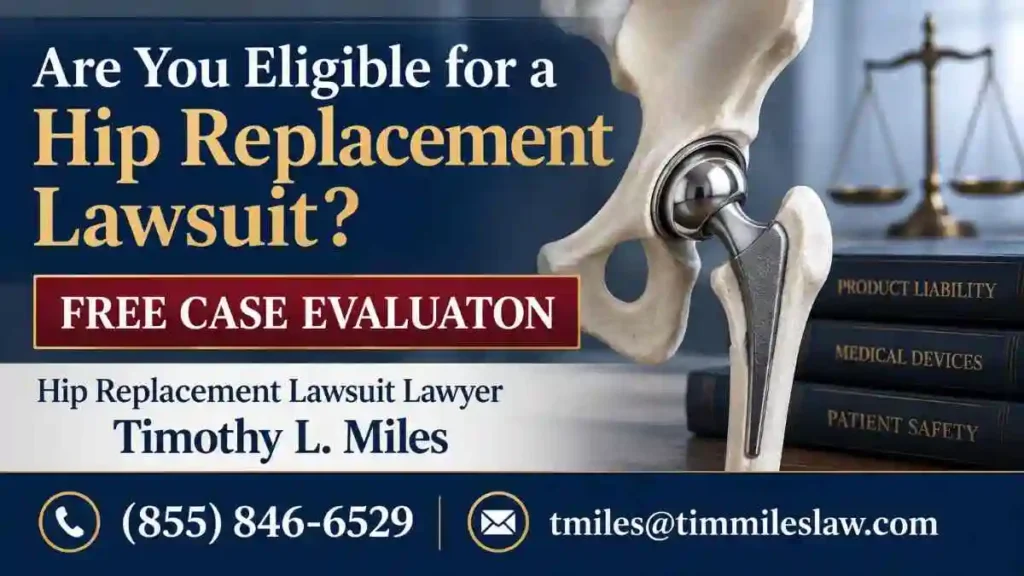
Introduction to the Hip Replacement Lawsuits
Hip Replacement Lawsuits: involve patients who suffered severe complications, early device failures, or revision surgeries after receiving defective artificial hip components.
Main Companies and Devices
- DePuy (Johnson & Johnson): Sued over metal-on-metal devices like the ASR and Pinnacle systems, which shed metal ions. DePuy paid billions in settlements.
- Stryker: Faced major claims and settlements over the Rejuvenate, ABG II, and LFIT V40 femoral heads for corrosion and metallosis.
- Wright Medical: Settled thousands of claims over devices like the Conserve, Dynasty, and Lineage systems.
- Exactech: Faced lawsuits and filed for bankruptcy following premature wear issues tied to polyethylene liners.
- Smith & Nephew: Handled claims over the Birmingham Hip Resurfacing and R3 systems.
Common Injuries and Complications
- Metallosis: Metal friction sheds chromium and cobalt particles into the body, destroying surrounding bone and tissue.
- Loosening and Failure: The implant shifts or breaks down prematurely.
- Revision Surgery: Patients require painful secondary operations to remove the faulty device.
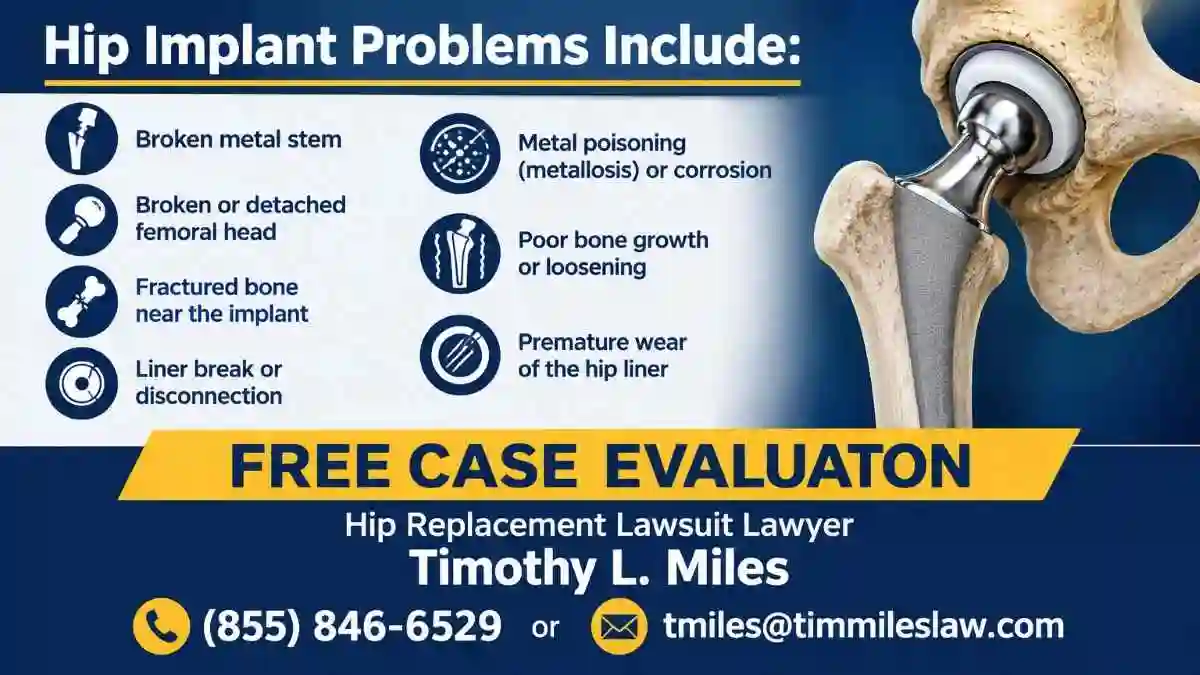
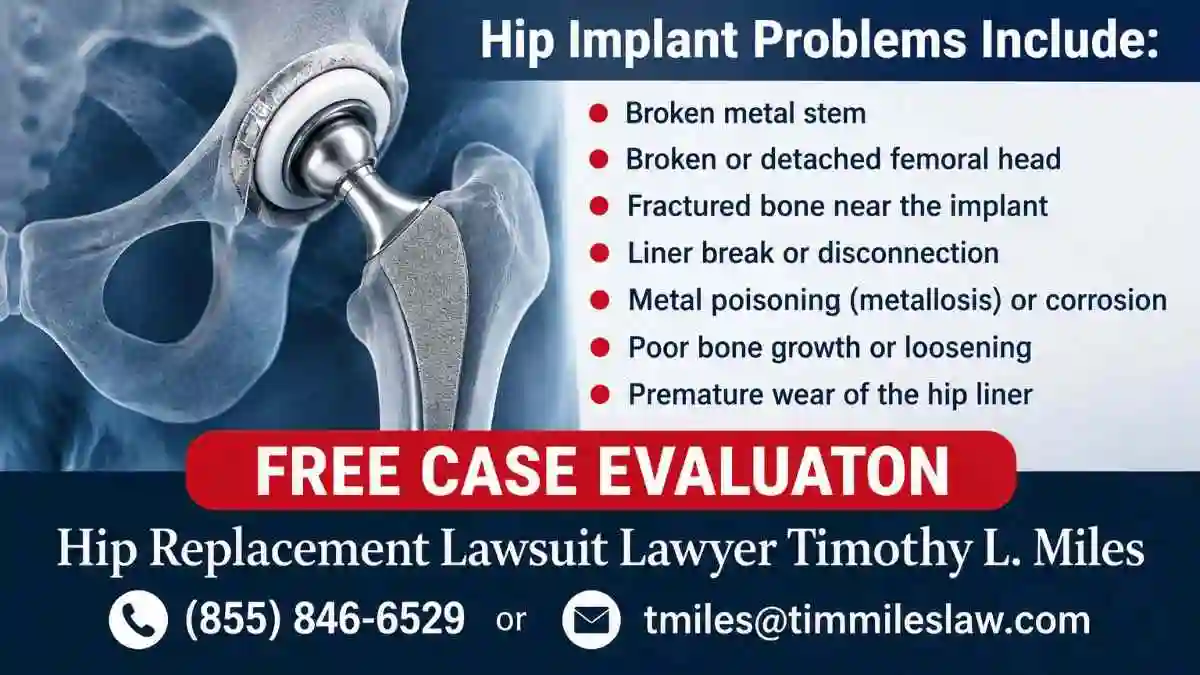
Hip implant problems include:
- Broken metal stem
- Fractured bone near the implant
- Metal poisoning (metallosis) or corrosion
- Premature wear of the hip liner
What Are the Hip Replacement Lawsuits About?
The core issues at the center of these legal claims include:
- Design and Manufacturing Defects: Major companies like DePuy (J&J), Stryker, Smith & Nephew, and Exactech manufactured hip components that suffered from critical flaws.
- Metal Poisoning (Metallosis): Many older systems used metal-on-metal designs. Friction between the metal parts shed toxic chromium and cobalt particles into the patient’s body, destroying the surrounding bone, muscles, and tissues.
- Premature Device Failure: Instead of lasting the promised 15 to 20 years, many defective implants loosened, cracked, or completely failed within just a few years.
- Failure to Warn: Lawsuits allege that manufacturers knew about these high failure rates and design flaws long before issuing public recalls, prioritizing corporate profits over patient safety.
Hip Implant Problems Include
- Broken metal stem — The main metal part of the implant (the stem) fractured, causing pain or instability.
Implant involved: Smith & Nephew Emperion stems
- Broken or detached femoral head — The ball part of the hip joint broke off from the stem due to corrosion.
Implant involved: Stryker LFIT V40 heads
- Fractured bone near the implant — A bone broke around the implant and required another surgery or metal hardware to fix it.
Implant involved: Zimmer CPT systems
- Liner break or disconnection — The plastic liner suddenly came loose inside the hip, not from slow wear but all at once.
Implant involved: DePuy Pinnacle liners
- Metal poisoning (metallosis) or corrosion — Metal parts of the hip rubbed together or broke down, releasing metal into the body and causing pain, swelling or tissue damage.
Implants involved: Encore Metal-on-Metal hips; Omnilife Apex K2 or Arc hips; Smith & Nephew Birmingham or R3 systems; Smith & Nephew Modular SMF or REDAPT stems
- Poor bone growth or loosening — The bone failed to grow properly around the implant, or the cup came loose.
Implant involved: Zimmer MMC systems
- Premature wear of the hip liner — The plastic liner in your hip wore out too early, usually between one and 12 years after surgery.
Implant involved: Exactech Connexion GXL liners
What Is Metallosis?
Metallosis: In recent years, an increasing number of hip replacement lawsuits named metallosis and a metal-on-metal implant in the complaint. Metallosis is a metal poisoning caused when two metal components rub together and release microscopic particles into the body. These particles can lead to tissue damage and loosening of the artificial hip.
Metal-On-Metal Implant: In a metal-on-metal implant, the artificial hip relied on a metal ball mounted on the top of the thighbone that rotated in a metal socket mounted in the hip bone. In addition to failing quickly, it also created metallosis.
Defendants in Hip Replacement Lawsuits
Companies are liable for any damages or loss caused by their products. There are several industry leaders involved in multiple lawsuits over their products. As of September 2026, some of these include:
Hip Replacement Injuries
- Metal-On-Metal Hip Replacement: The designs were supposed to be more durable, but lawsuits claim the devices shed microscopic amounts of chromium, cobalt or other metals into the body.
- Design Flaw: Caused a condition called metallosis, which destroys bone, muscle and other tissue. In addition to creating immediate health problems for the patient, the condition can weaken an implant and cause it to fail.
Hip Replacement Lawsuits: Allege deveral other complications occurred as a result.
- Dislocation
- Loosening
- Metallosis
- Pain
- Revision Surgery
Metal-On-Metal Implants: Very popular in the 2000s but quickly fell as reports of complications mounted which ed to hip replacement recalls, lawsuits and FDA actions. In 2016, the FDA strengthened the approval process for metal-on-metal hips.
Major Recalled Hip Systems
- Exactech: Recalled hip devices with polyethylene components and Connexion GXL liners due to defective packaging and oxidation risks leading to early wear.
- Stryker Rejuvenate and ABG II: Voluntarily recalled in 2012 due to corrosion and fretting of modular necks/stems, releasing metal debris.
- DePuy ASR: Recalled in 2010 for the ASR XL Acetabular and Resurfacing Systems due to high failure and revision rates.
- Zimmer Biomet CPT Hip System: Recalled in 2024 over increased risk of thigh bone fractures from cobalt-chromium alloy stems.
Common Symptoms of Hip Replacement Failure
Other Causes for Hip Replacement Recalls
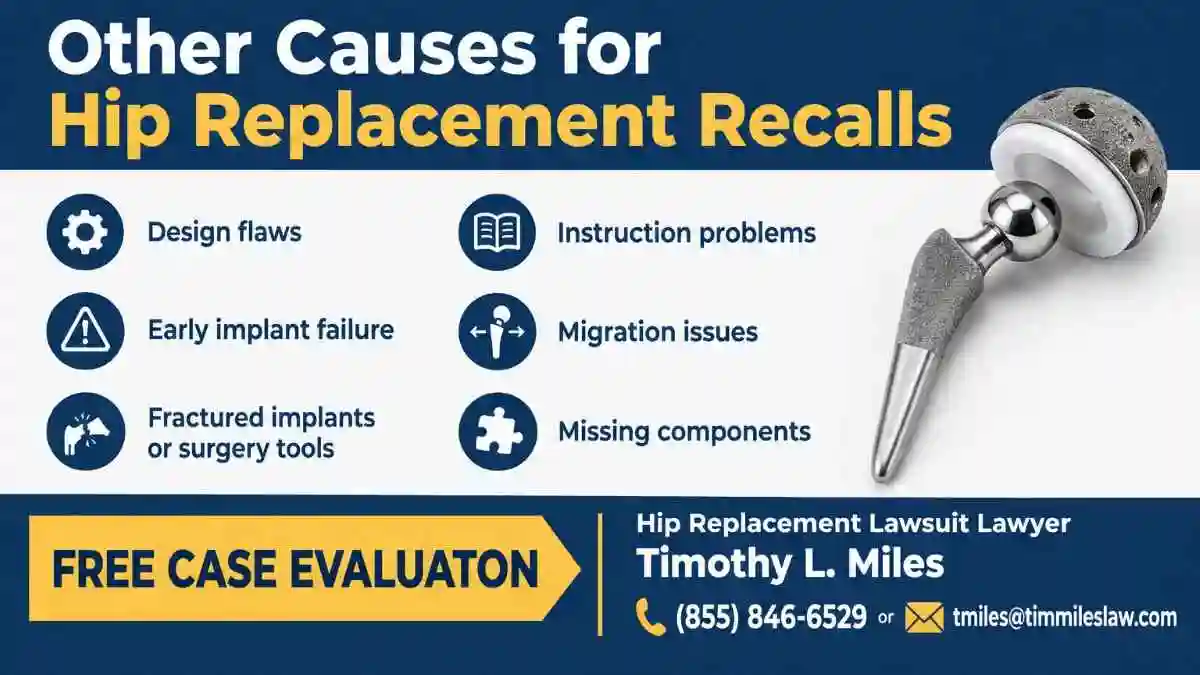
- Early implant failure
- Instruction problems
- Migration issues
Dislocation, Failure, Fracture or Loosening
Fracures: Severe complications leading to consumer lawsuits over hip replacement products include product dislocation, failure, fracture or loosening. In addition to pain, patients experience joint dislocation or bone fractures from the device moving out of place.
Settlement: While different products and companies are at the center of these lawsuits, Dupuy agreed to settle thousands of lawsuits over its ASR Systems, totaling more than $2.9 billion in payouts. Companies and products involved in dislocation, fracture or loosening claims include:
- DePuy: ASR XL Acetabular System and ASR Hip Replacement Resurfacing System for implant failure
- Smith & Nephew: Birmingham Hip Resurfacing System for dislocation or fractures; R3 Acetabular System for loosening and implant failure
- Stryker: Tritanium Acetabular Shells for loosening
- Zimmer: Durom cup implant for failing to fuse in some patients
Product Recall: For these companies, the injuries and complications to patients were so severe that many had to issue product recalls. Smith & Nephew recalled more than 6,000 hip replacement implants, while Stryker issued 9,000 ABG II implant recalls and 44,000 Rejuvenate implant recalls.
Worldwide Market Withdrawal: Stryker ultimately issued a worldwide market withdrawal on all Rejuvenate and ABG II hip implants and paid nearly $2.2 billion in settlements. Zimmer faced similar challenges with its Durom Cup product, issuing a temporary recall in 2008 but finally discontinuing it in 2010 after repeated issues.
Compensation in a Hip Replacement Lawsuit
If you are eligible for e lawsuit, you could recover damages for:
- Medical expenses (emergency treatment, hospitalization, long-term care)
- Pain and suffering caused by frequent exposure to hair dye products
- Emotional distress from if you suffered injuries linked to hair dye products
- Punitive Damages: In certain situations in which the defendants conduct was intentional, egregious and particularly harmful
Evidence to Gather for a Hip Replacement Lawsuit
- Treatment records
- Photos and videos of injuries
- Witnesses that saw the pain and suffering caused by Hip Implant Problems

Are You Eligible for a Hip Replacement Lawsuit?
If you believe you qualify for a Hip Replacement Lawsuit, contact Hip Replacement Lawsuit Lawyer Lawyer Timothy L. Miles today for a free case evaluation. You may be potentially entitled to substantial compensation in a Hip Replacement Lawsuit. (855) 846–6529 or tmiles@timmileslaw.com.
Timothy L. Miles, Esq.
Law Offices of Timothy L. Miles
Tapestry at Brentwood Town Center
300 Centerview Dr. #247
Mailbox #1091
Brentwood,TN 37027
Phone: (855) Tim-MLaw (855-846-6529)
Email: tmiles@timmileslaw.com
Website: www.classactionlawyertn.com