
Introduction to the Trulicity Lawsuit Update and How Multidistrict Litigation Works
Trulicity Vision Loss Lawsuit Update: The wave of Trulicity Vision Loss Lawsuits filed by individuals suffering debilitating and permanent Trulicity eye problems including Trulicity and vision loss continue to surge along with other GLP-1 drug lawsuits. As of September 2, 2026 there was a total of 2,676 lawsuits against GLP-1 drug manufacturers Eli Lilly and Company and Novo Nordisk.
The Trulicity Vision Loss Lawsuit and other GLP-1 drug lawsuits allege the manufactures were well-aware of these Trulicity vision side effects as well as those caused by other GLP-1 drugs but did not advise patients or healthcare providers: They allege if not for the defendant’s failure to warn, and they were able to make a fully informed decision, they would have chosen not to take a drug that can cause permanent blindness and death.
Trulicity Vison Issues: Recent developments have brought significant attention to potential ocular complications associated with Trulicity use. Reports of serious Trulicity vision side effects, including vision loss and blindness, have prompted an onslaught of lawsuits against the manufacturer. These concerns have crystallized into the Trulicity Vision Loss Lawsuit with patients seeking representation from legal professionals, including Trulicity Vision Loss lawyers, to address alleged inadequate warnings regarding vision-related risks.
Multidistrict Litigation: In this guide, we will address the basics of how Multidistrict (MDL) works so when your case is transferred to another court you will have a better understanding of the process and what to expect.
THE TRULICITY COMMON AND SERIOUS SIDE EFFECTS PROFILE

The MDL Process
The MDL Process: An MDL process combines numerous similar federal lawsuits, involving one or more common questions of fact, into a single court for coordinated pretrial proceedings to improve efficiency. The Judicial Panel on Multidistrict Litigation (JPML) decides if cases should be consolidated and designates a single judge to manage the coordinated pretrial process for all involved parties. Specifically, the statute, 28 U.S.C. § 1407(a), provides that “[w]hen civil actions involving one or more common questions of fact are pending in different districts, such actions may be transferred to any district for coordinated or consolidated pretrial proceedings.” (emphasis added).
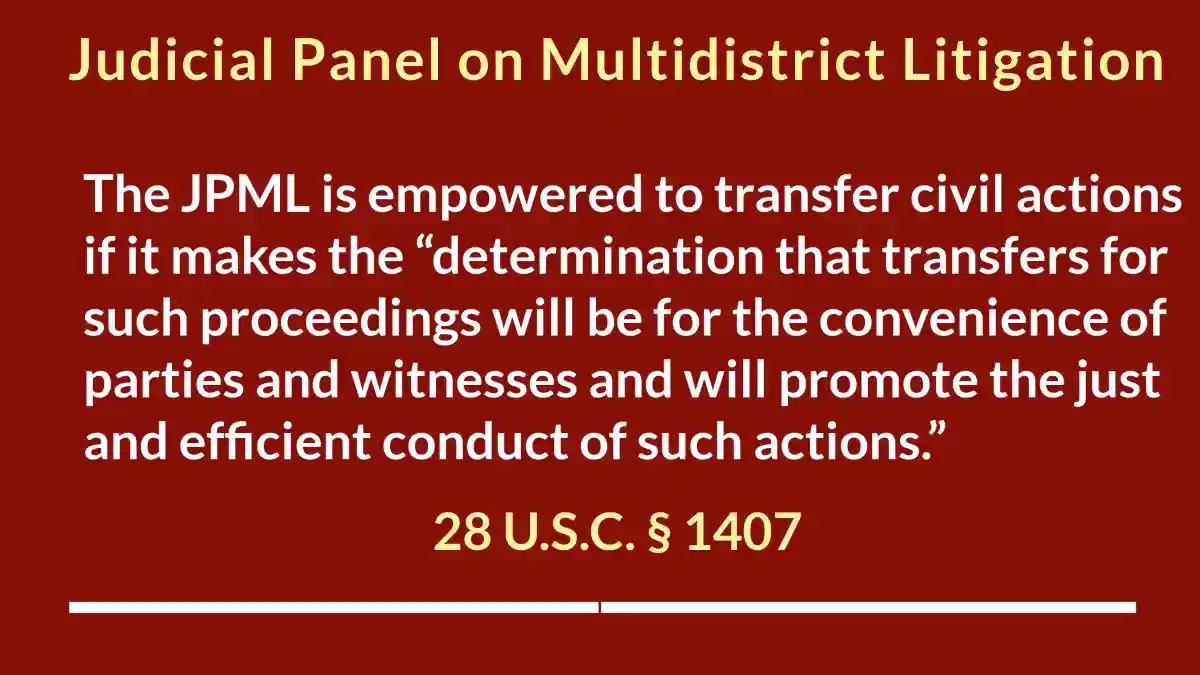
Convenience for all Involved: The JPML is empowered to transfer civil actions if it makes the “determination that transfers for such proceedings will be for the convenience of parties and witnesses and will promote the just and efficient conduct of such actions.” Furthermore, “coordinated or consolidated pretrial proceedings shall be conducted by a judge or judges to whom such actions are assigned by the judicial panel on multidistrict litigation.”
The Purpose of Multidistrict Litigation
- Judicial efficiency: The Judicial Code was amended by Congress in 1968 [t]o provide for the temporary transfer to a single district for coordinated or consolidated pretrial proceedings of civil actions pending in different districts which involve one or more common questions of fact.”
- MDL Process: The MDL process prevents duplicative discovery and inconsistent rulings that would occur if each Trulicity Vision Loss Lawsuit and other GLP-1 drug lawsuits were handled separately. Consolidating cases makes the pretrial process more efficient by allowing one judge to manage common issues, leading to significant savings in time and resources for everyone involved.
- Consistency: It ensures that cases with common facts are treated consistently and prevents multiple judges from making conflicting decisions on the same pretrial issues, ensuring a consistent approach across all related cases.
- Convenience: It is more convenient for the parties, witnesses, and the judiciary.
- Coordinated discovery: MDL prevents repetitive discovery efforts by having a single discovery plan for all cases with common facts, which is particularly helpful in cases with thousands of individual lawsuits as is the case in the GLP-1 lawsuits.
- Settlement facilitation: The process can lead to a more comprehensive settlement for all cases by using “bellwether trials“—trials of individual cases selected to give both sides an indication of how a jury might decide on the merits of the case.
Key Steps in the MDL Process
The MDL Process Steps
- Case Filing: Multiple lawsuits involving similar issues (e.g., defective products, dangerous drugs, mass disasters) are filed across various federal courts.
- JPML Review and Transfer: A party (plaintiff or defendant) or the court itself can petition the Judicial Panel on Multidistrict Litigation (JPML) to consolidate the cases. The JPML, a panel of seven federal judges, decides if consolidation is appropriate and selects a single “transferee” court and judge to oversee all the cases for pretrial proceedings.
- Coordinated Pretrial Proceedings: The assigned MDL judge manages all common pretrial matters for every case in the MDL. This often involves:
-
- Leadership Appointment: The judge appoints plaintiffs’ and defense steering committees to coordinate strategy and speak for their respective sides.
- Discovery: Both sides engage in extensive evidence gathering, document exchange, and depositions (sworn testimony), pooling resources to handle massive amounts of information efficiently.
- Motions: The judge rules on various legal motions, such as motions to dismiss or motions regarding the admissibility of evidence.
- Bellwether Trials: If cases do not settle during the pretrial phase, the judge may select a few representative cases for “bellwether” trials. The outcomes of these test trials help all parties assess the strengths and weaknesses of their claims and defenses, which in turn guides potential settlement negotiations for the remaining cases.
- Settlement or Remand:
-
- Settlement: Most MDLs result in a global settlement, where defendants create a fund to compensate most or all plaintiffs who agree to the terms.
- Remand: If a case is not resolved through settlement or dismissal, it is sent back (“remanded”) to its original federal district court for an individual trial.
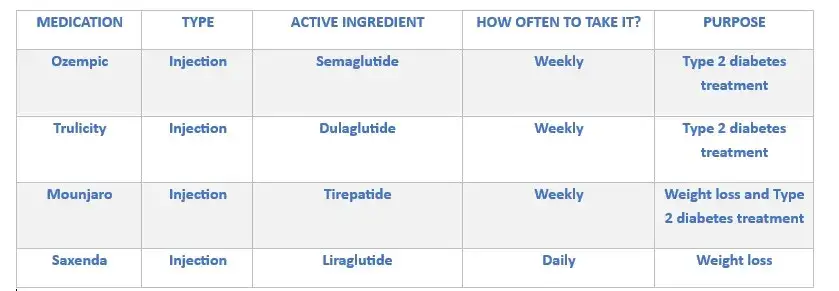
TRULICITY COMPARISON TO OTHER GLP-1 DRUGS
What is a Mass Tort?
Mass Torts: A mass tort refers to a legal action that involves a large number of plaintiffs who have suffered similar injuries or damages as a result of the actions or negligence of a single defendant or group of defendants. Unlike a class action lawsuit, where a large group of people are represented by one or a few individuals, mass tort cases treat each plaintiff has an individual case.
Each Plaintiff Retains their Separate Case: This means that each plaintiff has their own separate claim, but the cases are consolidated for purposes of efficiency and convenience. Mass torts are often filed against pharmaceutical companies, as in the case of the Trulicity Vision Loss Lawsuit, manufacturers of defective products, or entities responsible for environmental disasters.
The Trulicity Vision Loss Lawsuit: One key characteristic of a mass tort is that the injuries or damages suffered by the plaintiffs are similar. For example, in a mass tort against a pharmaceutical company, as in the Trulicity Vision Loss Lawsuit, the plaintiffs may have all taken the same medication and experienced similar severe side effects or complications. The similarities in their injuries allow their cases to be consolidated into a mass tort, rather than each filing a separate lawsuit. This consolidation allows for greater efficiency in the legal process and can also result in more consistent outcomes for the plaintiffs.
Involve Large Number of Plaintiffs: Another important aspect of mass torts is that they often involve a large number of plaintiffs. This could range from hundreds to thousands or even more individuals who have been affected by the same actions or negligence of the defendant. The sheer number of plaintiffs can make these cases complex and challenging to manage. However, by consolidating the cases into a mass tort, the legal process can be streamlined and resources can be effectively utilized.
Similar Injuries: A mass tort is a legal action that involves a large number of plaintiffs who have suffered similar injuries or damages as a result of the actions or negligence of one or more defendants as is alleged in the Trulicity Vision Loss Lawsuit, where each plaintiff took the same drug, but allege, among other things, the defendant did not warn patients or healtcare providers about certain Trulicity vision side effects, most notably Trulicity and vision loss.
Conclusion: These cases are consolidated for efficiency and convenience, allowing for streamlined management and potentially more consistent outcomes. Mass torts often arise in cases involving pharmaceutical companies, manufacturers of defective products, or entities responsible for environmental disasters. The consolidation of cases can be achieved through approaches such as multidistrict litigation or coordination of state court actions.
The Key Differences from a Class Action
Here are the key differences between MDL (Multidistrict Litigation) and Class Action lawsuits:
- Nature of Lawsuit: A class action is a single lawsuit filed by a group (class) of people, while MDL involves multiple individual lawsuits that share common facts but remain separate cases.
- Plaintiffs: In a class action, class representatives act on behalf of all members of the class. In MDL, each plaintiff maintains their individual lawsuit, but they are coordinated for pre-trial proceedings.
- Procedure: MDL is used for efficiency in handling complex cases by centralizing them in one court, whereas a class action consolidates claims into one single case.
- Outcomes: The outcomes in a class action affect all class members, while in MDL, each case can have different outcomes based on individual circumstances.
- These distinctions help clarify the legal processes involved in each type of lawsuit.
What Is a Bellwether Trial?
Purpose of Bellwether Trials
- Assess case value: Bellwether trials provide an indication of how a jury might perceive the arguments and evidence, which helps in negotiating settlement amounts for the other cases.
- Identify key issues: They highlight major legal issues and how evidence will be admitted, which can clarify the path forward for the litigation.
- Test legal theories: Bellwether trials serve as a test case to see how the structure of a plaintiff’s case is perceived by a judge or jury.
- Guide the overall litigation: The results help the court and parties understand the likely outcome of the remaining cases, enabling them to resolve them more efficiently.
- Promote Settlement: As just one example, in In re Vioxx Products Liability Litigation (MDL 1657), the transferee court conducted six bellwether trials, only one of which resulted in a verdict for the plaintiffs. After the six bellwether trials in the MDL, as well as several trials in the state courts, the parties began serious settlement discussions which ultimately resulted in a partial settlement of all Vioxx related cases pending in both state and federal courts in which the defendant, contingent upon a certain percentage of current claimants agreeing to participate, agreed to pay $4.85 billion to eligible claimants, with individual settlement awards varying based on an objective analysis of individual circumstances by a claims ministrator
How Bellwether Trials Are Selected
- Identify representative cases: Representative cases are selected from the MDL based on characteristics that are representative of the larger group of lawsuits.
- Advanced Discovery: Those representative cases are then advanced for discovery and then cases from that pool will be selected for trial.
- Schedule for trial: After case-specific discovery, a select number of these representative cases are then formally scheduled and prepared for trial.
How Bellwether Trials Work
-
Trial: One or more cases are chosen from the pool to go to trial. These are the “bellwether” cases, named after the practice of a bellwether sheep leading a flock.
-
Outcome:The verdict from a bellwether trial provides a preview of how other similar cases might fare in court. It offers insights into how a jury might respond to the evidence and arguments, the effectiveness of expert testimony, and the overall strengths and weaknesses of the claims.
-
Resolution: The results of the bellwether trials can lead to significant settlement discussions and agreements for the rest of the cases in the MDL, sometimes resolving hundreds or thousands of claims at once.
-
Benefits: This process can reduce the time and cost of litigation for everyone involved. It also provides a way to test complex claims that would be too burdensome for individual trials.
What Happens After a Bellwether Trial
- Encourage settlement: The verdicts from the bellwether trials can encourage the parties to settle the remaining cases.
- Inform future trials: The information gained from the trial can be used to guide the process for the remaining cases, though the outcomes are not definitive for every individual case.
- Return to original court: Cases not settled at the MDL stage are remanded (sent) back to their original district courts to proceed with trial.
The Trulicity Vision Loss Lawsuit Status
- As of September 2, 2026 there was a total of 2,676 lawsuits against GLP-1 drug manufacturers Eli Lilly and Company and Novo Nordisk. This includes each Trulicity Vision Loss Lawsuit as well as all other GLP-1 drug lawsuits.
- The cases are still in the discovery phase with no Bellwether cases selected or set for trial.
- Approximately forty cases filed in Marion County, Indiana accuse Eli Lilly of downplaying the risks of the company’s GLP-1 drugs, including Trulicity. The lawsuits name Eli Lilly while some also name Novo Nordisk, both the manufacturers of diabetes and weight loss drugs known as GLP-1 agonists.The lawsuits allege that Eli Lilly Novo Nordisk minimized the risks of taking their weight loss drugs while overplaying the weight loss benefits.

Frequently Asked Questions about Trulicity Vision Problems
What Are the Trulicity Vision Side Effects?
What Causes Trulicity and Vision Loss or other Trulicity Eye Problems?
Is there evidence linking Trulicity vison problems?
While research is ongoing, there have been reports suggesting a possible association between GLP-1 drugs like Trulicity and certain Trulicity vision problems.
Who qualifies for a Trulicity Vision Loss Lawsuit?
Generally, individuals who developed significant eye problems or suffered vision loss after using Trulicity—and who believe the drug contributed to their condition—may qualify for a Trulicity Vision Loss Lawsuit.
Are there serious risks associated with Trulicity?
Yes. In addition to common side effects, some users have reported more serious complications such as pancreatitis, kidney problems, severe allergic reactions, and possible thyroid tumors and Trulicity eye problems.
What is the process for filing a Trulicity Vision Loss Lawsuit?
The process typically starts with a free consultation with a qualified attorney. If they believe you have a case, they will gather evidence, file legal paperwork against the manufacturer (Eli Lilly), and handle the legal proceedings on your behalf. Most cases are handled on a contingency fee basis, meaning you only pay if you win compensation. (855) 846–6529 or [email protected].
How long does it take to resolve a Trulicity Vision Loss Lawsuit?
The timeline of a Trulicity Vision Loss Lawsuit varies depending on the complexity of the case and whether it settles before trial. Some cases may resolve within months; others could take several years if they go through lengthy court proceedings.
How do I know if my vision problems are linked to Trulicity?
If you began experiencing new or worsening vision problems after starting Trulicity, it’s possible there may be a connection. Discuss your symptoms and medication history with your doctor and consider consulting a lawyer familiar with the Trulicity Vision Loss Lawsuit to evaluate your situation.
What should I do if I experience Trulicity Vision Problems?
If you experience any sudden changes in your eyesight—such as blurriness or partial loss of vision, or any other Trulicity eye problems —contact your healthcare provider immediately for an evaluation and guidance on next steps.
What about Trulicity and Diabetic Retinopathy?
Diabetic retinopathy represents one of the most serious Trulicity vision problems, characterized by damage to blood vessels in the retina that can progress to vision loss.
Contact Trulicity Vision Loss Lawyer Timothy L. Miles Today for a Free Case Evaluation
If you were prescribed Trulicity and took it as directed and suffered Trulicity Vision Side Effects including Trulicity and vision loss or other Trulicity eye problems, contact Trulicity Vision Loss Lawyer Timothy L. Miles today. You could be eligible for a Trulicity Vision Loss lawsuit and potentially entitled to substantial compensation.
The call is free and so is the fee unless we win or settle your case, so give a Trulicity Vision Loss Lawyer a call today and see if you qualify for a Trulicity Vision Loss Lawsuit. (855) 846–6529 or [email protected].
Timothy L. Miles, Esq.
Law Offices of Timothy L. Miles
Tapestry at Brentwood Town Center
300 Centerview Dr. #247
Mailbox #1091
Brentwood,TN 37027
Phone: (855) Tim-MLaw (855-846-6529)
Email: [email protected]
Website: www.classactionlawyertn.com
Facebook Linkedin Pinterest youtube
