Introductionn to Fume Events on Planes
If you are a frequent flyer and wondering how common fume envents on planes are, you have come to the right place. Commercial aviation is built on layered redundancy: redundant systems, redundant procedures, and redundant oversight. Yet one topic continues to generate both operational concern and public confusion, namely “fume events” on planes. The term is used broadly, sometimes imprecisely, to describe odors, smoke, haze, or chemical irritants observed in the cabin or flight deck. It is also used to describe a suspected air contamination event involving engine oil, hydraulic fluid, deicing fluid, fuel, or other compounds.
So, how common are fume events on aplanes? The most accurate answer is that they are uncommon relative to total flights, but they are not rare as an operational occurrence across a large global fleet. The challenge is that “common” depends on definitions, reporting thresholds, and data sources. In other words, the denominator is enormous, the numerator is inconsistently captured, and the term itself covers multiple event types with different causes and risk profiles.
This article clarifies what a fume event is, what counts as one, how often they occur in practice, why estimates vary, and what airlines, manufacturers, and regulators do to prevent, detect, and manage them.
If you believe you have been affected by toxic airplane fumes, contact Aerotoxic Syndrome lawyer Timothy L. Miles as you may be eligible for an Aerotoxic Syndrome Lawsuit and potentially entitled to substantial compensation. (855) 846–6529 or [email protected].
What Is a “Fume Event” in Aviation?
A fume event is a reported episode of unusual odors, visible haze, smoke, or suspected air contamination in the aircraft cabin or cockpit. In operational usage, it can include events ranging from “dirty sock” or “wet dog” odors to acute smoke in the flight deck that triggers checklist actions, diversion, or emergency services response.
A key point is that “fume event” is not always a single standardized regulatory category across all jurisdictions. Reporting may be captured under broader labels such as:
- Smoke/fumes/odor occurrences
- Cabin air quality complaints
- Environmental Control System (ECS) anomalies
- Bleed air contamination suspicions (on bleed-air aircraft)
- Air conditioning pack events
- APU (auxiliary power unit) odor/smoke events
- Electrical smoke or overheat events (which may not be chemical contamination but still present as “fumes”)
Because these categories overlap, two different databases can describe the same phenomenon differently or exclude it entirely depending on classification rules.
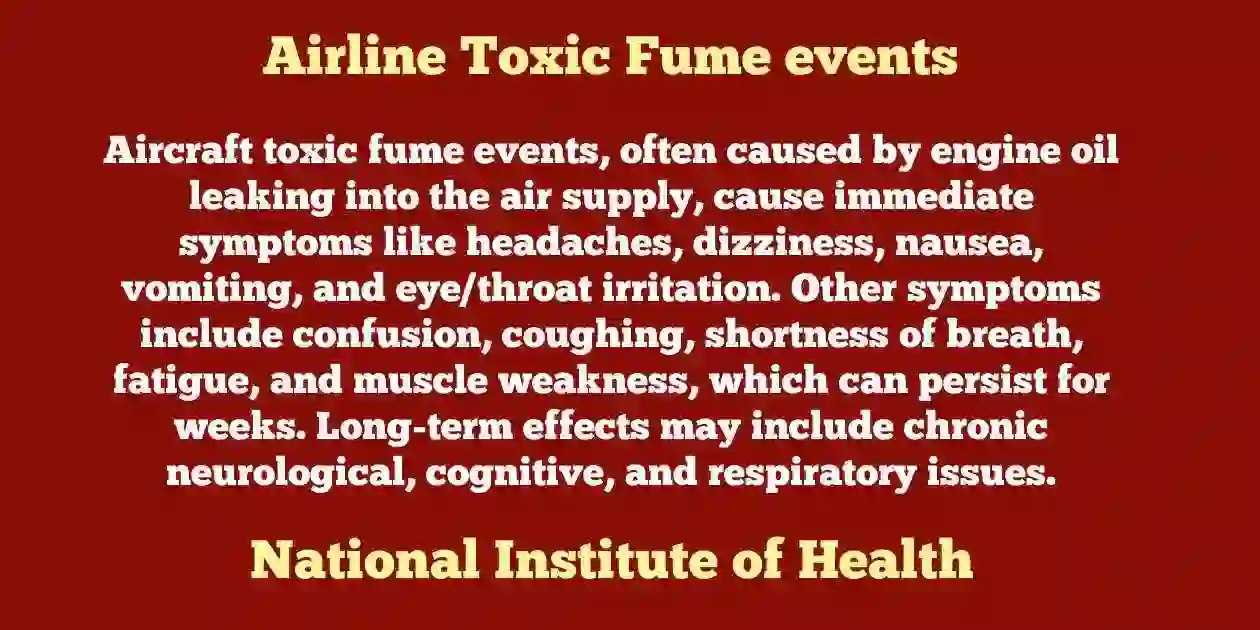
Understanding the symptoms associated with fume events can help passengers identify potential issues more effectively. These symptoms can range from respiratory problems to neurological effects due to exposure to toxic fumes. In fact, toxic fume events have been documented in various instances within commercial aviation. It’s crucial for both airlines and passengers to understand these risks for better management of such situations.
Moreover, recent research has shed light on the causes of fume events, offering valuable insights into how these incidents can be mitigated in the future.
The Big Picture: Rare Per Flight, Meaningful Per Fleet
Commercial aviation conducts tens of millions of flights globally over multi-year periods. Against that scale, even events that occur “once per tens of thousands of flights” can still produce a steady stream of reports across:
- multiple aircraft types,
- multiple operators,
- multiple climates and maintenance regimes,
- and multiple reporting cultures.
That is why fume events feel “common” to some aircrew communities (who may experience or hear about them regularly across a career), while appearing “rare” when framed statistically per flight.
A practical way to interpret frequency is to separate three concepts:
- Occurrence: how often unusual odors or haze are reported.
- Confirmation: how often a specific contaminant source is verified (oil seal leak, hydraulic leak, etc.).
- Severity: how often the event requires diversion, emergency declaration, or medical evaluation.
These three numbers are not the same, and confusion arises when they are treated as interchangeable.
Why Frequency Estimates Vary So Widely
If you search for “how often do fume events happen,” you will see numbers that appear inconsistent. That is not necessarily because anyone is fabricating data. It is primarily because fume events sit at the intersection of engineering, operations, and occupational health, where reporting is shaped by judgment calls.
The most common drivers of variability are the following.
1) Definitions Are Not Uniform
An odor report can be logged as:
- a minor cabin issue,
- an ECS fault,
- smoke/fumes,
- or not logged at all if it dissipates quickly and no maintenance discrepancy is written up.
Some operators use more conservative thresholds for reporting, while others log nearly every odor to support trend monitoring. Both approaches can be internally rational, but they produce different statistics.
2) Underreporting Can Occur, Especially for Transient Odors
Odors are subjective. Two people can interpret the same smell differently. In addition, if the smell is brief and no one becomes symptomatic, crews may prioritize schedule continuity and record minimal details. That can reduce reporting completeness.
3) Confirmation Is Technically Difficult
Even when an event is real, the ability to confirm a source is limited by:
- the short duration of many events,
- the lack of real-time chemical sensors in most cabins,
- the time delay before maintenance troubleshooting begins,
- and the fact that volatile compounds dissipate quickly.
As a result, many reports remain “odor of unknown origin,” which complicates event counting by cause.
4) Data Is Fragmented Across Systems and Jurisdictions
Aviation safety occurrence systems are often:
- national (or regional) rather than global,
- focused on safety outcomes rather than occupational exposure,
- and dependent on voluntary reporting for many categories.
Airlines also maintain internal reliability and maintenance data that is not always public.
If you believe you have been affected by toxic airplane fumes, contact Aerotoxic Syndrome lawyer Timothy L. Miles as you may be eligible for an Aerotoxic Syndrome Lawsuit and potentially entitled to substantial compensation. (855) 846–6529 or [email protected].
What Causes Fume Events?
Not all fume events are “toxic air” events, and not all relate to engines. In practice, reported fumes can originate from several distinct sources, each with its own failure modes and mitigations.
1) Engine Oil or APU Oil Ingress (Bleed-Air Aircraft)
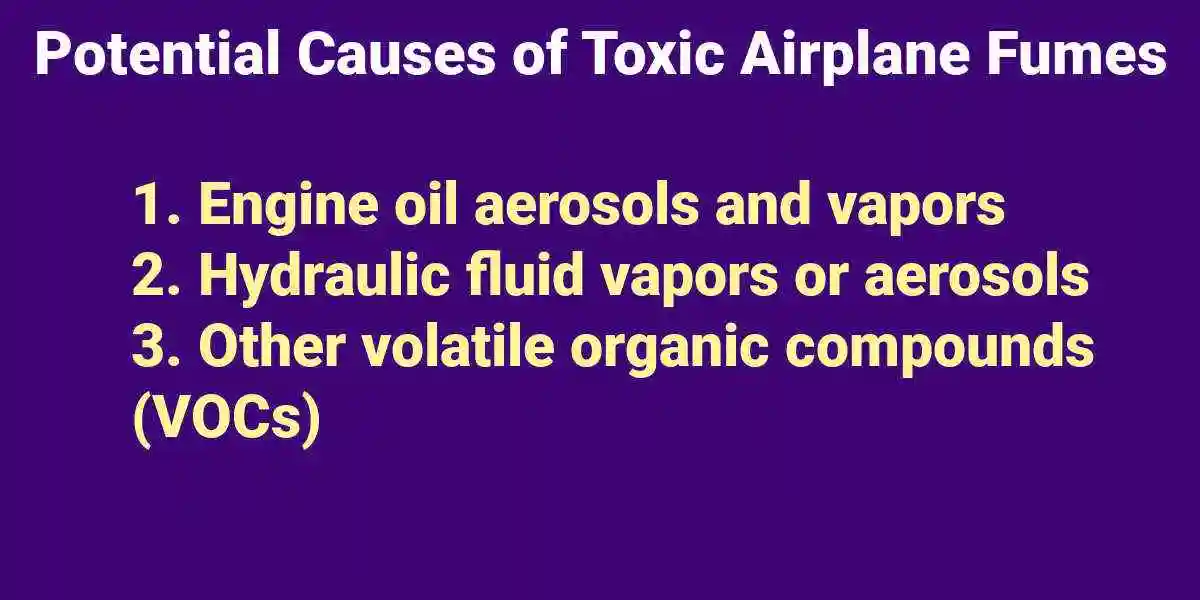
On many aircraft, bleed air is extracted from compressor stages of the engines (or the APU) and conditioned by the Environmental Control System (ECS) before entering the cabin. Under normal conditions, this air should be free of oil. However, if oil seals leak or if there is abnormal pressurization behavior, oil vapors or aerosols can enter the bleed stream and create characteristic odors.
Important nuance: modern engine bearing compartment sealing is designed to minimize leakage, but seals are not “perfect barriers” under all operating conditions. Seal performance is sensitive to pressure differentials, engine power settings, temperature, and component wear.
2) Hydraulic Fluid Leaks and Mist Ingress
Hydraulic fluids can produce strong odors and irritant effects. Leaks may occur in wheel wells, near APU compartments, or around actuators. If air ingestion paths exist, fumes can migrate into the cabin or cockpit through ECS inlets or through localized air pathways.
3) Electrical Overheat, Insulation, or Component Failures
Electrical smoke and “hot electronics” odors can be mistaken for chemical contamination from oil. Overheated wiring, failing power supplies, and fan motor issues can generate sharp smells and visible haze, and these events are treated seriously because of fire risk.
4) Ozone and Atmospheric Effects at Altitude
At cruise altitude, ozone can be present depending on route and season. Aircraft ozone converters reduce exposure, but converter performance and maintenance can influence cabin odor and irritation complaints. This is distinct from oil or hydraulic contamination, but it can still produce “fume-like” symptoms such as throat irritation or unusual smells.
5) External Sources: Deicing Fluid, Jet Exhaust, Ground Equipment
On the ground, cabin air intakes can be exposed to:
- deicing and anti-icing fluids,
- jet exhaust from nearby aircraft,
- fuel vapors,
- and fumes from ground service vehicles.
These events can be operationally common in winter operations and congested ramp environments, and they may dissipate after takeoff.
6) Cabin Interior Sources
Not all cabin odors are ECS-related. Sources include:
- cleaning agents,
- disinfectants,
- oven or galley smoke,
- overheated coffee makers,
- lavatory servicing chemicals,
- and off-gassing from materials after maintenance.
Operationally, these can be frequent contributors to odor reports, even though they do not involve engine bleed air. It’s important to note that the composition of various materials used in aircraft can also play a significant role in the overall odor profile experienced in the cabin.
So, How Common Are Fume Events in Practice?
Because public, globally harmonized datasets do not capture every odor report consistently, it is more responsible to describe frequency in operational terms rather than cite a single universal rate.
A realistic operational characterization
Across commercial fleets, odor and fume reports occur periodically, and every large airline will manage them as part of routine irregular operations. However:
- severe events with dense smoke, confirmed contamination, or diversion are far less frequent than minor odor complaints,
- and confirmed engine oil or hydraulic contamination is less frequent than “odor of unknown origin.”
In other words, fume events are best understood as a spectrum:
- Low-severity odors: more common, often transient, frequently not confirmed.
- Operational fume events: less common, may trigger checklists and maintenance actions.
- High-severity smoke/fumes: uncommon, may require diversion and emergency response.
Why this matters for passengers versus crew
A passenger who flies a few times per year is statistically unlikely to encounter a major event. A flight attendant or pilot flying multiple sectors per week over many years has a much higher cumulative chance of encountering at least one odor or fume event during their career, even if the event rate per flight is low.
That cumulative exposure perspective is one reason the topic remains prominent in crew communities and occupational health discussions.
Which Aircraft Are More Associated With Fume Event Discussions?
The conversation often centers on whether the aircraft uses bleed air or a bleedless architecture.
- Bleed-air aircraft use engine/APU compressor air for cabin ventilation after conditioning. Most legacy and many current aircraft use this approach.
- Bleedless aircraft (most notably the Boeing 787 architecture) use electrically driven compressors rather than engine bleed air for cabin supply.
This design difference influences the plausible pathways for oil contamination into cabin supply air. It does not eliminate all possible odor sources, because electrical overheat, hydraulic leaks, and external ramp sources can still occur, but it changes one major mechanism that is central to many “toxic air” claims.
A careful statement is that bleedless architecture can reduce the risk of bleed-air pathway oil contamination, but it does not mean “no fumes ever,” and it does not replace the need for detection, maintenance controls, and reporting.
What Happens When a Fume Event Is Suspected?
From a corporate governance and safety management perspective, the critical question when a fume event is suspected is not only “how often,” but also “how well the organization responds.” Strong operators treat fume events as a matter of:
- safety risk management,
- operational resilience,
- and occupational health diligence.
Typical operational response (high level) to fume events
When crews detect smoke or fumes, they follow Quick Reference Handbook (QRH) or equivalent procedures, which generally prioritize:
- Identify the source (if possible) and determine severity.
- Protect occupants (oxygen masks in the flight deck when indicated).
- Configure ventilation and packs to isolate suspected sources.
- Communicate with cabin crew and consider diversion based on symptoms, persistence, and smoke presence.
- Land as soon as practical if smoke persists or safety is uncertain.
On the ground, maintenance will perform troubleshooting that may include:
- inspection of engine seals and oil consumption trends,
- ECS pack checks,
- APU inspection,
- bleed duct checks for residue,
- filter inspection,
- and review of fault codes and sensor data.
The limitation is that unless specialized sampling is conducted during the event, post-event confirmation can be difficult.
Measurement and Monitoring: Why “Proving It” Fume “Events Is Hard
In many cases, the debate over fume events is really a debate over evidence. Stakeholders ask:
- Was it oil?
- Was it hydraulic fluid?
- Was it electrical?
- What compounds were present?
- At what concentration?
- For how long?
To answer those questions conclusively, you need timely sampling and validated instrumentation. Most commercial cabins are not equipped with comprehensive chemical sensors designed for forensic identification of transient contaminants. As a result, event reconstruction often relies on:
- crew descriptions (“dirty socks,” “burning oil,” “acrid,” “sweet”),
- symptom reports,
- maintenance findings,
- and operational context (engine start, climb power, APU usage, recent maintenance).
This does not mean the events are imaginary. It means the data is often insufficient to satisfy a laboratory standard of proof.
Health Considerations: Acute Symptoms Versus Long-Term Claims
Fume events sit within a sensitive domain: occupational exposure and health outcomes. It is essential to be precise.
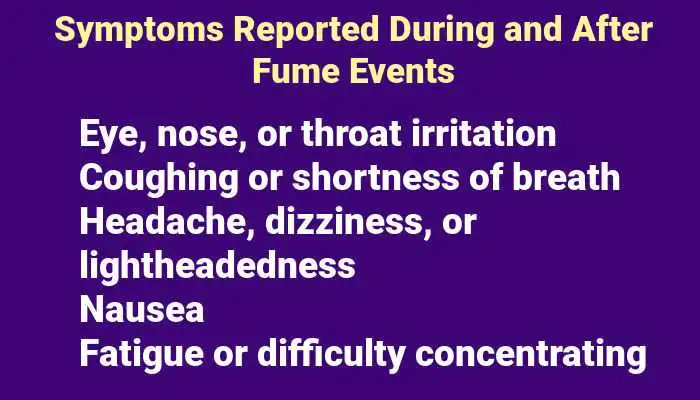
- Acute symptoms reported during or after events can include irritation, headache, nausea, dizziness, and respiratory discomfort. These symptoms are non-specific, meaning they can arise from multiple causes, including anxiety, dehydration, ozone exposure, or unrelated illness.
- Long-term health claims are more complex and require high-quality exposure assessment, medical evaluation, and epidemiological evidence.
A responsible aviation safety posture treats symptom reporting seriously, supports medical evaluation pathways, and improves data capture. At the same time, it avoids making blanket conclusions that any odor equals toxic exposure, or that all reported symptoms imply a single chemical cause.
Reporting Culture: The Governance Link That Often Gets Missed
If you want an honest answer to “how common are fume events,” you must also ask: How mature is the reporting system?
In a high-performing Safety Management System (SMS), the organization emphasizes:
- reporting, reporting, reporting,
- trend analysis, trend analysis, trend analysis,
- corrective actions, corrective actions, corrective actions.
That repetition is intentional because it reflects governance discipline. Fume events are a classic example where strong governance improves outcomes even when causality is uncertain.
Key governance elements that raise confidence in frequency estimates and reduce risk include:
- Clear occurrence definitions and standardized reporting codes.
- Non-punitive reporting for flight and cabin crew.
- Maintenance feedback loops, ensuring odor reports trigger structured inspection steps.
- Data integration, linking operational reports with maintenance findings and component reliability metrics.
- Proactive risk controls, including targeted inspections, seal performance monitoring, and ECS health monitoring where feasible.
When these elements are weak, events are more likely to be underreported, misclassified, or repeated without learning.
Practical Indicators That an Airline Takes Fume Events Seriously
From the passenger’s perspective, you cannot audit an airline’s internal SMS. From a governance and risk standpoint, you can still look for signals of operational seriousness:
- documented procedures for smoke/fumes events and recurrent training,
- clear guidance for cabin crew escalation and medical support,
- maintenance documentation practices that capture odor characteristics and timing,
- evidence of trend monitoring across tail numbers and component batches,
- and a culture that treats air quality as a safety-adjacent reliability issue, not a public relations inconvenience.
These indicators do not guarantee elimination. They indicate control.
Are Fume Events Becoming More Common?
There is no single public metric that conclusively shows a global increase. What can change over time is:
- awareness, which tends to increase reporting,
- fleet composition, as new aircraft types enter service,
- utilization patterns, as aircraft fly more sectors per day,
- and maintenance strategies, as condition-based maintenance expands.
In many safety domains, improved reporting can make it appear that events are increasing when the organization is simply detecting and documenting more of what was previously invisible. That is often a sign of a more mature safety culture.
What Should Passengers Do If They Smell Fumes?
Most passengers will never encounter a significant smoke or fume event. If you do notice a strong odor, haze, or irritation:
- notify a flight attendant promptly and describe what you observe,
- avoid assuming the source; just report the facts (smell, location, intensity, any visible haze),
- follow crew instructions, especially if they relocate passengers or adjust ventilation,
- and seek medical advice after landing if you experience persistent symptoms.
Crew procedures exist for a reason. The decisive variable in safety outcomes is timely communication and disciplined response.
The Bottom Line: Fume Events Are an Uncommon Event, Managed as a Serious Risk
Fume events are not an everyday occurrence for most passengers, but they are a recognized operational issue across global airline fleets. Minor odor reports occur with some regularity in large-scale operations, while high-severity smoke/fumes events that lead to diversions or emergency response are comparatively uncommon.
The most important forward-looking conclusion is this: the industry’s ability to manage fume events depends less on public debates over terminology and more on governance fundamentals. Standardized reporting, consistent investigation, integrated data, and proactive maintenance reduce recurrence and improve confidence in outcomes. In aviation, integrity is operational. Integrity is procedural. Integrity is measurable.
And that is the standard that ultimately determines whether a fume event is merely an unpleasant anomaly or a preventable risk trend identified early and controlled decisively.
If you believe you have been affected by toxic airplane fumes, contact Aerotoxic Syndrome lawyer Timothy L. Miles as you may be eligible for an Aerotoxic Syndrome Lawsuit and potentially entitled to substantial compensation. (855) 846–6529 or [email protected].
Frequently Asked Questions About Fume Events
What is a fume event in commercial aviation?
A fume event in commercial aviation refers to a reported episode of unusual odors, visible haze, smoke, or suspected cabin air contamination within the aircraft cabin or cockpit. These fume events can range from mild odors like ‘dirty sock’ or ‘wet dog’ smells to acute smoke incidents that may trigger emergency procedures.
How common are fume events on airplanes?
Fume events are uncommon relative to the total number of flights globally but are not rare as operational occurrences across the large global fleet. Their perceived frequency varies due to differences in definitions, reporting thresholds, and data collection methods over cabin air contamination.
Why do frequency estimates of fume events vary so widely?
Variability in frequency estimates arises primarily because fume events intersect engineering, operations, and occupational health domains where reporting depends on judgment calls. Differences in definitions, underreporting of transient odors, and technical challenges in confirming contaminant sources contribute to inconsistent statistics.
What factors contribute to underreporting of fume events?
Underreporting often occurs because odors are subjective; individuals may interpret smells differently. Additionally, if an odor is brief and no symptoms arise, flight crews might prioritize maintaining schedule continuity over detailed reporting, leading to incomplete data capture.
What kinds of contaminants are involved in fume events?
Fume events may involve suspected contamination from engine oil, hydraulic fluid, deicing fluid, fuel, or other chemical compounds. The specific source can be difficult to confirm due to the short duration of many events and limitations in real-time chemical detection.
How do airlines and regulators manage and prevent fume events?
Airlines, manufacturers, and regulators employ layered redundancy including redundant systems, procedures, and oversight to prevent and detect fume events. They monitor cabin air quality complaints, investigate Environmental Control System anomalies, and follow protocols for managing smoke or odor incidents to ensure passenger and crew safety.