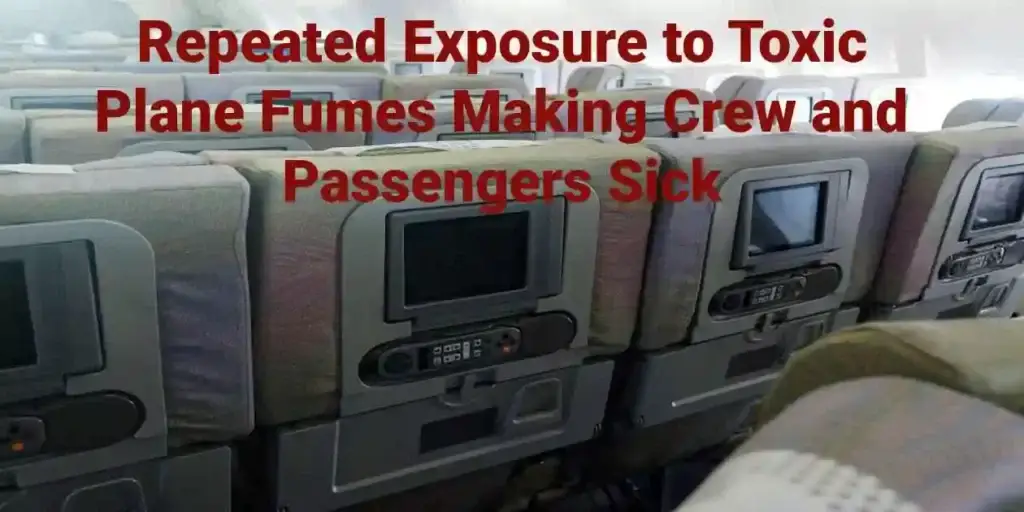
Introduction to Repeated Exposure to Toxic Plane Fumes
Repeated exposure to toxic plane fumes continues to make crew and passengers sick. Commercial aviation is widely regarded as a controlled and highly regulated environment. Yet a persistent occupational risk continues to generate concern among flight crew, safety professionals, and regulators: repeated exposure to toxic plane fumes, sometimes described within the industry as “fume events” or “contaminated cabin air events.”
This issue matters because it sits at the intersection of engineering design, chemical exposure, operational decision-making, and corporate governance. It is also an inherently forward-looking risk. The organizations that treat fume event exposure as a low-probability nuisance risk may face escalating legal, reputational, and workforce risks. Conversely, those that treat it as a measurable, manageable hazard can reduce uncertainty, protect personnel, and strengthen safety assurance.
If you believe you have been affected by toxic airplane fumes, contact Aerotoxic Syndrome lawyer Timothy L. Miles as you may be eligible for an Aerotoxic Syndrome Lawsuit and potentially entitled to substantial compensation. (855) 846–6529 or [email protected].

What “Toxic Plane Fumes” Means in Practical Terms
“Toxic plane fumes” is a broad, non-technical phrase used to describe unwanted airborne contaminants in the flight deck or cabin. In operational reality, the concern is not a single chemical. The concern is a mixture of compounds that can enter the breathing air under specific conditions.
Two key terms are useful:
- Fume event: An occurrence in which crew or passengers notice unusual odors, visible haze, smoke-like mist, or symptoms consistent with inhalation exposure, prompting reports and, in some cases, operational actions such as oxygen mask use or diversion.
- Cabin air contamination event: A broader term that includes fume events and less obvious exposures, including low-level contamination that may not produce strong odors but could still contribute to cumulative exposure.
The principal occupational concern involves repeated exposures over time, especially for flight crew whose work schedules can produce frequent opportunities for exposure. Such exposure to toxic airplane fumes has been linked to various health issues and has led to numerous toxic fumes exposure lawsuits.
These incidents often classified as fume events, can have serious implications for those affected. It’s crucial for both airlines and regulatory bodies to acknowledge these risks and implement measures to mitigate them.
How Cabin Air Is Supplied on Most Jet Aircraft
Understanding exposure pathways begins with how air is provided in-flight.
On many commercial jets, a portion of cabin and flight deck air is supplied using bleed air, which is air compressed and extracted from the engine or auxiliary power unit (APU) compressor stages. This compressed air is conditioned and mixed with recirculated air before entering occupied spaces.
This design has historically been effective for pressurization and ventilation. However, it introduces a critical dependency: if engine or APU seals leak, or if fluids are pyrolyzed due to high temperatures, contaminants can enter the supply air stream. Such scenarios may lead to toxic cabin air, posing health risks to passengers and crew.
Not all aircraft use the same architecture. Some newer designs use electrically driven compressors rather than engine bleed air. The architectural differences matter because they influence both risk pathways and risk controls.
Primary Sources of Contamination: Where the Fumes Can Come From
Repeated exposure risk is best evaluated by identifying plausible sources. While each event can be operationally unique, common sources include the following.
Engine Oil Seal Leakage and Oil Aerosols
Jet engine oil contains additive packages designed for extreme temperatures and mechanical loads. If oil leaks past seals into hot compressor airflow, it may form an aerosol and, in high-temperature zones, undergo thermal degradation. The resulting mixture may include irritant and neuroactive compounds, depending on oil formulation and temperature history.
Hydraulic Fluid Leaks
Hydraulic fluids used in aviation can also contain additive chemistries that are hazardous if inhaled in aerosolized or thermally degraded form. Leaks can introduce odors and potential irritants, particularly if fluid contacts hot surfaces.
Additionally, exposure to jet fuel can also pose serious health risks, further complicating the issue of cabin air quality.
It is important to note that these contamination issues are not just limited to the aircraft’s interior environment. They can also extend to ground personnel who are frequently exposed to these hazardous substances during routine maintenance checks or refueling operations. Such exposures could lead to severe health complications over time, as detailed in this scientific study, emphasizing the need for stringent safety measures and regular monitoring of air quality both inside the aircraft and in related ground operations.

APU-Related Contamination
When the APU is running, especially on the ground during boarding, cabin supply air may come from APU bleed. APU seal or bearing issues can similarly introduce contaminants. Ground exposures can be operationally significant because passengers and crew are present and ventilation patterns differ from cruise conditions.
De-Icing and Other Ground Chemicals
Not all fumes are oil-related. Ground operations can introduce contaminants through ingestion of de-icing fluids or other volatile chemicals into air intakes. These scenarios can be episodic but still relevant to cumulative exposure.
Electrical or Equipment-Related Smoke and Odors
Electrical faults, overheating components, and burning insulation can generate smoke and irritant gases. These incidents are typically handled as smoke or fire risks, but they also represent acute chemical exposure events for crew.
Why Repeated Exposure Is a Distinct Risk Category
A single, severe fume event is easier to recognize as a safety event. Repeated low-to-moderate exposures are harder to manage because they can be under-reported, inconsistently documented, and medically ambiguous.
From an occupational health perspective, repeated exposure raises three governance and risk challenges:
- Dose accumulation and variability: The dose is not only about concentration but also exposure duration and frequency. Crew can experience an uneven pattern across routes, aircraft, and maintenance states.
- Inconsistent detection: Human odor detection is subjective, and not all harmful contaminants have strong odors at low concentrations.
- Delayed or non-specific symptoms: Reports often include headache, respiratory irritation, dizziness, nausea, cognitive fog, fatigue, and eye or throat irritation. These symptoms are real to the individual and operationally relevant, but they are also non-specific, which complicates diagnosis and surveillance.
A proactive safety program treats repeated exposure as an exposure-management problem, not a public-relations problem. Such airplane toxic exposure issues should be addressed with urgency to ensure the safety of both crew members and passengers alike.
Potential Health Effects Reported in Connection With Fume Exposure
Health outcomes related to contaminated air incidents remain debated in terms of causation, mechanisms, and thresholds, in part because real-world exposures are complex and often lack real-time measurements. However, occupational reporting patterns are consistent enough to warrant structured attention.
Frequently reported acute effects include:
- Headache and migraine-like symptoms
- Eye, nose, and throat irritation
- Cough, chest tightness, and shortness of breath
- Nausea and gastrointestinal discomfort
- Dizziness, disorientation, and balance disturbance
- Fatigue and reduced alertness
- Concentration difficulties and short-term memory issues
For repeated exposure, some individuals report persistent or recurrent symptoms affecting respiratory function, neurological function, and overall wellbeing. Whether any specific diagnosis applies depends on clinical evaluation, exposure documentation, and differential diagnosis. From a corporate risk standpoint, the more important point is governance: repeated reports without a rigorous exposure and response framework create predictable downstream risk.
Operational and Safety Implications for Flight Crew
Repeated exposure has operational relevance beyond health outcomes.
- Cognitive performance risk: Aviation safety depends on high-reliability human performance. Even mild neurocognitive impairment, if it occurs at a critical phase of flight, is a safety concern.
- Crew resource management impact: Symptoms may affect communication, decision-making speed, and situational awareness.
- Fitness-for-duty complexity: If exposures are not measured and documented, decisions about return to duty become subjective, placing pressure on both crew and management.
- Reporting culture: If personnel believe reports are discouraged or dismissed, under-reporting increases. Under-reporting reduces the organization’s ability to detect patterns, manage maintenance risk, and protect people.
A forward-thinking operator treats crew reports as safety data. Repetition is a signal. Repetition is a trend. Repetition is an early warning.
Why Measurement Is the Missing Control in Many Programs
Many organizations rely on qualitative indicators: odors, visible haze, and symptoms. These indicators are important, but they are not sufficient for exposure management.
A mature program emphasizes:
- Real-time monitoring: Sensors or sampling methods that can detect relevant volatile organic compounds (VOCs), ultrafine particles, carbon monoxide, and other markers associated with contamination scenarios.
- Event-triggered sampling protocols: If an odor is reported, the response should include a defined sampling and documentation workflow, not an ad hoc decision.
- Maintenance correlation: Exposure events should be linked to aircraft tail number, engine/APU history, oil consumption trends, prior seal replacements, and deferred defects.
The governance principle is straightforward: what is not measured is not managed, and what is not managed becomes a liability.
Immediate Response: What a Robust “Fume Event” Procedure Looks Like
Procedures vary by operator and aircraft type, but a high-integrity response framework typically includes:
- Recognize and communicate: Crew report odors and symptoms using standardized language, avoiding ambiguity. “Dirty socks,” “oil,” and “electrical” odors should be coded consistently for analysis.
- Apply flight deck safety actions: Use oxygen masks and smoke checklists as appropriate. The priority is always aircraft control and safe flight.
- Manage ventilation configuration: Packs, recirculation, and airflow settings may be adjusted per approved procedures to reduce contaminant load.
- Document thoroughly: Time of onset, phase of flight, odor characteristics, visible haze, actions taken, and symptoms should be recorded.
- Medical evaluation pathway: If crew are symptomatic following a toxic fume event, a structured medical pathway should be available, with a focus on documenting exposure context.
- Maintenance follow-up with governance: The aircraft should not simply return to service after a superficial inspection if the event is credible. Clear criteria for inspection depth, component checks, and test flights support both safety and accountability.
The central aim is repetition prevention. One event is a disruption; repeated events indicate a system failure. Such fume events can pose serious health risks to crew members if not managed properly.
Engineering and Maintenance Controls That Reduce Repeated Exposure Risk
Repeated exposure to toxic airplane cabin fumes is rarely solved by messaging. It is resolved through engineering controls, maintenance rigor, and data-driven oversight.
Key control categories include:
Predictive Maintenance and Condition Monitoring
- Oil consumption trend monitoring by engine and APU
- Tracking of seal replacements and recurrence intervals
- Correlation of odor reports with maintenance actions
- Enhanced inspection triggers after credible reports
Filtration and Air Treatment Considerations
HEPA filtration is common for recirculated air, but it is not designed to capture all volatile compounds. If an operator’s risk assessment indicates recurrent events, additional filtration or adsorption technologies may be evaluated, subject to certification constraints and performance impacts.
Fleet Decisions and Design Choices
Aircraft architecture can influence risk. Where feasible, procurement and retrofit strategies that reduce contamination pathways can be considered within long-term fleet planning. This is not a short-term remedy, but it is a governance-level mitigation aligned with future resilience.
Corporate Governance: The Difference Between Compliance and Control
Repeated exposure to toxic plane fumes is not only a technical matter. It is a governance matter.
Strong corporate governance expresses itself through three repeated actions:
- Define accountability, define ownership, define escalation.
- Measure performance, measure exposure, measure closure.
- Audit outcomes, audit controls, audit culture.
In practical terms, boards and executive leadership should be able to answer:
- Do we have a formal hazard register entry for cabin air contamination, including repeated exposure risk?
- Do we have leading indicators, not only lagging reports?
- Do we have independent assurance over how events are investigated and closed?
- Do we protect reporting and prevent retaliation, formally and operationally?
- Do we have a clear worker health surveillance pathway that respects privacy while enabling trend detection?
A neutral stance is not the same as an effective stance. If the organization does not proactively manage uncertainty regarding exposure to toxic airplane fumes, uncertainty will manage the organization.
Documentation, Reporting, and Data Integrity
The credibility of any risk program depends on data integrity.
A robust reporting framework includes:
- Standardized event categories and odor descriptors
- Tail-number-specific tracking
- Integration with maintenance systems
- Clear thresholds for mandatory investigation
- A closed-loop corrective action process with verification
Repetition should be treated as a trigger for escalation. Repetition should be treated as a trigger for deeper root-cause analysis. Repetition should be treated as a trigger for executive visibility.
Worker Health Surveillance and Support Pathways
Occupational health programs that address repeated exposure should be designed with both medical rigor and operational practicality.
Key elements include:
- Baseline health assessments for crew in high-exposure roles where permitted and appropriate
- Post-event clinical pathways that document symptoms, timing, and exposure context
- Access to specialized evaluation when symptoms persist
- Clear return-to-duty criteria based on medical judgment and safety requirements
- Recordkeeping practices that support longitudinal analysis while respecting confidentiality
The strategic objective is early identification and early intervention. Early identification prevents chronic outcomes. Early intervention reduces operational disruption.
Training and Safety Culture: Making Reporting Actionable
Repeated exposure risks intensify when training is superficial or when reporting is discouraged implicitly.
Effective training programs emphasize:
- What constitutes an air contamination event
- How to describe odors and symptoms consistently
- What immediate actions are authorized and expected
- Why documentation matters for prevention
- How to access medical support and follow-up
Safety culture is built by repetition. Training repetition. Procedure repetition. Leadership repetition. The same message, the same standard, the same expectation.
A Forward-Looking Risk View: Why This Will Matter More, Not Less
Several trends suggest that cabin air quality will become more prominent:
- Increased attention to occupational health and psychosocial safety
- More sophisticated litigation and disclosure expectations
- Workforce retention pressures in safety-critical roles
- Improved sensor technology that makes “unknown exposure” less acceptable
- Stronger expectations of transparency from regulators and the public
Organizations that anticipate these trends will be positioned to demonstrate due diligence. Organizations that ignore these trends may be forced into reactive change under adverse conditions.
Practical Takeaways
Repeated exposure to toxic plane fumes, often referred to as toxic airplane cabin fumes, is best addressed as a measurable occupational hazard with clear controls, not as an occasional operational inconvenience.
- Contamination pathways exist in certain aircraft architectures, particularly where bleed air is used.
- Sources commonly include oil seal leakage, hydraulic fluids, APU-related issues, and ground chemical ingestion.
- Repeated low-level exposures are harder to detect but can carry significant health, safety, and governance implications. These toxic fume exposures can lead to serious health issues.
- Strong programs prioritize measurement, standardized reporting, maintenance correlation, and closed-loop corrective actions.
- Strong corporate governance prioritizes accountability, transparency, and proactive risk ownership.
In aviation, safety is built on anticipation. Safety is built on evidence. Safety is built on repetition. When repeated exposure to toxic airplane fumes is treated as a signal and managed as a system risk, the organization protects its people, protects its operations, and protects its future.
If you believe you have been affected by toxic airplane fumes, contact Aerotoxic Syndrome lawyer Timothy L. Miles as you may be eligible for an Aerotoxic Syndrome Lawsuit and potentially entitled to substantial compensation. (855) 846–6529 or [email protected].
Frequently Asked Questions about Exposure to Toxic Plane Fumes
What are ‘toxic plane fumes’ and why are they a concern in commercial aviation?
“Toxic plane fumes” refer to unwanted airborne contaminants in the flight deck or cabin, often resulting from mixtures of compounds entering the breathing air under specific conditions. These fumes are concerning because repeated exposure, especially among flight crew, can lead to health issues and pose occupational risks that intersect with engineering design, chemical exposure, operational decisions, and corporate governance.
What is a ‘fume event’ versus a ‘cabin air contamination event’ in aviation?
A ‘fume event’ is an occurrence where crew or passengers notice unusual odors, visible haze, smoke-like mist, or symptoms consistent with inhalation exposure, sometimes prompting operational actions like oxygen mask use or flight diversion. A ‘contaminated cabin air event’ is a broader term that includes fume events as well as less obvious exposures such as low-level contamination without strong odors but potentially contributing to cumulative exposure.
How is cabin air supplied on most commercial jets and how does this relate to fume exposure risks?
Most commercial jets supply cabin and flight deck air using bleed air—compressed air extracted from engine or auxiliary power unit (APU) compressor stages. This air is conditioned and mixed with recirculated air before entering occupied spaces. If engine or APU seals leak or fluids are thermally degraded at high temperatures, contaminants can enter this supply stream, posing toxic exposure risks to passengers and crew.
What are the primary sources of cabin air contamination leading to toxic fume events?
Key sources include engine oil seal leakage producing oil aerosols that may thermally degrade into irritant compounds; hydraulic fluid leaks containing hazardous additives; jet fuel exposure; APU-related contamination from seal or bearing issues; and ground chemicals such as de-icing agents. Each source can introduce harmful aerosols or vapors into cabin air under certain conditions.
Why is repeated exposure to toxic plane fumes particularly concerning for flight crew?
Flight crew face exposure to toxic plane fumes due to their frequent work schedules and time spent onboard aircraft where contaminated air may be present. Cumulative inhalation of toxic fumes has been linked to various health problems and legal actions. Recognizing and managing this hazard reduces uncertainty, protects personnel health, and strengthens overall safety assurance.
What measures can airlines and regulators take to mitigate risks associated with toxic plane fumes?
Airlines and regulatory bodies should acknowledge the occupational risks of cabin air contamination by implementing rigorous monitoring of air quality, improving engineering designs such as reducing reliance on bleed air systems prone to leaks, enforcing maintenance protocols for seals and fluid systems, educating crews on recognizing fume events, and developing policies for prompt operational responses when contamination occurs.

Call Aerotoxic Syndrome Lawyer Timothy L. Miles Today for a Free Case Evaluation
If you believe you have been affected by toxic airplane fumes, contact Aerotoxic Syndrome lawyer Timothy L. Miles as you may be eligible for an Aerotoxic Syndrome Lawsuit and potentially entitled to substantial compensation. (855) 846–6529 or [email protected].
Timothy L. Miles, Esq.
Law Offices of Timothy L. Miles
Tapestry at Brentwood Town Center
300 Centerview Dr. #247
Mailbox #1091
Brentwood,TN 37027
Phone: (855) Tim-MLaw (855-846-6529)
Email: [email protected]
Website: www.classactionlawyertn.com
Facebook Linkedin Pinterest youtube
