Introduction to Toxic Fumes in an Airplane
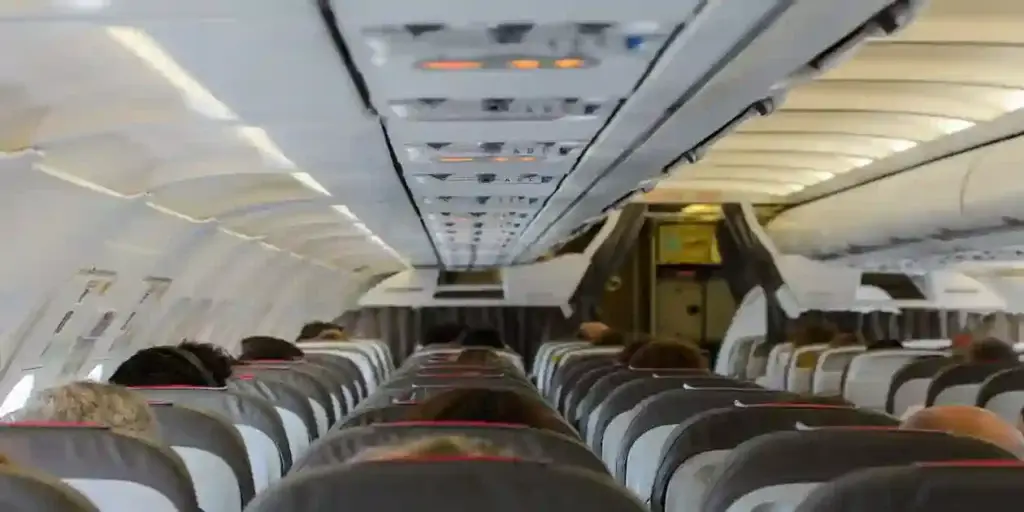
Toxic Fumes in an Airplane is the last thing on a passenger’s mind before bording a flight. Most people board an aircraft assuming the cabin air is carefully regulated, consistently filtered, and inherently safe. In the overwhelming majority of flights, that assumption holds. Yet a smaller, well-documented category of events challenges that baseline: episodes in which the cabin or flight deck fills with abnormal odors, smoke, haze, or irritant fumes. These are commonly described as fume events.
For passengers, the experience can be confusing. The smell may resemble “dirty socks,” burnt oil, or a chemical solvent. A light haze may appear and then disappear. Eyes may sting. Throats may burn. Some people feel dizzy, nauseated, or unusually fatigued. And when the flight ends, many are left with the same question: were you exposed to toxic fumes in an airplane, and what should you do next?
This article explains what fume events are, how they can occur, what symptoms have been reported, and what actions to take if you suspect exposure to toxic plane fumes, along with guidance on medical documentation and follow-up in a practical and evidence-focused manner.
If you believe you have been affected by toxic airplane fumes, bleed air, or contaminated cabin air contact Aerotoxic Syndrome lawyer Timothy L. Miles as you may be eligible for an Aerotoxic Syndrome Lawsuit and potentially entitled to substantial compensation. (855) 846–6529
If you believe you have been affected by toxic airplane fumes, bleed air, or contaminated cabin air contact Aerotoxic Syndrome lawyer Timothy L. Miles as you may be eligible for an Aerotoxic Syndrome Lawsuit and potentially entitled to substantial compensation. (855) 846–6529 or [email protected]. or [email protected].
What People Mean by “Toxic Fumes” on an Airplane
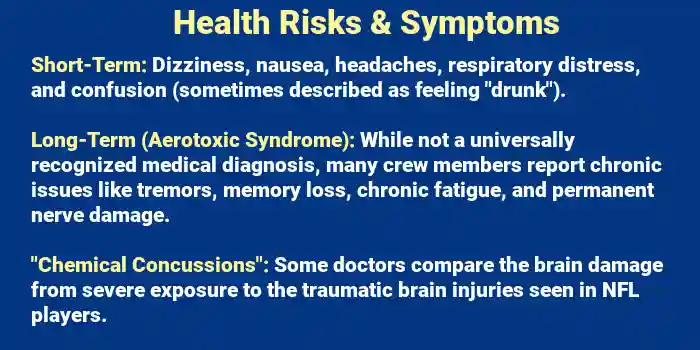
In aviation, “toxic fumes” is not a single substance. It is a broad, informal phrase used to describe unwanted contaminants in the cabin air that may cause irritation or other symptoms. These contaminants can include:
- Heated engine oils or hydraulic fluids, including their thermal decomposition products.
- Combustion byproducts (for example, smoke from an overheated component).
- De-icing fluids, fuel vapors, or exhaust intrusion in rare ground or servicing situations.
- Ozone at higher altitudes (generally controlled by ozone converters on many aircraft).
- Cleaning agents and disinfectants, which can irritate sensitive individuals when ventilation is limited.
The core point is definitional: a fume event can involve a complex mixture rather than a single identifiable chemical, and concentrations can vary significantly by aircraft type, phase of flight, ventilation settings, and the nature of the source. If you suspect you have been exposed to toxic airplane fumes, it’s crucial to understand your rights and potential next steps.
How Cabin Air Works, and Why It Matters
Understanding the ventilation system helps explain why certain types of events occur.
Modern commercial aircraft supply cabin air through a mix of:
- Outside air compressed at altitude and conditioned for temperature and pressure.
- Recirculated air that passes through HEPA filters on many aircraft.
HEPA filtration is highly effective for particulates, including many microbes. However, HEPA filters are not designed to remove gases or volatile organic compounds (VOCs). Gas-phase contaminants require other approaches, such as activated carbon filtration or source control.
The “Bleed Air” Discussion (Without the Hype)
On many aircraft designs, compressed air used for cabin pressurization and air conditioning is drawn from the engines or auxiliary power unit. This is often referred to as bleed air. Under normal operation, it should be clean and within design specifications.
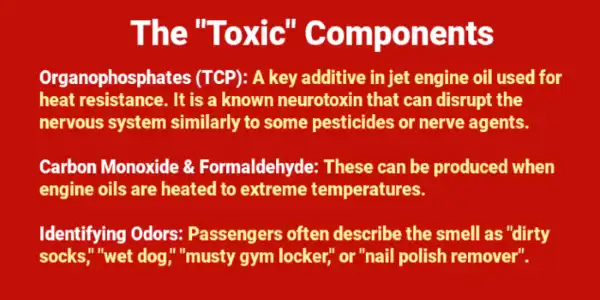
In certain malfunction conditions, however, oil seals or other components can allow small amounts of engine oil or hydraulic fluid to enter the air supply. When these fluids are heated, they can produce strong odors and a mixture of irritants. This is one reason fume events are frequently associated in public discussion with “dirty sock smell” or “burnt oil” odors.
Not all aircraft use bleed air in the same way, and not all fumes come from bleed air. The correct framing is operational: a fume event is an abnormal condition, and the source must be investigated, not assumed.
These fume events can lead to serious health issues due to toxic cabin air. Such exposure may result from aircraft toxic fumes which can occur when there is a leak in the system, commonly referred to as aircraft toxic fumes leaking.
What a Fume Event Can Look Like in Real Life
Fume events vary widely. Some are subtle, others are obvious. Commonly reported features include:
- Sudden onset of a strong odor, sometimes described as oily, musty, acrid, or chemical.
- Visible haze or smoke in the cabin or on the flight deck.
- Localized intensity, such as being stronger near the rear galley, near an air vent, or in a specific cabin section.
- Crew response, including making announcements, moving passengers, increasing ventilation, donning oxygen masks in the cockpit, or diverting in more severe cases.
Importantly, a brief exposure does not automatically equate to lasting injury. However, a brief exposure also does not automatically equate to “nothing.” The rational approach is to treat the event as a potential exposure to toxic airplane fumes and document it. If symptoms appear or persist after such an incident, seeking medical evaluation is crucial. For more information on what to do after experiencing suspected fume exposure, it’s advisable to consult with legal professionals who specialize in this area.
Common Symptoms People Report After Suspected Fume Exposure
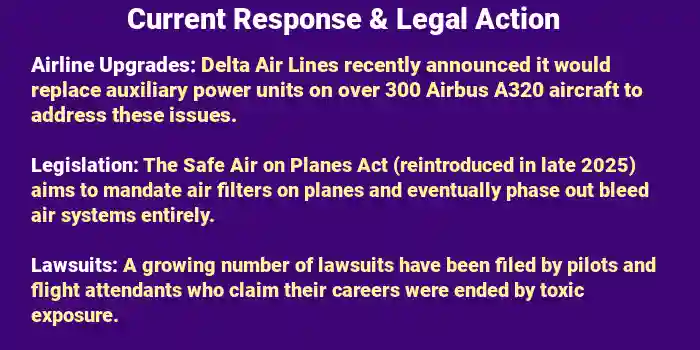
Reported symptoms differ from person to person and depend on the exposure profile. The most commonly described acute symptoms include:
- Eye, nose, or throat irritation
- Coughing, chest tightness, shortness of breath
- Headache or pressure-like head pain
- Dizziness, lightheadedness, or imbalance
- Nausea, stomach upset
- Unusual fatigue, “brain fog,” difficulty concentrating
- Metallic taste or chemical taste sensation
Some individuals report symptoms that persist beyond the flight, such as ongoing headaches, respiratory irritation, sleep disruption, or cognitive complaints. Persistence does not prove causation but it does warrant appropriate clinical attention and structured documentation. In some cases where the exposure has led to significant health issues, pursuing a toxic fumes exposure lawsuit might be an option worth considering.
Who Might Be More Susceptible?
Susceptibility can be influenced by:
- Pre-existing asthma or reactive airway disease
- Migraine history
- Chemical sensitivities
- Anxiety or panic vulnerability (which can amplify symptoms during an in-flight event)
- Recent respiratory infections or inflammation
This is not about blame. It is about risk stratification and clinical clarity.
What to Do During the Flight (If You Notice Fumes)
If you are currently on a flight and suspect abnormal fumes, prioritize immediate safety and practical steps. Toxic airplane fumes can pose serious health risks, so it’s important to act swiftly.
- Notify a flight attendant promptly.
- Use precise language: describe the smell, when it started, and whether you see haze or smoke.
- Reduce direct airflow to your face if the vent air seems to worsen symptoms.
- Adjust the gasper vent (the overhead nozzle). This is not a guarantee, but it is a low-risk step.
- If you feel unwell, ask to move seats if possible.
- Concentrations can be uneven. Relocating a few rows can sometimes help.
- Minimize exertion, stay hydrated, and avoid alcohol.
- These measures do not “detox” exposure, but they can reduce compounding stressors.
- If you develop significant symptoms (difficulty breathing, severe dizziness, chest pain, confusion), request medical assistance immediately.
- Airlines can coordinate medical consultation and, in serious cases, oxygen and diversion protocols.
Your goal in the moment is not chemical identification. Your goal is to communicate the abnormal condition and protect your immediate health.
If you believe you have been affected by toxic airplane fumes, bleed air, or contaminated cabin air contact Aerotoxic Syndrome lawyer Timothy L. Miles as you may be eligible for an Aerotoxic Syndrome Lawsuit and potentially entitled to substantial compensation. (855) 846–6529 or [email protected].
What to Do After the Flight: A Practical Checklist
The hours after a suspected exposure are where documentation and medical decision-making matter most.
1) Write Down a Timeline While It Is Fresh
As soon as you can, record:
- Flight number, date, route, and aircraft type if known
- Seat number and cabin section
- Time the odor/haze began (estimate is fine) and how long it lasted
- Description of the odor (burnt, oily, musty, chemical, sweet, acrid)
- Whether you saw haze or smoke
- What the crew did (announcements, ventilation changes, movement, diversion)
- Your symptoms, when they started, and how they evolved
This contemporaneous note often becomes the most reliable anchor for later medical and administrative discussions.
2) Report the Event to the Airline
Submit a written report through the airline’s customer relations or safety reporting channel. Keep it factual and structured. Request that the incident be logged as a possible fume event and ask for any reference number.
If other passengers experienced the same issue, consider asking them (politely) if they are willing to share contact information. Independent corroboration can be valuable.
3) Seek Medical Evaluation If Symptoms Are More Than Mild or Do Not Resolve
If you have persistent respiratory symptoms, neurological complaints, or any worsening pattern, a same-day or next-day medical evaluation is reasonable. If symptoms are severe, seek urgent care or emergency care.
When you see a clinician, bring your timeline. Use clear language:
- “I was on Flight X on Date Y. There was a strong abnormal odor/haze for approximately Z minutes. I developed symptoms A, B, and C during or shortly after the event.”
This helps a clinician document exposure history without speculation.
4) Ask for Objective Findings to Be Documented
For medical documentation, specificity matters. Depending on symptoms, clinicians may consider:
- Vital signs and oxygen saturation
- Lung exam and peak flow (especially for asthma-like symptoms)
- Pulmonary function testing if symptoms persist
- Neurological screening if cognitive or balance issues persist
- Basic labs if clinically indicated
There is no single definitive “fume exposure test” that applies to every event. Many potential contaminants metabolize quickly, and testing windows can be narrow. The more practical aim is to document symptoms, clinical findings, and functional impact.
5) Keep Receipts and Records
If the event results in medical visits, medications, missed work, or travel disruption, keep:
- Receipts, pharmacy records, visit summaries
- Work notes or leave documentation
- Communication with the airline
This is prudent record-keeping, not an assumption of liability.
How Fume Events Are Investigated (And Why Conclusions Can Be Slow)
Passengers often expect an immediate, definitive answer: “What was it?” In practice, aviation investigations can take time due to:
- The need to inspect aircraft systems and maintenance logs
- Potentially intermittent faults
- Variability in symptom reports
- Limited real-time cabin air sampling on many aircraft
Some events may be attributed to a specific mechanical issue (for example, a seal problem or overheating component). Others may be inconclusive, particularly when symptoms were transient and no visible haze remained by the time the aircraft landed.
A forward-looking takeaway is that systems, sensors, reporting pathways, and maintenance governance all influence how effectively these events are detected, documented, and prevented. Strong safety culture requires repetition for emphasis: reporting matters, documentation matters, investigation matters.
It’s important to note that these toxic fume events are not just isolated incidents but part of a larger pattern that needs thorough investigation and understanding for effective prevention in the future.
Distinguishing Irritation, Anxiety Responses, and Clinically Significant Injury
A fume event can trigger multiple overlapping responses:
- Direct irritation from exposure, especially to eyes and airways.
- Stress and anxiety responses in a confined environment, which can mimic or amplify dizziness, nausea, and chest tightness. These anxiety responses can be particularly challenging to manage.
- Underlying conditions (asthma, migraine) that can be provoked by odors or stress.
None of this invalidates the experience. It clarifies the clinical approach. A high-quality evaluation considers all plausible pathways, avoids premature conclusions, and prioritizes symptom management and objective findings.
When to Be More Concerned: Red Flags
Seek urgent medical care if you experience:
- Shortness of breath at rest or worsening breathing difficulty
- Chest pain, fainting, confusion, or severe weakness
- New neurological deficits (slurred speech, one-sided weakness, severe imbalance)
- Severe persistent vomiting or dehydration
- Symptoms that rapidly worsen after landing
Even when the trigger is uncertain, the medical response should be based on severity and risk.
Proactive Steps for Future Travel
You cannot control aircraft maintenance. You can control preparedness and response.
- If you have asthma, travel with rescue inhalers and ensure they are accessible, not stowed.
- If you are prone to migraines, consider discussing travel triggers and acute treatment plans with your clinician.
- If you notice an odor, report it early. Early reporting increases the likelihood of timely crew action and proper logging.
- Choose seats with flexibility when possible, especially if you have known sensitivities. Seat changes are easier on less full flights.
- Avoid self-diagnosis based on internet narratives. Treat your symptoms seriously, and pursue structured medical evaluation if needed.
Corporate Governance, Accountability, and the Future of Cabin Air Safety
Aviation safety is built on governance. That includes proactive maintenance, transparent reporting, and disciplined root-cause analysis.
In the context of cabin air quality, robust governance means:
- Clear operational definitions for what constitutes a fume event.
- Consistent reporting protocols for crew and maintenance teams.
- Data-driven trend analysis across fleets, routes, and aircraft types.
- Preventive maintenance and component life-cycle management, particularly for systems associated with air supply and fluid containment.
- Investment in monitoring and mitigation technologies where risk assessments support them.
These measures are not reactive. They are proactive. They protect passengers, protect crew health, and protect the integrity of the aviation system. Repetition for emphasis is appropriate here: proactive controls reduce incidents, proactive controls improve trust, proactive controls strengthen safety culture.
A Clear Way to Think About Your Situation
If you believe you were exposed to toxic fumes on an airplane, the most useful framework is sequential:
- Was there an abnormal event?
- Odor, haze, smoke, crew response, or corroboration from other passengers.
- Did you develop symptoms during or after the event?
- Note timing, severity, and progression.
- Do symptoms resolve quickly, or do they persist?
- Resolution suggests transient irritation. Persistence suggests the need for clinical follow-up.
- Can you document it?
- Timeline, airline report, and medical record if warranted.
This approach avoids both extremes: it avoids dismissing the event, and it avoids assuming worst-case conclusions without evidence.
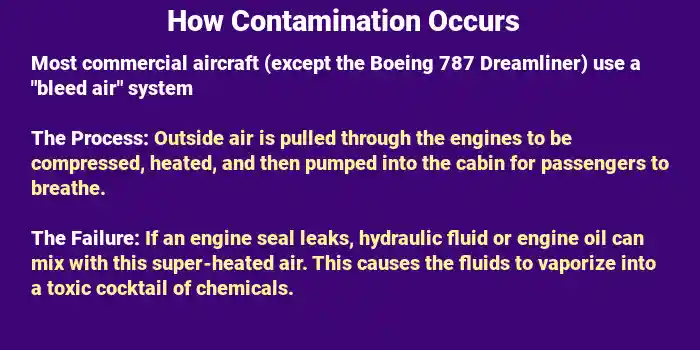
However, if your situation involves toxic airplane cabin fumes, it’s crucial to seek legal advice as these incidents can have serious health implications. You may want to explore potential legal actions related to toxic airplane fumes or toxic fumes in an airplane. Remember that documenting your experience thoroughly can aid in any legal proceedings that may follow such an incident involving toxic airplane cabin fumes or toxic fumes in an airplane.
Conclusion
Most flights are routine, and most cabin air concerns resolve without lasting harm. However, fume events are real, they are disruptive, and for some individuals they may be medically significant. The appropriate response is not panic and not dismissal. The appropriate response is early reporting, careful documentation, and timely medical evaluation when symptoms indicate it.
If you experienced abnormal odors or haze during a flight and you do not feel normal afterward, treat that as actionable information. Write the timeline. Report it. See a clinician if symptoms persist or intensify. Safety systems improve when events are reported, and health outcomes improve when symptoms are assessed early and documented accurately.
Frequently Asked Questions about Toxic Fumes in an Airplane
What are ‘toxic fumes’ on an airplane and what causes them?
In aviation, ‘toxic fumes’ or ‘contaminated cabin air’ refer to unwanted contaminants in the cabin air that may cause irritation or other symptoms. These can include heated engine oils or hydraulic fluids, combustion byproducts like smoke, de-icing fluids, fuel vapors, ozone at high altitudes, and cleaning agents. Such contaminants often arise from abnormal conditions such as leaks in the bleed air system where engine oil or hydraulic fluid enters the air supply.
How does the aircraft cabin air system work and why can it sometimes lead to fume events?
Modern aircraft supply cabin air through a mix of outside air compressed at altitude and recirculated air filtered by HEPA filters. While HEPA filters effectively remove particulates and microbes, they do not filter out gases or volatile organic compounds (VOCs). On many aircraft, compressed ‘bleed air’ from engines is used for pressurization and ventilation; if there are leaks allowing engine oils or fluids into this air supply, it can lead to fume events characterized by odors and irritants.
What are common signs and symptoms of exposure to toxic airplane fumes during a fume event?
Passengers may notice sudden onset of strong odors resembling dirty socks, burnt oil, or chemical solvents. Visible haze or smoke might appear in the cabin. Symptoms reported include eye stinging, throat burning, dizziness, nausea, unusual fatigue, and respiratory irritation. The intensity can vary by location in the cabin and severity of exposure.
What should passengers do if they suspect they have been exposed to toxic fumes in an airplane?
If you suspect exposure to toxic airplane fumes during a flight, it’s important to document the event carefully including time, symptoms experienced, and any crew announcements or actions. After landing, seek medical evaluation especially if symptoms persist. Keeping detailed records helps with medical follow-up and any legal consultations regarding your rights related to toxic fume exposure.
Are all aircraft equally likely to experience fume events caused by bleed air contamination?
No. Not all aircraft use bleed air in the same way; some newer designs avoid bleed air systems altogether. Fume events are abnormal conditions that require investigation rather than assumption about their source. Factors such as aircraft type, phase of flight, ventilation settings, and maintenance status influence the likelihood and nature of fume events.
Can HEPA filters in airplanes remove toxic fumes or gases from cabin air?
HEPA filters on many commercial aircraft are highly effective at removing particulates including microbes but are not designed to remove gases or volatile organic compounds (VOCs) responsible for toxic fumes. Addressing gas-phase contaminants requires other filtration methods like activated carbon filters or controlling sources of contamination within the aircraft’s environmental control system.

Call Aerotoxic Syndrome Lawyer Timothy L. Miles Today for a Free Case Evaluation