![empty inside of a plane' cabin with red and white seats usued in Dangerous Toxic Fume Exposure Continues Unabated [2026]](https://classactionlawyertn.com/wp-content/uploads/2026/02/ezgif-7949499aacb0c7d6-1024x512.webp)
Introduction to the Cabin Air Contamination Lawsuit
If you are searching for a trustorthy and authoritative source on a Cabin Air Contamination Lawsuit you have reached your final destination. Cabin air is marketed, regulated, and widely assumed to be safe. Yet a growing body of complaints, medical reports, union statements, and litigation claims assert that some aircraft cabin air events can expose crew members and passengers to harmful contaminants. These allegations sit at the center of what is often called a cabin air contamination lawsuit, a category of legal claims that typically involves suspected exposure to heated engine oil fumes, hydraulic fluid byproducts, and other volatile compounds that may enter the aircraft’s environmental control system.
This article explains what cabin air contamination claims generally allege, how the underlying aircraft systems work at a high level, what symptoms and documentation are commonly discussed in disputes, and what legal and evidentiary issues often determine whether a claim can move forward. It is informational only and is not legal advice.
If you believe you have been affected by cabin air contamination or toxic airplane fumes, contact Aerotoxic Syndrome lawyer Timothy L. Miles as you may be eligible for an Aerotoxic Syndrome Lawsuit and potentially entitled to substantial compensation. (855) 846–6529 or [email protected].

What “Cabin Air Contamination” Means in Aviation
In commercial aviation, cabin air contamination is commonly used to describe an event in which cabin or cockpit air is believed to contain airborne chemicals, fumes, or particulates at levels that may cause acute or chronic health effects. In many claims, the alleged contamination is associated with a “fume event,” which is a term used in industry reporting and incident narratives when occupants notice odors such as “dirty socks,” “oil,” “burnt,” or “chemical” smells, sometimes accompanied by visible haze or smoke-like mist.
From a technical standpoint, most modern commercial jets supply cabin air through systems designed to compress, cool, and distribute air. On many aircraft types, a portion of cabin air supply is derived from bleed air, which is air taken from the compressor stages of the engines or the auxiliary power unit (APU). That air is then conditioned by the environmental control system (ECS) before entering the cabin.
The dispute in many lawsuits is not whether an odor occurred. The dispute is whether the odor indicates harmful contamination such as toxic airplane cabin fumes, whether the exposure level was sufficient to cause injury, and whether the aircraft design, maintenance practices, warnings, or operational procedures were defective or inadequate.
For instance, claims related to contaminated cabin air often highlight these issues. Similarly, the concerns surrounding toxic cabin air are increasingly gaining attention in legal circles. These lawsuits typically involve allegations of exposure to harmful substances like heated engine oil fumes or hydraulic fluid byproducts during these fume events. Such incidents underline the critical need for stringent safety measures in aviation to prevent potential health risks associated with toxic airplane cabin fumes.
How Lawsuits Commonly Describe the Source of Contamination
Many cabin air contamination lawsuits focus on the possibility that engine oil or hydraulic fluid can enter the bleed air stream under certain failure modes or operating conditions. The key concept is that lubricants and fluids used in engines and APUs can be subjected to high temperatures, and some of their components can volatilize or thermally decompose into irritating or potentially neurotoxic byproducts.
Claims often reference:
- Engine oil seal leakage: Some lawsuits allege that worn or malfunctioning seals may allow oil to pass into air streams that ultimately reach the ECS.
- APU-related fumes: When the APU is operating, it can be a source of bleed air on the ground and sometimes in flight. Allegations can involve APU oil seals or servicing issues.
- Hydraulic fluid exposure: In some narratives, occupants report odors described as “sweet” or “chemical,” with allegations that heated hydraulic fluid or its byproducts entered the air supply.
- ECS recirculation and filtration limits: Plaintiffs may argue that existing filtration systems are not designed to remove certain volatile organic compounds (VOCs) or ultrafine particles associated with fume events.
Manufacturers and airlines, in turn, frequently dispute causation, exposure dose, and the interpretation of odor reports, and they often argue that systems and procedures meet certification requirements.
If you believe you have been affected by cabin air contamination or toxic airplane fumes, contact Aerotoxic Syndrome lawyer Timothy L. Miles as you may be eligible for an Aerotoxic Syndrome Lawsuit and potentially entitled to substantial compensation. (855) 846–6529 or [email protected].
The Health Allegations: Acute Symptoms and Long-Term Claims
A cabin air contamination lawsuit may involve an acute event with immediate symptoms, or it may involve allegations of cumulative exposure across multiple flights for crew members. Reported symptoms in complaints and medical narratives often include:
- Headache, dizziness, nausea
- Eye, nose, and throat irritation
- Coughing, chest tightness, shortness of breath
- Confusion, difficulty concentrating, memory issues
- Fatigue, sleep disruption
- Tingling sensations, tremors, balance problems
Some plaintiffs allege longer-term neurological, respiratory, or systemic effects. In certain cases, claimants and advocates use the term “aerotoxic syndrome” to describe a constellation of symptoms they attribute to exposure to contaminated bleed air. It is important to recognize that medical causation is frequently contested in litigation. Defendants often argue that symptoms are nonspecific, that alternative explanations exist (such as those seen in a Trulicity vision loss lawsuit), and that the scientific literature does not establish a definitive causal pathway for the claimed injuries in the particular circumstances alleged.
In court, general scientific debates rarely decide a case by themselves. What matters is whether the plaintiff can establish through admissible evidence that a specific exposure occurred, that it was capable of causing the injury alleged (which could be akin to those experienced in toxic fume exposure lawsuits), and that it actually caused the injury in that plaintiff.
Who Brings Cabin Air Contamination Lawsuits?
Most cabin air contamination cases arise from three categories of claimants:
- Flight attendants and pilots: Crew members spend more time in aircraft cabins and may experience repeated odor or fume incidents over a career. Their claims may be framed as occupational exposure cases.
- Passengers: Passenger cases often focus on a single flight or discrete incident, particularly when a flight diverts, emergency services meet the aircraft, or multiple occupants report symptoms.
- Ground personnel (less common): In limited scenarios, claims may involve exposure during aircraft servicing or when the APU is running at the gate.
The defendants can include airlines, aircraft manufacturers, engine manufacturers, component suppliers, and sometimes maintenance providers, depending on the legal theory and the facts alleged.
Common Legal Theories in a Cabin Air Contamination Lawsuit
A cabin air contamination lawsuit is not one single type of claim. It is a label applied to disputes that may use different legal theories, including:
Product liability (design defect, manufacturing defect, failure to warn)
Plaintiffs may allege that an aircraft or engine was defectively designed because it used a bleed air architecture without adequate barriers, sensors, or filtration, or because seal designs permit oil to enter the air supply under foreseeable conditions. Others allege manufacturing defects or inadequate quality control for components.
Failure-to-warn claims may argue that manufacturers or airlines did not provide adequate warnings, training, or procedures to address fume events and potential health risks.
In some instances, these fume events may lead to serious health conditions such as Aerotoxic Syndrome, which has been documented in several lawsuits. Moreover, prolonged exposure to contaminated cabin air could potentially result in conditions similar to those seen in Silicosis patients, leading to further legal action.
Additionally, there have been instances where certain medications like Saxenda have been linked with adverse health effects following such exposure. Similarly, other products such as Zepbound have also faced scrutiny resulting in lawsuits due to their potential harmful effects.
It’s worth noting that individuals who believe they are suffering from these health issues due to cabin air contamination might be eligible to file a silicosis lawsuit, seeking compensation for their suffering and losses incurred.
Negligence
Negligence claims often focus on maintenance, inspection, and operational decision-making. Allegations may include improper servicing, delayed component replacement, failure to investigate repeated odor reports, or failure to remove an aircraft from service after a suspected contamination event.
Workers’ compensation and occupational claims
For crew members, the primary remedy may be workers’ compensation, depending on jurisdiction. However, some cases involve additional claims where allowed, such as third-party product liability against manufacturers or claims under specific employment and disability frameworks. For instance, compensation in a silicosis lawsuit could be a relevant aspect if the exposure leads to such a condition.
Consumer protection or misrepresentation (rare, fact-specific)
Some plaintiffs attempt to frame cabin air safety statements as misleading. These claims tend to be challenging and depend heavily on the exact representations and the governing law.
The Core Challenge: Proving Exposure and Causation
Cabin air contamination litigation tends to be evidence-intensive because the most contested elements are:
- Did contamination occur?
- What was the contaminant?
- What was the concentration and duration of exposure?
- Can that exposure cause the claimed injury?
- Did it cause this plaintiff’s injury, as opposed to another cause?
These cases can succeed or fail on the strength of documentation created within hours of the event. That reality shapes how both plaintiffs and defendants approach investigations.
Evidence That Commonly Matters (and Why)
1) Aircraft and maintenance records
Relevant records may include:
- Pilot reports and maintenance log entries
- Fault codes and ECS-related write-ups
- APU and engine oil servicing history
- Seal replacements and component removals
- Prior fume or odor reports for the same tail number
Patterns matter. A single event may be ambiguous. Repeated reports tied to a particular component or timeframe may be argued as corroboration.
In some severe cases of exposure leading to health issues like vision loss, blindness, or other serious conditions, these documents become crucial in establishing a link between the exposure and health outcomes. Such health complications may also arise from certain medications as seen in Saxenda and Trulicity lawsuits, which further complicates the litigation landscape.
Understanding Toxic Substance Exposure in Aviation
The complexities surrounding aviation-related illnesses often stem from toxic substance exposure. It’s essential for affected parties to understand their rights under workers’ compensation laws which provide necessary support for those suffering due to workplace hazards. Furthermore, establishing causation in these cases is critical. This involves proving that specific toxic substances were present in cabin air during flights, leading to health
2) Incident reports and operational documentation
Airlines and regulators may have processes for documenting smoke, fumes, or odors. The details often become critical, including:
- Time of onset (taxi, takeoff, climb, cruise, descent)
- Odor description and intensity
- Presence of haze or visible smoke
- Crew actions taken, including oxygen use
- Diversion, return to gate, or medical response
Consistency across witness statements can become a central issue in litigation.
3) Medical documentation and temporal linkage
For claimants alleging injury, contemporaneous medical notes can carry significant weight, particularly when they document:
- Symptom onset during or immediately after the event
- Objective findings (when present)
- Differential diagnosis and exclusion of other causes
- Follow-up assessments, including pulmonary or neurological testing
Defendants often scrutinize gaps in treatment, preexisting conditions, and alternative causes, especially where symptoms are subjective or evolve over time. This is particularly relevant in cases involving medications such as Mounjaro. For more information on this topic, you can refer to this Mounjaro lawsuit update.
4) Air sampling and chemical testing (often absent)
A major practical problem is that real-time air sampling is not consistently performed during suspected fume events, and many aircraft are not equipped with sensors designed to identify or quantify the compounds at issue.
When testing does occur, litigation disputes may focus on:
- Sampling method and chain of custody
- Timing relative to the event
- Which compounds were tested and detection limits
- Interpretation of results, including background levels
The absence of sampling does not automatically defeat a claim, but it often makes causation disputes more complex and increases reliance on circumstantial evidence and expert testimony.
5) Expert testimony and admissibility standards
Because these cases often involve complex toxicology and engineering, expert testimony is typically central. Courts may apply evidentiary standards that require expert opinions to be grounded in reliable methods and sufficient data. If a court excludes key causation testimony, a plaintiff may face dismissal at summary judgment.
What Defendants Commonly Argue
Airlines, manufacturers, and other defendants frequently respond with several recurring arguments:
- Regulatory compliance: The aircraft and systems were certified and operated under applicable safety standards.
- Alternative sources: Odors can arise from deicing fluid, cabin materials, galley sources, external air pollution, or other non-oil sources.
- Insufficient dose: Even if a compound was present, the quantity and duration were too low to cause the claimed injury.
- Nonspecific symptoms: Headaches and dizziness have many potential causes, including anxiety, dehydration, fatigue, or viral illness.
- Lack of objective findings: Some plaintiffs do not have measurable biomarkers or definitive diagnostic tests tying symptoms to a specific chemical exposure.
These defenses shape both litigation strategy and settlement dynamics.
Why Cabin Air Contamination Claims Are Increasing in Visibility
Even where the total number of lawsuits is modest relative to overall flight volume, several forces increase visibility:
- Higher reporting awareness: Crew members are more trained and more willing to document events.
- Union and occupational health focus: Labor organizations have pushed for clearer protocols, better reporting systems, and improved investigation practices.
- Social amplification: Passengers and crew can rapidly publicize events, raising reputational stakes.
- Technology expectations: As sensor technology becomes cheaper, questions arise about why real-time detection is not ubiquitous.
In risk management terms, the issue is forward-looking. Companies are increasingly judged not only on compliance but on resilience, transparency, and the ability to detect and respond to emerging hazards.
Practical Steps After a Suspected Fume Event (Documentation-Focused)
If someone believes they experienced a cabin air contamination event, the steps below are often discussed in an evidentiary context. They are not medical or legal advice, but they reflect what commonly becomes relevant later:
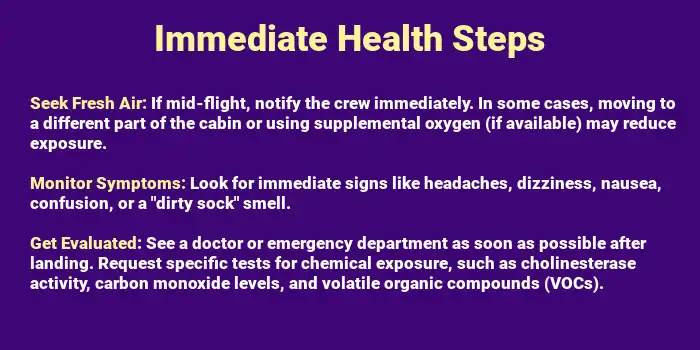
- Seek medical evaluation promptly and describe the timing and flight details accurately.
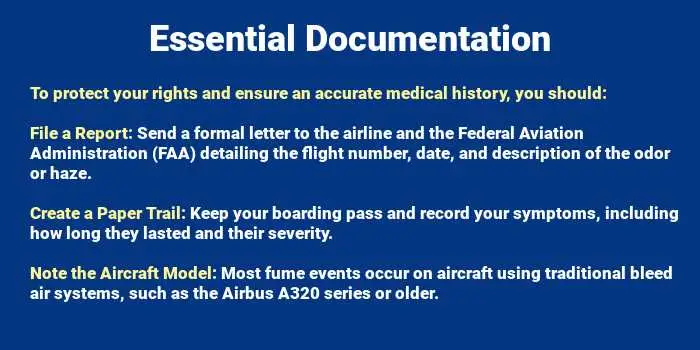
- Document the flight information: airline, flight number, date, aircraft type if known, seat location, and phase of flight when the odor began.
- Request copies of any incident documentation where possible, such as reports filed with the airline.
- Preserve contemporaneous notes: symptoms, duration, odor description, and any announcements or crew actions.
- Identify witnesses: traveling companions, nearby passengers, or crew names if available.
- Track follow-up symptoms with dates and clinical visits, avoiding speculation and focusing on observable facts.
These steps do not prove a claim by themselves. They often determine whether a claim can be evaluated rigorously rather than argued abstractly.
Regulatory and Governance Considerations
Cabin air safety touches multiple governance domains: aviation certification, occupational safety, maintenance quality systems, and incident reporting frameworks. For airlines and manufacturers, the governance question is not limited to liability exposure. It includes:
- Risk identification: defining what constitutes a fume event and when escalation is required.
- Risk measurement: improving detection, data quality, and trend analysis across fleets.
- Risk mitigation: maintenance interventions, operational procedures, training, and post-event protocols.
- Risk communication: ensuring crew and passengers receive accurate, consistent information.
Strong governance is repetitive by design. It repeats the standard, it repeats the protocol, and it repeats the audit cycle. That repetition is how complex systems remain reliable under pressure.
Settlement, Class Actions, and Case Structure
Some claimants ask whether cabin a air contamination lawsuit or a class actions. In practice, many claims are individualized because exposure circumstances, medical histories, and damages vary widely. Even where multiple people were on the same flight, their symptoms and outcomes can differ.
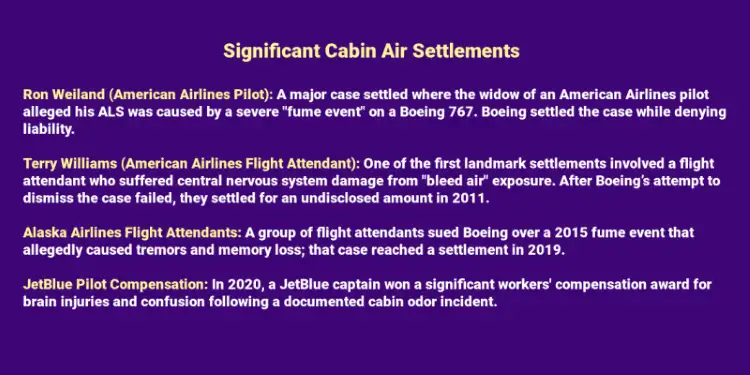
That said, broader litigation structures can arise, such as consolidated proceedings or coordinated discovery. For instance, similar to the Dexcom device recall lawsuit, there could be grouped claims involving similar aircraft types, similar alleged failure modes, or similar occupational exposure patterns. Whether aggregation is appropriate depends on jurisdictional rules and the degree of commonality in evidence.
What to Look for When Evaluating a Potential Claim
From a neutral perspective, the strength of a cabin air contamination lawsuit often correlates with a few concrete factors:
- A clearly documented event, ideally with operational disruption (return to gate, diversion, emergency response).
- Multiple consistent witness accounts.
- Maintenance records that show a plausible mechanical source.
- Prompt medical evaluation with documented temporal linkage.
- Objective testing where available, and careful expert analysis where not.
Conversely, claims tend to be harder where the event is undocumented or the medical timeline is delayed. This scenario is somewhat reminiscent of Mounjaro vision loss lawsuits, which often rely heavily on generalized scientific arguments without flight-specific evidence.
Conclusion: Why This Issue Remains Material
Cabin air contamination litigation is a technical and evidentiary contest. It requires clarity on systems, clarity on exposure, and clarity on causation. It also reflects a broader governance expectation: stakeholders increasingly demand proactive measurement, proactive transparency, and proactive mitigation rather than reactive explanations after an event.
For individuals affected by cabin air contamination, the central question is personal harm and proof. For organizations involved in such incidents, the central question is system integrity and trust. Both are shaped by the same discipline: document what happened, investigate what happened, and improve what happens next.
This situation is not unique to aviation; similar challenges arise in other sectors too. For example, in the realm of pharmaceuticals like Trulicity or Zepbound, claims involving vision loss due to medication side effects also require meticulous documentation and investigation into causal links.
Frequently Asked Questions about a Cabin Air Contamination Lawsuit
What is cabin air contamination in commercial aviation?
Cabin air contamination refers to events where the air inside an aircraft’s cabin or cockpit is believed to contain airborne chemicals, fumes, or particulates at levels that may cause acute or chronic health effects. These events often involve odors such as ‘dirty socks,’ ‘oil,’ or ‘chemical’ smells and sometimes visible haze or mist, commonly linked to what is known as a ‘fume event.’
What are the common sources of cabin air contamination in aircraft?
Common sources include heated engine oil fumes, hydraulic fluid byproducts, and other volatile compounds entering the aircraft’s environmental control system (ECS) through bleed air taken from engine compressor stages or the auxiliary power unit (APU). Issues like engine oil seal leakage, APU-related fumes, and limitations in ECS filtration systems are frequently cited in contamination claims.
How do cabin air contamination lawsuits typically describe the alleged exposure?
These lawsuits often allege that exposure occurs due to malfunctioning engine oil seals allowing oil into bleed air streams, APU oil leaks during ground or flight operations, heated hydraulic fluid vapors entering the cabin air supply, and insufficient filtration of volatile organic compounds (VOCs) and ultrafine particles by the ECS. They dispute whether such exposures caused injury and if aircraft design or maintenance was defective.
What symptoms are commonly reported by individuals claiming cabin air contamination exposure?
Reported symptoms include headache, dizziness, nausea; eye, nose, and throat irritation; coughing, chest tightness, shortness of breath; cognitive issues like confusion and memory problems; fatigue and sleep disruption; as well as neurological signs such as tingling sensations, tremors, and balance difficulties. Some claim longer-term neurological or respiratory effects attributed to cumulative exposure.
What is ‘aerotoxic syndrome’ in relation to cabin air contamination?
‘Aerotoxic syndrome’ is a term used by some claimants and advocates to describe a collection of symptoms they believe result from exposure to contaminated bleed air containing toxic substances like heated engine oils. It encompasses both acute symptoms experienced during fume events and potential chronic health effects. However, medical causation of this syndrome remains contested in legal proceedings.
Why is there controversy surrounding cabin air contamination claims in aviation?
Controversy arises because while odors and symptoms are often reported during fume events, defendants including manufacturers and airlines dispute whether these odors indicate harmful contamination at injurious levels. They argue that aircraft systems meet certification standards and that symptoms are nonspecific with alternative explanations possible. This leads to complex legal disputes over causation, exposure levels, and liability.