
Understanding Concealing Liabilities or Expenses: A Deliberate Path to Financial Deception
- Concealing liabilities or expenses: Represents a sophisticated form of financial statement fraud where companies deliberately hide, underreport, or misclassify financial obligations to present a misleading picture of their true financial condition. This deceptive practice involves keeping critical financial obligations off balance sheets or failing to record legitimate expenses, thereby artificially inflating equity, assets, or reported earnings.
- Financial Deception: The concealment creates a dangerous illusion of superior financial performance that can mislead investors, creditors, and other stakeholders into making decisions based on fundamentally false information. When these schemes inevitably unravel, they often trigger securities class action lawsuits and regulatory enforcement actions that can devastate companies and their shareholders.
- Omission of Financial Obligations: The most direct method involves simply failing to record legitimate liabilities in accounting systems. This deliberate omission creates substantial gaps between reported financial position and actual obligations, while companies may also understate existing liabilities through various manipulative techniques or improperly delay expense recognition to future accounting periods.
- Types of Concealed Liabilities: The scope of potential concealment encompasses numerous financial obligations that companies may attempt to hide:
-
- Loans and financing arrangements
- Warranties attached to sales
- Underreported health benefits
- Unpaid wages and salaries
- Accrued taxes and interest expenses
- Vacation time obligations
- Pending lawsuits and legal obligations
- Impact on Financial Performance: When expenses are concealed, reported net income becomes artificially exaggerated while actual costs remain understated. According to a Deloitte survey, more than 60% of Chief Financial Officers report that hidden or underestimated costs represent one of the top barriers to accurate financial forecasting. This widespread problem creates cascading effects throughout strategic decision-making processes.
- Accounting Fraud Classification: Financial statement manipulation through concealed liabilities falls squarely within the broader category of accounting fraud. These practices violate fundamental principles when companies overstate assets or understate liabilities to misrepresent their true liquidity position.
- Real-World Manipulation: Consider a company with actual assets of $1 million and liabilities of $5 million that falsely reports $5 million in assets and merely $500,000 in liabilities. This manipulation creates a completely deceptive impression of financial stability that can attract investors and creditors under entirely false pretenses.
- Common Concealment Techniques: Standard expense concealment methods include deferring expenses to future periods, failing to record required depreciation, hiding legitimate operating expenses, or intentionally recording artificially low production costs. Companies may also engage in capitalizing expenses—spreading costs over several years by recording an asset with annual depreciation rather than recognizing the entire expense in the appropriate accounting period.
- Distorted Financial Metrics: Concealed liabilities and expenses fundamentally distort crucial financial metrics that investors and creditors rely upon for decision-making. Debt-to-equity ratios appear artificially favorable when liabilities are hidden, making companies seem less risky to potential investors. Similarly, manipulated expenses artificially inflate profitability ratios, creating false impressions of operational efficiency.
- Fraud Warning Indicators: Multiple indicators can signal potential concealment practices within organizations:
-
- Invoices absent from sub-ledgers
- Significant liability estimates difficult to corroborate
- Management instructing employees to omit transactions from accounting records
- Unusual revenue growth without corresponding cash flow
- Sophisticated Manipulation Methods: These deceptive practices manifest through various sophisticated techniques, including off-balance-sheet financing arrangements, transferring assets to third parties, creating fictitious debts, or purchasing items likely to be overlooked during valuation processes. The complexity of modern accounting systems, combined with subjective judgment requirements and the sophisticated understanding that perpetrators often possess of financial principles, makes detection particularly challenging.
- Securities Litigation Consequences: When these concealment schemes are eventually discovered, companies face devastating consequences including securities litigation, regulatory enforcement actions, and massive financial settlements that can far exceed any temporary benefits gained through the fraudulent practices.
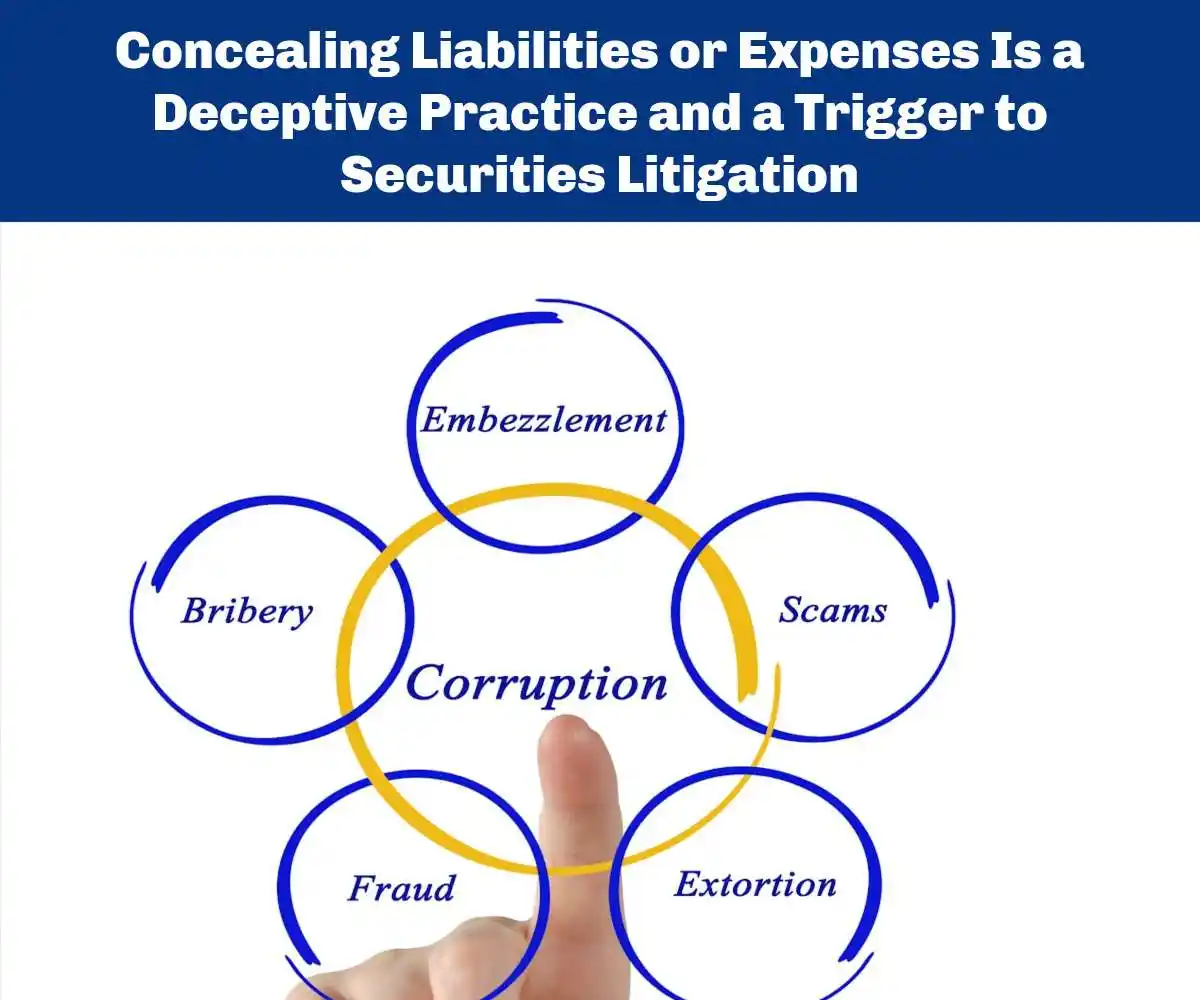
The Driving Forces Behind Liability Concealment: Pressure, Fraud, and Legal Consequences
- Financial pressure represents the most significant catalyst driving companies to conceal liabilities and expenses. The Association of Certified Fraud Examiners estimates that organizations lose approximately 5% of their annual revenues to fraud, highlighting the devastating financial impact of such deception. Companies facing intense pressure to meet analyst expectations, maintain stock prices, or comply with debt covenants frequently resort to these fraudulent practices to avoid reporting losses that could trigger securities litigation.
- Earnings expectations create a toxic environment where management teams may feel compelled to manipulate financial statements rather than disappoint investors. This pressure manifests particularly during critical reporting periods when companies scramble to meet previously announced guidance or maintain their market reputation. The consequences of failing to meet these expectations can include dramatic stock price declines, loss of investor confidence, and potential securities class action lawsuits filed by shareholders who suffered losses.
- Corporate governance failures often enable and encourage liability concealment practices. When boards of directors lack independence, fail to provide adequate oversight, or when there’s an absence of strong ethical leadership, the risk of accounting fraud increases substantially. Management teams operating without proper oversight may resort to instructing employees not to record transactions in accounting sub-ledgers or omitting significant information from financial statements.
- Competitive pressures and industry benchmarking demands create additional motivation for fraudulent financial reporting. Organizations experience intense scrutiny from analysts, investors, and peers who demand consistent performance metrics aligned with industry standards. This external pressure can inadvertently incentivize companies to compromise their financial reporting integrity when facing market participants who demand results that may not reflect operational reality.
- Weak internal controls provide the operational environment where concealment practices can flourish undetected. Companies with inadequate oversight mechanisms, poor segregation of duties, or insufficient audit functions create opportunities for manipulation that may persist for years before discovery. These control deficiencies often stem from rapid growth, inadequate resources allocated to compliance, or a corporate culture that prioritizes short-term results over ethical conduct.
- Regulatory compliance failures compound the risks associated with liability concealment. Non-compliant expenses can result in substantial penalties, particularly when violations involve regulations like the Foreign Corrupt Practices Act, where the average monthly cost for related investigations reaches $1,590,475. The threat of regulatory enforcement actions, combined with the potential for securities class action litigation, creates a cascade of legal and financial consequences that can devastate organizations.
- Ineffective operational processes create additional incentives for concealing expenses and liabilities. Poor visibility into company spending results in inaccurate financial projections, unreliable budgets that hinder decision-making, and increased risk of non-compliance with expense policies. These operational deficiencies create a foundation for financial misstatement that extends far beyond the finance department, affecting strategic decision-making throughout the organization.
- The relationship between management compensation structures and liability concealment cannot be ignored. When executive bonuses are tied heavily to stock performance or earnings metrics, the temptation to manipulate financial results increases dramatically. This compensation-driven pressure often leads to systematic financial statement fraud designed to meet specific targets while hiding the true cost of operations from investors and regulators.
Common Methods Used to Conceal Liabilities: Sophisticated Pathways to Securities Fraud
- Liability concealment schemes represent some of the most sophisticated forms of accounting fraud that continue to trigger securities class action lawsuits and regulatory enforcement actions. Organizations employ these techniques to artificially enhance their reported financial health, creating the foundation for investor deception that often leads to securities litigation.
- Fraudulent concealment methods require careful scrutiny to detect, as perpetrators deliberately design these schemes to circumvent standard auditing procedures and internal controls.
1. Off-Balance-Sheet Transactions
- Off-balance-sheet transactions represent financial activities that deliberately avoid disclosure on company balance sheets despite creating significant financial obligations. These arrangements serve as vehicles for hiding debt and risk from investors.
- Common off-balance-sheet structures include:
-
- Joint ventures and special purpose entities (SPEs)
- Contingent liabilities
- Derivatives and hedging activities
- The Enron scandal remains the quintessential example of off-balance-sheet abuse. The energy company created hundreds of SPEs with misleading names to hide billions in debt and risky investments. When the scheme collapsed, shareholders lost approximately $74 billion in market value.
- Regulatory response to these abuses resulted in new accounting standards. ASC 842 for U.S. GAAP now requires companies to recognize most leases on their balance sheets after regulators discovered that public companies carried over $1 trillion in off-balance-sheet financing for leasing obligations.
 2. Delayed Expense Recognition
- Expense manipulation through delayed recognition represents one of the most straightforward concealment methods. Companies intentionally defer expense recognition to future accounting periods, creating artificial profit inflation that misleads investors about true operational performance.
- Delayed recognition schemes typically involve:
-
- Postponing expense accruals beyond proper accounting periods
- Failing to record incurred expenses in current reporting periods
- Moving legitimate current costs to future periods inappropriately
3. Underreporting Payables
- Management manipulation of accounts payable creates the illusion of stronger financial health than reality warrants. Companies underreport payables by holding checks for extended periods, artificially preserving cash balances while concealing true obligations.
- Payable manipulation achieves several deceptive objectives:
-
- Preserves checking account balances for financial statement purposes
- Creates false impressions that supplier obligations are current
- Mismatches revenues with corresponding expenses
- Artificially enhances reported profitability
- Supplier relationship damage often results from these practices, leading to restricted credit terms that ultimately harm legitimate business operations.
4. Misclassifying Expenses
- Expense misclassification distorts crucial financial metrics including cash-flow forecasts, tax calculations, and key performance ratios. These manipulations directly impact investor decision-making by presenting false pictures of operational efficiency.
- Misclassification techniques include:
- Recording operating expenses as assets to defer profit impact
- Categorizing current liabilities as long-term to improve liquidity ratios
- Improperly classifying operational costs as capital expenditures
- Real-world example: When companies record a $12,000 annual SaaS license entirely as an operating expense in January rather than amortizing over twelve months, EBITDA drops artificially in that month, distorting profitability analysis and cash-flow projections.

5. Hiding Invoices
- Physical concealment of invoices represents a crude but effective method for avoiding liability recognition. Companies hide invoices for goods and services received prior to reporting periods, deliberately withholding documentation from auditors.
- Invoice concealment involves:
-
- Withholding transaction documentation from accounting systems
- Instructing employees not to record legitimate transactions in sub-ledgers
- Delaying invoice processing until after audit completion
- Audit circumvention through these methods ensures certain liabilities remain undisclosed during critical financial reporting periods, creating artificially improved financial positions.
6. Improper Asset Valuation
- Asset valuation manipulation involves deliberately overstating the reported value of inventory, accounts receivable, fixed assets, or intangible assets. These schemes hide true financial obligations while creating false impressions of company value.
- Valuation manipulation techniques include:
-
- Failing to write down obsolete inventory to fair value
- Creating fictitious receivables without legitimate underlying transactions
- Manipulating useful life estimates to reduce depreciation expense
- Overstating asset residual values
- Investment manipulation extends to securities without ready markets, where companies improperly value thinly traded stock or complex financial instruments. These practices particularly affect companies with significant investment portfolios.
- Layered deception schemes often combine multiple concealment methods, creating sophisticated fraudulent frameworks that require extensive forensic accounting investigations to uncover. When these schemes inevitably collapse, the resulting corrective disclosures typically trigger significant stock price declines and securities class action litigation.

Identifying Warning Signs of Concealed Liabilities: Critical Red Flags for Investors
- Detecting concealed liabilities requires systematic analysis of financial statement patterns and corporate behavior that often precede securities class action lawsuits and regulatory enforcement actions. Investors who understand these warning signs can protect themselves from the devastating consequences of accounting fraud before corrective disclosures trigger massive stock price declines.
- Early detection of liability concealment can mean the difference between avoiding losses and becoming a victim of securities litigation. Companies engaged in these fraudulent practices typically exhibit specific behavioral patterns that savvy investors can identify through careful scrutiny of financial statements and corporate communications.
Revenue Growth Without Corresponding Cash Flow: The Primary Red Flag
- The most significant warning sign of potential liability concealment involves persistent gaps between reported earnings and actual cash flow generation. When companies report strong profits but fail to generate corresponding cash, this disconnect often indicates financial statement fraud through expense manipulation or liability concealment.
- Key indicators include:
-
- Revenue increasing significantly while cash flow remains stagnant or decreases
- A cash flow from operations to net income ratio consistently below one
- Fourth-quarter earnings that are unusually high without seasonal justification
- This discrepancy occurs because while manipulated revenue can appear on financial statements, the underlying cash transactions cannot be fabricated. Companies concealing liabilities often struggle to convert reported profits into actual cash, creating vulnerabilities that eventually lead to corrective disclosures and securities class action filings.
Accounting Policy Changes: Masking Financial Reality
- Unexplained shifts in accounting methods frequently signal management’s attempts to conceal liabilities or manipulate financial results. Companies under financial pressure often change accounting policies to temporarily improve their reported financial position.
- Warning patterns encompass:
-
- Sudden adoption of accounting policies that diverge from industry standards
- Retroactive application of new policies that significantly impact historical results
- Inadequate disclosure regarding the financial impact of policy changes
- Legitimate accounting changes typically include transparent explanations and clear business justifications. When companies make unexplained policy shifts, particularly near reporting deadlines, investors should exercise heightened scrutiny for potential securities litigation risks.

Accounts Payable Discrepancies: Hidden Financial Distress
- Inconsistencies in accounts payable often reveal concealed obligations that companies attempt to hide from investors and creditors. These discrepancies can indicate systematic efforts to manipulate financial statements through liability concealment.
- Critical indicators include:
-
- Unexpected reductions in accounts payable during industry credit crunches
- Gross margins exceeding industry peers without operational advantages
- Unusual reductions in days’ purchases outstanding
- Earnings growth coupled with recurring negative operating cash flows
- Management teams sometimes underreport payables by holding checks for extended periods or instructing employees to hide invoices from auditors. These practices create artificial improvements in financial ratios while concealing the company’s true financial obligations.
Documentation Irregularities: Evidence of Fraudulent Activity
- Documentation irregularities represent strong indicators of systematic efforts to conceal liabilities from investors and auditors. Companies engaging in accounting fraud often manipulate or withhold documentation to prevent detection of their fraudulent schemes.
- Problematic patterns encompass:
-
- Invoices missing from accounting sub-ledgers
- Unexplained discrepancies in account reconciliations
- Documents showing signs of manipulation or unauthorized alterations
- Significant transactions lacking proper documentation
- Fraud perpetrators frequently withhold evidence or provide false information when questioned, sometimes creating fabricated documentation to conceal their activities. These practices often precede securities class action lawsuits when the truth eventually emerges.
Finance Staff Turnover: Internal Warning Systems
- High turnover in financial positions often signals underlying problems that insiders recognize before they become public. Finance professionals with knowledge of questionable practices frequently depart to avoid association with potential fraud.
- Concerning patterns include:
-
- Departures of employees positioned to identify financial problems early
- Staff leaving before stock options lose value due to anticipated problems
- Turnover of key executives creating organizational instability
- Frequent changes in management or accounting personnel
- These departures often occur when employees face pressure to participate in unethical activities or when they identify financial distress signals that have not yet been disclosed to investors. When companies experience unusual turnover in financial roles, investors should investigate whether these changes might indicate deeper problems that could eventually trigger regulatory enforcement actions and securities litigation.
 Corporate Fraud Cases: When Concealed Liabilities Trigger Securities Litigation
- Devastating Consequences: Several notorious corporate scandals demonstrate how concealing liabilities creates catastrophic financial consequences that extend far beyond simple accounting fraud—these cases triggered massive securities class action lawsuits and resulted in billions of dollars in investor losses.
- Historical Precedents: These real-world examples establish crucial legal precedents for how liability concealment violates federal securities laws and creates the foundation for extensive securities litigation.
Enron: The Quintessential Example of Off-Balance-Sheet Fraud
- The Enron scandal remains the definitive case study of how sophisticated liability concealment can destroy investor confidence and trigger the largest corporate bankruptcy in U.S. history at that time.
- Complex Fraud Schemes: The energy giant employed multiple deceptive practices to hide massive debt obligations:
-
- Special Purpose Entities: Created hundreds of SPEs with misleading names to move billions in debt off their balance sheets
-
- Mark-to-Market Manipulation: Used aggressive accounting to immediately claim projected profits from assets regardless of actual performance
-
- Shell Company Transactions: Orchestrated fraudulent deals with related entities to artificially inflate revenue figures
-
- Undisclosed Conflicts: Failed to reveal conflicts of interest in non-arm’s-length transactions between the company and its SPEs
- Financial Devastation: The resulting corrective disclosure created unprecedented investor losses. Shareholders lost $74 billion in market value, while thousands of employees lost both their jobs and retirement savings.
- Criminal Consequences: CEO Jeff Skilling received a 24-year prison sentence, establishing a precedent for executive accountability in securities fraud cases.
Colonial Bank: A $2.3 Billion Fraud Scheme
- Colonial Bank’s collapse in 2009 resulted from a massive fraud scheme involving its Mortgage Warehouse Lending Division that demonstrates how liability concealment can grow exponentially over time.
- The Scheme’s Evolution:
-
- Initial Concealment: The fraud began in 2002 when Taylor Bean & Whitaker started overdrafting its operating account
-
- Account Manipulation: Colonial employees systematically “swept” money between accounts to prevent overdrafts from appearing on regulatory reports
-
- Escalating Deception: The fraudsters concealed nearly $600 million by 2005, moving the scheme to the AOT Facility
-
- Phantom Securities: Colonial paid TBW for securities supposedly backed by mortgage pools that contained no underlying mortgages
-
- Ultimate Collapse: The scheme eventually reached $2.3 billion before being discovered
-
- Audit Failures: PricewaterhouseCoopers, serving as Colonial’s external auditor, failed to detect the fraud throughout their engagement.
Roadrunner Transportation: Systematic Earnings Manipulation
- Multiple Accounting Violations: Between 2013 and 2017, Roadrunner Transportation Systems engaged in systematic financial statement fraud through various liability concealment techniques:
-
- Expense Deferrals: Improperly shifted expenses across quarters to minimize their impact on reported earnings
-
- Asset Write-Down Avoidance: Refused to write down worthless assets and uncollectible receivables
-
- Earnout Manipulation: Manipulated acquisition-related earnout liabilities to create artificial income “cushions” for future quarters
-
- Auditor Deception: Actively concealed fraudulent activities from their independent auditors
-
- Material Misstatements: This systematic manipulation resulted in materially false financial results across multiple reporting periods.
- Executive Accountability: Former CFO Peter Armbruster received a 24-month prison sentence after being convicted of securities fraud violations.
Waste Management: The Foundation of Modern Fraud Detection
- Accounting Irregularities: While specific liability concealment details vary, waste-related costs frequently become hidden in traditional accounting systems through deliberate misclassification.
- Systemic Problems: Companies often dismiss waste costs as unavoidable business expenses, burying unspecified costs in overhead accounts where they escape proper scrutiny.
- Legal Precedents: These cases collectively establish that concealing liabilities—regardless of the specific methodology—creates substantial liability for securities class action lawsuits and regulatory enforcement actions.
- The Cascade Effect: When concealment schemes unravel, the resulting corrective disclosures typically trigger dramatic stock price declines, leading to substantial investor losses and creating the foundation for extensive securities litigation seeking to recover those losses.
Preventing Concealed Liabilities: Building Defense Against Securities Litigation
- Preventing concealed liabilities requires multi-layered organizational defenses that protect against accounting fraud and the devastating securities class action lawsuits that inevitably follow.
- Companies that fail to implement adequate safeguards expose themselves to regulatory sanctions, investor losses, and the catastrophic legal consequences that have destroyed numerous organizations throughout corporate history.
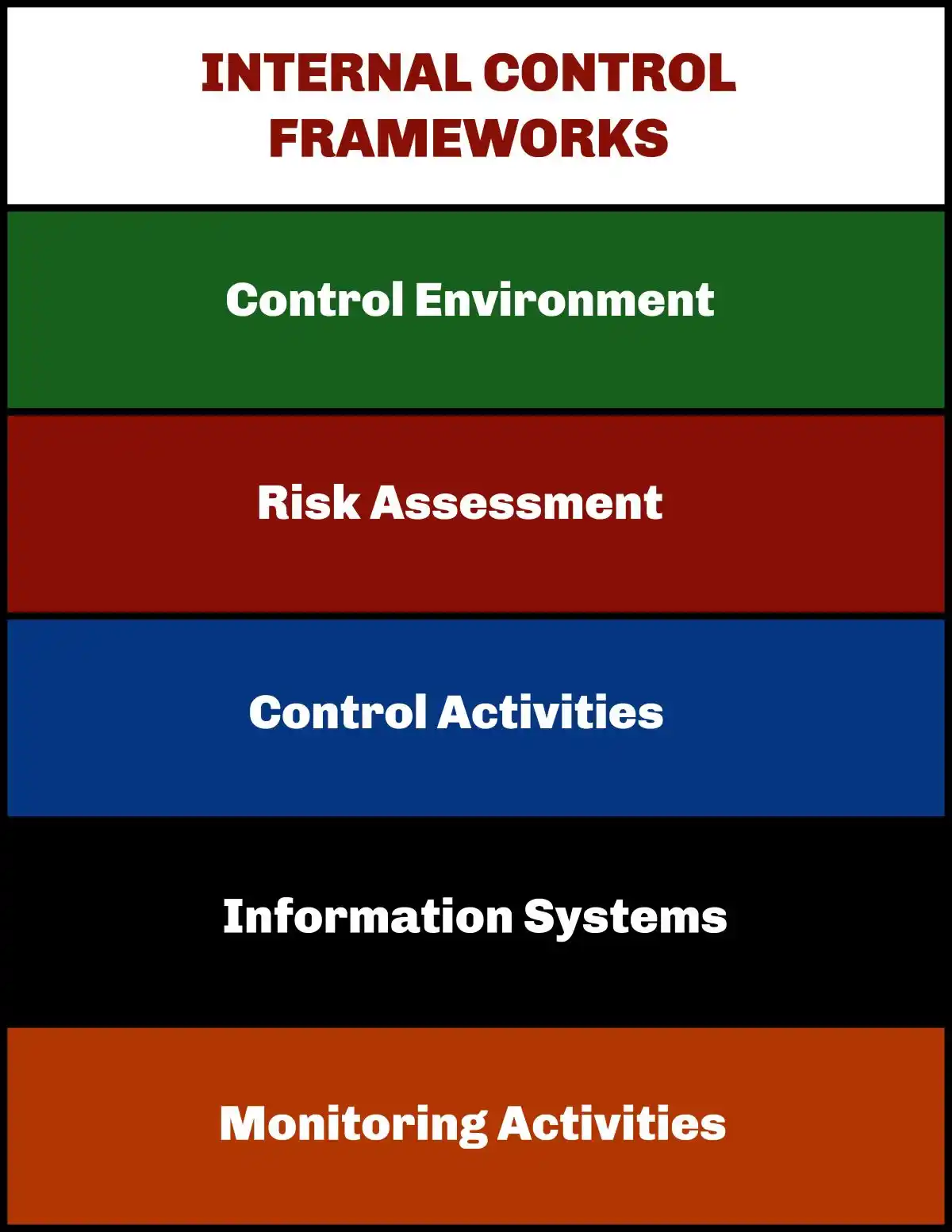
Strong Internal Controls: The Foundation of Fraud Prevention
- Internal controls serve as the primary barrier against liability concealment and the securities litigation that results from fraudulent financial reporting. Organizations must implement three critical control layers that work together to prevent, detect, and correct fraudulent activities:
-
- Preventive Controls: These mechanisms stop fraud before it occurs through segregation of duties, access restrictions, and authorization requirements that prevent any single employee from controlling financial transactions.
-
- Detective Controls: Account reconciliations, physical inventory checks, and analytical reviews identify anomalies early, often before they escalate into material misstatements that trigger securities class actions.
-
- Corrective Controls: Response procedures address violations promptly and prevent recurrence of control failures.
- The Association of Certified Fraud Examiners reports that half of all frauds occurred specifically due to inadequate internal controls. Segregation of duties prevents concentrated authority that enables fraud schemes, ensuring multiple checkpoints exist throughout financial reporting processes.
Regular Audits and Risk Assessment
- Regular audits identify control weaknesses before they result in the financial statement fraud that leads to securities litigation. Internal audit functions must conduct comprehensive risk assessments that specifically evaluate liability concealment risks across all business units and processes.
- Scheduled and surprise audits prove essential for detecting concealed liabilities early. Companies that discover problems through internal processes rather than external investigations typically face less severe regulatory penalties and reduced exposure to securities class action lawsuits.
Whistleblower Protections: Early Warning Systems
- Anonymous reporting systems detect fraud at significantly higher rates than organizations without such mechanisms—49% versus 31%. These programs serve as critical early warning systems that can prevent minor control failures from escalating into major accounting fraud schemes.
- The Dodd-Frank Act prohibits employer retaliation against whistleblowers who report potential violations. Companies must establish clear investigative procedures that demonstrate commitment to addressing reported concerns promptly and thoroughly.
Transparent Corporate Governance Frameworks
- Corporate governance failures frequently precede major fraud scandals and the securities litigationthat follows. The G20/OECD Principles of Corporate Governance emphasize transparency, accountability, and stakeholder protection as fundamental requirements.
- Effective governance creates cultures where ethical concerns can be raised without fear of retaliation. Board oversight, audit committee independence, and management accountability work together to prevent the governance breakdowns that enable liability concealment.
Enterprise Resource Planning Systems
- ERP systems integrate business functions into unified platforms that automatically enforce internal controls and maintain comprehensive audit trails. These systems implement segregation of duties electronically and require multi-level approvals for significant transactions.
- Organizations implementing ERP systems report average operational cost reductions of 13%, with top performers achieving 20% reductions. The investment in robust technology platforms pays dividends through improved control effectiveness and reduced fraud risk.
Regulatory Compliance Training
- Regulatory compliance training ensures employees understand their roles in preventing financial statement fraud and the serious legal consequences of violations. Effective training programs address anti-fraud protocols, ethical standards, and specific regulatory requirements that apply to the organization’s industry.
- Employee education about securities laws and the penalties for violations creates awareness that helps prevent inadvertent participation in fraudulent schemes. When employees understand the devastating impact of securities class actionson investors and communities, they become active participants in maintaining organizational integrity.

Key Takeaways
Understanding how companies conceal liabilities and expenses is crucial for investors, auditors, and stakeholders to protect themselves from financial fraud and make informed decisions.
• Concealing liabilities artificially inflates company performance by hiding debts, expenses, or obligations to mislead stakeholders about true financial health.
• Watch for red flags like revenue growth without matching cash flow, frequent accounting policy changes, and high finance staff turnover.
• Common concealment methods include off-balance-sheet transactions, delayed expense recognition, underreporting payables, and hiding invoices from auditors.
• Strong internal controls and regular audits are essential defenses against liability concealment, with segregation of duties preventing single-person fraud control.
• Historical cases like Enron and Colonial Bank demonstrate devastating consequences, including billions in shareholder losses and criminal prosecutions for executives.
The Association of Certified Fraud Examiners estimates organizations lose approximately 5% of annual revenues to fraud, making detection and prevention of concealed liabilities a critical business priority. Companies with anonymous whistleblower systems detect fraud at 49% higher rates than those without such protections.
FAQs
Q1. What are concealed liabilities and expenses? Concealed liabilities and expenses are financial obligations or costs that companies deliberately hide or underreport in their financial statements. This can include unreported loans, understated warranties, or omitted expenses, all aimed at presenting a more favorable financial picture than reality.
Q2. Why do companies conceal liabilities and expenses? Companies conceal liabilities and expenses primarily to inflate their financial results. By hiding debts or costs, they can artificially improve their balance sheet and report higher net income, making the company appear more financially stable and attractive to investors and creditors.
Q3. What are some red flags that may indicate concealed liabilities? Key red flags include unusual revenue growth without corresponding cash flow increases, frequent changes in accounting policies, discrepancies in accounts payable, missing or altered financial documents, and high turnover rates among finance staff.
Q4. How can companies prevent the concealment of liabilities and expenses? Prevention strategies include implementing strong internal controls, conducting regular audits, establishing whistleblower protection programs, maintaining transparent corporate governance, utilizing ERP systems, and providing comprehensive regulatory compliance training to employees.
Q5. What are the consequences of concealing liabilities and expenses? Concealing liabilities and expenses can lead to severe consequences, including significant financial losses for shareholders, legal repercussions for executives, damage to the company’s reputation, and potential bankruptcy. Historical cases like Enron have demonstrated how such practices can result in billions of dollars in losses and criminal prosecutions.
