
Introduction to A Comprehensive Guide to Accounting Fraud in
- Guide to Accounting Fraud: In this guide we will address the various accounting frauds, their consequences, building controls to prevent fraud and much more.
- Complex Environment: Businesses navigate an increasingly complex regulatory landscape, understanding these frameworks becomes crucial for investors seeking to protect their interests and foster sustainable growth.
- Implementing Strong Internal Controls: Encompasses the implementation of the processes, policies and regulations that will ensure your organization is run efficiently, ethically and responds to its stakeholders.
- Major Risk Assessment: Moreover, accounting fraud can create a false sense of financial stability. By manipulating financial statements, companies may hide underlying issues such as excessive debt, poor cash flow, or declining sales. These hidden problems can eventually surface via a corrective disclosure, leading to financial distress or even bankruptcy.
- Recognize the Risk: Understanding these risks is crucial for maintaining the ethics and integrity of financial reporting and safeguarding your organization’s future by avoiding regulatory scrutiny and securities litigation.
- Regulatory Enforcement: Refers to the processes and actions taken by government agencies to ensure that individuals and organizations comply with established laws and regulations. This enforcement is crucial for maintaining order, protecting consumers, and ensuring fair practices across various industries. Regulatory agencies are empowered to create rules, conduct inspections, and impose penalties for non-compliance which can run into the tens-of-millions if not much more. .

- Transparency through Financial Reporting: Openly, accurately, and understandably disclosing a company’s financial performance, risks, and activities to stakeholders. This process builds trust, enhances accountability, and helps prevent fraud by providing a clear picture of a company’s financial health through complete, accurate, and timely reports.
- Securities Litigation: Usually the result of weak internal controls that allows shareholders to rely on false and misleading financial disclosures and when the truth comes out in a corrective disclosure they lose money and file securities litigation as a collective way of recouping the money they lost.
- Pressure to-Beat-the-Street: In today’s business environment, the pressure to meet financial targets is immense. Companies are tempted to engage in creative accounting to enhance their financial image to investors, regulators, and the public. Understanding creative accounting is essential for anyone involved in financial analysis, reporting, or auditing. It empowers you to identify potential red flags and ensure transparency in financial reporting.
Understanding the Landscape of Accounting Fraud in 2025
- Accounting Fraud Landscape: The year 2025 presents a unique landscape for accounting fraud, shaped by technological advancements and evolving regulatory frameworks. With the integration of artificial intelligence and big data analytics, fraudsters have both new opportunities and challenges. As a business leader, it is essential for you to navigate these changes to prevent fraud effectively.
- Enhancing Transparency: Regulatory bodies worldwide are tightening their grip on financial misconduct, introducing stringent laws and compliance requirements. These regulations are designed to enhance transparency and accountability within organizations. Staying abreast of these changes will help you align your practices with legal standards, thereby reducing the risk of fraud.
- Globalization of Markets: Moreover, the globalization of markets introduces additional complexities in detecting and preventing accounting fraud. Cross-border transactions can obscure fraudulent activities, making it crucial for you to implement comprehensive monitoring systems. Understanding this intricate landscape will allow you to devise strategies that are both effective and adaptive.
Realizing the Enormous Risk of Engaging in Accounting Fraud
- Fraudulent Activities: While accounting fraud may offer short-term benefits, it poses significant risks that can undermine the financial health of an organization. One of the primary dangers is the potential for accounting fraud, where accounting fraud crosses into illegal territory. When companies prioritize appearance over substance, they may engage in fraudulent activities that can lead to severe legal and financial repercussions.
- Reputational Damages: Another risk associated with accounting chicanery is the erosion of trust. Investors, regulators, and stakeholders rely on accurate financial reporting to make informed decisions. When accounting chicanery practices are uncovered, it can damage a company’s reputation and lead to a loss of investor confidence. This loss of trust can have long-lasting effects, making it difficult for the organization to recover.
- Regulatory Enforcement: Regulatory enforcement refers to the processes and actions taken by government agencies to ensure that individuals and organizations comply with established laws and regulations. This enforcement is crucial for maintaining order, protecting consumers, and ensuring fair practices across various industries. Regulatory agencies are empowered to create rules, conduct inspections, and impose penalties which can run into the tens-of-millions or more for non-compliance.
- Securities Litigation: Sole purpose is to protect investors from fraud and misuse and ensure fair trading practices in the financial markets. Accounting fraud is the number one trigger for securities litigation from investors receiving false and misleading information and can ban together collectively to seek damages they suffered when the truth emerged
- Major Risk Assessment: Moreover, accounting chicanery can create a false sense of financial stability. By manipulating financial statements, companies may hide underlying issues such as excessive debt, poor cash flow, or declining sales. These hidden problems can eventually surface, leading to financial distress or even bankruptcy. Understanding these risks is crucial for maintaining the integrity of financial reporting and safeguarding your organization’s future.
Common Types of Accounting Fraud
- Accounting Fraud: Is not a singular concept but a collection of various deceptive practices. Some of the most prevalent types include:
-
- Revenue Recognition Fraud: This involves recording revenue before it is earned or deferring expenses to future periods, thereby inflating earnings.
- Asset Misappropriation: Often seen in smaller organizations, this occurs when individuals in positions of trust steal or misuse a company’s resources.
- Fraudulent Financial Reporting: This type of fraud involves intentional misstatements or omissions in financial statements to deceive stakeholders.
- Preventing Fraud: Understanding these common types is essential for preventing fraud. By knowing what to look for, you can implement more effective detection and prevention measures. This knowledge empowers you to protect your business’s financial integrity and maintain trust
Types of Revenue Recognition Fraud
- Premature revenue recognition: Booking revenue before it has been earned or before products are delivered or services are rendered. This can include “bill-and-hold” schemes, where a company bills a customer but holds the goods until a later date.
- Fictitious sales: Recording sales that did not occur to phantom customers. This can involve creating false invoices or shipping merchandise to undisclosed warehouses and booking it as a sale.
- “Channel stuffing”: Sending excessive inventory to distributors and recognizing it as revenue, even though the distributors are not likely to sell the products quickly.
- “Round-tripping”: Exchanging services with a partner company to artificially inflate both companies’ revenues.
- Manipulating the percentage-of-copletion method: Overstating the completion percentage of a long-term project to recognize more revenue in the current period.
- Improper use of side agreements: Using secret side agreements with customers to change the terms of a sale and justify improper revenue recognition.
- Impaired Assets: Failing to record asset impairments.
- Falsely Inflating Net Income: In a period by improperly eliminating or deferring current period expenses, or by allocating more costs to inventory than cost of goods sold.
- Creating Excess Reserves: Initially over-accruing a liability in one periodby initially over-accruing a liability in one period Creating Excess Reserves:by initially over-accruing a liability in one periodby initially over-accruing a liability in one period
- Fraudulent Management Estimates: A company uses inappropriate methodologies to determine write-offs or in other ways makes inappropriate adjustments to favorably impact financial statements
- Misleading Forecasts or Projections: A company might issue misleading forecasts to avoid disclosing a known, increased risk of missing key financial goals or metrics.
- Misleading Non-GAAP Reporting: An unethical practice for companies to use non-GAAP reporting metrics if GAAP figures do not fully portray their financial condition. Classic “cooking the books.”
Types of Asset Misappropriation
- Check Forgery: Altering or creating checks to steal funds.
- Theft of Money: Directly stealing cash from the company
- Inventory Theft: Stealing physical goods or products from the company.
- Payroll Fraud: Manipulating payroll systems to receive unauthorized payments.
- Cash Theft: Taking cash directly from the business.
- Skimming: Taking cash before it is recorded in the company’s books
- Misuse of Company Property: Using company assets for personal gain.
- Billing Schemes: Creating false invoices to divert company funds
Fraudulent Financial Reporting
- Fraudulent Financial Reporting: Refers to the intentional misrepresentation of a firm’s financial statements to mislead stakeholders about the company’s performance and profitability. This can involve the omission of information or the misstatement of financial data to deceive investors, creditors, and regulators. The reasons behind such fraud can be complex, often driven by pressures to meet financial targets or enhance the company’s image. Identifying fraudulent financial reporting requires auditors to look beyond the numbers and apply their skills to detect inconsistencies.
Common Financial Statement Fraud Schemes
| Scheme Type | Description | Example |
|---|---|---|
| Fictitious Revenue | Recording non-existent sales | Counterfeit sales transactions, Bill and hold arrangements |
| Premature Revenue Recognition | Recording revenue before earned | Accelerating revenue before service delivery |
| Channel Stuffing | Forcing excess inventory to distributors | Shipping excessive product to boost quarterly sales |
| Asset Overstatement | Inflating asset values | Phantom inventory, inadequate depreciation |
| Liability Concealment | Hiding financial obligations | Unrecorded debt, understated warranty liabilities |
| Material Omissions | Withholding critical information | Undisclosed related party transactions |
| Journal Entry Manipulation | Falsifying accounting records | Last-minute entries near reporting deadlines |
The Impact of Accounting Fraud on Financial Statements
- Misleading Company Health: Accounting fraud can significantly distort the true financial performance and position of a company. When financial statements are manipulated, they provide a misleading view of a company’s health, which can have far-reaching consequences for stakeholders.
- Investor Reliance on Accounting Fraud: For investors, distorted financial statements can lead to poor investment decisions. If a company’s earnings are artificially inflated, investors may believe the company is more profitable than it truly is, leading to overvaluation and potential financial loss. Similarly, creditors may underestimate the risk of lending to a company with manipulated financial statements, leading to increased exposure to default.
- Entire Section Effected: Another impact of accounting fraud is its potential to skew industry benchmarks and ratios. When companies engage in accounting fraud it can affect industry averages and distort comparisons between companies. This can make it challenging for analysts and investors to assess a company’s performance relative to its peers accurately.
- The Impact of Accounting Fraud: Ultimately, the integrity of financial statements is crucial for maintaining market confidence. By understanding the impact of creative accounting on financial statements, you can better navigate the financial landscape and make informed decisions that align with your financial goals.
What Are Internal Controls?
Internal controls are mechanisms put in place to ensure the reliability and integrity of financial and operational information. They help safeguard assets, ensure the accuracy of financial records, and promote operational efficiency. Implementing strong internal controls is essential to prevent fraud, errors, and inefficiencies within your organization.
These controls can be classified into preventive, detective, and corrective controls.
- Preventive controls aim to deter errors or irregularities from occurring.
- Detective controls are designed to identify errors that have already occurred, while corrective controls focus on rectifying identified anomalies.
- By understanding these categories, you can develop a comprehensive internal control framework tailored to your organization’s needs.
Moreover, internal controls are integral to achieving strategic goals. They provide a structured approach to risk management, allowing you to anticipate potential challenges and respond proactively. By embedding these controls into your operations, you create a resilient framework that adapts to changing business environments.
The Role of Internal Controls in Corporate Governance
Corporate governance refers to the system by which companies are directed and controlled.
- Internal controls are a fundamental component of this system, ensuring that the interests of stakeholders are protected.
- They provide a mechanism for accountability and oversight, crucial for maintaining investor confidence and safeguarding your organization’s reputation.
- Internal controls support corporate governance by promoting transparency and accountability.
- They ensure that management’s actions are consistent with the company’s policies and objectives.
- By doing so, they enhance the board’s ability to monitor performance and make informed decisions, thereby aligning management’s actions with shareholder interests.
Furthermore, internal controls play a critical role in mitigating risks associated with financial reporting.
- They ensure the reliability of financial statements, providing assurance to investors and regulators.
- In an era where corporate scandals can lead to significant financial and reputational damage, robust internal controls are indispensable to maintaining trust and credibility.
Key Components of Strong Internal Controls
Building effective internal controls involves several key components. These components form the backbone of a strong internal control system, ensuring that your organization operates efficiently and ethically.
- Control Environment: This is the foundation of any internal control system. It includes the organization’s values, integrity, and ethical standards. A strong control environment sets the tone for the entire organization, emphasizing the importance of internal controls.
- Risk Assessment: Identifying and assessing risks is crucial to implementing effective internal controls. By understanding potential threats, you can develop strategies to mitigate them, ensuring that your organization is well-prepared to face challenges.
- Control Activities: These are the policies and procedures put in place to address identified risks. Control activities ensure that management directives are carried out effectively, preventing errors and irregularities
- Information and Communication: Effective internal controls rely on timely and accurate information. Ensuring that relevant information is communicated to the right people is vital for decision-making and accountability.
- Monitoring: Continuous monitoring of internal controls is essential to ensure their effectiveness. Regular assessments help identify areas for improvement, ensuring that your internal control system remains relevant and robust.
By focusing on these components, you can implement a comprehensive internal control framework that supports your organizational objectives.
Steps to Implement Strong Internal Controls in Your Organization
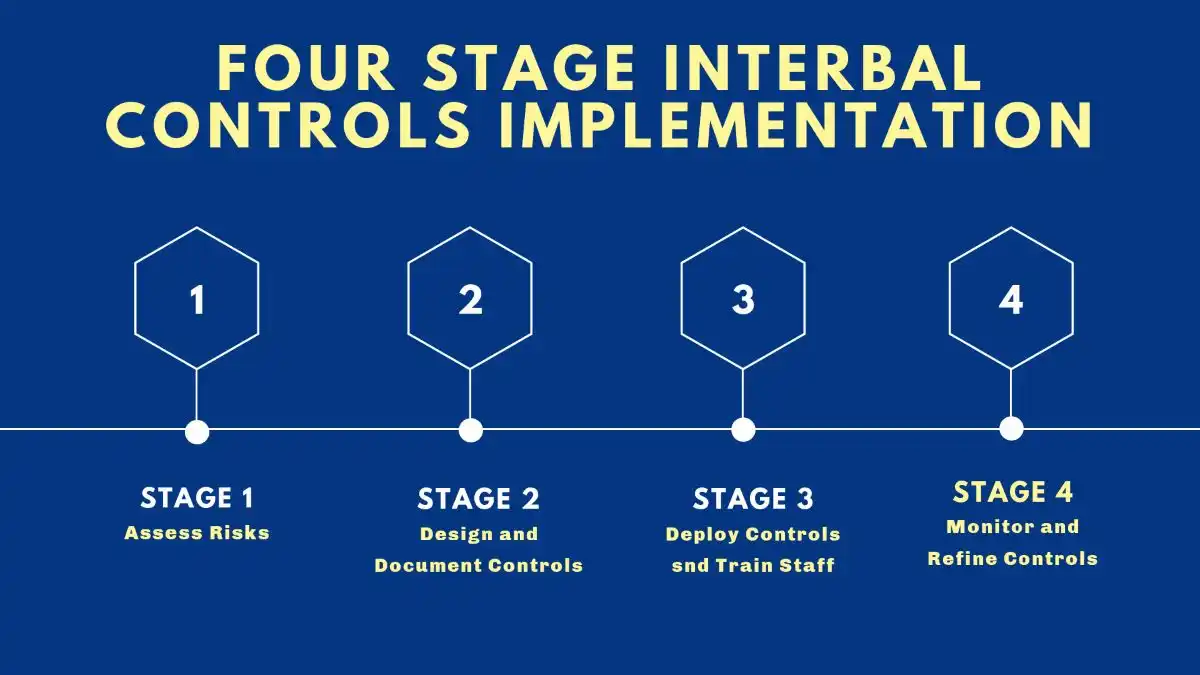
Implementing strong internal controls requires a strategic and systematic approach. Here are some steps to guide you in developing an effective internal control framework:
- Conduct a Risk Assessment: Identify potential risks that could impact your organization. Assess the likelihood and impact of these risks, prioritizing them based on their significance.
- Develop Control Activities: Establish policies and procedures to address identified risks. Ensure that these controls are aligned with your organization’s objectives and are communicated effectively to all relevant stakeholders.
- Enhance the Control Environment: Foster a culture of integrity and accountability by promoting ethical behavior and setting clear expectations. Encourage management and employees to prioritize internal controls as part of their daily operations.
- Implement Monitoring Mechanisms: Regularly assess the effectiveness of your internal controls. Conduct audits and reviews to identify areas for improvement and ensure that controls remain relevant and effective.
- Facilitate Information and Communication: Ensure that accurate and timely information is communicated to the right stakeholders. Encourage open communication to support decision-making and accountability.
Comprehensive Controls: By following these steps, you can implement a comprehensive internal control framework that supports your organization’s strategic goals.
Best Practices for Maintaining Internal Controls
Ongoing Vigilance: Maintaining effective internal controls requires ongoing commitment and vigilance. Here are some best practices to ensure the sustainability of your internal control framework:
- Regularly Review and Update Controls: Continuously assess the effectiveness of your internal controls and make necessary adjustments to address emerging risks and challenges.
- Provide Training and Awareness: Educate employees about the importance of internal controls and their role in maintaining organizational integrity. Regular training sessions can help reinforce the significance of internal controls and ensure compliance.
- Foster a Culture of Accountability: Encourage employees to take ownership of their responsibilities and hold them accountable for their actions. A culture of accountability promotes ethical behavior and supports the effectiveness of internal controls.
- Leverage Technology: Utilize technology to automate control processes and enhance efficiency. Implementing advanced data analytics can help identify anomalies and support decision-making.
- Engage Stakeholders: Involve stakeholders in the development and implementation of internal controls. Their input can provide valuable insights and enhance the effectiveness of your control framework.
Best Practices: By adhering to these best practices, you can maintain a robust internal control system that supports your organization’s objectives and mitigates risks.
The Impact of Accounting Fraud on Financial Statements
- Misleading Company Health: Accounting fraud can significantly distort the true financial performance and position of a company. When financial statements are manipulated, they provide a misleading view of a company’s health, which can have far-reaching consequences for stakeholders.
- Investor Reliance on Accounting Fraud: For investors, distorted financial statements can lead to poor investment decisions. If a company’s earnings are artificially inflated, investors may believe the company is more profitable than it truly is, leading to overvaluation and potential financial loss. Similarly, creditors may underestimate the risk of lending to a company with manipulated financial statements, leading to increased exposure to default.
- Entire Section Effected: Another impact of accounting fraud is its potential to skew industry benchmarks and ratios. When companies engage in accounting fraud it can affect industry averages and distort comparisons between companies. This can make it challenging for analysts and investors to assess a company’s performance relative to its peers accurately.
- The Impact of Accounting Fraud: Ultimately, the integrity of financial statements is crucial for maintaining market confidence. By understanding the impact of accounting fraud on financial statements, you can better navigate the financial landscape and make informed decisions that align with your financial goals.
Market Impact After Major Corporate Scandals
Stock Price Impact After Fraud Disclosure
| Time Period | Average Stock Price Decline |
|---|---|
| Immediate Impact (1 Day) | 5-10% |
| Short-Term Impact (20 Days) | 12.3% |
| Companies with Settlements | 14.6-20.6% |
| Companies Later Cleared | 7.2% |
| Extreme Cases (e.g., Luckin Coffee) | 80%+ |
The Consequences of Accounting Fraud
- Financial standing
-
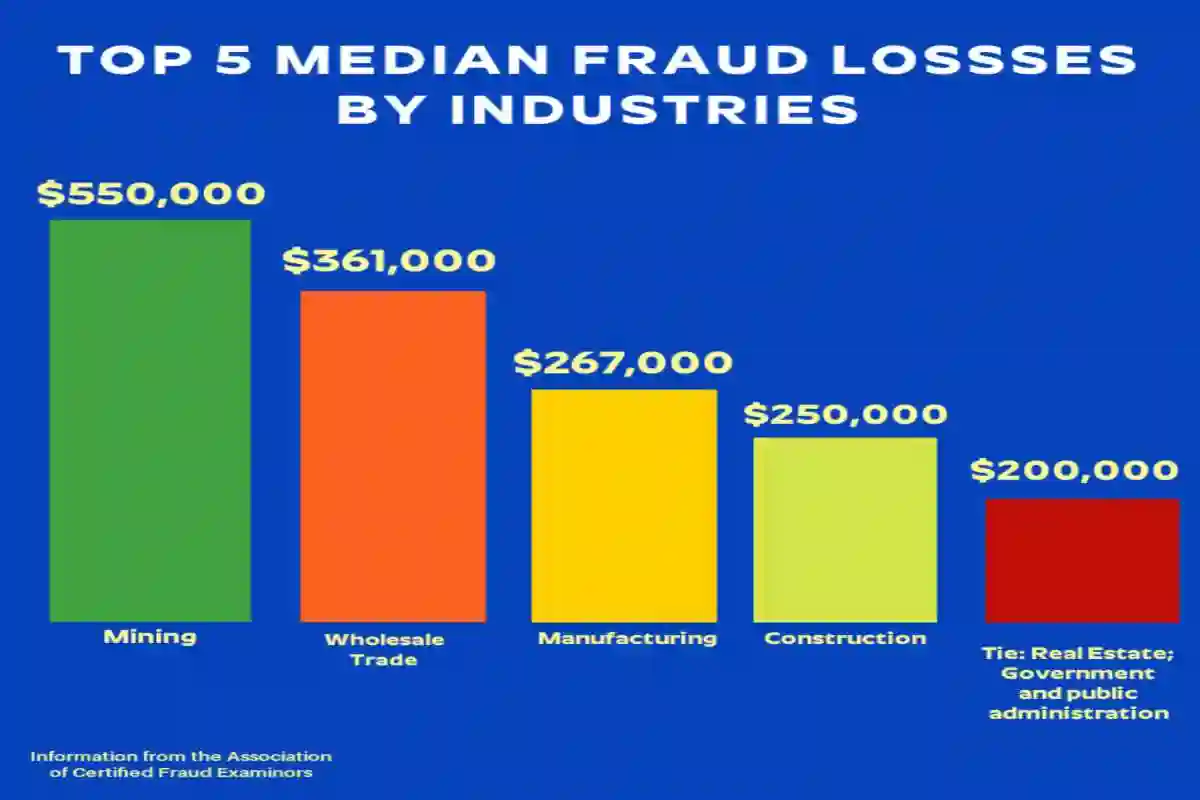
- Asset misappropriation may not be the most expensive, but it can still significantly impact an organization’s financial standing in a significant way if you are not careful. One study from the ACFF found median loss for businesses that experience asset misappropriation is $120,000 per incident.
- Legal penalties
-
- Companies and the individuals involved can face substantial fines, regulatory sanctions from bodies like the SEC, and criminal charges, including imprisonment.
- Loss of investor confidence
-
- Fraudulent activity erodes trust in the company and the broader market. This can cause stock prices to plummet, leading to significant losses for investors
- Reputational damage
-
- A fraud scandal can irreparably harm a company’s reputation, damaging its brand and making it difficult to attract customers, partners, and talent.Corporate collapse
 The Link Between Controls and Securities Litigation
- Internal controls play a critical role in mitigating the risk of securities class action litigation. Securities litigation typically arises from allegations of financial misrepresentation or fraud, often due to weak internal controls. By implementing strong internal controls, you can reduce the likelihood of such litigation and protect your organization from legal liabilities.
- Robust Controls: Effective controls ensure the accuracy and reliability of financial reporting, providing assurance to investors and regulators. They help prevent fraudulent activities and financial misstatements, reducing the risk of regulatory scrutiny and legal action. By prioritizing internal controls, you can enhance investor confidence and safeguard your organization’s reputation.
- Addresses Legal Requirements: Moreover, a robust control framework supports compliance with securities laws and regulations. It ensures that your organization adheres to legal requirements, minimizing the risk of penalties and sanctions. By linking internal controls with litigation, you can proactively address potential risks and protect your organization’s interests.
THE SECURITIES LITIGATION PROCESS
|
Filing the Complaint |
A lead plaintiff files a lawsuit on behalf of similarly affected shareholders, detailing the allegations against the company. |
|
Motion to Dismiss |
Defendants typically file a motion to dismiss the class action lawsuits, arguing that the complaint lacks sufficient claims. |
|
Discovery |
If the motion to dismiss is denied, both parties gather evidence, documents, emails, and witness testimonies. This phase of the litigation can be extensive. |
|
Motion for Class Certification |
Plaintiffs request that the court to certify the litigation as a class action. The court assesses factors like the number of plaintiffs, commonality of claims, typicality of claims, and the adequacy of the proposed class representation. |
|
Summary Judgment and Trial |
Once the class is certified, the parties may file motions for summary judgment. If the case is not settled, it proceeds to trial, which is rare for securities class actions. |
|
Settlement Negotiations and Approval |
Most securities litigation cases are resolved through settlements, negotiated between the parties, often with the help of a mediator. The court must review and grant preliminary approval to ensure the settlement is fair, adequate, and reasonable. |
|
Class Notice |
If the court grants preliminary approval, notice of the settlement is sent to all class members often by mail, informing them about the terms and how to file a claim. |
|
Final Approval Hearing |
The court conducts a final hearing to review any objections and grant final approval of the settlement of the securities litigation. |
|
Claims Administration and Distribution |
A court-appointed claims administrator manages the process of sending notices, processing claims from eligible class members, and distributing the settlement funds. The distribution is typically on a pro-rata basis based on recognized losses. |

The Role of Securities Litigation in Addressing Accounting Fraud
- Securities Litigation: Serves as a critical mechanism for addressing cases of accounting fraud.
- Legal Avenue: Securities litigation provides a legal avenue for investors and other stakeholders to seek redress when they have been misled by fraudulent financial reporting.
- Securities litigation and Enforcement: Can take various forms, including class-action lawsuits, enforcement actions by regulatory bodies, and arbitration proceedings.
Financial Statement Fraud: Key Data Visualizations
| Fraud Type | Frequency (% of Cases) | Median Loss |
|---|---|---|
| Asset Misappropriation | 89% | $120,000 |
| Corruption | 48% | $200,000 |
| Financial Statement Fraud | 5% | $766,000 |
The Primary Objective of Securities Litigation
- Primary Objective: The primary objective of securities litigation is to hold companies and their executives accountable for fraudulent activities.
- Accountability: Securities litigation causers accountability can deter future misconduct by signaling to other market participants that unethical behavior will be met with legal consequences.
- Compensation: Additionally, securities litigation can result in financial compensation for affected investors, helping to restore some of the losses incurred due to misleading information.
The Eight Biggest Triggers to Securities Litigation
|
Asset Valuation Manipulation |
Asset valuation manipulation is the intentional misrepresentation of an asset’s value for fraudulent purposes, such as misleading investors, obscuring illicit funds, or inflating a company’s financial health. Common methods include overstating assets, manipulating accounting assumptions in cash flow analysis, and misrepresenting liabilities, often leading to significant financial losses when the true value is eventually revealed |
|
Off-Balance-Sheet Schems |
Off-balance-sheet (OBS) schemes are legal accounting methods used by companies to keep certain assets and liabilities from appearing on their main balance sheet. By doing this, a company can improve its financial ratios, such as its debt-to-equity ratio, to appear more attractive to investors and lenders. |
|
Material Omissions |
A material omission is the failure to provide important facts or information that, if known, would likely influence a reasonable person’s decision in a significant way, such as in an investment or contract. This failure can create a misleading impression, and in legal and financial contexts, it can lead to penalties and liability, especially if there was a duty to disclose the information, as seen in securities law. |
|
Timing Manipulation |
Timing manipulation in financial statements involves intentionally altering the timing of revenue recognition and expense recognition to misrepresent a company’s financial performance. Common methods include recording revenue prematurely, deferring expenses to a future period, and manipulating asset valuations or provisions to achieve desired earnings targets, which can be unethical or illegal. |
| Cookie Jar Reserves |
Cookie jar reserves are an accounting practice where companies create hidden reserves by overstating expenses or understating revenues in profitable periods to artificially smooth earnings and boost reported profits in subsequent, less profitable periods. This form of earnings management is a form of financial statement manipulation that can mislead investors, as seen in cases involving Dell and Xerox, and is illegal when used to deceive stakeholders. |
| Expense Capitalization | Expense capitalization is an accounting method where a company records a cost as an asset on the balance sheet instead of an immediate expense on the income statement. This is done for expenditures that provide future economic benefits over multiple accounting periods, such as buying equipment or a building. The cost is then gradually expensed over the asset’s useful life through depreciation. |
|
Asset Valuation Manipulation |
Asset valuation manipulation is the fraudulent alteration of an asset’s value to mislead investors, conceal illegal activities, or manipulate financial reporting. This can involve artificially inflating or deflating the price of securities, high-value goods like art, or real estate by creating fake transactions or misrepresenting inventory. It is often used in schemes like Ponzi schemes to keep the operation afloat, to qualify for loans, or to meet performance targets tied to bonuses. |
|
Round-Trip Transactions |
A round-trip transaction is a series of financial transactions that end with the participants in the same financial position they began in, creating no genuine economic benefit. While it can simply refer to the cost of a purchase and sale, it is often used as a deceptive scheme to create the false appearance of revenue, activity, or investment. In fraudulent accounting and market manipulation, the term “round-tripping” or “circular trading” is widely associated with unethical and illegal activities. This was a key part of the notorious Enron accounting scandal. |
Sarbanes-Oxley Act: Transforming Executive Accountability
- Fundamental Transformation: The Sarbanes-Oxley Act of 2002 (SOX) fundamentally transformed corporate accountability and financial reporting requirements following major scandals. SOX established stringent regulations specifically designed to prevent accounting fraud and protect investors from deceptive financial practices.
- Section 302: Executive Certification Requirements
- Personal Accountability: Section 302 mandates that Chief Executive Officers and Chief Financial Officers personally certify the accuracy of financial statements, creating direct executive responsibility for:
- Comprehensive Review: All financial reports for accuracy and completeness
- Material Misstatement Confirmation: Ensuring reports contain no fraudulent or misleading informatiFair
- Presentation: Verifying financial statements accurately represent company condition
- Control Effectiveness: Establishing and maintaining effective internal controls over financial reporting
SUMMARY TABLE SARBANES-OXLEY PERTINENT SECTIONS
| (Sec. 101) |
Prohibits Board membership from including more than two certified public accountants. |
| (Sec. 302) |
instructs the SEC to promulgate requirements that the principal executive officer and principal financial officer certify the following in periodic financial reports: (1) the report does not contain untrue statements or material omissions; (2) the financial statements fairly present, in all material respects, the financial condition and results of operations; and (3) such officers are responsible for internal controls designed to ensure that they receive material information regarding the issuer and consolidated subsidiaries.
Requires such senior corporate officers additionally to certify that they have disclosed to the auditors and audit committee of the board of directors; (1) significant internal control deficiencies; and (2) any fraud that involves staff who have a significant role in the issuer’s internal controls.
States that the rules governing corporate responsibility apply to issuers even if they have reincorporated or transferred their corporate domicile or offices from inside the United States to outside the United States. |
|
(Sec. 304) |
Requires the chief executive officer and chief financial officer to forfeit certain bonuses and compensation received following an accounting restatement that has been triggered by a violation of securities laws. |
|
(Sec. 306) |
Prohibits insider trades during pension fund blackout periods if the equity security was acquired in connection with services as either a director, or employment as an executive officer. States that profits realized from such trades shall inure to and be recoverable by the issuer irrespective of the intent of the parties to the transaction.
Limits actions to recover profits to two years after the date on which such profits were realized. |
|
(Sec. 308) |
Allows civil penalties to be added to a disgorgement fund for the benefit of victims of securities violations if such penalties were obtained by the SEC in addition to an order for disgorgement.
Instructs the SEC to report to Congress on previous procedural actions taken to obtain civil penalties or disgorgement in order to identify where such procedures may be used to provide restitution efficiently for injured investors. |
| (Sec. 402) | Prohibits personal loans extended by a corporation to its executives and directors.
Permits certain loans if: (1) made in the ordinary course of the consumer credit business of the issuer; (2) of a type generally made available by the corporation to the public; and (3) made on market terms, or on terms that are no more favorable than those offered to the public.
Permits loans for: (1) home improvement and manufactured homes; (2) consumer credit; (3) an open end credit plan or a charge card; (4) credit extended by a broker or dealer for employee securities trades; and (5) made by an insured depository institution if they are subject to the insider lending restrictions of the Federal Reserve Act. |
| (Sec. 404) | Directs the SEC to require by rule that annual reports include an internal control report which: (1) avers management responsibility for maintaining adequate internal control mechanisms for financial reporting; and (2) evaluates the efficacy of such mechanisms. Requires the public accounting firm responsible for the audit report to attest to and report on the assessment made by the issuer.
|
| (Sec. 406) | Directs the SEC to issue rules requiring an issuer to disclose whether it has adopted a code of ethics for its senior financial officers, including its principal financial officer or principal accounting officer.
|
| (Sec. 408) | Mandates regular, systematic SEC review of periodic disclosures by issuers, including review of an issuer’s financial statement.
|
| (Sec. 806) | Amends Federal criminal law to prohibit a publicly traded company from retaliating against an employee because of any lawful act by the employee to: (1) assist in an investigation of fraud or other conduct by Federal regulators, Congress, or supervisors; or (2) file or participate in a proceeding relating to fraud against shareholders. |
Accounting Fraud: Real-World Examples
Enron
- The Enron scandal remains the quintessential example of howomissions in financial statements can devastate markets and investors.
- The energy company employed sophisticated accounting fraud schemes, including the use of special purpose entities (SPEs) to hide over $1 billion in debt from its balance sheets.
- These corporate scandals involved deliberate omissions of critical financial information that painted a false picture of the company’s financial health.
- Key Legal Precedents Established:
- Enhanced auditor independence requirements under the Sarbanes-Oxley Act
- Stricter CEO and CFO certification of financial statements
- Whistleblower protection provisions that encouraged internal reporting of fraud
- The securities litigation that followed resulted in one of the largest bankruptcy proceedings in U.S. history, with investors losing approximately $74 billion in market value.
- The case established crucial precedents for regulatory compliance, particularly regarding the disclosure of off-balance-sheet transactions and the independence of external auditors.
Under Armour
- The scandal: For several years leading up to 2017, the athletic apparel maker Under Armour used a practice known as “pulling forward” sales from future quarters to meet analysts’ revenue targets. After it became impossible to sustain the practice, the company reported a significant drop in revenue growth in 2017. An SEC investigation revealed that company executives were aware of the practices and misled investors and analysts by attributing revenue growth to other factors.
- The litigation: Following the revelations, Under Armour faced both an SEC enforcement action and a securities class action lawsuit from investors. The company agreed to a $9 million penalty in the SEC case and, in 2024, settled the shareholder suit for a record-setting $434 million.
Red Flags for Detecting Revenue Fraud
- Rapid revenue growth inconsistent with cash flow: This is one of the most common red flags. If profits are rising but cash flow is not, it may indicate fraudulent sales or fictitious receivables.
- Unusual surge in sales at the end of a reporting period: A company recording a significant portion of its sales in the last few days or weeks of a quarter may be improperly booking revenue to meet targets.
- Discrepancies in shipping and billing: For premature or phantom sales, there may be inconsistencies between the quantity of goods billed versus the quantity shipped, or unusual increases in shipping costs.
- Sudden changes in accounting methods: A shift in accounting practices can be used to hide manipulation and make period-to-period comparisons more difficult.
- Complex or unusual related-party transactions: Transactions with related parties that lack a logical business purpose can be used to generate fictitious revenue.
- High turnover of senior management or auditors: Frequent changes in key personnel, especially in accounting roles, can signal internal conflicts or attempts to conceal fraud.
Advanced analytical techniques
- Anomaly detection: Machine learning algorithms can automatically identify transactions that deviate significantly from a baseline of normal behavior.
- Benford’s Law analysis: This statistical test flags unnatural patterns in the first digits of numerical data, such as invoices, which is often a sign of manufactured or falsified numbers.
- Link analysis: Using graph technology, analysts can visualize relationships between different entities (employees, vendors, transactions) to uncover hidden fraud rings or connections.
- Predictive modeling: By analyzing historical fraud cases, machine learning models can be trained to predict the likelihood of a transaction being fraudulent in real time, preventing loss before it happens
Weaknesses in Internal Controls
A strong internal control environment i the first line of defense against fraud, so vulnerabilities in these systems are often exploited by employees seeking to commit theft or misuse company assets.
Segregation of duties
- Incompatible duties involve having responsibility for two or more of the following key functions:
-
- Authorization: Approving a transaction
-
- Custody: Handling the physical asset (cash, inventory)
-
- Record-keeping: Entering the transaction into the accounting system
-
- Reconciliation: Comparing records to physical assets or bank statements
-
- Example: If one employee is responsible for receiving cash payments, recording the payment in the accounting system, and reconciling the bank statement, they could easily take cash and cover it up by altering the records.
Management and oversight
- Inadequate supervision: Weak monitoring of employees and business processes, especially in remote locations, allows fraudulent activity to go unnoticed.
- Ineffective management review: If managers do not regularly review and approve transactions, it creates an opportunity for employees to hide fraudulent activity.
- Management override of controls: Senior leaders can bypass established internal control policies to achieve business goals or for personal gain, sending a message that controls can be ignored.
- Poor hiring practices: Inadequate background checks or screening for employees with access to assets can allow individuals with financial or behavioral red flags to be hired.
Physical and information safeguards
- Inadequate physical controls: Not locking up cash or valuable assets, using poorly guarded storage areas, or failing to restrict access to secure areas allows employees to easily steal inventory, equipment, or cash.
- Weak access controls: Insufficient or poorly monitored access to sensitive computer systems, data, and electronic records can lead to information theft or the creation of fraudulent transactions.
Recording and documentation
- Poor record keeping: Missing or inaccurate documentation, such as invoices, receipts, or shipping records, makes it difficult to trace transactions and compromises the audit trail.
- Lack of independent checks: Not performing regular, independent reconciliations of assets and accounts, such as bank statements, can allow discrepancies to go undetected.
- Failure to enforce mandatory vacations: Fraudulent schemes are often discovered when the perpetrator is on vacation and another employee takes over their duties. Without mandatory time off, fraudsters can maintain their schemes for longer periods.
Technology and automation
- Insufficient use of automation: Relying heavily on manual processes creates more opportunities for human error and intentional fraud.
- Failure to update technology: Outdated systems can lack the security features and automated controls needed to protect against modern threats.
- Poorly integrated systems: Disjointed or non-integrated software systems can create gaps that allow fraudulent transactions to slip through undetected
Management override of controls
- Rationalizing shortcuts: Managers who feel pressure to meet unrealistic financial targets may override controls under the guise of efficiency or speed. Employees observe this behavior and may interpret it as permission to do the same.
- Influencing accounting staff: High-level managers can coerce accounting staff into making questionable journal entries or transactions to hide theft. Staff may comply out of loyalty, fear of losing their job, or the belief that the manager is more trustworthy than the official policy.
- Hiding theft through authority: Management can use its authority to write off receivables or inflate revenue, which can be a way of concealing asset misappropriation. These overrides are hard to detect because they are performed by individuals with high levels of system access and authority.
Erosion of trust and control
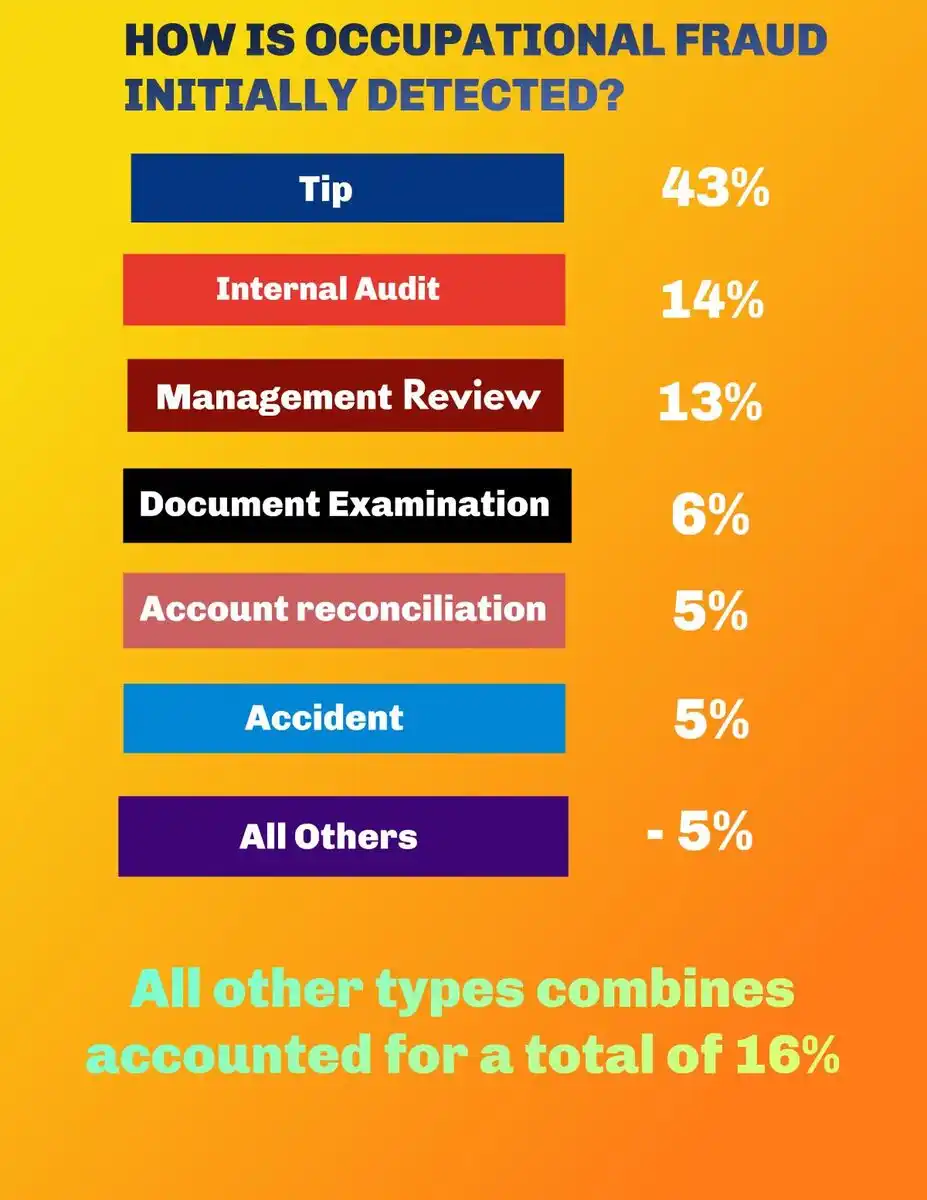
- Weakened whistleblower protections: A management team that ignores or retaliates against employees who report misconduct will destroy a company’s ethics hotline and encourage employees to remain silent. Since tips are the most common way fraud is detected, a poor tone effectively disables a key defense.
- Reduced morale and loyalty: Employees in an environment with low morale and a toxic culture feel less loyalty to the company and its goals. This reduces the rationalization barrier to committing fraud, as employees feel less guilt about hurting an organization that they feel has wronged them.
- Disregard for monitoring: When management does not take internal controls seriously, they are less likely to enforce monitoring activities, such as regular reconciliations or surprise audits. This increases the opportunity for fraud to occur and remain undetected.
