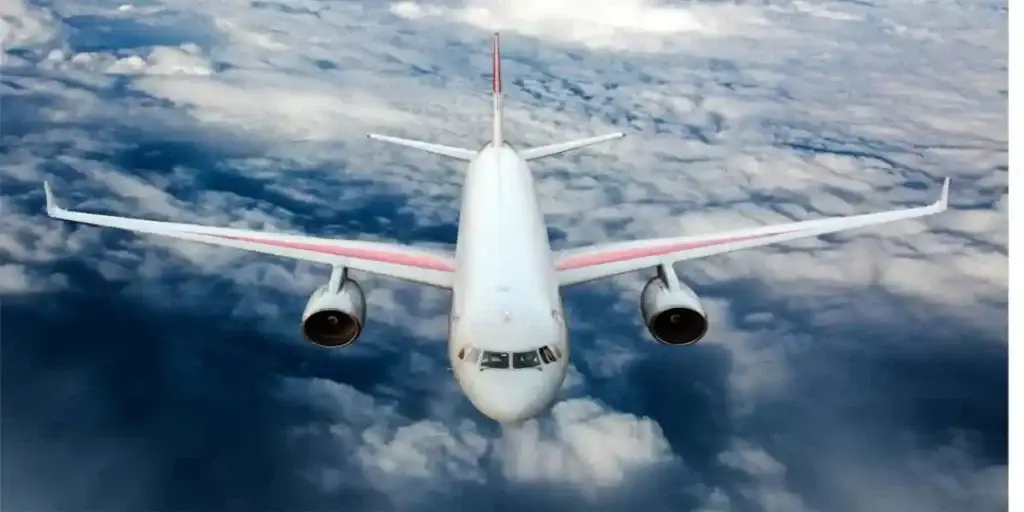
If you believe you have been affected by If you believe you have been affected by toxic airplane fumes, or jet fuel exposure, contact Aerotoxic Syndrome lawyer Timothy L. Miles today for afree case evaluation as you may be eligible for an Aerotoxic Syndrome Lawsuit and potentially entitled to substantial compensation.

1. What does “contaminated air” means in the aviation context?
Contaminated cabin air refers to a condition in which the air supplied to the cockpit or cabin contains undesired chemical compounds, particulate matter, or smoke-like aerosols at levels that may cause odour, irritation, or health effects.
In practice, most consumer discussion focuses onengine oil-related fumes and associated compounds. However, “contaminated air” is a broad term. It can include:
- Thermal decomposition products of lubricating oils or hydraulic fluids (heated and chemically altered under high temperatures).
- Smoke or vapours from electrical faults, overheating components, or cargo.
- De-icing fluid residues or ground-source contaminants, in rare circumstances.
- Ozone at cruise altitude (typically controlled by ozone converters on many long-haul aircraft, but not uniformly across all fleets and routes).
A fume event is the operational term frequently used when an unusual odour, haze, or smoke-like condition is reported in the aircraft environment and triggers a safety response ranging from monitoring to diversion.
2. How I cabin air is supplied to the cabin on an airline flight?
To understand the debate, it helps to understand the architecture.
Bleed air systems (common across many jet types)
On many commercial jets, cabin air is supplied in part by bleed air, which iscompressed air taken from the engine’s compressor section(or from an auxiliary power unit, the APU) and then cooled, conditioned, and mixed before entering the cabin.
Key points:
- Bleed air is not “exhaust.” It is taken from a compressor stage, upstream of combustion.
- The compressor environment is mechanically complex and uses lubricating oil seals. These seals are designed to limit oil migration but they are not always perfectly leak-free under all conditions.
- Under certain failure modes, maintenance conditions, or transient operating states, oil or hydraulic fluid may enter the air stream and then be heated, generating odorous compounds and aerosols.
These scenarios can lead to toxic cabin air, raising serious health concerns for passengers and crew.
Bleed-free architectures (notably Boeing 787)
Some aircraft, most prominently the Boeing 787, use an electric compressor system rather than engine bleed air for cabin supply. This design is often cited in consumer discussions because it reduces or eliminates certain pathways for engine-oil-related contamination of cabin supply air.
This does not mean “no fumes can occur,” because fumes can originate from other sources (electrical, cabin materials, galley equipment, external smoke ingestion on the ground), but it changes the risk profile for oil-seal-related events.
3. What does a fume event feel like to passengers?
Reports vary, but commonly described indicators include:
- Odours described as “dirty socks,” “wet dog,” “burning oil,” “acrid,” “sweet,” or “chemical.”
- Visible haze or mist (not the normal water vapour sometimes seen when humid air mixes with cooler air).
- Immediate irritation of eyes, nose, throat, or lungs.
- Headache, dizziness, nausea, or a sense of being “unwell suddenly.”
- In some cases, symptoms may persist after landing, particularly among crew due to cumulative exposure over many flights.
It is important to keep two truths in view:
- Many unusual smells on aircraft are benign and short-lived.
- Some events are operationally significant and require response, documentation, and medical evaluation.
From a consumer perspective, the correct posture is neither panic nor dismissal. It is recognition and documentation.
4. Where do the fumes come from?
When abnormal cabin odours or smoke-like conditions occur, several sources are investigated. The most discussed include:
1) Engine oil or hydraulic fluid ingestion into the air supply
This is the scenario most often referenced in relation to bleed air aircraft. Potential pathways include:
- Oil seal leakage in the engine compressor bearing chambers.
- APU seal leakage affecting air supply while on the ground or during certain phases of flight.
- Hydraulic fluid leaks in proximity to air conditioning packs or other hot components, depending on aircraft type and routing.
Heated oils and fluids can break down into a complex mixture of compounds. Some compounds are irritants; some are odorous at extremely low concentrations.
5. Why this issue remains controversial
By 2026, contaminated air and fume events remain a topic where engineering, occupational health, and public communication do not always align. Key reasons include:
- Measurement difficulty: Real-time, aircraft-certified monitoring for the full range of potential contaminants is not uniformly installed across fleets. Without consistent measurement, events rely on reports, maintenance findings, and limited sampling.
- Complex chemistry: Heated oils and fluids create a mixture that can change with temperature, airflow, and time. Identifying a single “signature compound” for all events is unlikely.
- Variable exposure: Passengers experience occasional exposure. Crew may experience repeated exposures across a career, which raises different occupational questions.
- Data fragmentation: Reporting standards, thresholds for classification, and disclosure practices vary across operators and regulators.
For consumers, the practical implication is simple: do not assume the absence of public data means the absence of risk, and do not assume every smell indicates a toxic exposure. Each situation should be treated on its facts.
However, it’s essential to acknowledge that these toxic fume events are not just isolated incidents. The exposure to aircraft toxic fumes has been documented extensively. Furthermore, there have been instances of toxic fumes leaking from aircraft systems that need to be addressed seriously.
6. What Is known about the health considerations from exposure to Aircraft contaminated air and fume events?
Longer-term effects (more disputed, higher variability)
Some individuals, particularly among crew, report persistent or recurrent symptoms after events. Establishing causation is challenging because:
- exposure characterization is often incomplete,
- symptoms are non-specific and multifactorial,
- medical baselines pre-event are rarely documented.
As a consumer, the prudent approach is medical documentation and follow-up if symptoms persist, regardless of the ultimate cause.

7. What airlines and crews typically do during a fume event?
Operational responses vary with severity, aircraft type, and standard operating procedures, but may include:
- Crew donning oxygen masks (especially if smoke or severe odour is present).
- Adjusting airflow configuration (packs, recirculation, APU bleed, engine bleed selection, where applicable).
- Requesting cabin crew reports on odour location and intensity.
- Coordinating with maintenance control and dispatch.
- Considering diversion if smoke, persistent fumes, or passenger incapacitation is reported.
The most important consumer point is that crew action is not proof of toxicity, and lack of dramatic action is not proof of safety. Crews must make decisions under uncertainty while prioritizing flight safety.
For more detailed information about fume event symptoms, it’s advisable to seek professional medical advice.
If you believe you have been affected by If you believe you have been affected by toxic airplane fumes, or jet fuel exposure, contact Aerotoxic Syndrome lawyer Timothy L. Miles today for afree case evaluation as you may be eligible for an Aerotoxic Syndrome Lawsuit and potentially entitled to substantial compensation.
8. Where do the fumes come from?
When abnormal cabin odours or smoke-like conditions occur, several sources are investigated. The most discussed include:
1) Engine oil or hydraulic fluid ingestion into the air supply
This is the scenario most often referenced in relation to bleed air aircraft. Potential pathways include:
- Oil seal leakage in the engine compressor bearing chambers.
- APU seal leakage affecting air supply while on the ground or during certain phases of flight.
- Hydraulic fluid leaks in proximity to air conditioning packs or other hot components, depending on aircraft type and routing.
Heated oils and fluids can break down into a complex mixture of compounds. Some compounds are irritants; some are odorous at extremely low concentrations.
2) Electrical or electronic overheating (“electrical smoke”)
Electrical faults can create sharp, pungent odours and visible smoke. These events often trigger rapid crew action because the risk profile includes fire. Sometimes, however, there may be an electrical smell without any smoke or fire, which still requires immediate attention.
3) Air conditioning pack issues
The “packs” condition and cool air. Faults, overheating, or contamination in ducting and heat exchangers can contribute to abnormal odours.
4) External ingestion on the ground
On the ramp, aircraft may ingest exhaust or fumes from ground equipment, nearby aircraft, or airport operations. These usually dissipate after pushback or after reaching altitude, but not always.
9. Why this issue is so controversial?
By 2026, contaminated air and fume events remain a topic where engineering, occupational health, and public communication do not always align. Key reasons include:
- Measurement difficulty: Real-time, aircraft-certified monitoring for the full range of potential contaminants is not uniformly installed across fleets. Without consistent measurement, events rely on reports, maintenance findings, and limited sampling.
- Complex chemistry: Heated oils and fluids create a mixture that can change with temperature, airflow, and time. Identifying a single “signature compound” for all events is unlikely.
- Variable exposure: Passengers experience occasional exposure. Crew may experience repeated exposures across a career, which raises different occupational questions.
- Data fragmentation: Reporting standards, thresholds for classification, and disclosure practices vary across operators and regulators.
For consumers, the practical implication is simple: do not assume the absence of public data means the absence of risk, and do not assume every smell indicates a toxic exposure. Each situation should be treated on its facts.
However, it’s essential to acknowledge that these toxic fume events are not just isolated incidents. The exposure to aircraft toxic fumes has been documented extensively. Furthermore, there have been instances of toxic fumes leaking from aircraft systems that need to be addressed seriously.

10. What airlines and crews typically do during a fume event?
Operational responses vary with severity, aircraft type, and standard operating procedures, but may include:
- Crew donning oxygen masks (especially if smoke or severe odour is present).
- Adjusting airflow configuration (packs, recirculation, APU bleed, engine bleed selection, where applicable).
- Requesting cabin crew reports on odour location and intensity.
- Coordinating with maintenance control and dispatch.
- Considering diversion if smoke, persistent fumes, or passenger incapacitation is reported.
The most important consumer point is that crew action is not proof of toxicity, and lack of dramatic action is not proof of safety. Crews must make decisions under uncertainty while prioritizing flight safety.
For more detailed information about fume event symptoms, it’s advisable to seek professional medical advice.
If you believe you have been affected by If you believe you have been affected by toxic airplane fumes, or jet fuel exposure, contact Aerotoxic Syndrome lawyer Timothy L. Miles today for a free case evaluation as you may be eligible for an Aerotoxic Syndrome Lawsuit and potentially entitled to substantial compensation.
Call Aerotoxic Syndrome Lawyer Timothy L. Miles Today for a Free Case Evaluation About a Aerotoxic Syndrome Lawsuit
If you believe you have been affected by toxic airplane fumes, or jet fuel exposure, contact Aerotoxic Syndrome lawyer Timothy L. Miles today for a free case evaluation as you may be eligible for an Aerotoxic Syndrome Lawsuit and potentially entitled to substantial compensation. .(855) 846–6529 or [email protected].
Timothy L. Miles, Esq.
Law Offices of Timothy L. Miles
Tapestry at Brentwood Town Center
300 Centerview Dr. #247
Mailbox #1091
Brentwood,TN 37027
Phone: (855) Tim-MLaw (855-846-6529)
Email: [email protected]
Website: www.classactionlawyertn.com
Facebook Linkedin Pinterest youtube