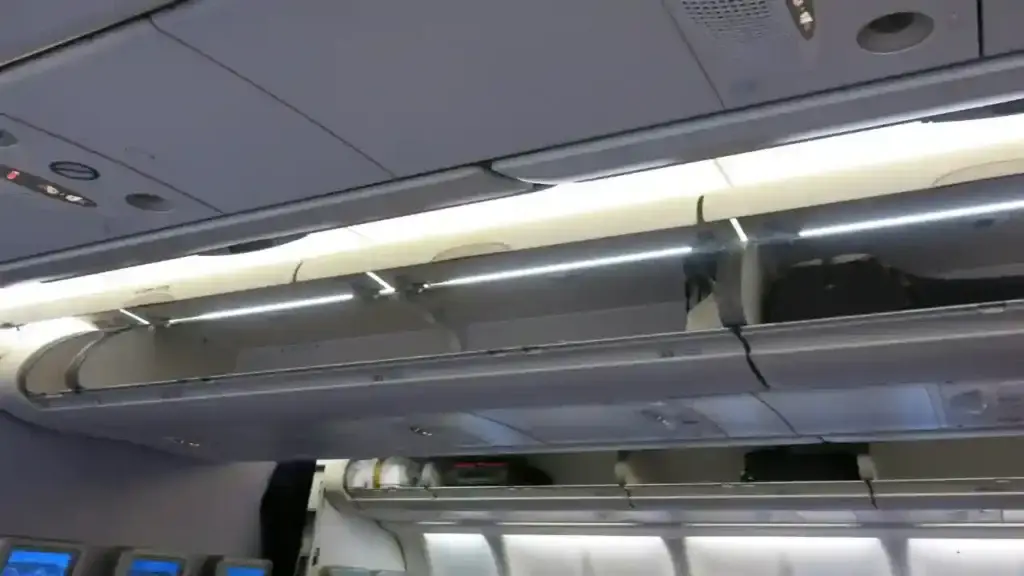
Introduction to a Toxic Fumes in an Airplane Lawsuit
If you are looking for information about toxic fumes in an airplaine lawsuit you have come to the right place. The allegations surrounding “toxic fumes” in commercial aviation lawsuits have gained significant attention due to their complex nature. These cases intertwine intricate engineering facts, medically disputed causation, and the safety responsibilities that airlines owe to the public. When a passenger or crew member asserts that contaminated cabin air has led to an injury, the resolution of the case seldom hinges on a singular dramatic incident. Instead, it relies heavily on documentation, definitions, and proof—proof of the event, proof of exposure, proof of causation, and proof of damages.
In this context, it’s essential to understand what “toxic fumes” typically signifies in aviation litigation. This term usually refers to a cabin air contamination event, often labeled as a “fume event.” The core allegation is not simply about an unpleasant odor; rather, it asserts that airborne contaminants infiltrated the passenger cabin or cockpit at concentrations and durations sufficient to result in a compensable injury.
These claimed contaminants can vary from case to case but frequently include:
- Engine oil or hydraulic fluid components allegedly introduced into the air supply.
- Volatile organic compounds (VOCs) associated with heated fluids or decomposed lubricants.
- Carbon monoxide or other combustion byproducts, often claimed when symptoms suggest hypoxia-like effects.
- Particulate matter and aerosolized residues, particularly where visible haze or “smoke” is reported.
- Decomposition products formed when fluids contact hot surfaces, which is crucial because decomposition can alter the chemical profile and toxicity.
For instance, exposure to toxic airplane fumes could lead to serious health issues as suggested by various legal cases. It’s important to note that while these claims are alarming, they require substantial evidence to prove.
The critical legal point here is that the phrase “toxic fumes” does not serve as a medical diagnosis or an engineering conclusion; it is merely a litigation descriptor. Courts typically mandate that involved parties translate this descriptor into quantifiable facts: identifying the substance, determining the dose and duration of exposure, and establishing a medically recognized mechanism that links exposure to injury.
As such, being exposed to toxic airplane fumes can lead to significant legal implications for airlines if proven. The litigation strategy often shifts depending on whether the claimant is a passenger or a flight attendant/pilot.
Moreover, understanding how these toxic airplane cabin fumes affect individuals can provide valuable insight into these cases. Therefore, it’s essential for all parties involved to gather comprehensive evidence and present clear arguments during such litigations.
If you believe you have been affected by toxic airplane fumes, contact Aerotoxic Syndrome lawyer Timothy L. Miles as you may be eligible for an Aerotoxic Syndrome Lawsuit and potentially entitled to substantial compensation. (855) 846–6529 or [email protected].
How Cabin Air Contamination Is Alleged to Happen
Many modern commercial aircraft use systems that draw compressed air from the engine (often called “bleed air”) for cabin pressurization and ventilation. In lawsuits, plaintiffs frequently allege that a seal failure or other malfunction allowed oil or hydraulic fluid to enter the air supply and become aerosolized or chemically altered by heat before reaching occupants.
These allegations often pertain to instances of toxic airplane cabin fumes, which can result from various operational scenarios:
- Seal or bearing-related leakage
- Plaintiffs may assert that worn or improperly maintained seals allowed oil to leak into the bleed air stream, especially during power changes. This scenario is often linked to toxic fume events.
- Hydraulic fluid ingestion or misting
- Some claims focus on hydraulic fluid leaks or exposure during maintenance-related events, asserting cabin migration. This is another pathway that could lead to aircraft toxic fumes exposure.
- APU-related events
- The auxiliary power unit is a common focus because it can provide air on the ground and during certain operations, and claimants often report fumes at the gate or during taxi.
- Electrical or material overheating
- Defendants sometimes argue that a reported smell was more consistent with “hot electronics,” de-icing fluid residue, or other non-toxic sources. Plaintiffs may counter that odor characterization by crew or maintenance is not a substitute for chemical confirmation.
- Operational conditions and reporting gaps
- The reported event may coincide with irregular operations, diversions, or air return. Litigation frequently centers on whether the crew declared an emergency, whether masks were used, and whether maintenance later confirmed any defect.
In most cases, the lawsuit’s technical heart is whether a contamination pathway existed and whether the aircraft records support that pathway. Such pathways can often lead to toxic cabin air issues that significantly impact passenger health and safety.
The Health Claims Most Often Raised
Plaintiffs’ alleged injuries from toxic fumes in an airplane range from transient symptoms to long-term impairment. Commonly reported symptoms include:
- Headache, dizziness, nausea, and disorientation.
- Respiratory irritation, coughing, or shortness of breath.
- Neurological symptoms such as memory impairment, concentration difficulties, tremors, or paresthesia.
- Anxiety and sleep disruption, sometimes framed as secondary to the event.
- In severe allegations, chronic neurocognitive impairment, asthma-like symptoms, or long-term disability.
The legal friction point is that many of these symptoms are nonspecific and can overlap with dehydration, stress, motion, viral illness, or ordinary occupational fatigue. Therefore, the dispute often becomes a battle of experts. Plaintiffs typically need qualified medical experts to differentiate alternative causes, establish a plausible toxicological mechanism related to exposure to toxic airplane fumes, and explain why the claimed condition is more likely than not attributable to the alleged exposure.

The Core Legal Theories in a Toxic Fumes Airplane Lawsuit
Although the fact patterns differ, most cases involving toxic airplane fumes are built around a limited set of legal theories. The applicable law depends on jurisdiction, the claimant’s status (passenger or crew), and whether international carriage rules apply.
Negligence
A negligence claim generally requires proof of:
- Duty: A carrier’s duty of reasonable care toward passengers, and an employer’s duty toward employees.
- Breach: Failure to maintain the aircraft properly (which could lead to toxic fumes in an airplane), failure to respond appropriately, or failure to warn.
- Causation: Both actual cause and legal (proximate) cause.
- Damages: Verifiable injury and loss.
In practice, breach is often fought through maintenance records, compliance with manufacturer guidance, and standard operating procedures for odor or smoke events.
Product Liability (Against Manufacturers or Component Suppliers)
Plaintiffs may sue manufacturers alleging:
- Design defect: The air supply design is unreasonably dangerous because it can be contaminated under foreseeable conditions.
- Manufacturing defect: A particular component deviated from specifications.
- Failure to warn: Inadequate warnings about risks, detection, or mitigation.
Defendants typically respond with regulatory compliance defenses, alternative causation arguments, and challenges to the feasibility and risk-benefit claims required for design defect theories.
Breach of Contract and Consumer Protection (More Limited)
Passengers sometimes include contract-based claims tied to safe carriage, refunds, or deceptive practices. These are often secondary because personal injury disputes still demand medical causation proof and are frequently constrained by federal preemption doctrines or international treaty frameworks.
Workers’ Compensation and Employer Liability (Crew Claims)
For flight attendants, pilots, and other crew, the procedural pathway can differ substantially. Depending on jurisdiction and employer structure, a claim may involve workers’ compensation exclusivity, occupational disease frameworks, or specific aviation employment statutes. Where civil suits are permitted, the employer typically contests medical causation and the occurrence of a toxic exposure.
The Most Important Evidence in These Cases
“Toxic fumes” cases are evidence-driven. Parties often lose not because the story is implausible, but because the proof is incomplete.
1) Aircraft and Maintenance Records
Expect disputes over:
- Logbooks and discrepancy reports.
- Maintenance actions before and after the event.
- Component replacement history for seals, filters, and related systems.
- Prior similar incidents on the same tail number, route, or fleet type.
- Minimum equipment list (MEL) deferrals that may be alleged to have increased risk.
These records often establish the timeline and help determine whether the airline treated the event as routine odor, smoke, or a reportable safety occurrence.
2) Cabin and Cockpit Reports
Plaintiffs benefit when the event was documented contemporaneously, such as:
- Captain reports, cabin crew statements, and maintenance write-ups.
- Passenger complaints made during or immediately after the flight.
- Audio, ACARS messages, or operational logs that show an abnormal event response.
- Use of oxygen masks, diversion decisions, or emergency declarations.
Defendants often argue that if the crew did not take emergency action or if maintenance found nothing, the incident was odor-only or non-toxic. Plaintiffs often counter that the absence of detection is not proof of absence, especially if the aircraft lacks continuous air contaminant monitoring.
3) Medical Records and Temporal Relationship
Courts and defense experts scrutinize:
- Timing of symptom onset.
- Emergency department records, urgent care notes, and primary care documentation.
- Objective findings versus subjective complaints.
- Pre-existing conditions and alternative explanations.
- Consistency of reported symptoms over time.
A key theme appears repeatedly: documentation, documentation, documentation. Plaintiffs who delay treatment or whose early records omit exposure details often face credibility and causation challenges later.
4) Industrial Hygiene and Toxicology Evidence
The most difficult evidentiary gap is often measurement. Many flights do not have direct sampling data from the time of the alleged event. As a result, experts rely on indirect indicators, such as:
- Reports of visible haze, smoke-like odor, or irritation among multiple occupants.
- Maintenance findings consistent with leakage.
- Modeling of ventilation rates, cabin volume, and plausible contaminant concentrations.
- Literature on pyrolysis products and exposure thresholds.
In this context, it’s essential to refer to comprehensive studies such as this one by the EPA, which provide valuable insights into air quality issues related to similar situations. Defendants typically attack these models as speculative, arguing that without actual sampling and dose quantification, causation is not established to the legal standard.
5) Expert Witnesses and Admissibility Standards
In many jurisdictions, expert testimony must satisfy reliability tests (often framed through standards such as Daubert-type analysis in U.S. federal courts). The fight becomes whether the plaintiff’s experts used reliable methods, relied on sufficient data, and applied accepted principles.
Common defense arguments include:
- The expert did not identify a specific toxin.
- The expert cannot quantify dose.
- The expert relies on case reports rather than robust epidemiology.
- The expert confuses correlation with causation.
- The expert’s differential diagnosis did not adequately rule out alternatives.
Plaintiffs respond by emphasizing that real-world exposures are frequently unmeasured, that dose reconstruction is an accepted method in occupational cases, and that the event evidence, symptom timeline, and toxicological plausibility are sufficient when considered together.
Passenger Claims Versus Crew Claims: Why the Cases Look Different
Passengers
Passenger cases often involve a single flight and a single alleged exposure event. The plaintiff must show that an unusual occurrence happened on that flight and that it caused injury. Defenses often focus on the limited duration of exposure and the absence of objective findings.
Passenger claims can also be affected by international carriage rules and limitations on damages depending on the itinerary and governing conventions. Even when liability frameworks differ, causation and damages remain central.
Flight Crew
Crew claims may involve repeated alleged exposures over time, with the lawsuit framing the injury as cumulative or occupational. The plaintiff may argue that repeated low-level exposure can produce chronic symptoms and that the employer failed to implement adequate preventive measures.
Defendants often respond that:
- The scientific evidence for chronic injury from intermittent low-level exposure is contested.
- Symptoms overlap with stress, circadian disruption, and other occupational factors.
- Records do not reliably document repeated exposure events.
The practical difference is that crew cases often hinge on pattern evidence and longitudinal medical documentation, while passenger cases hinge on event-specific proof.
Typical Defenses Raised by Airlines and Manufacturers
Defendants in toxic fumes lawsuits usually present layered defenses that attack the claim at multiple points.
“No Event” or “No Contamination”
Defendants may argue that:
- The odor was benign and consistent with normal operations.
- Maintenance inspections found no leaks or defects.
- The aircraft type’s systems and filters make significant contamination unlikely.
Plaintiffs respond by focusing on contemporaneous complaints, crew actions, and any corroborating operational anomalies.
Alternative Medical Causation
Defendants often argue the plaintiff’s symptoms were caused by:
- Viral illness, migraine, anxiety, or dehydration.
- Pre-existing respiratory or neurological conditions.
- Occupational stressors unrelated to fumes.
Plaintiffs counter with differential diagnosis methods, symptom clustering, and exposure-consistent onset.
Regulatory Compliance and Preemption Arguments
Manufacturers and airlines frequently invoke compliance with aviation regulations and certification standards. In some jurisdictions, they may also argue that certain state-law claims are preempted by federal aviation regulation, particularly where plaintiffs attempt to impose design or warning standards beyond regulatory requirements.
This area is technical and jurisdiction-specific. The key practical effect is that it can narrow the claims, limit punitive theories, or shift the focus to operational negligence rather than design.
Challenges to Expert Reliability
Even when a plaintiff has a sympathetic narrative, defendants often succeed by excluding or limiting expert testimony. If the plaintiff cannot present admissible medical causation testimony, the case can fail at summary judgment.
For that reason, plaintiffs increasingly build their cases around multidisciplinary expert teams that can cover engineering pathways, industrial hygiene methods, and clinical causation.
Damages: What Plaintiffs Typically Seek
Damages depend on the claimant’s status and evidence but commonly include:
- Medical expenses and future treatment costs.
- Lost wages and reduced earning capacity.
- Pain and suffering.
- For crew, potential claims related to loss of medical certification, fitness-for-duty restrictions, or career disruption.
Defendants often argue that symptoms were transient and that ongoing complaints are not objectively supported. Plaintiffs often respond with neuropsychological testing, pulmonary function testing, and treating physician testimony, although these can be contested on methodology and baseline comparisons.
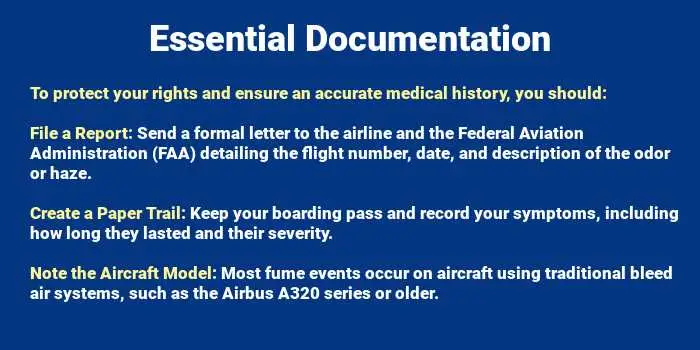
Why Documentation and Prompt Reporting Change the Case
Toxic fumes allegations live or die on early documentation. From a litigation standpoint, the most persuasive cases tend to include:
- Immediate reporting to crew and documented incident logs.
- Prompt medical evaluation that records the exposure history and symptom onset.
- Consistent follow-up records that track symptoms over time.
- Any corroboration from other passengers or crew.
- Maintenance documentation that aligns with a plausible contamination source.
The least persuasive cases often involve delayed reporting, inconsistent symptom descriptions, or reliance on generalized statements about “bad air” without linking the claim to verifiable flight-specific facts.
What Proactive Risk Management Looks Like for Aviation Stakeholders
Even when a lawsuit is defensible, it is expensive. It is expensive in legal fees, expensive in operational disruption, and expensive in reputational impact. Forward-looking aviation stakeholders increasingly treat cabin air quality disputes as a governance issue, not merely an isolated claims issue.
A proactive posture commonly includes:
- Clear internal reporting protocols for odor and smoke events, with consistent classification and escalation.
- Standardized documentation that captures time, phase of flight, ventilation configuration, and crew actions.
- Maintenance traceability that links event reports to inspection outcomes and corrective actions.
- Training and procedural clarity to reduce inconsistent responses across crews and stations.
- Vendor and component oversight to support defensible maintenance quality and supply chain integrity.
In litigation, robust governance does not guarantee victory, but it improves credibility. It improves traceability. It improves the ability to show reasonable care.
Conclusion: The Lawsuit Is About Proof, Not Labels
“Toxic fumes” is a powerful phrase, but courts do not decide cases based on phrases. They decide based on evidence that is credible, consistent, and technically grounded. Plaintiffs in a toxic fumes exposure lawsuit must prove an exposure event, must prove medically plausible causation, and must prove compensable damages. Defendants must rebut those points with records, alternative explanations, and reliable expert analysis.
For those dealing with aerotoxic syndrome, the legal landscape can be particularly complex. This condition, linked to toxic fumes in aircraft cabins, has led to a surge in lawsuits. Each aerotoxic syndrome lawsuit presents its own unique challenges and requires a robust legal strategy.
For the aviation industry, the lesson is equally direct. Documentation matters. Procedures matter. Governance matters. The strongest risk posture is proactive, repeatable, and audit-ready, because the next lawsuit related to toxic fumes or aerotoxic syndrome will not be decided by what someone remembers months later. It will be decided by what the records show, what the experts can support, and what the evidence proves.
If you believe you have been affected by toxic airplane fumes, contact Aerotoxic Syndrome lawyer Timothy L. Miles as you may be eligible for an Aerotoxic Syndrome Lawsuit and potentially entitled to substantial compensation. (855) 846–6529 or [email protected].
Frequently Asked Questions about Toxic Fumes in an Airplane Lawsuit
What does the term ‘toxic fumes’ mean in commercial aviation lawsuits?
In aviation litigation, ‘toxic fumes’ typically refers to a cabin air contamination event, often called a ‘fume event,’ where airborne contaminants enter the passenger cabin or cockpit at concentrations and durations sufficient to cause compensable injury. It is a litigation descriptor rather than a medical diagnosis or engineering conclusion.
What types of contaminants are alleged to be present in fume events on planes?
The claimed contaminants fume events on planes often include engine oil or hydraulic fluid components, volatile organic compounds (VOCs) from heated fluids or decomposed lubricants, carbon monoxide and other combustion byproducts, particulate matter and aerosolized residues like visible haze or smoke, and decomposition products formed when fluids contact hot surfaces.
How do plaintiffs allege that cabin air contamination occurs in commercial aircraft?
Plaintiffs in a cabin air contamination commonly allege that seal failures or malfunctions allow oil or hydraulic fluid to leak into the engine bleed air system used for cabin pressurization. This contamination can occur through worn seals during power changes, hydraulic fluid misting during maintenance, auxiliary power unit (APU) related events on the ground or taxiing, electrical or material overheating producing odors, and operational conditions such as irregular operations without proper reporting.
What kind of evidence is required to prove toxic fumes exposure in toxic fumes in an airplane lawsuit?
Courts require quantifiable evidence including identification of the specific substance involved, determination of dose and duration of exposure, medically recognized mechanisms linking exposure to injury, documentation of the event and exposure, proof of causation between exposure and health effects, and proof of damages resulting from the exposure.
What health symptoms are commonly reported by individuals claiming injury from fume events on planes?
Reported symptoms range from transient issues like headache, dizziness, nausea, disorientation, respiratory irritation, and coughing to potential long-term impairments. These symptoms form the basis for claims alleging injury due to exposure to contaminated cabin air.
How do legal strategies differ between passengers and crew members in toxic fumes in an airplane lawsuit?
Litigation strategies vary depending on whether the claimant is a passenger or a flight attendant/pilot. Crew members may have different exposure patterns and duties affecting their claims. Both parties must gather comprehensive evidence but may focus on different aspects such as frequency of exposure for crew versus single-event exposures for passengers.
Call Aerotoxic Syndrome Lawyer Timothy L. Miles Today for a Free Case Evaluation
If you believe you have been affected by toxic airplane fumes, contact Aerotoxic Syndrome lawyer Timothy L. Miles as you may be eligible for an Aerotoxic Syndrome Lawsuit and potentially entitled to substantial compensation. (855) 846–6529 or [email protected].