
Introduction to 5 Types of Financial Statement Fraud
- 5 Types of Financial Statement Fraud: Revenue Recognition Fraud,Concealed Liabilities and Expenses, Asset Valuation Manipulation; Manipulating Timing Differences and Improper Disclosures.
- Financial Statement Fraud: Represents one of the most devastating financial crimes facing organizations today, with businesses suffering median losses of $954,000 per incident according to the Association of Certified Fraud Examiners‘ 2020 global fraud study. These catastrophic losses occur despite financial statement fraud accounting for merely 5% of all fraud cases, demonstrating the severe consequences when deceptive accounting practices are eventually discovered.
- Financial Statement Fraud: Encompasses the deliberate falsification, misrepresentation, or omission of material information designed to deceive investors, creditors, and other stakeholders about an organization’s true financial condition. Management insiders typically perpetrate these schemes to present companies in artificially favorable fiscal positions, creating dangerous webs of deception that can trigger costly securities litigation.
- The Battle Against Accounting Fraud: Requires sophisticated understanding of fraudulent mechanisms and their detection methods. Organizations face substantial risks when accounting fraud schemes remain undetected, as these deceptive practices can devastate corporate reputation and result in catastrophic securities class action lawsuits when eventually disclosed.
- Prevention Through Knowledge: Effective internal controls and comprehensive fraud awareness serve as critical defenses against these sophisticated schemes. When prevention measures fail, rapid detection becomes essential for minimizing damage and avoiding the devastating consequences that follow major fraud revelations.
- Essential Guide Framework: Understanding the five distinct types of financial statement fraud empowers organizations to implement targeted safeguards and recognize warning signs before they result in significant losses and potential securities litigation. This systematic examination provides the knowledge necessary to protect against fraudulent accounting practices that continue to threaten market integrity and organizational survival.
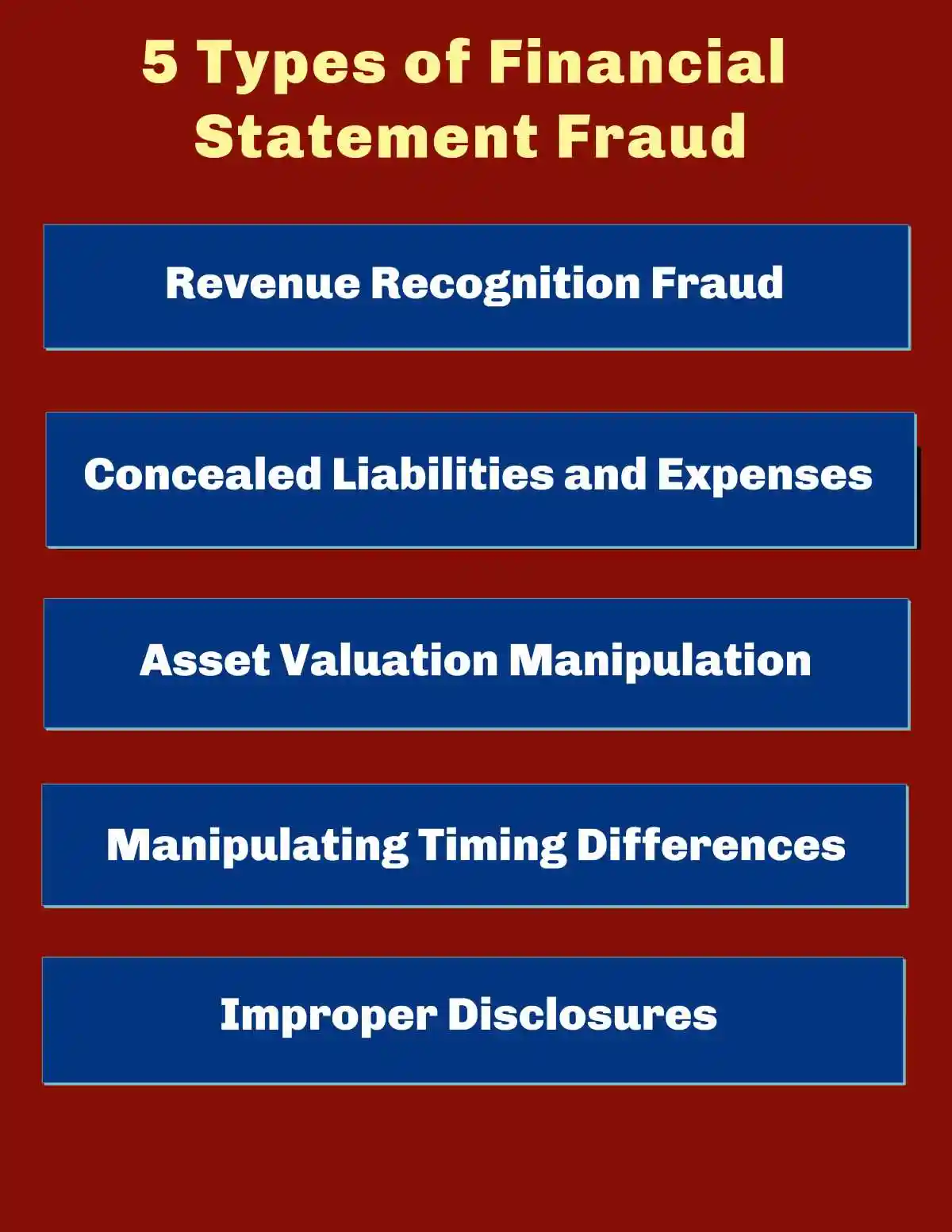
Revenue Recognition Fraud: The Foundation of Most Securities Cases
- Revenue Recognition Fraud: Represents the most devastating catalyst for securities class action lawsuits in modern financial markets, accounting for approximately 60% of SEC enforcement actions against companies for fraud.
- Financial Statement Manipulation. This sophisticated deception involves deliberate manipulation of revenue figures to create artificial impressions of financial health, often designed to meet earnings expectations or inflate corporate valuations.

Revenue Recognition Fraud Mechanisms
Revenue Recognition Fraud occurs when organizations intentionally falsify income by inappropriately recording when and how much revenue appears in financial statements. Under established accounting principles, revenue recognition requires both earning and realization before legitimate recording. Companies engaging in these schemes typically employ either premature recognition of legitimate sales or creation of entirely fictitious transactions that never occurred.
Deliberate Distortion: This fraudulent practice represents systematic manipulation of top-line financial performance, severely impacting stakeholders who depend on accurate reporting for critical investment and lending decisions.
Sophisticated Techniques That Trigger Securities Litigation
- Revenue manipulation schemes: Employ various methods designed to artificially inflate earnings and deceive investors:
-
- Improper Timing of Revenue Recognition: Companies inappropriately accelerate recognition to meet targets or delay recognition to smooth income across reporting periods. Marvell Technology Group faced charges for pulling future quarters’ sales into current periods, representing up to 16% of quarterly revenues.
- Recording Fictitious Revenue: Involves recognizing income from fake contracts or nonexistent sales. Luckin Coffee recognized $300 million in fictitious revenue during 2019, while Anicom reported nonexistent sales exceeding $20 million to inflate net income.
-
- Channel Stuffing: Companies oversell inventory to distributors beyond reasonable demand near reporting deadlines, prematurely recognizing future sales. Bristol-Myers Squibb paid $150 million in penalties for recognizing $1.5 billion through channel stuffing practices.
-
- Fraudulent Third-Party Transactions: Include bill-and-hold arrangements, consignment sales, side letter agreements, and contingency transactions. Diagnostic company Alere improperly recognized approximately $24 million through such arrangements.
-
- Round Tripping: Creates circular transactions where goods pass through third parties before returning to original companies at similar prices, generating artificial revenue without genuine economic substance.
Critical Warning Signs for Investors
- Detecting revenue recognition fraud: Requires recognition of specific patterns that precede major corporate scandals:
-
- Unusual End-of-Period Activity: Large revenue percentages recorded during final days of accounting periods.
-
- Revenue-Cash Flow Discrepancies: Revenue increases without corresponding cash flow growth indicate potential manipulation.
-
- Documentation Irregularities: Missing or out-of-sequence supporting documentation for reported sales.
-
- Suspicious Account Activities: Significant discrepancies in financial data and unusual business practice indicators.
-
- Atypical Transaction Terms: Significant transactions featuring unusual payment arrangements.
-
- Excessive Growth Patterns: Revenue growth substantially outpacing industry peers or historical performance.
-
- Artificial Consistency: Unusually smooth revenue growth during volatile market conditions.
Cascading Effects on Financial Reporting
- Revenue recognition fraud creates devastating consequences across entire financial reporting systems:
-
- Material Misstatements: Financial reports lose accuracy and reliability, often requiring restatement of prior-year figures.
-
- Distorted Performance Metrics: Key indicators become unreliable, leading to faulty analysis by investors and creditors.
-
- Comprehensive Impact: Inflated revenues affect accounts receivable, asset valuations, and reported profitability across multiple statement components.
-
- Legal Ramifications: Symbol Technologies paid $131 million in judgments for channel stuffing violations, demonstrating severe securities litigation consequences.

Advanced Detection and Prevention Strategies
- Sophisticated analytical approaches prove essential for identifying revenue manipulation before it triggers securities class actions:
-
- Analytical Procedures: Examining financial relationships and comparing ratios against historical data or industry benchmarks.
-
- Vertical Analysis: Assessing line items as revenue percentages to identify suspicious patterns.
-
- Horizontal Analysis: Evaluating financial statement changes over time to detect unusual trends.
-
- Documentation Verification: Reviewing sales orders, shipping documents, and invoices while comparing prices against published rates.
-
- Cash Flow Analysis: Comparing shipping costs across periods, as significantly higher costs may indicate premature recognition.
-
- Revenue Sampling: Examining invoices from period-end and subsequent period beginnings to verify appropriate timing.
-
- Advanced Technology Solutions: Forensic accountants employ AI tools and specialized software to identify unusual revenue relationships or transactions that traditional methods might miss.
-
- Comprehensive Protection: Organizations that implement rigorous detection techniques significantly reduce their exposure to revenue recognition fraud and the catastrophic securities litigation that typically follows disclosure of these deceptive practices.
Concealed Liabilities and Expenses
- Concealed liabilities and expenses emerge as sophisticated accounting fraud schemes designed to artificially enhance corporate financial positions through deliberate omission of financial obligations. Companies engaging in these deceptive practices create false impressions of reduced investment risk while understating their true financial burdens, ultimately exposing themselves to devastating securities litigation when these hidden obligations are eventually discovered.
- Concealed Liabilities and Expenses: Creating False Financial Stability
- Concealed Liabilities and Expenses: Involve systematic manipulation where organizations deliberately obscure or misclassify financial obligations to deceive stakeholders about their actual financial condition. The most direct approach involves simply failing to record liabilities altogether.
- Hidden Financial Obligations: These concealed items create dangerous webs of deception that encompass multiple areas:
-
- Unrecorded Financial Commitments: Loans and financing arrangements that remain hidden from balance sheets Warranty and Service Obligations: Sales-related warranties that companies fail to properly accrue Employee-Related Liabilities: Underreported benefits, wages, and accrued compensation Tax and Interest Obligations: Unpaid taxes and accumulating interest expenses Legal and Environmental Liabilities: Pending lawsuits and cleanup responsibilities Off-Balance Sheet Arrangements: Complex structures designed to hide debt from investors
-
- Artificial Enhancement: When companies engage in liability concealment, they artificially improve their debt-to-equity ratios, creating misleading impressions of financial stability that can attract unwary investors and lenders. The eventual discovery of these hidden obligations typically necessitates financial restatements, triggering securities class action lawsuits and destroying investor confidence.

Sophisticated Concealment Methods: Five Primary Techniques
- Concealment Strategies: Organizations employ increasingly sophisticated methods to hide financial obligations from stakeholders and regulators:
-
- Off-Balance-Sheet Financing Schemes: Companies create complex structures using special purpose entities (SPEs) and revolving accounts receivable financing to hide substantial debt obligations from investors.
-
- Strategic Expense Deferrals: Management deliberately shifts current-period costs to future accounting periods through various distribution methods, including failure to accrue liabilities for salary or vacation time.
-
- Expense Misclassification Fraud: Companies record capital expenditures as operating expenses to distort profit margins, or improperly capitalize operating expenses that should be recognized immediately.
-
- Invoice Suppression Tactics: Organizations systematically exclude certain invoices from accounting systems during critical reporting periods, while simultaneously holding checks for extended periods to preserve cash positions.
-
- Physical Document Concealment: Management instructs employees to hide bills at year-end to avoid recording payables and expenses, creating artificial profit enhancements through revenue-expense mismatching.
Case Studies: Real-World Concealment Fraud
- Documented Management Manipulation: Auditors discovered that management explicitly instructed employees to omit transactions from accounting sub-ledgers. Employee interviews revealed systematic exclusion of liabilities and expenses from financial records.
- Quantified Fraud Evidence: Additional analytical procedures identified 85 out of 120 transactions that were deliberately excluded from financial statements. Management eventually acknowledged their systematic manipulation of the financial reporting process throughout the entire year.
- Check-Holding Schemes: Companies underreport payables by holding checks for extended periods, creating illusions of timely supplier payments while preserving cash reserves. These practices damage supplier relationships and may result in restricted credit terms.

Detection Framework: Systematic Approaches and Control Mechanisms
- Analytical Detection Methods: Identifying hide bills at year-end liabilities requires comprehensive analytical approaches:
-
- Comparative Industry Analysis: Examining what significant liabilities or expenses appear in peer companies but remain absent from the subject company’s statements
-
- Cut-Off Testing Procedures: Comparing vendors’ invoices, receiving documents, and cash disbursements to determine proper liability recognition timing
-
- Post-Period Transaction Reviews: Analyzing transactions after financial statement dates for evidence of prior-period obligations
-
- Financial Ratio Analysis: Using gross profit margin and current ratio calculations to detect irregularities in liability reporting
-
- Essential Internal Control Framework: Strong internal controls provide fundamental protection against concealment fraud:
-
- Segregation of Duties Requirements: Different individuals must handle transaction authorization, recording, and asset custody responsibilities. This separation makes it nearly impossible for single individuals to both perpetrate and conceal fraudulent activities.
-
- Comprehensive Record-Keeping Standards: Organizations must maintain proper and timely reconciliations of major asset and liability accounts.
-
- Independent Audit Programs: Clear and focused internal audit functions provide independent evaluations of internal control system quality and effectiveness.
-
- Board-Level Management Oversight: Directors must review actions addressing material control weaknesses and verify these actions meet objectivity and adequacy standards.
Regulatory Compliance and Legal Consequences
- Sarbanes-Oxley Impact: The Sarbanes-Oxley Act of 2002 fundamentally transformed internal controls requirements, mandating strict financial reporting reforms to protect investors from accounting fraud.
- Management Liability: Current regulatory compliance frameworks hold managers legally responsible for financial accuracy. Discovered concealed liabilities trigger immediate legal repercussions and regulatory enforcement sanctions.
Comprehensive Compliance Requirements:
- Broad Debt Definition Standards: Legal frameworks must capture arrears, derivatives, suppliers’ credit, and guarantee assumptions
- Disclosure Requirement Clarity: Established reporting requirements and timeframes for debt disclosure
- Contract Confidentiality Limits: Tightly defined confidentiality provisions with limited disclosure exceptions
- Legislative Oversight Mechanisms: Clear administrative and judicial remedies specified in applicable legal provisions
- Post-Scandal Regulatory Evolution: Following major accounting fraud cases of the early 2000s, internal controls became critical regulatory compliance requirements. Companies must implement mechanisms ensuring financial reporting integrity while supporting operational efficiency and providing reliable leadership decision-making data.

Improper Asset Valuations
- Improper Asset Valuations represent a particularly insidious form of financial statement fraud that creates artificial impressions of financial stability while exposing organizations to devastating securities litigation. Companies deliberately misstate asset values to appear more financially robust than economic reality supports, ultimately deceiving investors and creditors about their true financial position.
Understanding Asset Valuation Manipulation
- Asset Valuation Fraud: Encompasses the deliberate inflation or deflation of balance sheet values to create misleading impressions about corporate financial health. This sophisticated deception typically involves exaggerating tangible assets like real estate and equipment, overvaluing intangible assets such as patents and brand value, and failing to write down obsolete inventory when appropriate.
- Fraudulent Motivations: Organizations pursue these schemes to secure financing, meet earnings targets, or artificially inflate stock prices. Unlike legitimate accounting judgments that involve reasonable professional discretion, asset valuation fraud deliberately misrepresents values through aggressive practices that fall outside acceptable accounting standards.
Sophisticated Manipulation Techniques
- Inventory Manipulation Schemes: Companies falsify inventory counts to inflate total assets, deliberately fail to record obsolescence or damage, and inappropriately capitalize costs that should be expensed.
- Fixed Asset Deception: Organizations manipulate depreciation schedules to minimize expenses, record nonexistent equipment or properties, and improperly capitalize expenses that should be recognized immediately.
- Intangible Asset Manipulation: Management exploits the subjectivity inherent in valuation models, using overly optimistic growth assumptions to justify inflated valuations while failing to take appropriate impairment charges when evidence indicates decreased value.
- Mark-to-Market Abuses: Companies exploit accounting subjectivity to inflate asset values through questionable appraisals and manipulated accounting maneuvers.
- Consequences: These manipulations create artificial improvements in debt-to-equity ratios, resulting in enhanced profit margins and false impressions of reduced investment risk.
Devastating Corporate Examples
Waste Management
- Waste Management’s senior executives carried out the scheme through a series of fraudulent accounting manipulations.
- The specific mechanisms of the fraud included:
-
- Manipulated depreciation: Executives repeatedly extended the useful life of company assets, such as garbage trucks, and assigned arbitrary, excessive salvage values to them. This dramatically reduced the annual depreciation expense and artificially boosted profits.
-
- Improper capitalization of expenses: Maintenance and repair costs for landfills were improperly classified as capital expenses rather than as current-period expenses. This illegally deferred recognition of these costs, making short-term profits appear larger.
- Concealment through “netting”: Management secretly used one-time gains from asset sales to erase unrelated operating expenses and accounting misstatements. This practice, known as “netting,” concealed the true financial health of the company from investors and auditors.
- Inflated environmental reserves: Executives would intentionally inflate environmental liability reserves during strong financial quarters. Then, during weaker quarters, they would release the excess reserves into earnings to boost results.
- Failure to write off impaired assets: The company neglected to write off the costs of abandoned or impaired landfill projects, instead keeping the costs on the balance sheet to hide their negative financial impact.
The role of Arthur Andersen
- Waste Management’s longtime auditor, Arthur Andersen, was complicit in the fraud
- The audit firm was aware of Waste Management’s improper accounting practices and documented numerous issues, but it repeatedly approved the company’s financial statements with an “unqualified” or “clean” opinion.
- The relationship was tainted by a conflict of interest. Many of Waste Management’s top financial officers were former Arthur Andersen employees, and Andersen was highly protective of the lucrative relationship with its “crown jewel” client.
- Andersen also received substantial fees for non-audit consulting services, which compromised its independence.
Unraveling and consequences
- Discovery: The scheme was discovered in 1997 after a new CEO took over and ordered a review of the company’s accounting practices. He resigned months later after calling the accounting “spooky”.
- Financial restatement: In 1998, Waste Management announced it would restate its earnings from 1992 through 1997, revealing over $1.7 billion in overstated profits.
- Regulatory action: The Securities and Exchange Commission (SEC) charged Waste Management’s founder and five other top executives with perpetrating the fraud.
- Executives were fired and faced charges of securities fraud. The SEC also fined Arthur Andersen $7 million for its role.
- Stock price collapse: When the fraud was revealed, the company’s stock price plummeted, causing over $6 billion in losses for shareholders.
- Company restructure: Crippled by the scandal, Waste Management was acquired by a smaller competitor, USA Waste Services. The newly merged company kept the Waste Management name but relocated its headquarters and replaced nearly all top executives.
- Legacy for auditors: The scandal was a major contributing factor to the downfall of Arthur Andersen, which was also implicated in the Enron scandal just a few years later.
- Broader reforms: The Waste Management case, alongside other major financial scandals, helped trigger the push for stricter regulations in corporate governance and financial reporting, ultimately leading to the passage of the Sarbanes-Oxley Act in 2002.
- Autonomy Corporation’s Inflated Valuations: Hewlett-Packard’s 2011 acquisition revealed that Autonomy had significantly overvalued intangible assets, particularly goodwill and intellectual property, based on unrealistic growth assumptions. HP ultimately took an USD 8.80 billion write-down on Autonomy’s value, triggering massive investor losses.
Enron’s Mark-to-Market Manipulation:
- The Enron scandal remains the quintessential example of howomissions in financial statements can devastate markets and investors.
- The energy company employed sophisticated accounting fraud schemes, including the use of special purpose entities (SPEs) to hide over $1 billion in debt from its balance sheets.
- These corporate scandals involved deliberate omissions of critical financial information that painted a false picture of the company’s financial health.
- Key Legal Precedents Established:
-
- Enhanced auditor independence requirements under the Sarbanes-Oxley Act
- Stricter CEO and CFO certification of financial statements
- Whistleblower protection provisions that encouraged internal reporting of fraud
- The securities litigation that followed resulted in one of the largest bankruptcy proceedings in U.S. history, with investors losing approximately $74 billion in market value.
- The case established crucial precedents for regulatory compliance, particularly regarding the disclosure of off-balance-sheet transactions and the independence of external auditors.
Detection Through Financial Analysis
- Ratio Analysis Techniques: Forensic accountants employ sophisticated analytical methods to identify potential asset valuation fraud. Asset composition ratios reveal significant changes without operational justification, while profitability indicators show abnormal fluctuations that may indicate manipulation.
- Liquidity and Leverage Assessments: Working capital to total asset ratios often deviate from industry norms when asset valuation fraud occurs. Companies with fraudulent financial statements typically exhibit significantly different leverage ratios compared to honest competitors, with higher debt-to-equity ratios serving as notable fraud predictors.
- Advanced Detection Methods: Specialized fraud detection models like the Beneish M-Score identify earnings manipulation probabilities, while trend analysis highlights asset value changes exceeding 10% annually without operational justification. Comprehensive horizontal and vertical analysis reveals suspicious patterns that deviate from historical performance and industry benchmarks.
- Critical Importance: Understanding these manipulation techniques becomes essential for preventing the catastrophic consequences that follow asset valuation fraud discovery, including devastating securities litigation and permanent damage to organizational credibility.
Manipulating Timing Differences
- Manipulating Timing Differences: Represents a sophisticated form of accounting fraud that exploits legitimate gaps between financial and tax reporting periods to deceive stakeholders about true financial performance. This deceptive practice enables companies to artificially shift transaction timing, creating misleading impressions that can trigger devastating securities litigation when eventually discovered.
Understanding Timing Manipulation in Financial Reporting
- Timing differences: Occur when revenues and expenses appear in accounting income during one period but impact taxable income in different periods. These variances between financial statements and income tax returns represent normal accounting procedures under legitimate circumstances.
- Fraudulent Transformation: Companies typically maintain separate books for financial accounting and income tax reporting purposes. Under normal circumstances, journal entries reverse these differences over time, ultimately producing identical total figures.
- Deliberate Manipulation: Timing fraud transforms these legitimate accounting scenarios into dangerous schemes through intentional misapplication of accounting principles designed to mislead investors and trigger potential securities class action lawsuits.
Revenue Recognition and Expense Deferral Schemes
- Timing manipulation fraud employs two primary deceptive techniques:
-
- Premature Revenue Recognition: Recording sales before they meet established earning and realization criteria
-
-
- Billing for unshipped goods to accelerate revenue reporting
- Recording future periods’ revenue in current reporting cycles
- Creating artificial bill-and-hold arrangements with distributors
- Implementing sham related-party transactions and round-trip deals
-
-
- Improper Expense Deferrals: Deliberately postponing current-period expenses to enhance reported profitability
-
-
- Shifting legitimate expenses to later accounting periods
- Capitalizing operating costs that require immediate expense recognition
- Manipulating depreciation schedules to minimize current-period costs
- Failing to record liabilities when obligations are actually incurred
-
- GAAP Violations: Revenue should not be recognized until it is both realized or realizable and earned. Companies engaging in timing manipulation directly violate these principles to meet earnings targets and avoid regulatory compliance failures.
Financial Statement Distortions and Their Consequences
- Artificial Profits: Income statements present fabricated earnings that bear no relationship to actual business performance. Research indicates that 18% of accountants make financial errors daily, with timing discrepancies representing major causes of distorted financial statements.
- Balance Sheet Misrepresentation: Financial position appears misleadingly favorable through incorrect asset and liability values that undermine stakeholder decision-making capabilities.
- Deferred Revenue Misclassification: Advance payments for future services require classification as liabilities until earned. Timing manipulation creates false impressions about company obligations and performance trajectories that can result in securities class action lawsuits.
Detection Methods: Analytical Procedures for Fraud Identification
- Vertical Analysis: Examines relationships between financial statement items during single reporting periods, expressing each entry as percentages of base figures such as sales or total assets. This analytical approach reveals disproportionate relationships indicating potential timing fraud.
- Horizontal Analysis: Evaluates financial statement changes over multiple periods by expressing current figures as percentages of base year amounts. Significant deviations from historical patterns often signal manipulative practices.
- Critical Warning Signs:
- Growing revenues without corresponding cash flow increases
- Consistent sales growth while industry competitors struggle
- Unexplained performance surges during final reporting periods
- Revenue-expense relationships defying logical business patterns
Auditor Responsibilities in Timing Fraud Detection
- Professional Skepticism: PCAOB inspections consistently identify deficiencies in auditors’ application of professional skepticism when evaluating fraud risks.
- Management Override Vigilance: Auditors must remain alert to management override of internal controls, as fraud instances frequently involve evidence concealment or information misrepresentation.
- Suspicious Evidence Indicators:
-
- Document production timing that raises concerns
- Invoices containing vague descriptions or unusual amounts
- New evidence emerging late in audit processes
- Presumed Fraud Risk: Auditors must maintain heightened awareness of improper revenue recognition as a presumed risk and intentional misstatement of accounting estimates.

Corporate Governance Framework for Prevention
- Robust Governance Systems: Effective corporate governance establishes essential foundations for preventing timing manipulation fraud. Macroeconomic environmental changes may create new pressures, opportunities, and rationalizations for fraudulent behavior.
- Essential Governance Components:
-
- Comprehensive quality control systems preventing manipulation
- Professional skepticism among audit staff and oversight personnel
- Awareness of cognitive biases hampering fraud detection capabilities
- Adequate resources resisting client pressures and deadline constraints
- Prevention Through Controls: Board oversight combined with effective internal controls creates environments where timing manipulation becomes difficult to execute and easier to detect, protecting financial reporting integrity and avoiding securities litigation consequences.
Improper Disclosures
- Improper disclosures represent a particularly insidious form of financial statement fraud that operates through deliberate concealment rather than direct manipulation. Companies engaging in disclosure fraud create dangerous webs of deception by withholding material information that stakeholders require for informed decision-making, ultimately creating substantial exposure to securities litigation.
Critical Elements of Disclosure Fraud
- Disclosure fraud occurs when organizations deliberately obscure or omit critical items including accounting changes, contingent liabilities, significant events, and material transactions from financial statements. These deceptive practices create misleading impressions about corporate financial conditions without directly manipulating numerical data.
Dangerous Concealment Tactics:
- Subsequent Events Affecting Financial Position: Companies deliberately conceal events occurring after the balance sheet date that provide evidence about conditions existing at that time.
- Related-Party Transaction Omissions: Management withholds information about transactions with executives, subsidiary companies, or other affiliated entities that could indicate conflicts of interest.
- Documentation Destruction: Organizations systematically destroy evidence related to negative events to prevent disclosure requirements.
Common Disclosure Fraud Mechanisms
- Material Omissions frequently involve organizations misrepresenting financial arrangements to cover risks or reduce apparent liabilities. Companies routinely fail to disclose transactions with related parties, creating artificial impressions of arm’s-length business relationships.
- Facility Contamination cases demonstrate the severity of disclosure fraud consequences. Management often instructs employees to omit contamination disclosures from financial statements while simultaneously destroying documentation related to environmental liabilities.
- Regulatory Violations: The Statement of Financial Accounting Standards No. 165 mandates recognition of all subsequent events providing evidence about conditions existing at the balance sheet date. Companies violating these requirements face substantial regulatory enforcement actions and potential securities class action lawsuits.
Securities Litigation Consequences
- Recent Court Decisions reveal increasing securities litigation claims focused specifically on risk-factor disclosures contained within SEC filings. Public companies create devastating liability exposure when risk disclosures describe events in hypothetical terms while those risks have already materialized.
- PIPE Transaction Lawsuits: Private Investments in Public Equity transactions where issuers experienced securities class actions demonstrate how voluntary disclosure practices directly influence litigation outcomes and investor recovery amounts.
- Legal Ramifications: Companies engaging in improper disclosure practices face not only regulatory compliance failures but also the prospect of costly securities litigation that can permanently damage corporate reputation and financial stability.
THE SECURITIES LITIGATION PROCESS
| Filing the Complaint | A lead plaintiff files a lawsuit on behalf of similarly affected shareholders, detailing the allegations against the company. |
| Motion to Dismiss | Defendants typically file a motion to dismiss, arguing that the complaint lacks sufficient claims. |
| Discovery | If the motion to dismiss is denied, both parties gather evidence, documents, emails, and witness testimonies. This phase can be extensive. |
| Motion for Class Certification | Plaintiffs request that the court to certify the lawsuit as a class action. The court assesses factors like the number of plaintiffs, commonality of claims, typicality of claims, and the adequacy of the proposed class representation. |
| Summary Judgment and Trial | Once the class is certified, the parties may file motions for summary judgment. If the case is not settled, it proceeds to trial, which is rare for securities class actions. |
| Settlement Negotiations and Approval | Most cases are resolved through settlements, negotiated between the parties, often with the help of a mediator. The court must review and grant preliminary approval to ensure the settlement is fair, adequate, and reasonable. |
| Class Notice | If the court grants preliminary approval, notice of the settlement is sent to all class members, often by mail, informing them about the terms and how to file a claim. |
| Final Approval Hearing | The court conducts a final hearing to review any objections and grant final approval of the settlement. |
| Claims Administration and Distribution | A court-appointed claims administrator manages the process of sending notices, processing claims from eligible class members, and distributing the settlement funds. The distribution is typically on a pro-rata basis based on recognized losses. |
Whistleblower Programs: Essential Detection Mechanisms
- Fraud Detection: Whistleblowers serve as critical early warning systems for disclosure fraud detection. Employee, supplier, and customer tip-offs prove instrumental in uncovering both improper disclosure schemes and improper asset valuation fraud.
- SEC Whistleblower Program: Provides essential avenues for individuals to report illegal behaviors within organizations, offering comprehensive protections including confidentiality provisions, anti-retaliation safeguards, and substantial monetary awards.
- Protection Framework: These programs create environments where employees understand the serious consequences of disclosure violations—including potential securities class actions—and become more likely to report concerns before significant investor harm occurs.
Financial Statement Fraud Classification Framework: Critical Analysis for Investor Protection
- Understanding Fraud Mechanisms: Organizations and investors require systematic approaches to identify the distinct characteristics of each financial statement fraud type, their detection methodologies, and the devastating consequences they create for stakeholders and securities litigation exposure.
Comprehensive Fraud Analysis:
Revenue Recognition Fraud: The Most Prevalent Securities Litigation Catalyst
- Definition: Intentional falsification of income through inappropriate timing and measurement of revenue recognition in financial statements.
Primary Manipulation Methods:
- Recording completely fictitious revenue through fake contracts
Channel stuffing schemes involving excessive distributor inventory
- Fraudulent third-party transactions including bill-and-hold arrangements
Round-tripping schemes creating artificial revenue without economic substance
- Detection Techniques: Analytical procedures examining revenue-cash flow relationships, vertical analysis of period-end activity, horizontal analysis identifying unusual growth patterns, comprehensive documentation examination, and systematic revenue sampling procedures.
- Devastating Impact: Material misstatements requiring financial restatements, distorted financial ratios misleading investors and creditors, cascading effects across multiple financial statement components.
- Critical Warning Signs: Unusual end-of-period revenue spikes, revenue growth without corresponding cash flow increases, suspicious or missing sales documentation, excessive growth rates compared to industry peers.
Concealed Liabilities and Expenses: Hidden Obligations That Trigger Securities Class Actions
- Definition: Deliberate obscuring or misclassification of financial obligations designed to present misleading impressions of corporate financial strength and regulatory compliance status.
-
- Sophisticated Concealment Methods:
- Off-balance-sheet financing through special purpose entities
- Delayed expense recognition across multiple reporting periods
- Strategic misclassification of operating versus capital expenditures
- Invoice suppression during critical reporting periods
- Physical concealment of financial documents and obligations
- Detection Approaches: Comparative analysis against industry peer liabilities, cut-off testing for unrecorded obligations, post-period transaction reviews, and ratio analysis targeting debt-to-equity distortions.
- Financial Consequences: Artificially improved debt-to-equity ratios creating false impressions of reduced investment risk, significantly understated liabilities, and enhanced profit margins that mislead stakeholders.
- Key Indicators: Missing transaction documentation, unusual supplier payment patterns, inconsistent creditor relationships, and unexplained improvements in leverage ratios.
Improper Asset Valuations: Balance Sheet Manipulation
- Definition: Deliberate inflation or deflation of asset values designed to enhance apparent financial stability and meet performance targets that could trigger securities class action lawsuits when discovered.
- Asset Manipulation Techniques:
-
- Inventory manipulation through falsified counts and obsolescence concealment
- Fixed asset schemes involving depreciation schedule manipulation
- Intangible asset overvaluation using aggressive future growth assumptions
- Mark-to-market abuses exploiting valuation model subjectivity
- Detection Methods: Comparative ratio analysis identifying asset composition anomalies, profitability indicators revealing valuation inconsistencies, and leverage assessments detecting fraudulent balance sheet strength.
- Market Impact: Inflated balance sheets creating false financial stability impressions, artificially enhanced profit margins, and misleading debt-to-equity ratios that deceive investors and lenders.
- Warning Indicators: Unexplained asset value fluctuations exceeding industry norms, depreciation discrepancies without operational justification, and inventory fluctuations inconsistent with business operations.

Manipulating Timing Differences: Exploiting Reporting Period Gaps
- Definition: Sophisticated exploitation of legitimate timing differences between financial and tax reporting to artificially influence financial performance and avoid regulatory enforcement scrutiny.
- Timing Manipulation Methods:
-
- Premature revenue recognition before sales completion
-
- Strategic transaction timing across reporting boundaries
- Analytical Detection: Vertical analysis revealing disproportionate period-end relationships, horizontal analysis identifying suspicious historical pattern deviations, enhanced auditor review procedures, and cash flow analysis detecting earnings-cash discrepancies.
- Performance Distortion: Creation of artificial profits misrepresenting business performance, misrepresented financial positions affecting stakeholder decisions, and distorted financial metrics undermining analytical reliability.
- Red Flag Patterns: Revenue growth without corresponding cash flow improvements, significant end-period performance surges, and revenue-expense relationships defying logical business patterns.
Improper Disclosures: Material Omission Schemes
- Definition: Intentional concealment or obscuring of material information required for informed stakeholder decision-making and regulatory compliance, often discovered through whistleblower reports.
- Concealment Strategies:
-
- Withholding subsequent events affecting financial position
- Concealing related-party transactions benefiting insiders
- Systematic documentation destruction eliminating evidence trails
- Deliberate understatement of contingent liabilities and potential losses
- Detection Mechanisms: Whistleblower reports from employees and stakeholders, comprehensive SEC filing reviews identifying disclosure gaps, and enhanced external audit procedures focusing on omission risks.
- Legal Ramifications: Misleading stakeholder investment and credit decisions, severe legal consequences including securities class action lawsuits, and substantial securities litigation risks when omissions are eventually discovered.
- Critical Indicators: Missing documentation for significant transactions, incomplete disclosure sections in regulatory filings, and hypothetical risk descriptions when actual events have occurred.
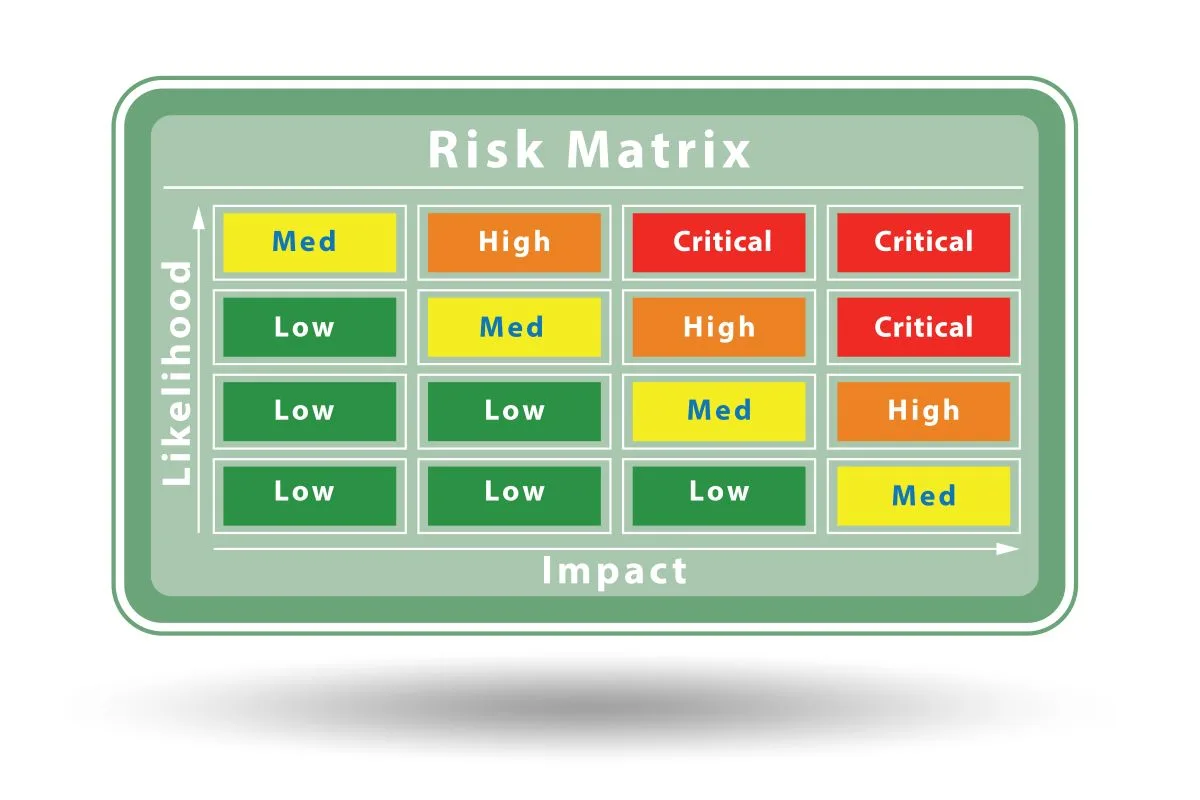
- Fraud Detection Priority Matrix: Revenue recognition fraud poses the greatest securities litigation risk due to its prevalence in SEC enforcement actions, while improper disclosures create substantial legal exposure when material omissions trigger corrective disclosures and subsequent securities class action lawsuits.
COMPARISON TABLE OF 5 FIVE TYPES OF FINANCIAL STATEMENT FRAUD
| Type of Fraud | Definition | Common Methods | Detection Methods | Impact | Key Red Flags |
|---|---|---|---|---|---|
| Revenue Recognition Fraud | Purposeful falsification of income by wrongly recording when and how much revenue is recognized | • Wrong timing of recognition • Recording fake revenue • Channel stuffing • Fraudulent third-party transactions • Round tripping |
• Analytical procedures • Vertical analysis • Horizontal analysis • Documentation examination • Revenue sampling |
• Material misstatements • Distorted financial ratios • Ripple effects across multiple statements |
• Unusual end-of-period activity • Revenue-cash flow misalignment • Suspicious documentation • Excessive growth |
| Concealed Liabilities | Purposely hiding or misclassifying financial obligations to show misleading pictures of corporate financial conditions | • Off-balance-sheet financing • Delayed expense recognition • Misclassification of expenses • Invoice suppression • Physical concealment |
• Comparative analysis • Cut-off testing • Post-period transaction review • Ratio analysis |
• Artificial improvement in debt-to-equity ratios • Understated liabilities • Inflated profits |
• Missing transactions • Unusual payment patterns • Inconsistent supplier relationships |
| Improper Asset Valuations | Purposely misstating asset values to appear more financially stable | • Inventory manipulation • Fixed asset schemes • Intangible asset manipulation • Mark-to-market abuses |
• Comparative ratio analysis • Asset composition ratios • Profitability indicators • Leverage assessments |
• Inflated balance sheets • Higher profit margins • Misleading debt-to-equity ratios |
• Unusual asset value changes • Discrepancies in depreciation • Unexplained inventory fluctuations |
| Manipulating Timing Differences | Using gaps between financial and tax reporting periods to show misleading performance pictures | • Early revenue recognition • Improper expense deferrals • Moving transactions between periods |
• Vertical analysis • Horizontal analysis • Auditor review • Cash flow analysis |
• Artificial profits • Misrepresented financial position • Distorted metrics |
• Growing revenues without cash flow • End-period performance surges • Inconsistent revenue-expense patterns |
| Improper Disclosures | Purposely omitting or hiding material information needed for stakeholder decisions | • Concealing subsequent events • Withholding related-party transactions • Destroying documentation • Understating liabilities |
• Whistleblower reports • SEC filing reviews • External audits |
• Misleading stakeholder decisions • Legal consequences • Securities litigation risks |
• Missing documentation • Incomplete disclosures • Hypothetical risk descriptions |
Safeguarding Against Financial Statement Fraud: Essential Defense Strategies
- Financial Statement Fraud Prevention: Requires systematic implementation of multi-layered defense mechanisms designed to detect deceptive practices before they escalate into catastrophic securities litigation. Organizations that fail to establish adequate safeguards face devastating consequences when fraudulent schemes are eventually discovered through regulatory enforcement actions or whistleblower disclosures.
- Critical Defense Framework:
-
- Robust Internal Controls: Segregation of duties creates essential barriers against manipulation by preventing individuals from controlling entire transaction cycles. Regular assessment of control effectiveness ensures these mechanisms adapt to evolving fraud tactics and maintain their protective capabilities against sophisticated accounting fraud schemes.
-
- Advanced Analytics Implementation: Modern forensic accounting techniques employ sophisticated algorithms to identify patterns indicative of revenue manipulation, asset valuation fraud, and timing differences before significant damage occurs. These technological solutions provide continuous monitoring capabilities that traditional audit procedures cannot match.
-
- Independent Oversight Mechanisms: Board-level audit committees with financial expertise provide essential checks against management override of controls. Direct communication channels with external auditors create additional layers of scrutiny that strengthen the overall control environment.
-
- Whistleblower Protection Programs: Confidential reporting mechanisms empower employees to expose suspicious activities without retaliation concerns. These programs serve as critical early warning systems that often detect fraud schemes before they cause substantial investor losses.
-
- Documentation Excellence: Meticulous record-keeping practices support transaction transparency and provide crucial evidence during fraud investigations. Comprehensive documentation standards create audit trails that make concealment of fraudulent activities significantly more difficult.
-
- Warning Signs Requiring Immediate Attention:
-
-
- Unexplained fluctuations in key financial ratios that deviate from industry benchmarks
- Revenue growth patterns disconnected from corresponding cash flow improvements
- Unusual transaction concentrations near reporting period boundaries
- Significant accounting policy modifications without clear business rationale
- Missing or altered supporting documentation for material transactions
- Management resistance to routine accounting inquiries or audit procedures
-
- The Path Forward: Organizations that prioritize financial statement fraud prevention through comprehensive education, robust controls, and transparent reporting cultures protect not only their assets but also their market reputation and stakeholder relationships. Early detection capabilities remain the most effective strategy when preventive measures encounter sophisticated manipulation schemes.
- Market Integrity: The battle against accounting fraud requires collective vigilance from management, boards, auditors, and regulators working together to maintain the transparency essential for functioning capital markets. Companies that demonstrate commitment to ethical financial reporting benefit from enhanced investor confidence and reduced exposure to costly securities litigation.
- Essential Knowledge: Understanding these five distinct fraud types—revenue recognition manipulation, concealed liabilities, improper asset valuations, timing differences exploitation, and disclosure omissions—empowers organizations to implement targeted safeguards that protect against the most common and destructive forms of financial statement fraud.
Key Takeaways
Understanding the five types of financial statement fraud is essential for protecting your organization from devastating financial losses and legal consequences.
• Revenue recognition fraud accounts for 60% of SEC enforcement actions – Watch for unusual end-of-period activity, revenue-cash flow misalignment, and excessive growth patterns that don’t match industry trends.
• Concealed liabilities artificially improve debt-to-equity ratios – Implement cut-off testing, post-period transaction reviews, and segregation of duties to detect hidden obligations and expenses.
• Improper asset valuations manipulate balance sheets to appear more stable – Use comparative ratio analysis and trend analysis to identify asset value changes exceeding 10% annually without operational justification.
• Timing manipulation exploits legitimate accounting gaps – Deploy horizontal and vertical analysis to spot growing revenues without corresponding cash flows and inconsistent revenue-expense patterns.
• Improper disclosures conceal material information from stakeholders – Establish whistleblower programs and maintain comprehensive documentation to uncover omitted transactions and destroyed evidence.
Despite representing only 5% of fraud cases, financial statement fraud causes the highest median losses at $954,000 per incident. Organizations must implement robust internal controls, data analytics, and independent oversight to detect these sophisticated schemes before they cause irreparable damage to financial integrity and stakeholder trust.
FAQs
Q1. What are the most common types of financial statement fraud? The five most common types of financial statement fraud are revenue recognition fraud, concealed liabilities and expenses, improper asset valuations, manipulating timing differences, and improper disclosures. Each type involves different methods of manipulating financial data to mislead stakeholders about a company’s true financial position.
Q2. How can companies detect revenue recognition fraud? Companies can detect revenue recognition fraud through various methods, including analytical procedures, vertical and horizontal analysis of financial statements, thorough documentation examination, and revenue sampling. Key red flags include unusual end-of-period activity, revenue-cash flow misalignment, and excessive growth patterns that don’t match industry trends.
Q3. What impact does financial statement fraud have on businesses? Financial statement fraud can have severe consequences for businesses, including material misstatements in financial reports, distorted financial ratios, legal penalties, and loss of investor trust. It often leads to the need for financial restatements, undermining company credibility and potentially resulting in significant financial losses.
Q4. How effective are whistleblower programs in uncovering financial fraud? Whistleblower programs play a crucial role in exposing financial fraud, particularly improper disclosures. These programs provide confidential channels for employees, suppliers, and customers to report suspicious activities without fear of retaliation. Many cases of fraud are initially detected through tips, making whistleblower programs an essential tool in fraud prevention and detection.
Q5. What strategies can organizations implement to prevent financial statement fraud? Organizations can prevent financial statement fraud by implementing robust internal controls, utilizing data analytics for anomaly detection, establishing independent audit committees, creating effective whistleblower programs, and maintaining comprehensive documentation practices. Regular employee training on fraud awareness and fostering a culture of transparency and ethical behavior are also crucial preventive measures.
