Current Clinical Finding:
“In this study of patients with type 2 diabetes who had no prior eye disorders, patients prescribed semaglutide or tirzepatide had an increased risk of NAION and other optic nerve disorders, although the overall risk was low. These findings highlight the need for close monitoring of these conditions.“
— JAMA Network Open (August 11, 2025)
Introuction to a Critical Patient Update on Zepbound and NAION
Welcome to this critcal patient update on Zepbound and NAION. As Zepbound (Tirzepatide) continues to transform weight management in 2026, a rare but serious eye condition called NAION has moved to the forefront of patient safety discussions.” Zepbound has established itself as a leading, high-efficacy therapy in modern obesity care, characterized by significant, sustained weight loss results and a unique dual-action mechanism.
As of 2026, it is recognized as a transformative agent, often yielding superior weight reduction compared to previous pharmacological standards. Some observational research has reported an association between GLP-1–based medications and NAION, but association is not causation, and the absolute risk appears to remain extremely low. However, Zepbound’s potential link to serious eye conditions such as NAION has raised concerns among patients and healthcare providers alike.
At the same time, sudden vision loss is always an emergency, regardless of the suspected trigger. The correct approach is not panic, but preparedness: understand the warning signs, understand your baseline risk factors, and know what to do if symptoms like Zepbound and blurry vision or other serios Zepbound side effects occur.
This update explains Zepbound and NAION in plain language, summarizes what research can and cannot prove, and provides patient-centered guidance that aligns with how ophthalmologists and prescribing clinicians manage risk.

What Is NAION (Explained Simply)
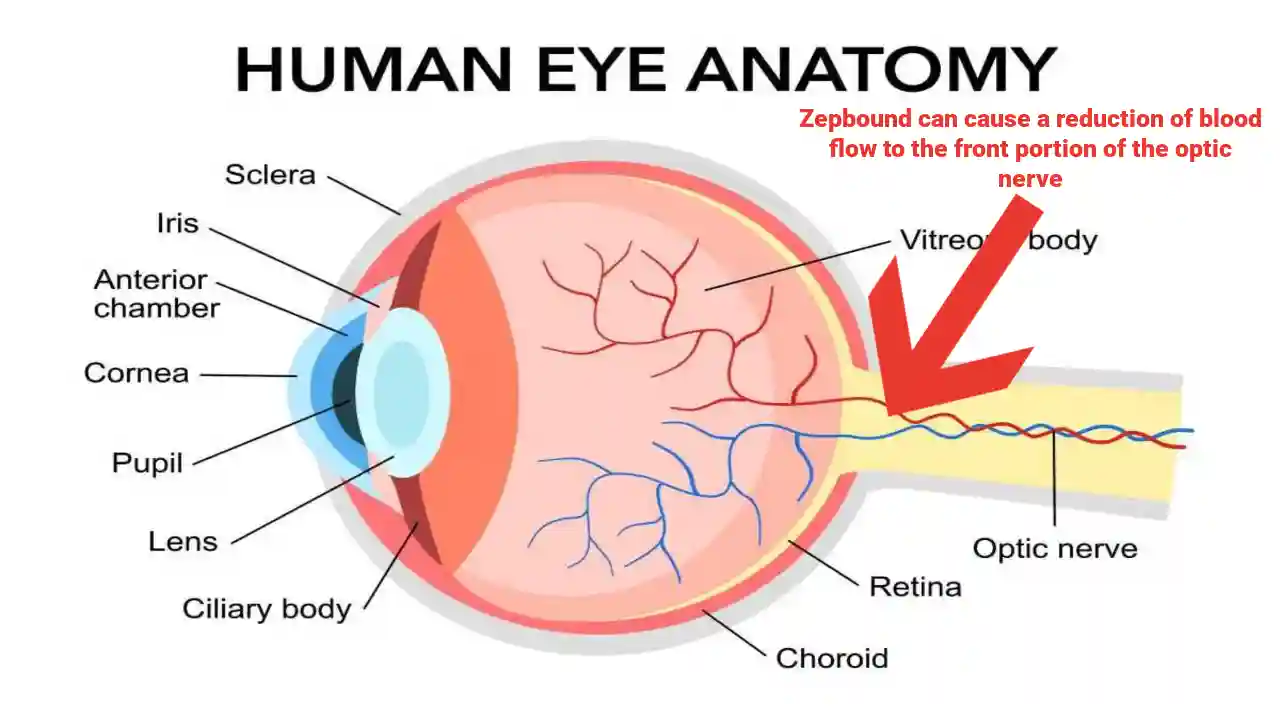
NAION stands for nonarteritic anterior ischemic optic neuropathy. In practical terms, it is often described as a rare “stroke of the eye,” although the underlying mechanism is more specific: reduced blood flow to the front portion of the optic nerve (the area where the optic nerve enters the eye). When that blood supply is interrupted or insufficient, optic nerve tissue can become injured.
Key features patients often report include:
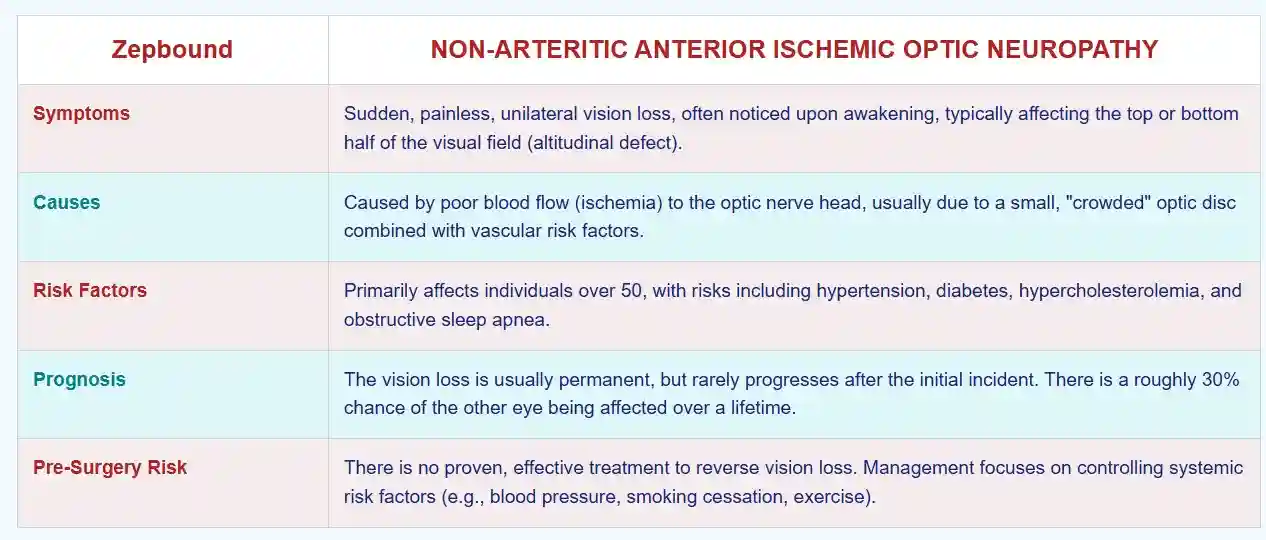
- Sudden, painless vision loss in one eye
- Blurred, foggy, or dim vision
- A dark “shadow” in the upper or lower field of view
- Symptoms that are first noticed upon waking
That “noticed upon waking” detail is clinically important. Many NAION events are discovered in the morning, which is one reason ophthalmology has long examined the roles of nocturnal blood pressure patterns, sleep apnea, and other night-time physiologic changes.
NAION is not the same condition as retinal detachment, glaucoma, or “pink eye.” It is an optic nerve injury that requires urgent evaluation because a narrow window exists to confirm the diagnosis and rule out other emergencies.
Given Zepbound’s association with potential vision loss or even blindness, it’s crucial for patients on this medication to be vigilant about their eye health. The symptoms of NAION should never be ignored as they could lead to severe outcomes if not addressed immediately.
If you were prescribed Zepbound and took it as directed and suffered Zepbound and NAION, Zepbound vision loss or other Zepbound Vision Side Effects, contact Zepbound Vision Loss Lawyer Timothy L. Miles today. You could be eligible for a Zepbound vision loss lawsuit and potentially entitled to substantial compensation. (855) 846–6529 or [email protected].
Why Zepbound and NAION Are in the Same Conversation Conversation
Zepbound is a dual incretin therapy (a GIP and GLP-1 receptor agonist) prescribed for chronic weight management. More broadly, GLP-1–based therapies are used across obesity, prediabetes, and Type 2 diabetes care. As their use expands, researchers can detect rare events that were previously too infrequent to quantify.
In recent years, observational studies (including reports discussed in outlets such as JAMA Ophthalmology) have identified higher rates of NAION among users of GLP-1–based medications compared with certain comparison groups. That signal has attracted justified attention. However, it must be interpreted with discipline.
Two points can both be true at the same time:
- A statistical association may exist in some observational datasets.
- The individual risk appears to be extremely low, on the order of roughly 1 in 10,000 users in simplified patient-facing terms, and may vary by population risk and study methods.
Even a low-risk of Zepbound side effects such as Zepbound and blurry vision matters when it involves potential Zepbound vision loss.
That is why the correct goal is not to dismiss the issue, but to understand it accurately.
Putting the Risk of Zepbound and NAION in Perspective
Risk communication frequently fails when relative risk is discussed without absolute risk. NAION is a rare event in the general population, and it remains rare among medication users.
A simplified way to frame the current concern is:
- Observational research has suggested an elevated rate in some GLP-1 user cohorts.
- The absolute number of cases remains small.
- A rough, patient-friendly estimate often cited in discussions is about 1 case per 10,000 users, although this is not a universal figure and should not be treated as a guaranteed “true rate” for every subgroup.
Your individual risk is not determined by the headline. It is determined by a combination of baseline health factors, anatomy, Zepbound side effects, and the quality of the evidence linking Zepbound and NAION or other serious Zepbound eye problems.
Zepbound and NAION: Association vs. Causation
Many patients want a clear yes-or-no answer. Medicine often cannot provide that immediately for rare outcomes because early evidence is usually observational. Observational studies finding the occurance of Zepbound vision problems including Zepbound eye pain are valuable, but they are prone to confounding, which means that the drug user group may differ from the comparison group in ways that also influence NAION risk.
This is particularly relevant here because many people prescribed medications like Zepbound, Trulicity, Saxenda, or Mounjaro already have NAION risk factors, including:
- Type 2 diabetes
- High blood pressure
- High cholesterol and atherosclerotic disease risk
- Obstructive sleep apnea
- Obesity and cardiometabolic syndrome
- Smoking history
- Older age (NAION is more common in middle-aged and older adults)
These factors can independently contribute to optic nerve ischemia risk. If a dataset shows that NAION occurs more often among GLP-1 users, it may be because GLP-1 users, on average, carry more of these risks than non-users.
Researchers attempt to adjust for confounding using statistical matching and multivariable models, but adjustment is not perfect. Residual confounding remains a major challenge, especially when datasets do not capture variables such as sleep apnea severity, nocturnal oxygenation, adherence to CPAP, or patterns of nocturnal hypotension.
For patients, the practical takeaway is consistent:
- The signal is being investigated.
- It is not proof of direct causation.
- Your baseline risk factors for Zepbound and NAION deserve as much attention as the medication itself.
How NAION Typically Presents (What Patients Actually Notice)
NAION usually does not feel like an infection or irritation. It is often painless. Patients commonly describe:
- Foggy or blurred vision in one eye
- Vision that looks dim, like a light was turned down
- A dark area in the visual field, often described as a shadow or missing patch
- Reduced contrast sensitivity
- Sometimes reduced color perception in the affected eye
The deficit is often partial rather than total Zepbound blindness, but it can still be functionally severe. Depth perception can be affected. Driving can become unsafe. Reading may become difficult. Even if not Zepbound and NAION, other serious Zepbound vision issues including any of the following deserve immediate medical attention:
- Zepbound and blurry vision
- Zepbound and eye floaters
- Zepbound eye pain
Importantly, the presentation is usually monocular (one eye), which is one reason it can be missed initially. Many people do not notice the deficit until they cover the unaffected eye.
THE ZEPBOUND SIDE EFFECTS PROFITS

Emergency Red Flags: Seek Same-Day Evaluation
If you are taking Zepbound, or any GLP-1–based therapy, and you experience any of the symptoms below, treat it as an emergency requiring same-day ophthalmologic evaluation:
- Sudden blurred or foggy vision in one eye
- A new shadow, gray patch, or dark spot in your field of vision
- Sudden loss of peripheral vision in one eye
- Sudden change in color perception (colors appear washed out in one eye)
- A rapid decline in sharpness or contrast in one eye, especially if noticed upon waking
If an ophthalmologist is not immediately available, an emergency department evaluation may be appropriate, particularly because clinicians must rule out other time-sensitive diagnoses such as NAION. It’s crucial not to self-diagnose NAION at home.
Do Not Stop Zepbound Abruptly Without Medical Advice
If you are stable on Zepbound and concerned after reading about NAION, the most important safety message is straightforward:
Do not stop your medication without speaking with your prescribing clinician.
Stopping abruptly can have consequences, including rebound appetite, weight regain, and destabilization of metabolic control. Additionally, stopping a medication does not substitute for urgent evaluation if you have symptoms. If vision changes occur, such as experiencing dry eye syndrome, the priority is immediate eye assessment, not medication decisions made in isolation.
A safer and more clinically sound sequence is:
- If you have acute symptoms, seek same-day ophthalmologic evaluation.
- Notify your prescriber promptly after evaluation begins.
- Make medication decisions collaboratively after a diagnosis is confirmed and other causes are assessed.
Who Is at Higher Baseline Risk for NAION (Regardless of Medication)
NAION is multifactorial. The best-established risk contributors include systemic vascular risk factors and certain optic nerve anatomy.
Common baseline risk factors include:
- Type 2 diabetes – which may also lead to diabetic retinopathy
- Hypertension
- Hyperlipidemia
- Obstructive sleep apnea
- Smoking
- Atherosclerotic cardiovascular disease
- Age (risk increases in later decades)
- A “crowded” optic disc anatomy (sometimes called a “disc at risk”), which is not something you can determine without an eye exam
This matters because patients who qualify for Zepbound often have several of these factors at the same time. That overlap complicates research and increases the importance of individualized clinical risk review.
Moreover, potential eye side effects from Zepbound should be part of the discussion during any medical evaluation. If you start noticing unusual visual symptoms like eye floaters, it’s crucial to address these concerns with your healthcare provider promptly.
What Patients Can Do Proactively to Reduce Zepbound and Blindness Risk
If you are taking Zepbound, a medication that has been linked with potential eye problems, and want to reduce NAION risk in a way that is aligned with broader health goals, focus on measures that address underlying vascular and oxygenation risk.
Practical steps to discuss with your clinicians include:
- Blood pressure optimization, including review of nighttime dosing if you are prone to low nocturnal pressures
- Diabetes and insulin resistance control, including avoidance of extreme glucose variability
- Sleep apnea screening and treatment, especially CPAP adherence when prescribed
- Lipid management based on your cardiovascular risk profile
- Smoking cessation support when relevant
- Regular eye examinations, particularly if you have diabetes or multiple vascular risk factors
These steps are not speculative. They are grounded in the known biology of optic nerve ischemia and the broader prevention framework for vascular disease.
COMPARISON OF EYE DISEASE SYMPTOMS
| Condition | What Others See | What the Patient Sees |
|---|---|---|
| NAION | Normal-looking eye | Sudden “curtain” or half-field loss |
| Glaucoma | Normal-looking eye | Gradual loss of side (peripheral) vision |
| Cataract | Cloudy/milky pupil | Constant, hazy blur |
| Conjunctivitis | Red, watery eye | Grittiness, but usually clear vision |
What to Expect at the Eye Appointment (So You Are Not Caught Off Guard)
When clinicians evaluate suspected NAION, the aim is to confirm optic nerve involvement and exclude other urgent causes. A typical workup may include:
- Visual acuity testing and color vision testing
- Pupil examination, looking for a relative afferent pupillary defect
- Dilated fundus examination to assess optic nerve swelling
- Optical coherence tomography (OCT) to document optic nerve head and retinal nerve fiber layer changes
- Visual field testing to map the pattern of vision loss
- In some cases, blood tests to exclude giant cell arteritis when symptoms or age profile suggest risk (for example, ESR and CRP), and immediate treatment if arteritis is suspected
Patients sometimes assume that “nothing can be done.” That is not the correct conclusion. Even when a single therapy does not reverse damage, urgent evaluation remains essential to confirm diagnosis, manage risk factors, and protect the other eye.
If NAION Is Diagnosed: What Medication Conversations Usually Look Like
If an ophthalmologist diagnoses NAION, your prescribing clinician may reassess Zepbound and NAION in the context of your overall risk-benefit profile or other Zepbound side effects, particularly Zepbound and blurry vision or Zepbound and eye floaters. The appropriate decision is individualized and depends on:
- Severity and pattern of vision loss
- Baseline NAION risk factors (sleep apnea, blood pressure patterns, diabetes status)
- Alternative causes and contributing factors identified during evaluation
- The benefits you are receiving from Zepbound (weight reduction, cardiometabolic improvement, functional improvement)
- Availability and suitability of alternative therapies
Some patients will continue therapy with careful monitoring; some may pause or discontinue; others may switch. There is no single universal recommendation that applies safely to all patients, which is why unilateral decisions based on online information are discouraged.
If you were prescribed Zepbound and took it as directed and suffered Zepbound and NAION, Zepbound vision loss or other Zepbound Vision Side Effects, contact Zepbound Vision Loss Lawyer Timothy L. Miles today. You could be eligible for a Zepbound vision loss lawsuit and potentially entitled to substantial compensation. (855) 846–6529 or [email protected].
What Current Research Still Needs to Answer about Tirzepatide eye problems
For patients and clinicians, the key unanswered questions are specific:
- Is the association consistent across different GLP-1–based agents and doses, including tirzepatide?
- Does risk concentrate in defined subgroups (for example, untreated sleep apnea, certain blood pressure patterns, or “disc at risk” anatomy)?
- Is there a time-dependent pattern, such as risk clustering early after initiation or during rapid weight loss?
- Can improved adjustment for confounders eliminate the signal, or does it persist after robust controls?
These questions require well-designed studies, improved case validation, and careful comparative methods. In the interim, the responsible approach is ongoing surveillance, transparent patient counseling, and rapid evaluation of symptoms.
A Practical Patient Action Plan to Your Optic Nerve Health
If you are taking Zepbound in 2026 and want a clear plan, use the framework below.
1) If you have no symptoms
- Continue Zepbound as prescribed.
- Review NAION baseline risk factors with your clinician, particularly sleep apnea and blood pressure control.
- Schedule routine eye care appropriate to your age and medical history.
2) If you develop sudden vision changes in one eye
- Seek same-day ophthalmologic evaluation. This is crucial as Zepbound has been linked to various eye problems, including sudden vision changes.
- If you cannot access an ophthalmologist quickly, consider urgent care or emergency evaluation depending on local access and severity.
- Inform your prescribing clinician promptly.
3) Do not self-manage medication your optic nerve health
- Do not stop or restart Zepbound based solely on online reports.
- Make medication decisions after clinical evaluation, ideally with input from both ophthalmology and the prescribing team.
This is the governance model that protects patients: rapid triage, confirmed diagnosis, coordinated decision-making, and risk-factor optimization.
Top Resources to Track Updates on Tirzepatide Eye Problems
If you want reliable updates rather than social media speculation, use sources that publish clinical guidance and ongoing safety reviews:
- American Academy of Ophthalmology (AAO): Updates and patient education on optic nerve disorders and emerging medication safety signals
- JAMA Ophthalmology: Peer-reviewed observational research and commentary relevant to NAION and medication exposure
- FDA (U.S. Food and Drug Administration): Drug safety communications and labeling updates when warranted
- Eli Lilly Medical Information (Zepbound): Official prescribing information, adverse event reporting pathways, and updates that reflect post-marketing surveillance
- NEI (National Eye Institute): Foundational education on optic nerve health and vision loss research
- Your board-certified ophthalmologist or neuro-ophthalmologist: The most relevant interpretation is individualized to your anatomy and risk profile
In light of recent legal actions surrounding the use of Zepbound, it’s important to stay informed about potential side effects to your optic nerve health such as Zepbound and eye floaters or other Zepbound eye problems. For the latest information regarding these issues, refer to the ongoing Zepbound lawsuit updates which may provide valuable insights into any emerging concerns related to this medication.
Bottom Line for Patients and their Optic Nerve Health
NAION is a rare but serious optic nerve event that can present as sudden, painless vision loss in one eye, often noticed upon waking. Some observational research has reported a higher rate of NAION among GLP-1 users, but this remains an evolving area where absolute risk appears extremely low and where confounding risk factors are common in the same patient populations most likely to use Zepbound.
If you or someone you know has experienced sudden vision loss while using Zepbound, it’s crucial to treat these sudden monocular vision changes as an urgent emergency. The safest, most clinically appropriate position in 2026 is disciplined and proactive:
- Do not stop Zepbound without medical advice.
- Treat sudden monocular vision changes as an urgent emergency.
- Focus on risk-factor control, especially sleep apnea and vascular health.
- Follow credible ophthalmology and regulatory resources for updates.
Vision is not an area for delay or guesswork. Preparedness, rapid evaluation, and coordinated care remain the standard of integrity in patient safety. If blurry vision persists while on Zepbound, it may be necessary to seek medical advice and explore potential legal avenues if your situation warrants it.
Final Takeaways: Zepbound and Your Vision
- The Risk is Rare: While studies show an association, the actual occurrence of NAION remains extremely low (roughly 0.04%).
- Know the Symptoms: Seek immediate medical attention if you experience sudden, painless blurred vision or a “shadow” in one eye, especially upon waking.
- Don’t Panic: Most patients can continue their treatment safely. The goal of this update is awareness, not alarm.
- Talk to Your Doctor: If you have a history of glaucoma, sleep apnea, or optic nerve issues, ensure your prescribing physician and ophthalmologist are both in the loop.
If you were prescribed Zepbound and took it as directed and suffered Zepbound and NAION, Zepbound vision loss or other Zepbound Vision Side Effects, contact Zepbound Vision Loss Lawyer Timothy L. Miles today. You could be eligible for a Zepbound vision loss lawsuit and potentially entitled to substantial compensation. (855) 846–6529 or [email protected].
Frequently Asked Questions about Zepbound and NAION
What is NAION?
Why is it often discovered in the morning?
What are the key symptoms?
- Sudden, Painless Vision Loss: Typically occurs in one eye and is noticed right away or shortly after waking up.
- Altitudinal Loss: A “curtain” or shadow covering either the top or bottom half of the visual field.
- Internal Swelling: A doctor will observe optic disc edema (swelling) inside the eye, though the outside of the eye usually appears normal.
What are the main risk factors?
- High Blood Pressure & Diabetes.
- Sleep Apnea: A significant independent risk factor; using a CPAP machine may help reduce the risk of it occurring in the second eye.
- Small Optic Disc: A “disc-at-risk” anatomy where the optic nerve head is structurally crowded.
- Medications: Certain drugs, such as PDE5-inhibitors (e.g., Viagra) or amiodarone, have been potentially associated with the condition.
Is there a treatment for someone who sufferes Zepbound and NAION?
- Controlling Risk Factors: Managing blood pressure, cholesterol, and diabetes.
- Timing of Meds: Some doctors recommend taking blood pressure medication in the morning rather than at night to avoid extreme blood pressure dips during sleep.
- Observation: About 40% of patients see some slight improvement in central vision over several months, though visual field loss is often permanent.
Zepboound Vision Problems, Contact Zepbound Vision Loss Lawyer Timothy L. Miles Today
If you were prescribed Zepbound and took it as directed and suffered Zepbound and NAION, Zepbound vision loss or other Zepbound Vision Side Effects, contact Zepbound Vision Loss Lawyer Timothy L. Miles today. You could be eligible for a Zepbound vision loss lawsuit and potentially entitled to substantial compensation. (855) 846–6529 or [email protected].
Timothy L. Miles, Esq.
Law Offices of Timothy L. Miles
Tapestry at Brentwood Town Center
300 Centerview Dr. #247
Mailbox #1091
Brentwood,TN 37027
Phone: (855) Tim-MLaw (855-846-6529)
Email: [email protected]
Website: www.classactionlawyertn.com