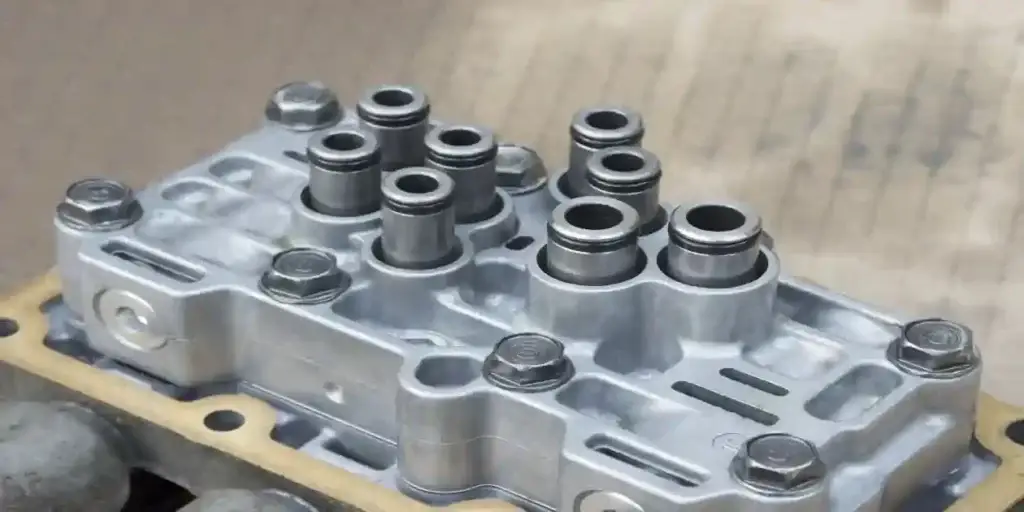
Introduction to the GM Transmission Lawsuit 10 Speed
If you looking for information about the GM Transmission Lawsuit 10 Speed you have come to the right place. The GM 10-speed automatic transmission has been positioned as a modern engineering solution for performance, towing capability, and fuel efficiency across several high-volume trucks and SUVs. In parallel, it has also become the subject of consumer complaints and litigation narratives that allege harsh shifting, hesitation, shuddering, and other drivability concerns.
If you are searching for information related to the GM transmission lawsuit 10 speed, you are likely trying to answer one practical question: Is the behavior you are experiencing normal operating logic, a repairable condition, or a potential defect that has broader legal implications? The most productive way to approach that question is to separate three issues that are often blended together online: (1) what the 10-speed is and how it behaves by design, (2) what owners commonly report when something is not behaving as expected (for instance, defective GM transmission problems), and (3) how the consumer-complaint and litigation process generally works in the automotive context.
This article explains the GM 10-speed transmission at a technical level, summarizes the issues most often alleged (which could potentially qualify for a GM transmission lawsuit), clarifies how lawsuits of this type are typically structured (especially in cases involving a defective GM transmission), and outlines the documentation owners generally need to protect their position going forward.
If you drive a Chevrolet, GMC, or Cadillac with a defective GM Transmission and you have experienced defective transmission issues like shuddering, jerking, slipping, or had repair work done, call GM Transmission Lawyer Timothy L. Miles today for a free case evaluation as you may qualify for a GM Transmission Lawsuit and could potentially be entitled to compensation. (855) 846–6529 or [email protected].

What “10 Speed” Means in GM Vehicles
A “10-speed” is an automatic transmission with ten forward gear ratios. In practice, the additional ratios are used to keep the engine operating in a favorable range more often, which can improve acceleration, towing stability, and highway efficiency.
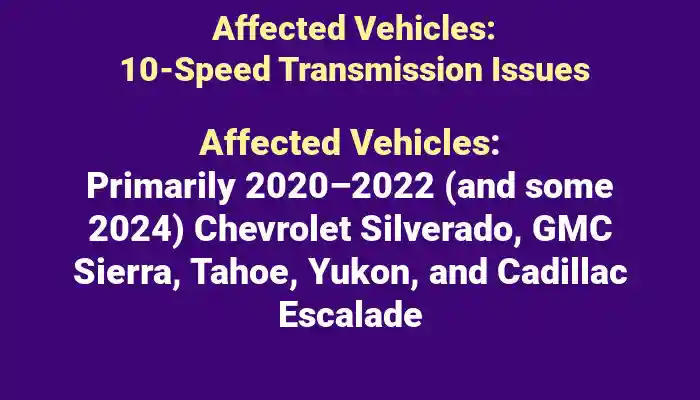
GM’s 10-speed has been installed across a range of models and trims, most notably in certain:
- Chevrolet Silverado and GMC Sierra configurations
- Chevrolet Tahoe/Suburban and GMC Yukon/Yukon XL configurations
- Cadillac Escalade configurations
- Performance-oriented applications in some model lines (depending on year and powertrain)
The precise transmission designation and calibration can vary by engine, model year, and drivetrain. For owners, that variation matters because drivability is not only about hardware. It is also about the software strategy that controls shift scheduling, torque converter clutch behavior, and adaptive learning.
Understanding these elements can help owners better navigate their experiences with the GM 10-speed automatic transmission. However, if you find yourself facing issues such as those described earlier – harsh shifting or shuddering – it’s crucial to remember that these may not be isolated incidents. They could be indicative of broader systemic problems with the vehicle’s transmission system. In such cases, seeking legal advice from professionals experienced in handling GM transmission lawsuits could prove beneficial.
Why 10-Speed Automatics Can Feel Different Than Older Transmissions
Some shift behaviors that feel “wrong” to a driver are not necessarily failures. They can be byproducts of how modern automatics are designed to meet multiple competing targets.
Key concepts that shape how a 10-speed feels include:
- Shift mapping: The transmission control module (TCM) selects gears based on throttle input, vehicle speed, grade, load, and drive mode.
- Torque management: The engine and transmission coordinate to reduce torque during a shift for smoothness and durability.
- Torque converter clutch (TCC) strategy: The converter may lock and unlock more frequently to improve fuel economy, which can feel like a subtle shudder or “busy” driveline when not operating optimally.
- Adaptive learning: The TCM may “learn” driver behavior and clutch fill times. After certain repairs, battery disconnects, or software updates, relearn procedures can meaningfully change shift feel.
This distinction matters because many legal complaints turn on whether a condition is a normal characteristic, a correctable calibration issue, a maintenance-related issue, or a defect that persists despite repeated repair attempts.
Common Complaints Associated With GM 10-Speed Transmissions
When consumers discuss a “GM 10 speed transmission problem,” the language used online is often consistent. The most frequently alleged symptoms include:
1) Harsh Shifting (Upshifts or Downshifts)
Owners may describe:
- A pronounced “bump” or “bang” during 1–2, 2–3, or 3–4 shifts
- A firm downshift when slowing or rolling into a stop
- A jolt when reapplying throttle after coasting
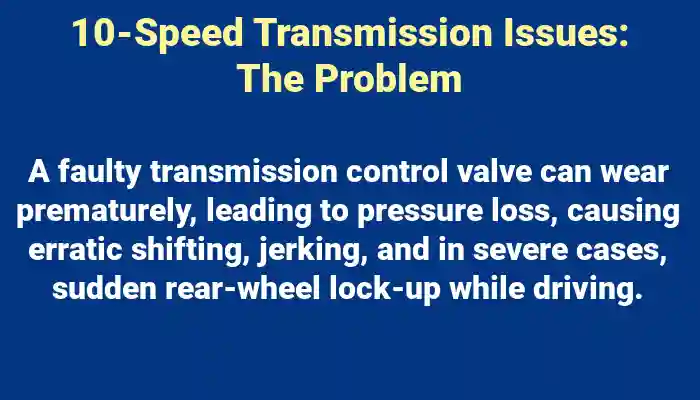
In technical terms, harsh shifting can be influenced by clutch pressure control, line pressure command, adaptation values, or a mismatch between expected and actual slip time during gear changes.
If you find yourself experiencing these issues with your GM vehicle’s transmission, it might be time to consult with a GM transmission lawyer who practices in these types of cases. It is important to understand whether your experience falls under the category of normal operational behavior or if it’s indicative of faulty GM transmission problems. In some instances, these issues could be severe enough to warrant filing a GM Transmission Lawsuit. If you’re considering this route, it’s crucial to know if you’re eligible to file a GM transmission lawsuit. Furthermore, if you believe your vehicle has a defective GM transmission, seeking legal advice could provide you with the guidance needed to address these concerns effectively.
2) Hesitation, Delay, or “Searching” for Gears
A 10-speed has many ratios, and in some driving conditions it may:
- Downshift multiple gears when throttle demand increases
- Delay engagement momentarily when transitioning from coasting to acceleration
- Seem uncertain as it selects between closely spaced ratios
Drivers often label this as “gear hunting.” In litigation narratives, hesitation is frequently framed as a safety concern when it occurs while merging or turning across traffic.
3) Shuddering or Vibration
Shudder complaints are often described as:
- A vibration under light throttle
- A rumble-strip sensation at specific speeds
- A condition that becomes more noticeable when the torque converter is locking
Shudder has a long history in modern automatics across the industry, and it can be related to fluid condition, torque converter clutch control, software calibration, or internal wear. From a governance standpoint, the core question is whether the manufacturer can consistently correct the issue through approved service procedures, and whether the correction is durable.
4) Clunking, Bumping, or Driveline “Slack” Feel
Some owners report:
- Clunks when shifting into Drive or Reverse
- A bump when coming to a stop
- A sensation of slack being taken up in the driveline
Not every clunk originates inside the transmission. Driveshaft components, mounts, differentials, and even brake hold logic can contribute. For documentation purposes, however, owners should still ensure the complaint is recorded as a transmission-related drivability concern if that is the observed behavior.
5) Repeated Repair Attempts With No Durable Resolution
From a legal perspective, the most consequential pattern is not a single harsh shift. It is a timeline that looks like this:
- Symptom appears.
- Dealer performs software update, fluid service, relearn, or component replacement.
- Symptom improves temporarily or not at all.
- Symptom returns, leading to additional repair visits.
This repeatability is often central to allegations that a vehicle is not conforming to warranty or that a defect is systemic rather than isolated.
What a “GM 10 Speed Transmission Lawsuit” Typically Alleges
Automotive class actions and individual warranty suits vary by jurisdiction, but they often share a common structure. Claims may include allegations that:
- The transmission has a design or manufacturing defect that causes harsh shifting, hesitation, shudder, or premature wear.
- The condition materially impairs the use, value, or safety of the vehicle.
- The manufacturer knew or should have known about the issue through pre-release testing, warranty data, dealer repair data, or consumer complaints.
- Repairs provided under warranty are ineffective, short-lived, or do not address the root cause.
- Marketing, window sticker representations, or warranty promises created expectations of smooth operation and durability that were not met.
It is important to be precise with language. A lawsuit allegation is not the same thing as a proven defect. Litigation is a mechanism for resolving disputed facts through evidence, expert analysis, and legal standards.
If you drive a Chevrolet, GMC, or Cadillac with a defective GM Transmission and you have experienced defective transmission issues like shuddering, jerking, slipping, or had repair work done, call GM Transmission Lawyer Timothy L. Miles today for a free case evaluation as you may qualify for a GM Transmission Lawsuit and could potentially be entitled to compensation. (855) 846–6529 or [email protected].
Class Action vs Individual Claim: Why the Path Matters
Many consumers searching “GM transmission lawsuit 10 speed” are trying to decide whether they should join a class action or pursue an individual remedy. This decision can significantly impact the outcome of their claims, as highlighted in this comparison of class action and individual lawsuits.
A practical comparison:
Class action (general characteristics)
- Often seeks standardized relief such as reimbursements for certain repairs, extended warranty coverage, or software updates.
- Individual payouts, if any, may be modest after fees and administrative processes.
- Can drive broader corporate changes and consistent policy, which is the forward-looking benefit.
Individual claim (general characteristics)
- Focuses on one vehicle and one owner’s damages.
- May pursue repurchase, replacement, or a larger settlement, depending on state law and facts.
- Usually requires stronger documentation: repair history, timelines, persistence of symptoms, and proof of impairment.
This is not legal advice. It is a governance reality in consumer protection: the remedy framework depends on the legal vehicle chosen and the evidence available.
The Role of Warranty, Technical Service Bulletins, and Software Updates
Most transmission disputes live at the intersection of warranty administration and technical troubleshooting.
Three terms matter:
Warranty
The warranty is the manufacturer’s contractual promise. Many disputes arise when owners believe the warranty should result in a definitive fix, while manufacturers and dealers may treat certain behaviors as “normal characteristics,” “no trouble found,” or “operating as designed.”
Technical Service Bulletin (TSB)
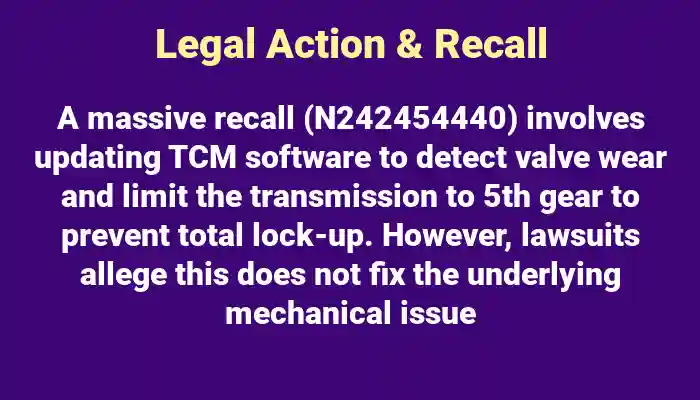
A TSB is guidance to dealers about known issues and recommended procedures. A TSB is not automatically an admission of defect. It can, however, become important evidence that the manufacturer had knowledge of a recurring condition and provided a standardized approach to address it.
Calibration updates and relearn procedures
Modern transmissions are software-driven. Some drivability complaints are addressed through:
- TCM/ECM calibration updates
- Shift adaptation resets
- Relearn drive cycles
- Fluid service under specific conditions
For owners, the key is not whether a dealer “updated software.” The key is whether the repair order clearly states:
- Your symptom description
- The diagnostic steps performed
- The codes found (if any)
- The exact correction applied
- The verification result after repair
A well-documented repair order is a governance asset. It transforms a subjective complaint into a traceable record.
What Owners Should Document Before Escalating
If you are experiencing persistent or escalating drivability issues, you should treat documentation as risk control. The goal is consistency, repetition, and clarity.
A practical checklist:
- Repair orders for every visit
- Ensure the symptom is written in your words. “Customer states harsh 2–3 shift” is stronger than “check transmission.”
- Mileage and dates
- Record when symptoms began and whether they are worsening.
- Videos or audio
- A short clip showing tachometer behavior, vibration, or the jolt during a shift can be useful. Always do this safely.
- Driving conditions
- Note temperature, speed range, throttle input, towing status, and drive mode. Many complaints are repeatable only under light throttle or specific load.
- Dealer statements
- If a dealer says “normal,” ask for that in writing on the repair order. If they say “could not duplicate,” ask that your symptom description remain on the RO.
- Out-of-pocket costs
- Keep receipts for rentals, towing, diagnostic fees, and related expenses.
This approach is proactive, and it aligns with the broader objective of corporate accountability. Manufacturers respond most consistently to structured, verifiable data.
Why “Could Not Duplicate” Is a Common Friction Point
Transmission complaints can be intermittent. Many occur under:
- Light throttle at steady speed
- Gentle deceleration into a stop
- Warmed-up driveline conditions
- Specific torque converter lockup events
If a dealer cannot reproduce the symptom, the repair order may close with no corrective action. From a consumer standpoint, the right response is not confrontation. The right response is repeatability engineering:
- Offer to ride with the technician.
- Provide a route and conditions that reliably trigger the symptom.
- Provide video evidence.
- Ask whether data logging is available.
When an issue becomes reproducible, the service process becomes measurable, and measurability is what supports escalation.
Safety, Reliability, and Value: The Three Legal Lenses
Most automotive defect claims frame harm through three lenses:
- Safety risk
- Hesitation during acceleration, unpredictable downshifts, or loss of power delivery is often framed as a risk during merges or turns.
- Reliability risk
- Repeated harsh shifting or shudder can be framed as leading to premature wear, including torque converter or clutch degradation.
- Resale value impact
- A known reputation for transmission issues can affect trade-in and private sale value, especially if repair history shows repeat visits.
These categories show up repeatedly in complaints because they map cleanly to consumer protection standards. They also reflect a broader governance principle: risk is not only failure; risk is the probability and consequence of failure over time.
What Remedies Are Commonly Sought or Discussed
While outcomes vary widely, the remedies commonly discussed in these disputes include:
- Repairs at no cost under warranty
- Reimbursement for prior repair attempts
- Extended coverage for transmission components
- Buyback or replacement under applicable state lemon law standards
- Cash settlements reflecting diminished value or inconvenience
The forward-looking point is this: remedies tend to correlate with evidence. A single complaint with no repeat visits is treated differently than a documented pattern of persistent symptoms.
Practical Steps If You Suspect a Persistent GM 10-Speed Issue
If your vehicle exhibits harsh shifting, hesitation, or shudder that is persistent and disruptive, a structured escalation path is typically more effective than ad hoc visits.
Step 1: Start with a precise written complaint at the dealer
Use specific language: “shudder at 35 to 45 mph under light throttle,” “hard 2–3 shift when cold,” “delay engaging Drive after reverse.”
Step 2: Request documentation of diagnostics and updates
Ask for the calibration level applied and what relearn procedure was performed, if any.
Step 3: Confirm whether additional service guidance exists
Ask whether there are bulletins or updated procedures applicable to your VIN and symptom set.
Step 4: Escalate through the manufacturer’s customer assistance channel
Keep records of case numbers, call dates, and written responses.
Step 5: Evaluate your consumer-law options
This may include arbitration, lemon law pathways, or consultation with a qualified attorney, depending on jurisdiction, mileage, warranty status, and repair history.
The discipline here is repetition: repeat the symptom description, repeat the request for written documentation, and repeat the expectation of a durable resolution.

Frequently Asked Questions About a GM Transmission Lawsuit 10 Speed
Is every GM 10-speed transmission covered by a GM Transmission Lawsuit?
Not necessarily. Litigation often targets certain model years, platforms, and powertrain combinations based on complaint patterns. For more detailed information on this topic, you can consult a GM transmission lawyer. Also, a lawsuit filing does not mean every vehicle has the issue, and it does not mean every complaint is caused by the same root factor.
Are harsh shifts always a defect?
No. Some firmness can be characteristic of calibration, load, or drive mode. However, if you’re experiencing defective GM transmission problems, the concern generally escalates when the shift behavior is severe, unpredictable, worsening over time, or persists after multiple repair attempts.
Can software updates fix these problems?
Sometimes. Because shift behavior is software-controlled, calibrations and relearn procedures can meaningfully change drivability. The governance question is durability: does the improvement last, and does it address the root condition?
What if the dealer says “normal operation”?
Ask for that conclusion to be written on the repair order along with your symptom description. From there, you can decide whether to seek a second evaluation, escalate to the manufacturer, or pursue other remedies.
What matters most if I want to protect my position?
A complete paper trail: repair orders, mileage, dates, symptom descriptions, and the outcome of each visit. Documentation is leverage because it converts a subjective experience into an objective record.
What is the GM 10-speed automatic transmission and which vehicles commonly feature it?
The GM 10-speed automatic transmission is a modern engineering solution featuring ten forward gear ratios designed to enhance performance, towing capability, and fuel efficiency. It is commonly installed in several high-volume trucks and SUVs including Chevrolet Silverado and GMC Sierra configurations, Chevrolet Tahoe/Suburban and GMC Yukon/Yukon XL configurations, Cadillac Escalade models, and certain performance-oriented applications depending on the year and powertrain.
Why does the GM 10-speed transmission sometimes feel different compared to older transmissions?
The GM 10-speed transmission can feel different due to its advanced design targeting multiple competing goals such as smoothness, durability, and fuel economy. Factors influencing its behavior include shift mapping by the Transmission Control Module (TCM), torque management coordinating engine and transmission during shifts, frequent locking/unlocking of the torque converter clutch for efficiency, and adaptive learning that adjusts shift feel based on driver behavior or after software updates.
What are the most common complaints associated with GM 10-speed transmissions?
Common complaints reported by owners include harsh shifting characterized by pronounced bumps or bangs during gear changes (especially 1–2, 2–3, or 3–4 shifts), firm downshifts when slowing or stopping, jolts when reapplying throttle after coasting, hesitation, shuddering, and other drivability concerns. These symptoms may indicate issues with clutch pressure control, line pressure command, adaptation values, or mismatches in expected slip time during gear changes.
How can I determine if my GM 10-speed transmission issues are normal or indicative of a defect?
To assess whether your transmission behavior is normal operating logic or a potential defect, it’s important to understand the designed behavior of the GM 10-speed system versus reported problems. Issues like harsh shifting or shuddering could be normal characteristics or correctable calibration issues. However, persistent problems despite repairs might suggest a defect with broader legal implications. Consulting technical resources or professionals specializing in GM transmissions can help clarify your situation.
What should I do if I suspect my GM vehicle’s 10-speed transmission has a defect?
If you experience persistent harsh shifting, hesitation, shuddering, or other drivability problems that are not resolved through standard maintenance or repairs, it is advisable to seek legal advice from professionals experienced in handling GM transmission lawsuit. Documenting your vehicle’s service history and symptoms thoroughly will support your position if you consider participating in litigation related to defective GM transmissions.
How does a GM Transmission Lawsuit related to GM 10-speed transmission defects generally work?
Lawsuits involving alleged defects in GM 10-speed transmissions typically focus on whether the issues represent a systemic defect affecting many owners. These cases often require documentation of repeated repair attempts and persistent problems despite those efforts. Legal proceedings may involve class actions where affected consumers seek remedies for faulty transmissions. Understanding how consumer-complaint processes operate in automotive contexts helps owners navigate potential claims
Closing Perspective: Proactive Documentation, Measurable Outcomes
The conversation around “GM transmission lawsuit 10 speed” reflects a broader shift in automotive governance. Modern vehicles are defined by software logic, adaptive controls, and integrated powertrain strategies. As complexity increases, the threshold for “normal” versus “defective” becomes harder to define without data, repeatability, and consistent documentation.
If you believe your GM 10-speed transmission is exhibiting harsh shifting or other faulty GM transmission issues, treat the issue as a managed process: document it, reproduce it, service it, and escalate it in writing. Clarity supports resolution. Consistency supports accountability. Evidence supports outcomes.
In cases where you’re facing persistent issues such as hesitation or shuddering with your GM transmission that might qualify for compensation under a legal framework, it’s essential to understand your rights regarding compensation in a GM transmission lawsuit. Remember that a well-documented case increases your chances of receiving due compensation for any faulty GM transmission issues you may be experiencing.
Timothy L. Miles, Esq.
Law Offices of Timothy L. Miles
Tapestry at Brentwood Town Center
300 Centerview Dr. #247
Mailbox #1091
Brentwood,TN 37027
Phone: (855) Tim-MLaw (855-846-6529)
Email: [email protected]
Website: www.classactionlawyertn.com
Facebook Linkedin Pinterest youtube
