
Introduction
- Section 11 of the Securities Act of 1933: Imposes strict civil liability on issuers, underwriters, directors, and signing professionals for material misstatements or omissions in a securities registration statement. Buyers need not prove fraud or reliance, only that they purchased shares traceable to the defective document and suffered financial loss.
- Securities Act of 1933: A foundational U.S. federal law enacted to prevent fraud and mandate transparency in public securities offerings. Often called the “Truth in Securities” law, it requires issuers to register new securities with the SEC and provide investors with detailed financial information prior to purchase.
- Securities Litigation: An essential tool for rectifying these breaches. They not only provide a pathway for compensation for those who have been wronged but also act as a deterrent against future misconduct. The threat of such lawsuits encourages companies to maintain transparency and uphold robust governance practices, thereby fostering a healthier investment environment.
- Internal Controls: Public companies are expected to maintain robust internal control over financial reporting (ICFR), effective disclosure controls and procedures (DCP), and corporate governance mechanisms that identify and escalate risk before it becomes a public crisis. When those expectations are not met, securities litigation often follows, anchored in the argument that investors were misled because the company’s control environment did not support reliable reporting or timely disclosure.
- Strong Corporate Governance: Is vital to the proper functioning and transparency of modern corporations, ensuring that the interests of shareholders, management, and other stakeholders are aligned and protected.

- Investor Protection: The foundation of shareholder rights lies in the principle that investors should be able to rely on accurate and honest information when making investment decisions. When companies fail to meet these standards, either through deliberate deception or negligent behavior, they violate the trust placed in them by their investors.
- Litigation Landscape: The landscape of corporate governance and securities litigation continues to evolve, influenced by regulatory bodies, market dynamics, and technological advancements. Companies are increasingly recognizing the importance of adopting robust governance practices to not only comply with legal requirements but also to build investor confidence and foster long-term sustainability.
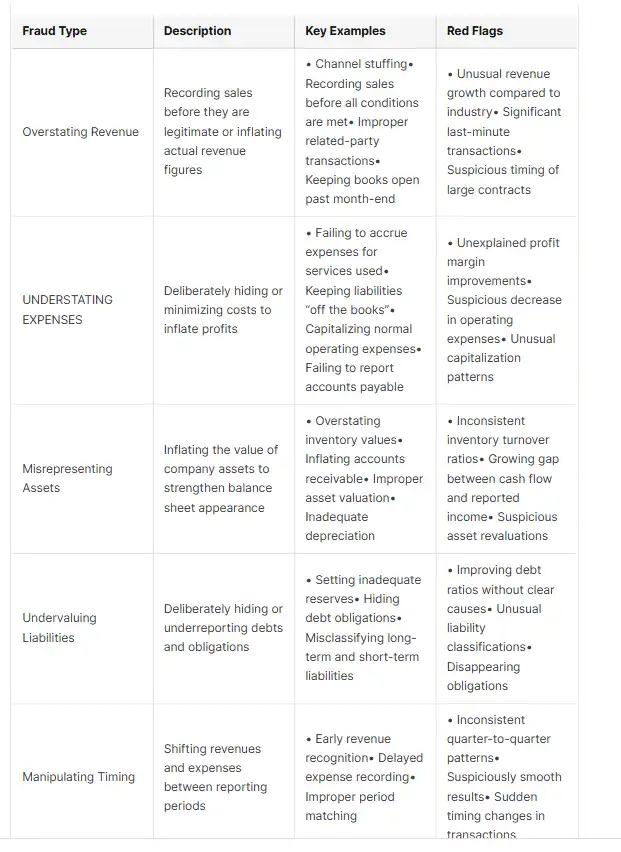
- Investor Best Practices: Individual investors can protect themselves by doing their own research and learning to recognize common warning signs.
If you believer you my have any questions about securities class action lawsuits, further information about securities class actions, internal controls, corporate governance, or if you just have questions about your rights as as shareholder, contact Timothy L. Miles at the Law Office of Timothy L. Miles today for a no-charge free case evaluation or over the phone. I will be happy to answer any questions you may have, no charge. 855-846-6529 or [email protected] (24/7/365).
An Exhaustive Guide to Investor Protection and Securities Class Actions
- Section 11 of the Securities Act of 1933 imposes strict liability for material misstatements or omissions in a company’s registration statement, meaning defendants are liable without proof of fault or “scienter” (culpable state of mind).
- This strict liability applies to issuers and others involved in the offering, though a due diligence defense is available for non-issuer defendants like underwriters, directors, and officers.
- Plaintiffs in securities class action lawsuits must prove they purchased securities that can be traced to the defective registration statement, a standard recently affirmed by the Supreme Court in the Slack v. Piranicase cecided in 2022.
The Foundation of Strict Liability Protection
At its essence, Section 11 creates a strict liability framework that revolutionizes investor protection by removing traditional barriers to recovery. Unlike common law fraud claims that require proof of intent, Section 11 operates on a fundamentally different principle making securiteis litigation standards less onoreus:
- Stict Liability: Issuers face liability regardless of their intent to deceive or knowledge of misstatements
- Burden Shifting: The law places the burden on defendants to prove the offering was not misleading or made an omission.
- This section relates to material misstatements or omissions in a company’s registration statement during a public offering. In these cases:
- An investor does not need to prove the defendant’s intent to defraud, reliance on the misstatement, or loss causation.
- The defendant (other than the issuer) can escape liability by asserting a “due diligence” defense. This means the burden shifts to the defendant to prove they had “no grounds to believe” the statement contained a misstatement or omission after a reasonable investigation.
- Material Misstatement Standard: Any material misstatement or omission in registration statements triggers potential liability and securities litigation.
- Streamlined Recovery Process: Investors can recover damages without proving they relied on the false statements
- Comprehensive Coverage: Protection extends to all parties involved in the securities offering process
This revolutionary approach emerged from the ashes of the 1929 stock market crash, when Congress recognized that traditional legal remedies were inadequate to address the sophisticated schemes that had devastated ordinary investors.
Section 11 vs. Common Law Fraud
| Feature | Section 11 of the Securities Act | Common Law Fraud (e.g., Rule 10b-5) |
|---|---|---|
| Claim Trigger | Material misstatement or omission in a registration statement for a public offering. | Material misrepresentation, usually in a press release or SEC filing, with fraudulent intent. |
| State of Mind (Scienter) | Not required for the plaintiff to prove. Issuers face strict liability, while other defendants can avoid liability by proving they were not negligent. | The plaintiff must prove the defendant acted with “scienter,” or fraudulent intent. |
| Burden Shifting | The burden is on defendants (except the issuer) to prove their due diligence. The plaintiff only needs to show a material misstatement or omission. | The burden of proof is entirely on the plaintiff to prove the defendant’s wrongdoing. |
| Reliance | Not required for the plaintiff to prove, except in limited circumstances (such as if the plaintiff purchased after a 12-month earnings statement was released). | The plaintiff must prove they relied on the misstatement when making their investment decision. |
| Loss Causation | Not required for the plaintiff to prove, although the defendant can reduce or eliminate damages by proving the loss was not caused by the misstatement. | The plaintiff must prove that the misstatement was the direct cause of their financial loss. |
Key Elements and Enforcement Mechanisms
The enforcement power of Section 11 lies in its comprehensive scope and detailed requirements:
Covered Parties and Their Responsibilities
- Issuing Companies: Bear ultimate responsibility for all registration statement contents
- Underwriters: Must conduct reasonable investigations and exercise due diligence
- Directors and Officers: Face personal liability for statements made under their authority
- Experts (Accountants, Lawyers, Engineers): Liable for portions of registration statements they prepared or certified
- Controlling Persons: May face liability for actions of controlled entities
- Strict liability: The issuer is automatically held liable if the registration statement contains material misstatements or omissions. This liability is virtually absolute.
- No due diligence defense: Unlike other responsible parties, the issuing company cannot claim that it acted in good faith or conducted a reasonable investigation to avoid liability.
- Disclosure of material information: The core principle is that if a company wants to sell securities to the public, it must provide full and accurate information about its business, finances, and risks. The registration statement is the document that provides this information.
- Other liable parties: Although the issuer has strict liability, other parties involved in the offering process are also subject to liability under Section 11, including:
- The principal executive and financial officers who signed the registration statement.
- The company’s directors.
- Experts, such as accountants, who consent to be named as having certified part of the statement.
- Underwriters of the offering.
- Consequences of violation: If found in violation, an issuer can face securities class action lawsuits from investors who bought securities based on the misleading registration statement and can file securities class action lawsuits. In such a lawsuit, the plaintiff does not need to prove the issuer’s intent or reliance on the false statement, only that a material misstatement or omission existed.
Defenses Available to Defendants
Despite the strict liability framework, Section 11 provides several affirmative defenses:
- Due Diligence Defense: Defendants can escape liability by proving they conducted reasonable investigations
- Knowledge Defense: If defendants can show the plaintiff knew of the misstatement before purchase
- Causation Defense: Proving that losses resulted from factors other than the misstatement
- Expert Reliance: Non-expert defendants may rely on expert opinions if reasonable
- Statute of Limitations: A Section 11 claim under the Securities Act of 1933 must be brought within one year after the discovery of a material misstatement or omission, but no more than three years after the security was first offered to the public.
Recent Developments and Court Rulings
The landscape of Section 11 enforcement has evolved significantly through recent judicial decisions and regulatory developments:
Landmark 2023-2024 Court Decisions
Recent court rulings have clarified and expanded Section 11’s reach in several critical areas:
- Digital Asset Securities: Courts have increasingly applied Section 11 to cryptocurrency and digital token offerings, with the SEC v. Ripple case establishing important precedents for when digital assets constitute securities subject to Section 11
- SPAC Liability: The explosion of Special Purpose Acquisition Companies (SPAC) has led to numerous Section 11 claims, with courts in 2024 ruling that SPAC sponsors and underwriters face the same strict liability standards as traditional IPO participants
- Forward-Looking Statements: Recent decisions have narrowed the safe harbor provisions for forward-looking statements, particularly in cases involving artificial intelligence and technology projections
Regulatory Enforcement Trends
- The SEC has dramatically increased its Section 11 enforcement activities:
- Record Settlement Amounts: 2024 and 2025 saw several billion dollare casees, including:
- Google settlement with Texas ($1.4 billion): In May 2025, Google agreed to pay $1.4 billion to settle a lawsuit from the Texas attorney general’s office. The suit alleged that Google illegally collected user data, including geolocation and biometric data, without proper consent.
- Oracle privacy settlement ($115 million): In a privacy-related class-action suit, Oracle settled for $115 million. While Oracle was accused of improperly collecting and selling user data, the settlement did not involve overstated user metrics.
- NCAA antitrust settlement ($2.8 billion): The NCAA and its Power Five conferences agreed to a $2.8 billion settlement with former and current college athletes over name, image, and likeness (NIL) rights. This significant settlement was widely reported but involved the NCAA, not a tech company.
- Blue Cross antitrust settlement ($2.8 billion): This $2.8 billion settlement was approved in an antitrust case against Blue Cross Blue Shield. It did not involve a tech company or overstated user metrics.
- Expanded Scope: Regulators are increasingly targeting ESG (Environmental, Social, and Governance) misstatements in registration documents
- International Coordination: Cross-border enforcement actions have increased, with U.S. authorities coordinating with international regulators on Section 11 violations
- Record Settlement Amounts: 2024 and 2025 saw several billion dollare casees, including:
Practical Implications for Modern Investors
Understanding Section 11’s practical applications empowers investors to protect their interests more effectively:
Investment Decision Framework
- Registration Statement Analysis: Investors should thoroughly review registration statements, focusing on risk factors, financial projections, and management discussions
- Expert Opinion Verification: Verify the credentials and independence of experts whose opinions appear in registration documents
- Timing Considerations: Be aware of the one-year statute of limitations for Section 11 claims from the date of discovery
- Documentation Preservation: Maintain detailed records of purchase decisions and any materials relied upon
Red Flags and Warning Signs
Savvy investors should watch for these indicators of potential Section 11 violations:
The Technology Revolution and Section 11
- Inconsistent Financial Reporting: Discrepancies between registration statements and subsequent filings
- Unusual Expert Relationships: Experts with financial ties to the issuer beyond their professional fees
- Vague Risk Disclosures: Generic or boilerplate language that fails to address company-specific risks
- Management Turnover: Significant changes in leadership shortly after securities offerings
- Rapid Business Model Changes: Fundamental shifts in business strategy not disclosed in registration materials
Artificial Intelligence and Disclosure Requirements
Companies increasingly face scrutiny over AI-related claims in their registration statements:
- Algorithm Performance Claims: Misstatements about AI system capabilities or performance metrics
- Data Privacy Representations: False or misleading statements about data handling and privacy protections
- Competitive Advantage Assertions: Overstated claims about proprietary AI technologies or market positions
- Regulatory Compliance: Misrepresentations about compliance with emerging AI regulations
Cybersecurity and Risk Disclosure
Recent court decisions have established that cybersecurity risks must be adequately disclosed:
- Breach History: Companies must disclose material cybersecurity incidents and their potential impacts
- Security Infrastructure: Accurate representations about cybersecurity measures and investments
- Third-Party Dependencies: Disclosure of cybersecurity risks from vendors and partners
- Regulatory Compliance: Accurate statements about compliance with cybersecurity regulations
Building a Stronger Investment Strategy
Investors can leverage Section 11 protections to build more robust investment strategies:
Due Diligence Best Practices
- Multi-Source Verification: Cross-reference registration statement claims with independent sources
- Expert Consultation: Engage independent experts to review complex technical or financial representations
- Peer Comparison: Compare issuer claims with industry standards and competitor disclosures
- Historical Analysis: Review the issuer’s track record of meeting projections and promises
Portfolio Protection Strategies
- Diversification Across Offering Types: Balance investments between established companies and new issuers
- Timing Diversification: Spread purchases across different time periods to minimize exposure to any single misstatement
- Documentation Systems: Maintain comprehensive records of investment decisions and supporting materials Legal Resource Identification: Establish relationships with securities attorneys before issues arise and securities litigation.
The Future of Section 11 Enforcement
As markets continue to evolve, Section 11’s role in investor protection will likely expand:
Emerging Trends and Challenges
- Climate Risk Disclosure: Increasing focus on environmental claims and climate-related financial risks
- Social Impact Investing: Greater scrutiny of ESG claims and social impact representations
- Global Market Integration: Enhanced coordination between international securities regulators
- Technology-Enhanced Enforcement: Use of AI and data analytics to identify potential violations
- The evolution of Section 11 reflects the dynamic nature of securities markets and the ongoing need for robust investor protections.
- As new technologies emerge and market structures change, this foundational law continues to adapt, ensuring that the principles of transparency and accountability remain central to our capital markets.
Foundational Investor Protection Mechanisms
- Section 11 of the Securities Act of 1933 stands as one of the most powerful investor protection tools in federal securities law, providing a robust legal framework that fundamentally reshapes the relationship between investors and corporate issuers.
- This provision creates a strict liability standard for material misstatements or omissions in registration statements, establishing unprecedented accountability measures that protect individual investors from corporate misconduct who can file securities class action lawsuits.
- For investors, Section 11 represents far more than a legal remedy—it serves as a critical equalizer in securities markets where information asymmetries traditionally favor sophisticated institutional players over individual retail investors. The provision’s significance extends beyond mere compensation, creating a comprehensive framework that:
- Eliminates traditional barriers to recovery by removing the need to prove reliance, scienter, or causation
- Establishes clear liability standards for issuers, underwriters, and other participants in securities offerings
- Provides accessible legal recourse for investors who lack resources for extensive due diligence
- Creates immediate accountability from the moment securities are offered to the public
- Enables collective action through securities class action mechanisms that amplify individual investor voices
Enhanced Market Transparency and Efficiency
The transformative impact of Section 11 on capital market efficiency cannot be overstated.
Recent developments in securities litigation demonstrate how this provision continues to evolve and strengthen market integrity through enhanced disclosure requirements and accountability measures.
Key market efficiency benefits include:
- Rigorous disclosure standards that mandate comprehensive information sharing before public offerings
- Enhanced price discovery mechanisms that allow investors to assess true security values without misleading information
- Optimal capital allocation that directs investment flows to their most productive economic uses
- Reduced information asymmetries between corporate insiders and public investors
- Strengthened market confidence through reliable disclosure frameworks
- Improved corporate governance standards across public companies
- The provision’s effectiveness in promoting transparency has been particularly evident in recent court rulings, where judges have consistently reinforced the importance of complete and accurate disclosure in registration statements.
- These decisions have established clear precedents that strengthen investor protection while maintaining market efficiency.
Deterrent Effect and Corporate Accountability Framework
- Section 11’s deterrent function represents one of its most significant contributions to securities market integrity. The provision creates powerful incentives for corporate compliance through its strict liability framework and potential for substantial financial penalties.
- Comprehensive deterrent mechanisms include:
- Immediate legal exposure for material misstatements or omissions in registration statements
- Joint and several liability for multiple parties involved in securities offerings
- Significant financial penalties that can include substantial damage awards and legal costs
- Reputational consequences that affect long-term corporate credibility and market access
- Enhanced due diligence requirements that improve overall disclosure quality
- Strengthened internal controls and compliance programs across public companies •
- Increased board oversight and executive accountability for disclosure accuracy
Crucial Provisions of Section 11
- Section 11 outlines specific liabilities for issuers and related parties involved in the registration statement of securities.The core provision is that any material misstatement or omission in the registration statement can trigger liability.
- This includes not only the issuer but also any person who signed the registration statement, directors of the issuer, underwriters, and experts such as accountants or appraisers who contributed to the document.
- This broad scope ensures that all parties involved in the creation and dissemination of the statement are incentivized to verify its accuracy. One of the key features of Section 11 is its allowance for investors to recover damages without needing to prove fraudulent intent.
- This provision is particularly beneficial for investors, as proving intent can be challenging and resource-intensive. Instead, the focus is on the misstatement or omission itself and whether it had a material impact on the investor’s decision-making process.
- This approach simplifies the litigation process and increases the chances of investors obtaining compensation for their losses. Another critical aspect of Section 11 is the statute of limitations for bringing a claim. Investors must file a lawsuit within one year after discovering the untrue statement or omission or within three years after the security was offered to the public, whichever is earlier.
- This timeline underscores the importance of vigilance on the part of investors and their advisers. Staying informed and promptly addressing any suspicions of in accuracies can make the difference in successfully leveraging Section 11 protections.
Trigger for the Statute of Limitations to File a Securites Class Action
Inquiry notice
- This standard is different from a stricter “inquiry notice” approach that some courts used in the past, under which the clock started ticking the moment “storm warnings” or other red flags appeared that would prompt a reasonable person to investigate.
- Under the current standard, inquiry notice is merely one factor a court can consider to show when a reasonably diligent plaintiff would have discovered the necessary facts.
What reasonable diligence entails
- The level of reasonable diligence required of a plaintiff depends on the specific circumstances. It does not require a plaintiff to investigate when there are no “storm warnings” to prompt one.
- However, if there are obvious public signals, such as media reports or announcements that contradict the original statement, a plaintiff is expected to take reasonable steps to investigate further.
What Constitutes a Red Flag or Storm Warnings?

- In the context of securities class actions, “red flags,” or “storm warnings,” are pieces of information that would lead a reasonably diligent investor to investigate a potential misstatement or omission.
- Red flags are highly fact-specific, depending on the particular circumstances of the case.
- For the one-year statute of limitations for a Section 11 claim, the plaintiff’s discovery of, or ability to reasonably discover, a red flag can start the clock.
- Under the current standard, a plaintiff is not put on notice by the mere appearance of a red flag but by discovering facts that would lead a reasonably diligent person to plead the facts of the violation with particularity.
Financial red flags
- Missing or inconsistent documentation. Legitimate investments involve comprehensive paperwork. Inconsistent financial statements, missing prospectuses, or documents with poor grammar are all signs of fraud.
- Unusual or overly consistent returns. Investments, even stable ones, experience market volatility. A promised high return with little or no risk, or returns that are consistent year after year, should raise suspicion.
- Complex or vague strategies. Scammers may use overly complex language to confuse investors and obscure the fraudulent nature of an investment.
- Failure to prove ownership. In investments like real estate or oil and gas, a red flag is a company’s inability to provide documentation that proves it has legal rights or ownership.
- Unexpected financial news. A sudden, unexpected downturn in a company’s financial performance or the revelation of accounting irregularities in the media can serve as a red flag that contradicts earlier statements in a registration statement.
- Significant accounting restatements. A company being forced to restate its financial results due to accounting errors or fraud is a major red flag, as this indicates the original statements were materially misstated.
Procedural and behavioral red flags
- Unlicensed sellers. Always be suspicious of investment professionals who are not properly licensed or registered with the SEC. You can check registration through databases like BrokerCheck.
- High-pressure sales tactics. Legitimate investment opportunities do not require an immediate decision. High-pressure tactics, such as claiming the opportunity is “limited” or “exclusive,” are common in fraudulent schemes.
- Lack of transparency or secrecy. A broker who insists you keep an investment a secret is a major red flag. Legitimate investment opportunities are transparent and registered with regulators.
- Unauthorized trading. If you see trades on your account that you did not authorize, this can signal churning or fraud. It is a sign of either negligence or dishonesty.
- Refusal to provide information. Be wary of sellers who refuse to provide full contact details or who insist on receiving funds personally or through an offshore account.
- Difficulty withdrawing money. If you experience delays or denials when trying to access your investment funds, it is a significant warning sign that a scam may be unraveling.
Contextual red flags
- A history of problems. Regulatory complaince problems, securities class action lawsuits, or a history of bankruptcy associated with an issuer or salesperson can indicate a history of misconduct.
- Market events. Unexpected trading activity or a market-wide event that disproportionately affects a specific company can trigger an investigation.
- SEC investigations. The existence of an ongoing SEC investigation into a company’s conduct is a public red flag, often prompted by whistleblower complaints, market surveillance, or suspicious corporate disclosures.
