Introduction to the GM Transmission Recalled Vehicle
If you have a GM Transmission Recalled Vehicle you have come the right place. Transmission reliability is not a minor technical detail. It is a core safety and performance issue that affects acceleration, highway merging, towing stability, and the predictability of vehicle response in everyday driving. For many General Motors owners, questions about GM transmission recalled vehicles arise after a hard shift, a sudden loss of power, a warning light, or a news headline that is difficult to interpret.
This guide is designed to help you answer one practical question: Do you have a GM vehicle affected by a transmission recall or a related safety campaign? It also explains how recalls differ from other GM programs, how to check your Vehicle Identification Number (VIN) correctly, and what to do next if your vehicle is included.
If you drive a Chevrolet, GMC, or Cadillac with a GM Transmission Problems and you have experienced defective transmission issues like shuddering, jerking, slipping, or had repair work done, call GM Transmission Lawyer Timothy L. Miles for a free case evaluation as you may qualify for a GM Transmission Lawsuit and could potentially be entitled to compensation. (855) 846–6529 or [email protected].

Why GM Transmission Recalls Matter
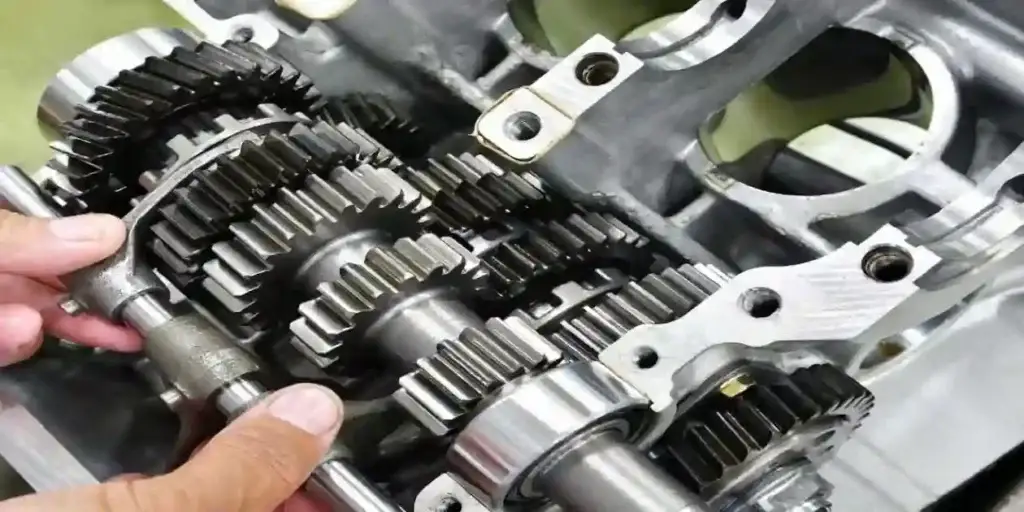
A modern automatic transmission is a complex electro-mechanical system. It relies on:
- Hydraulic pressure to apply and release clutches
- Solenoids and valve bodies to direct fluid flow
- A torque converter to transmit engine power smoothly
- Transmission control software (TCM calibration) to schedule shifts and manage torque
- Internal mechanical components such as clutch packs, gears, bearings, and shafts
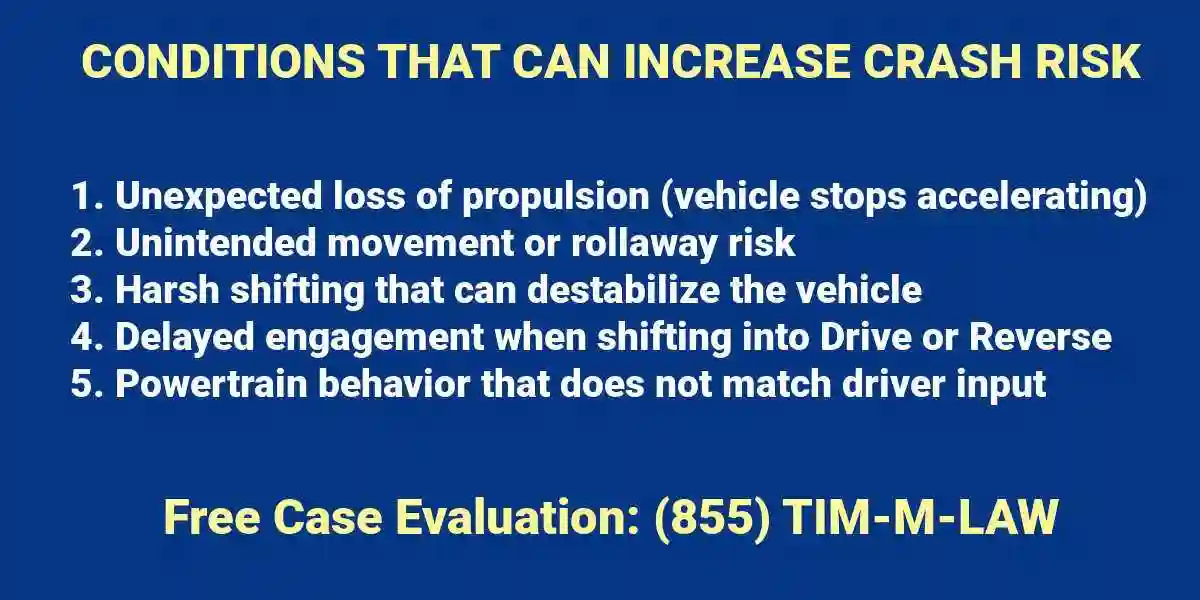
When a defect affects any of these elements in a way that creates a safety risk, such as those seen in defective GM transmission problems, a recall may be issued. Recalls are not about minor inconvenience. They typically involve conditions that can increase crash risk, including:
- Unexpected loss of propulsion (vehicle stops accelerating)
- Unintended movement or rollaway risk
- Harsh shifting that can destabilize the vehicle
- Delayed engagement when shifting into Drive or Reverse
- Powertrain behavior that does not match driver input
Because transmissions are integrated with engine torque management, traction control, and stability systems, a transmission-related defect can have broader implications than most drivers realize. If you’re experiencing GM transmission problems or need legal assistance regarding these issues, it may be beneficial to consult with a GM transmission lawyer.
Recall vs. Service Bulletin vs. Customer Satisfaction Program (Know the Difference)
Before you assume your vehicle is “recalled,” it is essential to understand the terminology GM and dealers use.
Safety Recall
A safety recall is a formal action typically coordinated with the National Highway Traffic Safety Administration (NHTSA) in the United States. It addresses a defect that relates to motor vehicle safety or fails to meet a federal safety standard. If your vehicle is included, the repair is generally performed at no cost.
Service Bulletin (TSB)
A Technical Service Bulletin (TSB) is guidance from the manufacturer to dealerships on how to diagnose or repair a known issue. A TSB is not automatically free. Coverage depends on warranty status or other programs.
Customer Satisfaction Program (CSP) / Special Coverage
These are manufacturer programs intended to address frequent issues, extend warranty coverage, or improve customer experience. They are often VIN-specific and time-limited. They are not the same as a recall, even if the fix looks similar.
Practical point: A vehicle can have no safety recall and still have a known transmission concern addressed by a bulletin or special coverage. The only reliable way to confirm your status is to check your VIN.
The Fastest Way to Know: Check Your VIN (Not Your Model Name)
Online discussions often list broad categories such as “Silverado transmission recall” or “Tahoe transmission recall.” That can be misleading because recall applicability is usually based on:
- Production plant and build range
- Specific transmission variant and calibration
- Component supplier lots
- VIN breakpoints
Two identical-looking vehicles may have different recall statuses.
What You Need
- Your VIN (17 characters)
- Basic access to the official recall lookup tools
Where to Check (Official Sources)
Use at least one of these, and ideally both:
- NHTSA VIN Lookup (United States)
- Visit: NHTSA Recall Lookup
- Enter your VIN to see open safety recalls.
- GM Recall and Program Lookup
- GM provides VIN-specific information through its owner resources and recall portals. The exact page can vary by brand (Chevrolet, GMC, Cadillac, Buick), but the key requirement is the same: VIN-based lookup.
Where to Find Your VIN
- Driver-side dashboard, visible through the windshield
- Driver door jamb label
- Vehicle registration or insurance documents
Important: The VIN must be exact. A single character error can return the wrong recall information. You can learn more about how to find your VIN here.
Common Signs That Prompt Owners to Suspect a Transmission Recall
A recall cannot be diagnosed by symptoms alone, but certain patterns frequently trigger concern. If you notice these issues, you should check for recalls and schedule a professional inspection.
1) Harsh Shifts or “Clunk” Between Gears
You may feel a pronounced bump when the transmission upshifts or downshifts. This can be caused by software calibration, adaptive learning issues, torque converter problems, or internal wear. These are some of the faulty GM transmission issues that could lead to a recall. For instance, some users have reported experiences similar to this Tacoma forum post, which could indicate a serious issue.
2) Shudder Under Light Acceleration
A vibration that feels like driving over rumble strips, often at steady speeds, may point to torque converter clutch behavior or fluid condition issues. This symptom is often associated with faulty GM transmission problems, which might require further investigation and potential recall checks.
3) Delayed Engagement Into Drive or Reverse
A lag between selecting a gear and actual movement can indicate pressure control issues, valve body concerns, or internal clutch leakage.
4) Unexpected Downshift or Surging
Some drivers report unstable shift scheduling that causes a sudden downshift or rapid RPM changes. This can be influenced by control software and sensor inputs.
5) Loss of Propulsion
If the engine revs but the vehicle does not accelerate as expected, treat it seriously. Safely pull over and have the vehicle evaluated. Loss of propulsion is one of the most significant safety-related outcomes associated with powertrain defects.
6) Warning Lights and Messages
- Check Engine Light
- “Service Transmission” messages
- Reduced power notifications in some cases
Even if a recall is not present, diagnostic trouble codes (DTCs) can provide critical information.
Which GM Vehicles Are Most Commonly Discussed in Transmission-Related Recalls?
GM has produced a wide range of transmissions across Chevrolet, GMC, Cadillac, and Buick vehicles, and recall activity can vary by model year and configuration. Owners most frequently ask about:
- Chevrolet Silverado and GMC Sierra (light-duty pickups)
- Chevrolet Tahoe/Suburban and GMC Yukon (full-size SUVs)
- Chevrolet Colorado and GMC Canyon (mid-size pickups)
- Chevrolet Traverse, GMC Acadia, Buick Enclave (crossovers)
- Cadillac Escalade and other Cadillac models depending on year
However, it is not accurate to assume that a model line is recalled across all years. In practice, recall coverage is often narrower.
Use VIN confirmation as the decisive step. Any model-based list should be treated as a starting point only.
Understanding “Transmission Recall” Headlines (What They Usually Mean)
Many articles and posts use “transmission recall” as shorthand for several different types of powertrain actions. When you research your vehicle, you may encounter:
- A recall involving software updates that change shift behavior, similar to this Land Rover software update
- A recall involving the gear position indicator (PRNDL display), which can be connected to rollaway risk in some scenarios
- A recall involving transmission oil cooler lines or related hardware that can lead to fluid loss
- A recall involving valve body function, pressure control, or manufacturing defects
- Non-recall actions, such as a service bulletin for torque converter shudder or shift harshness
That is why the recall text in a VIN lookup is more valuable than any headline. It explains the safety risk, the affected population, and the remedy.
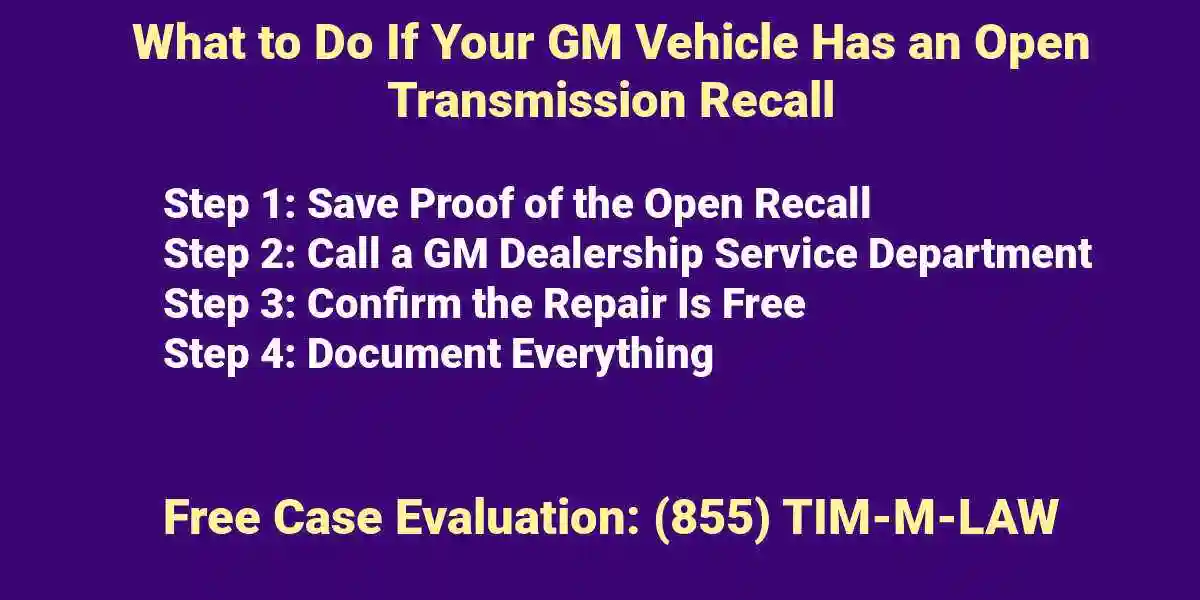
What to Do If Your GM Vehicle Has an Open Transmission Recall
If the VIN lookup shows an open recall, proceed with a structured, documented approach.
Step 1: Save Proof of the Open Recall
Take screenshots or print the recall page that shows:
- Recall number
- Description
- Remedy status (for example, “remedy available”)
This helps if scheduling delays occur.
Step 2: Call a GM Dealership Service Department
Provide:
- VIN
- The recall number if available
- Your availability for scheduling
Ask directly:
- Is the remedy available now?
- Is the repair a software update, parts replacement, or inspection?
- How long will the vehicle be needed?
- Is a loaner vehicle available (policies vary by dealer and region)?
If you find yourself dealing with ongoing issues related to your GM vehicle’s transmission even after following these steps, it might be time to consider seeking legal advice. There are various avenues for pursuing compensation in a GM transmission lawsuit, especially if you believe your vehicle has a faulty GM transmission.
If you’re contemplating filing a lawsuit due to these persistent transmission issues, it’s crucial to understand whether you qualify for a GM transmission lawsuit and what steps you need to take. Consulting with a GM transmission lawyer could provide valuable insight into your situation and help you navigate this challenging process.
Moreover, if you’re uncertain about your eligibility to file a lawsuit or what grounds you might have for doing so, resources are available that can help clarify whether you’re eligible to file a GM transmission lawsuit.
Step 3: Confirm the Repair Is Free
A safety recall repair is typically performed at no charge. Clarify this before authorizing additional work.
Step 4: Document Everything
Keep:
- Appointment confirmations
- Repair order (RO)
- Final invoice showing recall work completed (even if $0)
Clear documentation protects you in future warranty discussions and resale transactions.
If There Is No Recall: What You Should Still Do
A “no open recalls” result does not mean “no transmission issue.” It simply means there is no VIN-specific safety recall currently open.
If you have persistent symptoms, take these steps:
1) Request a Diagnostic Evaluation
Ask for a formal diagnostic with documentation of:
- Fluid condition
- DTC scan results
- Road test findings
- Any software calibration updates available
2) Ask About TSBs and Special Coverage
Dealers can check GM systems for bulletins and VIN-specific programs. You can ask directly:
- Are there any technical service bulletins related to my transmission symptoms?
- Is there special coverage or a customer satisfaction program for my VIN?
3) Keep a Symptom Log
Track:
- Speed and RPM when the issue occurs
- Engine temperature
- Road grade (flat, uphill)
- Driving mode (tow/haul, normal)
- Frequency and severity
Repeatability matters in diagnosis, and detailed logs reduce the risk of “could not duplicate” outcomes.
4) Avoid Unqualified “Quick Fixes”
Transmission issues are often worsened by:
- Incorrect fluid type
- Improper flush procedures
- Aftermarket additives that do not address the root cause
- Temporary resets that mask symptoms
If a recall is involved, unauthorized modifications can complicate the repair pathway.
Questions Owners Commonly Ask (Clear Answers)
“If my transmission is failing, does that mean it is recalled?”
No. Failure alone does not establish recall status. A recall requires a defined defect pattern and a safety-related determination. Check your VIN.
“Can a recall appear later if it is not there today?”
Yes. Recalls can be issued after additional field data becomes available. If your vehicle is within common model years of concern, it is reasonable to re-check periodically.
“Is a software update considered a real fix?”
It can be. Many modern transmission concerns relate to shift scheduling, torque converter clutch control, and pressure management. A calibration update can significantly reduce harshness, shudder, or undesirable shift behavior when the root cause is control logic rather than hardware damage.
“Can I keep driving if I suspect a recall-related transmission problem?”
If you have symptoms that involve loss of propulsion, unpredictable shifting, or safety warnings, the conservative approach is to limit driving and schedule service promptly. Safety risk is situational, and conditions can deteriorate quickly.
How Recalls Affect Resale Value and Trade-In Discussions
From a governance and risk perspective, recall completion is a form of asset protection. It improves reliability, preserves valuation, and reduces liability exposure for both sellers and buyers.
If you plan to sell or trade in your GM vehicle:
- Run a VIN recall check and complete open recalls first
- Keep paperwork proving completion
- Provide transparency to potential buyers
A completed recall is usually viewed more favorably than an open recall, even if the issue never produced symptoms.
Proactive Ownership: A Simple Recall Monitoring Routine
For long-term risk reduction, establish a repeatable recall monitoring process:
- Check VIN recall status twice per year
- Check again before long trips, towing seasons, or resale
- Update your contact information with GM owner services so recall notices reach you
- Keep digital copies of all service records
This is a practical example of proactive controls. It reduces uncertainty, reduces downtime, and supports safer operation.
A Practical Checklist: Do You Have a GM Transmission Recalled Vehicle?
Use this short list to make a clear determination.
- I located my VIN (17 characters) from the vehicle or registration
- I checked the VIN on the NHTSA recall site (U.S.)
- I checked the VIN on a GM owner/recall lookup tool
- I confirmed whether there are open recalls (not just completed ones)
- If open, I scheduled a dealership recall appointment and saved documentation
- If no recall but symptoms exist, I requested diagnosis and asked about TSBs/CSPs
If you complete those steps, you will have a defensible answer based on authoritative records, not assumptions or online lists.
If you drive a Chevrolet, GMC, or Cadillac with a GM Transmission Problems and you have experienced defective transmission issues like shuddering, jerking, slipping, or had repair work done, call GM Transmission Lawyer Timothy L. Miles for a free case evaluation as you may qualify for a GM Transmission Lawsuit and could potentially be entitled to compensation. (855) 846–6529 or [email protected].
Closing Perspective
Transmission recalls are not simply a mechanical inconvenience. They are a governance issue in the broader sense of safety, accountability, and risk management. The most effective approach is consistent: verify by VIN, act promptly on open recalls like those related to defective GM transmissions, and document all outcomes.
If you are wondering whether your GM vehicle is affected by any transmission recalls, do not rely on your model name, your symptoms, or a headline. Use your VIN and confirm it through official recall databases. That single step turns uncertainty into clarity, and clarity supports safer decisions.
In some cases, if you’re facing ongoing issues with your GM transmission despite no open recalls, it may be worth exploring legal options such as filing a GM transmission lawsuit.
Additionally, it’s crucial to stay informed about any potential safety recalls that might affect your vehicle model. For instance, recent safety recalls related to connecting rod bearing issues in certain GM models from 2016 to 2020 should not be overlooked as they could pose serious safety risks.
Frequently Asked Questions about a GM Transmission Recalled Vehicle
What is the importance of transmission reliability in GM vehicles?
Transmission reliability in GM vehicles is a core safety and performance issue affecting acceleration, highway merging, towing stability, and predictable vehicle response during everyday driving. Defects can lead to serious safety risks such as unexpected loss of propulsion, unintended movement, harsh shifting, and delayed engagement.
How do I know Have a GM Transmission Recalled Vehicle?
The most reliable way to determine if you have a GM Transmission Recalled Vehicle is by checking your Vehicle Identification Number (VIN) using official recall lookup tools such as the NHTSA VIN Lookup or GM’s own recall and program lookup portals. Recall applicability depends on specific factors like production plant, transmission variant, and VIN breakpoints.
What is the difference between a GM safety recall, service bulletin (TSB), and customer satisfaction program (CSP)?
A GM safety recall addresses Defective GM Transmission Problems and typically involves free repairs coordinated with NHTSA. A Technical Service Bulletin (TSB) provides dealerships guidance on known issues but may not be covered for free depending on warranty status. Customer Satisfaction Programs (CSP) are manufacturer initiatives to address frequent issues or extend warranty coverage but are not formal recalls.
Where can I find my GM vehicle’s VIN to check a GM Transmission Recalled Vehicle?
You can find your GM vehicle’s 17-character VIN on the driver-side dashboard visible through the windshield, on the driver door jamb label, or in your vehicle registration and insurance documents. It is important to enter the exact VIN when checking for a GM Transmission Recalled Vehicle.
What common Defective GM Transmission Problemsmight indicate a potential recall in GM vehicles?
Common signs prompting suspicion of a Defective GM Transmission Problems include harsh shifting or a ‘clunk’ between gears, sudden loss of power or propulsion, warning lights related to transmission issues, unintended vehicle movement or rollaway risk, delayed engagement when shifting into Drive or Reverse, and powertrain behavior that does not match driver input.
What should I do if I have a GM Transmission Recalled Vehicle?
If your GM vehicle is included in a GM Transmission Recalled Vehicle, you should schedule a repair with an authorized GM dealership as soon as possible. Recall repairs are generally performed at no cost. Additionally, if you are experiencing ongoing problems or need legal advice regarding defective GM transmissions, consulting with a qualified GM transmission lawyer may be beneficial.
Timothy L. Miles, Esq.
Law Offices of Timothy L. Miles
Tapestry at Brentwood Town Center
300 Centerview Dr. #247
Mailbox #1091
Brentwood,TN 37027
Phone: (855) Tim-MLaw (855-846-6529)
Email: [email protected]
Website: www.classactionlawyertn.com
Facebook Linkedin Pinterest youtube
