What This Guide Covers (and Why It Matters)
This Zepbound Vision Loss Lawsuit Update is designed to provide clarity amidst the noise surrounding the recent headlines and social posts about “Zepbound vision loss lawsuits.”
This guide is for you if:
- You are seeing headlines and social posts about “Zepbound vision loss lawsuits,” and you want clarity, not noise.
- You may be taking Zepbound (tirzepatide) now, may have taken it recently, for are considering it. It is important to be aware of the potential side effects, including the worst vision side effects associated with this medication.
- You may have experienced:
-
- Partial vision loss
- A “curtain” or shadow in your field of view
- You may be asking:
-
- Is there a confirmed link between Zepbound and vision loss?
-
- What do lawsuits typically claim regarding these side effects?
-
- What should I do medically, legally, and practically if I experience such symptoms?
This patient reference guide organizes the topic into:
- Medical context: Understanding the potential side effects of Zepbound, especially concerning vision.
- Risk-awareness actions: Knowing what to look out for while on Zepbound.
- Documentation steps: How to document your experiences for medical and legal purposes.
- Lawsuit process basics: A brief overview of what to expect if you decide to pursue a lawsuit, similar to the ongoing Firefly Aerospace class action lawsuit.
- Frequently Asked Questions: Addressing common concerns and queries related to Zepbound eye side effects.

Quick Orientation: What Is Zepbound?
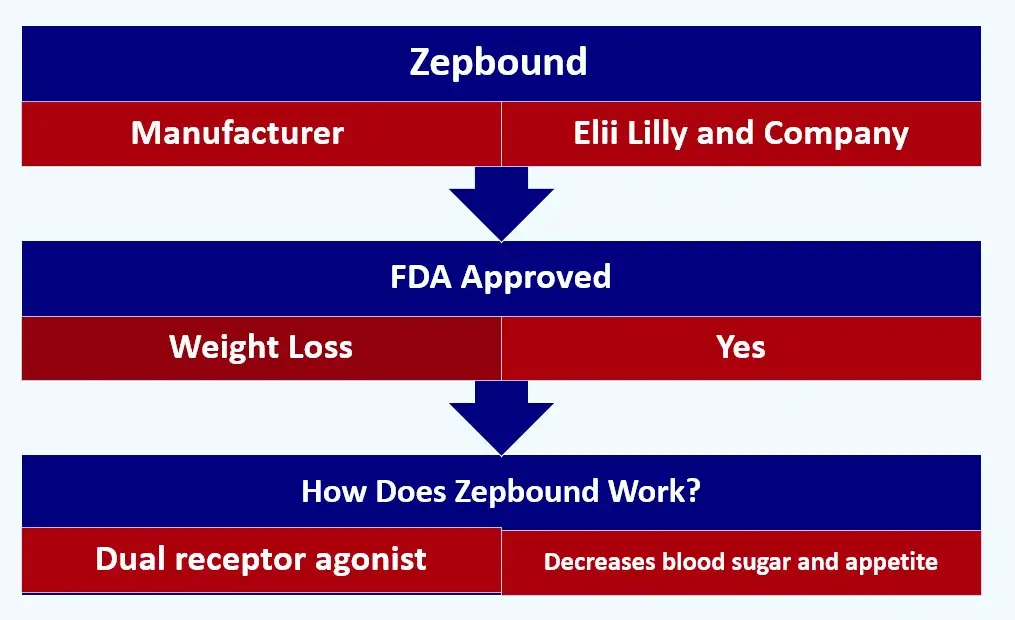
- Zepbound: Is a branded form of tirzepatide, a medication used for chronic weight management in adults who meet prescribing criteria.
- Tirzepatide works by targeting two receptors in the body:
-
- GLP-1 (glucagon-like peptide-1) receptor
- GIP (glucose-dependent insulinotropic polypeptide) receptor
- These drug classes can help improve:
-
- Glycemic control (in related indications)
Why vision is important in patient safety discussions
- Vision symptoms can be caused by:
-
- Medication-related issues, such as those linked to Zepbound, which has been associated with eye issues due to its action on the GLP-1 receptor
- Disease-related conditions (especially diabetes and hypertension)
- Coincidental but urgent problems
- A notable example of medication-related vision issues comes from the use of Wegovy, another weight management drug. In such cases, patients may need a Wegovy blindness lawyer to navigate the legal complexities arising from these adverse effects.
- The main focus should not be on assigning blame to the patient. Instead, the priority should be on quickly evaluating and documenting the situation.
The Core Issue: What People Mean by “Vision Loss” in This Context
“Vision loss” is not one diagnosis. It is an outcome that can be caused by multiple eye and neurologic conditions, including emergencies.
Symptom patterns patients commonly report
Sudden painless loss of vision in one eye, which could potentially be linked to medications like Mounjaro or Trulicity, necessitating the expertise of a Mounjaro Vision Loss Lawyer or a Trulicity Vision Loss Lawyer respectively
- Sudden blurry vision that does not clear
- Flashing lights or new floaters with visual field loss
- Eye pain with headache or nausea
If you took Zepbound and developed vision problems, it might be worth consulting a Zepbound vision loss lawyer about a potential Zepbound vision loss lawsuit. If you suffered Zepbound vision problems call Zepbound Vision Loss LawyerTimothy L. Miles today for a free case evaluation. (855)-846-6529 or [email protected]. The only call you will have to make.
Conditions that can present with vision loss (examples)
1. Non-arteritic anterior ischemic optic neuropathy (NAION)
- Often noticed upon waking
- Associated risk factors include age, vascular risk factors, and “crowded” optic discs
2. Retinal artery occlusion / retinal vein occlusion
- requires urgent ophthalmic evaluation
3. Retinal detachment
- Urgent surgical evaluation often required
4. Diabetic retinopathy and diabetic macular edema
- May fluctuate with changes in blood glucose control
- Trulicity, a medication used for diabetes management, has been linked to worsening diabetic macular edema.
5. Optic neuritis or neurologic causes
- May include pain with eye movement (often optic neuritis)
- May include neurologic symptoms (stroke/TIA warning signs)
Patient takeaway
If you experience sudden visual symptoms, treat it as urgent regardless of cause. It Is important to note that some medications like Trulicity, while beneficial for managing certain health conditions, can also lead to serious side effects including vision loss.
What Is the Current “Lawsuit Update” Landscape in 2026?
Because lawsuit activity can change quickly, the most reliable way to understand any “update” is to focus on how these cases typically develop rather than any single headline.
For instance, the Baxter Class Action Lawsuit is one such case that has garnered significant attention. This lawsuit seeks to represent purchasers or acquirers of Baxter International, Inc. common stock.
Similarly, the Alexandria Real Estate Class Action Lawsuit is another notable case where investors have suffered losses and are seeking legal recourse.
On a different note, the MoonLake Class Action Lawsuit, which seeks to represent purchasers of MoonLake Immunotherapeutics, is still unfolding and serves as an example of how these cases evolve over time.
Moreover, recent scientific investigations have raised concerns about a potential link between Dupixent and cancer development, leading to the filing of the Dupixent Cancer Lawsuit. This lawsuit highlights the serious implications that certain medications may have on health.
In addition to this, there are numerous lawsuits against Sanofi and Regeneron regarding their drug Dupixent, alleging that these companies failed to adequately warn consumers about potential side effects. These cases are encapsulated in the broader context of the Dupixent Lawsuit, which includes various claims from affected individuals seeking justice.
If you suffered Zepbound vision problems call Zepbound Vision Loss Lawyer Timothy L. Miles today for a free case evaluation. (855)-846-6529 or [email protected].
What “updates” usually refer to
- filings of new complaints (more plaintiffs coming forward)
- consolidation efforts (coordination in one court system)
- selection of bellwether cases (test cases to evaluate evidence and settlement frameworks)
- discovery milestones (document exchange, expert reports)
- motions about admissibility of expert testimony
- settlement discussions or mediation scheduling
What you should infer, and what you should not infer
- You can infer:
-
- legal teams are investigating whether evidence supports claims
- You should not infer:
-
- that causation is “proven”
-
- that a settlement is guaranteed
Patient takeaway
Lawsuits are a mechanism to test evidence. They are not, by themselves, a medical conclusion.
What Lawsuits Commonly Allege (Without Assuming the Outcome)
In medication injury litigation, claims often center on structured themes. They may include:
- Failure to warn: plaintiffs may allege that labeling did not adequately communicate a risk or that warnings were delayed, unclear, or incomplete
- Design defect: plaintiffs may allege the drug’s risk profile is unreasonably dangerous for some users
- Negligence: plaintiffs may allege failures in risk monitoring, signal detection, or communication
- Misrepresentation or marketing-related claims: plaintiffs may allege benefit messaging outweighed risk messaging
Important
- Allegations are not findings.
- The strength of a case depends on:
-
- medical records
-
- diagnostic specificity (what was actually diagnosed)
-
- timing
-
- alternative risk factors
-
- expert analysis
These themes and considerations are not exclusive to medication injury litigation. Similar structured allegations can also be observed in other types of legal disputes such as securities litigation, where plaintiffs might argue about misrepresentation in financial statements or inadequate disclosure of risks associated with certain investments.
Medical Reality Check: Multiple Plausible Pathways Can Affect Vision
A forward-looking patient approach requires acknowledging complexity.
Why Zepbound vision issues can occur during rapid metabolic change
Rapid shifts in blood glucose can temporarily alter:
- perceived clarity
Rapid weight loss can change:
- blood pressure patterns
- vascular risk profiles
Why certain patients may already be at risk of Zepbound vision side effects
Certain patients may already be at risk due to various factors. These factors include:
- Patients with:
- diabetes or prediabetes
- hypertension
- hyperlipidemia
- sleep apnea
- smoking history
- known optic disc anatomy risks (often discovered by eye exam)
- Patients on:
- antihypertensive regimens that can lower nighttime blood pressure
- medications associated with vascular or optic nerve risk discussions (your clinician can advise)
Patient takeaway
- The correct first step is diagnosis, not assumption.

If You Have Vision Symptoms: A Patient Action Plan
If you are experiencing Zepbound vision problems, it’s crucial to take immediate action. Here’s a structured patient action plan:
- Seek Immediate Medical Attention: Contact your ophthalmologist or visit an eye care clinic as soon as possible.
- Document Your Symptoms: Keep a record of your symptoms including when they started, their severity, and any other health changes.
- Follow Medical Advice: Adhere strictly to the treatment plan prescribed by your healthcare provider.
In some cases, vision problems may arise as a side effect of certain medications or medical conditions. For instance, if you’ve been prescribed medication from companies like Baxter International or Perrigo, and you suspect it might be causing your vision issues, it may be worth investigating further.
- Consider Class Action Lawsuits if Applicable: If you believe your vision problems are linked to a medication from Baxter International, you might want to look into the Baxter Class Action Lawsuit. Similarly, for medications from Perrigo, consider exploring the Perrigo Class Action Lawsuit for potential legal recourse.
Moreover, if your vision issues are related to an investment in companies like Firefly Aerospace or Freeport-McMoRan Inc., you should seek professional legal advice regarding the ongoing Firefly Aerospace Class Action Lawsuit or the Freeport-McMoRan Class Action Lawsuit.
Step 1: Treat symptoms as urgent
Go to an emergency department or urgent eye clinic if you have:
- sudden vision loss
- a curtain/shadow over vision
- flashes/floaters with missing vision
- severe headache with vision changes
- weakness, facial droop, speech difficulty (call emergency services)
Step 2: Request the right clinical evaluations (patient-facing checklist)
- ask whether you need:
- comprehensive dilated eye exam
- optic nerve evaluation
- OCT (optical coherence tomography)
- visual field testing
- retinal imaging
- fluorescein angiography if indicated
- neurologic evaluation if stroke/TIA is a concern
Step 3: Do not stop medication without medical guidance (unless emergency clinicians advise)
- discuss with prescribing clinician:
- whether to pause or discontinue
- alternative weight management strategies
- risk-benefit evaluation tailored to you
- review the CDC guidelines regarding medication and weight management
Step 4: Document symptoms while details are fresh
- write down:
- the exact date/time symptoms started
- whether symptoms were upon waking
- which eye is affected
- whether there was pain
- associated symptoms (headache, nausea, neurologic signs)
Documentation That Matters (Medical and Legal)
If you are exploring a possible Zepbound Vision Loss Lawsuit, documentation quality is not “extra.” It is foundational.
Medication and dosing history
- Keep the following records:
- Prescription records
- Pharmacy receipts
- Lot numbers if available on packaging
- Dose escalation timeline
- Dates of injections
- Missed doses or interruptions
Medical records to request (practical list)
Ophthalmology
- exam notes
- imaging results (OCT, fundus photos)
- diagnoses and differential diagnoses
- visual acuity records
Emergency department records
- triage notes
- imaging (CT/MRI) reports if performed
- discharge instructions
Primary care and endocrinology notes
- baseline risk factors
- A1c trends and rapid change history
- blood pressure records
Relevant history
- Sleep study records if sleep apnea is relevant
- Lipid panels
- Smoking status documentation
Why “diagnosis specificity” is critical
- “blurred vision” is a symptom
- “NAION” is a diagnosis with defined clinical criteria
- strong documentation often requires:
- a clear diagnosis
- a timeline connecting symptoms, dosing, and clinical findings
- evaluation of alternative explanations
How Attorneys Typically Screen These Cases (What You Will Be Asked)
Expect structured intake questions. Prepare concise answers.
Common screening topics
- Patient demographics (age, sex)
- Timing:
- First use date
- Dose changes
- Symptom onset date
-
- Diagnosis:
- What you were diagnosed with
- By whom (ophthalmologist, neuro-ophthalmologist)
- Diagnosis:
- Prior risk factors:
- Diabetes status
- Hypertension
- Sleep apnea
- Smoking history
- Outcome:
- Vision recovered fully, partially, or not
- Ongoing impairment and treatment
Records you may be asked to sign for
- HIPAA authorizations to obtain:
- ophthalmology records
- hospital records
- pharmacy records
- prior eye exam baseline records
Patient takeaway
A credible review depends on records, not recollection.
What a Lawsuit Process Usually Looks Like (Plain-English, Patient-Centered)
The lawsuit process can vary significantly depending on the nature of the case. For instance, in a class action lawsuit like the Skye Bioscience Class Action Lawsuit, which aims to represent individuals who purchased or acquired Skye Bioscience, Inc., the process may involve numerous plaintiffs coming together to file a single suit against a defendant. This type of lawsuit often addresses widespread issues affecting a large group of people, making it essential to understand the specific steps involved in such cases.
Typical stages (high level)
- case intake and record review
- filing a complaint (if accepted)
- service and response
- discovery:
- written questions
- document production
- depositions
- expert testimony:
- ophthalmology
- pharmacovigilance
- epidemiology
- warnings and labeling practice
- motions and court rulings
- settlement discussions and, if needed, trial
Coordination mechanisms you may hear about
- Coordinated proceedings can occur when:
- multiple similar cases exist
- courts aim to reduce duplication
- Bellwether cases may be used to:
- test evidence and jury response
- guide settlement valuation frameworks
Patient takeaway
- Litigation is slow by design. Your medical care should move faster than the court calendar.
Compensation Categories Typically Discussed (General Information)
This varies by jurisdiction and facts. Common categories include:
- medical expenses (past and projected)
- lost wages and loss of earning capacity
- pain and suffering
- disability or loss of enjoyment of life
- out-of-pocket costs:
- transportation for specialist care
- vision aids
- home modifications in severe cases
Important
- To be eligible for a Zepbound Vision Loss Lawsuit. a valuation depend on:
- diagnosis certainty
- severity and permanence
- causation analysis
- alternative risk factors

How to Choose a Lawyer (Patient Safety and Quality Filters)
Use objective criteria. For instance, if you’re dealing with issues related to corporate misconduct or patient safety violations, you might need a specialized attorney such as a Whistleblower Lawyer in Nashville, who understands the intricacies of such cases and can provide the necessary legal support.
Proactive Risk Management for Current Zepbound Patients (Clinically Sensible, Not Alarmist)
A forward-thinking approach emphasizes early detection and baseline documentation.
Consider a baseline eye exam (especially if you have risk factors)
Ask your clinician whether you should schedule:
- Comprehensive dilated exam
- Optic nerve assessment
- Retinal screening if diabetic or prediabetic
Monitor and manage systemic risk factors
- keep targets aligned with your care plan:
- blood pressure control
- lipid management
- A1c monitoring if relevant
- sleep apnea evaluation and treatment adherence
Know the red flags that warrant immediate evaluation
- sudden vision loss
- new visual field defect
- curtain-like shadow
- flashes/floaters with missing vision
- neurologic symptoms with vision changes
Patient takeaway
- Preparedness is not panic. Preparedness is protection.
Common Myths and Clarifications
- Myth: “If I have any blurry vision, it must be permanent vision loss.”
- Clarification: Blurry vision can be temporary, refractive, metabolic, or emergent; you need evaluation. It’s important to note that certain medications, like Mounjaro, can also cause blurry vision as a side effect.
- Myth: “If lawsuits exist, the drug is proven to cause the injury.”
- Clarification: lawsuits test evidence; causation is determined through medical and legal analysis.
- Myth: “I should stop my medication immediately to protect my case.”
- Clarification: do not change medication without medical guidance; your safety and stability come first.
FAQ: Zepbound Vision Loss Lawsuit Update [2026]
1) What should I do first if I notice sudden Zepbound vision problems?
- Seek urgent medical evaluation
- Prioritize an ophthalmology or emergency assessment the same day when Zepbound eye problems are sudden
2) What diagnosis is most often discussed in connection with sudden, painless vision loss?
- NAION is commonly referenced in public discussions of sudden optic nerve related vision loss
- Only a clinician can diagnose it, typically using exam findings and imaging
3) If I have diabetes, does that change how my Zepbound vision symptoms are interpreted?
- Yes, diabetes increases baseline risk for several eye conditions, including Zepbound vision side effects, and it can complicate causation analysis
- It also increases the importance of baseline retinal screening and follow-up after suffering Zepbound vision problems
4) Does Zepbound and blurry vision always mean retinal or optic nerve injury?
- No, Zepbound and blurry vision can be caused by refractive shifts, dry eye, migraines, metabolic changes, retinal disease, optic nerve disease, and neurologic causes
5) What records should I gather before speaking to an attorney?
- Ophthalmology records and imaging (OCT, fundus photos)
- ER visit notes and imaging reports (if any)
- Pharmacy dispensing history
- Zepbound dosing timeline (dates and dose changes)
- Prior eye exam records, if available, including all Zepbound vision problems
6) Will joining a Zepbound Vision Loss Lawsuit affect my medical care?
- It should not. Your clinicians should treat based on medical need and you can ask for copies of records without disrupting care for your Zepbound vision problems
7) How long do a Zepbound Vision Loss Lawsuit typically take?
Lawsuits are usually measured in months to years. However, the exact timeline can vary based on several factors:
- Case volume
- Court coordination
- Discovery and expert schedules
- Settlement negotiations or trial calendars
8) Can I file a Zepbound Vision Loss Lawsuit if my vision improved?
- Possibly. Improvement does not automatically eliminate a Zepbound Vision Loss Lawsuit, but severity, permanence, and documented diagnosis matter
9) Is there a guaranteed settlement payout if I qualify for a Zepbound vision loss lawsuit?
- No, credible firms will not guarantee outcomes and compensation, if any, because it is fact-specific and evidence-driven
10) What should I tell my prescribing clinician if I am worried about Zepbound eye problems?
- Describe symptoms precisely
- Request guidance on:
- Whether to continue, pause, or switch treatment
- Referral to ophthalmology or neuro-ophthalmology
- Risk factor optimization and monitoring
Final Patient Checklist (Print-Friendly)
- Seek urgent care for sudden vision symptoms
- Request diagnostic clarity (not just symptom notes)
- Document timing, dosing, and symptom onset
- Obtain copies of eye imaging and ophthalmology notes
- Coordinate with your prescriber before changing medication
- Consult a qualified Zepbound Vision Loss Lawyer if you have a documented diagnosis and a clear timeline
Timothy L. Miles, Esq.
Law Offices of Timothy L. Miles
Tapestry at Brentwood Town Center
300 Centerview Dr. #247
Mailbox #1091
Brentwood,TN 37027
Phone: (855) Tim-MLaw (855-846-6529)
Email: [email protected]
Website: www.classactionlawyertn.com
Facebook Linkedin Pinterest youtube
