
Introduction to the Jasper Therapeutics Class Action Lawsuit

- Jasper Therapeutics Class Action Lawsuit: The Jasper Therapeutics Class Action Lawsuit, Grant v. Jasper Therapeutics, Inc., No. 25-cv-08010 (N.D. Cal.), seeks to represent purchasers or acquirers of of Jasper Therapeutics, Inc. (NASDAQ: JSPR) securities between November 30, 2023 and July 3, 2025. This securities litigation case highlights critical concerns regarding corporate governance and internal controls at the cybersecurity company.
- Basis for Filing: The Jasper Therapeutics Class Action Lawsuit alleges that Jasper Therapeutics is a clinical-stage biotechnology company that focuses on developing therapeutics targeting mast and hematopoietic stem cell-driven diseases. According to the complaint, Jasper Therapeutics’ lead product candidate is briquilimab.
- Complaint: The Jasper Therapeutics Class Action Lawsuit alleges that defendants throughout the Class Period made false and/or misleading statements and/or failed to disclose that:
-
- (i) Jasper Therapeutics lacked the controls and procedures necessary to ensure that the third-party manufacturers on which it relied were manufacturing products in full accordance with current Good Manufacturing Practices regulations and otherwise suitable for use in clinical trials;
-
- (ii) the foregoing failure increased the risk that results of ongoing studies would be confounded, thereby negatively impacting the regulatory and commercial prospects of Jasper Therapeutics’ products, including briquilimab;
-
- (iii) the foregoing increased the likelihood of disruptive cost-reduction measures; and
-
- (iv) accordingly, Jasper Therapeutics’ business and/or financial prospects, as well as briquilimab’s clinical and/or commercial prospects, were overstated.
- Complaint: The Jasper Therapeutics Class Action Lawsuit further alleges that on July 7, 2025, Jasper Therapeutics disclosed that results of certain cohorts of its briquilimab BEACON Study “appear to be confounded by an issue with one drug product lot used in those cohorts, with 10 of the 13 patients dosed with drug from the lot in question,” that “[Jasper Therapeutics] is investigating the drug product lot in question and expects to have the results of that investigation in the coming weeks,” and that Jasper Therapeutics was “taking steps to ensure that drug product from the lot in question is returned to [Jasper Therapeutics] and that sites have drug product from other lots to continue dosing.”
- Complaint: According to the complaint, Jasper Therapeutics further revealed that it “has also determined that the drug product lot in question was used to treat participants enrolled in the ETESIAN [Study]. As a result, and in order to focus resources on advancing briquilimab in [Chronic Spontaneous Urticaria], [Jasper Therapeutics] is halting the study and pausing development in asthma.”
- Corrective Disclosure: Finally, Jasper Therapeutics disclosed that it “is halting development in [severe combined immunodeficiency]” and that Jasper Therapeutics “will be implementing a number of other cost cutting measures, including a potential restructuring, to extend runway and reduce expenses,” the Jasper Therapeutics Class Action Lawsuit alleges. On this news, the price of Jasper Therapeutics stock fell more than 55%, according to the complaint.
- Lead Plaintiff Motion: Lead plaintiff motions for the Jasper Therapeutics Class Action Lawsuit must be filed with the court no later than November 18, 2025. When a securities class action is filed, the Private Securities Litigation Reform Act (PSLRA) requires that within 20 days of the complaint filing, notice must be published informing shareholders of the pending litigation and their right to move the court to serve as lead plaintiff. This process ensures proper representation of shareholder interests in securities litigation cases.
Misrepresentation of Financial Information
Misrepresentation of Financial Information: Companies may deliberately provide false or misleading financial statements to artificially inflate stock prices, often through:
Omissions of Material Facts: Securities fraud frequently involves failing to disclose critical information that reasonable investors would consider important in making investment decisions. This includes:
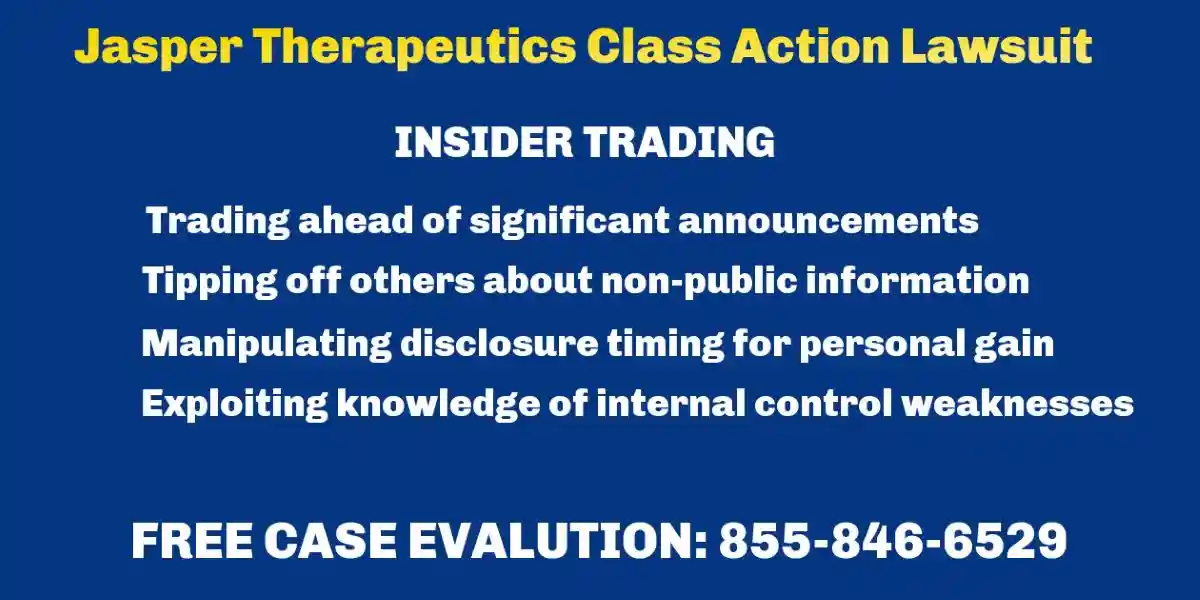
Insider Trading: Corporate executives may engage in unauthorized trading based on material non-public information, violating fundamental principles of market fairness and corporate governance. This can involve:
Consequences of Securities Fraud Like in the Jasper Therapeutics Class Action Lawsuit
The repercussions of securities fraud extend far beyond immediate financial losses, impacting:
Companies found engaging in fraudulent practices often face:

The Role of Regulatory Bodies
Regulatory authorities, particularly the Securities and Exchange Commission (SEC), play a vital role in:
The SEC maintains broad investigative powers and can impose significant penalties, including:
Importance of Compliance
Maintaining robust compliance programs proves essential for:
Companies must prioritize:
Protecting Your Investments
Investors must remain vigilant in safeguarding their investments through:
Effective protection strategies include:
Strategies for Investor Protection
Here are comprehensive strategies investors should consider to protect their interests and navigate potential securities fraud:
Conduct Thorough Due Diligence in the Jasper Therapeutics Class Action Lawsuit
Before making any investment decisions, shareholders must conduct extensive research focusing on:
- Comprehensive analysis of the company’s financial statements, paying special attention to revenue recognition practices and internal controls
- Detailed evaluation of management’s track record in maintaining strong corporate governance
- Assessment of the company’s regulatory compliance history and any past securities litigation
- Review of analyst reports and independent research highlighting potential red flags
- Examination of the company’s corporate governance structure, including board independence and audit committee effectiveness
Warning signs that warrant further investigation include:
- Frequent changes in executive leadership or board composition
- History of regulatory violations or securities litigation
- Weak or ineffective internal controls
- Inconsistent financial reporting patterns
- Unusual related-party transactions
Monitor Company Communications and Disclosures
Maintaining vigilant oversight of company communications proves essential:
- Carefully review all SEC filings, particularly Forms 10-K, 10-Q, and 8-K
- Analyze earnings calls transcripts and management presentations
- Track company press releases and public statements
- Monitor regulatory investigations or enforcement actions
- Follow securities litigation developments affecting the company
Pay particular attention to:
- Changes in accounting policies or practices
- Modifications to internal controls
- Corporate governance updates
- Management’s discussion of operational challenges
- Disclosure of material risks or uncertainties
Implement Portfolio Diversification Strategies
Effective diversification remains crucial for risk management:
- Spread investments across multiple sectors and industries
- Balance holdings between growth and value stocks
- Consider geographic diversification
- Maintain appropriate position sizes
- Regular portfolio rebalancing
Key diversification principles include:
- Avoiding over-concentration in single companies
- Understanding sector-specific risks
- Monitoring correlation between holdings
- Maintaining liquidity reserves
- Regular risk assessment and rebalancing
The Lead Plaintiff Deadline in the Jasper Therapeutics Class Action Lawsuit
- Lead plaintiff motions for the Jasper Therapeutics Class Action Lawsuit must be filed with the court no later than November 18, 2025.
- This securities litigation alleges that the company made misleading statements about its internal controls and financial condition during the Class Period.
- When a securities class action is filed, shareholders have important rights and deadlines to be aware of:

The Eligibility Criteria for Lead Plaintiff Appointment in the Jasper Therapeutics Class Action Lawsuit
-
- The investor must have purchased Jasper Therapeutics stock during the Class Period
- The investor must have suffered financial losses related to their investment
- The investor must be willing to represent the interests of all class members
- The investor must have significant financial interest in the litigation outcome
- The investor must meet certain legal requirements for serving as lead plaintiff
- It is crucial to note that both domestic and international investors who meet these criteria are eligible to seek appointment as the lead plaintiff in the class action lawsuit, as courts have consistently recognized the rights of non-U.S. investors in securities litigation. The lead plaintiff plays a vital role in overseeing the Jasper Therapeutics Class Action Lawsuit and protecting shareholder interests through proper corporate governance.
- Overall, the Securities Act of 1934 plays a pivotal role in maintaining market integrity and investor confidence through robust internal controls and corporate governance requirements. The Act establishes comprehensive frameworks for securities litigation and regulatory enforcement actions when companies make misleading statements or fail to maintain adequate controls.
- These provisions help ensure transparency and accountability in financial markets while protecting shareholder interests through various enforcement mechanisms.
Investor Rights in the Jasper Therapeutics Class Action Lawsuit
- Investors impacted by the Jasper Therapeutics Class Action Lawsuit have specific legal rights established under securities laws to protect shareholder interests. These rights include the ability to seek appointment as lead plaintiff, participate as a class member, object to settlement terms, opt out of the class, and submit claims for damages. Understanding these rights is essential for shareholders evaluating their options for pursuing recovery through securities litigation.
- Investors who suffered losses related to the Jasper Therapeutics Class Action Lawsuit can pursue several strategic options based on their specific circumstances and objectives. They may choose to: 1) actively participate by seeking lead plaintiff appointment, 2) remain passive class members, 3) opt out and pursue individual claims, or 4) object to settlement terms. Each option carries distinct advantages and considerations regarding control, timing, and potential recovery.
Pleading Materiality in the Jasper Therapeutics Class Action Lawsuit
- The PSLRA introduces heightened pleading standards in securities class action lawsuits, requiring plaintiffs to meet more rigorous requirements in their initial complaints. This includes the requirement to plead with particularity each statement alleged to be misleading and the reasons why those statements are misleading.
- For statements based on information and belief, plaintiffs must state with particularity all facts on which that belief is formed. Additionally, plaintiffs must plead and prove that the alleged misconduct caused the purported loss. The Supreme Court has clarified that a plaintiff must allege that the stock price fell after the truth of the fraud became known.
- Materiality is a crucial concept in securities litigation, as it determines the significance of information to a reasonable investor. Under the PSLRA, a plaintiff must prove that the alleged misrepresentation or omission was material, meaning it would have been important to a reasonable investor in making their investment decisions.
- The legal framework for materiality is defined and regulated by the federal securities laws, particularly the Securities Exchange Act of 1934, which imposes a duty on companies to disclose all material information to their investors.
- Different parties involved in securities litigation may have varying perspectives on materiality. Plaintiffs must establish materiality to prove that the defendant’s actions or omissions had a direct impact on their investment decisions, while defendants may argue that the information was immaterial.
- The legal standard for materiality is based on the context in which the alleged misrepresentation or omission occurred and whether a reasonable investor would have considered it significant.
- The PSLRA’s materiality standard is significant in securities litigation, as it helps to prevent frivolous lawsuits and ensures that only genuine claims are brought against companies. The act’s heightened pleading standards and materiality requirement are designed to protect investors and prevent the abuse of the securities litigation
Other Statutory Provisions of the PSLRA
- Early notice to class members. Within 20 days of filing the complaint, the plaintiff must publish notice advising class members of the pendency of the action, the claims asserted, the purported class period, and that any class member may move the court to serve as lead plaintiff. 15 U.S.C. §§ 77z-1(a)(3)(A), 78u-4(a)(3)(A).
- Motion for appointment as lead plaintiff. Within 60 days after publication of the notice to class members, any member of the class may move the court to become lead plaintiff. 15 U.S.C. §§ 77z-1(a)(3)(A)(i)(II), 78u-4(a)(3)(A)(i)(II).
- Court appointment of lead plaintiff. Within 90 days after publication of the notice to class members, the court shall consider any motions for lead plaintiff and appoint as lead plaintiff the member(s) of the purported plaintiff class that the court determines to be most capable of adequately representing the interests of class members. 15 U.S.C. §§ 77z-1(a)(3)(B)(i), 78u-4(a)(3)(B)(i).
- Lead Plaintiff’s Recovery: The PSLRA provides that the lead plaintiff’s recovery is limited to their pro rata share of the final judgment or settlement awarded to all other members of the class. 15U.S.C. §§ 77z-1(a)(4), 78u-4(a)(4). This provision does not limit lead plaintiff’s recovery of an award of reasonable costs
and expenses (including lost wages) directly relating to the representation of the class.
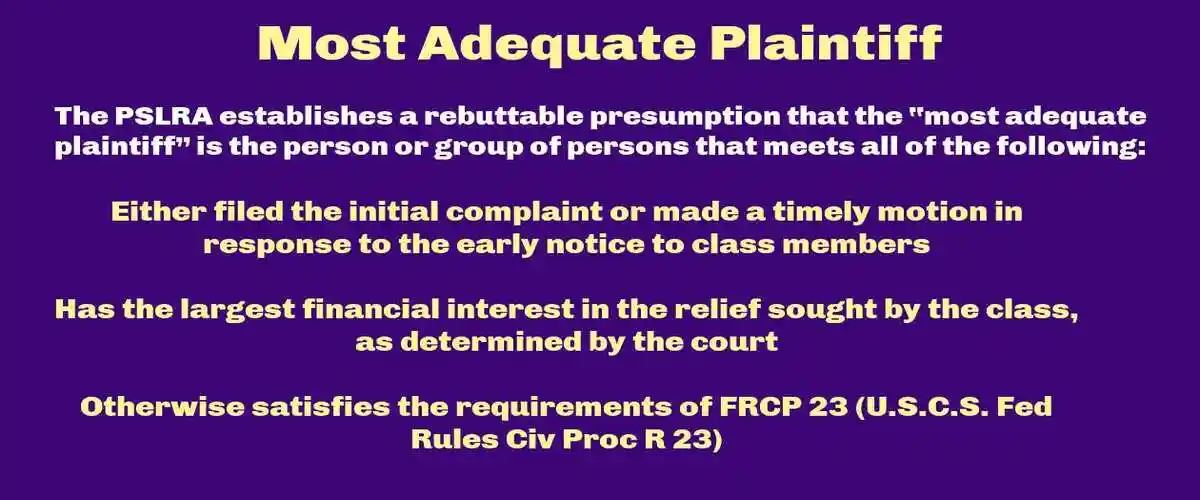
- Most Adequate Plaintiff: The PSLRA establishes a rebuttable presumption that the “most adequate plaintiff” is the person or group of persons that meets all of the following:
-
- Either filed the initial complaint or made a timely motion in response to the early notice to class members
-
- Has the largest financial interest in the relief sought by the class, as determined by the court
-
- Otherwise satisfies the requirements of FRCP 23 (U.S.C.S. Fed Rules Civ Proc R 23)
Rights of Investors in the Jasper Therapeutics Class Action Lawsuit
Frequently Asked Questions About the Jasper Therapeutics Class Action Lawsuit
Contact Timothy L. Miles Today About a Jasper Therapeutics Class Action Lawsuit
