Introduction to Zepbound Vision Damage
Zepbound Vision Damage: As the amount of clinical research now confirms patient reports of Zepbound Vision Damage, the litigation landscape against the manufacturer, Eli Lilly and Company, continues to grow. Zepbound (Tirzepatide) is a prescription medication used to support chronic weight management in adults with obesity or who are overweight with at least one weight-related comorbid condition. While many people benefit from its use, concerns have arisen regarding potential Zepbound vision problems—including serious vision problems. Reports of blurred vision, vision loss, and even blindness have led to questions, legal actions, and increased scrutiny from both patients and healthcare providers.
This FAQ addresses the most common questions about Zepbound’s potential impact on eye health. It covers reported symptoms, legal considerations, what steps to take if you experience Zepbound Vision Damage, and how to seek help if needed. If you are using Zepbound or considering it as part of your weight management plan, being informed about possible Zepbound vision side effects is essential for your safety and peace of mind.
1. What is Zepbound?
Is a prescription injectable medication that is used in connection with diet and exercise to help with weight loss in adults who meet certain criteria for weight management therapy. The medication is also approved to treat moderate-to-severe sleep apnea. This medication is a glucose-dependent insulinotropic polypeptide (GIP) receptor and glucagon-like peptide-1 (GLP-1) receptor agonist.
2. How does Zepbound work?
Zepbound’s active ingredient, tirzepatide, functions as a dual glucose-dependent insulinotropic polypeptide (GIP) and glucagon-like peptide-1 (GLP-1) receptor agonist. This unique mechanism allows the drug to:
- Stimulate insulin production in response to elevated blood glucose levels
- Reduce glucagon secretion, which helps lower blood sugar
- Slow gastric emptying, promoting a feeling of fullness
- Decrease appetite and food intake
These combined effects make Zepbound an attractive option for individuals struggling with weight management and blood sugar control.
3. What are the common side effects of Zepbound?
The most common side effects of Zepbound include nausea, diarrhea, vomiting, constipation, abdominal pain, indigestion, injection site reactions, feeling tired, allergic reactions, belching, hair loss, and heartburn. These are the most common but not all of the Zepbound side effects.

4. Is there a link between Zepbound and blindness?
Yes, nonarteritic anterior ischemic optic neuropathy (NAION) is the most concerning Zepbound vision side effects that may be linked to Zepbound use. This condition occurs when there is insufficient blood supply to the optic nerve head, resulting in sudden and painless vision loss, usually affecting one eye.
Recent surveillance data suggests that the frequency of NAION reports is similar for semaglutide and tirzepatide, with preliminary incidence rates of approximately 8.9 per 100,000 person-years for semaglutide and 9.7 per 100,000 person-years for tirzepatide. This indicates that NAION occurs at a similar, very rare rate across this class of drugs, though the risk is a serious one and requires ongoing monitoring.
5. Can Zepbound cause blurry vision?
Yes, blurry vision is a serious ocular side effect of Zepbound.
6. What should I do if I experience Zepbound vision problems?
Stop taking the medication and contact your healthcare provider immediately. Prompt assessment can help prevent further complications.

7. What are the signs of Zepbound vision side effects?
The medication may cause your vision to worsen when you begin using the medicine or start a higher dose. If you have been diagnosed with a condition called diabetic retinopath your vision may get worse when you first begin Zepbound treatment or use at an escalated dose.
8. Are there ongoing lawsuits regarding Zepbound vision problems? What are they about?
Yes, several lawsuits have been filed alleging Zepbound vision problems—including partial or total blindness—in some users. These legal actions generally claim that Eli Lilly and Company (the manufacturer) failed to adequately warn patients and healthcare providers about potential risks to eye health.
Plaintiffs often seek compensation for medical expenses, lost income due to disability, pain and suffering, and sometimes punitive damages. Central issues in these lawsuits include whether there was sufficient scientific evidence linking Zepbound to these risks at the time of approval and whether warning labels should have included clearer information about potential Zepbound vision side effects.
8. Who can I contact if I suffered Zepbound vision side effects?
If you suffered Zepbound vision problems you should first consult with your healthcare provider for medical evaluation. For legal advice, contact Zepbound vision loss lawyer Timothy L. Miles for a free case evaluation. (855) 846–6529 or [email protected].
9. What should I do if I experience any Zepbound Vision Side Effects?
If you notice any changes in your vision—such as blurriness, double vision, seeing spots or flashes, eye pain, or sudden loss of sight—stop using Zepbound immediately and contact your healthcare provider without delay. Vision problems can signal underlying conditions like increased intraocular pressure, retinal issues, or even stroke-like events that require urgent assessment.
Your doctor will likely perform a complete eye examination and may refer you to an ophthalmologist for further evaluation. They will also review your medication history and may conduct blood tests to rule out other causes such as uncontrolled blood sugar levels or hypertension.
Do not resume Zepbound until your doctor has determined it is safe to do so. Early intervention greatly improves the chance of recovery if the problem is drug-related.
10. Am I eligible to file a Zepbound vision loss lawsuit if I suffered Zepbound vision problems?
You may be eligible for a Zepbound vision loss lawsuit if you experienced significant eye-related side effects after using Zepbound and can establish a connection between your injury and the medication.
To see if you are eligible, contact Zepbound vision loss lawyer Timothy L. Miles for a free case evaluation. (855) 846–6529 or [email protected].
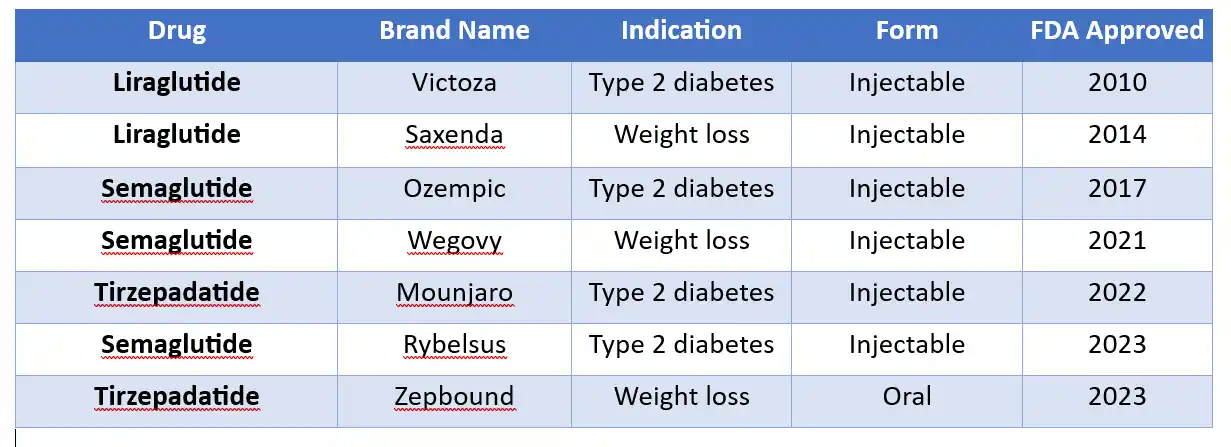
GLP-1 RECEPTOR AGONISTS COMPARISON (Indication, Form, FDA Approval)
11. How soon can Zepbound vision side effects appear after starting the medication?
Zepbound vision problems could theoretically occur at any time during treatment but are most likely within the first few weeks if they are related to the medication.
12. Have there been any studies confirming Zepbound vision side effects?
Yes, a comprehensive review of the available scientific literature reveals several significant studies:
- Retrospective Cohort Study (2024):
-
- Analyzed data from over 16,000 patients
- Found a higher incidence of NAION in patients using GLP-1 receptor agonists compared to those on other diabetes medications
- Reported a hazard ratio of 4.28 for patients with type 2 diabetes and 7.64 for patients with obesity
- Pharmacovigilance Analysis (2023):
-
- Examined adverse event reports submitted to regulatory agencies
- Identified a disproportionate number of vision-related events associated with GLP-1 receptor agonists
- Suggested a potential class effect rather than a drug-specific issue
- Prospective Observational Study (2024):
-
- Followed 5,000 patients newly prescribed Zepbound for 18 months
- Documented a small but statistically significant increase in the incidence of Zepbound vision problems compared to matched controls
- Noted that risk factors such as hypertension and pre-existing eye conditions may contribute to increased vulnerability to Zepbound vision side effects
13. Can Zepboud cause neovascular age-related macular degeneration?
Yes, one study found that patients taking Zebpound had 2 times higher risk of developing neovascular age-related macular degeneration (nAMD).
14. Can Zepbound cause pancreatitis (inflammation of the pancreas)?
Acute pancreatitis is a potential serious risk mentioned in the prescribing information for Zepbound. While one meta-analysis of randomized controlled trials (RCTs) did not find a statistically significant association for pancreatitis compared to control groups in that specific analysis, case reports of tirzepatide-induced acute pancreatitis exist, and the condition is considered a serious adverse event that requires immediate medical attention if symptoms occur
15. Does Zepbound cause thyroid cancer?
It is unknown if Zepbound causes thyroid cancer in humans, but the medication carries an FDA Boxed Warning because it caused thyroid C-cell tumors in animal studies. The official prescribing information explicitly states that Zepbound is contraindicated in patients with a personal or family history of medullary thyroid carcinoma (MTC) or in patients with Multiple Endocrine Neoplasia syndrome type 2 (MEN 2).

16. Are there risks of bowel obstruction or stomach paralysis (gastroparesis)?
Yes, there are risks of severe gastrointestinal issues. While not in the initial label, the FDA updated the labels for GLP-1 receptor agonists, including Zepbound, to include a warning about ileus (a type of bowel obstruction) as a post-marketing experience based on voluntary reports. These medications slow down gastric emptying, and in severe cases, this can lead to serious bowel motility issues.
17. Has Zepbound been linked to gallbladder problems?
Yes, a 2023 systematic review and meta-analysis found that tirzepatide was associated with an increased risk of the composite of gallbladder or biliary diseases compared to placebo. The analysis, which included data from 12 randomized controlled trials (RCTs), showed a relative risk of \(1.52\) for gallbladder/biliary diseases in tirzepatide-treated patients versus control groups.
18. Where can I find the official prescribing information from the FDA?
You can access the full, detailed official prescribing information and safety data directly from the FDA’s website at accessdata.fda.gov.
19. How much does it cost to hire a Zepbound vision loss lawyer?
It does not cost anything to hire a Zepbound vision loss lawyer if you are eligible for a Zepbound vision loss lawsuit. We take all cases on a contingency basis which means we do not get paid unless we win or settle your case. A Zepbound vision loss lawyer can explain the process and answer any questions you may have free of charge, so contact Timothy L. Miles today for a free case evaluation and see if you are eligible for a Zepbound vision loss lawsuit. (855) 846–6529 or [email protected].
20. Can Zepbound cause severe stomach problems?
Yes, in addition to causing Zepbound vision side effects, there have been numerous documents cases finding that Zepbound can cause severe stomach problems, such as gastroparesis.
Contact Zepbound Vision Loss Lawyer Timothy L. Miles Today about a Zepbound vision loss lawsuit
If you were prescribed Zepbound and took it as directed and suffered Zepbound vision problems or other Zepbound vision side effects, contact Zepbound Vision Loss Lawyer Timothy L. Miles today. You could be eligible for a Zepbound vision loss lawsuit and potentially entitled to substantial compensation.
The call is free and so is the fee unless we win or settle your case, so give a Zepbound vision loss Lawyer a call today and see if you qualify for a Zepbound vision loss lawsuit. (855) 846–6529 or [email protected].
Timothy L. Miles, Esq.
Law Offices of Timothy L. Miles
Tapestry at Brentwood Town Center
300 Centerview Dr. #247
Mailbox #1091
Brentwood,TN 37027
Phone: (855) Tim-MLaw (855-846-6529)
Email: [email protected]
Website: www.classactionlawyertn.com
Facebook Linkedin Pinterest youtube
