
Introduction to 5 Ways of Understating Expenses
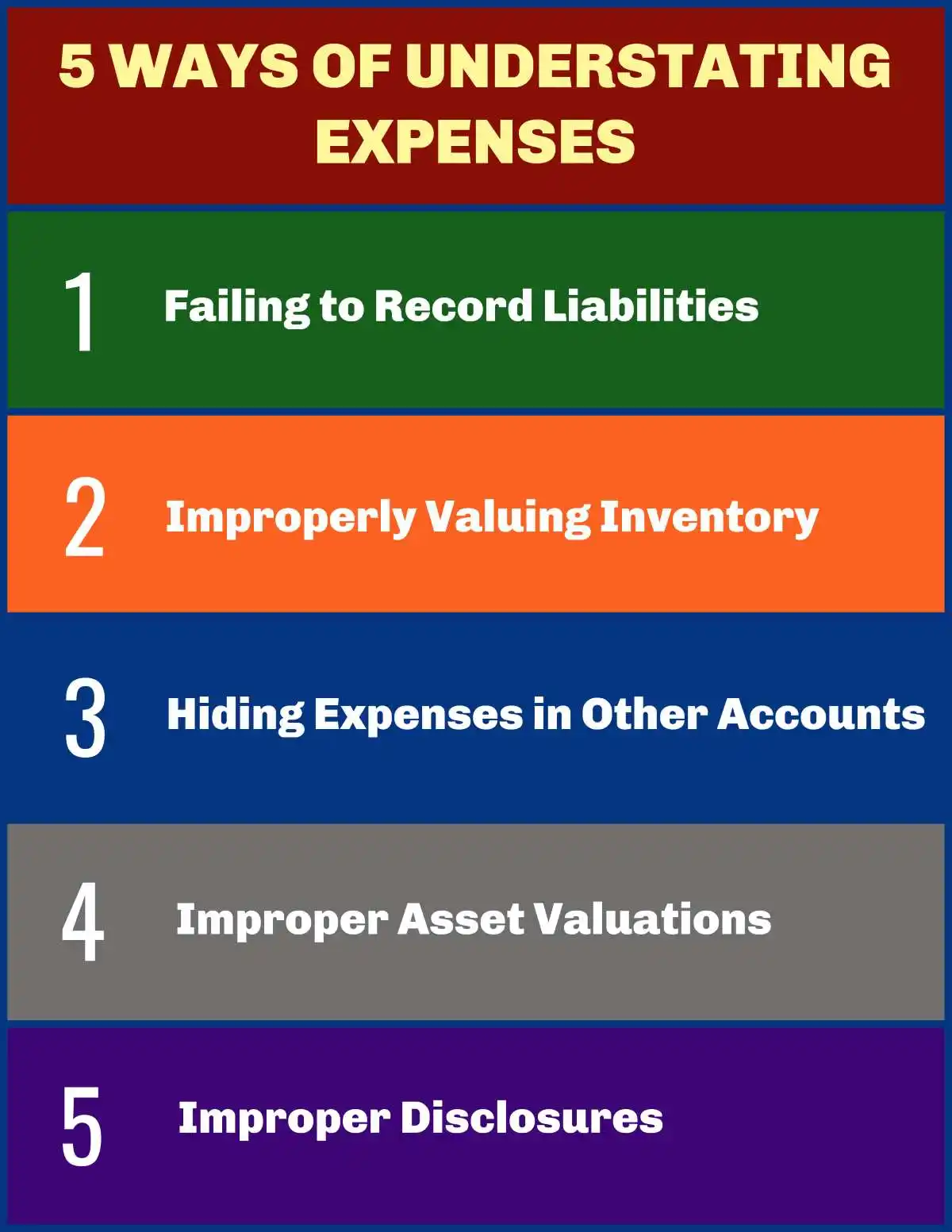
- 5 Ways of Understating Expenses: Failing to Record Liabilities; Improperly Valuing Inventory
Hiding Expenses in Other Accounts; Improper Asset Valuations; and Improper Disclosures.
- Expense understating: Represents one of the most insidious forms of accounting fraud that systematically deceives stakeholders and triggers devastating securities litigation. Organizations lose approximately 5% of annual revenue to fraud, making recognition of understating expenses techniques essential for protecting investments and maintaining market integrity.
- Corporate Fraud Consequences: The manipulation of corporate expenses creates catastrophic financial and legal repercussions that extend far beyond simple accounting errors. WorldCom’s admission to improperly capitalizing $11 billion in expenses demonstrates how expense manipulation constitutes outright financial statement fraud that destroys investor confidence and triggers massive securities class action lawsuits.
- Operational Cost Reality: While legitimate businesses face substantial ongoing operational costs—with average subscription expenses reaching $219 monthly and intelligent automation reducing costs by 40% to 75%—the deceptive practices examined in this analysis represent deliberate violations of regulatory compliance standards designed to mislead stakeholders.
- Five Primary Manipulation Methods: This analysis examines the critical accounting fraud techniques that every investor and business professional must understand:
-
- Failing to Record Liabilities
- Improperly Valuing Inventory
- Hiding Expenses in Other Accounts
- Improper Asset Valuations
- Improper Disclosures
- Fraud Prevention Framework: Understanding these deceptive practices becomes essential for strengthening internal controls, ensuring regulatory compliance, and protecting organizations from the securities litigation that inevitably follows when expense manipulation schemes are discovered. Companies that fail to recognize these warning signs create substantial exposure to catastrophic legal and financial consequences that can permanently destroy shareholder value.
Failing to Record Liabilities
Unrecorded Liabilities: The Foundation of Systematic Expense Manipulation
- Deliberate Omission of Financial Obligations: Creates one of the most devastating pathways to financial statement fraud that consistently triggers securities class action lawsuits when discovered. This sophisticated deception involves systematically excluding legitimate business obligations from accounting records to artificially enhance corporate financial performance.
- Concealment Strategy: Unrecorded liabilities represent financial obligations companies deliberately fail to document in their financial statements, creating false impressions of financial strength that deceive investors and regulators. Unlike honest accounting oversights, these omissions constitute intentional accounting fraud designed to manipulate stakeholder perceptions.
Critical Categories of Omitted Obligations
Systematic Exclusion Patterns: Organizations engaging in liability concealment typically target specific categories of obligations that appear most susceptible to manipulation:
- Waiting Period Obligations: Systematically failing to process benefits applications to defer recorded expenses.
- Warranty Claims: Deliberately avoiding recognition of potential future service obligations that impact current period results.
- Payroll-Related Items: Omitting accrued vacation time, unpaid salaries, and health benefit obligations from financial records.
- Pending Legal Costs: Concealing potential expenses from ongoing lawsuits and regulatory enforcement investigations.
- End-of-Period Manipulation: Companies frequently postpone recording invoices received near year-end, particularly those dated after the reporting period but related to services received during the current period. Some organizations deliberately hold supplier checks for extended periods, creating illusions of timely payment while artificially preserving cash balances.
- Fraudulent Systems: The most egregious violations involve systematically excluding obligations from accounting systems entirely, transforming what appears as unintentional oversight into deliberate financial statement fraud.
Financial Statement Distortion: Multi-Dimensional Impact
Immediate Consequences: When liabilities remain concealed, both balance sheet and income statement figures present fundamentally false impressions of organizational financial health. These distortions create cascading effects that compound over multiple reporting periods.
Specific Manipulation Effects:
- Artificial Equity Enhancement: Omitting liabilities enables companies to report higher net worth than they actually possess, misleading investors about true financial strength.
- Inflated Asset Reporting: Missing obligation records create false profit margins that obscure genuine operational performance.
- Revenue-Expense Mismatching: This fundamental accounting violation creates temporary improvements in reported performance that violate basic matching principles.
- Working Capital Manipulation: Organizations holding supplier payments while claiming timely settlement artificially improve working capital ratios and liquidity measurements.
- Cascading Business Consequences: Financial reporting inaccuracies waste substantial organizational resources as companies scramble to trace and correct discovered errors. Regulatory compliance failures often trigger penalties and fines from authorities including the IRS.
- Executive Decision Impact: Manipulated financial data leads to catastrophically poor business decisions when executives rely on inaccurate reports, potentially overestimating available cash and creating serious cash-flow crises when concealed obligations mature. Investors face substantial exposure to securities class action lawsuits once these deceptions surface.
Corporate Scandals: Devastating Real-World Consequences
- Scale of Hidden Obligations: The Financial Accounting Standards Board discovered in February 2016 that public companies carried over $1 trillion in off-balance sheet financing for leasing obligations alone—demonstrating the massive scope of concealed financial commitments.
- Colonial Bank Collapse: This 27th-largest commercial bank collapsed in 2009 after executives engaged in systematic fraud through liability concealment. The failure cost the FDIC’s Deposit Insurance Fund approximately $2.8 billion. Bank executives covered overdrafts through overnight money sweeping between accounts while creating fictitious mortgage loan sales, causing false information to be recorded and filed with the SEC.
- Tyco International Scandal
-
- The scandal: Former CEO L. Dennis Kozlowski and CFO Mark Swartz embezzled hundreds of millions of dollars from the company in the early 2000s, using it to fund lavish personal lifestyles. To conceal the theft and maintain the appearance of strong financial performance, they made false and misleading statements to investors.
-
- The litigation: Kozlowski and Swartz were convicted of grand larceny, securities fraud, and other crimes. Tyco settled shareholder lawsuits for $3 billion, one of the largest securities class action settlements at the time, and its auditor paid an additional $225 million to settle claims.
-
- The outcome: When the fraud was uncovered, it led to massive financial restatements, the resignation and eventual conviction of several executives, and a steep drop in the company’s stock price. Although Scrushy was initially acquitted of accounting fraud, he was later convicted of bribery in a separate case.
- HealthSouth
-
- The fraud: The healthcare company HealthSouth, led by CEO Richard Scrushy, was caught in an accounting scandal involving the fraudulent inflation of its earnings. Between 1996 and 2002, the company systematically overstated its profits by billions of dollars to meet analyst expectations.
-
- The cover-up: The fraud was carried out by executives who would meet to “fill the gap” between actual and reported earnings. The scheme involved falsifying financial records to inflate revenue and hide expenses.
- Kraft Heinz Company (2021 Settlement)
-
- The SEC charged the Kraft Heinz Company with an “expense management scheme” that resulted in the restatement of several years’ worth of financial reports.
-
- Method: The company’s former Chief Operating Officer and Chief Procurement Officer engaged in a long-running scheme to manipulate supplier agreements and create false cost savings, thus misstating the company’s financial performance by understating expenses.
-
- Outcome: The company agreed to pay a $62 million penalty to settle the charges.
- Market Reactions: Even established corporations suffer severe consequences for liability concealment. One major appliance manufacturer experienced a 3% stock price decline after announcing required restatements due to erroneously recorded assets. The same company later missed reporting deadlines while correcting similar issues, resulting in a dramatic 9% stock price decrease.
- Fraud Study Findings: According to the 2020 global fraud study conducted by the Association of Certified Fraud Examiners, the median loss for financial statement fraud reached $954,000. Major corporate cases frequently involve losses measured in hundreds of millions.

Detection Challenges and Prevention Strategies
- Concealment Vulnerabilities: Failing to record liabilities remains particularly difficult to detect because subjective standards like “reasonably estimable” and “more than likely to occur” provide convenient cover for fraudulent concealment.
- Professional Detection Methods: Experienced accounting professionals uncover these schemes through systematic approaches:
-
- Examining post-balance sheet disbursements for unexpected payments
- Reviewing subsequent journal entries targeting backdated expenses
- Identifying unusual patterns in accounts payable aging reports
- Checking unentered invoice files that might contain underaccruals
- Corporate Governance Impact: The deliberate omission of liabilities fundamentally undermines trust in corporate governance and accounting integrity. This deceptive practice represents the first critical method of expense manipulation that organizations must vigilantly prevent through enhanced internal controls and rigorous regulatory compliance frameworks.
Inventory Valuation Fraud: The Hidden Catalyst for Securities Class Actions
- Inventory manipulation: Constitutes one of the most sophisticated methods companies employ to understate expenses and deceive investors. For organizations where inventory represents the largest portion of current assets, these valuation schemes create substantial exposure to securities litigation when fraudulent practices are eventually discovered.
Critical Definition: Inventory Valuation Manipulation
- Improper inventory valuation: Involves the deliberate misstatement of unsold goods value at accounting period ends to achieve specific financial objectives. The dynamic relationship between cost of goods sold (COGS) and merchandise inventory means these manipulations create immediate and devastating impacts on financial statement fraud detection.
- Sophisticated Manipulation Techniques:
-
- Incorrect unit counts: Physical inventory counts deliberately altered from recorded amounts
- Improper cost assignments: Strategic application of wrong costs to inventory items
- Misapplication of valuation methods: Deliberately incorrect implementation of FIFO, LIFO, or weighted average methods
- Failure to account for obsolescence: Systematic avoidance of writing down damaged or outdated inventory
- Ownership errors: Including consigned inventory or customer-owned inventory as company assets
- Deliberate vs. Accidental: These errors often stem not from simple mistakes but from calculated manipulation designed to achieve specific financial outcomes. Inventory valuation errors cause mistaken values to be reported for merchandise inventory and cost of goods sold due to the toggle effect between these two accounts.

Five Primary Manipulation Methods That Trigger Securities Litigation
- Method 1: Inventory Costing Method Manipulation Companies deliberately switch between First-In-First-Out (FIFO), Last-In-First-Out (LIFO), and weighted average cost methods without proper disclosure or justification. During inflationary periods, LIFO results in higher COGS and lower reported profits, thereby reducing tax liability. Conversely, FIFO typically produces higher inventory values and higher reported profits, strengthening the balance sheet.
- Method 2: Deliberate Physical Count Misstatement
Management instructs staff to overstate or understate inventory quantities during physical counts. This technique represents perhaps the simplest form of accounting fraud yet remains difficult to detect without proper internal controls.
- Method 3: Improper Cutoff Procedures Organizations manipulate the timing of inventory recognition, particularly at period ends. They might include goods in transit as inventory (when using FOB destination terms) or exclude consigned inventory that should be recorded.
- Method 4: Failure to Apply Lower-of-Cost-or-Market Rules Regulatory compliance requires inventory to be valued at the lower of its cost or its market value. Failing to recognize market value declines allows companies to maintain artificially inflated inventory values.
- Method 5: Neglecting Obsolescence Accounting Companies frequently avoid writing down slow-moving, damaged, or obsolete inventory. This neglect artificially preserves asset values on the balance sheet.
- System Vulnerabilities: Both perpetual and periodic inventory systems face risks related to ownership transfers, shrinkage, theft, and consignment inventory. Periodic inventory systems prove particularly vulnerable when management neglects to conduct thorough counts.
TABLE SUMMARY OF THE FIVE PRIMARY MANIPULATION METHODS
|
Inventory Costing Method Manipulation |
Inventory costing method manipulation refers to altering the choice of valuation methods (like FIFO, LIFO, or weighted average) or changing production levels to influence reported earnings. Companies may also manipulate the physical count of inventory to misrepresent asset values. While changing methods can affect financial metrics and potentially lower tax liabilities, this practice can be considered a form of earnings management and may require IRS approval. |
|
Deliberate Physical Count Misstatement |
A deliberate physical count misstatement is an intentional manipulation or falsification of inventory quantities during a physical count. In accounting, this action constitutes inventory fraud or fraudulent financial reporting, and is done to deceive financial statement users by misrepresenting the company’s financial position and performance. |
|
Improper Cutoff Procedures |
Improper cutoff procedures occur when a transaction is recorded in the wrong accounting period, which can be caused by prematurely recording revenue or delaying expense recognition. This misstatement can be accidental or intentional, leading to inaccurate financial statements that overstate revenue and understate expenses. Examples include recording a sale before a good is shipped or including goods received after year-end in the current period’s inventory. |
| Failure to Apply Lower-of-Cost-or-Market Rule |
Failure to apply the lower-of-cost-or-market (LCM) rule is a violation of accounting and tax regulations, leading to penalties such as fines and legal action. It can also result in inaccurate financial statements, reputational damage, and potential operational disruptions. Regulatory bodies like the IRS and GAAP require that inventory be valued at its historical cost or current market value, whichever is lower, to properly reflect income and asset value. |
|
Neglecting Obsolescence Accounting |
Neglecting obsolescence in accounting means failing to recognize and report the decline in value of assets (like inventory or long-term equipment) that have become outdated or no longer useful due to factors like technological advancements or changes in market demand. |
Cascading Consequences: From Manipulation to Securities Litigation
- Financial Statement Distortion: Errors in ending inventory directly affect both balance sheet and income statement figures. When inventory is overstated, cost of goods sold is understated, resulting in overstated gross profits and net income. This manipulation creates a false impression of company performance and financial position.
- Multi-Period Fraud Impact: Perhaps most concerning, inventory errors carry forward automatically. Since the ending inventory of one period becomes the beginning inventory of the next, errors affect at least two accounting periods. Although errors eventually “wash out” over two years, the damage to financial statement integrity creates lasting exposure to securities class action lawsuits.

Specific Financial Manipulation Impacts:
- Overstated inventory: Understates COGS, inflates gross profits, overstates assets and retained earnings
- Understated inventory: Overstates COGS, deflates gross profits, understates assets and retained earnings
- Tax Fraud Implications: Inventory valuation directly impacts taxable income. Companies manipulating inventory to reduce reported profits can improperly reduce tax liabilities. This practice constitutes both accounting fraud and potentially tax fraud.
- Investment Decision Consequences: Investors, creditors, and management rely on accurate inventory figures to assess company performance. Inventory errors lead to faulty financial analysis, misleading key ratios like current ratio and asset turnover. These distortions prompt poor investment decisions and operational strategies that compound when fraudulent practices are disclosed.
- Regulatory Enforcement Response: Regulatory compliance bodies increasingly scrutinize inventory practices. The discovery of improper valuation typically triggers restatements, regulatory enforcement investigations, and potential legal action. Financial reporting inaccuracies waste significant time and resources as companies scramble to trace and correct errors.
- Market Trust Destruction: The loss of stakeholder confidence when improper valuation practices are discovered proves most damaging. This erosion of trust leads to stock price declines, increased borrowing costs, and difficulties raising capital.
- Detection Challenges: The subjective judgment involved in inventory valuation makes these manipulations particularly difficult to detect. Scrutinizing these practices requires experienced financial analysts and robust internal controls. Companies must implement proper segregation of duties, regular independent verification, and thorough documentation procedures to prevent these manipulative practices that inevitably lead to securities litigation.
Hiding Expenses in Other Accounts: Sophisticated Concealment Through Strategic Misclassification
- Strategic expense concealment: Represents one of the most sophisticated forms of financial statement fraud that often escapes detection longer than other manipulation techniques because these schemes appear legitimate while fundamentally distorting financial reality.
Deliberate Expense Misclassification: A Deceptive Practice
- Hiding expenses in other accounts: Occurs when companies deliberately misclassify expenditures to achieve more favorable financial results. This practice involves recording costs in inappropriate financial statement categories to understate expenses and artificially inflate reported profitability.
- Multi-Dimensional Impact:
-
- Overstated net income: Creates artificial profitability through incorrect expense recording
- Asset misrepresentation: Improperly capitalized expenses appear as balance sheet assets rather than period costs
- Distorted financial ratios: Key performance metrics like return on assets and profit margins become unreliable
- Multi-period consequences: Misclassified expenses affect financial reporting across multiple accounting periods
- Material Fraud Scale: The Macy’s case demonstrates the substantial nature of these deceptive practices. A single employee concealed approximately $132 to $154 million in delivery expenses over three years—representing manipulation of routine transactions that received insufficient oversight from internal controls and audit procedures.
Sophisticated Concealment Techniques That Trigger Securities Litigation
Organizations employ multiple methods to hide expenses:
- Expense Capitalization: Companies inappropriately convert current-period expenses into balance sheet assets, spreading costs over multiple years through depreciation rather than recognizing them immediately. This technique artificially boosts current-period profits while creating future financial statement distortions.
- Expenditure Misclassification: Involves incorrectly assigning expenses to wrong account numbers, business entities, or accounting periods. These practices blur the line between legitimate accounting judgment and deliberate accounting fraud.
- “Other Income/Expense” Category Manipulation: Companies conceal various expenses by netting them against income from sources like asset sales or investment gains. This category becomes a convenient repository for costs management prefers not to highlight.
- Special Purpose Entities: Creates separate subsidiaries that house liabilities or incur expenses the parent company seeks to conceal from investors. When these entities lack full parent company ownership, they may remain absent from consolidated financial statements.
- Synthetic Lease Arrangements: Enable companies to rent assets to themselves through special purpose entities while treating leases as operating expenses for tax benefits while keeping related assets and liabilities off balance sheets.
- Pension Plan Expense Manipulation: Organizations with defined benefit plans reduce reported plan expenses to improve earnings, potentially recording investment gains as operational revenue.
Detection Methods and Warning Signs
- Identifying concealed expenses requires specialized analytical techniques:
- Financial Ratio Analysis: Sudden changes in key ratios often signal manipulation:
-
- Gross margin fluctuations without corresponding production cost changes
- Unusual quick ratios or current ratios compared to industry benchmarks
- Decreasing receivables turnover ratios
- Significant divergence between operating cash flow and reported sales revenue
- Critical Account Scrutiny:
-
- “Other Income/Expense” categories requiring detailed investigation
- Recently capitalized costs previously expensed in prior periods
- Related-party transactions and special purpose entity arrangements
- Accounts involving subjective management judgment
- Post-Period Transaction Analysis: Examining transactions after financial statement dates reveals expenses that should have been recorded in prior periods.
- Documentation Review: Experienced analysts examine supporting documentation including invoices, contracts, and correspondence to identify discrepancies between financial records and underlying transactions.
- Legal and Regulatory Consequences: Organizations face potential securities litigation and regulatory enforcement actions when manipulation schemes are discovered. The Macy’s case highlights how individual employee actions can create material misstatements affecting multiple years of financial reporting.
- Prevention Requirements: Robust internal controls, proper segregation of duties, and detailed spending documentation represent essential protective measures against these sophisticated concealment schemes that can trigger securities class action lawsuits when eventually discovered.

Improper Asset Valuations: Deliberate Distortion of Financial Reality
- Asset valuation manipulation: Represents a fundamental method organizations employ to distort their financial reality through deliberate deception designed to mislead stakeholders. This practice extends far beyond simple accounting errors, constituting intentional efforts to present a more favorable financial position than actually exists and creating substantial exposure to securities litigation.
Asset Valuation Fraud: Critical Definition for Investor Protection
- Improper asset valuation: Occurs when organizations deliberately inflate or deflate asset values to achieve specific financial objectives that violate established accounting standards requiring fair value reporting. Companies engaging in these practices may overstate asset values to artificially boost net worth or underreport debt obligations to create false impressions of financial strength.
- Scope of Manipulation: The practice encompasses both tangible and intangible assets:
-
- Tangible assets: Equipment, property, and inventory valuations
- Intangible assets: Brands, patents, and intellectual property assessments
- Distinguishing Fraud from Legitimate Practice: Unlike planned depreciation that represents gradual value decline, improper asset valuation involves sudden artificial adjustments that contradict economic reality. This distinction proves essential for identifying potential accounting fraud versus legitimate accounting practices.
Primary Manipulation Methods:
- Aggressive mark-to-market accounting: Using overly optimistic assumptions to inflate asset prices beyond reasonable market values
- Impairment Recognition Failure: Deliberately avoiding write-downs when assets experience legitimate value declines
- Improper Capitalization: Converting operating expenses into balance sheet assets inappropriately
- Off-Balance Sheet Arrangements: Creating complex structures designed to conceal toxic assets from investor scrutiny
- Misapplication of Accounting Principles: Deliberately violating established standards to achieve desired financial outcomes
Warning Signs: Critical Red Flags for Fraud Detection
- Asset valuation manipulation: Creates detectable patterns that experienced analysts can identify before these schemes trigger securities class action lawsuits:
-
- Cash Flow Discrepancies: Significant gaps between reported profits and actual cash flows often indicate inflated asset values
-
- Unusual Financial Trends: Revenue increases or decreases that contradict industry norms or economic conditions
-
- Unexplained Margin Changes: Significant variations in gross margins lacking legitimate business explanations
-
- Accounting irregularities: Unusual or undocumented journal entries, particularly near reporting period ends
-
- Recurring Negative Cash Flows: Companies reporting earnings growth while failing to generate positive operational cash flows
-
- Management Overinvolvement: Excessive non-financial management participation in accounting principle selection or significant estimate determination
-
- Ratio Anomalies: Unusual growth patterns in days’ sales receivables or inventory ratios
-
- Pattern Recognition: Companies engaged in financial statement fraud typically display multiple warning signs simultaneously, creating suspicious activity patterns rather than isolated incidents that warrant immediate investigation.
Corporate Scandals: Devastating Consequences of Asset Valuation Fraud
- Historical Evidence: Major corporate cases demonstrate both the sophisticated methods employed and the catastrophic consequences that follow discovery:
Autonomy Corporation:
- Misrepresented company value prior to Hewlett-Packard acquisition by significantly overvaluing intangible assets including goodwill and intellectual property. Following acquisition, HP recorded an $8.8 billion write-down while alleging systematic accounting manipulation had artificially inflated Autonomy’s value.
Enron
- The Enron scandal remains the quintessential example of how omissions in financial statements can devastate markets and investors.
- The energy company employed sophisticated accounting fraud schemes, including the use of special purpose entities (SPEs) to hide over $1 billion in debt from its balance sheets.
- These corporate scandals involved deliberate omissions of critical financial information that painted a false picture of the company’s financial health.
- Key Legal Precedents Established:
-
- Enhanced auditor independence requirements under the Sarbanes-Oxley Act
- Stricter CEO and CFO certification of financial statements
-
- Whistleblower protection provisions that encouraged internal reporting of fraud
- The securities litigation that followed resulted in one of the largest bankruptcy proceedings in U.S. history, with investors losing approximately $74 billion in market value.
- The case established crucial precedents for regulatory compliance, particularly regarding the disclosure of off-balance-sheet transactions and the independence of external auditors.
WorldCom
- This is one of the most prominent examples of understating expenses. WorldCom, at the time the second-largest long-distance phone company in the U.S., inflated its assets by nearly $11 billion through fraudulent accounting practices.
- Method: The company improperly capitalized billions of dollars’ worth of “line costs” (fees paid to other telecommunications companies for network access). These were operating expenses that should have been fully expensed in the current period, but by treating them as capital expenditures, WorldCom was able to spread the costs over many years, thereby significantly inflating its current net income and assets on the balance sheet.
- Outcome: The fraud led to the largest bankruptcy filing in U.S. history at the time, massive investor losses, and a 25-year prison sentence for CEO Bernard Ebbers
HealthSouth
- The fraud: The healthcare company HealthSouth, led by CEO Richard Scrushy, was caught in an accounting scandal involving the fraudulent inflation of its earnings. Between 1996 and 2002, the company systematically overstated its profits by billions of dollars to meet analyst expectations.
- The cover-up: The fraud was carried out by executives who would meet to “fill the gap” between actual and reported earnings. The scheme involved falsifying financial records to inflate revenue and hide expenses.
- The outcome: When the fraud was uncovered, it led to massive financial restatements, the resignation and eventual conviction of several executives, and a steep drop in the company’s stock price. Although Scrushy was initially acquitted of accounting fraud, he was later convicted of bribery in a separate case.
- Legal and Financial Consequences: Companies engaging in improper asset valuation face regulatory enforcement investigations, securities litigation, and potential organizational collapse when deceptions unravel. Implementing robust internal controls and regular independent asset verification becomes essential for preventing these manipulative practices that consistently trigger devastating securities class action lawsuits.
Improper Disclosures: Concealing Critical Financial Information
- Transparency Requirements: Financial reporting transparency forms the foundation of market integrity and investor protection. The fifth critical method of expense manipulation involves deliberately withholding or misrepresenting essential financial information that stakeholders require for informed decision-making.
Improper Disclosures: Definition and Scope
- Improper Disclosures: Occur when organizations deliberately fail to provide complete, accurate, and timely information about their financial condition and operating results. These violations represent serious breaches of regulatory compliance that typically involve either making false statements in public communications or omitting required information from regulatory filings.
Critical Disclosure Violations:
- Undisclosed conflicts of interest that could materially influence financial decisions and corporate governance
- Inadequate reporting of one-time events affecting revenue recognition or expense manipulation schemes
- Manipulative business transactions designed to alter financial results through deceptive accounting practices
- False statements about financial results in press releases, earnings calls, or investor presentations
- Omission of required risk disclosures in SEC filings that conceal potential securities litigation exposure
- Market Impact: The consequences of these improper practices extend far beyond simple regulatory compliance failures. Inadequate financial disclosures create direct pathways to incorrect investment decisions by stakeholders, resulting in substantial financial losses and erosion of trust in both individual companies and broader financial markets.

Regulatory Enforcement: SEC Requirements and Penalties
- SEC Standards: The Securities and Exchange Commission maintains extensive requirements governing what public companies must disclose about their business operations, financial condition, and governance structures. These regulations exist because disclosures serve as essential components of financial statements, helping investors understand the economic reality behind reported numbers.
- Intensified Scrutiny: Regulatory enforcement of disclosure requirements has become increasingly aggressive. Morgan Stanley’s case demonstrates the severe financial consequences, as the firm paid approximately USD 249.00 million in disgorgement and penalties to resolve SEC charges related to improper disclosure of confidential information about large stock sales.
- Legal Consequences: Organizations engaging in fraudulent or deceptive financial reporting practices face escalating penalties:
-
- Substantial Financial Penalties: Disgorgement of profits and civil penalties that can reach hundreds of millions of dollars
-
- Criminal Charges: Individual executives face potential imprisonment for willful disclosure violations
-
- Reputational Destruction: Permanent damage affecting customer relationships and investor confidence
-
- Market Value Collapse: Decreased stock prices and difficulties raising capital following disclosure scandals
-
- Enabling Other Fraud: Improper disclosures prove particularly dangerous because they enable other forms of accounting fraud. Without required transparency, companies can more easily conceal expense manipulation, inflated assets, and improper revenue recognition schemes that eventually trigger securities class action lawsuits.
Internal Controls: Primary Defense Against Disclosure Violations
- Control Framework: Effective internal controls serve as the primary defense against improper disclosures. The Morgan Stanley case illustrates how inadequate authorization workflows for handling sensitive information create substantial securities litigation exposure.
- Essential Control Measures:
-
- Authorization Workflows: Multiple approval requirements for disclosure of sensitive financial information
-
- Whistleblower Programs: Safe reporting channels that encourage early detection of potential violations
- Enhanced Communication: Structured protocols between management and board members regarding disclosure obligations
-
- Compliance Training: Regular education programs emphasizing ethical standards and regulatory compliance requirements
-
- Disclosure Audits: Systematic review processes ensuring accuracy and completeness of public communications
-
- Quality Standards: Organizations must ensure disclosures provide entity-specific information rather than generic boilerplate text that fails to inform investors about actual company circumstances and risks.
-
- Strategic Approach: Disclosures should complement, rather than substitute for, proper recognition and measurement in financial statement fraud prevention. Companies that prioritize increasing disclosure quality and completeness rather than minimizing information volume demonstrate commitment to transparency and reduce their exposure to securities litigation.
-
- Prevention Strategy: Robust internal controls and a culture of transparency represent essential defenses against accounting fraud that can destroy shareholder value and trigger devastating legal consequences.
Expense Manipulation Framework: Critical Analysis for Securities Litigation Prevention
Sophisticated Fraud Comparison: The five primary methods of expense manipulation represent distinct yet interconnected techniques that create substantial exposure to securities class action lawsuits and regulatory enforcement actions. Understanding the specific characteristics, detection methods, and financial consequences of each manipulation technique becomes essential for protecting investments and maintaining regulatory compliance.
Framework Analysis: This analytical framework demonstrates how different accounting fraud schemes target specific aspects of financial reporting while creating similar patterns of deception that ultimately trigger devastating legal and financial consequences.
| Manipulation Method | Fraud Definition | Primary Techniques | Detection Strategies | Case Examples | Financial Consequences |
|---|---|---|---|---|---|
| Failing to Record Liabilities | Financial obligations deliberately omitted from financial statements to artificially enhance equity positions | • Concealing warranty claim obligations • Systematic omission of payroll-related items • Hiding pending securities litigation costs • Withholding period-end invoice processing |
• Post-balance sheet disbursement analysis • Subsequent journal entry examination • Accounts payable aging pattern review • Unrecorded invoice file investigation |
Colonial Bank (2009) – $2.8 billion FDIC loss Tyco International (2002) – $600 million accounting fraud |
• Artificial equity inflation • Misleading financial statements • Revenue-expense mismatching • Securities litigation exposure |
| Improperly Valuing Inventory | Deliberate misstatement of unsold goods value to manipulate cost of goods sold and reported profitability | • FIFO/LIFO method manipulation • Physical count misstatements • Period-end cutoff violations • Obsolescence write-down avoidance |
• Financial ratio analysis • Independent count verification procedures • Valuation method consistency review • Market value decline assessment |
Multiple financial statement fraud cases involving inventory manipulation | • Multi-period financial statement distortion • Tax liability manipulation • Investor decision-making compromise • Regulatory compliance failures |
| Hiding Expenses in Other Accounts | Strategic expense misclassification designed to understate operating costs and inflate reported earnings | • Expense capitalization schemes • Special Purpose Entity arrangements • “Other Income/Expense” manipulation • Synthetic lease structures |
• Financial ratio anomaly detection • Supporting documentation analysis • Post-period transaction examination • Expense trend analysis |
Macy’s Case (2024) – $132-154 million concealed delivery expenses over three years | • Net income overstatement • Balance sheet asset misrepresentation • Financial ratio distortion • Multi-period reporting impacts |
| Improper Asset Valuations | Deliberate asset value manipulation to enhance balance sheet strength and avoid impairment recognition | • Mark-to-market accounting abuse • Impairment charge avoidance • Inappropriate expense capitalization • Off-balance sheet arrangements |
• Cash flow discrepancy identification • Financial trend anomaly detection • Unexplained margin change analysis • Management involvement assessment |
Autonomy/HP ($8.8B write-down) Enron – complex off-balance-sheet fraud WorldCom – goodwill manipulation Toshiba – project impairment delays |
• Financial position misrepresentation • Regulatory enforcement investigations • Securities class action lawsuits • Complete organizational collapse |
| Improper Disclosures | Systematic failure to provide complete, accurate, and timely information about financial condition and material omissions | • Conflict of interest concealment • Material event reporting inadequacy • Financial result misrepresentation • Risk disclosure omissions |
• Authorization workflow implementation • Whistleblower policy establishment • Disclosure practice audit procedures • Regulatory filing compliance review |
Morgan Stanley (2024) – $249 million SEC penalties for confidential information disclosure violations | • SEC enforcement penalties • Executive criminal liability • Reputational damage • Market value destruction |
Pattern Recognition: These expense manipulation techniques demonstrate consistent patterns of deception that create substantial liability for securities litigation when discovered. Organizations exhibiting multiple manipulation methods face exponentially higher risks of catastrophic financial and legal consequences, making comprehensive fraud prevention essential for protecting stakeholder interests and maintaining market integrity.
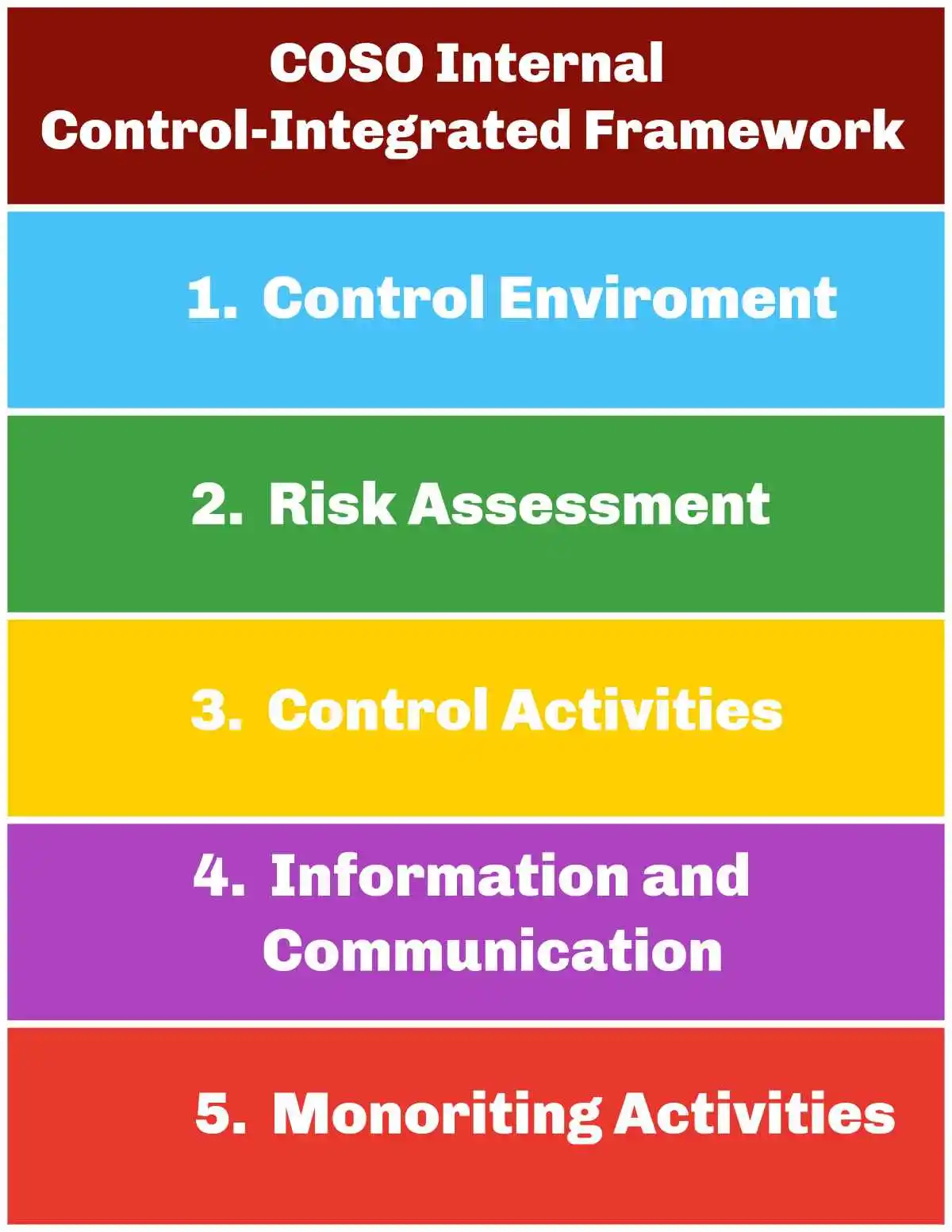
Safeguarding Against Expense Manipulation: Essential Protections for Market Integrity
- Expense Manipulation Recognition: Understanding these five sophisticated methods of expense understating provides essential protection against financial statement fraud that can devastate investment portfolios and destroy corporate value. Market participants who recognize these deceptive practices before they escalate into catastrophic securities litigation create substantial advantages in protecting their financial interests.
- Cascading Financial Consequences:
-
- Legal and Regulatory Ramifications: Organizations face severe penalties, criminal charges for executives, and costly securities class action lawsuits when manipulation schemes are discovered.
-
- Market Value Destruction: Shareholder value evaporates rapidly when fraudulent practices are revealed, as demonstrated by Colonial Bank’s $2.8 billion collapse and WorldCom’s $11 billion fraud revelation.
-
- Capital Market Impact: Trust erosion leads to higher borrowing costs, investor flight, and permanent damage to corporate reputation and market access.
-
- Regulatory Scrutiny: Companies face intensified oversight, compliance monitoring, and potential criminal investigations that can permanently alter their operational capacity.
- Prevention Through Robust Controls: Effective internal controls represent the primary defense against these manipulation schemes. Companies must implement comprehensive authorization workflows, establish meaningful whistleblower programs, conduct regular independent audits, and maintain unwavering ethical standards throughout their organizations.
- Warning Sign Recognition: Cash flow discrepancies, unusual financial trends, unexplained margin changes, and sudden ratio anomalies provide early detection opportunities for potential accounting fraud. Investors and analysts who understand these indicators can identify problematic companies before significant losses occur.
- Historical Lessons: The spectacular failures of major corporations demonstrate how seemingly minor accounting adjustments can rapidly escalate into enterprise-destroying fraud. These corporate collapses serve as stark reminders that expense manipulation schemes inevitably unravel, creating catastrophic consequences for all stakeholders involved.
- Market Integrity Foundation: Companies committed to transparent financial reporting build sustainable competitive advantages through enhanced investor confidence, reduced legal exposure, and strengthened market positions. These organizations consistently outperform competitors who rely on deceptive practices to mask underlying operational weaknesses.
- Collective Vigilance: The battle against financial statement fraud requires commitment from all market participants. Investors must exercise analytical skepticism, boards must ensure robust oversight, auditors must maintain independence, and regulators must continue aggressive enforcement actions against violators.
- Empowered Decision-Making: Armed with knowledge of these five primary expense manipulation methods, stakeholders can better protect their investments, strengthen organizational controls, and contribute to the market transparency essential for healthy capital formation and economic growth.

Key Takeaways
Understanding these five expense manipulation methods helps protect your business from financial fraud and regulatory violations that can destroy shareholder value.
• Failing to record liabilities artificially inflates equity and earnings by omitting financial obligations like warranties, payroll items, and pending legal costs from financial statements.
• Improper inventory valuation distorts both balance sheet and income statement figures, with errors automatically carrying forward to affect at least two accounting periods.
• Hiding expenses in other accounts through misclassification techniques like expense capitalization and special purpose entities can conceal millions in costs over multiple years.
• Improper asset valuations involve inflating tangible and intangible asset values using aggressive mark-to-market accounting or failing to recognize impairment when assets lose value.
• Inadequate financial disclosures enable other forms of manipulation by omitting required risk information, conflicts of interest, and material business events from regulatory filings.
Implementing robust internal controls, regular audits, and strong ethical standards represents your best defense against these deceptive practices. Companies like WorldCom ($11 billion fraud) and Colonial Bank ($2.8 billion loss) demonstrate how quickly accounting manipulation escalates from minor adjustments to catastrophic fraud, making early detection and prevention essential for long-term business success.
FAQs
Q1. What are some effective ways to reduce expenses in 2025? To cut costs in 2025, focus on paying down high-interest debt, automating your savings, maximizing employer 401(k) matches, trying savings challenges, removing automatic billing information, planning for upcoming expenses, and finding side hustles for additional income.
Q2. How can one achieve financial success in 2025? To thrive financially in 2025, review your wealth plan and goals, organize your accounts and estate planning, complete annual financial tasks, maintain appropriate cash reserves, ensure your portfolio is resilient, and maximize tax efficiency in your financial strategies.
Q3. What is the 50/30/20 budgeting rule for managing expenses? The 50/30/20 rule is a budgeting guideline that suggests allocating 50% of your after-tax income to needs, 30% to wants, and 20% to savings and debt repayment. This simple framework helps balance essential expenses, discretionary spending, and financial goals.
Q4. Can you provide examples of common fixed expenses? Common fixed expenses include rent or mortgage payments, car loans, insurance premiums, property taxes, and subscription services. These costs typically remain constant from month to month and are essential for budgeting and financial planning.
Q5. What are some red flags that may indicate improper expense reporting in a company? Red flags for improper expense reporting include unexplained changes in financial ratios, discrepancies between reported profits and cash flows, unusual or undocumented journal entries, recurring negative cash flows despite reported earnings growth, and significant variations in gross margins without clear business reasons.
