
Introduction to Trulicity and NAION: 1 Distressingly Hideous Side Effect
Welcome to an authoritative guide on Trulicity and NAION. Trulicity (dulaglutide) is widely prescribed for type 2 diabetes and, in some patients, to support cardiometabolic risk reduction. It belongs to the GLP-1 receptor agonist class, a category of medicines that has reshaped diabetes care through meaningful A1C reduction, weight loss benefits, and simplified once-weekly dosing.
- However, even well-established therapies can carry risks that feel disproportionate in severity when they occur.
- One such risk that patients occasionally ask about is NAION, short for non-arteritic anterior ischemic optic neuropathy, a condition that can cause sudden, often painless vision loss.
This article explains the relationship between Trulicity and NAION with clinical precision and practical clarity. It defines NAION, outlines the known risk profile, distinguishes correlation from causation, and describes the proactive steps that support safer long-term outcomes.
If you were prescribed Trulicity and took it as directed and suffered Trulicity eye problems, contact Trulicity Vision Loss Lawyer Timothy L. Miles today. You could be eligible for a Trulicity vision loss lawsuit and potentially entitled to substantial compensation. (855) 846–6529 or tmiles@timmileslaw.com.
NAION, Defined: What It Is and Why It Matters
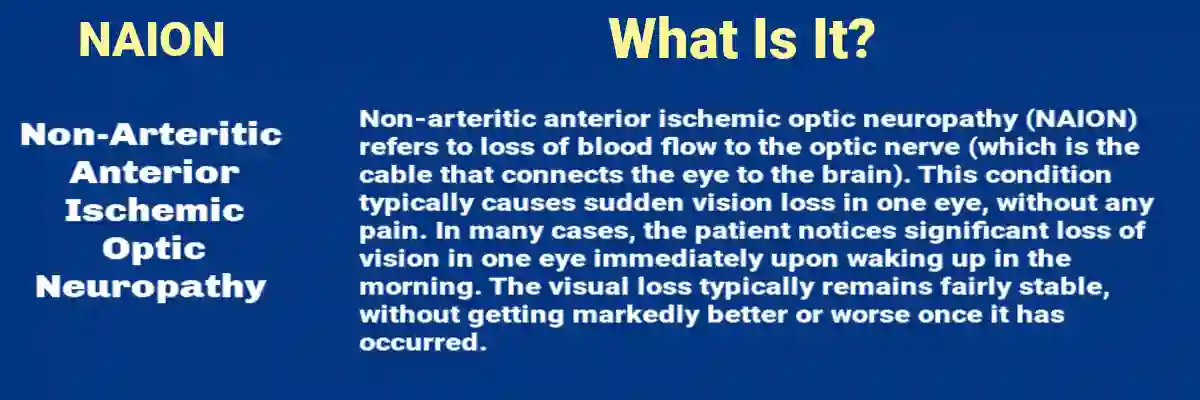
Non-arteritic anterior ischemic optic neuropathy (NAION) is an acute injury to the optic nerve head caused by insufficient blood flow through the small vessels that supply it. “Non-arteritic” means it is not caused by inflammatory vasculitis such as giant cell arteritis. “Anterior” refers to the portion of the optic nerve visible at the back of the eye, where swelling can be observed on exam.
Clinically, NAION is distressing for one primary reason: it often presents as sudden visual impairment, and the recovery can be incomplete.
Typical features include:
- Sudden vision loss in one eye, often noticed upon waking
- Painless or minimally uncomfortable onset
- Visual field defect, frequently an inferior or superior “altitudinal” loss
- Decreased color vision (dyschromatopsia)
- Optic disc swelling on ophthalmic examination
NAION is considered an ophthalmic emergency in the sense that it requires prompt evaluation. Even though there is no universally effective “reversal” therapy, early assessment is essential to confirm the diagnosis, exclude more dangerous causes of optic neuropathy, and implement risk reduction to protect the other eye.
Patients who have experienced such adverse effects may consider seeking legal advice or support. For those contemplating this route, it’s important to understand your rights and options. Legal professionals specializing in Trulicity vision loss lawsuits can provide guidance tailored to individual circumstances.
The Single “Hideous” Issue: Vision Loss Can Be Sudden and Irreversible
When people describe NAION as a “hideous” side effect, they are typically reacting to the same reality clinicians focus on: the onset can be abrupt and the deficit can persist. This severity is why the topic deserves careful, structured discussion. It’s also why it is important not to dilute the facts with vague reassurance or alarmism. The correct approach is disciplined risk analysis: define the condition, clarify the evidence, identify who is at risk, and specify what to do if symptoms appear.
Is NAION a Known Side Effect of Trulicity?
A precise answer requires two separate considerations:
- What the official labeling says
- What broader medical evidence suggests about GLP-1 receptor agonists and optic nerve events
1) Product labeling and “established adverse reaction” status
For most medications, an adverse event becomes an “established” side effect when the manufacturer’s labeling and postmarketing safety evaluations identify a clear enough association to warrant formal inclusion as a recognized risk.
If a patient asks, “Is NAION a listed side effect of Trulicity?” the most defensible approach is this:
- Trulicity and NAION is not typically presented as a common, expected adverse effect in standard patient education for dulaglutide.
- Visual adverse events are not generally among the hallmark, high-frequency risks discussed for Trulicity, which are more often gastrointestinal effects, hypoglycemia risk when combined with certain agents, pancreatitis warnings, and gallbladder-related concerns. However, there have been numberous documented reports of Trulicity and vision loss.
However, it’s critical to note that Trulicity has been linked to several debilitating vision side effects, including NAION which can lead to serious complications like blindness. Patients experiencing such symptoms should seek immediate medical attention as these vision loss incidents could potentially result in a lawsuit.
| Feature | Key Connections Between Trulicity and NAION |
| What is NAION? | It is a rare “eye stroke” caused by reduced blood flow to the optic nerve, resulting in sudden, often permanent, vision loss. |
| The Link | While some studies specifically highlight semaglutide, several reports indicate a broader association between GLP-1 medications (including Trulicity) and an increased risk of NAION, especially in patients with existing risk factors. |
| What is NAION? | Known as an “eye stroke,” it causes sudden, permanent vision loss in one eye due to reduced blood flow to the optic nerve. |
| Risks & Recommendations | Individuals with diabetes, high blood pressure, or sleep apnea are already at higher risk for NAION. |
| What to Do | If you experience sudden vision loss, blurred vision, or blind spots, contact your doctor immediately, |
2) The broader question: could there be a plausible association?
Patients often encounter discussions about NAION in the context of metabolic disease therapies for an important reason: type 2 diabetes itself increases vascular risk, and NAION is a vascular event at the optic nerve head.
So the more clinically accurate question is often not “Does Trulicity cause NAION?” but rather:
- Does Trulicity change the probability of NAION in a meaningful way, beyond the baseline risk created by diabetes and related conditions?
At present, there is no simple, universally agreed conclusion that NAION is directly caused by dulaglutide in the way that, for example, certain drugs are clearly linked to specific toxic optic neuropathies. The evidence landscape is complex, and in individual cases, multiple risk factors frequently coexist. This complexity has led to some patients seeking legal recourse through Trulicity NAION lawsuits.
This distinction matters. It protects patients from two errors:
- Attributing every NAION event to a medication when underlying vascular risk is the primary driver
- Dismissing medication timing entirely when symptom onset appears temporally linked and warrants clinical review
The prudent stance is therefore: NAION is a serious optic nerve ischemic event that can occur in populations commonly treated with Trulicity, and any sudden vision change during therapy demands urgent evaluation and medication review. Such changes could potentially lead to serious conditions such as [macular edema](https://classactionlawyertn.com/trulicity-and-macular-edema-5566/), which have been reported by some users of the medication.
If you were prescribed Trulicity and took it as directed and suffered Trulicity eye problems, contact Trulicity Vision Loss Lawyer Timothy L. Miles today. You could be eligible for a Trulicity vision loss lawsuit and potentially entitled to substantial compensation. (855) 846–6529 or tmiles@timmileslaw.com.
Why the Confusion Exists: Diabetes, Vascular Risk, and Coincidence That Is Not “Random”
The overlap between Trulicity users and NAION risk factors is substantial. Many Trulicity patients have:
- Type 2 diabetes (microvascular disease risk)
- Hypertension
- Hyperlipidemia
- Obesity and metabolic syndrome
- Sleep apnea (often underdiagnosed)
- Cardiovascular disease history
NAION is strongly associated with systemic vascular risk. In other words, a person taking Trulicity is often already in the demographic where NAION is more likely to occur, irrespective of the medication.
This creates a classic pharmacovigilance challenge:
- A rare event occurs
- The patient is taking a widely used medication
- The event is temporally close to treatment
- The underlying disease itself predisposes to the event
In such scenarios, causation can be difficult to prove, but the clinical response should still be decisive: treat the vision loss as urgent and address all modifiable risk factors. It’s crucial to note that some patients have experienced severe vision loss while on Trulicity, leading to further investigations into potential side effects like NAION and other related eye problems.
The Real Risk Profile: Who Is Most Vulnerable to NAION?
NAION is not evenly distributed across the population. Risk rises when optic nerve anatomy and systemic vascular conditions align.
Common NAION risk factors include:
- Age over 50 (typical demographic, though not exclusive)
- Diabetes mellitus
- Hypertension
- Hyperlipidemia
- Obstructive sleep apnea (OSA)
- Nocturnal hypotension (blood pressure that drops too low overnight, sometimes due to antihypertensive timing)
- Smoking
- Small cup-to-disc ratio (“disc at risk”), an anatomic predisposition identified by eye specialists
A forward-looking risk strategy emphasizes repetition for clarity: control blood sugar, control blood pressure, control lipids, control sleep apnea. Control, control, control.
Because once NAION occurs in one eye, the other eye is at risk over time. That is not a reason for panic. It is a reason for governance: systematic, monitored prevention.

Mechanisms: How Could a Drug Theoretically Be Involved?
Any discussion of medication association should separate hypotheses from proven mechanisms.
NAION results from impaired perfusion to the optic nerve head. A medication could theoretically influence that risk through:
- Blood pressure changes, particularly nocturnal dips
- Volume depletion and dehydration, especially during periods of vomiting, diarrhea, or reduced intake
- Glycemic shifts and systemic metabolic effects that might influence vascular tone
- Indirect effects through weight loss, appetite reduction, or altered antihypertensive needs
Trulicity commonly causes gastrointestinal side effects early in treatment. In some patients, nausea or reduced intake can lead to relative dehydration, which can worsen perfusion in vulnerable tissues. This is not a definitive causal pathway to NAION, but it is a clinically relevant risk consideration, particularly in older adults and those with multiple vascular comorbidities.
The key point is disciplined: possible does not mean proven, but possible does mean worth preventing.
Symptoms That Require Immediate Action
Patients should not attempt to “wait and see” with acute vision changes. If you are taking Trulicity, or any medication, and you develop symptoms suggestive of NAION, treat it as urgent.
Concerning symptoms include:
- Sudden blurred vision in one eye
- A dark or gray area in the visual field (often described as a “shadow,” “curtain,” or missing section)
- Sudden loss of contrast or color intensity
- Vision loss noticed upon waking
- New visual field defect without pain
What to do immediately
- Seek urgent same-day evaluation by an ophthalmologist or emergency department equipped for eye assessment.
- Do not drive yourself if vision is impaired.
- Inform the clinician of all medications, including Trulicity, blood pressure agents, diuretics, and any erectile dysfunction drugs, as these may be relevant to optic nerve perfusion discussions.
Urgency is not overreaction. It is governance. It is integrity in health decision-making.
Diagnosis: How NAION Is Confirmed
NAION is a clinical diagnosis supported by exam findings and targeted testing. Evaluation often includes:
- Dilated fundus exam showing optic disc edema
- Optical coherence tomography (OCT) to quantify swelling and nerve fiber layer changes
- Visual field testing to map defects
- Assessment for giant cell arteritis when appropriate (especially in older patients with headache, jaw claudication, scalp tenderness, or systemic symptoms), often including ESR/CRP and sometimes temporal artery evaluation
This distinction is critical: arteritic AION (from giant cell arteritis) is vision-threatening and systemic-threatening and requires immediate steroid therapy. NAION management is different, which is why prompt differentiation is essential.
If you experience severe vision loss while on Trulicity, it’s crucial to seek immediate medical attention. This could potentially lead to a Trulicity vision loss lawsuit, for which you may be eligible. In such cases, consulting a Trulicity vision loss lawyer can provide valuable guidance.
If NAION Occurs, Should Trulicity Be Stopped?
This is a clinical decision, not a general rule, and it should involve both the prescribing clinician and the ophthalmologist.
Key considerations typically include:
- Timing of symptom onset relative to dosing and side effects
- Evidence of dehydration, hypotension, or other reversible triggers
- Baseline vascular risk and quality of glycemic control
- Availability of alternative diabetes therapies
- The patient’s personal risk tolerance after a vision event
In some cases, clinicians may elect to discontinue or switch therapy out of caution, particularly if other triggers are present. In others, they may prioritize stabilization of systemic risk factors while continuing therapy. The correct approach is individualized and documented.
The principle is parallel and repeatable: protect vision, protect vascular health, protect glycemic control. None should be managed in isolation.
Risk Reduction: Practical Steps That Actually Matter
If you are taking Trulicity, the most meaningful preventive strategy is not obsessive symptom monitoring. It is structured vascular risk management.
1) Prevent dehydration, especially during GI side effects
- Maintain consistent fluid intake.
- If vomiting or diarrhea occurs, contact your clinician early.
- Ask whether temporary dose adjustments or supportive medications are appropriate.
2) Review blood pressure strategy, including nighttime dosing
- Discuss whether antihypertensive medications could contribute to nocturnal hypotension.
- Avoid self-adjusting blood pressure medications without supervision.
3) Screen for and treat obstructive sleep apnea
- If you snore, experience daytime sleepiness, or have resistant hypertension, request evaluation.
- CPAP adherence is not optional when risk is high. It is preventive medicine.
4) Optimize diabetes and lipid control
- Consistent A1C improvement reduces microvascular stress over time.
- Statin therapy, when indicated, supports vascular stability.
5) Schedule routine eye care
- Diabetic eye exams are foundational.
- If you have known “disc at risk” anatomy, ask your eye specialist what that means for your risk profile.
This is where forward-thinking care becomes measurable: identify risk early, reduce risk systematically, document risk management consistently.
What Patients Should Ask Their Clinician
To keep discussions efficient and clinically grounded, consider these targeted questions:
- “Given my blood pressure pattern, am I at risk for nocturnal hypotension?”
- “Do my GI side effects put me at risk of dehydration, and what is the plan if that happens?”
- “Should I be screened for sleep apnea?”
- “If I experience sudden vision symptoms, where should I go immediately?”
- “If NAION occurred, what alternatives to Trulicity would be appropriate for me?”
These questions move the conversation from fear to planning. Planning is the point.
The Bottom Line
NAION is a rare but potentially devastating optic nerve ischemic event that can cause sudden, sometimes permanent vision loss. Many people prescribed Trulicity already carry systemic risk factors that are strongly associated with NAION, including diabetes, hypertension, hyperlipidemia, and sleep apnea. That overlap can create understandable concern about whether Trulicity is involved when a vision event occurs.
What matters most is not speculation. What matters most is response and prevention: urgent evaluation for any sudden vision change, comprehensive vascular risk control, and coordinated decision-making between ophthalmology and the prescribing clinician.
In modern diabetes care, success is not only better numbers. Success is better outcomes. Better outcomes require proactive monitoring, disciplined risk governance, and swift action when vision is on the line.
However, it’s crucial to understand that certain medications like Trulicity can potentially lead to serious Trulity vision problems, including blurry vision or even sudden vision loss. If you experience any such symptoms while on this medication, it’s important to seek immediate medical attention.
If you were prescribed Trulicity and took it as directed and suffered Trulicity eye problems, contact Trulicity Vision Loss Lawyer Timothy L. Miles today. You could be eligible for a Trulicity vision loss lawsuit and potentially entitled to substantial compensation. (855) 846–6529 or tmiles@timmileslaw.com.
Frequently Asked Questions about Trulicity and NAION and other Trulicity Vision Side Effects
What is Trulicity and what conditions is it prescribed for?
Trulicity (dulaglutide) is a medication widely prescribed for type 2 diabetes management and, in some patients, to support cardiometabolic risk reduction. It belongs to the GLP-1 receptor agonist class, known for meaningful A1C reduction, weight loss benefits, and simplified once-weekly dosing.
What is Trulicity and NAION and why is it significant in relation to patients?
NAION, or non-arteritic anterior ischemic optic neuropathy, is an acute injury to the optic nerve head caused by insufficient blood flow through small vessels. It often presents as sudden, painless vision loss, making it a distressing condition. Patients occasionally inquire about its potential association with Trulicity due to reported vision side effects.
Is NAION a recognized side effect of Trulicity according to official labeling?
NAION is not typically listed as a common or established adverse effect in standard patient education or official labeling for Trulicity. While gastrointestinal effects and risks like pancreatitis are more commonly noted, visual adverse events like NAION have been linked anecdotally but are not formally recognized as high-frequency risks.
Can Trulicity increase the risk of developing NAION beyond the baseline risk from diabetes?
Currently, there is no universally agreed scientific conclusion that Trulicity directly causes NAION. Since type 2 diabetes itself increases vascular risk—a key factor in NAION—the critical question remains whether Trulicity meaningfully changes this risk beyond what diabetes already confers. The evidence is complex and inconclusive at this time.
What should patients do if they experience Trulicity Vision Problems?
Sudden vision loss or changes should be treated as an ophthalmic emergency requiring prompt medical evaluation. Early assessment helps confirm diagnosis, rule out other serious causes of optic neuropathy, and implement measures to protect the other eye. Patients experiencing such symptoms should seek immediate medical attention without delay.
Are there legal options available for patients affected by Trulicity Vision Side Effects?
Yes, patients who have experienced serious vision side effects potentially related to Trulicity may consider seeking legal advice or support. Legal professionals practicing in Trulicity vision loss lawsuits can provide guidance tailored to individual circumstances regarding rights and possible claims.