
Attn add for free case evaluation in USED IN Ocaliva Lawsuit

Ocaliva Litigation Update (As of April 2026)

  • Lawsuit Status: Investigations are active, and Ocaliva lawsuits are in early stages; no large-scale public settlements or jury trials have been announced yet.
  • AllegationsOcaliva lawsuits allege Intercept Pharmaceuticals failed to adequately warn patients and doctors about the risks of Ocaliva and liver failure, delayed in communicating safety risks, and marketed a defective drug.
  • Primary Injuries: Claims focus on patients who experienced sudden liver decline, cirrhosis progression, or required liver transplants after using Ocaliva.
  • Highest Risk Data: In December 2024, the FDA reported that Ocaliva users faced a 377% higher risk of liver transplant or death compared to those on a placebo.

Litigigtion Landscape Just Beginning to Form

  • Individuals who have suffered serious liver injuries after taking Ocaliva (obeticholic acid) eligible for an Ocaliva lawsuit and possibler may be entitled to substantial compensation for medical expenses, lost wages, pain and suffering, and other damages.
  • As of April 2026, litigation is in the early stages, with many cases being consolidated into a Multidistrict Litigation (MDL) rather than a class action, allowing for individualized compensation based on the severity of each person’s injuries.
  • Potential Compensation and Damages

Ocaliva Lawsuits against the manufacturer of Ocaliva aim to secure compensation for both economic and non-economic losses, including:

  • Medical Expenses: Coverage for past and future medical care, including hospitalizations, doctor visits, diagnostic tests, and expensive procedures like liver transplants.
  • Lost Income: Reimbursement for wages lost due to the inability to work, as well as diminished future earning capacity.
  • Pain and Suffering: Non-economic damages for physical pain, mental anguish, and reduced quality of life.
  • Wrongful Death: Compensation for families who lost a loved one due to Ocaliva liver failure, covering funeral expenses, loss of companionship, and financial support.
  • Punitive Damages: Potential additional damages intended to punish the manufacturer for alleged reckless or negligent behavior.

Lawsuit Status and Structure

  • No Public Settlements Yet: As of January 2026, there have not been any public Ocaliva lawsuit settlements or specific average compensation amounts disclosed.
  • MDL Consolidation: Because injuries vary—ranging from liver damage to death—cases are being managed in an MDL, which helps streamline legal proceedings while allowing each victim to receive an individualized settlement based on their specific damages.
  • Contingency Fee Basis: Lawyers handling Ocaliva Lawsuits typically work on a contingency basis, meaning they do not get paid unless you recover compensation.

If you suffered Ocaliva and liver failure or suffered injuries linked to Ocaliva use, or lost a loved one to Ocaliva liver injuries, contact Ocaliva Lawyer Timothy L. Miles today who can tell you if youqualify for an Ocaliva lawsuitand possibly may be entitled to significant compensation.

What Are Mass Torts?

  • Mass torts: refers to legal actions that involves a large number of plaintiffs who have suffered similar injuries or damages as a result of the actions or negligence of a single defendant or group of defendants. Unlike a class action lawsuit, where a large group of people are represented by one or a few individuals, mass tort cases treat each plaintiff as an individual case.
  • Your Own Separate Case: This means that each plaintiff has their own separate claim, but the cases are consolidated for purposes of efficiency and convenience. Mass torts are often filed against pharmaceutical companies, manufacturers of defective products such as in the Takata Airbag Recall, or entities responsible for environmental disasters. Each mass tort situation can vary significantly based on circumstances and the defendants involved. Furthermore, in instances where numerous individuals are harmed, a mass tort can provide a more effective path to seek justice compared to individual lawsuits.


How Mass Torts Work

  • Common Issues: Plaintiffs’ lawyers consolidate cases (often in Multidistrict Litigation – MDL) to prove common facts (e.g., the product is dangerous).
  • Advantage: Main advantage is that it provides strength in numbers. Because claims are consolidated into one lawsuit for pretrial discovery in mass torts, the plaintiff may have more success when facing a large and well-funded defendant like a drug manufacturer or a chemical company. Additionally, mass torts saves plaintiffs time and money in litigation due to the fact they are usually consolidated for pretrial discovery and proceeding by the Judicial Panel on Multidistrict Litigation.
  • Discovery & Bellwethers: Evidence is gathered, and a few “bellwether” trials occur to test claims and gauge potential jury awards.
  • Bellwether Trials: Are test cases that are chosen out of the thousands of claims in a mass tort action to go to trial. The outcome of the bellwether trials gives the parties an idea of what will happen if an individual claim goes to trial, the strength and weaknesses of their evidence, and can expedite settlement negotiations.
  • Settlement Matrix: A formula is created, factoring in injury severity, medical bills, lost wages, and other damages.
  • Individual Claims: Each claimant submits a Plaintiff Fact Sheet, plugged into the matrix for a personalized offer.
  • Negotiation & Payout: Defendants often offer large global settlements after bellwether losses, leading to payouts that can take years.
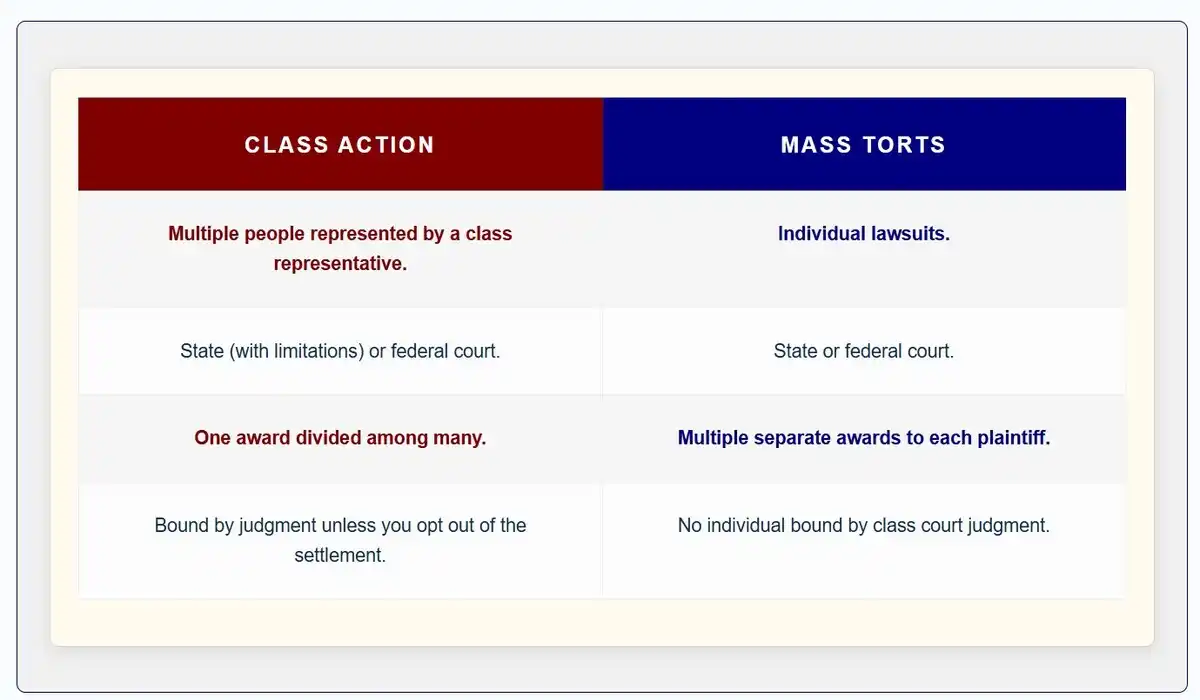
Chart comparing class actions and mass torts used in Ocaliva lawuit

Key Characteristic

  • Not Equal: Payouts differ significantly based on individual harm, from thousands to millions.
  • Long Timelines: Can take years to resolve due to complexity and volume of claims.
  • Varying Payouts: Settlements are substantial, like billions for opioids or PFAS, but individual amounts depend on case specifics.

Examples of Mass Tort Cases

Mass torts arise from varying factual background but cause by  a single source causes that cause injury to many individuals.  Frequent categories involve:

  • Dangerous Drugs:  Usually arising in cases where a drug has sever side effects, which were know by the manufacturer, but not disclosed to healthcare providers or patients- a failure to warn.
  • Defective Medical Devices: Such as him implants or surgical tools that fail, pacemakers can be defective and causing injury to a large number of individuals and often lead to mass torts. These cases focus on holding companies accountable for products that were not adequately tested or whose risks were concealed. When such defective products malfunction or fail and cause harm, they often affect thousands of individuals across the country.
  • Toxic Environmental Exposure: Exposure to toxic substances, chemicals, pollutants and other harmful substances can cause severe injuries and significant health issues to a large group of individuals and can lead to cancers, respiratory diseases after length of exposure.
  • Natural Disasters: These mass torts claims involves natural disasters such as hurricanes, earthquakes,  avalanches or tornadoes that cause substantial injury to individuals as well as property damages. While no corporate entity is directly responsible for the disaster, insurance companies who fail to pay out claims following natural disasters can be held accountable through a mass tort lawsuit. This is a frequent occurrence in the case of hurricanes.
  • Large-Scale Catastrophes: Unlike natural disasters, these disasters are man-made such as file or explosion at a work plant causing injuries to numerous individuals. While they may suffer varying injuries, the injuries are al cased by the same entity. In such cases, individuals can form a mass tort for compensation for their individual claim.Examples of Cases:
  • Asbestos
  • Talcum Powdere
  • GLP-1 Drugs (Zepbound, Wegovy, Trulicity, Victoza, Saxenda, Rebelus, and Mounjaro)
  • Firefighting Foam
  • Paraquat
  • Opioids
  • Tobacco
  • Transvaginal Mesh
  • Vioxx
  • 3M Military Earplugs
  • Baycol
  • Xarelto

What Is the Difference Between a Mass Tort and a Class Action?

  • Distinguishing Factor: The primary distinguishing factor between a mass tort and a class action lawsuit is how the plaintiffs are treated under the law. While both mass torts and class actions involve a group of plaintiffs filing over a common injury, plaintiffs in a mass tort lawsuit are viewed differently than in a class action suit.
  • Collective Action: The plaintiffs in a class action lawsuit are considered be “class members” and are treated as one collective plaintiff. A class representative, known as the lead plaintiff, is chosen, subject to court approval, and sues the defendant on behalf of the entire class.
  • Individual Cases: On the other hand, each plaintiff in a mass tort lawsuit is treated as an individual with their own individual lawsuit. Although plaintiffs in a mass tort are part of a group, they must individually establish how they were harmed by the defendant’s actions. And while mass torts may be consolidated for pretrial discovery purposes, they retain the individual character of their claim, and it the case does not settle, after coordination, they are remanded (sent back) to the court they were originally filed in for trial.

What Are the Ocaliva Side Effects

  • According to the FDA, post-market data revealed that even patients without existing liver cirrhosis experienced outcomes such as liver transplant or death at rates higher than placebo. Media reports stated that“The agency identified 20 cases of serious liver damage associated with Ocaliva in the latest setback for a drug once seen as a potential blockbuster.”

  • The FDA had identified additional safety concerns associated with the use of a Ocaliva, a medicine once seen as a wonder drug.

The FDA’s finding were stunning to patients:

  • The agencey found cases of serious liver injury among patients with biliary cholangitis and treated with Ocaliva.
  • The FDA’s finding were discovered in a review of post-approval clinical trial data.
  • In particulare, the agency indicated these events occurred in patients who did not yet have cirrhosis, or scarring of the liver.
  • The agency three years earlier the FDA hasd restricted use of Ocaliva in those who already have advanced cirrhosis.

As a result, Medical and Healthcare professionals were requested to monitor liver tests frequently and to watch for signals of worsening liver function in patients on the drug. Tellingly, Intercept continued seeking full approval for years. irrrespective of the clear uncertainty of drug’s benefit versus risk shown in confirmatory trials.

Serious Ocaliva Liver Injuries

Serious Ocaliva liver injuries have been thoroughly documented in FDA safety alerts, clinical trial results, and post-marketing surveillance. Many patients experienced symptoms indicating a sudden decline in liver function, often with few or no early warning signs at the start of treatment.

In several instances, these declines progressed rapidly, leading to medical emergencies that required hospitalization, transplant assessments, or even life-support interventions.

Reports also include cases of unexpected weight loss, persistent fatigue, and a general decline in health as liver function deteriorated. Some individuals reported ongoing abdominal discomfort or pain, which was later found to be associated with significant hepatic impairment upon further clinical evaluation.

These findings underscore the seriousness of liver related complications associated with Ocaliva and help explain why the medication was ultimately removed from the U.S. market.

Examples of Documented Serious Ocaliva Liver Injuries:

  • Rapid decline in liver function necessitating urgent medical care.
  • Sudden development of jaundice and associated complications.
  • Hospital admissions resulting from acute liver injury.
  • Progression from stable (compensated) to unstable (decompensated) liver disease.
  • Instances where patients required liver transplantation.
  • Reports of liver-related deaths submitted to regulatory authorities.

If you suffered Ocaliva and liver failure or suffered injuries linked to Ocaliva use, or lost a loved one to Ocaliva liver injuries, contact Ocaliva Lawyer Timothy L. Miles today who can tell you if youqualify for an Ocaliva lawsuitand possibly may be entitled to significant compensation.

Severe Common Symptoms Reported by Patients Before any Diagnosis

  • Many patients who suffered injuries linked to Ocaliva use described experiencing severe symptoms well before receiving a formal diagnosis.
  • These reports raised important questions about whether a wider recall of the medication should have been initiated earlier in its market history.
  • Individuals from diverse medical backgrounds reported symptoms they often dismissed as typical for their condition, not realizing these could be early warning signs of harm.
  • In fact, these symptoms frequently warranted prompt medical attention, particularly as new evidence emerged regarding the Ocalive and liver failure risks linked to certain FDA-approved medications.
  • Healthcare providers consistently advised patients to promptly report any unexpected or worsening Ocalive side effects so that proper monitoring and timely intervention could be provided.
  • These patient reports played a crucial role in informing the medical community and contributed to better decision-making in clinical practice.

Frequently Noted Severe Ocaliva Side Effects Prior to Diagnosis

  • Marked exhaustion or abrupt onset of severe tiredness.
  • Persistent itching or unusual skin discomfort.
  • Diminished appetite or a swift deterioration in general health.
  • Ongoing nausea or progressively worsening digestive issues.
  • Unexpected fluctuations in weight or noticeable shifts in physical condition.
  • Initial indications of jaundice, such as changes in the color of the skin or eyes.

Additional Reported Ocaliva Side Effects

  • Severe itching (pruritus): Among the most commonly noted Ocaliva side effects, with studies showing a much higher rate in patients taking Ocaliva compared to those on placebo.
  • Fatigue and low energy: Many individuals experienced ongoing tiredness that interfered with everyday activities.
  • Abdominal discomfort and gastrointestinal issues: Patients reported pain in the upper or lower abdomen, bloating, constipation, and various other digestive disturbances.
  • Altered cholesterol or lipid profiles: Some users saw a significant reduction in HDL (“good”) cholesterol while on Ocaliva, raising concerns about potential cardiovascular risks.
  • Skin reactions: Complaints included rashes, eczema, skin irritation, and other dermatological changes.
  • Other systemic effects: Less frequently, patients described swelling (edema), fluid retention, heart palpitations, abnormal thyroid function, and dizziness.

Who Is Eligible for a Ocaliva lawsuit

I order to qualify for an Ocaliva lawsuit, the follow criteria must be met:

  • A documented medical history confirming being placed at risk by the drug’s evolving side effect profile.
  • Were prescribed Ocaliva for primary biliary cholangitis under dosing or monitoring conditions that subsequently proved unsafe.
  • Experienced rapid declines in liver function or unexpected health complications despite following their prescribed regimen.
  • Were never informed of the Ocaliva’s boxed warning, updated contraindications, or the FDA’s ongoing safety communications.
  • Families who suffered the loss of a loved one as a result of sudden liver-related events or suffered injuries linked to Ocaliva prior to death, usemay also be eligible to pursue a lawsuit for wrongful death.
  • Individuals whose healcarer provider continued to prescribe Ocaliva in light of the uncontrodicted evidence of liver progression, or prescribed it despite cirrhosis later deemed contraindic

If you suffered Ocaliva and liver failure or suffered injuries linked to Ocaliva use, or lost a loved one to Ocaliva liver injuries, contact Ocaliva Lawyer Timothy L. Miles today who can tell you if youqualify for an Ocaliva lawsuitand possibly may be entitled to significant compensation.

Illustration Formats used in ocaliva lawsits

Compensation in Ocaliva Lawsuits

If you are eligible for an  Ocaliva lawsuit, you to recover damages for:

  • Medical expenses (emergency treatment, hospitalization, long-term care)
  • Lost wages or reduced earning capacity
  • Pain and suffering caused by the defective Dexcom device
  • Emotional distress from if you suffered injuries linked to Ocaliva use
  • Wrongful death damages for families who lost a loved one‘

If you suffered Ocaliva and liver failure or suffered injuries linked to Ocaliva use, or lost a loved one to Ocaliva liver injuries, contact Ocaliva Lawyer Timothy L. Miles today who can tell you if youqualify for an Ocaliva lawsuitand possibly may be entitled to significant compensation.

Frequently Asked Questions about the Ocaliva Lawsuit

What is the Ocaliva lawsuit about?

The Ocaliva lawsuit involves claims that patients suffered serious liver injuries and other adverse side effects after using Ocaliva, a medication prescribed for certain liver conditions. Lawsuits allege that the risks were not adequately communicated and that the drug contributed to cases of liver failure and related complications.

How do I know if I qualify for an Ocaliva lawsuit?

You may be eligible for an Ocaliva lawsuit if you or a loved one experienced liver injuries, liver failure, or other serious health complications after taking Ocaliva. An experienced Ocaliva lawyer can review your medical history and determine if you meet the criteria for filing a claim.

What must be proven to qualify for compensation in an Ocaliva lawsuit?

To qualify for compensation, a claimant must prove four key elements: use and exposure (that the patient took Ocaliva), injury (a diagnosable harm such as liver decompensation), causation (that Ocaliva more likely than not contributed to the injury), and damages (that the injury caused measurable losses). Evidence supporting these elements is critical in establishing a valid claim.

How Do I File a Dexcom Device Recall Lawsuit?

If you are considering filing a lawsuit, your first step is to call Timothy L. Miles for a free case evaluation to see if you qualify for a Dexcom Lawsuit and are potentially entitled to significant compensation. (855) 846–6529 or [email protected].

Are punitive damages commonly awarded in Ocaliva lawsuits?

Punitive damages are available only in limited situations where the defendant’s conduct warrants punishment or deterrence beyond compensatory damages. They are not automatically awarded and depend on specific facts demonstrating egregious or reckless behavior by the drug manufacturer or other parties involved.

Attn add for free case evaluation in USED IN Ocaliva Lawsuit

If You Suffered Injuries Linked to Ocaliva Use, Contact Ocaliva Lawyer Timothy L. Miles

If you suffered Ocaliva and liver failure or suffered injuries linked to Ocaliva use, or lost a loved one to Ocaliva liver injuries, contact Ocaliva Lawyer Timothy L. Miles today who can tell you if youqualify for an Ocaliva lawsuitand possibly may be entitled to significant compensation.

The call is free and so is the fee unless we win or settle you case, so call today and see what an Ocaliva Lawyer can do for you.

Timothy L. Miles, Esq.
Law Offices of Timothy L. Miles
Tapestry at Brentwood Town Center
300 Centerview Dr. #247
Mailbox #1091
Brentwood,TN 37027
Phone: (855) Tim-MLaw (855-846-6529)
Email: [email protected]
Website: www.classactionlawyertn.com

FacebookLinkedinPinterestyoutube