
Introduction to Mounjaro and Ileus: An Excruciatingly Painful Side Effect
If you are looking for an authoritative exploration on Mounjaro and Ileus, you have come to the right place. While the exact cause is unknown ro doctors, there is a well known connection between Mounjaro and Ileus. Ileusis a functional, temporary halt in intestinal motility (peristalsis) where the bowel stops working, creating symptoms similar to a physical blockage without an actual mechanical obstruction.
Common symptoms include abdominal pain, cramping, bloating, nausea, vomiting, and inability to pass gas or stool. It is most frequently caused by post-operative abdominal surgery complications, infections, or opioid medication usage. Treatment involves bowel rest, IV fluids, and, in severe cases, nasogastric tube decompression, with recovery typically occurring within a few days.
Also known as tirzepatide, Mounjaro is a groundbreaking medication for Type 2 diabetes developed by Eli Lilly and Company.
- It works by activating two specific receptors in the body to regulate blood sugar levels. This class of drugs, which includes Ozempic and Wegovy, is known as GLP-1 receptor agonists.
- Mounjaro belongs to a class of medications known as GLP-1 receptor agonists, which are commonly prescribed for type 2 diabetes and weight management.
- Other well-known drugs in this category include Ozempic (semaglutide) and Wegovy (also semaglutide but at higher doses specifically approved for chronic weight management).
If you suffered Mounjaro and Ileus or othere sever Mounjaro stomach side effects, including gastrogaresis or persistent vomitting, Mounjaro Gastroparesis Lawyer Timothy L. Miles today. You could be eligible for a eligible for a Mounjaro Gastroparesis Lawsuit and potentially entitled to substantial compensation. (855) 846–6529 or tmiles@timmileslaw.com.
What Is Ileus?
Ileus is an acuter condition in which you intestine in unabler to thrust food and waste out of your body. Your intestine, a long and winding tube inside of your body, is attacheed from your stomach to your anus. Your Ileus two parts, a small and a large.
These extremely small intestine’s promary function is to decompose and break down the food we eat. The large intestine, or colon, absorbs water and uses strong, wavelike movements to push broken-down food and waste to your anus so you can poop.
If the llarge intestines ceases these movements and is unalbre to pate waste out of your body, the condition is called Illeus.
Synonyms and Related Terms
- Paralytic ileus (most common term for non-mechanical stoppage)
- Adynamic ileus
- Intestinal paresis (partial paralysis)
- Functional bowel obstruction
- Pseudo-obstructio
- Postoperative Ileus: Occurs after abdominal surgery, typically lasting 1-3 days, where the bowel fails to move contents forward.
- Medication-Induced Ileus: Use of opioids (morphine, oxycodone), tricyclic antidepressants, or antihistamines can slow or stop bowel motility.
- Metabolic/Systemic Causes: Sepsis, peritonitis, or severe electrolyte imbalances (like low potassium/hypokalemia) can cause it.
- Gallstone Ileus: A specific, rare type where a large gallstone causes a mechanical blockage, acting as an exception to the usual “non-mechanical” definition.
Common Symptoms of Ileus may include:
- Abdominal swelling (distention)
- Abdominal fullness, gas
- Abdominal pain and cramping
- Breath odor
- Constipation
- Diarrhea
- Inability to pass gas
- Nausea and vomiting
Ileus has also been reported as one of the Mounjaro Stomach Side Effects and other GLP-1 receptor agonists. Ileus differs from an intestinal obstruction or blockage.
In the case of ileus, the walls of the intestines are unable to propel the contents of the digestive system forward, which is termed a nonmechanical bowel obstruction.
Conversely, if a physical barrier hinders the movement of contents, it constitutes a mechanical bowel obstruction. Various factors can cause a physical blockage, and it can occur at any point in the colon, extending to the rectum.
If you have developed Ileus, you will been symptoms in your stomach area for 24-72 hours. You may:
- Feel bloated from a buildup of gas and liquid in your belly
- Feel sick to your stomach (nausea)
- Throw up (vomit)
- Find it hard to poop (constipation)
- Not want to eat
- Have stomach cramps
- Have watery stools
- Be dehydrated
If you took Mounjaro and developed Ileous, contact Mounjaro Gastroparesis Lawyer Timothy L. Miles for a free case evaluation as you would be eligible for a Mounjaro Stomach Paralysis Lawsuit and potentially entitled to substantial compensation. (855) 846–6529 or tmiles@timmileslaw.com.

Gastroparesis: The Locked Stomach
Gastroparesis (stomach paralysis) is a condition characterized by delayed stomach emptying, resulting in symptoms such as nausea, vomiting, and bloating. It can be caused by various factors, including diabetes, certain medications, and neurological disorders.
Recently, there have been several reports of individuals who developed gastroparesis after taking Trulicity and had to be taken to the emergency room for extended hospital stays.
While the exact relationship between Mounjaro and gastroparesis is not fully understood, healthcare providers and patients need to be aware of this potentially severe and one of the most painful Mounjaro Stomach Side Effects which has been referred to as “a debilitating disease.”
- Indeed, CNN recently reported that at least two people taking the same class of drugs, one taking Ozempic and the other taking Wegovy, have experienced more than just minor stomach issues; these individuals have been diagnosed with gastroparesis, or “paralyzed stomachs”.
- In addition, Dr. Andrew Boxer, a gastroenterologist at Gastroenterology Associates of New Jersey, is among several gastroenterologists who said he is seeing an increased number of patients coming into his practice complaining of side effects from these types of drugs.
- In an article on Healthline, Dr. Boxer continued stating that “I was seeing a tremendous amount of people coming in just with nausea, vomiting, and feelings of fullness, early satiety, just not feeling well … Universally these patients were on GLP-1’s.” (emphasis added).
The exact mechanism by which Mounjaro may cause or contribute to the development of gastroparesis is not well understood.
- The medication’s effects on digestion and stomach emptying may play a role.
- Additionally, individual factors such as pre-existing gastrointestinal conditions or other medications being taken concurrently may also contribute to the development of gastroparesis in individuals using Trulicity.
- If a patient develops symptoms of gastroparesis after starting Trulicity, it is important for them to consult with their healthcare provider immediately.
- Symptoms of gastroparesis can include nausea, vomiting, abdominal pain, bloating, and feeling full quickly after eating.
- According to some of the individuals who developed gastroparesis after taking Mounjaro, it is a very painful ordeal.
Therefore, a thorough evaluation will help determine if the symptoms are indeed related to the medication or if there are other underlying factors contributing to the development of gastroparesis.
According to the Mayo Clinic, there is no known cure for gastroparesis, although withdrawal of the drug may bring an end to it.
- Gastroparesis can cause major complications in the body, like dehydration, malnutrition, and a decreased quality of life.
- Gastroparesis has been described as a long-term condition that can iimpair quality of life and well-being and can affect not only those suffering from the disease but also family members and friends.
- In cases where Mounjaro is suspected to be the cause of gastroparesis, healthcare providers may consider discontinuing the medication and exploring alternative treatment options for managing diabetes.
- Patients need to communicate any changes in their symptoms to their healthcare provider so that appropriate adjustments in treatment can be made.
In conclusion, while Mounjaro is generally well-tolerated and effective in managing blood sugar control in individuals with type 2 diabetes, there has been a steady increase in reports of individuals who developed Gastroparesis after taking Mounjaro .
- Healthcare providers and patients must be aware of this potentially severe side effect and monitor for symptoms of gastroparesis.
- Prompt communication between patients and healthcare providers is key to ensuring optimal management and treatment in these cases.
If you took Mounjaro and developed gastroparesis, contact Trulicity Gastroparesis Lawyer Timothy L. Miles today. (855) 846–6529 or tmiles@timmileslaw.com. You could be eligible for a Trulicity Gastroparesis Lawsuit and potentially entitled to substantial compensation.

Medical Experts’ Perspectives on Mounjaro and Gastroparesis Confirm Allegations in the Mounjaro Gastroparesis Lawsuit
Steps to Take if You Experience Mounjaro Stomach Side Effects
If you experience adverse Mounjaro Stomach Side Effects, taking prompt action is essential for your health and legal standing. Here are some steps you can follow to address these issues effectively:
- Consult Your Healthcare Provider: Discuss any side effects with your doctor to receive appropriate medical advice and treatment. This step is crucial for managing your health and documenting your symptoms.
- Document Everything: Keep detailed records of your symptoms, medical visits, and any communications with healthcare providers. This documentation can be invaluable in building your case should you pursue legal action.
- Contact a Mounjaro Gastroparesis Lawyer: Reach out to a skilled lawyer to evaluate your situation. They can provide insights into your legal options and help you understand whether a lawsuit is a viable course of action.
By following these steps, you can protect your health and legal rights effectively. Whether you are seeking medical solutions or considering a Mounjaro Gastroparesis Lawsuit, having a structured approach ensures that you are prepared for any eventualities.
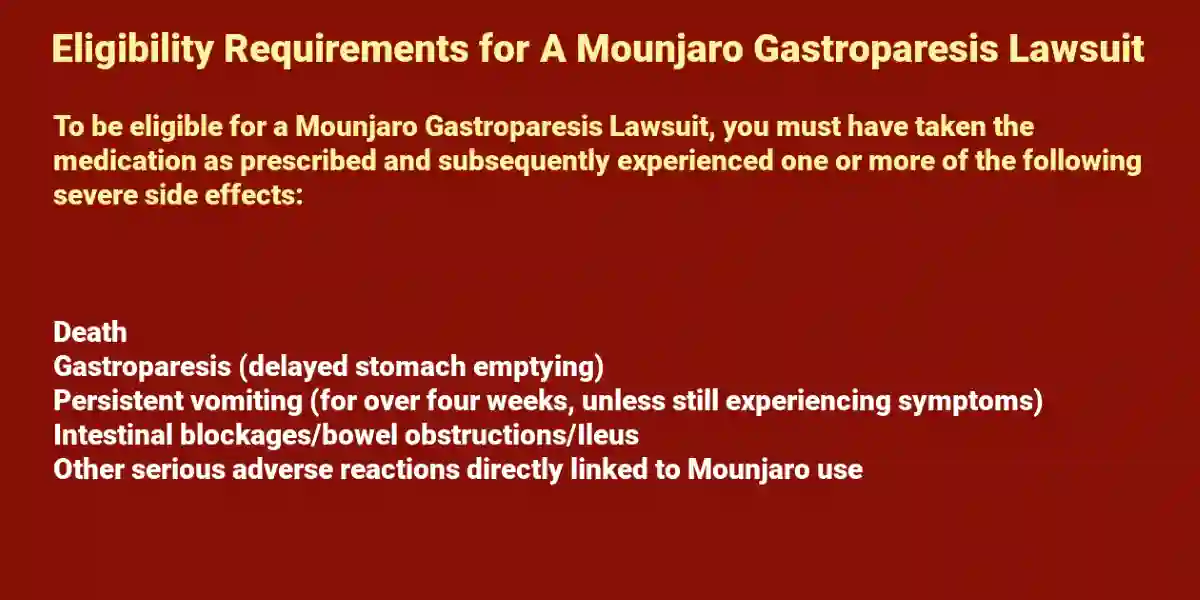
If you were prescribed Mounjaro and took it as directed and suffered Mounjaro and persistent vomiting, developed gastroparesis after taking Mounjaro, intestinal blockages or bowel obstructions or Ileus, or suffered other severe Mounjaro stomach side effects, contact Trulicity Gastroparesis Lawyer Timothy L. Miles today. You could be eligible for a eligible for a Mounjaro Gastroparesis Lawsuit and potentially entitled to substantial compensation. (855) 846–6529 or tmiles@timmileslaw.com.
When you hire a skilled Mounjaro Gastroparesis Lawyer, they will work tirelessly to build a strong case on your behalf. This includes:
- Thoroughly investigating the details of your case, including your medical history, Mounjaro usage, and the onset of your symptoms
- Gathering and analyzing relevant medical records, scientific studies, and other evidence to support your claims
- Collaborating with medical experts to provide expert testimony and strengthen your case
- Negotiating with the pharmaceutical company and their legal team to secure a fair settlement
- Preparing and filing the necessary legal documents to initiate and progress your lawsuit
- Representing you in court if litigation becomes necessary
If you were prescribed Mounjaro and took it as directed and suffered Mounjaro and persistent vomiting, developed gastroparesis after taking Mounjaro, intestinal blockages or bowel obstructions or Ileus, or suffered other severe Mounjaro stomach side effects, contact Trulicity Gastroparesis Lawyer Timothy L. Miles today. You could be eligible for a eligible for a Mounjaro Gastroparesis Lawsuit and potentially entitled to substantial compensation. (855) 846–6529 or tmiles@timmileslaw.com.

Contingency Fee Agreements: No Cost to Hire a Mounjaro Gastroparesis Lawyer
Conclusion
- Understanding the potential Mounjaro Stomach Side Effects and knowing when to consult a Mounjaro Gastroparesis Lawyer can empower you to make informed decisions about your healthcare.
- By staying informed and proactive, you can better manage your treatment and protect your rights.
- If you or a loved one experiences severe Mounjaro Stomach Side Effects, don not hesitate to seek medical attention and consult with a legal professional.
Taking these steps can help ensure your health and legal rights are safeguarded. (855) 846–6529 or tmiles@timmileslaw.com.

If You Suffered From Mounjaro and Persistent Vomiting, Contact Mounjaro Gastroparesis Lawyer Timothy L. Miles Today