Introduction to Aerotoxic Syndrome Lawsuit: Deplorable Toxic Fumes Skyward
Welcome to the Aertoxic Sydrome Lawsut. Commercial aviation is built on a promise of safety, redundancy, and rigorous engineering discipline. Passengers board an aircraft with the reasonable assumption that the air they breathe at 35,000 feet is clean, monitored, and controlled.
Yet a growing body of allegations, incident reports, and medical claims has placed a particular risk under a harsh spotlight: contaminated cabin air linked to “fume events,” and the resulting claims grouped under the term aerotoxic syndrome.
The phrase itself is contested. The suffering described by many crew members and some passengers is not. As lawsuits and regulatory petitions continue to emerge internationally, the legal question is becoming more defined. For instance, those affected may be eligible for an aerotoxic syndrome lawsuit, which raises questions about responsibility when toxic fumes enter the breathing air supply.
This article explains what aerotoxic syndrome claims typically involve, how aircraft cabin air systems can become contaminated cabin air, what plaintiffs allege in an aerotoxic syndrome lawsuit, and what aviation stakeholders can do now to reduce risk, improve governance, and strengthen defensibility before the next claim arrives.
If you believe you have been affected by toxic airplane fumes, contact Aerotoxic Syndrome lawyer Timothy L. Miles as you may be eligible for an Aerotoxic Syndrome Lawsuit and potentially entitled to substantial compensation. (855) 846–6529 or tmiles@timmileslaw.com.
What “Aerotoxic Syndrome” Means in Legal and Medical Disputes
“Aerotoxic syndrome” is commonly used to describe a constellation of acute and chronic symptoms that individuals attribute to inhalation exposure during aircraft toxic fume events. The term is not consistently recognized as a formal medical diagnosis across jurisdictions, creating legal complexities. In litigation, terminology matters.
Plaintiffs may frame claims as toxic exposure or [chemical inhalation injury](https://classactionlawyertn.com/aerotoxic-syndrome-lawsuit-334657/), occupational illness, or negligence resulting in neurological or respiratory harm. The label varies, but the central allegation remains consistent: contaminated bleed air or cabin air exposure caused measurable injury.
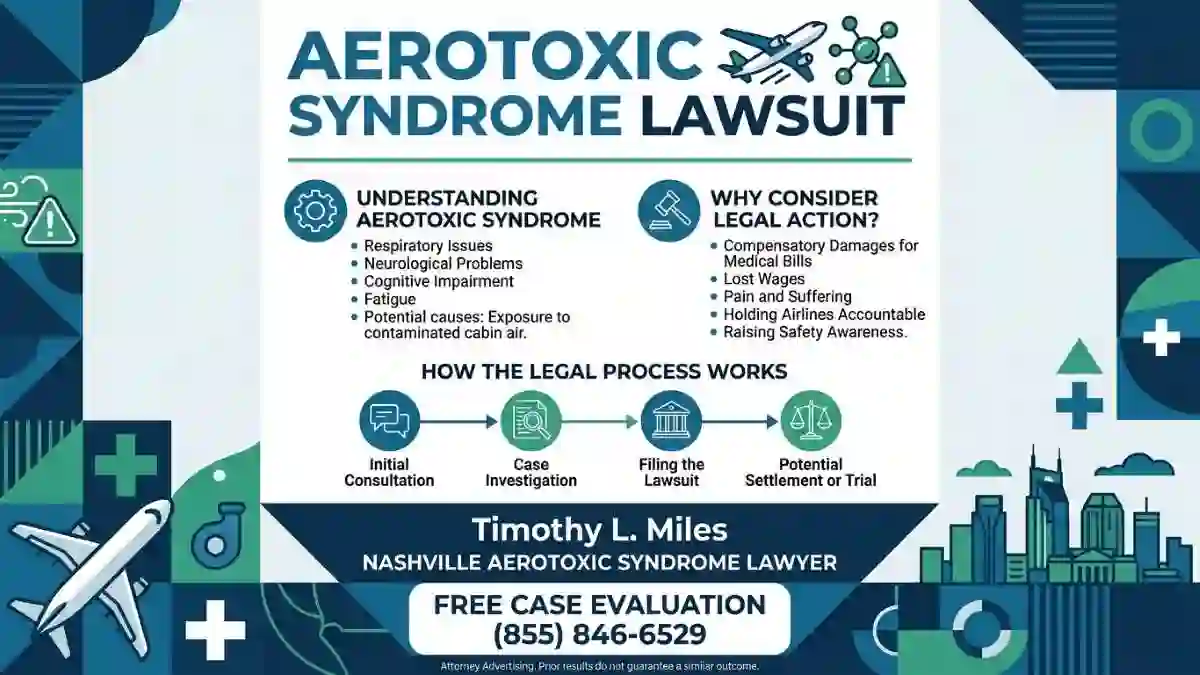
Commonly reported symptoms in complaints include:
- Headache, dizziness, nausea, and disorientation during or after flight
- Respiratory irritation, coughing, and shortness of breath
- Cognitive impacts like memory impairment and reduced concentration
- Neurological complaints such as tingling or visual disturbances
- Fatigue and sleep disruption
From a legal perspective, the dispute often turns on four issues: exposure, dose, causation, and damages. Plaintiffs must show that an exposure occurred at harmful levels that caused their injuries resulting in compensable losses.
To understand more about the history behind this condition you can visit this link which provides insights into its background. Additionally it’s important to note that these incidents often stem from toxic airplane fumes which further complicates matters for those seeking justice through legal channels.
How Cabin Air Is Supplied, and Where Contamination Can Occur
Most large commercial jetliners use a system in which compressed air is taken from the engine compressor stages, conditioned, and supplied to the cabin. This is commonly referred to as “bleed air.” The design objective is straightforward: provide breathable air under controlled temperature and pressure conditions.
The alleged vulnerability arises when engine oils, hydraulic fluids, or other contaminants enter the air supply path. Under normal conditions, seals and containment systems are designed to prevent that. During abnormal conditions, including seal wear, maintenance issues, or certain operating states, oil or fluid leakage may allow aerosols and volatile components to enter the bleed air stream. When this occurs, occupants may detect odors described in reports as “dirty socks,” “wet dog,” “burning,” or “chemical.”
Key concept for litigation: a fume event does not always leave a simple, visible trail. Some events are transient, some are not captured by onboard sensors, and some are documented only through crew reports, maintenance logs, and post-flight medical visits.
What Plaintiffs Typically Allege in an Aerotoxic Syndrome Lawsuit
Aerotoxic syndrome lawsuits vary by jurisdiction and by plaintiff status, whether the plaintiff is flight crew, cabin crew, maintenance personnel, or a passenger. Claims often assert that defendants knew or should have known of the risk associated with exposure to toxic airplane fumes, failed to warn adequately about toxic fumes in an airplane, failed to implement engineering controls to mitigate such risks, and failed to respond appropriately after reported events.
Common allegations include:
- Negligence in maintaining safe cabin air quality
- Failure to adequately inform about the risks of aerotoxic syndrome
- Lack of proper response following incidents involving toxic airplane fumes
It’s important to note that the effects of aerotoxic syndrome can manifest in various ways depending on individual health factors and duration of exposure.
1) Negligence and Failure to Exercise Reasonable Care
Plaintiffs may claim that airlines, manufacturers, or maintenance providers did not maintain aircraft in a condition that ensured safe breathing air. In practical terms, the lawsuit may focus on maintenance practices, deferred defects, repeat fume event histories, and whether known risk pathways were mitigated.
2) Failure to Warn or Inadequate Training
A recurring theme in filings is that crew were not given clear guidance on recognizing, reporting, and responding to fume events, or that the guidance did not reflect the severity of potential harm. Where training exists, plaintiffs may argue it was incomplete, inconsistent, or not operationalized.
3) Product Liability and Design Defect Theories
In some cases, plaintiffs target aircraft or engine manufacturers. These claims may focus on the architecture of bleed air systems, the adequacy of filtration, the lack of real-time contaminant detection, or the suitability of seals and materials. Depending on the jurisdiction, plaintiffs may plead design defect, manufacturing defect, or failure to warn.
4) Occupational Safety and Workers’ Rights Claims
For crew members, the dispute often intersects with workplace health and safety obligations. Claims may involve workers’ compensation frameworks, employer duty of care, and allegations that occupational exposures were not properly recorded, investigated, or medically managed. Such situations often arise from incidents involving aircraft toxic fumes which can have serious health implications for crew members.
5) Medical Monitoring and Long-Term Harm
Even where symptoms improve, plaintiffs may seek damages for medical monitoring. The argument is forward-looking: if exposure to certain chemicals increases long-term risk, then periodic medical evaluation is a compensable necessity.
The Evidentiary Challenge: Proving Exposure and Causation
Aerotoxic claims, which involve toxic cabin air, can be difficult to prove or defend because the best evidence is time-sensitive. Many flights do not capture contemporaneous chemical measurements inside the cabin. That does not end the inquiry, but it changes the litigation posture.
In practical litigation terms, evidence often comes from a mosaic of sources:
- Aircraft technical logs, maintenance records, and defect histories
- Crew incident reports and safety reporting systems
- Flight data, including altitude and engine parameters relevant to seal performance
- Medical records, symptom timelines, and differential diagnosis documentation
- Expert testimony in occupational medicine, toxicology, neurology, and industrial hygiene
- Any available sampling data, whether onboard, airport-based, or ad hoc monitoring
Defendants commonly challenge causation by arguing that symptoms are nonspecific, that alternative explanations exist, that exposure levels were unknown, or that regulatory standards were not exceeded. Plaintiffs counter by emphasizing temporal association, repeat exposures, cluster patterns among crew, and the foreseeability of oil and fluid contaminants entering cabin air.
The forward-thinking governance point is clear: a company that improves documentation, incident response protocols, and measurement capability strengthens both safety outcomes and legal defensibility.
Who Can Be Sued, and Why Liability Theories Differ
An aerotoxic syndrome lawsuit may name one or multiple parties, depending on facts and jurisdiction. The legal analysis is highly context-dependent, but common defendants include:
- Airlines, for operation, maintenance, training, and workplace safety obligations
- Aircraft manufacturers, for system design and warnings associated with cabin air architecture
- Engine manufacturers, for seal design, failure modes, and maintenance guidance
- Maintenance providers, for inspection, repair quality, and airworthiness compliance
- Component suppliers, in cases alleging part defects or inadequate specifications
Liability theories also differ based on the plaintiff. Crew claims tend to be anchored in occupational duty and employer obligations related to airplane toxic exposure, while passenger claims often proceed as negligence, failure to warn, or consumer safety theories with additional complexity around international carriage regimes.
Why “Deplorable Toxic Fumes” Is Not Mere Rhetoric in Court
Courts tend to be skeptical of sensational language. They tend to be attentive to patterns, documentation, and governance failures. When plaintiffs describe “deplorable toxic fumes”, they are not simply amplifying emotion. They are signaling allegations of systemic breakdown: repeated events, inadequate response, and preventable exposures in a controlled environment where safety is supposed to be engineered, verified, and enforced.
In corporate governance terms, the reputational risk is not limited to the specific case. The broader risk is that a company appears reactive rather than proactive. In safety-critical industries, such as aviation where exposure to toxic airplane fumes, a reactive posture invites scrutiny from regulators, unions, insurers, and investors.
Repetition for emphasis is appropriate here. Proactive controls reduce harm. Proactive controls reduce disputes. Proactive controls reduce liability.
What a Strong Incident Response Should Look Like
Aviation organizations already operate mature safety management systems (SMS). The practical question is whether fume events are handled with the same rigor as other safety occurrences. A defensible, safety-first response typically includes:
Immediate Operational Response
- Clear crew procedures for reporting and escalation
- Availability of protective breathing equipment when indicated
- Consideration of diversion protocols based on severity and persistence
Evidence Preservation
- Rapid capture of aircraft logs and maintenance status
- Documentation of odor descriptions, timing, and affected zones
- Identification of crew and passenger witnesses
- Preservation of any replaceable filters or components relevant to the event
Medical Pathway
- Prompt clinical evaluation for symptomatic crew
- Standardized medical documentation templates focused on exposure timelines
- Return-to-work pathways that prioritize safety and accurate reporting
It is crucial for aviation companies to recognize the potential legal implications of aircraft toxic fumes exposure, and ensure that their incident response plans are robust enough to handle such situations effectively.

Engineering and Maintenance Review
- Root cause analysis aligned with SMS and quality systems
- Trend analysis for tail number histories and repeated seal issues
- Clear criteria for grounding, component replacement, and post-maintenance verification
Continuous Improvement
- Feedback loops into training, maintenance planning, and procurement
- Clear risk ownership at the executive level
- Regular reporting to governance committees responsible for safety and compliance
This is not only prudent. It is strategically necessary. In a contested medical space, the organization with the best facts often has the best outcome.
The Role of Filtration and Detection: Engineering Controls as Risk Governance
Many disputes ultimately converge on a practical proposition: if a risk pathway exists, why not measure it and mitigate it? Plaintiffs frequently argue that the absence of contaminant detection, or the limited use of targeted filtration, reflects an avoidable gap.
From a governance standpoint, engineering controls carry a dual benefit:
- Risk reduction, by lowering exposure likelihood or magnitude.
- Risk clarity, by producing data that reduces uncertainty in incident investigations.
Detection and filtration are not universal solutions. They require validation, maintenance, calibration, and clear thresholds for action. Yet they represent an important direction in proactive risk management, particularly when paired with robust reporting and medical follow-up.
Litigation Damages: What Plaintiffs May Seek
The remedies requested in aerotoxic syndrome cases vary, but frequently include:
- Medical expenses and ongoing treatment costs
- Lost wages, reduced earning capacity, and career disruption
- Pain and suffering, including loss of quality of life
- Costs of future medical monitoring
- In some jurisdictions, punitive or exemplary damages where conduct is alleged to be reckless or willful
For airlines and manufacturers, the financial risk is only part of the exposure. The operational risk includes crew availability impacts, union relations, regulatory scrutiny, and brand trust.
How Companies Can Reduce Lawsuit Risk Without Waiting for Regulation
Forward-thinking aviation governance is not defined by minimal compliance. It is defined by anticipatory control. Companies that treat cabin air quality as a measurable safety parameter, rather than a reputational hazard to be managed after the fact, are better positioned for future success.
A practical, proactive roadmap includes:
- Policy clarity: define fume events, define severity criteria, define escalation.
- Training consistency: ensure crew and maintenance teams share the same definitions and expectations.
- Data discipline: standardize reporting fields so incident data can be trended and audited.
- Medical governance: create an occupational health pathway that is structured, consistent, and evidence-based.
- Technical investment: evaluate filtration and detection options with rigorous testing and lifecycle planning.
- Supplier accountability: align component specifications, maintenance guidance, and quality controls with measurable outcomes.
- Board-level oversight: treat cabin air events as an enterprise risk, not a localized operations issue.
Repetition for emphasis is warranted again. Measure what matters. Document what happens. Improve what fails.
What Claimants Should Understand Before Filing
Individuals who believe they were harmed by a fume event should approach the issue with precision. Legal success often depends less on the label “aerotoxic syndrome” – a condition often resulting from toxic airplane cabin fumes – and more on the quality of contemporaneous documentation.
Commonly useful steps include:
- Seeking prompt medical evaluation and describing the incident timeline accurately
- Requesting copies of relevant employment or flight records where applicable
- Documenting symptoms, duration, and functional impacts in a consistent manner
- Identifying witnesses who observed the same odor or symptoms
- Consulting counsel experienced in aviation, toxic exposure, and occupational claims
For instance, understanding the symptoms of aerotoxic syndrome can aid in accurately documenting one’s health condition. It’s also crucial to be aware of the potential toxic fumes in an airplane, which can assist in establishing a clear narrative about the incident.
This is not a guarantee of outcome. It is recognition of what courts and insurers evaluate: credibility, consistency, and evidence.
The Larger Point: Cabin Air Integrity as a Future-Facing Safety Standard
Aviation safety has advanced through a pattern of learning, standardization, and engineering control. Cabin air integrity should follow the same trajectory. Whether courts ultimately embrace or reject “aerotoxic syndrome” as a clinical label, ffume events are operationally real, reported repeatedly, and consequential for the people who spend their careers in pressurized aluminum tubes.
The strategic direction is not complicated. Reduce uncertainty. Reduce exposure. Reduce harm.
When organizations invest in governance structures that emphasize prevention, documentation, and continuous improvement, they do more than reduce lawsuit risk. They strengthen integrity, reinforce public confidence, and build a safer system for the next generation of flight.
In an industry defined by precision, the air people breathe should be treated with the same precision.
Frequently Asked Questions
What is aerotoxic syndrome and why is it significant in aviation safety?
Aerotoxic syndrome refers to a set of acute and chronic symptoms attributed to inhalation exposure during a toxic event. It is significant because it raises concerns about contaminated cabin air quality, which challenges the aviation industry’s promise of safety and has led to legal disputes over health impacts from toxic airplane fumes.
How can aircraft cabin air become contaminated with toxic substances?
Aircraft cabin air is typically supplied using bleed air drawn from engine compressor stages. Contaminated cabin air can occur when engine oils, hydraulic fluids, or other chemicals leak into the bleed air due to seal wear, maintenance issues, or abnormal operating conditions. These contaminants can introduce aerosols and volatile compounds into the cabin air supply.
What symptoms are commonly reported by individuals affected by aerotoxic syndrome?
Commonly reported symptoms include headaches, dizziness, nausea, disorientation during or after flight, respiratory irritation such as coughing and shortness of breath, cognitive impairments like memory loss and reduced concentration, neurological issues such as tingling or visual disturbances, fatigue, and sleep disruption.
What legal challenges do plaintiffs face in aerotoxic syndrome lawsuits?
Plaintiffs must prove four key elements: that exposure to fumes in cabin air occurred at harmful levels (exposure), the amount of toxins inhaled was sufficient to cause harm (dose), that this fume exposure caused their specific injuries (causation), and that these injuries resulted in compensable damages. Additionally, inconsistent recognition of aerotoxic syndrome as a formal medical diagnosis complicates legal proceedings.
What allegations are typically made against airlines or manufacturers in an aerotoxic syndrome lawsuit?
Typical allegations include negligence in maintaining safe cabin air quality, failure to warn crew and passengers about risks related to toxic airplane fumes, inadequate engineering controls to mitigate contamination risks, and insufficient response following reported fume events. Plaintiffs argue that defendants knew or should have known about these risks but failed to act appropriately.
How can aviation stakeholders reduce the risk of aerotoxic syndrome claims?
Stakeholders can improve governance by implementing rigorous maintenance protocols for bleed air systems, enhancing monitoring technologies for early detection of fume events, educating crew members about potential risks and symptoms, responding promptly to incidents involving contaminated cabin air, and investing in engineering solutions that minimize the likelihood of toxic fume ingress into the cabin environment.