
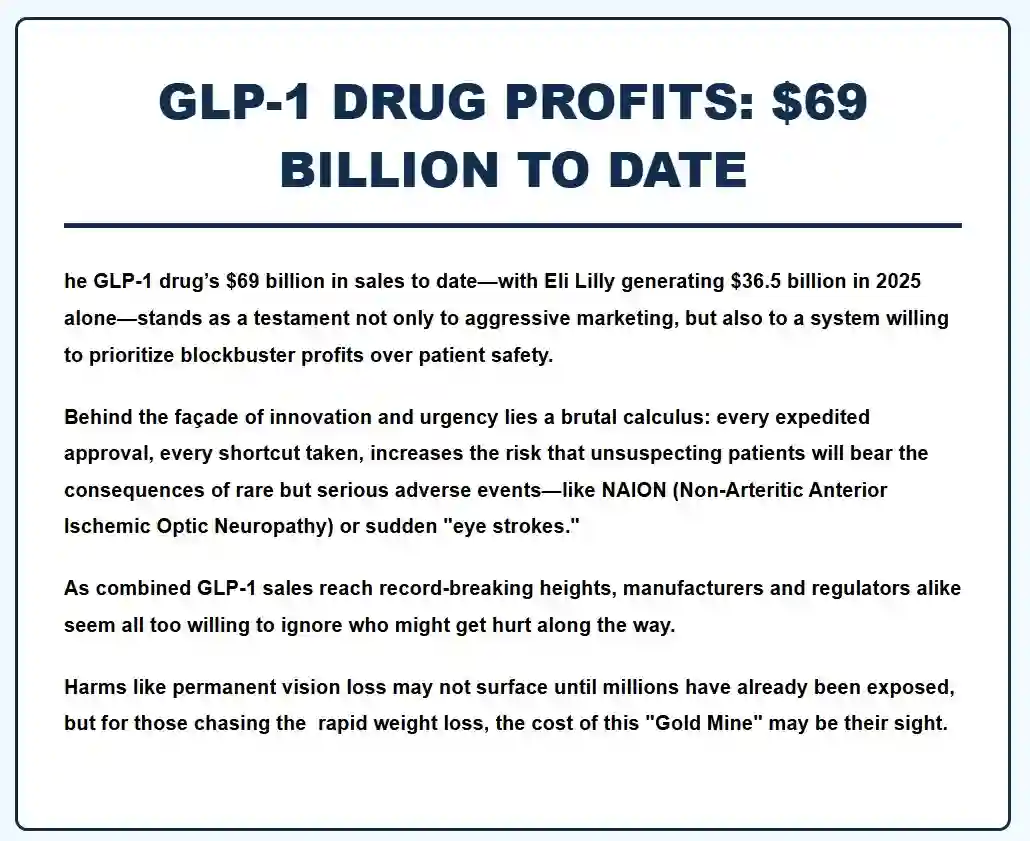
Preface to Patients
If you are or have experienced side efffect from Zepbound (and in the unlikely event you see this) please feel free to contact me and I will answere any questions I can, or refer to someone who can, of course, at absolutley no charge. Please take note of retinal detachment, which is, by far, the most reported major side effect in which you can lose your vision. Thank you.
Zepbound Vision Loss: 2026 Lawsuit Facts
- The Main Condition: Lawsuits focus on NAION (Non-Arteritic Anterior Ischemic Optic Neuropathy), often called an “eye stroke.”
- Permanent Impact: NAION causes sudden, painless vision loss that is typically irreversible.
- The Link: Recent studies suggest GLP-1 drugs like Zepbound and Trulicity may increase the risk of optic nerve damage.
- Other Symptoms: Look for sudden “smudges” in your vision, dark spots, or blurred sight.
- 2026 Legal Status: Cases are being consolidated into a federal Multidistrict Litigation (MDL) to streamline the process for victims.
- Failure to Warn: The core of the case is that manufacturers knew of the risks but failed to update the warning labels

Introduction to Zepbound Eye Problems
Research published in JAMA Ophthalmology has established a concerning association between GLP-1 receptor agonists, including tirzepatide (Zepbound), and increased risk of vision-threatening complications.
A landmark study examined electronic health records from multiple healthcare systems and identified a statistically significant elevation in the incidence of nonarteritic anterior ischemic optic neuropathy (NAION) among patients prescribed these medications compared to those receiving alternative diabetes or weight management therapies.
- Zepbound, a weight-loss medication containing the active ingredient tirzepatide, received FDA fast-track approval in November 2023 as a treatment option for individuals struggling with obesity and weight-related health conditions.
- Manufactured by Eli Lilly and Company, this glucagon-like peptide-1 receptor agonist (GLP-1 RA) has gained significant attention within the medical community and among consumers seeking effective weight management solutions.
- This medication belongs to a class of drugs known as GLP-1 receptor agonists, which also includes widely prescribed medications like semaglutide.
- What sets tirzepatide apart from other similar medications is its ability to target two receptors in the body: the glucose-dependent insulinotropic polypeptide (GIP) receptor and the glucagon-like peptide-1 (GLP-1) receptor.
- This dual action mechanism makes it different from single-action alternatives and has shown promising results in achieving significant weight loss.

JUSTICE IS AND ALWAYS WILL BE BLIND TO THE LOVE OF PROFIT
Synopsis of the Reported Zepbound Eye Problems
- Zepbound Eye Problems: Reports from patients and healthcare providers have documented various Zepbound eye problems following the administration of tirzepatide.
- Zepbound Eye Side Effects: These eye issues can vary in severity and how they show up, which is why it’s important for both doctors prescribing the medication and patients receiving treatment to pay close attention.
- Vision Changes or Worsening when Starting Zepbound: This medication may cause your vision to worsen when you start using the medicine or start a higher dose.
Common Eye Side Effects of Zepbound
- Here are some specific ways that Zepbound eye side effects may show up:
-
- Blurred vision: Patients have reported temporary or persistent difficulty focusing, which may affect one or both eyes. Rapid blood sugar control has been associated with a temporary worsening of diabetic retinopathy, which may lead to vision disturbances, most notably blurry vison.
-
- Eye pain: Discomfort ranging from mild irritation to severe ocular pain requiring immediate medical evaluation
-
- Visual field disturbances: Alterations in peripheral or central vision that interfere with daily activities
-
- Photophobia: Increased sensitivity to light sources
-
- Diplopia: Double vision episodes occurring spontaneously during treatment
-
- Zepbound and Eye Floaters: Zepbound can cause low blood sugar, particularly when used with insulin or other medicines that increase your insulin levels. If your blood sugar drops quickly, it can cause fluid shifts inside your eye. This affects the lens and vitreous gel, possibly making existing floaters more noticeable or causing new ones.
- The rise in cases of Zepbound and vision loss has caught the attention of the medical community.
- Doctors have noticed that these negative effects might happen at different points during treatment, starting from the first dose and continuing through maintenance therapy.
- Some patients experience temporary symptoms that go away with ongoing use, while others face worsening problems that require stopping the medication.
The Ten Most Sight-Threatening Side Effects for Patiens to Monitor Closely with their Doctor
1. Nonarteritic Anterior Ischemic Optic Neuropathy – NAION
Breaking down the meaning of the name component-by-component:
- Non-Arteritic: The reason it is called “non-arteritic” is because there is reduced blood flow without true inflammation of the blood vessels (as there is in arteritis).
- Anterior: It is called “anterior” because the reduced blood flow and injury to the optic nerve happen at the front-most part of the nerve, where the nerve meets the eye.
- Ischemic: The reason it is called “ischemic” is because that is the word that describes an injury due to reduced blood flow.
- Optic Neuropathy: The reason it is called an “optic neuropathy” because it is an injury to the optic nerve, which disrupts the ability of eye to send information to the brain.
If you were prescribed Zepbound and took it as directed and suffered Zepbound eye problems or other Zepbound vision side effects contact Zepbound Vision Loss LawyerTimothy L. Miles today. You could be eligible for at Zepbound vision loss lawsuit and potentially entitled to substantial compensation.
Defining the Characteristics of NAION
- NAION is characterized by sudden, painless, unilateral vision loss upon awakening.
- Is the most common cause of optic nerve swelling and optic neuropathy in adults older than 50.
- NAION and is caused by decreased blood flow to the front part of the optic nerve (optic disc). However, the exact mechanism causing reduced blood flow to the optic nerve is not proven.
- What is known is that NAION occurs more often when a patient has conditions such as diabetes, high blood pressure, and sleep apnea. Additionally, smoking may also elevate the risk of developing NAION.
- Additionally, it happens more often in patients born with small optic discs (the front part of the optic nerve that can be seen within the eye).
- It typically affects one eye, although the other eye sometimes suffers similar loss months or years later (there is about a 15% risk of second eye involvement within 5 years). Rarely, both eyes may be affected at the same time.
- Approximately 15% of people with NAION in one eye will develop NAION in the other eye within 5 years

Symptoms of NAION
- NAION Clinical Presentation: The way NAION presents itself is quite unique, allowing healthcare providers to recognize it during a thorough eye examination. Patients usually experience:
-
- Sudden Vision Loss: Sudden, painless vision loss in one eye that occurs upon waking up or is noticed within the first few hours of the day
-
- One Side Involvement: With one eye being affected initially, although there’s an increased risk for the other eye
-
- Visual Filed Defects: Specific visual field defects, most commonly affecting the lower part of the visual field
-
- Optic Disc Swelling: Swelling of the optic disc and visible bleeding during an eye examination
-
- Pupil Defect: A relative defect in pupil response in the affected eye
-
- Dark or Gray Spot: The vision loss from NAION often consists of a gray or dark spot that does not move or change or a severe blur. For many patients, the vision loss affects the bottom or top half of the vision in one eye, although other patterns of vision loss may occur.
-
- Color Vision and Ability to See Contrasts: IIn addition to central vision loss, there may be difficulties with color vision and reduced ability to see contrasts, which can affect daily activities.
The Risk Factors for NAION
- Optic Nerve Anatomy: Having a naturally small or “crowded” optic disc (“disc-at-risk”). This is an unchangeable physical trait.
- Age: Most common in adults over 50
- High Blood Pressure (Hypertension): Especially if blood pressure drops too low overnight, sometimes because of medication taken at bedtime.
- Diabetes: Poorly controlled blood sugar and the associated blood vessel damage.
- Sleep Apnea: A condition where breathing stops temporarily during sleep. This is a significant risk factor, possibly due to changes in blood pressure and oxygen levels at night.
- Smoking: Damages blood vessels and is a strong risk factor.
- High Cholesterol (Hyperlipidemia): Contributes to hardening of the arteries (atherosclerosis).
- Certain Medications: The heart medicine amiodarone and some erectile dysfunction drugs (like Viagra, Cialis, Levitra) may be associated with NAION in at-risk individuals.
- Genetic Predisposition: Minor changes in genes related to blood flow control and clotting that can increase susceptibility in some cases.
- Chronic Vascular Effects: Other risk factors may include the chronic vascular other risk factors may include the chronic vascular effects of anemia and kidney disease.
- Nocturnal hypotension: Significant drops in blood pressure during sleep can decrease blood flow to the optic nerve head.
It is vital that you work with your primary care physician to identify and manage the well-established health risks to help prevent NAION in the other eye or a future vascular event like a heart attack or stroke.
2. Zepbound and Retinal Detachment
What to Watch For: The “Red Flags” of Vision Loss
Many patients ignore these symptoms because they are painless. If you are taking a medication like Mounjaro, Zepbound, Wegovy, or Ozempic, these are the signs that require an immediate call to an ophthalmologist:
- The “Curtain” or “Shadow” effect: Patients often describe a dark veil or gray curtain moving in from the side, top, or bottom of their field of vision. This is a hallmark sign that the retina has already begun to peel away.
- A “Shower” of new floaters: While a few spots are normal with age, a sudden “explosion” of new dark specks, threads, or cobwebs is a major warning sign. These are actually tiny clumps of gel or blood casting shadows on your retina.
- Lightning-bolt flashes: Known as photopsia, these split-second arcs or streaks of light—most visible in the dark—happen when the gel inside your eye pulls on the retina.
- The “Eye Stroke” (): This is a sudden, painless loss of vision, often noticed immediately upon waking up. It feels like the lights have been “dimmed” in one eye, and it can happen even if you feel perfectly fine.
- Distorted or Wavy Vision: If straight lines (like a door frame or a row of text) suddenly look bent or “wavy,” it could be a sign of fluid buildup under the retina, a common complication linked to rapid changes in blood sugar from these drugs
If you were prescribed Zepbound and took it as directed and suffered Zepbound eye problems or other Zepbound vision side effects contact Zepbound Vision Loss LawyerTimothy L. Miles today. You could be eligible for at Zepbound vision loss lawsuit and potentially entitled to substantial compensation.
3. Zepbound and Diabetic Retinopathy
- Diabetic retinopathy is a major concern for patients using GLP-1 receptor agonists like Zepbound. It involves gradual harm to the blood vessels in the retina, which can be seen through signs such as microaneurysms, bleeding, and new blood vessel growth.
- Interestingly, while Zepbound treatment aims to control blood sugar levels quickly, it may unintentionally worsen retinopathy in susceptible individuals, especially those with existing microvascular issues.
- This is because a sudden drop in blood glucose levels can disturb the retinal blood vessels, causing them to become more permeable and leading to insufficient blood supply.
4. Zepbound and Eye Floaters
- Zepbound and Eye Floaters: Floaters are tiny, shadowy shapes that drift across your field of vision, like twisted lines, dots, or webs. They are typically caused by changes in the gel-like substance (the vitreous) inside the eye. Myodesopsias is the medical term for eye floaters.
- Dehydration: GLP-1s are well-known for curbing appetite and slowing digestion. That also means people tend to eat and drink less, often unintentionally. Dehydration can affect the consistency of the vitreous and increase dry eye symptoms, which may make floaters seem more prominent.
- Circulation Changes: GLP-1s can alter blood flow to delicate areas like the retina or optic nerve. This can shift pressure or fluid balance in the eye and may play a role in how floaters form or are perceived
- Rare but Serious Complications: In rare cases, floaters could be a sign of something more serious, like a vitreous hemorrhage or retinal changes. These are less common but have been reported, especially in people with diabetes or pre-existing eye conditions.
- Sudden Drop in Blood Sugar: If your blood sugar drops quickly, it can cause fluid shifts inside your eye. This affects the lens and vitreous gel, possibly making existing floaters more noticeable or causing new ones. If you experience Zepbound and Eye Floaters, or other Zepbound vision side effects, contact your doctor right away.
5. Zepbound and Papillitis
- What is Papillitis: Also known as optic neuritis, Papillitis is represented by inflammation and deterioration of the portion of the optic nerve known as the optic disk.
- Papillitis and Vision Impairment: Patients with papillitis experience loss of vision in one eye that may occur within several hours of onset. The severity of visual impairment may vary from case to case, ranging from slight visual deficiency to complete loss of light perception.
- Severe Complications for Elderly: In individuals who are over 60 years of age, a common cause of papillitis is temporal arteritis (giant cell arteritis). In such cases, papillitis can spread to the other eye resulting in bilateral blindness.
- Zepbound and Papillitis: Zepbound has been associated with other disorders of the optic nerve and visual pathways. Recent studies have identified a potential link between Zepbound (tirzepatide) and other GLP-1 drugs and bilateral papillitis.
6. Zepbound and Blurry Vision
- Surge in Blurry Vision Causes Concern: With the surge in use of these medications, researchers and medical experts are paying closer attention to the potential side effects of GLP-1 drugs, due to their effect the eyes.
- Rapid blood sugar control has been associated with a temporary worsening of diabetic retinopathy, which may lead to vision disturbances, most notably blurry vison.
- Bo Cognizant of Suppen Changes to Eyesight Including Blurry Vision: Watch for any sudden changes, such as blurriness, altered color perception, or loss of peripheral vision. Zepbound may cause your vision to worsen when you start using the medicine or start a higher dose.
- Tell your healthcare provider if you develop new vision problems, including blurry vision. Previous studies have shown that Zebound or other GLP-1 Drugs causes blurry vision
If you were prescribed Zepbound and took it as directed and suffered Zepbound eye problems or other Zepbound vision side effects contact Zepbound Vision Loss LawyerTimothy L. Miles today. You could be eligible for at Zepbound vision loss lawsuit and potentially entitled to substantial compensation.
7. Macular Edema: Zepbound Vison Problems
- Another complication acomplication associated with Zepbound is macular edema, characterized by fluid buildup in the macula—the central part of the retina responsible for sharp vision.\
- As a result, patients may experience blurred central vision, difficulty reading, and altered color perception.
- This condition occurs when the barrier between the blood vessels and retinal tissue is disrupted, allowing fluid leakage into the macula and compromising visual clarity.
9. Zepbound Dry Eye Syndrome
- Zepbound Vision Side Effects and Dry Eyes: Multiple case reports have documented instances of dry eye syndrome among users of GLP-1 receptor agonists.
- Insufficient Tear Production: Patients may feel discomfort on the surface of their eyes, experience burning sensations, and have intermittent blurry vision due to insufficient tear production or excessive evaporation of tears.
- Autonomic Nervous System: The underlying mechanism could involve effects on the autonomic nervous system or inflammatory responses triggered by the medication.

10. Zepbound Induced Cellular Dehydration
Clinical Monitoring Protocols
- Establishing a Bassline Assessment: Physicians recommend establishing baseline ophthalmologic assessments before initiating Zepbound therapy. This initial evaluation creates a reference point for detecting subsequent changes in ocular health. Patients should receive clear instructions to report any visual disturbances immediately, including:
-
- Sudden onset of blurred vision or visual field defects
- Unexplained eye pain or pressure
- Changes in color perception
- Appearance of floaters or flashing lights
- Difficulty with night vision or contrast sensitivity
- FDA Warnings: The FDA warnings on GLP-1 drugs underscore the necessity for heightened vigilance during the first several months of treatment, when metabolic changes occur most rapidly. Healthcare teams must educate patients about the distinction between temporary visual fluctuations related to blood sugar stabilization and potentially serious complications requiring urgent evaluation.
Timothy L. Miles, Esq.
Law Offices of Timothy L. Miles
Tapestry at Brentwood Town Center
300 Centerview Dr. #247
Mailbox #1091
Brentwood,TN 37027
Phone: (855) Tim-MLaw (855-846-6529)
Email: [email protected]
Website: www.classactionlawyertn.com
#WTBRORC07245-14