
Introduction to Zepbound Eye Problems: A Miracle Drug that Prints Money
Welcome to this authoritative explication on the Zepbound Eye Problems and a miracle drug that also prints moneyl
- The GLP‑1 “miracle drug” era is not subtle.
- These medications have become a defining product category in modern healthcare, with demand that has reshaped clinical practice, advertising, and consumer expectations.
Zepbound (tirzepatide), made by Eli Lilly, sits squarely in that story: blockbuster weight loss outcomes, blockbuster revenue, and a growing number of patients who say the trade-offs were not fully explained.
And that brings us to the part nobody wanted to headline: Zepboun vision problems. Blurry vision. New floaters. Flashes. Sudden field loss. Even the frightening phrase “Zepbound eye stroke,” which many people use when describing abrupt, painless vision loss consistent with an optic nerve event like NAION.
If you were prescribed Zepbound and took it as directed and suffered Zepbound Eye Problems, Zepbound vision loss or other serious Zepbound Vision Side Effects, contact Timothy L. Miles, a Zepbound Vision Loss Lawyer today. You could be eligible for a Zepbound vision loss lawsuit and potentially entitled to substantial compensation. (855) 846–6529 or [email protected].
This article is a symptom, safety, and legal landscape overview for readers searching terms like:
- Zepbound eye problems
- Zepbound vision side effects
- Zepbound blurry vision
- Zepbound eye floaters
- Zepbound vision loss
- Zepbound eye stroke (often used to describe NAION, Non‑Arteritic Anterior Ischemic Optic Neuropathy)
It is not medical advice. It cannot diagnose you, and it cannot replace a clinician. What it can do is help you recognize what matters, communicate clearly with doctors, understand how evaluations typically work, and understand what a Zepbound Vision Loss Lawsuit often hinges on when vision loss is alleged.
Zepbound Eye symptoms create urgency for a simple reason: time matters. With sudden Zepbound abd vision loss, new flashes and floaters, or a curtain-like shadow, the evaluation window can be short. If something is happening to the retina or optic nerve, delaying care can change outcomes.
By the end, you will know:
- Which eye symptoms are “watch and schedule” versus “same-day now.”
- How doctors test for common causes.
- What to document if you suspect a drug-related adverse event.
- What “Zepbound vision loss lawsuit” searches usually mean in practice.
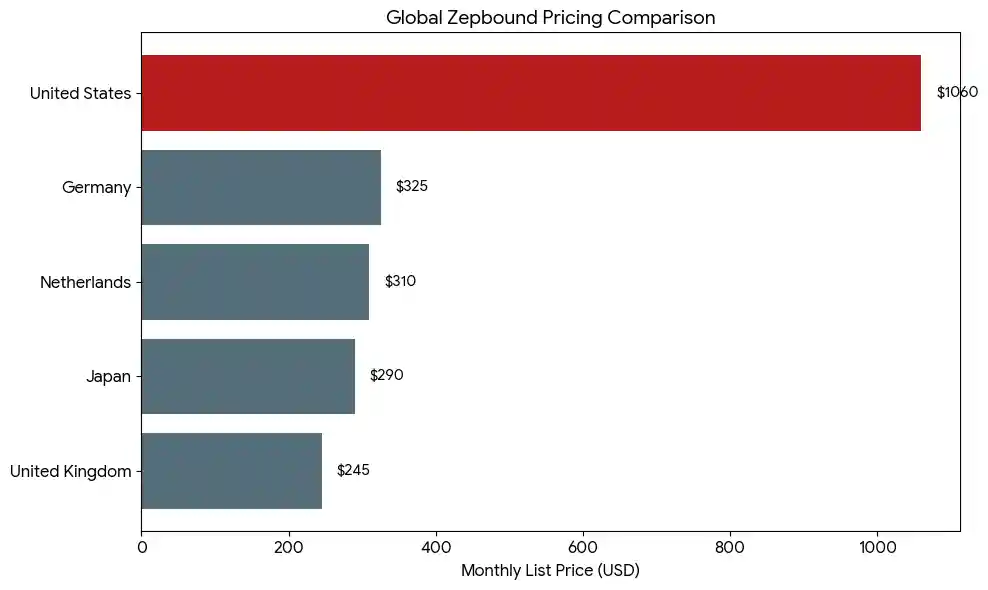
Global Price Comparison: The Zepbound “Money Printing” Gap
(Estimated monthly list prices for 2025/2026)
| Country | Zepbound (U.S. List Price) |
|---|---|
| United States | $1,060 |
| Netherlands | $310 |
| Germany | $325 |
| United Kingdom | $245 |
| Japan | $290 |
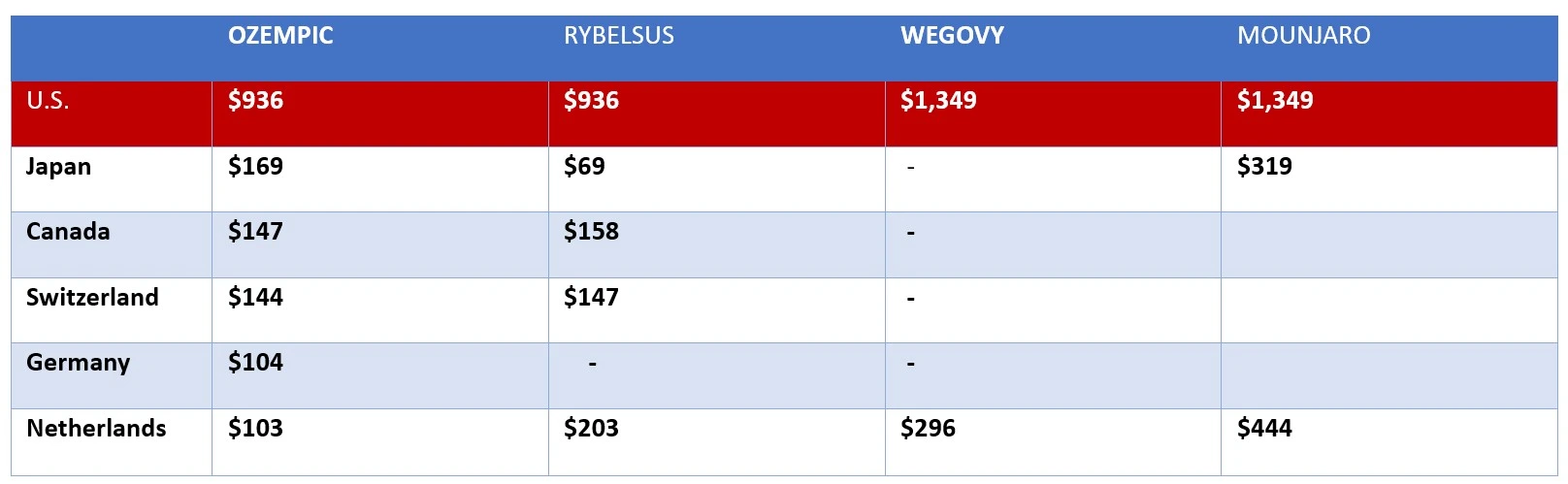
OTHER GLP=1 Drug Pricing Comparison
Zepbound Global Pricing Comparison
The Miracle Drug Revenue Explosion: Eli Lilly Revenue Growth
| Fiscal Year | Total Company Revenue | Tirzepatide Sales (Mounjaro/Zepbound) |
|---|---|---|
| 2022 | $28.54 Billion | $0.48 Billion |
| 2023 | $34.12 Billion | $5.16 Billion |
| 2024 | $45.04 Billion | $16.47 Billion |
| 2025 | $65.18 Billion | $36.51 Billion |
Some Eye-Opening Projections
The “Profit” Trajectory
| Year | Tirzepatide Revenue | CEO Pay |
|---|---|---|
| 2022 | $0.48 Billion | $21.4 Million |
| 2023 | $5.16 Billion | $26.6 Million |
| 2024 | $16.47 Billion | $29.2 Million |
| 2025 | $36.51 Billion | $36.7 Million |
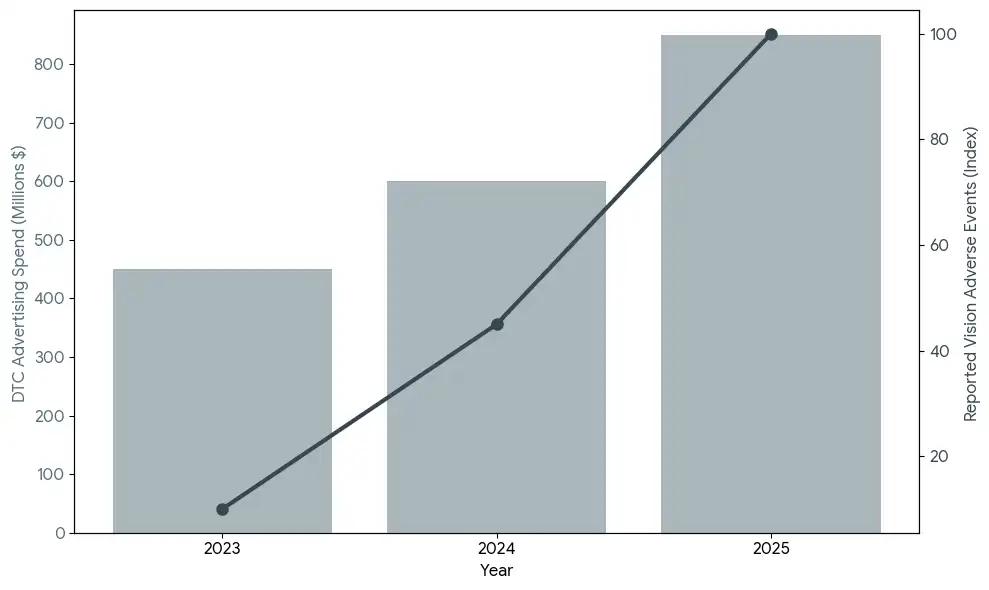
Ad=Spend and Reported Adverse Events Comparison
- Speed to Success: Tirzepatide reached $36 billion in annual sales less than four years after its 2022 launch, a pace never seen before in the industry.
- Market Dominance: For the first time, Eli Lilly has surpassed Merck to become the world’s top-earning pharmaceutical company by revenue, largely due to this single molecule.
- Projected Growth: Analysts at Evaluate expect tirzepatide sales to reach $62 billion per year by 2030.
Current Leaders by Annual Sales (2025)
| Drug Molecule | Brand Names | 2025 Sales (Billion) |
|---|---|---|
| Tirzepatide | Mounjaro / Zepbound | $36.5B |
| Semaglutide | Ozempic / Wegovy | $34.5B |
| Pembrolizumab | Keytruda | $31.7B |
| Year | Ad Spend (Direct-to-Consumer) | Adverse Event Reports (Vision/Eye) |
|---|---|---|
| 2023 | ~$450 Million | Initial Reports |
| 2024 | ~$600 Million | Rapid Increase |
| 2025 | ~$850 Million | Spike (NAION Concerns) |
- The 56% Factor: By the end of 2025, just two drugs—Mounjaro and Zepbound—accounted for over half of the entire company’srevenue.
- The Trillion Dollar Club: This revenue surge pushed Eli Lilly’s market value over $1 Trillion Google Finance.
- Side Effects Soar: While the blue line (sales) skyrocketed, so did the reports of NAION (eye strokes) and other permanent Zepbound Vision Problems

Clinical Features
Symptoms:
NAION generally manifests as a sudden, painless loss of vision in one eye. Although uncommon, both eyes may be affected, particularly in situations involving major fluctuations in blood pressure such as after surgery, during hemodialysis, or following significant blood loss. Most patients do not experience eye discomfort, headache, or pain around the eye; however, about 10% report these symptoms. If pain is present alongside vision loss, it is important to consider other potential causes.
Signs:
Vision impairment in NAION is usually less profound than what is seen in arteritic anterior ischemic optic neuropathy (AAION). Complete loss of light perception is rare with NAION and should raise suspicion for AAION if encountered. At the initial evaluation, roughly half of individuals with NAION have visual acuity better than 20/64, and two-thirds maintain vision better than 20/200. Some patients may even retain normal visual acuity.
The most frequent visual field abnormality is loss of the lower half of the visual field (inferior altitudinal defect), though other patterns such as inferior nasal deficits or central, cecocentral, and arcuate scotomas can also occur.
Color vision disturbances (dyschromatopsia) and a relative afferent pupillary defect may also be observed. In NAION, the severity of color vision loss generally parallels the degree of visual acuity reduction. This contrasts with optic neuritis, where color vision loss tends to be disproportionately severe compared to the level of visual acuity.
Fundus Findings:
On examination of the back of the eye (fundus), there is often swelling of the optic nerve head that can be either widespread or localized to one segment. Additional findings may include small peripapillary hemorrhages (splinter or flame-shaped), dilated and telangiectatic capillaries near the disc, and narrowing of nearby retinal arterioles. Cotton-wool spots are rarely seen; their presence should prompt consideration of AAION. The unaffected eye may display structural features indicating increased risk for developing NAION in the future.
The “miracle drug” era—and the eye problems nobody wanted to headline
GLP‑1 drugs have been framed as once-in-a-generation therapies. For many patients, the benefits are real: weight loss, improved metabolic markers, and sometimes improved cardiovascular risk profiles. The marketing is confident, the social proof is relentless, and the revenue is historic.
But “miracle drug” language has a cost. It can flatten the risk conversation into a footnote. It can turn “rare” into “impossible.” It can encourage patients to normalize alarming symptoms as a temporary adjustment.
Vision symptoms resist that framing because they feel immediate, personal, and irreversible. People will tolerate nausea. They will tolerate fatigue. They do not tolerate the fear that they might be losing their sight.
So when readers search Zepbound eye problems, they are usually doing one of two things:
- Trying to determine if what they are experiencing is a known side effect, an emergency, or both.
- Trying to understand whether a serious diagnosis like NAION could be connected, and whether legal claims are being filed.
The responsible approach is not panic. It is triage, evaluation, and documentation.
Key Symptoms of NAION
- Sudden, painless vision loss: Often noticed immediately upon waking.
- Visual Field Defects: Frequently presents as an inferior (lower) altitudinal visual field defect, although others occur.
- Vision Loss Severity: Ranges from 20/20 to no light perception, commonly around 20/60 to 20/200.
- Optic Disc Swelling: Swelling of the optic nerve head that later subsides, leading to pallor.
Causes and Risk Factors
NAION is caused by impaired blood flow (ischemia) to the anterior part of the optic nerve.
- Anatomical Factor: A small, “crowded” optic disc with a small or absent cup is a common anatomical predisposition.
- Vascular Risk Factors: Diabetes, hypertension, smoking, and hypercholesterolemia.
- Sleep Apnea: Strongly associated, likely contributing to nocturnal hypotension.Medications: Possible links to phosphodiesterase-5 (PDE-5) inhibitors (e.g., sildenafil) and potentially some medications like semaglutide (Ozempic).
Quick primer: what Zepbound is, how it works, and why the eyes might be involved
Zepbound is the brand name for tirzepatide, a medication that acts as a GLP‑1/GIP receptor agonist. In practical terms, it influences appetite, satiety, and metabolic regulation. Many patients take it for weight loss and metabolic improvement under clinician supervision.
However, there have been reports of Zepbound vision problems, which raises concerns among patients.
So why would the eyes be part of the conversation at all?
At a high level, clinicians and researchers consider several non-definitive pathways that could plausibly intersect with vision in some patients:
- Rapid metabolic shifts, including changes in blood glucose (especially relevant for people with diabetes or prediabetes).
- Blood pressure changes and volume status changes.
- Dehydration, which can aggravate dry eye and may influence overall vascular stability in susceptible individuals.
- Vascular or optic nerve susceptibility, particularly in people with known risk factors.
None of that proves causation. It explains why the topic is being discussed and why clinicians take symptoms seriously.
It also helps to distinguish between:
- Common visual disturbance complaints: intermittent blur, dryness, itching, transient focusing difficulty.
- Potential emergencies: sudden painless vision loss, new field cuts, flashes with a curtain or veil, or severe eye pain with nausea and halos.
- There is no proven therapy to reverse vision loss, making the modification of risk factors and prevention crucial.
Readers also search comparator drugs, including Trulicity (dulaglutide) and the broader GLP‑1 class. That search behavior reflects a broader concern: whether the issue is specific to one drug or part of a class-level risk discussion.
In light of these potential risks associated with Zepbound, it’s crucial for patients experiencing [eye problems after taking Zepbound](https
Zepbound eye side effects people report (and how to describe them clearly to a doctor)
When people talk about “Zepbound vision side effects,” the descriptions often arrive in fragments. That is understandable. Vision symptoms, like blurry vision, are hard to describe. Clinicians, however, need specifics to triage correctly.
Below are common symptom categories patients report, and the key details that make those reports clinically useful.
Blurry vision
Blurry vision can be:
- Intermittent (comes and goes)
- Persistent (stays most of the day)
- Dose-related (worse after escalation)
- System-related (tied to nausea, dehydration, poor intake, headache)
What to tell your clinician:
- When it started and whether it tracks with dose changes.
- Whether it is in one eye or both.
- Whether you have headache, light sensitivity, nausea, or a sense of “pressure.”
Eye pain and inflammation
Not all eye pain is equal. Distinguish:
- Surface irritation: burning, gritty sensation, tearing (often dry eye).
- Pressure-like pain: deep ache, sometimes with headache, nausea, halos around lights.
When to worry more:
- Severe pain plus nausea and halos can raise concern for acute glaucoma, which is an emergency.
Photopsias (flashes) and new floaters
Flashes and floaters often involve the vitreous and retina. The key issue is new onset and change over time.
What to tell your clinician:
- Whether the floaters are new and increasing.
- Whether flashes occur with eye movement or in dim light.
- Whether you see a curtain, veil, or missing peripheral vision.
It’s crucial to convey these symptoms accurately to your healthcare provider so they can offer the best care possible.
“Eye stroke” language
Patients frequently use “eye stroke” as shorthand for sudden vision loss. Clinically, the phrase can point toward an event affecting the retina or optic nerve. One diagnosis that comes up in these discussions is NAION, which typically presents as sudden, painless vision loss, often in one eye.
What to tell your clinician:
- Whether vision loss was sudden or progressive.
- Whether it was noticed upon waking.
- Whether there is a missing portion of vision, such as an upper or lower half.
A symptom log checklist (bring this to your appointment)
A simple symptom log can improve care and clarify timelines later:
- Start date and time
- One eye or both
- Dose and date of last injection
- Recent dose escalation or missed doses
- Hydration status and appetite changes
- Other medications (including blood pressure meds)
- Comorbidities: diabetes, sleep apnea, hypertension, smoking history
- Photos or screenshots (if you can capture visual distortion)
- Prior eye history: glaucoma, retinal tear, diabetic retinopathy
Zepbound and eye floaters update: what floaters can mean (and when it’s an emergency)
Floaters are commonly described as specks, cobwebs, threads, or translucent shadows that drift across vision. Many floaters are benign. The problem is that some floaters are the first warning sign of a retinal complication.
In plain language, floaters often relate to changes in the vitreous gel inside the eye. A common event is posterior vitreous detachment (PVD), where the vitreous separates from the retina as part of aging or structural change. PVD itself is often manageable, but it can sometimes create traction that causes a retinal tear.
Clinicians typically consider several differentials:
- PVD (common, often benign but needs evaluation)
- Retinal tear (urgent)
- Retinal detachment (emergency)
- Vitritis or inflammation (variable urgency, needs evaluation)
Red flags that warrant same-day evaluation:
- Flashes plus a sudden increase in floaters
- A curtain or veil over part of vision
- New peripheral vision loss
If you are searching for information on “Zepbound and eye floaters”, that does not prove the medication caused the floaters. It does suggest a temporal association that requires triage, especially if onset is sudden.
What an eye doctor may do:
- A dilated exam to view the retina thoroughly
- A retinal evaluation to confirm or rule out PVD, tear, or detachment
- Urgent referral if tear or detachment is suspected
Action guidance is straightforward: do not wait if symptoms are sudden, increasing, or paired with peripheral vision loss.
If you were prescribed Zepbound and took it as directed and suffered Zepbound Eye Problems, Zepbound vision loss or other serious Zepbound Vision Side Effects, contact Timothy L. Miles, a Zepbound Vision Loss Lawyer today. You could be eligible for a Zepbound vision loss lawsuit and potentially entitled to substantial compensation. (855) 846–6529 or [email protected].
Legal Recourse for Zepbound Users Experiencing Vision Loss
If you have experienced severe side effects such
The big fear: Zepbound, NAION, and sudden vision loss (“eye stroke”)
NAION (Non‑Arteritic Anterior Ischemic Optic Neuropathy) is often explained as reduced blood flow to the optic nerve head, causing damage that can present as sudden, painless vision loss, typically in one eye.
People worry about NAION because:
- It can be abrupt.
- It can be functionally devastating.
- It can leave permanent deficits.
Typical NAION symptom pattern often includes:
- Vision loss noticed upon waking
- A visual field defect, sometimes described as loss of the top or bottom half of vision
- Reduced color saturation or dimming in the affected eye
This differs from classic retinal detachment symptoms, which often include increasing floaters and flashes followed by a curtain effect. Both are urgent. The workup differs.
Commonly discussed risk factors for NAION include:
- Diabetes
- Hypertension
- Sleep apnea
- Smoking
- An anatomic predisposition sometimes described as a “crowded disc”
Many weight-loss patients overlap with these risk factors, which complicates the conversation. That is why responsible discussions emphasize uncertainty: associations may be under investigation, and causation may be contested. If NAION is suspected, evaluation by an ophthalmologist or neuro‑ophthalmologist is often appropriate.
For readers searching for information on Zepbound and its potential link to sudden vision loss, clarity matters. In most online discussions, the phrase is used to describe NAION-like sudden optic nerve events, even when a formal diagnosis has not yet been documented.
How doctors evaluate Zepbound-related vision complaints (tests you may see on your chart)
When you present with vision symptoms, clinicians think in priorities. They are often trying to rule out:
- Retinal emergencies (tear, detachment)
- Acute glaucoma
- Optic nerve events (including NAION)
- Inflammatory or infectious causes
Common evaluation elements include:
- Visual acuity testing (how well you see on the chart)
- Pupil exam, including checking for RAPD (relative afferent pupillary defect), which can signal optic nerve dysfunction
- Intraocular pressure measurement (important for glaucoma concerns)
- Dilated fundus exam (direct look at retina and optic nerve)
- OCT (Optical Coherence Tomography), which provides cross-sectional imaging of retina and optic nerve structures
- Visual field testing, which maps areas of missing vision
For floaters and flashes, the retina-focused pathway often includes:
- Confirming or ruling out PVD
- Identifying tears
- Setting follow-up intervals if PVD is diagnosed without a tear, because risk can evolve
For readers with diabetes, diabetic retinopathy and rapid changes in glucose can affect vision. Baseline and follow-up eye exams are not administrative chores. They are risk controls.
One more note, because patients sometimes see unrelated tests mentioned in records or in broader GLP‑1 safety discussions: gastric emptying scintigraphy, wireless motility capsule, and 13C‑spirulina breath test are GI motility evaluations sometimes used in digestive workups. They do not diagnose eye disease. They can appear in the GLP‑1 ecosystem because these drugs affect gastric emptying and GI symptoms, not because they explain retinal or optic nerve findings.
If you were prescribed Zepbound and took it as directed and suffered Zepbound Eye Problems, Zepbound vision loss or other serious Zepbound Vision Side Effects, contact Timothy L. Miles, a Zepbound Vision Loss Lawyer today. You could be eligible for a Zepbound vision loss lawsuit and potentially entitled to substantial compensation. (855) 846–6529 or [email protected].
What to do right now if you have Zepbound vision problems
When in doubt, treat new vision symptoms as time-sensitive until proven otherwise.
Same-day care or ER evaluation
Seek immediate evaluation for:
- Sudden painless vision loss
- Flashes with a curtain or veil
- Severe eye pain with nausea and halos (acute glaucoma concern)
Urgent, prompt eye exam (not “next month”)
Schedule soon for:
- Persistent blurry vision
- Increasing floaters
- New unilateral headaches with visual changes
- New visual field defects or “missing spots”
Medication decisions: do not freestyle this
Do not self-diagnose and stop or restart medication without input. Instead:
- Tell the prescribing clinician what happened and when.
- Ask directly whether you should pause, continue, or adjust dosing while evaluation is in progress.
- Bring your symptom log.
Documentation tips that matter medically and legally
If this becomes a serious diagnosis, documentation is not optional. It is the backbone of care and of any later causation analysis.
Save:
- Pharmacy records and lot information if available
- Dosing history and escalation schedule
- Symptom timeline
- Eye exam notes and diagnoses
- Copies of OCT and visual field results, if performed
If diagnosed with NAION (which is a type of ischemic optic neuropathy), retinal tear, or detachment, ask for:
- The final impression note
- The imaging printouts or digital copies
- The follow-up plan and restrictions
Where the legal heat is: Zepbound vision loss lawsuits and “failure to warn” claims
When people search “Zepbound vision loss lawsuit,” they are typically asking whether claims exist and what those claims allege. At a high level, many pharmaceutical injury cases center on a theory of failure to warn.
A failure-to-warn lawsuit generally alleges that:
- A serious risk existed or was reasonably knowable, and
- The warning label, marketing, or risk communication did not adequately disclose that risk.
This is not a declaration of guilt. It is a legal claim that must be proven with evidence, expert testimony, and causation arguments.
In this space, the injuries people usually reference include:
- NAION
- Sudden vision loss with optic nerve damage
- Severe persistent visual impairment after starting or escalating the medication
Readers may also encounter litigation terms such as Multidistrict Litigation (MDL), which is a structure used to coordinate similar federal cases for efficiency and consistency. They may see references to a judge, including names such as Judge Karen S. Marston, with the important caveat that assignments and procedural posture can change, and readers should verify current court details through reliable sources or counsel.
The practical point is this: lawsuits tend to focus on what can be documented, what can be diagnosed, what can be defended under cross-examination, and what the label and promotional materials communicated at the relevant time.
For those interested in the ongoing legal proceedings surrounding Zepbound vision loss lawsuits, it’s essential to understand the nature of these claims. The Zepbound blindness lawsuit represents a significant part of this legal landscape.
Eligible for a Zepbound vision loss lawsuit: what usually determines if you qualify
While every case is fact-specific, eligibility screening often looks for a familiar pattern.
Eligibility basics (typical)
- A documented diagnosis (for example, NAION, optic neuropathy, retinal injury)
- A temporal relationship to Zepbound use
- Measurable vision loss or functional impairment
- Medical evaluation notes that support the diagnosis and timing
What tends to strengthen a claim
- Neuro‑ophthalmologist confirmation when optic nerve damage is alleged
- Objective tests such as OCT and visual fields
- ER or urgent visit records close to symptom onset
- A consistent, contemporaneous symptom timeline
What can weaken a claim
- Unclear or shifting diagnosis
- Long delay between symptom onset and evaluation
- Alternative explanations that are not addressed in the record
Damages commonly considered (not promised)
- Medical bills and follow-up treatment
- Vision rehabilitation and assistive devices
- Lost wages or reduced earning capacity
- Reduced quality of life
How a Zepbound vision loss lawyer often screens cases
Most intake processes include:
- A questionnaire about drug start date, dose escalation, and symptom onset
- Record requests from pharmacies and clinics
- Expert review of ophthalmology and imaging results
If you are preparing to contact counsel, gather:
- Your prescription and dosing history
- The earliest documentation of symptoms
- All ophthalmology records, including OCT and visual fields
- Any diagnosis codes or discharge summaries
Why blockbuster drugs can outpace safety conversations
No such thing as a miracle drug is not cynicism. It is risk literacy.
When a drug category becomes a cultural phenomenon, incentives can distort messaging:
- Marketing can outpace nuance.
- Off-label chatter can outpace patient selection.
- Social proof can outpace adverse event awareness.
Patients often describe feeling blindsided because vague phrases like “visual disturbances” do not match the lived experience of sudden vision loss, a field defect, or a frightening emergency workup. Repetition matters here because the lesson is consistent across drug cycles: benefits can be real, and adverse events can be real.
The forward-looking response is proactive, not reactionary:
- Ask for individualized risk assessment, especially if you have diabetes, hypertension, or sleep apnea.
- Consider baseline eye exams if you are high-risk.
- Report adverse events promptly to clinicians.
- Do not normalize new flashes, floaters, or sudden vision changes.
If you are experiencing symptoms now, take them seriously. If you have a confirmed serious injury with objective findings, document everything, and consider a legal consultation to understand your options. Robust governance in healthcare depends on transparency, and transparency depends on patients insisting that outcomes, good and bad, are recorded, investigated, and addressed.
If you were prescribed Zepbound and took it as directed and suffered Zepbound Eye Problems, Zepbound vision loss or other serious Zepbound Vision Side Effects, contact Timothy L. Miles, a Zepbound Vision Loss Lawyer today. You could be eligible for a Zepbound vision loss lawsuit and potentially entitled to substantial compensation. (855) 846–6529 or [email protected].

Frequently Asked Questions about Zepbound Vision Problems
What is Zepbound (tirzepatide) and why is it considered a ‘miracle drug’?
Zepbound, known generically as tirzepatide, is a GLP‑1/GIP receptor agonist medication developed by Eli Lilly. It has gained attention for its blockbuster weight loss outcomes and metabolic improvements, making it a defining product in modern healthcare’s ‘miracle drug’ era.
What types of vision problems have been reported by patients taking Zepbound?
Patients have reported various vision-related side effects including blurry vision, new floaters, flashes of light, sudden field loss, and even symptoms resembling an ‘eye stroke,’ such as Non‑Arteritic Anterior Ischemic Optic Neuropathy (NAION), which involves abrupt and painless vision loss affecting the optic nerve.
Why might Zepbound affect eye health or cause vision changes?
While causation isn’t definitively proven, several plausible pathways exist: rapid metabolic shifts especially in blood glucose levels; changes in blood pressure and volume status; dehydration leading to dry eyes and vascular instability; and vascular or optic nerve susceptibility in individuals with existing risk factors. These factors can contribute to visual disturbances during treatment.
What eye symptoms should prompt immediate medical attention for someone on Zepbound?
Urgent symptoms include sudden painless vision loss, new flashes or floaters accompanied by a curtain-like shadow over the visual field, new field cuts, or severe eye pain with nausea and halos. These signs require same-day evaluation due to the potential for serious retinal or optic nerve events where time-sensitive care impacts outcomes.
How should patients document and communicate possible Zepbound-related vision side effects with their healthcare providers?
Patients should carefully note the onset, nature, frequency, and severity of any visual symptoms such as blurriness, floaters, flashes, or field loss. Clear communication about these symptoms during clinical visits helps clinicians evaluate potential drug-related adverse events effectively and guide appropriate testing and management.
Are there ongoing legal actions related to Zepbound vision problems?
Searches for ‘Zepbound vision loss lawsuit’ often reflect patient concerns about potential adverse effects like NAION linked to the medication. While this overview does not provide legal advice, understanding symptom urgency, evaluation processes, and documentation can inform discussions about eligibility for legal claims if significant vision loss is suspected to be drug-related.
