Introduction to Toxic Cabin Air Continues to Flow Unabated
As an Aerotoxic Syndrome Lawyer in Tennessee, I am very aware that toxic exposure cases usually involve factories, refineries, or contaminated groundwater and end up in Multi-District Litigation (MDL). Yet for thousands of aircrew members and frequent flyers, the exposure risk may be occurring at 35,000 feet, in a sealed cabin, during routine operations.
Aerotoxic syndrome, a term commonly used to describe a constellation of acute and chronic symptoms reported after exposure to contaminated cabin air, particularly during so called “fume events.” These events are most often associated with bleed air systems in which compressed air from jet engines is used for cabin ventilation and pressurization. When engine oil or hydraulic fluid leaks into the airstream, the cabin environment can be contaminated by complex mixtures of chemicals, including organophosphates and other neurotoxicants.
In 2026, the central reality remains unchanged. Reports continue. Symptoms continue. Flights continue. And for many people, the medical, occupational, and financial consequences continue to compound.
If you are searching for an aerotoxic syndrome lawyer in Tennessee, this article explains what the term means, how toxic cabin air exposure claims are commonly framed, what evidence tends to matter, and why proactive legal strategy is essential when corporate defendants and insurers dispute causation.
If you believe you have been affected by toxic fume exposure contact Timothy L. Miles, an Aerotoxic Syndrome lawyer in Tennessee, (855) 846–6529 or tmiles@timmileslaw.com.

Aerotoxic Syndrome Attorney in Tennessee: What “Toxic Cabinated Air” Typically Means
Commercial aircraft cabins are controlled environments. Ventilation is engineered, humidity is low, and air is recirculated through filtration systems. The core concern in aerotoxic cases is not ordinary recirculated air. The concern is contaminated cabin air entering the cabin as a result of mechanical malfunction, maintenance failures, or component degradation such as exposure to toxic airplane fumes.
Bleed systems and toxic events
Many aircraft designs use “bleed air,” which is compressed air tapped from the engine compressor stage and routed into the environmental control system. Under normal conditions, this air should be clean. However, under abnormal conditions, contaminants can enter the air supply, including:
- Engine oil pyrolysis products (heated breakdown products generated when oil is exposed to high temperatures)
- Volatile organic compounds (VOCs) and irritant gases
- Ultrafine particles (UFPs) that can penetrate deep into the lungs
- Organophosphate compounds, including compounds associated with anti wear additives in some lubricants
A fume episonde is a non-technical industry term used when aircrew or passengers report odors (often described as “dirty socks,” “oil,” “chemical,” or “burning”) and/or visible haze or smoke in the cabin. In some incidents, pilots declare an emergency or divert. In others, the flight continues, and exposure documentation is minimal.
Why the dispute persists in 2026
The dispute is not simply about whether fume events occur. Many stakeholders acknowledge they do. The central dispute is about health impact, dose, and causation.
Defendants and insurers frequently argue that measured contaminant levels are too low, too transient, or too poorly documented to explain long term injury. Claimants often counter with medical records, symptom timing, recurrence after subsequent flights, occupational patterns, peer-reviewed literature such as this comprehensive study on the health impacts of fume events, and industrial hygiene principles explaining why short high concentration peaks and complex mixtures can cause harm.
From a legal standpoint, early case development is not optional. It is the foundation for addressing these disputes effectively. For more detailed information on the legal aspects surrounding such cases, you may refer to this FAA document which provides insights into cabin safety regulations and protocols related to bleed air systems and fume events.
Signs and Symptoms Tennessee Aerotoxic Syndrome Lawyers Commonly Hear About
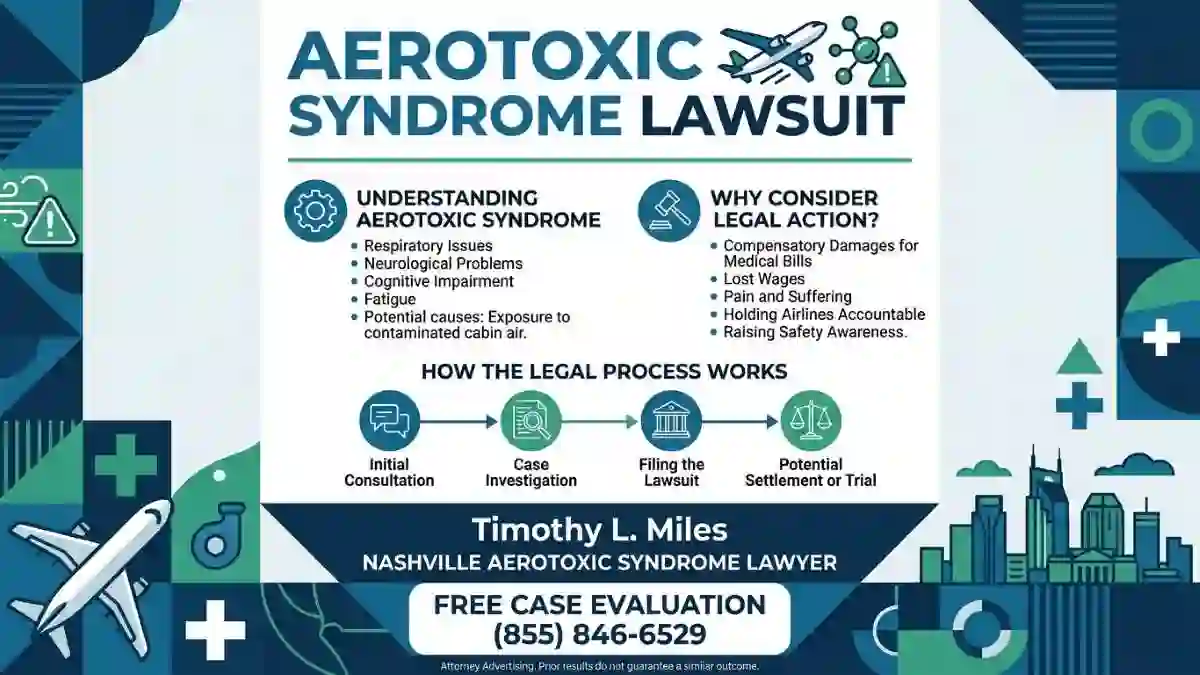
Aerotoxic syndrome is not a single lab value or a single diagnosis code. It is a symptom complex reported after exposure. The pattern may be acute, delayed, intermittent, or progressive.
Symptoms commonly reported include:
- Eye, nose, and throat irritation
- Tremor, tingling, numbness, and neuropathic pain
- Sleep disturbance, anxiety, mood changes
For flight crew, additional occupational consequences are common: grounded status, loss of medical certification, loss of flight hours, forced career change, and contested disability claims.
A Tennessee aerotoxic syndrome lawyer typically evaluates not only the symptom list but also the timeline and exposure context. This includes whether symptoms:
- Began during a particular flight segment (taxi, climb, cruise, descent)
- Improved after landing or after oxygen administration
- Recurred after subsequent flights on the same aircraft type or tail number
- Were shared by other crew members on the same flight
This timeline analysis is critical because it becomes the spine of the causation narrative.
Aerotoxic Syndrome Lawyer Tennessee: Who May Have a Viable Claim
Not every unpleasant odor on a flight creates a legally viable case. Viability depends on facts, documentation, jurisdiction, and provable damages. That said, aerotoxic exposure claims often arise among:
Flight attendants and pilots
Aircrew members have repeated exposure potential. They also have a professional obligation to report safety issues which can create documentation. At the same time they often face pressure to minimize reporting or to return to duty quickly which can undermine medical documentation.
In addition to these symptoms and challenges faced by aircrew members due to aerotoxic syndrome exposure claims could also arise from other conditions like Zepbound dry eye syndrome, especially when there are overlapping symptoms such as eye irritation.
Frequent business travelers
Consultants, sales professionals, executives, and other frequent flyers may have repeated exposures across routes and carriers. Their cases often hinge on medical proof, work impact, and travel records, rather than crew style incident reporting.
Mechanics and ground personnel (in certain scenarios)
Some exposure cases involve maintenance runs, APU operations, or confined areas where fumes concentrate. These claims may overlap with workplace safety frameworks.
Tennessee Toxic Cabin Air Attorney: Why Documentation Wins or Loses These Cases
Aerotoxic cases are evidence intensive. Airlines and manufacturers tend to defend aggressively, and insurers often exploit any ambiguity in medical causation. A proactive, structured documentation plan can change the trajectory of a claim.
Evidence that often matters in a toxic cabin air case
A Tennessee toxic cabin air attorney will typically seek to collect and preserve:
- Flight details: date, flight number, aircraft type, tail number (if available), route, seat assignment, and crew assignment
- Incident reports: pilot reports, cabin crew reports, internal safety reports, irregularity reports, maintenance log references
- Medical records: emergency visit notes, occupational health, neurology, pulmonology, neuropsychology, and primary care notes
- Objective testing where indicated: pulmonary function testing, neurocognitive testing, nerve conduction studies, imaging results, vestibular testing
- Witness evidence: statements from other crew members or passengers; reports of odor/haze; whether oxygen was deployed
- Employment records: schedule history, sick leave, loss of income, grounding documentation, fitness for duty determinations
- Disability insurance records: applications, denials, claim file, independent medical exams
Frequent flyers may find themselves exposed to toxic airplane fumes on multiple occasions. Such toxic fume exposure could lead to serious health issues which need to be documented meticulously. In some instances like aircraft toxic fumes leaking, it becomes crucial to gather as much evidence as possible to support the claim.
Moreover,toxic fumes in an airplane can also affect mechanics and ground personnel during maintenance runs or APU operations. Thus it’s essential for all parties involved to have a comprehensive understanding of their rights and the necessary steps to take when faced with such hazardous situations.
Why “I felt sick after the flight” is rarely enough
Symptoms are real, but litigation is proof driven. Defendants often argue alternative causes such as migraine, anxiety, viral illness, dehydration, altitude effects, or pre existing conditions. Without contemporaneous documentation, they may frame the exposure as speculative.
The objective is not to over document. The objective is to document correctly, early, and consistently.
Aerotoxic Syndrome Lawyer in Tennessee: Legal Theories That May Apply
The viable legal theory depends on the facts, the defendants, and the applicable law. Common frameworks may include:
Negligence and negligent maintenance
If an airline failed to maintain aircraft systems, failed to address known oil seal issues, or returned an aircraft to service without adequate remediation after repeated fume complaints, negligence may be alleged.
Product liability (in certain cases)
Claims involving defective design, defective components, or failure to warn may arise against manufacturers or component suppliers, depending on jurisdictional and federal preemption issues and the specific allegations.
Workers’ compensation and related employment claims
For Tennessee based workers, the first pathway may be workers’ compensation. For flight crew, additional complexities arise due to multi state employment footprints and airline specific employment structures. Coordination between a toxic exposure strategy and an occupational benefits strategy is often necessary.
Disability insurance disputes
Many aircrew members face a second battle: disability carriers disputing whether toxic exposure caused functional impairment. A coordinated approach can reduce inconsistent narratives between litigation and benefits claims.
Because aviation cases can be legally complex, a Tennessee aerotoxic syndrome lawyer typically evaluates venue, jurisdiction, and defendant identity before recommending a litigation posture.
Tennessee Aerotoxic Syndrome Attorney: The Causation Problem and How It Is Addressed
Causation is the predictable battlefield. Defendants frequently argue:
- No validated diagnostic criteria exist for aerotoxic syndrome
- Exposure levels are unknown or not quantified
- Symptoms are non-specific and can be caused by many conditions
- Alternative explanations are more likely
A well-built case does not rely on a single argument. It uses layered proof, including:
- Temporal relationship between exposure and onset
- Consistency across repeated events
- Differential diagnosis documented by treating clinicians
- Industrial hygiene principles regarding short duration peaks and mixtures, such as those outlined in OSHA’s guidelines
- Peer-reviewed literature used appropriately, without overstatement
- Functional impairment evidence tied to work and daily activities
A forward-thinking legal approach anticipates the defense strategy and builds the evidentiary record accordingly.
Toxic Cabin Air Lawyer Tennessee: Steps to Take After a Suspected Fume Event
If you suspect you were exposed to toxic cabin air, the early steps you take can affect both medical outcomes and legal outcomes.
- Seek medical evaluation promptly and describe the exposure context clearly. “I was on a flight” is less useful than “strong oil or chemical odor in cabin, haze reported, symptoms started during climb, persisted after landing.”
- Write down your timeline: when you first noticed odors, when symptoms began, what symptoms occurred (you can refer to this comprehensive list of symptoms associated with aerotoxic syndrome), and how long they lasted.
- Preserve flight documentation: boarding pass, itinerary, receipts, trip confirmations, and any airline communications.
- Report the incident through appropriate channels: airline complaint systems, workplace reporting systems for crew, and treating physician documentation.
- Avoid speculative conclusions in writing, particularly on public platforms. Focus on facts, observed conditions, and documented symptoms.
- Consult an aerotoxic syndrome lawyer in Tennessee early if symptoms persist, if you face work restrictions, or if you anticipate an insurance dispute.
These steps reflect a simple principle: repetition for emphasis. Document the exposure. Document the symptoms. Document the impact.
Understanding aerotoxic syndrome is crucial as it provides valuable insights into the health hazards associated with toxic cabin air exposure.
Aerotoxic Syndrome Attorney Tennessee: Damages That May Be Pursued
Potential damages in an aerotoxic syndrome lawsuit vary by case type and legal framework. Common categories include:
- Medical expenses and future medical care
- Lost wages and diminished earning capacity
- Loss of flight status, loss of certification, or forced career transition
- Pain and suffering (where applicable)
- Out of pocket expenses related to treatment, travel, and rehabilitation
- Disability benefits owed under private policies (in separate actions or disputes)
For aircrew, damages analysis is often technical because it may involve seniority systems, route bidding, premium pay, per diem structures, and long term career projections.Aerotoxic Syndrome Lawyer in Tennessee: Why These Cases Require Proactive Litigation Strategy
Toxic exposure cases are rarely won through moral outrage. They are won through credible proof, disciplined case theory, and consistent medical documentation.
A proactive aerotoxic syndrome litigation strategy typically includes:
- Early identification of all potential defendants
- Preservation letters and evidence requests before records are lost
- Medical expert selection aligned to the actual symptom profile
- Coordination between treating physicians and retained experts
- Structured damages development and vocational analysis where needed
- Anticipation of preemption, jurisdiction, and forum issues
Forward thinking matters here because delays benefit defendants. Documentation gaps widen. Witnesses move. Records age out. Insurers harden their positions.
If you believe you may be eligible for an aerotoxic syndrome lawsuit, it’s crucial to consult with an experienced attorney who practices such cases. An aerotoxic syndrome lawyer can guide you through the complex legal process and help secure the compensation you deserve.
Aerotoxic Syndrome Lawyer in Tennessee: How to Choose Counsel for a Toxic Cabin Air Case
This practice area sits at the intersection of toxic tort, aviation operations, and medical causation. When evaluating a Tennessee aerotoxic syndrome lawyer, look for capabilities that match the dispute you are likely to face:
- Experience with toxic exposure causation disputes
- Comfort working with medical experts and technical records
- Familiarity with complex defendants and insurer driven litigation
- A structured approach to documentation and damages
- Willingness to litigate when pre suit resolution is unrealistic
Robust corporate governance is often discussed in the context of financial integrity and regulatory compliance. In aviation safety, governance also matters because reporting systems, maintenance culture, and risk controls determine whether hazards are identified early or normalized over time. When governance is weak, risk compounds. When governance is strong, risk is mitigated. The law often becomes the instrument people turn to when internal controls fail.
Toxic Cabin Air Continues to Flow Unabated in 2026: The Practical Reality for Claimants
Many people assume that if a safety issue is real, it will be solved quickly. Aviation history shows otherwise. Some risks persist for years because the incentives are misaligned, the measurement is difficult, and accountability is dispersed.
In 2026, fume event concerns remain a live issue for crew and passengers. The most practical takeaway is therefore not theoretical. It is operational:
- If you were exposed, document it.
- If you are symptomatic, seek medical care.
- If you are facing job loss or a disability dispute, do not wait.
- If you need to evaluate legal options, speak with an aerotoxic syndrome lawyer in Tennessee who can assess facts, venue, and strategy.
Toxic cabin air claims are not simple. They are document driven, expert driven, and contested. With the right evidence and a disciplined approach, they can be investigated responsibly and pursued effectively.
Frequently Asked Questions about Toxic Cabin Air
What is aerotoxic syndrome and how does it relate to toxic cabin air exposure?
Aerotoxic syndrome refers to a set of acute and chronic symptoms reported after exposure to contaminated cabin air, particularly during ‘fume events’ in aircraft cabins. These events involve the introduction of toxic chemicals, such as organophosphates from engine oil or hydraulic fluid leaks, into the sealed cabin environment, posing health risks to aircrew members and frequent flyers.
What causes fume events in commercial aircraft cabins?
Fume events are primarily caused by contamination of the cabin air supply due to leaks or failures in bleed air systems. Bleed air, which is compressed air taken from jet engines for ventilation and pressurization, can become contaminated with engine oil pyrolysis products, hydraulic fluid aerosols, volatile organic compounds (VOCs), ultrafine particles (UFPs), and neurotoxic organophosphate compounds when mechanical malfunctions or maintenance issues occur.
What symptoms are commonly associated with aerotoxic syndrome after exposure to toxic airplane fumes?
Common symptoms include headache, dizziness, nausea, disorientation, eye/nose/throat irritation, cough, shortness of breath, chest tightness, tremors, neuropathic pain, cognitive dysfunction like memory impairment and brain fog, sleep disturbances, anxiety, mood changes, fatigue, exercise intolerance, and prolonged recovery times after flights.
Why do disputes about aerotoxic syndrome claims persist despite acknowledgment of fume events?
While many stakeholders agree that fume events occur, disputes center on the health impact, dose levels of contaminants, and causation. Defendants often argue that contaminant levels are too low or transient to cause long-term injury. Claimants counter with medical records, symptom patterns linked to flights, occupational evidence, peer-reviewed studies on health impacts of fume events, and industrial hygiene principles explaining harm from complex chemical mixtures even at short high concentration peaks.
How can a Tennessee aerotoxic syndrome lawyer assist individuals affected by toxic cabin air exposure?
A Tennessee aerotoxic syndrome lawyer can help by evaluating symptom patterns and medical evidence related to toxic cabin air exposure claims. They provide proactive legal strategies essential for addressing disputes over causation with corporate defendants and insurers. Early case development is critical for effectively framing claims and securing occupational or financial compensation for affected flight crew or passengers.
Where can I find more information about regulations and safety protocols related to bleed air systems and fume events?
The Federal Aviation Administration (FAA) provides detailed documents on cabin safety regulations concerning bleed air systems and fume events. For instance, the FAA’s section 326 report offers insights into safety standards and protocols designed to mitigate risks associated with toxic cabin air exposure in commercial aircraft.
Can a single fume event cause long term symptoms?
Some individuals report prolonged effects after a single high intensity event, while others report cumulative effects after repeated lower intensity exposures. Legally, what matters is whether your medical evidence supports causation and whether damages are provable.
What if the airline says there was “no issue found”?
That statement does not necessarily resolve the question. Maintenance findings, operational logs, and reporting thresholds vary. A lawyer may attempt to obtain incident reports, maintenance history, and other records that are not provided to passengers routinely.
