
Introduction to Hair Dye and Cancer Risks: What Salon Professionals Need to Know
Welcome to this authoritative analysis on hair dye and cander risks. Hair color services sit at the center of modern salon economics. They also sit at the intersection of occupational health, consumer safety, and evolving science. Clients increasingly ask direct questions about cancer risk, pregnancy safety, “clean color,” and ingredient lists. Stylists and colorists, in turn, want clear guidance that is accurate, current, and practical.
This article synthesizes what salon professionals need to know as of April 2026: what research does and does not show, where the real occupational exposures occur, which ingredients drive most concern, and how to implement robust risk controls without sacrificing service quality. For example, adopting the principles outlined in the hierarchy of controls can significantly reduce occupational hazards.
If you had frequent exposure to hair dye products, and were diagnosed with cancer, contact Hair Dye Lawsuit LawyerTimothy L. Miles yoday for a free case evaluation to see if you are eligible for a hair dye lawsuit and potentionally entitled to substantial compensation. . (855) 846-6529 or [email protected]

The question clients are really asking
When a client asks, “Does hair dye cause cancer?” they usually mean one of four things:
- Personal use risk: “If I color my hair, am I increasing my risk?”
- Occupational risk: “If you color hair every day, are you being harmed?”
- Ingredient-specific concerns: “What about ammonia, PPD, resorcinol, or ‘coal tar dyes’?”
- Vulnerable situations: Pregnancy, breastfeeding, immunosuppression, eczema, asthma, prior cancer, or family history.
A professional answer separates hazard from risk.
- Hazard is the inherent ability of something to cause harm under some conditions.
- Risk is the probability of harm at the exposure levels and routes that actually occur in real life.
Hair color products contain chemicals with legitimate hazards, including skin sensitizers and irritants. Cancer risk, however, depends heavily on formulation, frequency, exposure route, ventilation, gloves, and how long and how often those substances contact the body.
What the research says in plain language (as of April 2026)
1) For clients who color their hair at home or in a salon
Across decades of epidemiology, most studies do not show a large, consistent increase in overall cancer risk from personal hair dye use. Where associations appear, they tend to be:
- Small in magnitude, sometimes limited to specific cancers.
- Inconsistent across studies, with results varying by population, era, and product type.
- Hard to separate from confounders, such as smoking history, alcohol use, occupational exposures, hormonal factors, and genetic susceptibility.
That does not mean “zero risk.” It means the evidence does not support broad claims that modern hair coloring is a major cancer driver.
However, it’s important to note that certain situations or conditions may elevate these risks. For example, people with specific health issues like those using Dupixent, may have different considerations regarding the use of hair dye and its potential risks.
2) For salon professionals with long-term, high-frequency exposure
Occupational studies are more complex. Hairdressers may experience:
- Repeated dermal exposure (hands, wrists, forearms).
- Inhalation exposure from mixing, application, blow-drying, and product off-gassing.
- Co-exposures from other services (straighteners, keratin smoothing, disinfectants, aerosols).
Some research suggests elevated risk for certain cancers in some groups of hair professionals, particularly in older cohorts trained decades ago when formulations and controls were different. Modern exposure controls, glove use, and ventilation can materially change risk profiles.
If you had frequent exposure to hair dye products, and were diagnosed with cancer, contact Hair Dye Lawsuit Lawyer Timothy L. Miles yoday for a free case evaluation to see if you are eligible for a hair dye lawsuit and potentionally entitled to substantial compensation. . (855) 846-6529 or [email protected]
Key operational implication: Even when client risk appears low,occupational risk management still matters, because frequency and cumulative exposure are higher for professionals.
3) Product “era” matters more than most headlines admit
One reason the literature is messy is that “hair dye” is not one thing. Formulations have evolved substantially over time. Studies that include exposure from the 1970s, 1980s, or early 1990s often reflect different chemistry and different workplace practices than a well-run salon in 2026.
A forward-looking salon treats safety as a moving target, and updates procedures as products and science change.
The chemistry basics: what is in hair dye that raises concern?
Oxidative (permanent) color
Permanent dye systems typically involve:
- Dye precursors (aromatic amines) that develop color through oxidation.
- Couplers that influence tone and stability.
- Oxidizing agents (commonly hydrogen peroxide).
- Alkalizing agents (ammonia or alternatives like MEA).
- Stabilizers, solvents, surfactants, fragrance, and chelators.
Some dye intermediates can be biologically reactive. From a safety standpoint, the most immediate and common health issue is allergic contact dermatitis, not cancer. Cancer concerns tend to focus on repeated exposure to certain aromatic amines and related compounds, particularly historical ones and trace contaminants.
Semi-permanent and demi-permanent color
These often use:
- Lower or no peroxide (varies by system).
- Different dye molecules with different penetration profiles.
- Typically lower alkalinity for demi-permanent.
They may reduce certain exposures, but they are not “chemical-free.” They still can contain sensitizers and irritants.
Bleach and lighteners
Lighteners commonly contain:
- Persulfates (ammonium, potassium, sodium persulfate).
- Alkalizing agents.
- Peroxide (developer).
The dominant occupational issue here is respiratory irritation and occupational asthma related to persulfate dusts and aerosols, not cancer risk. If you want to protect your team, controlling persulfate exposure is high impact.
If you had frequent exposure to hair dye products, and were diagnosed with cancer, contact Hair Dye Lawsuit LawyerTimothy L. Miles yoday for a free case evaluation to see if you are eligible for a hair dye lawsuit and potentionally entitled to substantial compensation. . (855) 846-6529 or [email protected]
Ingredient spotlight: what clients ask about most
“Ammonia”
Ammonia is a strong irritant. It can trigger eye, nose, and throat irritation, and it can worsen symptoms for individuals with reactive airway disease. It is not typically the central driver of cancer risk discussions. The more relevant operational point is ventilation and mixing techniqueto reduce inhalation peaks.
PPD (p-phenylenediamine) and related dye intermediates
PPD is a well-known skin sensitizer and a frequent cause of allergic contact dermatitis. For salons, the practical implications are:
- Patch testing protocols when indicated.
- Strict glove use.
- Avoiding skin staining on clients by using barrier methods properly.
- Clear documentation if a client reports prior dye allergy.
When clients ask if PPD is “carcinogenic,” the most responsible answer is that the primary established concern is allergy, and cancer evidence in typical consumer use remains mixed and not definitive. For professionals, repeated exposure strengthens the case for robust controls.
Resorcinol
Resorcinol can be an irritant and is sometimes discussed in endocrine-related narratives online. In professional settings, treat it as a chemical that warrants minimizing skin contact and preventing unnecessary inhalation exposure.
“Coal tar dyes”
This term appears in older labeling language and consumer advocacy content. In modern salon reality, what matters is the specific ingredient list and regulatory compliance in your jurisdiction. Use it as a prompt to discuss transparency rather than debating outdated terminology.
If you had frequent exposure to hair dye products, and were diagnosed with cancer, contact Hair Dye Lawsuit Lawyer Timothy L. Miles yoday for a free case evaluation to see if you are eligible for a hair dye lawsuit and potentionally entitled to substantial compensation. . (855) 846-6529 or [email protected]
Formaldehyde (keratin treatments, smoothing systems)
Although not “hair dye,” clients and staff often lump chemical services together. Formaldehyde and formaldehyde-releasing ingredients are associated with serious respiratory risks and are a frequent occupational enforcement focus in some regions.
If your salon performs smoothing services, you need a separate, stringent control program: verified product selection, ventilation, exposure reduction, and staff training. This is often a higher priority than dye discussions.
What regulators and major health bodies generally emphasize
Even where agencies differ in phrasing, most converge on a few themes:
- Evidence for strong consumer cancer risk from hair dye is not conclusive.
- Hairdressers may have higher occupational exposureand should use protective measures.
- Safety depends on product selection, training, ventilation, glove use, and hygiene.
- Allergy risk (especially to PPD and related chemicals) is real and common.
For salon leaders, the strategic takeaway is simple: You do not need perfect certainty to implement better controls. Corporate governance principles apply here. Identify foreseeable hazards, document controls, train staff, monitor compliance, and continuously improve.
The real exposure pathways in salons (and how to reduce them)
1) Dermal exposure (hands and wrists)
This is usually the biggest controllable exposure.
Controls that work:
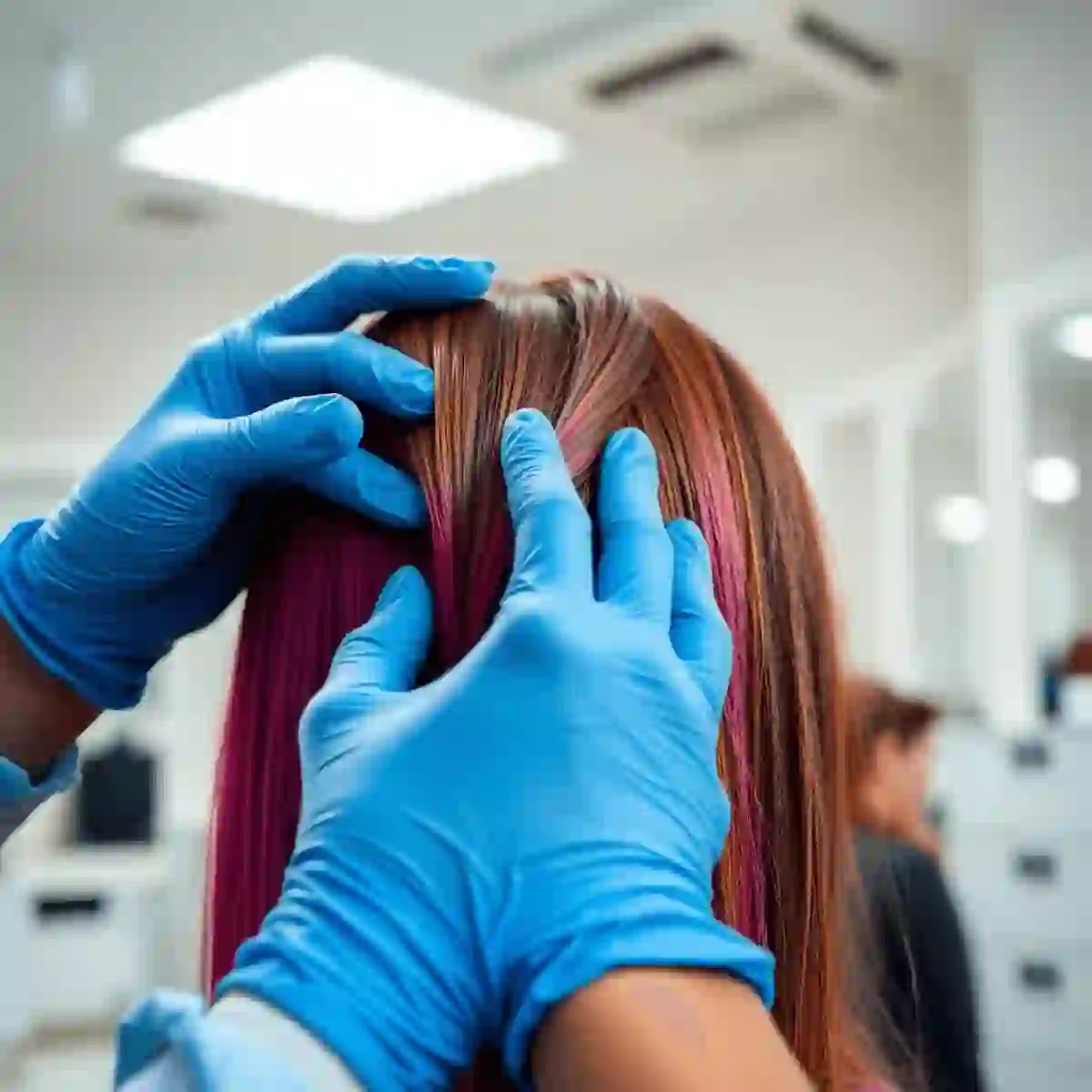
- Use nitrile gloves (appropriate thickness, chemical resistance) for mixing, application, emulsifying, and rinsing.
- Change gloves between clients and when contaminated.
- Use extended-cuff gloves or sleeves to protect wrists and forearms.
- Implement a “no bare-hand emulsify” rule, and audit it.
Why it matters: Dermal exposure drives both acute dermatitis and cumulative sensitization. Once sensitized, a professional may be forced to limit services or exit the occupation.
2) Inhalation exposure (mixing, application, and blow-drying)
Fumes and aerosols spike at predictable moments: mixing powders, opening persulfates, applying sprays, and heat-styling treated hair.
Controls that work:
- Ensure general ventilation meets local guidelines. If you cannot quantify air changes, focus on measurable proxies: outdoor air intake, HVAC maintenance, and CO₂ monitoring as a ventilation adequacy indicator.
- Add local source capture where feasible at color bars or mixing stations.
- Prefer low-dust product formats when performance allows.
- Mix powders gently, keep containers closed, and avoid shaking.
Operational standard: If your staff can smell product strongly across the salon, your exposure control is not performing.
3) Secondary exposure from contaminated surfaces
Color bars, tools, capes, and bowls can become reservoirs.
Controls that work:
- Standardize cleaning procedures with clearly labeled spray bottles and contact times.
- Separate food and drink areas from chemical stations.
- Use dedicated storage for chemicals and oxidizers.
- Implement spill response routines.
4) Client skin exposure (scalp and hairline)
Client comfort and liability intersect here.
Controls that work:
- Avoid unnecessary scalp contact when the service does not require it.
- Use barrier creams appropriately, but do not treat them as a substitute for safe formulation and technique.
- Follow manufacturer instructions precisely, including timing and mixing ratios.
If you had frequent exposure to hair dye products, and were diagnosed with cancer, contact Hair Dye Lawsuit Lawyer Timothy L. Miles yoday for a free case evaluation to see if you are eligible for a hair dye lawsuit and potentionally entitled to substantial compensation. . (855) 846-6529 or [email protected]
Patch testing, allergy screening, and documentation
A practical governance approach treats patch testing and allergy screening as part of client safety, staff protection, and reputational risk management.
When to consider patch testing
- Client reports previous reaction to hair dye, temporary black henna tattoos, or chronic dermatitis.
- Client has eczema, asthma, or multiple allergies.
- Switching to a new brand or a new shade family with different intermediates.
Document what you do
- Record the product used, date/time, application site, and client’s reported outcome.
- Store signed consultation forms securely.
- Train staff to avoid overpromising. You are reducing risk, not guaranteeing outcomes.
Pregnancy and breastfeeding: how to answer responsibly
Clients often want binary reassurance. The ethical response is structured and calm:
- Explain that systemic absorption from properly applied hair dye is generally considered low, particularly when exposure is limited and the scalp is intact.
- Suggest practical risk-reduction options: highlights/balayage that avoid scalp contact, spacing services, ensuring strong ventilation, and scheduling after the first trimester if the client prefers a more conservative approach.
- Encourage consultation with the client’s clinician for individualized guidance, especially with high-risk pregnancies or medical complexity.
For staff who are pregnant, apply the same logic but add the occupational frequency factor. Consider temporary duty adjustments if requested, especially away from high-fume services and persulfate-heavy work.
“Clean color” marketing: how to evaluate products without guesswork
“Ammonia-free,” “PPD-free,” “natural,” “botanical,” and “non-toxic” are marketing phrases, not a risk assessment.
A defensible evaluation process uses three checkpoints:
- Full ingredient disclosure and Safety Data Sheets (SDS): If a supplier cannot provide them promptly, that is a governance red flag.
- Hazard profile: Identify sensitizers, respiratory irritants, and any known hazardous impurities.
- Exposure controls required: Ask what PPE and ventilation the manufacturer recommends. If their best practice is not feasible in your space, reconsider the product.
Governance principle: Choose products your team can use safely and consistently, not products that look safest on social media.
If you had frequent exposure to hair dye products, and were diagnosed with cancer, contact Hair Dye Lawsuit LawyerTimothy L. Miles yoday for a free case evaluation to see if you are eligible for a hair dye lawsuit and potentionally entitled to substantial compensation. . (855) 846-6529 or [email protected]
A practical salon risk-control program (that clients will trust)
A credible program is simple, repeatable, and documented.
1) Written chemical safety standard
Include:
- Approved products list and where SDS are stored.
- Required PPE by service type.
- Mixing and disposal procedures.
- Ventilation expectations.
- Incident response: spills, splashes, reactions, and exposures.
2) Training and competency
- Onboarding training for all new hires.
- Annual refreshers.
- Observed competency checks, not just verbal reminders.
If you had frequent exposure to hair dye products, and were diagnosed with cancer, contact Hair Dye Lawsuit Lawyer Timothy L. Miles yoday for a free case evaluation to see if you are eligible for a hair dye lawsuit and potentionally entitled to substantial compensation. . (855) 846-6529 or [email protected]
3) PPE that is actually wearable
If gloves tear, fit poorly, or feel like a punishment, compliance will fail. Standardize glove sizing, stock quality nitrile, and place glove boxes at every station.4) Ventilation upgrades with measurable outcomesMaintain HVAC and replace filters on schedule.
- Use portable air cleaners where appropriate, but do not treat them as a substitute for outdoor air exchange.
- If you can, measure CO₂ during peak hours and set internal targets for improvement.

5) Hand care program to prevent dermatitis
- Mild cleansers.
- Barrier creams before services where appropriate.
- Moisturizers after handwashing and at end of shift.
- Policies that discourage working through active dermatitis without evaluation.
Dermatitis is not just discomfort. It is an early warning signal of exposure management failure.
If you had frequent exposure to hair dye products, and were diagnosed with cancer, contact Hair Dye Lawsuit LawyerTimothy L. Miles yoday for a free case evaluation to see if you are eligible for a hair dye lawsuit and potentionally entitled to substantial compensation. . (855) 846-6529 or [email protected]
Client communication: a script that protects trust and avoids absolutes
When asked about cancer risk, a strong response is factual, balanced, and proactive:
“The research on personal hair coloring has not shown a large, consistent increase in cancer risk, but like many cosmetic chemicals, hair color can cause irritation or allergy in some people. In a professional salon, we reduce exposure by using gloves, following manufacturer instructions, and maintaining ventilation. If you have a history of reactions or specific medical concerns, we can review ingredients and consider a patch test or a technique that minimizes scalp contact.”
This approach accomplishes three things:
- It avoids false certainty.
- It acknowledges legitimate concerns.
- It demonstrates governance through process.
Common pitfalls that increase risk unnecessarily
- Bare-hand emulsifying or rinsing color “just for a minute.”
- Mixing powders aggressively, creating airborne dust.
- Poor ventilation during peak services, especially in small rooms.
- Inconsistent glove changes, leading to contamination transfer.
- Treating “ammonia-free” as “risk-free.”
- Ignoring early dermatitis until it becomes chronic.
Operational integrity is built in small behaviors repeated daily.
If you had frequent exposure to hair dye products, and were diagnosed with cancer, contact Hair Dye Lawsuit LawyerTimothy L. Miles yoday for a free case evaluation to see if you are eligible for a hair dye lawsuit and potentionally entitled to substantial compensation. . (855) 846-6529 or [email protected]
The forward-looking perspective: why this matters for salon success
Cancer-risk headlines come and go, but the market trend is stable: clients want transparency, and professionals want sustainable careers. A salon that treats chemical safety as part of its core governance model will outperform in three ways:
- Reduced staff turnover by preventing dermatitis and respiratory complaints.
- Higher client trustthrough competent, consistent communication.
- Lower operational risk through documentation, training, and compliance readiness.
Proactive measures are not merely defensive. They are strategic. They protect people, protect the brand, and protect revenue.
Quick checklist (printable for your back office)
- SDS available for every color line and lightener.
- Nitrile gloves at every station, correct sizes stocked.
- No bare-hand mixing, application, emulsifying, or rinsing.
- Low-dust practices for persulfates and powders.
- Ventilation plan: HVAC maintenance + outdoor air + local controls where possible.
- Patch test protocol for clients with risk indicators.
- Documented training at onboarding and annually.
- Hand care program and early reporting of dermatitis.
- Clear client script that avoids absolutes and emphasizes controls.
Conclusion
As of April 2026, the strongest professional position is neither alarmism nor dismissal. It is governance. The evidence for large consumer cancer risk from hair dye remains inconclusive and generally does not show major increases, while occupational exposure in salons warrants disciplined control because frequency and cumulative contact are higher.
Salon professionals do not need to wait for perfect scientific consensus to act. You can reduce exposure now through gloves, ventilation, low-dust techniques, hygiene, patch testing where appropriate, and clear documentation. Repetition for emphasis is intentional here: controls reduce exposure, exposure reduction reduces risk, and risk reduction builds trust.
If you had frequent exposure to hair dye products, and were diagnosed with cancer, contact Hair Dye Lawsuit LawyerTimothy L. Miles yoday for a free case evaluation to see if you are eligible for a hair dye lawsuit and potentionally entitled to substantial compensation. . (855) 846-6529 or [email protected]
Frequently Asked Questions about Hair Dye and Cancer Risks
Does hair dye cause cancer for personal use?
Most studies do not show a large, consistent increase in overall cancer risk from personal hair dye use. While some associations with specific cancers have appeared, they are generally small, inconsistent, and influenced by confounding factors like smoking and genetics. Therefore, modern hair coloring is not considered a major cancer driver for personal users.
Are salon professionals at higher risk of cancer due to frequent exposure to hair color chemicals?
Occupational studies suggest that hairdressers with long-term, high-frequency exposure may have elevated risks for certain cancers, especially older cohorts trained when formulations and safety controls were less advanced. However, modern risk management practices such as glove use and proper ventilation significantly reduce these occupational hazards.
What ingredients in hair dyes raise the most health concerns?
Ingredients like ammonia, para-phenylenediamine (PPD), resorcinol, and coal tar dyes are known hazards due to their skin sensitizing and irritant properties. These substances require careful handling and exposure controls to minimize risks during application.
Is it safe to use hair dye during pregnancy or breastfeeding?
Pregnancy, breastfeeding, immunosuppression, eczema, asthma, prior cancer history, or family cancer history are vulnerable situations where clients should exercise caution. While research does not conclusively show high risk, consulting qualified clinicians for personalized medical advice is recommended before using hair dye under these conditions.
How can salons reduce occupational exposure risks from hair color services?
Salons can adopt the hierarchy of controls by implementing measures such as wearing nitrile gloves and protective aprons, ensuring adequate ventilation with open windows or air purifiers near color bars, performing patch tests to identify sensitivities, and following updated safety protocols. These steps help maintain service quality while minimizing occupational hazards.
What should clients ask their stylists about hair color safety?
Clients increasingly inquire about cancer risk, ingredient transparency, ‘clean color’ options, and safety during pregnancy or other vulnerable conditions. Stylists should provide clear, current information separating hazard from real-life risk levels and encourage clients with personal medical concerns to consult healthcare professionals for tailored advice.