
Introduction to the Criteria for a Silicosis Lawsuit
If you exposed to silica dust and looking to se if you meet the criteria for a Silicosis Lawsuit you have arrived at your destination. Silicosis is not a routine respiratory condition. It is a progressive, often irreversible occupational lung disease caused by inhaling respirable crystalline silica. For many workers, the diagnosis arrives after years of being exposed to silica dust, years of symptoms, and years of missed opportunities to prevent harm. That reality matters because silicosis is frequently linked to preventable failures in workplace safety, product warnings, and exposure controls.
A silicosis lawsuit is not about “catching a break” after a difficult diagnosis. It is about accountability. It is about whether an employer, contractor, manufacturer, or premises owner failed to follow established safety standards, failed to warn, failed to monitor, or failed to protect people who were doing their jobs.
If you are asking whether you meet the criteria for a silicosis lawsuit, the core issue is this: can you connect a medically supported silicosis injury to silica exposure that occurred because another party breached a legal duty of care? This article explains, in practical terms, what that means.
If you were exposed to silica dust and subsequently diagnosed with silicosis, contact Silicosis Lawyer Timothy L. Miles to day for a free case evaluation as you meet the criteria for a Silicosis Lawsuit and possibly may be entitled to substantial compensation. (855) 846–6529 or [email protected].
What Silicosis Is (Legally and Medically)
Silicosis is a form of pneumoconiosis caused by inhalation of respirable crystalline silica particles, typically generated when materials such as stone, sand, concrete, brick, engineered stone, or grout are cut, ground, drilled, or polished. These particles are small enough to reach deep into the lungs, where they trigger inflammation and scarring (fibrosis).
Clinically, silicosis is often categorized as:
- Chronic silicosis, typically after long-term exposure (often 10+ years).
- Accelerated silicosis, after higher exposures over a shorter period (often 5 to 10 years).
- Acute silicosis, after very high exposures over months or a few years.
From a legal standpoint, the specific type can matter because it can support conclusions about intensity of exposure, adequacy of controls, and foreseeability of harm. In other words, the medical classification can help tell the liability story.
In pursuing a silicosis lawsuit, it’s essential to understand the potential compensation you might be entitled to if successful.
The Basic Legal Elements of a Silicosis Lawsuit
While details differ by jurisdiction, most silicosis claims require evidence aligned with these elements:
- Exposure: You were exposed to respirable crystalline silica from specific work, products, or environments.
- Injury: You have a diagnosable injury (silicosis or a related silica-induced condition).
- Causation: The exposure was a substantial contributing factor to the injury.
- Duty and breach: A responsible party owed a duty to reduce or warn about risk and failed to do so.
- Damages: You suffered compensable losses, such as medical costs, lost income, pain and suffering, disability, or reduced life expectancy.
Meeting the “criteria” usually means you can support these elements with documentation and credible testimony. You do not need to have every document in hand before speaking to a silicosis lawyer, but you should understand what will be evaluated.
Step One: Do You Have a Silicosis Diagnosis or Strong Medical Evidence?
A silicosis lawsuit typically starts with medical proof. A confirmed diagnosis is ideal, but many cases begin with suspicious imaging and occupational history that later becomes definitive. If you’re diagnosed with silicosis, you may have stronger grounds for your claim.
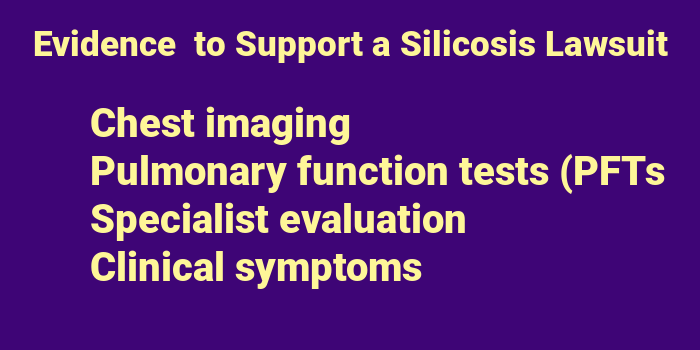
Evidence that often supports a silicosis claim includes:
- Chest imaging, including X-rays or high-resolution CT scans showing findings consistent with silicosis.
- Pulmonary function tests (PFTs) demonstrating impaired lung capacity.
- Specialist evaluation, often from a pulmonologist or occupational medicine physician.
- Clinical symptoms such as shortness of breath, chronic cough, wheezing, chest tightness, fatigue, and reduced exercise tolerance.
Silica exposure is also associated with other serious outcomes, including progressive massive fibrosis (PMF) in severe silicosis, and increased risk of tuberculosis and other complications. Some workers present with mixed dust diseases or overlapping diagnoses, which does not automatically disqualify a claim. It typically shifts the focus to causation evidence.
Practical point: If you have respiratory symptoms and a history of silica exposure but no formal silicosis diagnosis, you may still be on a pathway where early legal and medical guidance is important. Early documentation reduces disputes later.
It’s worth noting that certain conditions like Aerotoxic Syndrome can arise from similar exposures in aviation environments. If you’re experiencing symptoms consistent with this syndrome due to workplace conditions, consider seeking legal advice for potential claims related to Aerotoxic Syndrome.
Additionally, if you’ve been prescribed medications like Trulicity which resulted in adverse effects such as vision loss, there are avenues for pursuing legal action as seen in Trulicity vision loss lawsuits.
Step Two: Can You Identify Plausible Sources of Silica Exposure?
A Silicosis lawsuit is exposure-driven. The clearer the exposure history, the stronger the case. Many people assume they must know the exact silica concentration they inhaled. In practice, your attorney can often reconstruct exposure using work history, job tasks, site practices, industrial hygiene data, and witness testimony.
Common silica exposure settings include:
Construction and Demolition
- Cutting, grinding, drilling, or jackhammering concrete or masonry
- Tuckpointing and mortar removal
- Sandblasting
- Roadwork, excavation, and site prep that aerosolizes silica-containing dust
Stone Fabrication and Countertop Work (Including Engineered Stone)
- Cutting and polishing engineered stone, quartz slabs, and natural stone
- Dry cutting or inadequate wet methods
- Insufficient ventilation or dust capture
Mining, Quarrying, and Aggregates
- Drilling, crushing, screening, and hauling silica-containing rock
- Poorly controlled dust in enclosed cabs or processing areas
Foundries and Manufacturing
- Use of silica sand in molds
- Refractory work and furnace maintenance
- Material handling that produces fine dust
Oil and Gas (Including Frac Sand)
- Handling and transfer of sand
- Dust exposure during loading, conveyance, and blending
Concrete Products, Brick, Tile, and Ceramics
- Mixing, cutting, grinding, and finishing
- Cleanup practices that re-aerosolize settled dust
If your work involved visible dust clouds, dry cutting, compressed air cleanup, sweeping without HEPA systems, or inconsistent respirator use, those details can be significant. They help show how exposure likely occurred and whether controls were missing or inadequate.
In certain situations where the exposure to silica has led to severe health issues such as blindness or other serious conditions like those associated with prolonged use of medications such as Depo-Provera which could potentially lead to further complications like those discussed in this lawsuit, it’s crucial to document every detail of your exposure history meticulously.
Furthermore, it’s important to understand that prolonged exposure to silica can lead to serious health issues beyond silicosis. Research indicates that such exposure may also contribute to other severe conditions including blindness, underscoring the need for diligent record-keeping regarding your exposure history.
If you were exposed to silica dust and subsequently diagnosed with silicosis, contact Silicosis Lawyer Timothy L. Miles to day for a free case evaluation as you meet the criteria for a Silicosis Lawsuit and possibly may be entitled to substantial compensation. (855) 846–6529 or [email protected].
Step Three: Was There a Failure to Warn, Protect, or Control Exposure?
Silica hazards are not new. Legal responsibility often turns on whether the risk was known or should have been known, and whether reasonable steps were taken to prevent injury.
Failures that frequently appear in silicosis litigation include:
- No wet cutting methods where wet methods were feasible and expected.
- No local exhaust ventilation, dust collection, or effective engineering controls.
- Inadequate respiratory protection, such as wrong respirator type, poor fit testing, or no training.
- Lack of exposure monitoring, air sampling, or hazard assessments.
- No medical surveillance, including failure to provide required respiratory evaluations.
- Inadequate training on silica hazards and safe handling.
- Improper cleanup methods, such as dry sweeping or compressed air.
- Missing or insufficient product warnings, SDS issues, or misleading safety messaging.
- Production pressure that incentivized unsafe practices, such as speed over dust control.
A strong claim often shows repetition and predictability. Repetition because the exposure occurred over months or years. Predictability because silica risk is well-established in the relevant industries. When hazards are well-known and controls are standard, the argument for negligence becomes more direct.
Step Four: Who Might Be Legally Responsible?
A Silicosis lawsuit can involve multiple defendants. Responsibility depends on where and how exposure occurred.
Potentially responsible parties may include:
Employers (in some legal pathways)
In many states, workplace injury claims are routed through workers’ compensation, which can limit lawsuits against the direct employer. However, this does not end the inquiry. Third-party cases remain common, and exceptions may apply in certain circumstances depending on the jurisdiction and facts.
Contractors and Subcontractors
On multi-employer worksites, liability can extend to contractors who controlled the work area, set safety policies, provided equipment, or supervised dust-producing tasks.
Premises Owners
A property owner or operator may have responsibilities related to site safety, hazards, and coordination, particularly if they retained control over the work or knew about dangerous conditions.
Product Manufacturers and Suppliers
Some cases involve defective design, failure to warn, or inadequate instructions related to tools, equipment, or silica-containing materials. This is common in scenarios where products were marketed or used in ways that predictably generated respirable silica without adequate warnings and control guidance.
Equipment and Tool Providers
If dust control systems were absent, inadequate, or marketed with performance claims that did not match real-world use, that can become part of a product liability analysis.
A credible legal review will map your job tasks to the parties with real control over the hazard. Control is a recurring theme in liability. Control over the work. Control over the equipment. Control over the warnings. Control over the safety program.
Step Five: Do You Have Compensable Damages?
Damages are the measurable consequences of the injury. Silicosis can create both immediate and long-term losses, and many of the most serious impacts develop over time.
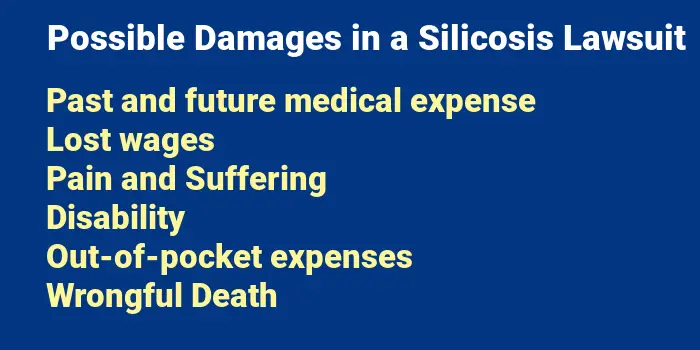
Damages commonly claimed include:
- Past and future medical expenses, including pulmonology care, imaging, medications, oxygen therapy, rehabilitation, and potential transplant evaluation in severe cases
- Lost wages and reduced earning capacitySilicosis Lawsuit
- Disability and reduced ability to perform physical tasks
- Pain and suffering, including breathlessness, fatigue, anxiety, and loss of normal life activities
- Out-of-pocket expenses, travel for treatment, home modifications, assistive devices
- In some cases, wrongful death damages for surviving family members if the disease proves fatal
Forward-looking documentation matters. Silicosis is often progressive. The claim is not limited to what you have already paid. It also considers what the disease is reasonably expected to cost you in the future.
Additionally, it’s important to note that certain medications like Saxenda have been linked to severe side effects such as vision loss. If you or a loved one has experienced such adverse effects after using Saxenda for weight management purposes, you might want to explore this update on Saxenda vision loss lawsuits for more information on your potential legal options.
In a similar vein, if you’re seeking further insights into other ongoing lawsuits related to Saxenda’s side effects such as another case concerning vision loss, or issues related to its usage, these updates could provide valuable information regarding your situation.
What If You Were a Smoker or Have Another Lung Condition?
This is a common concern, and it is also a common defense strategy. Smoking history, asthma, COPD, or other respiratory conditions do not automatically defeat a silicosis case.
The legal question is typically whether silica exposure was a substantial contributing factor to your lung injury or disability. Medical experts can differentiate patterns consistent with occupational lung disease. Imaging findings, exposure history, and disease progression can support causation even when other factors exist.
What matters is evidence, not assumptions. Evidence of exposure. Evidence of injury. Evidence that the injury aligns with silica-related disease mechanisms.
What If You Wore a Respirator?
Using a respirator does not automatically eliminate liability. The follow-up questions matter:
- Was the respirator appropriate for silica exposure?
- Was it fit-tested and properly maintained?
- Were filters changed on schedule?
- Was use enforced consistently?
- Were engineering controls used, or was the respirator treated as the only control?
In occupational hygiene, respirators are often considered a critical protective measure, but they are not a substitute for feasible engineering controls. If the safety program was incomplete, inconsistent, or poorly implemented, respirator use may not prevent a claim.
Timing Matters: Statutes of Limitation and Discovery Rules
Silicosis has a long latency period. Many people are exposed for years before they understand what is happening. The law addresses this through rules that often tie filing deadlines to when you knew or reasonably should have known that:
- You had an injury, and
- The injury was linked to occupational exposure.
This is commonly called a discovery rule, though the details vary. The key risk is delay. If you wait too long after diagnosis or after being told your condition may be work-related, you may lose the right to file.
Because deadlines are jurisdiction-specific and fact-specific, it is generally prudent to obtain a legal review soon after diagnosis or after a doctor raises occupational causation.
The Evidence That Usually Strengthens a Silicosis Lawsuit
You do not need a perfect file to start, but certain records consistently improve outcomes:
- A detailed work history (employers, job titles, locations, dates)
- Description of tasks that generated dust (cutting, grinding, drilling, polishing)
- Names of materials used (engineered stone, quartz, concrete, masonry products)
- Names of tools and whether they had dust capture or water feed
- Training records, safety meetings, respirator fit-test records
- Medical records including imaging reports and physician notes
- Coworker statements or witness contacts
- Photos of job sites, tools, dust conditions, PPE, or work processes (if available)
- Any documentation of complaints, incident reports, or OSHA-related activity
Even basic details matter. A timeline of where you worked and what you did can be enough to begin a serious exposure investigation.
A Simple Checklist: Do You Likely Meet the Criteria?
You may have a viable silicosis lawsuit if most of the following apply:
- You have been diagnosed with silicosis, suspected silicosis, or another silica-related lung condition supported by imaging and clinical evaluation.
- You worked in a job or industry with credible respirable silica exposure, particularly involving cutting, grinding, drilling, blasting, or polishing silica-containing materials.
- Dust controls were absent, inconsistent, or clearly inadequate (for example, dry cutting, no ventilation, poor cleanup practices).
- You were not adequately warned or trained about silica hazards, or safety policies existed on paper but were not enforced in practice.
- You have meaningful damages such as medical treatment for your silicosis or other related conditions like aerotoxic syndrome, work limitations due to health issues from medications like Mounjaro which have been linked to vision loss, lost income from prolonged illness or ongoing respiratory impairment.
- Your claim is still within the relevant filing deadline based on diagnosis and discovery timing.
If you are uncertain about any of these points, that does not mean you do not qualify. It usually means you need a structured intake process to gather records and clarify exposure. It’s also important to note that silicosis is a serious condition that requires immediate attention and action.
What to Do Next if You Think You Qualify
The most effective approach is proactive and evidence-driven:
- Request your medical records related to respiratory complaints, imaging, and pulmonology care.
- Write down your work history while details are still clear. Include dates, sites, employers, and job tasks.
- Document exposure conditions, including whether wet methods, ventilation, and dust capture were used.
- List potential witnesses, including coworkers who saw the work conditions.
- Avoid signing broad releases from insurers or third parties without legal review.
- Speak with a lawyer experienced in occupational disease and toxic exposure, particularly silica and dust disease cases.
Silicosis litigation often depends on disciplined documentation and credible expert support. The earlier you begin organizing facts, the more control you retain over the process.
If you suspect that your health issues are due to toxic fume exposure, it’s crucial to gather all necessary evidence and seek legal counsel.
The Broader Point: Silicosis Is Preventable, and That Matters
Modern industries have no shortage of guidance on silica risk. Exposure limits, hazard communication standards, respiratory protection protocols, and dust control technologies exist because the harm is predictable. Predictable harm creates a clear governance obligation: identify the hazard, control the hazard, and document compliance.
When that obligation is not met, workers carry the consequences for years. A silicosis lawsuit, at its best, reinforces a forward-looking principle: prevention must be operational, not aspirational. Safety must be engineered, not improvised. Accountability must be measurable, not rhetorical.
If your diagnosis is connected to workplace silica exposure and the exposure occurred under preventable conditions, you may meet the criteria for a silicosis lawsuit. The next step is to confirm the facts, preserve the evidence, and evaluate responsible parties before deadlines close.
However, silicosis isn’t the only condition that can arise from workplace exposures. For instance, prolonged use of certain medications like Depo-Provera has been linked to adverse health effects such as vision loss (Depo-Provera vision loss lawsuit). Similarly, Mounjaro has also been associated with vision loss under certain circumstances.
In addition to these specific cases, it’s important to remember that other forms of occupational exposure can lead to health complications as well. If you or someone you know is dealing with vision loss due to Zepbound, seeking legal advice might be necessary to navigate through this challenging situation effectively.
Frequently Asked Questions about a Silicosis Lawsuit,
What is silicosis and how is it caused?
Silicosis is a progressive, often irreversible occupational lung disease caused by being exposed to silica dust. These particles are typically generated when materials like stone, sand, concrete, brick, engineered stone, or grout are cut, ground, drilled, or polished. The particles reach deep into the lungs, triggering inflammation and scarring (fibrosis).
What are the different types of silicosis and why do they matter legally?
Silicosis is clinically categorized into chronic silicosis (after long-term exposure of 10+ years), accelerated silicosis (after higher exposures over 5 to 10 years), and acute silicosis (after very high exposures over months or a few years). Legally, the type can support conclusions about exposure intensity, adequacy of safety controls, and foreseeability of harm, which are important for establishing liability in a Silicosis Lawsuit.
What are the basic legal elements required to file a silicosis lawsuit?
A Silicosis Lawsuit requires evidence supporting these elements: (1) Exposure to respirable crystalline silica from specific work or environments; (2) A diagnosable injury such as silicosis; (3) Causation linking exposure as a substantial contributing factor to the injury; (4) Duty and breach where a responsible party failed to reduce risk or warn; and (5) Damages including medical costs, lost income, pain and suffering, disability, or reduced life expectancy.
What medical evidence supports a silicosis lawsuit?
Evidence to support a Silicosis Lawsuit includes medical proof typically starts with a confirmed diagnosis but can include suspicious imaging combined with occupational history. Supporting evidence includes chest imaging like X-rays or high-resolution CT scans showing findings consistent with silicosis; pulmonary function tests demonstrating impaired lung capacity; specialist evaluations from pulmonologists or occupational medicine physicians; and clinical symptoms such as shortness of breath, chronic cough, wheezing, chest tightness, fatigue, and reduced exercise tolerance.
Can I pursue a silicosis lawsuit if I have respiratory symptoms but no formal diagnosis?
Yes. If you have respiratory symptoms consistent with silica exposure and a relevant occupational history but no formal diagnosis yet, early legal and medical guidance is important. Early documentation can reduce disputes later in your claim process. Consulting a lawyer experienced in silicosis cases can help evaluate your situation and potential eligibility for compensation.
What compensation might I be entitled to if successful in a silicosis lawsuit?
Compensation in a Silicosis Lawsuit may cover medical expenses related to diagnosis and treatment, lost income due to inability to work or reduced capacity, pain and suffering endured from the illness, disability resulting from lung impairment, and reduced life expectancy. The exact amount depends on case specifics including severity of injury and impact on quality of life.

Call Silicosis Lawyer Timothy L. Miles for a Free Case Evaluation
If you were exposed to silica dust and subsequently diagnosed with silicosis, contact Silicosis Lawyer Timothy L. Miles to day for a free case evaluation as you meet the criteria for a Silicosis Lawsuit and possibly may be entitled to substantial compensation. (855) 846–6529 or [email protected].
Timothy L. Miles, Esq.
Law Offices of Timothy L. Miles
Tapestry at Brentwood Town Center
300 Centerview Dr. #247
Mailbox #1091
Brentwood,TN 37027
Phone: (855) Tim-MLaw (855-846-6529)
Email: [email protected]
Website: www.classactionlawyertn.com
Facebook Linkedin Pinterest youtube
