Introduction to Strong Governance Frameworks
- Strong Governance Frameworks represent the primary defense against securities class action lawsuits and regulatory enforcement actions, yet only 30% of C-suite executives rate their boards’ overall performance as excellent or good. This performance gap creates substantial liability exposure for organizations facing increasingly aggressive regulatory scrutiny and securities litigation.
- Corporate governance failures directly correlate with accounting fraud, internal control deficiencies, and the devastating securities class actions that follow. Companies with robust
governance structures demonstrate significantly better financial performance and maintain stronger investor confidence, while organizations with weak governance frameworks face elevated risks of regulatory enforcement and corporate scandals.
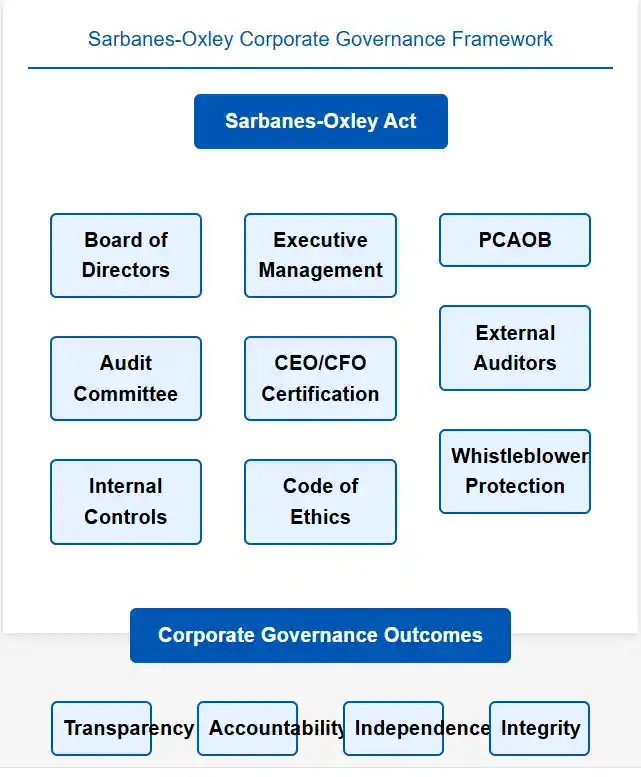
- The Sarbanes-Oxley Act of 2002 requirements underscore that effective governance represents far more than mere regulatory compliance—it serves as essential risk mitigation against the catastrophic consequences of governance breakdowns.
- Board diversity contributes meaningfully to governance effectiveness, with 79% of directors reporting that diverse perspectives enhance decision-making capabilities, while 68% acknowledge improved overall board performance. These improvements translate directly into stronger internal controls and reduced exposure to the securities litigation that frequently follows governance failures.
- Regulatory compliance demands have intensified dramatically, with organizations confronting expanded SEC enforcement priorities, enhanced disclosure requirements, and growing institutional investor demands for transparency. The securities litigation landscape continues to evolve, making proactive governance implementation not merely advisable but essential for avoiding the massive financial settlements and reputational damage associated with governance failures.
- This authoritative guide provides the framework necessary for establishing governance structures that satisfy regulatory compliance obligations while protecting against securities class action lawsuits. From selecting appropriate governance models to implementing internal controls that withstand regulatory enforcement scrutiny, organizations will discover the essential strategies for building governance frameworks that serve as effective shields against corporate liability and securities fraud allegations.

Understanding Governance Frameworks: Critical Protection Against Corporate Liability
- Governance frameworks represent the systematic architecture of policies, roles, processes, and controls that determine how organizations operate and make decisions. These frameworks function as the organizational backbone, ensuring regulatory compliance while establishing the governance structures essential for preventing securities litigation and regulatory enforcement actions.
- Internal controls and governance protocols delineate authority, establish decision-making processes, and create the accountability mechanisms that protect against corporate scandals.
Essential Purpose and Regulatory Foundation
- Robust governance frameworks serve a fundamental purpose: establishing clear accountability structures and responsibilities for board members and directors. This systematic approach creates the foundation for entity management and regulatory compliance, forming the structural basis from which all compliant operations emerge.
-
- Decision-making authority: Define who has voice, decision-making power, and ultimate accountability within the organization
-
- Stakeholder balance: Coordinate interests among shareholders, management, customers, suppliers, financiers, government entities, and community stakeholders
-
- Operational protocols: Establish interaction guidelines for stakeholder groups during company operations
-
- Performance standards: Create efficiency frameworks that directly impact organizational goal achievement
- The organizational structure of governance frameworks directly influences success in meeting strategic objectives. Organizations implementing well-received governance changes significantly increase their probability of achieving desired operational outcomes.
Preventing Securities Litigation Through Effective Governance
- Organizations maintaining strong governance frameworks gain substantial advantages in both internal operations and external regulatory relationships. Boards and executives following established guidelines for finance, risk analysis, and reporting avoid regulatory enforcement penalties and securities class action vulnerability. These structured processes enable leadership teams to address stakeholder inquiries confidently, having established systematic information-gathering protocols.
- Weak governance structures create dangerous exposure to securities litigation. Organizations operating without well-defined governance frameworks struggle to respond effectively to shareholder concerns or employee complaints. These entities frequently scramble to collect data and cannot ensure accuracy in their reporting, creating the conditions that typically precede accounting fraud allegations. Companies ignoring regulatory compliance requirements routinely face SEC enforcement actions and securities class actions.
- Corporate governance excellence demonstrates organizational commitment to accountability and transparency, attracting investment capital and supporting higher market valuations. Research indicates that companies with robust governance frameworks achieve data quality improvements of 58% and increased inter-departmental collaboration of 57%.
- Key governance benefits include:
-
- Enhanced transparency through systematic insight into operations, financial performance, and decision-making processes
-
- Improved decision-making via clearly defined roles, responsibilities, and procedural frameworks
-
- Stakeholder protection through ethical conduct standards and trust-building mechanisms
-
- Stronger financial performance resulting from improved reputation and enhanced capital accessibility
-
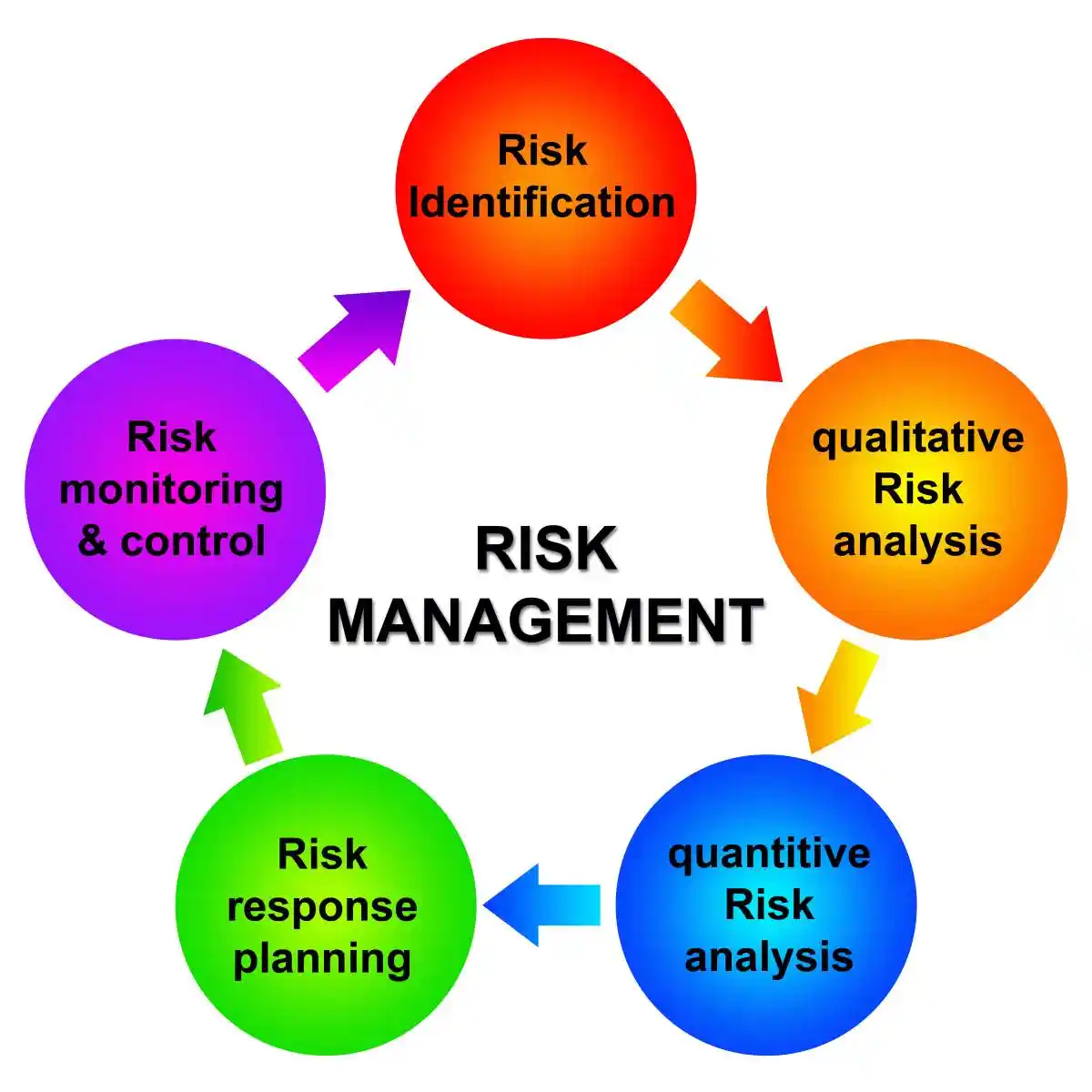
- Risk management effectiveness through systematic processes for identifying, assessing, and managing organizational risks
Governance Frameworks as Securities Litigation Defense
- Governance frameworks transcend mere regulatory compliance—they represent fundamental organizational infrastructure ensuring long-term sustainability and protecting against catastrophic legal exposure. These frameworks establish the processes and guidelines controlling organizational direction while aligning stakeholder interests and ensuring management maintains accountability and transparency standards.
- Comprehensive governance frameworks enable boards to understand their oversight responsibilities more effectively. These frameworks must incorporate attributes supporting effective governance while providing tools for addressing governance risk factors that frequently trigger securities litigation. Properly structured frameworks create clear constructs for evaluating management responsibilities relative to board oversight duties.
- Risk management and organizational culture form the core of effective governance frameworks, as all board and management activities supporting governance programs depend upon robust risk management systems and cultures supporting ethical conduct. Boards maintain specific objectives and activities across governance elements including strategy development, performance monitoring, integrity maintenance, and talent management.
- Operating without governance frameworks represents an organizational disaster waiting to happen, regardless of company size or profitability. Clear guidelines and oversight structures enable organizations to manage complex legal environments while meeting strategic goals and maintaining cultures of transparency and ethical behavior.

Essential Components of Corporate Governance: Building Shields Against Securities Litigation
- Effective governance frameworks require three critical components that function as integrated defense systems against corporate scandals, regulatory enforcement, and securities class action lawsuits.
- These foundational elements determine whether organizations can withstand the regulatory scrutiny that has intensified following major corporate failures.
Board Structure and Roles: The First Line of Defense
- Clear board structure represents the cornerstone of effective governance and the primary defense against control failures that trigger securities litigation. Organizations lacking properly defined roles and responsibilities create the governance vacuum that enables fraud and the corporate governance breakdowns that devastate stakeholder confidence.
Optimal board composition requires strategic attention to several critical elements:
- Board composition: Effective governance demands directors with complementary expertise in regulatory compliance, financial reporting, and risk management. Governance failures frequently occur when boards lack sufficient financial literacy or internal controls expertise to detect warning signs of accounting irregularities.
- Leadership accountability: Board chairs must establish governance cultures that prioritize regulatory compliance over short-term performance pressures. Weak leadership structures often precede the securities class actions that follow governance breakdowns.
- Committee effectiveness: Audit committees of three to seven independent members serve as essential safeguards against financial statement fraud and internal control deficiencies. These committees provide the oversight necessary to prevent the corporate scandals that result in massive securities litigation.
Governance model selection directly impacts an organization’s vulnerability to regulatory enforcement:
- One-tier boards concentrate oversight and management authority, requiring robust internal controls to prevent conflicts of interest
- Two-tier systems separate supervisory and management functions, providing additional checks against corporate governance failures
- Hybrid models adapt governance structures to specific regulatory compliance requirements while maintaining oversight effectiveness
Internal Controls: Critical Safeguards Against Regulatory Failure
- Internal controls function as the operational backbone preventing accounting fraud, financial statement manipulation, and the securities class actions that follow control breakdowns. The Sarbanes-Oxley Act mandates that internal control systems provide reasonable assurance regarding financial reporting accuracy and regulatory compliance.
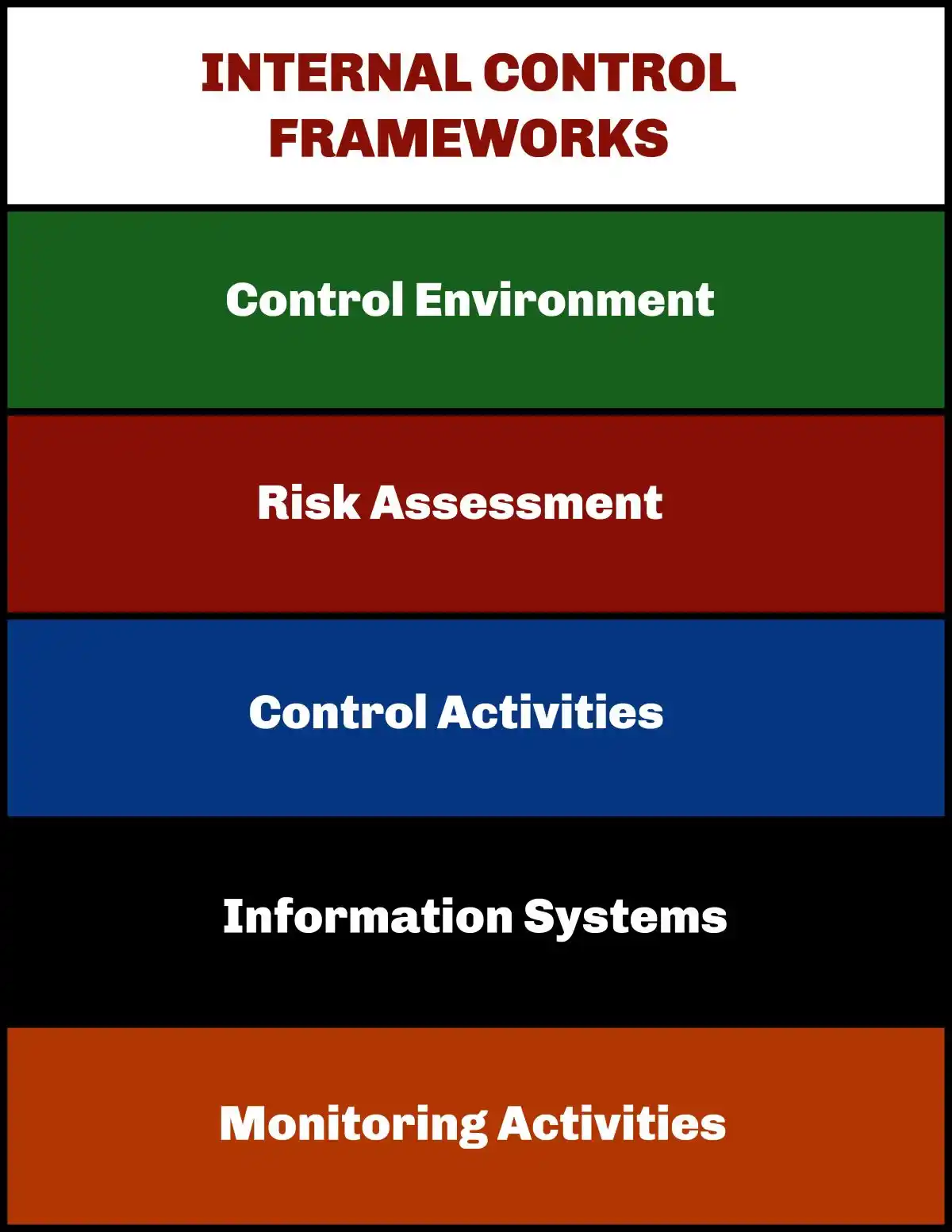
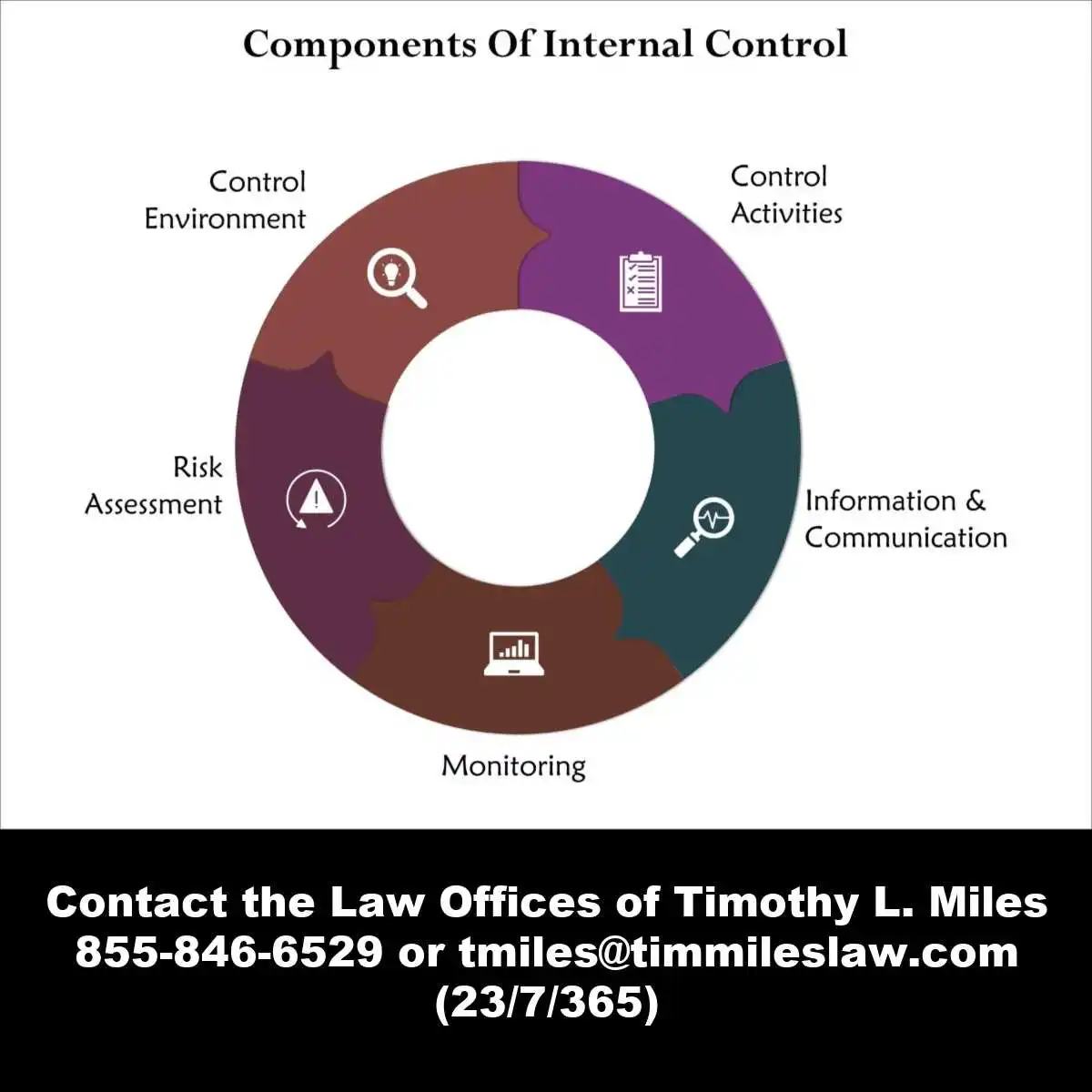
- Comprehensive internal control frameworks must address five interconnected elements:
-
- Control Environment: Establishes the ethical foundation that prevents accounting fraud and supports regulatory compliance
- Risk Assessment: Identifies financial statement fraud risks and governance vulnerabilities before they escalate
- Control Activities: Implements specific procedures that detect accounting irregularities and prevent securities litigation
- Information Systems: Ensures financial data accuracy and supports SEC reporting requirements
- Monitoring Activities: Provides ongoing surveillance that identifies control weaknesses before they trigger regulatory enforcement
- Risk mitigation through internal controls serves multiple critical objectives: asset protection, error prevention, operational efficiency, and securities litigation prevention.
- Organizations with weak internal controls face elevated exposure to regulatory enforcementactions and securities class action lawsuits.
Decision-Making Frameworks: Preventing Governance Catastrophes
- Structured decision-making processes represent the final component protecting organizations from governance failures that result in securities litigation.
- Clear authority matrices prevent the decision-making confusion that enables accounting fraud and regulatory compliance failures.
- Proven decision-making frameworks enhance governance effectiveness:
-
- RACI methodology: Eliminates ambiguity about accountability that frequently precedes corporate scandals
- RAPID Decision Model: Prevents decision bottlenecks that can compromise regulatory compliance in time-sensitive situations
- Risk-centered approaches: Prioritize regulatory compliance and securities litigation prevention in strategic decisions
- Transparent decision processes require stakeholder input mechanisms that identify potential governance failures before they escalate. Organizations that suppress dissenting views often experience the corporate governance breakdowns that trigger SEC enforcement and securities class actions.
- Advanced governance technology provides essential decision-making infrastructure through centralized information systems, collaborative platforms, comprehensive audit trails, and analytical capabilities. These technological solutions ensure consistent data accuracy and prevent the information gaps that contribute to governance failures and subsequent securities litigation.
Selecting Governance Structures: Critical Defense Against Corporate Scandals and Securities Litigation
- Governance structure selection represents the foundational decision that determines organizational vulnerability to securities class action lawsuits and regulatory enforcement actions. The chosen structure directly influences decision-making processes, responsibility distribution, and oversight mechanisms that either protect against or expose organizations to corporate scandals and accounting fraud allegations.
- This critical determination shapes how effectively organizations maintain regulatory compliance while preventing the internal control failures that trigger devastating securities litigation.

Corporate Governance Models: Strategic Protection Frameworks
- Multiple governance models have evolved to address different organizational needs and regulatory compliancerequirements, each offering distinct advantages for risk mitigation and corporate governance effectiveness:
- Traditional Model – Establishes clear accountability chains with collective board responsibility for operations and strategy. This model provides definitive accountability lines essential for regulatory compliance but may lack the agility required for rapid response to regulatory enforcement challenges.
-
- Key Characteristics
-
-
- Shareholder-Centric:The primary focus is on protecting and enhancing shareholder interests and ensuring returns on investment.
- Board of Directors: A board appointed by shareholders holds the main responsibility for strategic decisions and oversight.
- Management Oversight: The board supervises the executive management, which is responsible for day-to-day operations and implementing strategy.
- Separation of Duties: There is a clear distinction between the roles of the board, which provides strategic oversight, and the management, which handles operations.
- Working Board: In some cases, especially with smaller organizations, the board may take on a more active, hands-on “working” role.
- Regulatory Framework: Regulatory bodies like the Securities and Exchange Commission (SEC) play a role in ensuring transparency and protecting shareholder rights.
-
- Advisory Model – Positions the board as a strategic resource for executive teams without direct decision-making authority. This approach reduces bureaucratic obstacles but demands exceptional trust and communication systems to prevent internal control deficiencies.
-
- Key Characteristics
-
-
- Guidance and Expertise: Advisory boards serve as a source of professional advice, leveraging the members’ established expertise and credentials.
- Lack of Formal Power: Unlike a formal board of directors, members of an advisory board typically do not have direct decision-making power or legal responsibilities.
- Problem-Solving Focus: Advisory boards are structured to resolve specific, high-impact problems that can help elevate a company’s performance or address complex strategic issues.
- Enhancing Credibility: By being visibly connected to prominent advisors, an organization can increase its credibility and enhance its public relations efforts.
- Building Networks: Members often provide valuable connections and resources that can significantly benefit the company.
-
- Policy Board Model (Carver Model) – Emphasizes policy establishment while delegating substantial authority to CEOs. The model requires regular executive interaction but maintains minimal standing committees, potentially creating vulnerabilities to
-
- Key Principles of the Carver Policy Governance Model
-
-
- Ends vs. Means: The board focuses on the “Ends,” which are the organizational purposes and desired outcomes, and the board’s ethical standards. All other operational details and implementation methods (“Means”) are delegated to the CEO.
- Board Accountability: The board is ultimately accountable to the owners or stakeholders on whose behalf it governs.
- CEO Delegation: The CEO is empowered to determine the most effective “Means” to achieve the board’s “Ends,” ensuring clarity in delegation.
- Executive Limitations: The board sets limitations on the CEO and staff to ensure they do not violate the board’s ethical and prudent standards.
- Board Authority as a Group: Board members act as a unified group to make decisions, rather than as individuals.
- Integrated Policy Manual: The model uses a single policy document to organize all the board’s principles, functions, activities, and relationships.
- Proactive, Strategic Focus: The model emphasizes proactive decision-making and strategic leadership, preparing the organization for the future by shaping meaningful outcomes.
-
- Cortex Model – Creates inclusive governance structures prioritizing stakeholder input and cooperative decision-making, particularly effective for technology and healthcare organizations facing complex regulatory scrutiny.
-
- Key Aspects of the Cortex Model
-
-
- Community & Client Focus: The model emphasizes understanding the value the organization provides to its clients and the broader community.
- Outcome-Oriented: Boards using this model focus on defining and setting quantifiable outcomes as measures of success, rather than just the “means” to achieve those goals.
- Accountability Framework: A clear framework is established to define the roles of the board, CEO, staff, and others in achieving the stated outcomes, fostering transparency.
- Basis for Standards: The board defines organizational standards, expectations, and performance outcomes by considering the external environment (legislation, best practices) and internal knowledge.
- Transparency: The model promotes internal processes that are open and transparent by clearly outlining how success is measured and by whom.
-
- Competency Model – Structures boards around specific expertise areas, ensuring members possess the specialized knowledge necessary to prevent accounting fraud and maintain regulatory compliance.
-
- Purpose of a Corporate Governance Competency Model
-
-
- Define Role Requirements: Clearly outlines what success looks like for key governance positions, ensuring alignment with organizational goals.
- Identify Skill Gaps: Helps organizations understand the difference between the existing skills and the competencies needed for optimal governance.
- Guide Talent Management: Informs recruitment, training, development, and succession planning for board members and governance professionals.
- Enhance Performance: Provides a benchmark for assessing individual and board performance, fostering a culture of continuous improvement.
-
Nonprofit Organization Structures:
- Cooperative Governance Model – Facilitates consensual decision-making among equals without hierarchical structures, suitable for organizations lacking traditional CEO positions.
- Management Team Model – The most prevalent nonprofit structure where boards form specialized committees handling fundraising and finance responsibilities rather than employing paid staff.
- Patron Governance Model – Focuses board members primarily on fundraising activities, utilizing personal wealth and influence to secure organizational contributions.
GLOBAL COMPETENCY FRAMEWORK
|
Level |
Competency Stage |
Focus Area |
Key Characteristics |
| Level 1 |
Foundation |
Basic Knowledge |
Understanding core concepts and terminology |
| Level 2 |
Application |
Skill Development |
Applying knowledge in structured environments |
| Level 3 |
Integration |
Process Mastery |
Combining multiple skills effectively |
| Level 4 |
Optimization |
Performance Excellence |
Achieving consistent, high-quality results |
| Level 5 |
Innovation |
Strategic Thinking |
Creating new approaches and solutions |
| Level 6 |
Leadership |
Organizational Impact |
Driving transformation and mentoring others |
Critical Selection Factors for Regulatory Protection
- Organizations must evaluate multiple factors when selecting governance models to ensure adequate protection against securities litigation and regulatory enforcement:
-
- Organizational Complexity and Regulatory Exposure – Larger, more complex organizations require increasingly formal governance structures to prevent corporate scandals. Small businesses often benefit from advisory arrangements, while public corporations need robust oversight mechanisms capable of preventing securities class action lawsuits.
-
- Industry-Specific Regulatory Requirements – Highly regulated sectors including finance, healthcare, and energy demand boards with specialized committees focused on regulatory compliance and risk management. These sectors face elevated exposure to SEC enforcement and require governance structures designed specifically for regulatory protection.
-
- Decision-Making Speed Requirements – Organizations must balance quick decision-making capabilities with deliberate consensus-building approaches that ensure adequate oversight and prevent internal control failures.
-
- Stakeholder Protection Obligations – Corporate governance must reflect stakeholder interests and protection requirements. Public companies prioritize shareholder confidence and financial oversight to prevent securities litigation, while nonprofits focus on mission-driven governance that maintains donor trust and regulatory standing.
-
- Risk Management Needs – Industries with substantial financial, operational, or reputational risk exposure require governance structures with dedicated risk management oversight functions capable of preventing corporate scandals and accounting fraud.
-
- Cultural Integration Requirements – Governance models must align with organizational culture and values, particularly regarding authority distribution and decision-making processes that support ethical conduct and prevent regulatory compliance failures.
-
- Regulatory Adaptation Capabilities – Organizations and regulations continue evolving, requiring governance structures flexible enough to adapt to changing regulatory enforcement priorities and SEC regulations without compromising oversight effectiveness.
- The selected governance structure must serve as the practical implementation mechanism for broader governance philosophy. The governance framework represents the overarching approach to corporate governance, while the specific model provides the infrastructure through which regulatory compliance and risk mitigation strategies function effectively.
Strategic Alignment: Essential Documentation for Legal Protection and Regulatory Defense
- Strategic alignment between governance frameworks and organizational objectives serves as a critical defense mechanism against regulatory enforcement actions and securities class action lawsuits.
- Organizations failing to document clear governance objectives and performance metrics create substantial vulnerabilities that SEC enforcement teams and securities litigation plaintiffs frequently exploit in accounting fraud cases.
Documentation Requirements for Regulatory Defense
- Formal documentation represents the primary line of defense when organizations face regulatory scrutiny or securities class actions. The Sarbanes-Oxley Act mandates extensive documentation requirements, making proper governance documentation essential for avoiding regulatory enforcement penalties.
- Corporate governance documentation provides the evidentiary foundation necessary to defend against allegations of internal control deficiencies and accounting irregularities.
- Essential documentation components must include:
-
- Governance objectives – Specific, measurable goals that demonstrate regulatory compliance intent
- Board responsibilities – Detailed role definitions that establish accountability for internal controls oversight
- Stakeholder protocols – Clear guidelines preventing conflicts of interest and related-party transaction violations
- Risk metrics – Quantifiable indicators that track corporate governance effectiveness and regulatory compliance
- Regulatory bodies require policy libraries to be reviewed at least annually, with many SEC enforcement actions citing inadequate policy maintenance as evidence of internal control failures. Legal and compliance teams must actively participate in documentation updates to ensure regulatory compliance and defend against securities litigation.
Preventing Strategic Misalignment Risks
- Corporate governance failures often stem from misalignment between stated organizational strategies and actual governance practices. SEC enforcement cases frequently demonstrate how strategic misalignment creates the conditions that enable accounting fraud and trigger securities class action lawsuits.
- Boards must maintain direct oversight of strategic implementation to prevent corporate scandals that result in massive investor losses.
- Strategic governance alignment requires:
- Regular assessment of governance effectiveness against strategic objectives
- Board-level decision-making processes that prioritize regulatory compliance and risk mitigation
- Meeting agendas structured to address internal controls and compliance issues
- Continuous monitoring of governance risks that could trigger securities litigation
- Adaptive frameworks capable of responding to evolving regulatory enforcement priorities
Strategic flexibility becomes crucial when organizations face regulatory enforcement investigations or securities class actions. Companies with rigid governance structures often cannot respond effectively to SEC enforcement demands or securities litigation discovery requirements.
Performance Measurement as Early Warning Systems
- Governance metrics function as early warning systems that can prevent corporate scandals before they trigger securities litigation. Key performance indicators enable boards to identify internal control deficiencies and accounting irregularities before they escalate into regulatory enforcement actions.
- Organizations lacking proper governance measurement systems frequently discover problems only after securities class action lawsuits expose their control failures.
- Effective governance metrics must demonstrate:
-
- Specificity – Precise indicators that can withstand regulatory scrutiny and securities litigation challenges
- Measurability – Quantifiable standards that provide objective evidence of regulatory compliance
- Achievability – Realistic targets that boards can reasonably monitor and enforce
- Relevance – Direct connection to risk mitigation and corporate governance objectives
- Timeliness – Regular reporting cycles that enable proactive internal controls management
- Many organizations implement a traffic light system for monitoring governance progress that provides immediate visibility into areas requiring intervention before they become regulatory enforcement targets. This systematic approach enables boards to address potential corporate governance failures before they trigger securities litigation.
- Performance tracking must encompass regulatory compliance metrics, internal controls effectiveness, and accounting fraud risk indicators. Data security metrics become particularly important given the SEC enforcement focus on cybersecurity and data protection violations.
- Systematic performance measurement enables organizations to demonstrate proactive corporate governance management when facing regulatory enforcement or securities class actions. This data-driven approach provides the documentation necessary to defend against securities litigation while ensuring continuous improvement in regulatory compliance and risk mitigation practices.
Implementing Governance Frameworks: Critical Steps for Regulatory Compliance and Risk Mitigation
- Successful governance implementation requires systematic deployment across all organizational levels to prevent the corporate governance failures that lead to securities class action lawsuits. Organizations that fail to achieve proper implementation face elevated exposure to regulatory enforcement actions and the devastating financial consequences of governance breakdowns.
Securing Stakeholder Buy-In: Essential Defense Against Corporate Scandals
- Stakeholder buy-in represents the cornerstone of governance implementation success and serves as the primary defense against the corporate scandals that trigger securities litigation. Research demonstrates that project outcomes depend fundamentally on securing appropriate levels of team commitment, stakeholder engagement, and executive support.
- Organizations lacking adequate stakeholder engagement face imminent failure, often resulting in the governance deficiencies that lead to accounting fraud and regulatory enforcement actions.
- Essential Steps for Meaningful Stakeholder Engagement:
-
- Identify key stakeholders during the initial implementation phase, including board members, executives, technical teams, and external stakeholders who might be impacted by governance decisions.
- Communicate the vision with clarity and specificity. Stakeholders must understand not merely what the governance framework entails, but why it matters for preventing securities litigation and how it benefits their specific roles.
- Engage stakeholders meaningfully rather than simply informing them. Effective engagement involves consulting stakeholders on important decisions within their areas of responsibility while maintaining transparency about decisions outside their direct purview.
- Create a common language around governance through early framework adoption. This approach simplifies meetings and facilitates the onboarding of new stakeholders into governance processes.
- Executive Support remains among the most critical factors determining governance success or failure. Organizations must avoid creating adversarial relationships and instead focus on collaborative stakeholder management that emphasizes shared responsibility for preventing corporate governance failures.
Clear Responsibility Allocation: Building Accountability Systems
- Clear responsibility allocation ensures accountability at every organizational level and creates the systematic oversight necessary to prevent internal control failures. Organizations must establish governance structures that clearly outline roles, responsibilities, and decision-making processes to avoid the ambiguity that often contributes to corporate scandals.
- Critical Responsibility Assignment Requirements:
-
- Document specific responsibilities for designing, implementing, and maintaining the framework. This documentation typically encompasses board members, executives, technical teams, and compliance officers.
- Specify accountability levels through clear delineation of who bears responsibility, who maintains ultimate accountability, who should be consulted, and who must stay informed (RACI matrix methodology).
- Avoid individual name references within governance policies. Responsibilities should be allocated to specific role titles, teams, or functional groups to enable proper succession planning and prevent governance disruption.
- Ensure realistic responsibility assignments by confirming that staff possess appropriate skills and experience to fulfill their defined roles effectively.
- Responsibility frameworks should address both governance oversight and operational implementation, potentially including internal staff, external users, and service providers. Smaller organizations may require individual staff members to fulfill multiple governance roles.
Governance Committees: Specialized Oversight Bodies for Risk Management
- Governance committees serve as specialized oversight bodies that ensure adherence to governance principles and provide the structured oversight necessary to prevent regulatory compliance failures. These committees create accountability mechanisms throughout the implementation process.
- Essential Committee Structures:
-
- Transformation Steering Committee: Cross-functional teams providing strategic direction, oversight, and decision-making authority for governance initiatives.
- Transformation Management Office (TMO): Dedicated teams coordinating daily activities while ensuring alignment with overall strategy and regulatory objectives.
- Specialized Committees: Organizational needs determine specific committee focus areas, including audit, risk management, compliance, and compensation oversight.
- Governance committee structures must define committee membership selection processes and qualification requirements. Committees typically comprise three to seven members with diverse backgrounds and expertise, balancing varied perspectives with decision-making efficiency.
- Optimal implementation requires governance committees to establish clear charters outlining their purpose, composition, and specific responsibilities. These committees should conduct annual self-assessments to evaluate effectiveness and identify improvement opportunities.
- Experienced governance committees with strong risk management capabilities help ensure frameworks address specific organizational risks while maintaining compliance with regulatory requirements.
Step 4: Continuous Monitoring and Assessment: Preventing Governance Failures and Securities Litigation
- Continuous monitoring serves as the critical early warning system against corporate governance failures that lead to securities class action lawsuits. Static governance structures cannot withstand the evolving regulatory enforcement landscape or address the sophisticated accounting fraud schemes that continue to emerge.
- Governance failures typically follow predictable patterns that effective monitoring systems can identify before they escalate into securities litigation. Organizations lacking robust monitoring mechanisms face substantially higher risks of regulatory scrutiny and the devastating financial consequences of corporate scandals.
Establishing Governance Performance Indicators
Key Performance Indicators must directly measure the governance elements most critical for preventing securities litigation and regulatory enforcement actions. Effective governance metrics focus on:
Regulatory Compliance Monitoring: Direct measurement of adherence to SEC regulations and Sarbanes-Oxley Act requirements
Internal Control Effectiveness: Assessment of control deficiencies that historically precede accounting fraud discoveries
Board Oversight Quality: Evaluation of board independence and audit committee effectiveness in preventing corporate governance failures
Risk Assessment Accuracy: Measurement of the organization’s ability to identify and address financial statement fraud risk factors before they result in securities class actions. These indicators must include both leading measures that predict potential problems and lagging indicators that confirm when governance breakdowns have occurred.
Real-Time Governance Monitoring Systems
- Regulatory compliance demands continuous oversight rather than periodic assessments. Enterprise Risk Management (ERM) software provides the systematic monitoring capabilities essential for preventing securities litigation.
- Advanced monitoring platforms deliver critical capabilities for governance protection:
- Automated Compliance Tracking: Real-time monitoring of compliance obligations across multiple jurisdictions
- Internal Control Testing: Continuous assessment of control effectiveness to prevent accounting irregularities
- Red Flag Detection: Immediate identification of patterns associated with financial statement fraud and corporate scandals
- Audit Trail Management: Complete documentation necessary for defending against securities fraud class action lawsuits and regulatory enforcement actions
- Application Performance Monitoring (APM) technologies have become essential for maintaining the governance oversight necessary to prevent corporate governance failures.
Systematic Review and Corrective Action
- Governance oversight requires structured evaluation cycles that address evolving enforcement priorities. Effective review processes must include:
- Quarterly Governance Assessments: Regular evaluation of internal controls and corporate governance effectiveness
- Annual Compliance Reviews: Comprehensive assessment of compliance status and emerging securities litigation risks
- Stakeholder Feedback Analysis: Systematic evaluation of investor and regulatory concerns that could indicate governance failures
- Audit Committee Oversight: Independent review of governance performance and risk mitigation effectiveness
- Feedback mechanisms create the accountability loops essential for preventing securities class actions. Organizations that systematically collect and respond to governance feedback demonstrate the proactive oversight that regulators expect and that helps defend against securities litigation allegations.
- Continuous improvement transforms governance from a compliance exercise into a strategic defense against the corporate scandals and enforcement actions that devastate shareholder value and organizational reputation.
Governance Implementation Failures: Critical Vulnerabilities That Trigger Securities Litigation
Corporate governance failures during implementation create dangerous vulnerabilities that frequently escalate into securities class actions and regulatory enforcement proceedings. Understanding these critical weaknesses allows organizations to identify potential problems before they trigger the devastating consequences of governance breakdowns.
Conflicts of Interest: Hidden Triggers for Corporate Scandals
- Conflicts of interest represent one of the most dangerous yet underestimated financial statement fraud risk factors in modern corporate governance. When board members or executives maintain competing personal interests that compromise their fiduciary duties, they create conditions ripe for accounting fraud and securities litigation.
- Warning signs of inadequately managed conflicts include:
-
- Among 26 OECD countries surveyed, responsible authorities verified only 60% of declarations filed over the previous two years
- Only seven OECD countries demonstrated that authorities issued recommendations for resolving conflicts within 12 months for all detected cases
- Many public officials incorrectly deny conflicts exist at all, mistakenly believing their roles cannot involve conflicting interests
- Corporate scandals frequently emerge when organizations fail to recognize or address these conflicts proactively. Directors who fail to disclose potential conflicts—including personal relationships or financial interests—create exposure to securities class actions alleging corporate governance failures and breach of fiduciary duty.
Succession Planning Failures: Governance Continuity Risks
- Succession planning deficiencies represent a critical corporate governance vulnerability that can trigger operational disruptions and investor confidence crises. Research reveals alarming gaps in organizational preparedness:
-
- Only 29% of nonprofits surveyed reported having written succession plans in place
- Only 19% of board and staff leaders rated their boards as extremely or very effective in succession planning
- Private companies face particularly acute succession challenges since many CEOs are also owners who have founded, purchased, or inherited the company. Red flags include:
-
- CEO owner/founder no longer effectively leading due to declining health or outdated skills
- Owner expecting unqualified relatives to assume leadership roles
- Owner’s CEO choice lacking board support
- Organizations without adequate succession planning frequently face emergency leadership transitions that can trigger stock price volatility, regulatory scrutiny, and potential securities litigation when investors suffer losses due to management uncertainty.
Regulatory Adaptation Failures: Compliance Vulnerabilities
- The regulatory landscape continues to evolve at an unprecedented pace, creating significant compliance challenges for organizations with inflexible governance frameworks. The scope of regulatory change demonstrates the magnitude of this challenge:
-
- In 2022 alone, regulatory monitoring across 190 countries identified 61,228 events—a daily average of 234 events
-
- Organizations in highly regulated sectors like banking, healthcare, and energy face particularly complex compliance requirements
- Regulatory enforcement priorities shift frequently, affecting multiple governance aspects, including SEC enforcement focus, cryptocurrency oversight, and shareholder proposals. Companies that fail to anticipate and adapt to these changes face operational disruptions, reputational damage, and securities fraud class action lawsuits when compliance failures result in material misstatements or inadequate disclosures.
- Risk mitigation requires comprehensive compliance management systems that help track regulations, prove compliance, and maintain current frameworks through systematic monitoring processes. Organizations that proactively monitor regulatory developments position themselves to adjust business models, update compliance frameworks, and communicate changes before regulations create liability exposure.
Technology Solutions for Governance Excellence and SEC Readiness
Modern governance technology has evolved beyond simple efficiency tools into sophisticated defense systems against regulatory enforcement actions and securities fraud allegations. Organizations deploying advanced governance platforms demonstrate measurably superior internal control effectiveness while significantly reducing exposure to corporate scandals and securities class actions.
Board Management Platforms and Digital Collaboration
- Board portals represent essential infrastructure for maintaining the documented oversight trails required during SEC enforcement investigations. These platforms provide:
-
- Automated meeting protocols that create comprehensive audit trails for regulatory review
- Secure document access controls that satisfy Sarbanes-Oxley Act documentation requirements
- Real-time collaboration capabilities enabling rapid response to emerging compliance issues
- Integrated voting systems with digital signatures that provide legally defensible records
- AI-assisted transcription that ensures accurate meeting minutes for regulatory scrutiny
- Organizations implementing advanced board platforms achieve 50-60% reduction in board material preparation time, translating to approximately 1,600 hours annually in operational efficiency gains. Microsoft-enabled platforms provide synchronous editing capabilities without security vulnerabilities that could compromise sensitive governance data.
Continuous Compliance Monitoring and Risk Detection
- Regulatory compliance monitoring has shifted from periodic assessments to continuous surveillance systems. Traditional manual auditing examines only 3-5% of governance activities, whereas automated solutions monitor nearly 100% of organizational activities in real-time.
- Centralized risk dashboards provide boards with complete visibility into potential compliance violations before they escalate into regulatory enforcement actions. These monitoring platforms deliver:
-
- Real-time regulatory updates that alert organizations to emerging compliance requirements
- Automated violation detection that identifies potential accounting irregularities before they become material
- Enhanced decision-making transparency that satisfies increasing institutional investor demands
- Systematic policy tracking that demonstrates proactive internal control maintenance
Enterprise Risk Management Systems for Regulatory Defense
- Enterprise Risk Management (ERM) software has become indispensable for organizations facing potential SEC enforcement scrutiny. These platforms connect directly to source data, automate compliance processes, and create the transparency that regulatory authorities increasingly demand.
- ERM implementations enable organizations to demonstrate the effective risk management systems that Federal Sentencing Guidelines recognize with substantial penalty reductions during enforcement proceedings. Modern ERM platforms align risk assessment methodologies with compliance frameworks, creating integrated defense systems against corporate governance failures.
- Strategic ERM deployment often proves more valuable than basic compliance programs, as these systems provide the comprehensive documentation and proactive risk identification that distinguish well-governed organizations from those vulnerable to securities litigation and regulatory sanctions.
Protecting Organizational Integrity Through Strategic Governance Implementation
- Effective corporate governance frameworks serve as the primary defense mechanism against securities litigation and enforcement actions in today’s increasingly complex legal environment. Organizations that implement robust governance structures proactively address the risk factors that historically trigger securities class action lawsuits and corporate scandals.
- Regulatory compliance begins with selecting governance structures that align with organizational complexity and industry-specific requirements. Companies with well-designed frameworks demonstrate enhanced transparency, superior decision-making capabilities, and systematic risk mitigation that protects against the accounting fraud and internal deficiencies that fuel securities fraud class actions.
- Documentation requirements under regulatory frameworks demand clear policies, precisely defined responsibilities, and measurable performance indicators. These foundational elements create accountability structures that satisfy SEC enforcement expectations while providing evidence of good-faith compliance efforts during regulatory scrutiny.
- Stakeholder engagement proves critical for governance implementation success. Organizations must secure commitment from board members, executives, and key personnel to prevent the governance failures that create vulnerability to securities litigation. Failed stakeholder alignment frequently contributes to the corporate governance breakdowns that result in massive legal settlements.
- Technology solutions enable continuous monitoring and real-time regulatory compliance tracking. Board portals, enterprise risk management software, and automated compliance systems create audit trails that demonstrate proactive governance oversight—essential evidence when defending against securities fraud class action allegations or enforcement investigations.
- Essential Implementation Principles:
Continuous Evolution: Governance frameworks must adapt to regulatory changes and emerging risk factors
-
- Performance Monitoring: Established metrics enable early detection of internal control weaknesses
- Regulatory Adaptation: Proactive monitoring prevents compliance failures that trigger enforcement actions
- Succession Planning: Leadership continuity protects against governance disruptions
- Technology Integration: Modern tools enhance compliance capabilities and documentation
- Strategic Asset Protection: Effective governance transcends basic regulatory compliance to become a fundamental business asset that protects stakeholder interests while preventing the catastrophic financial and reputational damage associated with securities litigation. Organizations that prioritize governance implementation create sustainable protection against the evolving threats of regulatory enforcement and corporate liability.
- The cost of prevention invariably proves far less than the price of remediation, making proactive governance not just a legal necessity but a sound business strategy that protects all stakeholders’ interests.
Key Takeaways
Building strong governance frameworks requires strategic planning, stakeholder engagement, and continuous improvement to transform compliance from a burden into a competitive advantage.
• Choose governance structures that align with your organization’s size, industry requirements, and strategic goals—one-tier, two-tier, or hybrid models each serve different needs.
• Document clear roles, responsibilities, and performance metrics to create accountability at every level and ensure governance supports your mission and strategy.
• Secure stakeholder buy-in through meaningful engagement and communication—without executive support and board commitment, even well-designed frameworks fail.
• Implement continuous monitoring using KPIs and technology tools like board portals and ERM software to track performance and adapt to regulatory changes.
• Address common pitfalls proactively: manage conflicts of interest transparently, develop succession plans, and stay current with evolving regulations.
Strong governance frameworks serve as strategic assets that enhance board effectiveness, improve risk management, and build stakeholder confidence. Organizations that invest in robust governance today create sustainable foundations for long-term success while navigating increasingly complex business environments.
FAQs
Q1. What are the key components of a strong governance framework? A strong governance framework typically includes a clear board structure with defined roles, robust internal controls and policies, and structured decision-making processes. It should also align with the organization’s mission and strategy, have mechanisms for monitoring and evaluation, and leverage appropriate technology tools.
Q2. How can organizations ensure stakeholder buy-in when implementing a governance framework? To secure stakeholder buy-in, organizations should identify key stakeholders early, clearly communicate the vision and benefits of the framework, engage stakeholders meaningfully in the process, and create a common language around governance. It’s crucial to involve both internal stakeholders like board members and executives, as well as relevant external stakeholders.
Q3. What role does technology play in modern governance frameworks? Technology plays a vital role in enhancing governance effectiveness. Board portals and collaboration tools streamline operations and improve communication. Risk assessment and compliance tracking software enable real-time monitoring and reporting. Enterprise Risk Management (ERM) systems help organizations prepare for regulatory requirements and improve overall risk management.
Q4. How often should governance frameworks be reviewed and updated? Governance frameworks should be continuously monitored and regularly evaluated. Many organizations conduct annual reviews of their governance strategies and policies. However, more frequent assessments may be necessary in rapidly changing industries or regulatory environments. It’s important to establish clear KPIs and review cycles to ensure the framework remains effective and relevant.
Q5. What are some common pitfalls to avoid when implementing a governance framework? Common pitfalls include failing to address conflicts of interest transparently, neglecting succession planning, and not adapting to regulatory changes. Organizations should also be wary of implementing overly complex frameworks that hinder decision-making, ignoring feedback from stakeholders, and failing to align the governance structure with the organization’s culture and values.
