
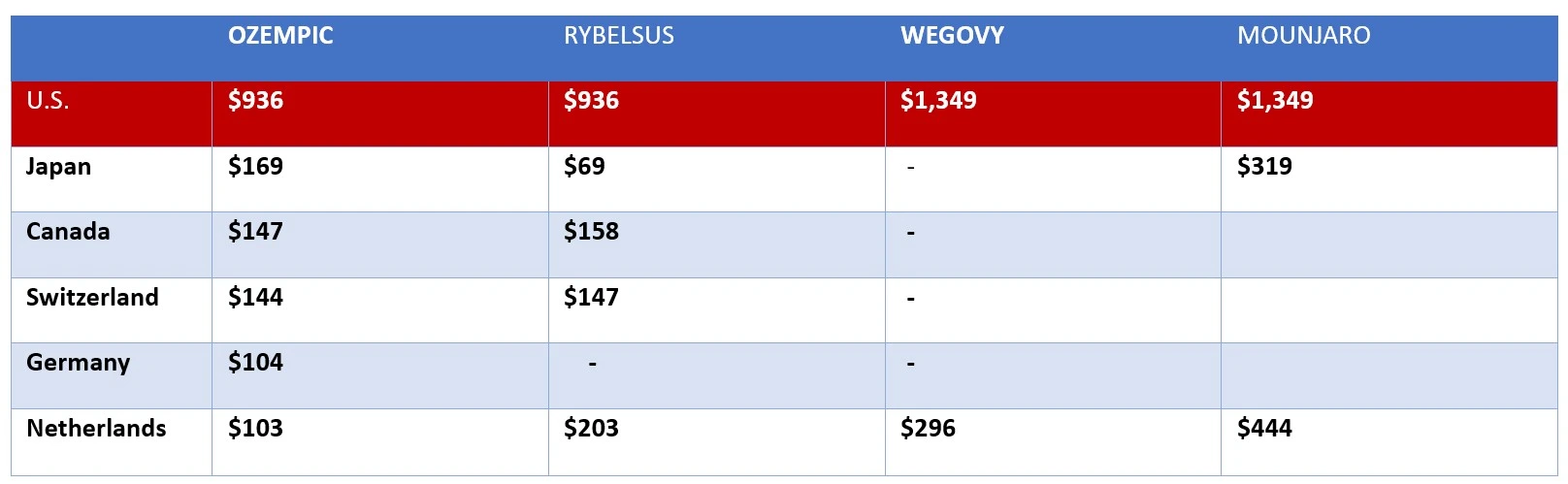
“The price tags for these new medications are simply outrageous,” Dr. Lipska said. “Ozempic, the brand name for Semaglutide approved for type 2 diabetes and marketed by Novo Nordisk, has a U.S. list price of over $900 per month. Wegovy, the brand name for the same drug approved for obesity, is $1,300 per month…”
Kasia Lipska, M.D., M.H.S, Associate Professor of Medicine at the Yale School of Medicine testifying at a 2023 hearing in the U.S. Senate Committee on Health, Education, Labor & Pensions (HELP)
Introduction to Zepbound Eye Stroke: Fast Tracking Patients Blind
Welcome to this authoritative guide on the Zepbound Eye Stroke. Zepbound (tirzepatide) is reshaping obesity care because it produces clinically meaningful weight loss and improves cardiometabolic risk markers. However, it is also forcing clinicians, pharmacists, and corporate compliance teams to confront a familiar governance question: how do we scale access to a high-impact medication while maintaining rigorous safety surveillance, disciplined communication, and rapid escalation pathways for rare but catastrophic adverse events?
One emerging concern in patient searches and informal reports is “Zepbound eye stroke,” a nontechnical term used to describe sudden, painless vision loss caused by vascular compromise of the retina or optic nerve. In clinical language, this may include conditions such as central retinal artery occlusion (CRAO), branch retinal artery occlusion (BRAO), central retinal vein occlusion (CRVO), branch retinal vein occlusion (BRVO), or nonarteritic anterior ischemic optic neuropathy (NAION). These conditions constitute medical emergencies and some are time sensitive in a way that mirrors cerebral stroke care.
It’s important to note that there have been reports linking Zepbound with various eye problems. For instance, Zepbound has been associated with issues like eye floaters, blurry vision and other Zepbound vision problems. More concerningly, some patients have reported experiencing NAION – a condition that falls under the umbrella of what patients often refer to as an “eye stroke”.
An “eye stroke” is not a single diagnosis. It generally refers to acute ischemia or venous obstruction affecting the retina or optic nerve, leading to sudden vision loss. The most consequential entities include:
- Central retinal artery occlusion (CRAO): Occlusion of the central retinal artery causing sudden, profound, painless monocular vision loss.
- Retinal vein occlusion (RVO): Venous thrombosis in the central or branch retinal vein causing blurred vision and retinal hemorrhages.
- Nonarteritic anterior ischemic optic neuropathy (NAION): Ischemia of the optic nerve head presenting with sudden, painless monocular vision loss.
The common governance theme is urgency. If a patient reports sudden loss of vision in one eye, a curtain coming down, new blind spot, or marked vision blur, the default posture should be emergency evaluation. The window for effective intervention can be narrow, and delayed triage is a recurrent driver of poor outcomes.
Health systems need to structure rapid response and governance so that a small signal does not become large preventable harm. This includes being aware of potential side effects associated with medications like Zepbound which can lead to serious vision loss if not addressed promptly.
If you were prescribed Zepbound and took it as directed and suffered Zepbound Eye Problems, Zepbound vision loss or other serious Zepbound Vision Side Effects, contact Timothy L. Miles, a Zepbound Vision Loss Lawyer today. You could be eligible for a Zepbound vision loss lawsuit and potentially entitled to substantial compensation. (855) 846–6529 or [email protected].
Wonder Drug Fast-Track Approved by the FDA
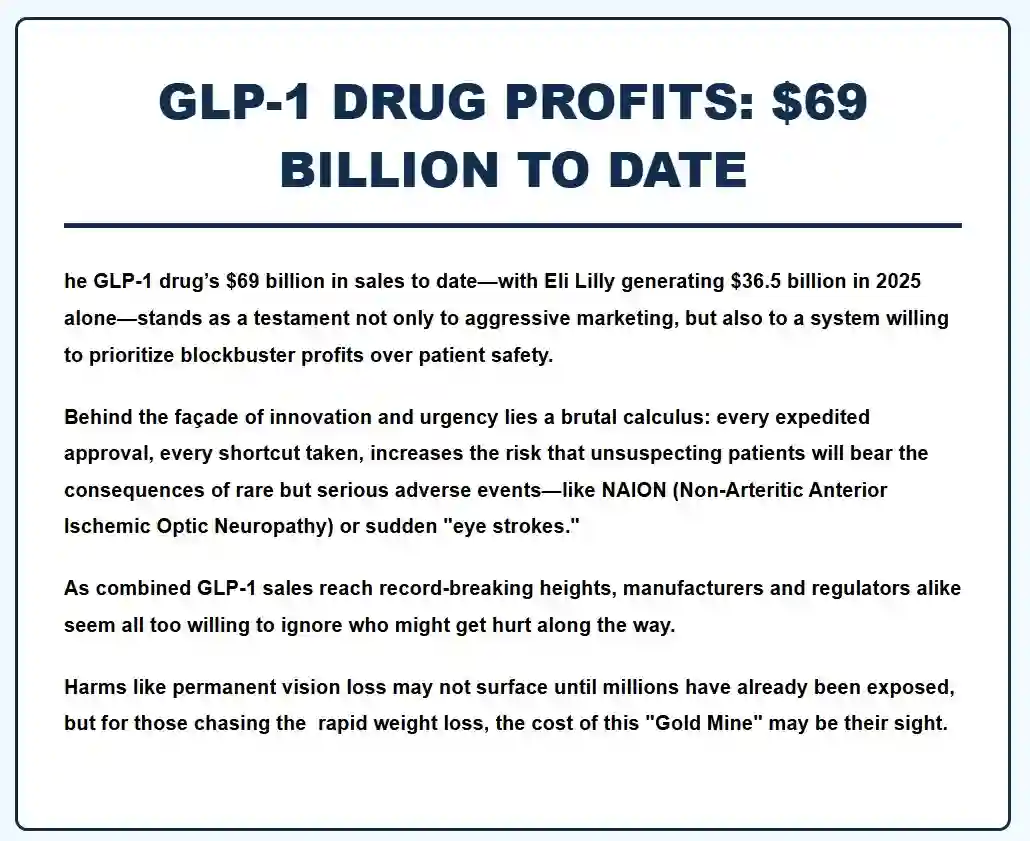
- The GLP-1 drug’s $69 billion in sales to date—with Eli Lilly generating $36.5 billion in 2025 alone—stands as a testament not only to aggressive marketing, but also to a system willing to prioritize blockbuster profits over patient safety.
- The streamlined evaluation, rolling data submissions, and accelerated access weren’t just about addressing unmet medical needs; they ensured Zepbound would dominate the market as the best-selling obesity drug of all time.
- Behind the façade of innovation and urgency lies a brutal calculus: every expedited approval, every shortcut taken, increases the risk that unsuspecting patients will bear the consequences of rare but serious adverse events—like NAION (Non-Arteritic Anterior Ischemic Optic Neuropathy) or sudden “eye strokes.”
If you were prescribed Zepbound and took it as directed and suffered Zepbound Eye Problems, Zepbound vision loss or other serious Zepbound Vision Side Effects, contact Timothy L. Miles, a Zepbound Vision Loss Lawyer today. You could be eligible for a Zepbound vision loss lawsuit and potentially entitled to substantial compensation. (855) 846–6529 or [email protected].
GLP-1 DRUGS LIST PRICE ARE SIGNIFICANTLY HIGHER IN THE U.S. THAN OTHER WEALTHY COUNTRIES
Zepbound in Brief: Mechanism and Systemic Effects Relevant to Vascular Risk
Zepbound contains, a dual incretin agonist targeting GLP 1 (glucagon-like peptide 1) receptors and GIP (glucose-dependent insulinotropic polypeptide) receptors. Its clinical effects include:
- Reduced appetite and caloric intake through central and gastrointestinal pathways.
- Improved glycemic control and insulin sensitivity.
- Meaningful weight reduction, often accompanied by improvements in blood pressure, triglycerides, and inflammatory markers.
From a vascular risk perspective, these improvements are generally expected to be favorable over time. However, rapid metabolic change can also create transitional physiologic states that merit disciplined monitoring, particularly in patients with preexisting microvascular disease.
It is also important to separate two different questions that are frequently conflated in public discussion:
- Does tirzepatide increase the risk of retinal or optic nerve vascular occlusion?
- Can symptoms that occur during weight loss, dehydration, or blood pressure shifts mimic or precipitate ocular ischemic events in vulnerable individuals?
The first question is a pharmacovigilance question. The second is a clinical operations question. Both require precision because they trigger different actions.
What Is Known About Zepbound and “Eye Stroke” Risk
At present, patients may encounter anecdotes online attributing sudden vision loss to Zepbound. While such anecdotes can sometimes indicate a true signal, they may also simply reflect coincidence in a population already carrying elevated baseline risk.
Obesity and its common comorbidities are themselves strongly associated with vascular disease. Patients eligible for Zepbound frequently have:
- Hypertension
- Dyslipidemia
- Prediabetes or type 2 diabetes
- Obstructive sleep apnea
- Atherosclerotic cardiovascular disease risk factors
- History of smoking or endothelial dysfunction
Each of these factors can increase the risk of retinal vascular occlusion or optic nerve ischemia independent of medication exposure.
However, recent reports have raised concerns about potential side effects related to vision loss associated with Zepbound usage. For instance, some patients have reported experiencing eye stroke or retinal issues following the initiation of this treatment. It’s crucial to note that sudden vision loss is a high severity event regardless of cause.
From a corporate governance perspective, the responsible stance is neither dismissal nor alarmism. It is signal discipline:
- Recognize that sudden vision loss is a high severity event regardless of cause.
- Establish a standardized escalation pathway.
- Document medication timing, dose changes, hydration status, blood pressure readings, and concurrent medications.
- Report suspected serious adverse events through appropriate channels including manufacturer reporting and regulatory pharmacovigilance systems where applicable.
The outcome should be consistent: rapid clinical assessment for the patient, and structured data capture for the organization.
For those interested in pursuing legal action due to adverse effects experienced from Zepbound, there are ongoing lawsuits regarding blindness linked to this medication. Recent updates on these cases can be found [here](https://classactionlaw
Why the “Fast Tracking Patients Blind” Narrative Spreads about Zepbound and NAION
The phrase “fast tracking patients blind” is emotionally powerful because it reflects a legitimate fear: vision is irreplaceable, and acute ocular vascular events can be permanent. That fear spreads faster when three conditions align:
- A high visibility medication with rapid uptake, such as Zepbound.
- Common nonspecific eye complaints during weight loss, including dryness, transient blur, or migraine aura.
- Limited public understanding of which symptoms are urgent and which are not.
This is precisely where proactive risk communication matters. Organizations that scale Zepbound prescribing must invest in patient education that uses repetition for emphasis:
- Sudden vision loss is urgent.
- Sudden vision loss is urgent.
- Sudden vision loss is urgent.
The goal is not to imply a proven causal link between Zepbound and vision loss, as seen in some Zepbound vision loss lawsuits, but to prevent a delayed presentation if an event occurs.
Zepbound Eye Problems That Require Immediate Evaluation
Patients should be instructed to seek emergency care, and clinicians should triage as time sensitive, when any of the following occur:
- Sudden, painless loss of vision in one eye.
- A dark curtain, veil, or shadow across vision.
- A new fixed blind spot.
- Sudden severe blurring that does not resolve within minutes.
- Zepbound and Vision loss with neurologic symptoms, including facial droop, weakness, speech changes, or severe headache.
In operational terms, the patient should not be routed to routine optometry scheduling. The default should be emergency department evaluation or urgent ophthalmology, depending on local protocols and availability. It’s crucial to note that prolonged use of medications like Zepbound could potentially lead to serious vision-related issues, and understanding the urgency of these symptoms can make all the difference in treatment outcomes.
If you were prescribed Zepbound and took it as directed and suffered Zepbound Eye Problems, Zepbound vision loss or other serious Zepbound Vision Side Effects, contact Timothy L. Miles, a Zepbound Vision Loss Lawyer today. You could be eligible for a Zepbound vision loss lawsuit and potentially entitled to substantial compensation. (855) 846–6529 or [email protected].
Symptoms That Are Common but Not Necessarily “Eye Stroke”
Not every visual symptom indicates vascular occlusion. During weight loss and metabolic shifts, some patients experience:
- Dry eye symptoms, along with fluctuating blur, particularly with screen use.
- Transient light sensitivity.
- Migraine aura, including scintillating scotoma that resolves.
- Changes in refractive error as glycemic control shifts in patients with diabetes.
These issues still deserve assessment, but the triage threshold changes when symptoms are sudden, persistent, unilateral, and profound.
Plausible Clinical Pathways That Could Increase Vulnerability
Even without asserting causality, it is clinically reasonable to identify pathways that could increase vulnerability in certain patients on Zepbound:
Dehydration and Hemoconcentration
GLP 1 based therapies can cause nausea, vomiting, diarrhea, and reduced oral intake. If dehydration develops, blood viscosity may increase, and perfusion pressures can change. Dehydration also interacts with antihypertensives and diuretics, increasing the risk of hypotension.
If you were prescribed Zepbound and took it as directed and suffered Zepbound Eye Problems, Zepbound vision loss or other serious Zepbound Vision Side Effects, contact Timothy L. Miles, a Zepbound Vision Loss Lawyer today. You could be eligible for a Zepbound vision loss lawsuit and potentially entitled to substantial compensation. (855) 846–6529 or [email protected].
Blood Pressure Changes and Nocturnal Hypotension
Weight loss and improved insulin sensitivity may reduce blood pressure. That can be beneficial. However, in patients with NAION risk factors, nocturnal hypotension is a recognized concern. A sudden reduction in perfusion pressure at the optic nerve head could theoretically contribute in a susceptible anatomy.
Rapid Glycemic Improvement in Diabetes
In diabetes care, rapid improvement in glycemia has been associated in some contexts with transient worsening of diabetic retinopathy. This is not the same as an “eye stroke,” but it underscores that the eye responds to metabolic change. Patients with diabetes starting Zepbound should remain aligned with established retinal screening and follow-up intervals.
Prothrombotic Baseline Risk
Many patients have baseline prothrombotic risk due to smoking, estrogen therapy, inflammatory conditions, malignancy, prior thrombosis, or inherited thrombophilia. In these patients, any episode of dehydration or immobility can compound risk.
The point is not that Zepbound “causes” an eye stroke. The point is that patient selection, counseling, and monitoring must be structured so that known vascular risk is not ignored during treatment.

Patient Risk Factors That Warrant Higher Vigilance
The following patients should be considered higher vigilance for ocular vascular events, regardless of medication:
- History of retinal artery or vein occlusion.
- Prior NAION in either eye.
- Known significant carotid artery disease or atrial fibrillation.
- Uncontrolled hypertension or labile blood pressure.
- Diabetes with established retinopathy.
- Obstructive sleep apnea that is untreated or poorly controlled.
- Current smoking.
- Known hypercoagulable states or prior venous thromboembolism.
For these patients, risk governance is about repetition and documentation:
- Repeat the warning signs at initiation.
- Repeat the warning signs at dose escalation.
- Repeat the warning signs at follow-up.
If you were prescribed Zepbound and took it as directed and suffered Zepbound Eye Problems, Zepbound vision loss or other serious Zepbound Vision Side Effects, contact Timothy L. Miles, a Zepbound Vision Loss Lawyer today. You could be eligible for a Zepbound vision loss lawsuit and potentially entitled to substantial compensation. (855) 846–6529 or [email protected].
What Clinicians Should Do When a Patient on Zepbound Reports Vision Loss
A disciplined response protects both patient outcomes and organizational integrity.
- Treat as an emergency symptom until proven otherwise. Do not wait for routine referral if the vision loss is sudden and persistent.
- Document timing and dose. Record the most recent dose, any recent dose increase, and the onset time of symptoms.
- Assess dehydration and blood pressure context. Note recent vomiting, diarrhea, reduced intake, diuretic use, and recent blood pressure readings.
- Review concurrent medications. Pay attention to antihypertensives, PDE5 inhibitors, estrogen therapy, migraine therapies, and anticoagulants.
- Escalate to ophthalmology and stroke pathways as appropriate. CRAO in particular warrants systemic evaluation for embolic source and stroke risk.
- Report suspected serious adverse events. Use internal safety reporting and external pharmacovigilance systems per policy.
This is not defensive medicine. It is appropriate governance for a high severity, low frequency event.
If you were prescribed Zepbound and took it as directed and suffered Zepbound Eye Problems, Zepbound vision loss or other serious Zepbound Vision Side Effects, contact Timothy L. Miles, a Zepbound Vision Loss Lawyer today. You could be eligible for a Zepbound vision loss lawsuit and potentially entitled to substantial compensation. (855) 846–6529 or [email protected].
Corporate Governance: Building a Safety System That Scales With Demand
Zepbound prescribing is scaling through primary care, telehealth, employer sponsored programs, and weight management clinics. Scale without controls is where reputational risk becomes clinical risk.
A robust governance approach should include:
1) Standardized Patient Education at Each Touchpoint
- A written “red flag” list.
- A brief verbal script.
- Reinforcement during dose changes.
Education should be consistent across prescribers, nurses, pharmacists, and care navigators.
2) A Clear Escalation Pathway
Define where patients go when vision symptoms occur:
- Emergency department versus urgent ophthalmology.
- Same day triage protocols.
- After hours instructions.
Make it simple, repeatable, and auditable.
3) Structured Data Capture
If a serious event occurs, the organization should be able to answer, without reconstructing from memory:
- Dose and timing.
- Symptoms and onset.
- Comorbidities and baseline risk.
- Hydration status and GI adverse events.
- Zepbound Vision Loss LawsuitBlood pressure trends.
- Concurrent medications.
This is both clinical quality and compliance maturity.
4) Pharmacovigilance and Signal Review Cadence
Establish a regular cadence to review adverse events, including vision complaints, across the program:
- Categorize events by severity.
- Separate transient blur from acute vision loss.
- Track time to escalation and outcome.
Repetition for emphasis applies here too: monitor, review, improve.
5) Ethical Marketing and Communication Controls
Governance fails when marketing outruns safety messaging. Ensure promotional materials do not minimize adverse event triage, such as downplaying potential side effects like blurry vision. Ensure call centers and chat staff do not “down-triage” vision loss into routine scheduling.
Practical Patient Guidance: What to Do Today
If you are taking Zepbound and experience sudden vision loss or a sudden, persistent change in vision, treat it as urgent:
- Seek emergency medical evaluation immediately.
- Do not drive yourself if vision is impaired.
- Bring a list of medications, including the date and dose of your last injection.
If your symptoms are mild, fluctuating, or clearly consistent with dryness, schedule evaluation, but do not ignore persistent or worsening changes.
If you have diabetes, remain aligned with routine retinal exams and report any new visual symptoms promptly. If you have obstructive sleep apnea, treat adherence as a vascular risk reduction measure, not a comfort choice.
If you were prescribed Zepbound and took it as directed and suffered Zepbound Eye Problems, Zepbound vision loss or other serious Zepbound Vision Side Effects, contact Timothy L. Miles, a Zepbound Vision Loss Lawyer today. You could be eligible for a Zepbound vision loss lawsuit and potentially entitled to substantial compensation. (855) 846–6529 or [email protected].
The Most Important Clarification: Urgency Does Not Require Certainty
A frequent misconception is that clinicians need certainty about causality before acting. In ocular vascular events, that is backwards. Action is based on severity and time sensitivity, not on whether the medication is definitively implicated.
- Sudden vision loss is urgent even if it is unrelated to Zepbound.
- Sudden vision loss is urgent even if it is caused by baseline vascular disease.
- Sudden vision loss is urgent even if it is ultimately reversible.
This is the forward looking posture that protects patients in the real world.
Conclusion: Safety at Scale Requires Proactive Structure
Zepbound is a powerful tool in obesity medicine, and for many patients it will reduce long term cardiovascular risk. However, the emergence of “Zepbound eye stroke” narratives is a signal that safety systems must mature alongside prescribing volume.
The correct response is structured and repeatable:
- Educate patients on red flags.
- Triages sudden vision loss as an emergency.
- Capture data consistently.
- Review events systematically.
- Communicate responsibly.
The goal is not to amplify fear. The goal is to operationalize readiness. In modern weight management programs, readiness is not optional. Readiness is the difference between isolated events and preventable harm, between reactive defense and proactive governance, and between short term growth and long term integrity.
If you were prescribed Zepbound and took it as directed and suffered Zepbound Eye Problems, Zepbound vision loss or other serious Zepbound Vision Side Effects, contact Timothy L. Miles, a Zepbound Vision Loss Lawyer today. You could be eligible for a Zepbound vision loss lawsuit and potentially entitled to substantial compensation. (855) 846–6529 or [email protected].
Frequently Asked Questions about Zepboune and NAION
What is Zepbound (tirzepatide) and how does it impact obesity care?
Zepbound, containing tirzepatide, is a dual incretin agonist targeting GLP-1 and GIP receptors. It significantly aids obesity care by promoting meaningful weight loss and improving cardiometabolic risk markers such as blood pressure, triglycerides, and inflammatory markers.
What are ‘eye strokes’ and how are they related to Zepbound use?
‘Eye stroke’ is a nontechnical term describing sudden, painless vision loss caused by vascular compromise of the retina or optic nerve. Conditions include central retinal artery occlusion (CRAO), branch retinal artery occlusion (BRAO), central retinal vein occlusion (CRVO), branch retinal vein occlusion (BRVO), and nonarteritic anterior ischemic optic neuropathy (NAION). Some patients taking Zepbound have reported such vision problems, raising concerns about potential links.
What symptoms should prompt emergency evaluation in patients taking Zepbound?
Patients experiencing sudden loss of vision in one eye, a curtain coming down over vision, new blind spots, or marked vision blur should seek immediate emergency evaluation. These symptoms may indicate serious ocular ischemic events requiring urgent intervention to prevent permanent vision loss.
Does tirzepatide increase the risk of retinal or optic nerve vascular occlusion?
Currently, it remains unclear if tirzepatide directly increases the risk of retinal or optic nerve vascular occlusion. While some reports link Zepbound with eye problems like NAION and other vision issues, these may also reflect coincidence given the high baseline vascular risk in patients eligible for Zepbound due to comorbidities like hypertension and diabetes.
How can rapid metabolic changes from Zepbound affect ocular health?
Rapid metabolic improvements induced by Zepbound can create transitional physiological states that may mimic or precipitate ocular ischemic events in vulnerable individuals, especially those with preexisting microvascular disease. This necessitates disciplined monitoring to distinguish medication side effects from underlying conditions.
