Introduction to the SLM Class Action Lawsuit
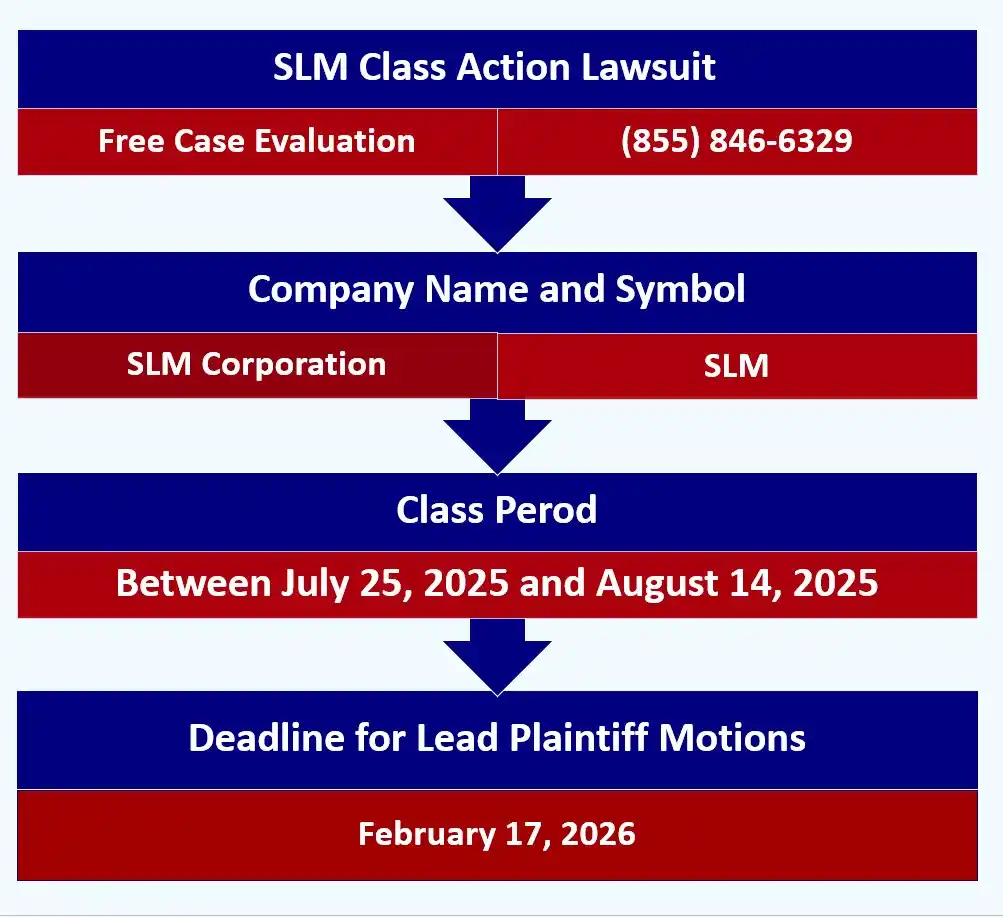
The SLM class action lawsuit seeks to represent investors in SLM Corporation a/k/a Sallie Mae (NASDAQ: SLM; SLMBP) securities between July 25, 2025 and August 14, 2025, inclusive (the “Class Period”). Captioned Zappia v. SLM Corporation a/k/a Sallie Mae, No. 25-cv-18834 (D.N.J.), the SLM class action lawsuit charges SLM and certain of SLM’s top executives with violations of the Securities Exchange Act of 1934.
If you suffered substantial losses and wish to serve as lead plaintiff of the SLM class action lawsuit, or just have general questions about you rights as a shareholder, please contact attorney Timothy L. Miles of the Law Offices of Timothy L. Miles, at no cost, by calling 855/846-6529 or via e-mail at [email protected].
Lead plaintiff motions for the SLM class action lawsuit must be filed with the court no later than February 17, 2026.
The Securities Act Of 1933
The Securities Act of 1933 is a federal legislation passed in response to the stock market crash of 1929. It was enacted to restore investor confidence in the financial markets and prevent fraudulent activities in the sale of securities. The act requires companies to provide detailed information about their securities offerings, including financial statements and business operations, to potential investors. It also established the Securities and Exchange Commission (SEC) to regulate the securities industry and enforce the provisions of the act. The Securities Act of 1933 plays a crucial role in ensuring transparency and disclosure in the securities market, protecting investors from fraud and securities fraud cases like the SLM class action lawsuit, and promoting fair and efficient capital markets.
The Securities Act of 1934
The
Securities Act of 1934 is a
significant piece of legislation that was enacted in the United States to regulate the securities industry. This act was passed in response to the stock market crash of 1929 and the subsequent
Great Depression. Its main purpose is to protect investors (as in the
SLM class action lawsuit) by ensuring that they have access to accurate and reliable information about securities being offered for public sale such as. The act requires companies to register with the SEC and disclose relevant financial information to the public. It also regulates the activities of brokers, dealers, and exchanges to ensure fair and transparent trading practices. Overall, the Securities Act of 1934 plays a
crucial role in promoting investor confidence and maintaining the integrity of the securities market.
The Trust Indenture Act of 1939?
The
Trust Indenture Act of 1939 is a federal law in the United States that r
egulates the issuance of corporate bonds and debentures. The Act was passed in response to the stock market crash of 1929 and the subsequent Great Depression, which highlighted the need for increased transparency and regulation in the financial markets. The Act requires companies to enter into a
trust indenture, which is a legally binding agreement between the issuer of the securities and a trustee who represents the interests of the bondholders.
The trust indenture outlines the terms and conditions of the bond issuance, including the interest rate, maturity date, and any provisions for early redemption or call options. It also establishes certain rights and protections for bondholders, such as the right to be notified of any material changes to the issuer’s financial condition or business operations.
The Trust Indenture Act of 1939 helps to ensure that investors have access to accurate and timely information about corporate bonds and provides a framework for resolving disputes between issuers and bondholders. It is administered by the SEC, which has the authority to bring enforcement actions against companies that violate the Act’s provisions. Overall, the Trust Indenture Act of 1939 plays a crucial role in promoting transparency and protecting investors in the corporate bond market.
What Is the Investment Company Act of 1940?
The
Investment Company Act of 1940 is a piece of legislation passed by the U.S. Congress that regulates investment companies. Its main purpose is to protect investors by setting forth rules and regulations that investment companies must adhere to. This act was established in response to the stock market crash of 1929 and subsequent Great Depression, which highlighted the need for stricter oversight of the investment industry.
Under the Investment Company Act of 1940, investment companies are required to register with the SEC and disclose certain information about their operations and investments. They are also subject to periodic examinations by the SEC to ensure compliance with the act’s provisions. The act also outlines certain restrictions on investment company activities, such as limitations on borrowing and prohibitions on engaging in certain types of transactions.
One of the key provisions of the Investment Company Act of 1940 is the requirement for investment companies to have a board of directors that acts in the best interests of shareholders. This board is responsible for overseeing the operations and investments of the company and making decisions that are in line with the company’s stated investment objectives. Additionally, the act places limits on fees and expenses that can be charged by investment companies, ensuring that investors are not subject to excessive costs.
Overall, the Investment Company Act of 1940 plays a crucial role in protecting investors and promoting transparency in the investment industry. By establishing regulations and oversight mechanisms, it helps to maintain the integrity and stability of investment companies, giving investors confidence in their financial decisions.

The Sarbanes-Oxley Act of 2002
The Sarbanes-Oxley Act (SOX) of 2002 is a U.S. federal law enacted after major accounting scandals (like Enron, WorldCom) to protect investors by boosting accuracy and transparency in corporate financial reporting, mandating strict internal controls, creating the PCAOB (Public Company Accounting Oversight Board) for auditor oversight, and holding executives personally accountable for financial statements, with severe penalties for non-compliance. It significantly changed corporate governance, demanding robust financial record-keeping, disclosure, and internal auditing processes.
Key Functions & Requirements
- Corporate Responsibility: CEOs and CFOs must personally certify financial reports, facing criminal liability for fraud. (Sec. 302);
- Internal Controls (Section 404): Companies must establish, document, test, and maintain strong internal controls for financial reporting.
- Auditor Oversight (PCAOB): Created the PCAOB to oversee auditors of public companies, setting auditing standards and inspecting firms.
- Financial Disclosure: Requires timely disclosure of material changes and accurate, complete periodic reports.
- Record Retention: Mandates specific retention periods for electronic records and communications.
- Whistleblower Protection: Protects employees who report corporate fraud or rule violations.
Purpose & Impact
- Restore Investor Trust: The primary goal is to protect investors by ensuring reliable corporate disclosures.
- Enhance Governance: Implemented stricter rules for corporate governance, ethics, and financial accountability.
- Prevent Fraud: Aimed to prevent future scandals by improving financial integrity and accountability.
The Dodd-Frank Wall Street Reform and Consumer Protection Act of 2010
One of the main objectives of the Dodd-Frank Act was to increase
transparency and accountability in the financial industry. It introduced a number of new regulations and requirements for banks and other financial institutions, including stricter oversight and reporting standards. It also established new agencies, such as the
Consumer Financial Protection Bureau, to ensure that consumers were protected from predatory practices.
Another key aspect of the Dodd-Frank Act was the implementation of measures to prevent future bailouts. The act created a framework for the orderly liquidation of large financial institutions that are deemed to be at risk of failure, rather than relying on taxpayer-funded bailouts. It also imposed stricter capital requirements on banks, in an effort to strengthen their financial stability and reduce the likelihood of another crisis.
Overall, the Dodd-Frank Wall Street Reform and Consumer Protection Act of 2010 had a significant impact on the financial industry. While it faced criticism from some who believed it placed too much regulatory burden on banks, others argued that it was necessary to prevent another financial meltdown. The act remains an important piece of legislation in the United States, and its impact continues to be debated and analyzed.
The Jumpstart Our Business Startups Act of 2012
The
Jumpstart Our Business Startups Act of 2012, also known as the JOBS Act, is a piece of legislation that was signed into law by President Barack Obama with the aim of
encouraging the growth and development of small businesses in the United States. The act was introduced as a response to the economic downturn of the late 2000s and seeks to address the challenges faced by entrepreneurs and startups in accessing capital and navigating regulatory requirements.
One of the key provisions of the JOBS Act is the relaxation of certain securities regulations, particularly those related to crowdfunding. This allows small businesses to raise capital by soliciting investments from a large number of individuals, often through online platforms. Prior to the act, crowdfunding was limited to donations or rewards-based campaigns. The JOBS Act opened up the possibility for equity crowdfunding, whereby investors can receive shares in the company in exchange for their investment.
Another important aspect of the JOBS Act is the creation of a new category of companies called “emerging growth companies” (EGCs). These are defined as companies with total annual gross revenues less than $1 billion during their most recent fiscal year. EGCs are eligible for certain exemptions and reduced reporting requirements, making it easier for them to go public and access capital markets.
Overall, the Jumpstart Our Business Startups Act of 2012 seeks to promote entrepreneurship and innovation by reducing regulatory barriers and increasing access to capital for small businesses. By providing more opportunities for fundraising and easing the burden of compliance, the act aims to foster economic growth and job creation in the United States.
Allegations in the Stride Class Action Lawsuit