Introduction to Securities Class Action Lawsuits
The landscape of securities class action lawsuits has undergone significant transformations in 2024, reflecting shifts in market dynamics, regulatory scrutiny, and investor behavior. This article delves into the latest trends, statistics, and implications surrounding securities litigation, providing a comprehensive overview for issuers, investors, and legal practitioners alike.
Understanding Securities Class Actions

Securities class actions represent a significant legal mechanism for investors who have suffered financial losses due to corporate malfeasance. These lawsuits typically arise when a company or its executives engage in deceptive practices that mislead investors about the company’s financial health or prospect.
The goal of such litigation is to hold the perpetrators accountable and secure compensation for the affected investors. Securities fraud encompasses a range of activities, including insider trading, false financial statements, and misleading disclosures, all of which can severely impact market integrity and investor confidence.
In a class action context, a group of investors collectively brings the lawsuit against the defendant, which could be a corporation or its executives. This collective approach is particularly powerful in the securities realm because it allows individual investors, who might not have the resources to pursue litigation on their own, to band together and seek justice.
The class action mechanism ensures that the legal process is efficient and that the interests of all affected investors are represented.
The complexity of securities fraud class action lawsuits requires plaintiffs to navigate a labyrinth of legal standards and procedural hurdles. One of the most significant challenges is surviving a motion to dismiss, a legal maneuver by the defendants to have the case thrown out before it reaches trial.
Understanding the nuances of securities class actions is crucial for any stakeholder involved, as it sets the stage for the strategic decisions that will follow.

Importance of Monitoring Trends
Understanding the trends in securities class action lawsuits is crucial for various stakeholders, including corporate issuers, investors, and legal professionals. By analyzing filing patterns and settlement amounts, stakeholders can better navigate the complexities of securities litigation and implement effective risk management strategies.
Key Players in Securities Litigation
- Investors: Often the lead plaintiffs, they seek compensation for losses incurred due to alleged securities violations.
- Corporate Issuers: Companies facing lawsuits must manage their public disclosures and governance practices to mitigate risks.
- Legal Practitioners: Attorneys practicing in securities law play a vital role in representing both plaintiffs and defendants in these cases.

Securities Class Action Filing Trends in 2024
The year 2024 has seen a notable resurgence in the number of securities class action filings, reversing a trend of decline observed in previous years. This increase is indicative of heightened scrutiny on corporate practices and a more aggressive approach by plaintiffs’ attorneys.
Year-on-Year Comparison
- 2022: A significant drop in filings, with only 333 cases recorded.
- 2023: A slight recovery, with filings increasing to 378.
- 2024: A substantial rise, with filings reaching 420, marking a 11% increase from the previous year.
This upward trajectory suggests a renewed focus on corporate accountability and investor protection.

Sector-Specific Developments
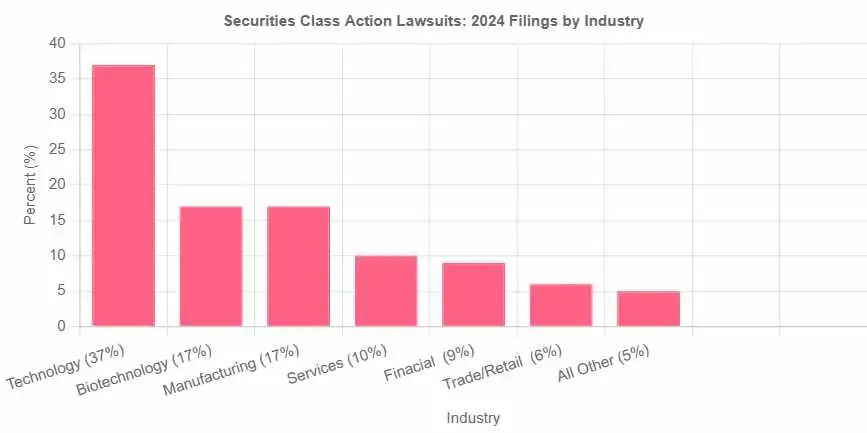
Certain sectors have experienced more pronounced increases in litigation activity. Notably, the biotechnology sector has seen a surge in filings, driven by heightened scrutiny of clinical trial results and regulatory compliance.
- Biotechnology: Filings rose from 54 in 2023 to 67 in 2024, a 24% increase.
- Consumer Non-Cyclical: This sector has also witnessed increased litigation, reflecting broader market trends.

Financial Implications of Securities Class Actions
The financial stakes involved in securities class action lawsuits have escalated significantly, with record-breaking settlement amounts and increased average losses reported in 2024.
Record Securities Class Action Settlements Amounts
The total settlement amount for securities class actions in 2024 reached an unprecedented $4.1 billion, the highest in the history of securities litigation. This figure underscores the growing financial implications for companies facing lawsuits. Here are the top five settlements:

Disclosed Dollar Loss (DDL) Metrics
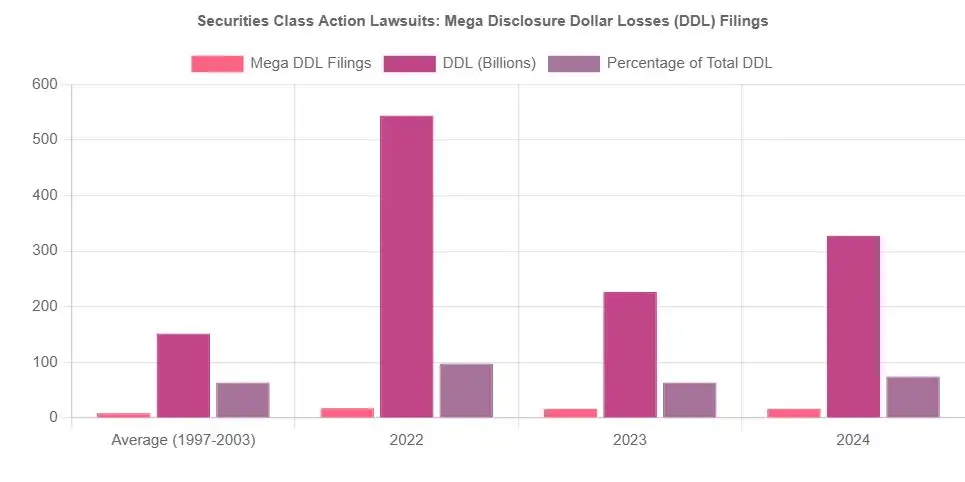
The DDL metrics for 2024 reveal substantial developments in the magnitude of alleged losses in securities class action settlements:
- Mega DDL Filings: A record 27 cases with alleged losses exceeding $5 billion.
- Average DDL: Increased to $438 million, nearly double the historical average of $237 million from 1997 to 2023.
These figures indicate a shift towards more significant financial impacts in securities litigation, necessitating enhanced risk management strategies for corporate issuers.
Litigation Probability and Risk Assessment to Being Subject to a Securities Class Action
The likelihood of a U.S. exchange-listed company becoming the subject of a securities class action has increased, reflecting a broader targeting of alleged violations across the market, the result of which would be higher securities class action settlements.
Increased Litigation Risk
- Overall Probability: The probability of a company facing a core federal filing rose from 3.2% in 2023 to 3.9% in 2024.
- S&P 500 Companies: Conversely, the litigation probability for S&P 500 companies decreased from 7.1% to 6.1%, indicating a potential shift in focus towards smaller and mid-cap issuers.
This divergence suggests that plaintiffs may be identifying vulnerabilities in disclosure practices among smaller companies, prompting a reassessment of risk exposure.
Implications for Corporate Issuers
Given the increased probability of litigation, corporate issuers must prioritize robust risk management protocols. This includes:
- Enhanced Disclosure Practices: Companies should ensure transparency in their communications, particularly regarding emerging technologies and product development timelines.
- Governance Structures: Strengthening corporate governance can mitigate perceived vulnerabilities and reduce litigation risk.
The Role of Institutional Investors in Securities Class Action Lawsuits

Regulatory Environment and Enforcement Actions
The regulatory landscape surrounding securities class action lawsuits is continually evolving, with the Securities and Exchange Commission (SEC) playing a pivotal role in enforcement actions.
Recent SEC Enforcement Statistics
In November 2024, the SEC reported a significant decline in enforcement actions for the fiscal year ending September 30, 2024:
- Total Actions: 583 enforcement actions, a 26% decrease from 784 in 2023.
- Standalone Actions: 431 standalone enforcement actions, down 14% from the previous year.
This reduction may reflect changing regulatory priorities or resource constraints within the SEC, warranting close attention from market participants.
Implications for Market Participants
The decline in enforcement actions may signal a shift in the SEC’s focus, prompting companies to reassess their compliance programs and risk management strategies. Stakeholders should remain vigilant and adapt to the evolving regulatory landscape. As show below, securities class action settlements went down substantially in 2024.

- For Corporate Issuers: The increased probability of being subject to a securities class action, coupled with the rising magnitude of alleged losses, necessitates enhanced risk management protocols, particularly regarding public disclosures related to emerging technologies, pandemic impacts, and product development timelines. Companies in the biotechnology sector face particularly elevated litigation risk and should implement corresponding risk mitigation strategies.
- For Investors: The concentration of filings in specific trend categories and sectors provides valuable insight for portfolio risk assessment. The dramatic increase in average DDL values suggests potentially greater financial exposure when allegations emerge, warranting careful consideration of disclosure quality and corporate governance practices in investment decisions.
- For Insurers and Underwriters: The record number of mega DDL filings and substantially increased average loss allegations may necessitate reassessment of Directors and Officers liability coverage terms, pricing models, and risk selection criteria, particularly for companies operating in high-risk sectors or engaging with trend-vulnerable business activities.
- For Legal Practitioners: The shifting distribution of cases across trend categories, coupled with divergent litigation probabilities between large-cap and broader market issuers, may indicate evolving plaintiff strategies and case selection criteria that warrant consideration in both plaintiff and defense contexts.
Conclusion
The securities class action landscape in 2024 is characterized by increased filing activity, record settlement amounts, and heightened litigation risks. As market dynamics continue to shift, stakeholders must remain proactive in managing their exposure to securities litigation. By understanding the trends and implications outlined in this article, corporate issuers, investors, and legal practitioners can navigate the complexities of securities class action lawsuits more effectively.
This article provides a comprehensive overview of the current state of securities class action lawsuits, and securities class action settlements, emphasizing the importance of awareness and proactive measures for all stakeholders involved.
