Introduction to Pharmacy Medication Errors in Nashville
As a Pharmacy Medication Error Lawyer in Nashville, I am very aware that pharmacy medication errors represent a significant concern within Nashville’s healthcare system. Medication errors are among the most common medical errors, harming at least 1.5 million people every year. The extra medical costs of treating drug-related injuries occurring in hospitals alone are at least to $3.5 billion a year.
- These mistakes can range from incorrect dosages to administering the wrong medication altogether.
- Understanding the scope of such errors is crucial for patients, as it empowers you to recognize potential dangers in your healthcare journey.
- In Nashville, pharmacies play a vital role in patient care, but the complexity of prescriptions and the high volume of medications can lead to oversights.
Locally, the Nashville healthcare landscape presents unique challenges.
- Pharmacies often juggle a heavy workload, especially during peak hours, which can result in hurried decisions. Additionally, communication gaps between healthcare providers can contribute to misunderstandings regarding prescriptions.
- Recognizing these factors can help you appreciate the importance of vigilance when it comes to your medications.
- To protect yourself, it is essential to be aware of the various types of errors that can occur.
- By understanding the potential pitfalls, you can take proactive steps to ensure your safety.
- This awareness can aid in minimizing the risk of medication errors in your treatment regimen, thus fostering a safer healthcare experience.
If you were the victim of a medication error, contact Timothy L . Miles, a Pharmacy Medication Error Lawyer in Nashville for a free case evaluation. You could be eligible for a pharmacy medication error lawsuit and possible entitled to significant compensation (855) 846-6529 or [email protected],

What are Pharmacy Medication Errors?
The National Coordinating Council for Medication Error and Prevention (NCCMERP) has adopted the following definition of a pharmachy medication error:
“A medication error is any preventable event that may cause or lead to inappropriate medication use or patient harm while the medication is in the control of the health care professional, patient, or consumer. Such events may be related to professional practice, health care products, procedures, and systems, including prescribing, order communication, product labeling, packaging, and nomenclature, compounding, dispensing, distribution, administration, education, monitoring, and use.”
Common Pharmacy Medication Errors
According to the National Libriary of Medicine, the following are common pharmacy medication errors:
-
Omission
-
Unauthorized medication
-
Wrong dose prescription or wrong dose preparation
-
Administration errors such as incorrect route of administration, administering the drug to the wrong patient, extra dose, or wrong rate
-
Monitoring errors such as failing to take into account the patient’s liver and renal function, failing to document allergy or potential for drug interaction
-
Compliance errors such as not following protocol or rules established for dispensing and prescribing medications
Common Causes for Pharmacy Medication Errors
Some of the most common causes of pharmachy medication errors include:
- Incorrect Preparation
- These occur with compounded prescriptions or medications that require a specific diluent for reconstitution (.liquid (diluent) to a powdered or concentrated substance to return it to its natural, usable liquid state)
- Incorrect Strength
- Incorrect strength. Human error is usually the cause when similar bottles or syringes with the incorrect strength are selected.
- Incorrect Rate
- The incorrect rate of administration occurs with medications given as IV push or infusions.This may cause adverse drug reactions: These include:
- Dermatologic: Rashes, hives, itching, or swelling.
- Gastrointestinal: Nausea, vomiting, diarrhea, or constipation.
- Neurological: Dizziness, headache, drowsiness, or blurred vision.
- Severe (Anaphylaxis): Difficulty breathing, throat swelling, or sudden, severe drop in blood pressure.
- The incorrect rate of administration occurs with medications given as IV push or infusions.This may cause adverse drug reactions: These include:
- Incorrect Timing
- Alterations in the absorption of some medications occur in the presence or absence of food. The result may be underdosing or overdosing.
- Incorrect Dose
- Illegible Writing
- The Institute of Safe Medication Practices recommends eliminating handwritten orders and prescriptions.
- Consusing Medications
- Confusing two medications with similar names or similar appearance
- Failure to Disclose
- Failure to disclose possible side effects of the medication being prescribed
Common Factors for Pharmacy Medication Errors
According to a publication by the World Health Organization titled “Medication Errors: Technical Series on Safer Primary Care,” the following factors have been associated with an increased risk of medication errors in the primary care setting:
-
Lack of therapeutic training or inadequate knowledge
-
Poor communication with patients
-
A language barrier between healthcare professionals and patients
-
Interruptions and distractions
-
Lack of accuracy of patient records and a poor interface between prescriber and electronic health records
-
Inadequate naming, labeling, and packaging of medicines
-
Poor communication with secondary care providers
Proving negligence in pharmacy medication errors is a critical component of seeking justice. To establish negligence, you must demonstrate that the pharmacy failed to meet the standard of care expected within the industry. This typically involves proving four key elements:
- Duty of Care: The pharmacy had a duty to provide safe and effective medication to you as a patient. This includes accurately filling prescriptions and providing necessary counseling on medication use.
- Breach of Duty: You need to show that the pharmacy breached its duty of care. This could involve demonstrating that the pharmacist made a mistake in filling your prescription or failed to provide proper warnings about potential side effects.
- Causation: Establishing a direct link between the pharmacy’s actions and your injury is essential. You must demonstrate that the error directly led to your harm or worsened your medical condition.
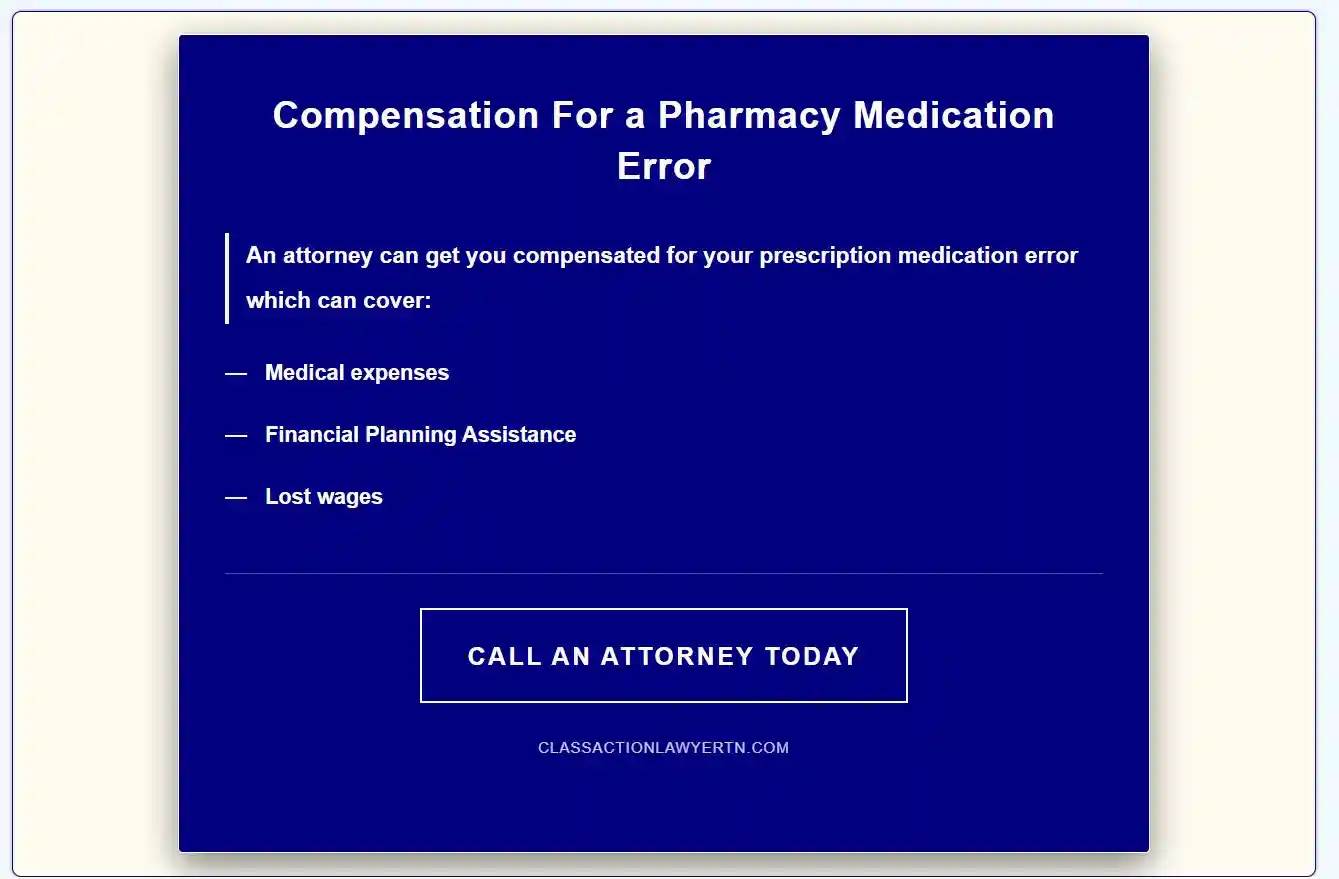
- Damages: Finally, you must provide evidence of the damages you suffered as a result of the pharmacy medication error. This can include medical bills, lost income, and emotional distress.
Steering the the complex arena of proving negligence can be challenging. Partnering with a Nashville pharmacy medication error lawyer like Timothy L.. Miles can streamline this process and enhance your chances of a favorable outcome.
If you were the victim of a medication error, contact Timothy L . Miles, a Pharmacy Medication Error Lawyer in Nashville for a free case evaluation. You could be eligible for a pharmacy medication error lawsuit and possible entitled to significant compensation (855) 846-6529 or [email protected],
Filing a pharmacy medication error lawsuit can be a daunting process, but understanding what to expect can ease your anxiety. Here is a step-by-step breakdown of the typical legal process:
- Consultation: Your journey begins with a free case evaluation with a Nashville pharmacy medication error lawyer. They will review the details of your case, assess your eligibility for a claim, and explain the legal options available to you.
- Investigation: If you choose to proceed, your attorney will conduct a thorough investigation. This includes gathering evidence, interviewing witnesses, and consulting medical experts to build a strong case.
- Filing a Claim: Once your attorney has gathered sufficient evidence, they will file a claim on your behalf. This document outlines the details of your case, including the nature of the prescription medication error and the damages you are seeking.
- Negotiation: After filing, the opposing party may respond with a settlement offer. Your attorney will negotiate on your behalf to secure fair compensation, ensuring that your best interests are represented.
- Litigation: If a satisfactory settlement cannot be reached, your case may proceed to trial. Your attorney will represent you in court, presenting evidence and advocating for your rights.
Understanding this process can empower you as you navigate the complex legal aspects of your claim. Your Nashville pharmacy medication error lawyer will be with you every step of the way, providing support and guidance.
If you believe you have been a victim of medication error, it is vital to take action promptly. Here are some essential steps to follow:
- Seek Medical Attention: Your health should be your top priority. If you experience adverse effects from a medication error, seek medical attention immediately.
- Document Everything: Keep detailed records of your medications, prescriptions, and any communications with the pharmacy. This documentation will be crucial for your case.
- Consult an Attorney: Reach out to a Nashville pharmacy medication error lawyer like Timothy L. Miles, a competent and well-respected lawyer, to discuss your situation. They can provide insights into your legal options and help you determine the best course of action.
- File a Complaint: Consider filing a complaint with the pharmacy and the appropriate regulatory body. This can help raise awareness of the issue and may contribute to systemic improvements.
- Prepare for the Legal Process: Work with your attorney to gather evidence and prepare for any necessary legal proceedings. Your attorney will guide you through this process, ensuring your rights are protected.
Taking these steps can significantly impact your recovery from a prescription medication error. By being proactive, you can seek justice and help prevent similar incidents from occurring in the future.
In addition to pharmacy prescription medication errors, other lawsuits involving prescription drugs, including dangerous drug lawsuits evolve as new therapies enter the market and as older drugs reveal long-term risks. In 2026, attorneys frequently evaluate claims involving:
- Metabolic and weight-management drugs, including GLP-1 and related therapies (often discussed on hub pages that also reference drugs such as Trulicity and Zepbound, the latter of which has been linked to severe side effects like vision loss)
- Anticoagulants and blood thinners
- Certain antidepressants, antipsychotics, and seizure medications
- Antibiotics and drugs associated with tendon injury or neurologic effects
- Hormone therapies and fertility-related drugs
- Immunosuppressants, including Dupixent, which has faced scrutiny for potential cancer risks
- Drugs tied to severe gastrointestinal injury, pancreatitis, or gallbladder disease
- Products with complex device-drug combinations, including injectors or implant-delivery systems
Frequently Asked Questions
1. What should I do if I believe I have been harmed by a pharmacy medication error in Nashville?
If you suspect that you’ve been harmed due to a pharmacy medication error in Nashville, it’s crucial to act quickly and carefully. First, seek immediate medical attention for any adverse effects or symptoms you’re experiencing. Preserve all relevant evidence—keep the medication bottles, prescription slips, receipts, and any packaging.
Document your symptoms, the timeline of events, and communications with pharmacists or healthcare providers. Then, consult a specialized Nashville Pharmacy Error Lawyer or Nashville Medication Error Lawyer who can review your case details and advise you on the best course of action. An experienced attorney will be able to determine if your situation meets the criteria for being eligible for a pharmacy error lawsuit and help you navigate the complexities of legal proceedings.
2. How do I know if I am eligible for a pharmacy error lawsuit in Nashville?
Eligibility for a pharmacy error lawsuit generally depends on proving that a mistake occurred and that it directly caused harm or injury. Common types of pharmacy medication errors include receiving the wrong prescription, incorrect dosage instructions, dangerous drug interactions overlooked by the pharmacist, or labeling mistakes.
If you suffered physical injury, emotional distress, or financial loss as a result of such errors in Nashville, you may have grounds for legal action. A seasoned Nashville Pharmacy Injury Lawyer or Nashville Pharmacy Error Attorney can assess your specific circumstances—such as medical records, pharmacy documentation, and expert testimony—to determine your eligibility and guide you through the process of seeking justice.
3. What types of compensation can I receive if I win a medication error case in Nashville?
Victims of medication errors in Nashville may be entitled to various forms of compensation depending on the nature and severity of their injuries. Compensation typically covers medical expenses (including hospitalization, surgeries, ongoing treatments), lost wages due to missed work, pain and suffering (both physical and emotional), loss of quality of life, and sometimes punitive damages intended to deter future negligence by pharmacies or healthcare providers.
A skilled Nashville Medication Error Lawyer will work diligently to ensure you receive fair compensation for all aspects of your suffering caused by a prescription error or other pharmacy mistake.
4. Why should I hire a Nashville Pharmacy Error Attorney instead of handling my case alone?
Handling a pharmacy error lawsuit without professional legal representation can be overwhelming due to the complex medical and legal issues involved. A dedicated Nashville Pharmacy Error Attorney possesses deep knowledge of state laws governing pharmaceutical negligence as well as access to medical experts who can testify about standards of care and causation.
Your attorney will gather evidence, negotiate with insurance companies or opposing counsel, file necessary paperwork within Tennessee’s statutes of limitations, and advocate fiercely on your behalf in court if needed. Hiring an experienced lawyer greatly increases your chances of obtaining full compensation for a medication error while allowing you to focus on healing.
5. What are common causes of medication errors in Nashville pharmacies?
There are several common causes behind medication errors in Nashville, including miscommunication between healthcare providers and pharmacists; look-alike or sound-alike drug names; illegible handwriting on prescriptions; failure to check for drug allergies or interactions; dispensing incorrect dosages; labeling mistakes; understaffed pharmacies leading to rushed work; and lack of proper patient counseling at pick-up.
These errors can lead to serious health consequences ranging from allergic reactions to life-threatening complications. If you’ve suffered harm due to any kind of pharmacy-related mistake in Nashville, consulting with a reputable Nashville Pharmacy Injury Lawyer is essential for understanding