
This guide explains what a Nashville birth injury attorney does, how birth injury cases are evaluated, what parents should do first, and how Tennessee law can affect timelines, proof requirements, and compensation. It is written to support informed decision-making, not to replace individualized legal advice.
If your child suffered birth injury negligence, contact Nashville birth injury attorney Timothy L. Miles for a free case evaluation today If you about a birth injury lawsut. You may be eligible for a birth injury lawsuitand possiby entitled to substantial birth injury compensation. The call is free and so is the fee unless we win or settle your case so call today and see what a Birth injury lawyer in Nashville can do for you. (855) 846-6529 or [email protected].

The Role of a Nashville Birth Injury Attorney (And Why It Matters Early)
A Nashville birth injury attorney represents families when an injury may have been caused by preventable medical error before, during, or shortly after labor and delivery. The attorney’s role is not limited to filing a lawsuit. In well-run cases, early legal work is evidence preservation work.
A qualified attorney typically helps parents:
- Obtain and organize records from prenatal care, labor and delivery, neonatal care, and follow-up treatment.
- Identify potential breaches of the standard of care, including monitoring failures, delayed escalation, medication errors, and surgical errors.
- Consult appropriate medical experts who can evaluate whether negligence likely occurred and whether it caused harm.
- Quantify damages, including life care costs, therapies, assistive technology, home modifications, and future lost earning capacity.
- Manage Tennessee malpractice procedure, including pre-suit requirements and expert proof expectations.
- Negotiate with insurers and defense counsel while preparing for trial if resolution is not reasonable.
Timing matters because clinical records, fetal monitoring strips, imaging, medication logs, staffing notes, and internal communications can be difficult to obtain or can become harder to interpret as time passes. Proactive action supports future success; repetition matters here: protect the child’s health, protect the evidence, protect the timeline.
In some cases where there may be a broader pattern of negligence or misconduct within a healthcare facility that goes beyond individual incidents such as birth injuries or other medical malpractice cases in Nashville. Families might also consider consulting with a Nashville whistleblower attorney. These attorneys specialize in helping individuals who expose wrongdoing within organizations which could include unsafe practices or violations of patient rights.
Understanding Birth Injuries vs. Birth Defects (A Foundational Distinction)
Parents often encounter confusing terminology. A birth injury generally refers to harm that occurs due to trauma, oxygen deprivation, or medical mismanagement around delivery. A birth defect usually refers to a congenital condition that developed during pregnancy, often due to genetic or environmental factors, and may not involve malpractice.
This distinction is not always obvious at the beginning. Some conditions have overlapping presentations. A Nashville birth injury attorney, working with medical experts, focuses on two legal questions:
- Was there a deviation from the applicable standard of care?
- Did that deviation cause the injury and measurable damages?
Even when a child has a congenital vulnerability, negligence may still be actionable if improper management worsened the outcome.
Common Birth Injuries Seen in Nashville Birth Injury Claims
Birth injury cases are fact specific, but certain injury categories appear repeatedly in litigation and clinical review. These are examples, not diagnoses.
Hypoxic-Ischemic Encephalopathy (HIE) and Oxygen Deprivation Injuries
HIE is a brain injury caused by reduced oxygen and blood flow. In legal analysis, the focus often includes fetal monitoring interpretation, response time to distress, decision-to-incision timing for emergent cesarean delivery, and management of complications such as placental abruption or uterine rupture.
Cerebral Palsy (CP) Related to Birth Events
Cerebral palsy is a group of disorders affecting movement and posture. Not all CP is caused by malpractice. When it is linked to intrapartum events, review commonly includes fetal heart tracings, labor progression, infection management, maternal vitals, and timely intervention.
Brachial Plexus Injuries (Erb’s Palsy) and Shoulder Dystocia Complications
Shoulder dystocia is an obstetric emergency. A brachial plexus injury can occur when traction forces affect the nerves controlling the arm. Legal review often evaluates whether risk factors were recognized, whether appropriate maneuvers were used, and whether excessive force was applied.
Skull Fractures, Intracranial Hemorrhage, and Instrument-Assisted Delivery Errors
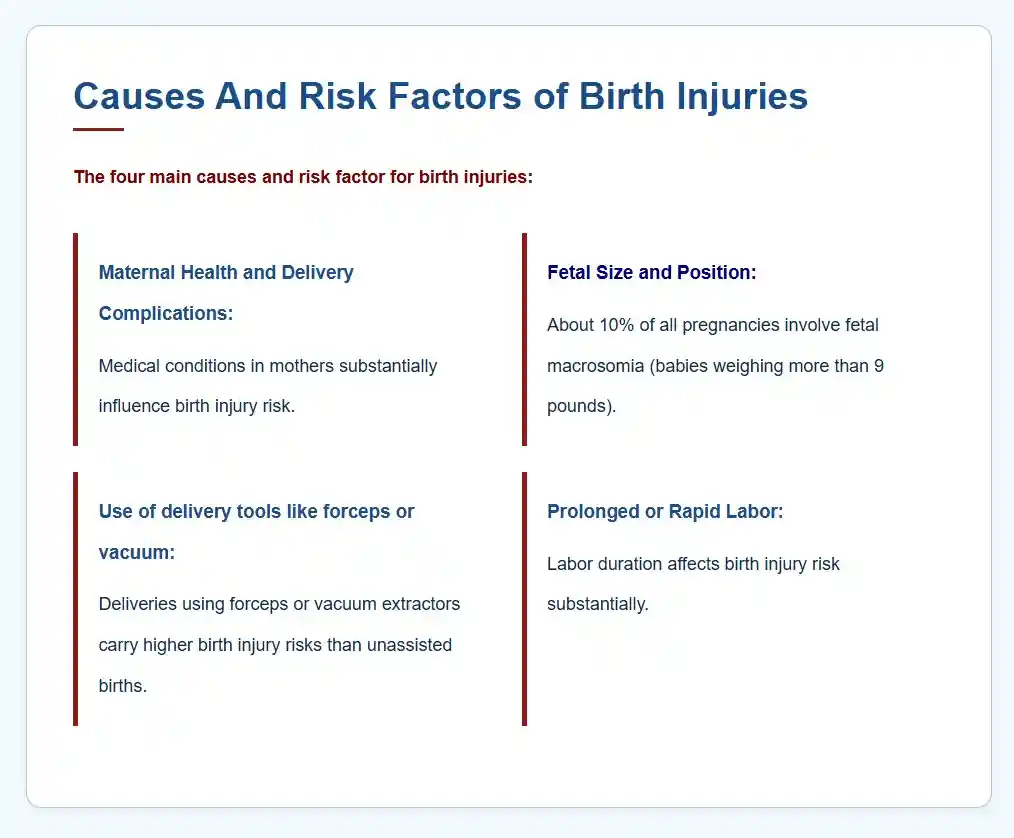
Vacuum extraction and forceps deliveries can be appropriate in certain circumstances. They can also produce preventable injury when used improperly, used too long, or used without proper indication or technique.
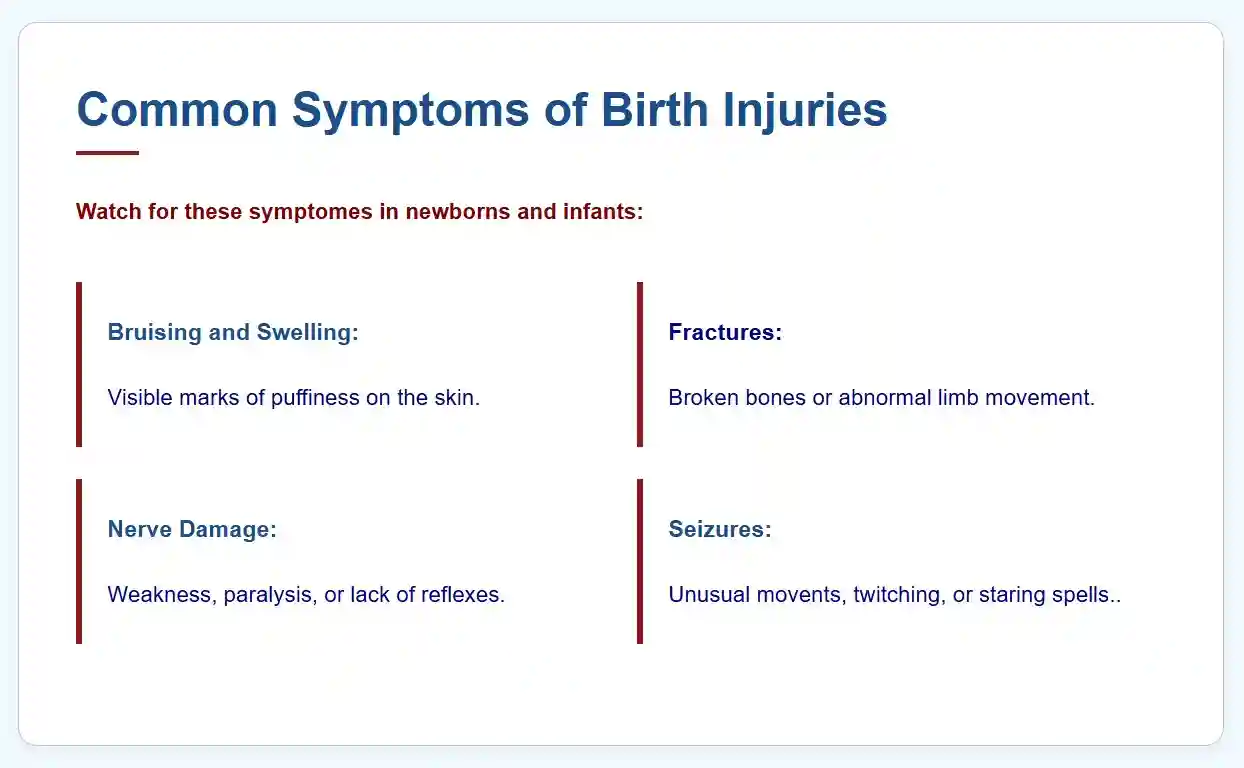
Facial Nerve Damage, Fractures, and Soft Tissue Trauma
Some trauma resolves. Some does not. Documentation of newborn exams, imaging, and follow-up care can be central to proving both severity and causation.
Maternal Injuries That Can Overlap With Neonatal Harm
A birth injury case may include maternal harm such as hemorrhage, infection, surgical complications, or delayed diagnosis. These issues can also create neonatal risks when delays occur.
If your child suffered birth injury negligence, contact Nashville birth injury attorney Timothy L. Miles for a free case evaluation today If you about a birth injury lawsut. You may be eligible for a birth injury lawsuitand possiby entitled to substantial birth injury compensation. The call is free and so is the fee unless we win or settle your case so call today and see what a Birth injury lawyer in Nashville can do for you. (855) 846-6529 or [email protected].
Common Causes of Preventable Birth Injury (Medical Negligence Categories)
A Nashville birth injury attorney evaluates negligence through categories that align with hospital practice, obstetric protocols, and nursing standards.
Common allegations include:
- Failure to monitor fetal distress or misinterpretation of fetal heart rate strips.
- Failure to respond appropriately to signs of distress, including delayed escalation to an obstetrician, anesthesia, or surgical team.
- Delayed emergency C-section, including operational delays and decision-making delays.
- Improper use of vacuum or forceps, including excessive attempts or improper placement.
- Medication errors, such as oxytocin mismanagement that leads to uterine tachysystole and fetal compromise.
- Failure to diagnose and treat infection, including chorioamnionitis, sepsis risk, or prolonged rupture of membranes issues.
- Failure to manage maternal conditions, such as preeclampsia, gestational diabetes complications, or hemorrhage risks.
- Neonatal resuscitation failures, including delayed or inadequate interventions immediately after birth.
In high-stakes obstetrics, small process failures can cascade. Clarity matters, and repetition matters: the standard of care is about reasonable clinical decisions, reasonable timing, and reasonable escalation.
When to Contact a Nashville Birth Injury Attorney (Practical Triggers)
Parents often hesitate because they fear overreacting. In practice, an early consultation is less about accusation and more about preservation and assessment.
Consider contacting a Nashville birth injury attorney if:
- Your child required NICU admission, therapeutic hypothermia, ventilation, or had seizures soon after birth.
- You were told there was fetal distress, low Apgar scores, or concerning blood gas results.
- Delivery involved shoulder dystocia, vacuum, forceps, or an emergency C-section.
- There were unexpected neurological findings, feeding difficulties, tone abnormalities, or developmental delays.
- You suspect delays, poor communication, or inconsistent explanations from the care team.
- You are facing long-term therapy plans and need clarity on resources and accountability.
A consultation should also help you understand whether the facts align with negligence, or whether the outcome appears to be a known complication without a provable breach.
What to Do First If You Suspect a Birth Injury Claim in Nashville
The first steps should support both medical outcomes and legal integrity.
1) Prioritize Medical Follow-Up and Early Intervention
Continue care with pediatric specialists as recommended. Ask for referrals to pediatric neurology, developmental pediatrics, and therapy providers when appropriate. Early intervention can improve function and can also create well-documented clinical timelines.
2) Request and Preserve Records (Without Altering Anything)
You can request medical records directly, but an attorney can often obtain a more complete set, including fetal monitoring strips and audit trails when available. Save:
- Discharge summaries
- NICU notes
- Imaging reports
- Lab results
- Therapy evaluations
- Bills and insurance correspondence
Keep a simple written timeline of events, dates, and names. Avoid editing or “cleaning up” screenshots or documents.
While these steps are crucial for your child’s health and future, it’s equally important to understand the broader implications of potential birth injuries. For instance, research shows that birth injuries can lead to various long-term challenges that require ongoing medical attention and resources.
3) Document Developmental Milestones and Daily Care Impacts
Damages in birth injury claims are not abstract. Keep notes about therapies, equipment, missed work, and caregiving demands. This supports accurate valuation later.
4) Avoid Signing Broad Releases Without Reviewing Them
Insurers may seek authorizations that allow broad access to unrelated records. A Nashville birth injury attorney can help limit disclosures to what is appropriate.
How a Nashville Birth Injury Attorney Evaluates a Case (Standard of Care and Causation)
Birth injury litigation is evidence intensive. The legal framework is built around duty, breach, causation, and damages, but the practical work is medical.
A professional evaluation commonly includes:
- Record chronology: prenatal risk factors, labor course, interventions, neonatal condition.
- Fetal monitoring analysis: category patterns, variability, decelerations, response times.
- Labor management: induction/augmentation decisions, uterine activity, maternal vitals.
- Decision points: when escalation was warranted versus when it occurred.
- Causation analysis: whether earlier intervention likely would have avoided or reduced injury.
- Damages modeling: life care planning, assistive needs, therapy trajectory, and future costs.
A credible claim needs credible proof. A strong claim is supported by consistent documentation, qualified expert review, and a coherent medical narrative.
Tennessee Birth Injury Lawsuit: Key Legal Concepts Parents Should Know
Tennessee has specific procedural rules for medical malpractice (often referred to in statutes as health care liability). A Nashville birth injury attorney will tailor advice to the facts, but parents benefit from understanding the core structure.
Tennessee Statute of Limitations and Statute of Repose (Why Deadlines Can Be Strict)
Medical malpractice claims are governed by strict time limits. In many cases, a claim must be filed within a defined period from the date of injury or discovery, and a separate outside limit may apply regardless of discovery.
Because birth injury cases involve minors and complex discovery issues, deadlines can be nuanced. The safest approach is proactive: consult counsel early so the timeline is evaluated precisely.
Pre-Suit Requirements and Expert Support
Tennessee practice often involves formal pre-suit steps in health care liability cases, including notices and expert-related requirements. These steps can be decisive. Missing a procedural requirement can jeopardize a meritorious case.
Comparative Fault and Alternative Causation Arguments
Defendants may argue that the injury was unavoidable, caused by congenital factors, or linked to maternal conditions. A well-prepared case anticipates these defenses through expert analysis and complete records.
If your child suffered birth injury negligence, contact Nashville birth injury attorney Timothy L. Miles for a free case evaluation today If you about a birth injury lawsut. You may be eligible for a birth injury lawsuitand possiby entitled to substantial birth injury compensation. The call is free and so is the fee unless we win or settle your case so call today and see what a Birth injury lawyer in Nashville can do for you. (855) 846-6529 or [email protected].
Compensation in a Nashville Birth Injury Case (Damages Categories)
Compensation is intended to address both economic and non-economic harms, subject to Tennessee law and case-specific facts. A Nashville birth injury attorney typically evaluates damages using a forward-looking framework because many costs arise over years.
Common categories include:
- Past and future medical expenses
- Therapies and rehabilitation (PT, OT, speech therapy, feeding therapy)
- Assistive technology and durable medical equipment
- Home and vehicle modifications
- In-home care, respite care, and attendant services
- Special education supports
- Lost earning capacity (in appropriate cases)
- Pain and suffering and loss of enjoyment of life (subject to legal limits and proof requirements)
- Parents’ out-of-pocket costs and, in some cases, lost wages related to caregiving
The purpose is clarity and stability. The method is documentation and expert-backed forecasting. The goal is long-term support, not short-term assumptions.
How Nashville Birth Injury Attorneys Work With Medical Experts
Medical expert testimony is central in most birth injury cases. Experts may include:
- Obstetricians (OB/GYN)
- Maternal-fetal medicine specialists
- Neonatologists
- Pediatric neurologists
- Neuroradiologists
- Nursing experts
- Life care planners
- Economists and vocational experts
The attorney’s role is to align expert review with the legal elements. Parallelism is useful here: experts clarify the standard of care, experts explain causation, experts support damages.

Settlement vs. Trial: How Decisions Are Typically Made
Many birth injury cases resolve through negotiated settlement, but meaningful settlement usually requires trial-ready preparation. A Nashville birth injury attorney should be able to explain:
- The strength of liability evidence
- The credibility and consistency of medical documentation
- The projected lifetime costs supported by expert planning
- The risks of litigation, including defenses and procedural issues
- The timing and structure of any potential resolution, including structured settlements where appropriate
A parent-centered approach emphasizes informed consent in legal strategy. You should understand what is being traded, what is being protected, and what is being prioritized.
How to Choose the Right Nashville Birth Injury Attorney (A Due Diligence Checklist)
Not every personal injury lawyer is equipped for medical malpractice litigation, and not every malpractice lawyer focuses on birth injury complexity. Use a structured selection process.
When speaking with a Nashville birth injury attorney, ask:
- Do you regularly handle birth injury and obstetric malpractice cases?
- Who reviews the medical records, and which experts do you use?
- What is your process for obtaining fetal monitoring strips and NICU records?
- How do you evaluate causation in HIE or cerebral palsy cases?
- What is your approach to life care planning and future damages?
- Who will manage my case day-to-day?
- How do fees and costs work, and what expenses might I be responsible for?
- Have you taken similar cases to trial when settlement was not acceptable?
The objective is fit and capability. The objective is communication and transparency. The objective is preparedness. The Law Offices of Timothy L. Miles offers free case evaluations and takes all cases on a contingency basis.
In some instances, there may be potential whistleblower situations that arise within the healthcare system during these cases. In such scenarios, it’s crucial to consult with a whistleblower lawyer in Nashville who can provide guidance on how to proceed while protecting your rights.
For families navigating these challenging circumstances, understanding the process of filing a birth injury lawsuit can be invaluable. This guide on filing a birth injury lawsuit offers detailed insights that can help parents make informed decisions during this difficult time.
Nashville Birth Injury Attorney Fees: What Parents Usually Pay
Most birth injury attorneys like the Law Offices of Timothy L. Miles work on a contingency fee basis, meaning the attorney is paid only if there is a recovery through settlement or verdict. However, birth injury cases can involve significant case expenses, including expert review and testimony costs.
Before signing, ensure you receive clear written answers on:
- Percentage fee structure
- How litigation costs are advanced and reimbursed
- What happens if there is no recovery
- How medical liens or subrogation may be handled
A professional attorney such as the Law Offices of Timothy L. Miles will explain fees in plain language and confirm details in the engagement agreement.
A Forward-Thinking Parental Action Plan (What Success Looks Like in 2026)
In 2026, the most effective families and legal teams share one characteristic: they are proactive. They build the case the same way they build the care plan, with structure, documentation, and measurable goals.
A practical action plan looks like this:
- Confirm medical follow-up and request specialist referrals early.
- Build a complete record file and keep a timeline of events.
- Consult a Nashville birth injury attorney for a structured case assessment.
- Ask direct questions about standard of care, causation, and deadlines under Tennessee law.
- Plan for long-term needs using life care concepts, even before any legal outcome.
Clarity supports decision making. Preparation supports leverage. Evidence supports truth.
Closing Perspective: Why a Nashville Birth Injury Attorney Can Be a Stabilizing Partner
A suspected birth injury can change a family’s trajectory, but it does not have to remove a family’s control. The right Nashville birth injury attorney like Timothy L. Miles provides structure in a moment that feels uncertain: structure for records, structure for expert review, structure for deadlines, and structure for long-term planning.
If you are unsure whether what happened was preventable, focus on what is immediately within your control. Seek appropriate medical evaluation. Preserve records. Then obtain a legal assessment grounded in medicine, Tennessee procedure, and a forward-looking plan for your child’s future.
Frequently Asked Questions About Nashville Birth Injury Cases
What does a Nashville birth injury attorney do and why is early involvement important?
A Nashville birth injury attorney represents families when a preventable medical error may have caused harm before, during, or shortly after labor and delivery. Early involvement is crucial because the attorney helps obtain and organize medical records, identify breaches of the standard of care, consult medical experts, quantify damages, manage Tennessee malpractice procedures, and negotiate with insurers. Timely action preserves vital evidence such as clinical records and fetal monitoring strips, which can become harder to obtain or interpret over time.
How can parents distinguish between a birth injury and a birth defect?
A birth injury generally refers to harm caused by trauma, oxygen deprivation, or medical mismanagement around delivery. In contrast, a birth defect usually denotes a congenital condition developed during pregnancy due to genetic or environmental factors without involving malpractice. Since some conditions overlap in presentation, a Nashville birth injury attorney works with medical experts to determine if there was a deviation from the standard of care that caused the injury and measurable damages.
What are common types of birth injuries seen in Nashville birth injury claims?
Common birth injuries include Hypoxic-Ischemic Encephalopathy (HIE) caused by oxygen deprivation; Cerebral Palsy related to intrapartum events; Brachial Plexus Injuries such as Erb’s Palsy linked to shoulder dystocia complications; skull fractures and intracranial hemorrhages often associated with instrument-assisted deliveries like vacuum extraction or forceps; facial nerve damage and soft tissue trauma; as well as maternal injuries that may overlap with neonatal harm.
What are typical causes of preventable birth injuries involving medical negligence?
Preventable birth injuries often arise from failures such as improper fetal monitoring interpretation, delayed response to fetal distress, medication errors, surgical mistakes during labor and delivery, failure to recognize risk factors like shoulder dystocia, inappropriate use of instruments during assisted delivery, inadequate documentation, and delayed diagnosis or management of maternal complications that increase neonatal risks.
Why is it important to protect both the child’s health and legal position after a suspected birth injury in Nashville?
Protecting the child’s health through timely clinical evaluation and early intervention ensures immediate medical needs are addressed. Simultaneously protecting the family’s legal position by preserving evidence, identifying critical decision points, and understanding Tennessee’s malpractice framework is essential for building a strong case. This dual approach supports informed decision-making and increases the likelihood of securing appropriate compensation while safeguarding the child’s future care needs.
When should families consider consulting a Nashville whistleblower attorney in addition to a birth injury attorney?
Families might consider consulting a Nashville whistleblower attorney if there is suspicion of broader patterns of negligence or misconduct within a healthcare facility beyond individual birth injury incidents. Whistleblower attorneys practice in exposing unsafe practices or violations of patient rights within organizations, which could be relevant in cases involving systemic issues affecting patient safety alongside specific medical malpractice claims.