
Introduction to the Klarna Class Action Lawsuit
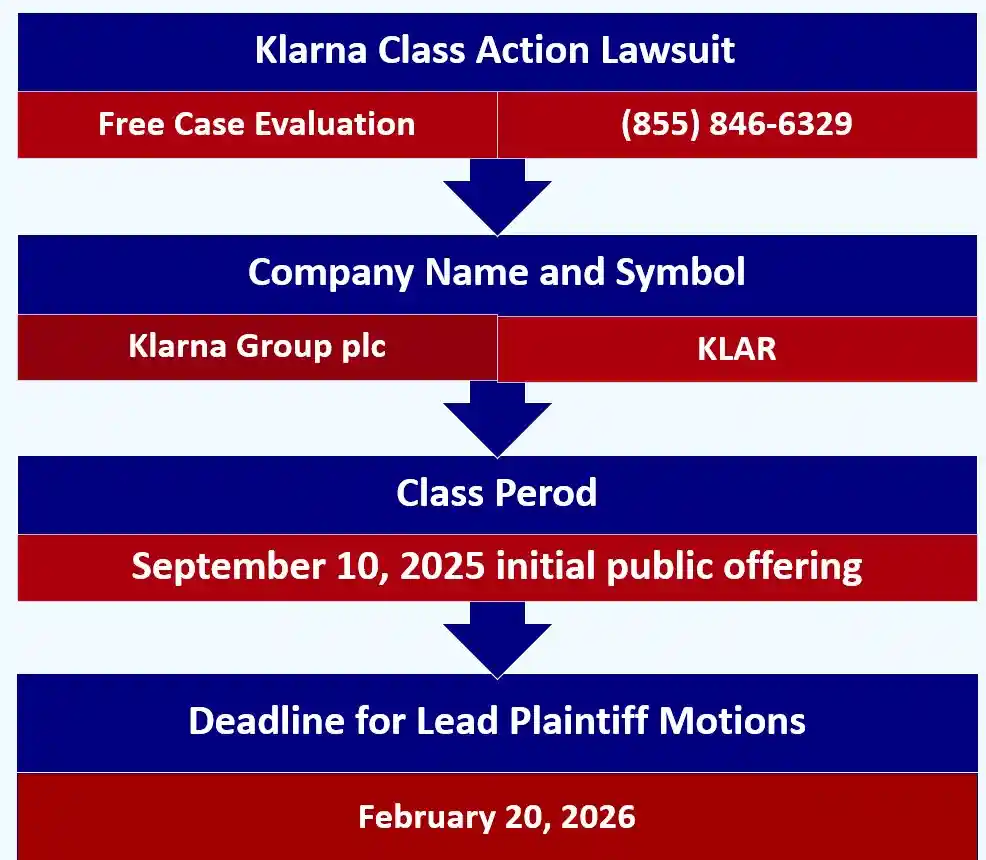
The Klarna class action lawsuit seeks to represent purchasers or acquirers of Klarna Group plc (NYSE: KLAR) securities pursuant and/or traceable to Klarna’s offering documents issued in connection with Klarna’s September 10, 2025 initial public offering (the “IPO”). Captioned Nayak v. Klarna Group plc, No. 25-cv-07033 (E.D.N.Y.), the Klarna class action lawsuit charges Klarna and certain of Klarna’s top executives and directors, authorized representatives, and underwriters of the IPO with violations of the Securities Act of 1933.
If you suffered substantial losses and wish to serve as lead plaintiff of the Klarna class action lawsuit, or just have general questions about you rights as a shareholder, please contact attorney Timothy L. Miles of the Law Offices of Timothy L. Miles, at no cost, by calling 855/846-6529 or via e-mail at [email protected].
1. Who Is Affected by the Klarna Class Action Lawsuit?
All persons or entities who purchased or otherwise acquired Klarna Group plc (NYSE: KLAR) securities pursuant and/or traceable to Klarna’s offering documents issued in connection with Klarna’s September 10, 2025 initial public offering (the “IPO”).
2. How Does it Work?
- A lawsuit is initiated by one or more investors, called the “lead plaintiffs,” on behalf of a larger group of investors, or the “class”.
- The “class period” is defined as the specific timeframe during which the alleged fraudulent activity took place. Only those who bought or sold the security during this period are eligible to participate.
- A lead plaintiff is appointed to represent the class. Under the Private Securities Litigation Reform Act (PSLRA), the court will typically appoint the investor with the largest financial interest in the outcome of the case.
- The case is litigated, which may include a lengthy discovery phase for gathering evidence.
- The case can be settled or go to trial. Most class actions are resolved through settlements, which can include cash or stock paid into a common fund for the class. The lead plaintiff and class counsel approve any settlement before it is finalized.
3. What Do the Plaintiffs Have to Prove in the Klarna class action lawsuit?
To succeed in a federal securities fraud class action, plaintiffs must prove several elements:
- Material misstatement or omission: The company made a false or misleading statement or failed to disclose a material fact.
- Scienter: The defendant acted with an intent to deceive, manipulate, or defraud.
- Reliance: The plaintiff relied on the misstatement or omission when buying or selling the security. For publicly traded securities, this can be proven through the “fraud-on-the-market” theory, which presumes the market price reflects all public, material information.
- Economic loss: The plaintiff suffered a financial loss.
- Loss causation: The company’s misstatement or omission directly caused the plaintiff’s loss, often demonstrated by a stock price drop after the truth is revealed in a “corrective disclosure”
4. What Are the Benefits for Investors in Joining the Klarna class action lawsuit?
- Participating in a class action allows investors to pool their resources, which offers leverage they would not have in an individual lawsuit against a large corporation.
- The collective approach also makes it more efficient and cost-effective to pursue legal action, especially for smaller investors.

5. How Do I Get Involved in the Klarna class action lawsuit?
- If you bought a security during the alleged class period and suffered a loss, you are generally automatically included in the class. You don’t have to take any action unless you want to file a claim for recovery later.
- You may be notified of a class action by mail if you are an eligible class member.
- You may be able to become a lead plaintiff by applying within 60 days of the first lawsuit being announced.
- If you believe you may have a claim, you can contact a securities class action law firm for guidance.
6. What Are the Allegations in the Klarna class action lawsuit?

7. When is the Lead Plaintiff Deadline in the Klarna Class Action Lawsuit?
Lead plaintiff motions for the Klarna class action lawsuit must be filed with the court no later than February 20, 2026.

8. What Are the Eligibility Criteria for Lead Plaintiff Appointment in the Klarna class action Lawsuit?
To be eligible for appointment as the lead plaintiff in the Klarna class action lawsuit, an investor must meet the following criteria:
- Securities Acquisition: The investor must have purchases or acquired of Klarna Group plc (NYSE: KLAR) securities pursuant and/or traceable to Klarna’s offering documents issued in connection with Klarna’s September 10, 2025 initial public offering (the “IPO”).
- Financial Losses: The investor must have suffered financial losses as a direct result of the alleged securities fraud perpetrated by Klarna and its executives.
- Typicality and Adequacy: The investor’s legal claims must be typical of those asserted on behalf of the class, and they must demonstrate their ability to adequately represent the interests of the entire class through experience, resources, and the absence of conflicts of interest.
It is crucial to note that both domestic and international investors who meet these criteria are eligible to seek appointment as the lead plaintiff in the class action lawsuit, as courts have consistently recognized the rights of non-U.S. investors in securities class actions.