
Introduction to the History of Mass Torts
The history of mass torts is an important part of civil lawsuits where many people are harmed by a common cause, such as a faulty product, harmful substance, or careless act. Unlike class actions where all plaintiffs are treated as one, mass tort cases acknowledge that each victim has their own unique situation while grouping similar claims together for more efficient court proceedings.
In simple terms, mass torts involve multiple plaintiffs filing individual lawsuits against one or more defendants because they have experienced similar injuries from the same product or action. These cases can include issues like pharmaceutical disasters, environmental pollution, defective medical devices, and consumer product failures.
Why Understanding the History of Mass Torts Matters
Knowing how mass torts have developed over time is important for several reasons:
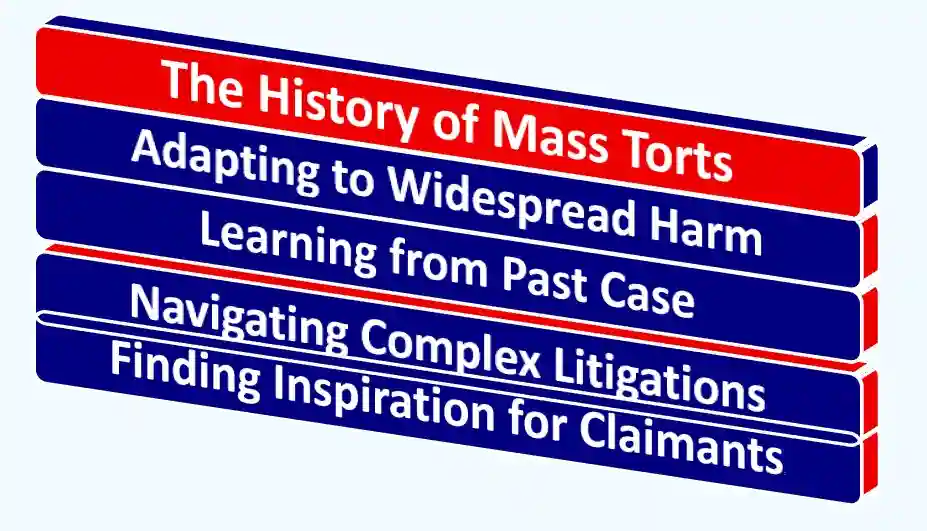
- Adapting to Widespread Harm: The history of mass torts shows us how our legal system changed to deal with large-scale harm that traditional one-on-one lawsuits could not effectively handle.
- Learning from Past Cases: By studying past landmark litigations such as asbestos exposure and pharmaceutical recalls, we can gain insights into current procedures and precedents that may impact our own cases today.
- Navigating Complex Litigations: Legal professionals rely on this historical knowledge to navigate complicated multi-district litigations, ensuring they understand the nuances of each case.
- Finding Inspiration for Claimants: Claimants can benefit from understanding how previous victims achieved compensation and justice through successful mass tort cases.
The history of mass torts is a testament to the evolution of our legal system in safeguarding public health and holding corporations accountable for their actions, while empowering victims to seek compensation from powerful corporations that sold them dangerous drugs and defective products.
Early Days of Mass Tort Litigation
The foundations of early mass tort litigation were laid in the late 1960s and early 1970s, marking a pivotal shift in how the American legal system approached cases involving multiple victims. During this period, attorneys and courts began recognizing that certain catastrophic events created unique legal challenges that traditional one-on-one litigation could not adequately address.
These challenges included the difficulty of managing numerous individual lawsuits, the potential for inconsistent judgments, and the unequal power dynamics between large corporations and individual plaintiffs. As a result, courts started consolidating similar claims into a single lawsuit, forming the basis of what we now know as mass tort litigation.
This approach allowed for more efficient and effective resolution of cases, ensuring that victims had a better chance at receiving justice. One of the earliest examples of mass tort litigation was the DES (diethylstilbestrol) case in the 1970s, where thousands of women who had been exposed to this dangerous drug during pregnancy came together to seek compensation.
Since then, mass tort litigation has continued to evolve, with landmark cases such as those involving asbestos exposure, faulty medical devices, and harmful pharmaceutical drugs shaping the legal landscape and setting important precedents.
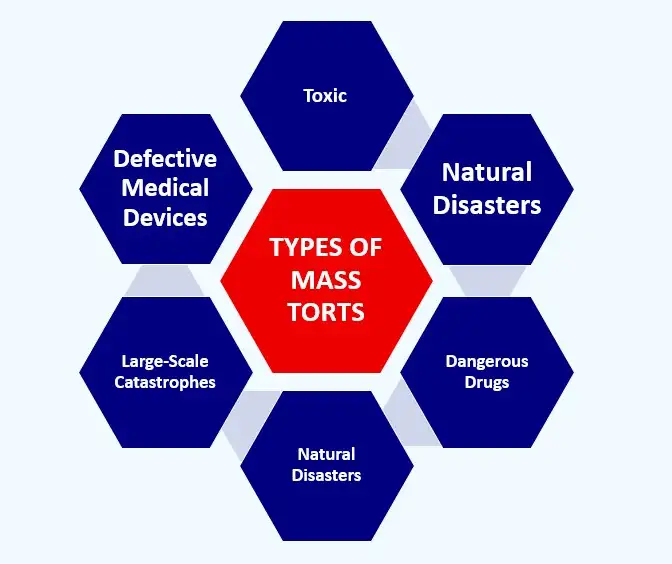
1. Mass Accident Cases
These cases involve a large number of plaintiffs injured in a single, identifiable event. The injuries occur immediately and can be directly traced back to one incident. Examples of such cases include plane crashes, building collapses, or industrial explosions where causation is typically straightforward to establish.
2. Product Liability Cases
Product liability cases involve defective products that cause harm to a large number of people. This can include faulty car parts, dangerous medications, or defective consumer goods. These cases require extensive investigation and expert testimony to establish the product’s defect and its link to the injuries sustained by the plaintiffs.
3. Environmental Tort Cases
Environmental tort cases involve harm caused by pollution, toxic waste, or other environmental hazards. These cases often have a broad impact, affecting entire communities or regions. Examples include lawsuits against oil companies for oil spills or chemical manufacturers for groundwater contamination. Proving causation in these cases can be complex and requires scientific evidence.
4. Pharmaceutical Mass Torts
These cases involve harmful drugs or medical devices that have caused widespread injuries or deaths. The complexity arises from the need to establish a causal link between the product and the harm suffered by individual plaintiffs. The opioid crisis and the recent lawsuits against manufacturers highlight the significance of pharmaceutical mass tort litigation.
5. Financial Fraud Cases
Mass tort litigation can also extend to financial fraud cases, where a large number of investors or consumers are deceived by misleading information or fraudulent practices. Such cases often involve complex financial transactions and require extensive investigation to uncover the extent of the fraud and its impact on individuals.
These are just a few examples of how mass tort litigation has expanded over the years, addressing a wide range of issues that affect numerous individuals. By consolidating similar claims, this approach ensures that justice is accessible to those who have been harmed while holding corporations accountable for their actions.
6. Mass Exposure Cases
In contrast, mass exposure cases involve plaintiffs who suffer harm from prolonged exposure to a common substance or product. Unlike mass accident cases, injuries in these situations develop gradually over time—sometimes over months, years, or even decades. Victims may not immediately recognize the connection between their illness and the source of exposure, making it challenging to prove causation without complex scientific and medical evidence.
This distinction became critical in shaping how courts would handle mass tort claims. While mass accident cases offered relatively clear-cut scenarios with defined victim populations, mass exposure cases introduced complications that would challenge the legal system for decades to come.
Some of the most notable mass exposure cases include asbestos litigation, where individuals developed diseases such as mesothelioma after years of exposure to asbestos fibers, and tobacco litigation, where smoking was linked to various health conditions. These cases involved large numbers of plaintiffs seeking compensation for the harm caused by corporations.
Courts had to grapple with issues like statute of limitations, the role of scientific evidence in proving causation, and the establishment of class actions or multidistrict litigation for efficient resolution. Despite these challenges, mass exposure cases have played a crucial role in raising awareness about the risks associated with certain products or substances, leading to regulatory reforms and increased safety standards.
The Shift Towards Mass Exposure Cases
Mass tort litigation underwent a significant change as attorneys and courts recognized patterns of harm extending far beyond single catastrophic events. The legal system began addressing injuries that developed slowly, impacting thousands of individuals exposed to hazardous substances over extended periods—months, years, or even decades.
This shift in perspective led to the development of mass exposure cases, where plaintiffs sought redress for harm caused by long-term exposure to substances like asbestos, tobacco, and certain pharmaceutical drugs. Unlike traditional personal injury cases, these mass exposure cases required a different approach due to the unique challenges they posed.
Courts had to grapple with issues like statute of limitations, the role of scientific evidence in proving causation, and the establishment of class actions or multidistrict litigation for efficient resolution. Despite these challenges, mass exposure cases have played a crucial role in raising awareness about the risks associated with certain products or substances, leading to regulatory reforms and increased safety standards.
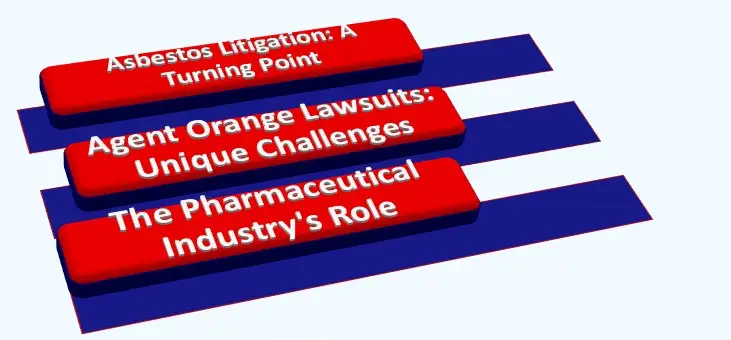
Asbestos Litigation: A Turning Point
Asbestos litigation history became the pivotal moment that reshaped mass tort law. Workers in shipyards, construction sites, and manufacturing plants developed mesothelioma and other fatal diseases decades after their initial exposure. The scale was unprecedented—by the 1980s, courts faced hundreds of thousands of claims against asbestos manufacturers. This litigation introduced complex questions about causation, latency periods, and corporate liability that would influence future mass exposure cases.
The challenges posed by asbestos litigation prompted the legal system to develop innovative procedures and frameworks to handle mass exposure cases. Class actions, multidistrict litigation (MDL), and other mechanisms were adopted to streamline the process. The establishment of trusts to compensate victims and expedite settlements also emerged as a strategy for managing the overwhelming caseload. These developments paved the way for future mass tort litigation, expanding the scope beyond accidents to encompass widespread harm caused by products, environmental factors, and pharmaceuticals.
The lessons learned from the asbestos litigation have had a profound impact on the field of mass tort law. They have helped shape the legal strategies, procedures, and compensation mechanisms in place today. As new mass exposure cases arise, such as those involving harmful chemicals, defective products, or environmental contamination, the experience gained from asbestos litigation continues to guide attorneys and courts in seeking justice for the victims and holding responsible parties accountable.
Agent Orange Lawsuits: Unique Challenges
Agent Orange lawsuits added another layer to mass tort litigation. Vietnam War veterans who had been exposed to this herbicide during their service developed cancers, neurological disorders, and had children with birth defects. The case presented unique challenges:
- Proving causation when injuries manifested years after exposure
- Establishing liability when the government contracted multiple manufacturers
- Addressing claims from plaintiffs scattered across the country with varying exposure levels
The Pharmaceutical Industry’s Role
The pharmaceutical industry soon became a focal point for mass exposure litigation. Pharmaceutical recalls like the Baycol case demonstrated how defective drugs could harm patients nationwide before risks became apparent. You witnessed the legal system adapting to handle claims where:
- Plaintiffs took medications as prescribed by their doctors
- Injuries ranged from mild side effects to fatal conditions
- Manufacturers possessed internal research suggesting potential dangers
These cases forced courts to develop new procedural mechanisms for managing thousands of related claims efficiently while preserving individual plaintiffs’ rights to fair compensation.
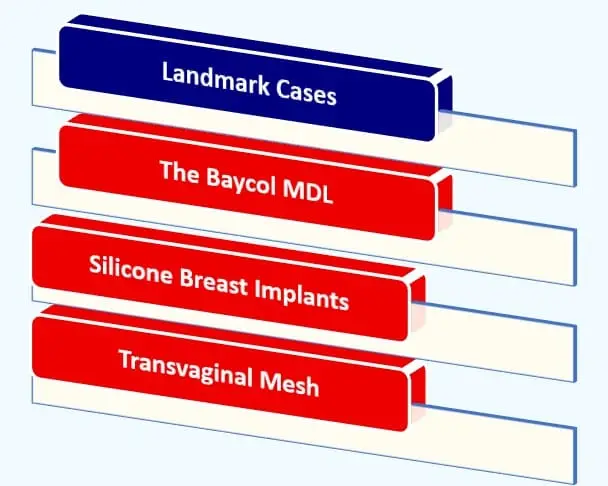
Landmark Cases That Shaped Mass Tort Law
The history of mass tort litigation includes several pivotal cases that fundamentally altered how courts handle large-scale litigation. These decisions established frameworks that continue to guide mass tort proceedings today.
The Baycol MDL: A Defining Moment
The Baycol Multi-District Litigation stands as a watershed moment in mass tort history. This case involved the cholesterol-lowering drug Baycol (cerivastatin), which Bayer voluntarily withdrew from the market in 2001 after reports linked it to rhabdomyolysis, a severe muscle disorder that could lead to kidney failure and death.
The MDL consolidated thousands of individual lawsuits into a single federal court, demonstrating how the legal system could efficiently manage complex pharmaceutical litigation involving numerous plaintiffs with similar claims. The Baycol MDL showcased the effectiveness of coordinated discovery, bellwether trials, and settlement negotiations in resolving mass pharmaceutical injury cases.
Silicone Breast Implants
silicone breast implant mass torts started in 1984. Lawsuits claimed the implants led to severe and serious health issues, including autoimmune diseases and cancer. While the evidence was strong, the suffering of victims was enough for the courts to rule against manufacturers. These claims put the silicone breast implant industry in bankruptcy and out of business and protected countless future patients from needless pain and suffering.
Transvaginal Mesh
Transvaginal mesh was used in surgeries to repair pelvic organ prolapse. However, while the mesh did an effective job, it also caused severe internal injuries. The Transvaginal Mesh lawsuits began in 2012 and resulted is over 60,000 claims with damages adding up to billions of dollars. It is one of the largest mass torts in history.
These examples show how mass torts can bring about change and help prevent others from suffering injuries due to bad medical products and devices.
The Daubert Standard: Gatekeeping Scientific Evidence
The 1993 Supreme Court decision in Daubert v. Merrell Dow Pharmaceuticals revolutionized how courts evaluate expert testimony in mass tort cases. Before Daubert, courts relied on the Frye standard, which required scientific evidence to be “generally accepted” in the relevant scientific community. The Daubert standard transformed judges into gatekeepers who must assess whether expert testimony is both relevant and reliable based on specific factors:
- Whether the theory or technique can be tested
- Whether it has been subjected to peer review and publication
- The known or potential error rate
- The existence and maintenance of standards controlling the technique’s operation
- Whether the methodology has gained general acceptance
This standard became particularly crucial in mass tort litigation where plaintiffs must establish causation through complex scientific evidence. The Daubert standard raised the bar for admissibility, requiring plaintiffs to present scientifically sound expert testimony linking their injuries to the defendant’s product or conduct. You’ll find this requirement shapes virtually every modern mass tort case, from pharmaceutical litigation to toxic exposure claims.
The Daubert standard also shifted the burden of proof onto the parties, as judges now have the authority to exclude unreliable expert testimony. This has led to increased scrutiny of scientific evidence and a more rigorous evaluation of expert witnesses. While some argue that this standard can be overly restrictive and may hinder access to justice for certain plaintiffs, others maintain that it promotes the reliability and integrity of the legal system.

Challenges Faced by Plaintiffs in Mass Tort Litigation
Mass tort litigation presents unique hurdles that can significantly impact your ability to recover compensation. You need to understand these obstacles before pursuing a claim, as they can determine whether your case moves forward or stalls indefinitely.
Bankruptcy Issues
Bankruptcy issues represent one of the most formidable barriers you will face. When a defendant company files for bankruptcy protection, your lawsuit typically gets frozen through an automatic stay. This legal mechanism prevents creditors—including mass tort plaintiffs—from continuing their claims against the debtor. You have seen this scenario play out repeatedly with asbestos manufacturers, pharmaceutical companies, and medical device makers.
The bankruptcy process can take years to resolve, and you might ultimately receive only pennies on the dollar from a trust fund established during reorganization. Companies like Johns Manville and A.H. Robins used bankruptcy strategically to limit their liability exposure, leaving thousands of plaintiffs waiting for reduced settlements.
Statute of Limitations
The statute of limitations creates another complex challenge in mass tort litigation. You must file your claim within a specific timeframe, but determining when that clock starts ticking is not always straightforward. In mass exposure cases, you might not discover your injury until years or even decades after the initial exposure.
Different states apply varying discovery rules—some jurisdictions start the clock when you’re exposed to the harmful substance, while others begin counting when you discover or reasonably should have discovered your injury.
You also face the “delayed manifestation” problem, where diseases like mesothelioma or certain cancers don’t appear until long after exposure. Courts have wrestled with whether to apply the statute of limitations from the date of exposure, diagnosis, or when you connected your illness to the defendant’s product. This uncertainty can mean you lose your right to sue before you even knew you had a claim.

The Impact and Future Outlook of Mass Tort Litigation
Mass tort litigation has fundamentally reshaped the American legal landscape. Traditional civil litigation operated on a one-plaintiff, one-defendant model, but the growth of mass tort litigation demanded innovation. Courts developed Multi-District Litigation (MDL) procedures, allowing judges to consolidate hundreds or thousands of related cases for pretrial proceedings. This streamlined approach reduces redundant discovery, prevents conflicting rulings, and promotes efficient case management.
You will find that specialized courts and judges now handle complex mass tort litigation exclusively. These legal professionals develop expertise in managing large-scale litigation, coordinating bellwether trials, and facilitating global settlements. The Federal Judicial Center has created specific guidelines for MDL proceedings, recognizing mass torts as a distinct category requiring unique procedural frameworks.
The trajectory points toward accelerated expansion. Emerging contaminants like PFAS (per- and polyfluoroalkyl substances) in drinking water affect millions of Americans. You’re seeing new pharmaceutical litigation arise regularly as long-term side effects of medications become apparent. Medical devices, from hip implants to surgical mesh, continue generating substantial caseloads.
Environmental disasters and industrial exposures create fresh waves of claims. The opioid epidemic alone has spawned thousands of lawsuits against manufacturers, distributors, and pharmacies. Technology-related injuries, including those from electronic cigarettes and vaping products, represent the newest frontier in mass tort litigation. Legal professionals must adapt continuously to handle these evolving case types effectively.
FREQUENTLY ASKED QUESTIONS ABOUT MASS TORTS
What Are Mass Torts?
What are Bellwether Trials?
What Is the Advantage to Filing Mass Torts?
How Much Does It Cost to Hire a Lawyer in Mass Torts?
How Much Compensation is Available in Mass Torts?
-
past and future medical expenses;
-
pain and suffering including emotional distress; and
Conclusion
The history of mass tort litigation reveals a legal landscape that refuses to stand still. From those early plane crash cases in the 1960s to today’s complex pharmaceutical and toxic exposure litigation, this field has continuously adapted to protect individuals harmed by widespread negligence.
You have seen how mass tort law evolved from handling single catastrophic events to addressing years-long exposure cases. The history summary mass torts demonstrates a clear pattern: each decade brought new challenges that demanded innovative legal solutions. Asbestos litigation paved the way for Agent Orange cases, which then informed how courts handle defective drug claims.
The ongoing evolution of mass tort litigation shows no signs of slowing down. You can expect emerging issues like environmental contamination, data breaches, and new pharmaceutical products to shape the next chapter of this field. Legal professionals who understand this historical context position themselves to better serve future claimants.
The History of mass torts is not just about looking backward—it’s about recognizing patterns that help you anticipate what is coming next in this dynamic area of law.
As technology advances and industries evolve, new types of mass tort litigation will undoubtedly emerge. For instance, with the rise of artificial intelligence and autonomous vehicles, we may see an increase in product liability cases in these areas. Additionally, as climate change becomes an ever-pressing issue, we can anticipate more litigation surrounding environmental harm caused by corporations. By staying informed and adaptable, legal professionals can effectively navigate these emerging challenges and provide the best possible representation for their clients.
Timothy L. Miles, Esq.
Law Offices of Timothy L. Miles
Tapestry at Brentwood Town Center
300 Centerview Dr. #247
Mailbox #1091
Brentwood,TN 37027
Phone: (855) Tim-MLaw (855-846-6529)
Email: [email protected]
Website: www.classactionlawyertn.com
Facebook Linkedin Pinterest youtube