Introduction to Dupixent Cancer Claims

Dupixent Cancer Lawsuit

What Is Dupixent?

  • Dupixent (dupilumab): Is an injectable biologic medication that is used to treat particular types of inflammatory diseases.
  • Mechanism of Action: It works by treating the underlying cause of inflammation and is commonly prescribed for people with atopic dermatitis, eczema, asthma, chronic sinusitis, and eosinophilic esophagitis.
  • Recent studies on Dupixent and Cancer:  Have shown that Dupixent use may increase the risk of certain types of cancers known as Cutaneous T-cell Lymphomas (CTCL), including its subtypes Mycosis fungoides and Sezary syndrome, by as much as 300% or more in people who used the medication.
  • Potential Compensation: People who used Dupixent and were later diagnosed with CTCL may be eligible to file a Dupixent Cancer Lawsuit and potential entitled to substantial compensation. If you suffered Dupixent and Cancer call Dupixent Cancer Lawyer Timothy L. Miles today for a free case evaluation. (855)-846-6529 or [email protected].

Dupixent and Cancer

  • Dupixent and its Intended Use:  Dupixent  is a prescription injection manufactured by Sanofi and Regeneron and first approved by the FDA in 2017. It is commonly prescribed for patients with:
    • Moderate-to-severe eczema (atopic dermatitis)
    • Asthma
    • Chronic sinusitis with nasal polyps
    • eosinophilic esophagitis
  • Dupixent And Cancer: In recent years, however, Dupixent® has been linked to cutaneous T-cell lymphoma (CTCL), a rare and serious form of non-Hodgkin lymphoma. Studies published in 2024 and 2025 suggest that Dupixent® patients may face a 300% higher risk of developing CTCL yet manufacturers never warned healthcare providers or patients about this risk.


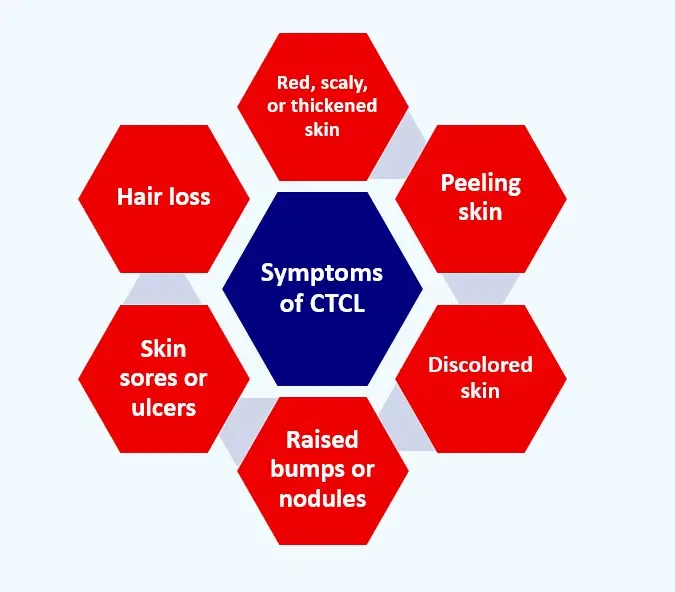
Symptoms of CTCL

Symptoms of CTCL may include:

  1. Itching
  2. Red, scaly, or thickened patches of skin
  3. Peeling skin
  4. Discolored skin
  5. Raised bumps or nodules
  6. Skin sores or ulcers
  7. Hair loss
  8. Enlarged lymph nodes

the serious dupixent side effects, blue background, white forground, used in Dupixent Cancer Lawsuit

Research and the Link Between Dupixent and Cancer
Several medical reports and studies including the Nation Library of Medicine have suggested that Dupixent may be tied to an increased risk of CTCL.

    • A study published on April 6, 2024 (Hasan et al., 2024), looked at whether people with atopic dermatitis (AD) who were treated with the drug dupilumab had a higher risk of developing cutaneous T-cell lymphoma (CTCL) compared to those who didn’t take the drug. In their first model, which adjusted for age only, they found that people who took dupilumab had a 300% higher risk of getting CTCL compared to those who didn’t (OR 4.10). Even after they adjusted for more factors—like sex, ethnicity, and race, and removed people who had taken certain other immune-suppressing drugs—the risk was still more than two times higher (OR 3.20).
    • A second study using TriNetX data (Mandel et al., 2024) was published in August 2024 and followed a method similar to the first study by Hasan et al. The researchers excluded patients who had other inflammatory diseases or had taken biologic drugs that might be linked to lymphoma.After matching patients by age, race, and sex, they found that people with atopic dermatitis (AD) who were treated with dupilumab had a 350% higher risk of developing cutaneous T-cell lymphoma (CTCL) compared to those who weren’t treated with the drug (RR 4.59).
    • In September 2025, a study led by Sheng-Kai Ma and his team looked at the  patients in the United States with asthma who initiated dupilumab or the active comparator (combination therapy with inhaled corticosteroids (ICS) plus long-acting β-agonists (LABA), or ICS/LABA), between 2018 and 2024. After propensity score matching, dupilumab-treated patients were found to have a higher risk of lymphoma (54 versus 43 cases, hazard ratio (HR) 1.79, 95% CI 1.19-2.71), especially T-cell and natural killer (NK)-cell lymphomas (19 versus ≤10 cases, HR 4.58, 95% CI 1.82-11.53).

After adjusting for things like age, gender, income, other health problems, and medicine use, the risk of CTCL was more than 4.5 times higher in the dupilumab group. Dupilumab was also linked to an overall increased risk of any type of lymphoma. When the researchers looked only at patients who had taken their medications for at least 16 weeks, the risk numbers went up even more, especially for combined mature T and NK cell lymphomas, a broader group of cancers including CTCL and other subtypes, which was over 14 times higher for dupilumab users.

  • Acceleration of cutaneous T-cell lymphoma following dupilumab administration
    • Case reports warning that Dupixent may “unmask” or worsen hidden lymphomas mistaken for eczema

These findings have pushed doctors to re-evaluate how and when to prescribe Dupixent — especially when patients show unusual skin reactions that don’t improve.

Patient Reports of Cancer Linked to Dupixent

  • Patient and Healthcare Reports on FAERS: In addition to the clinical research and studies, the U.S. Federal and Drug Administration’s (FDA),  Adverse Event Reporting System (FAERS) included numerous patient reports and reports from healthcare providers linking Dupixent (dupilumab) to cancer, specifically to multiple types of T-cell lymphoma. FAERS is a vital database that regulators and researchers use to recognize potential drug risks requiring further investigation.
  • Reports Confirm Clinical Research: As you will note by visiting FAERS from the button below, the current dashboard shows close to 300 reports of T-cell lymphoma cases among Dupixent patients, which includes confirmed reports of cutaneous T-cell lymphoma (CTCL) and other related and serious conditions. These patient and healthcare reports to the FDA continue to fuel concerns that was addressed in clinical studies, strengthening the need for doctors to closely monitoring patients taking Dupixent.
  • Volume of Reports:  The vast volume of these reports only provides further evidence that Dupixent may be contributing to serious cancer risks in certain patients

.FAERS DATABASE

Key Warning Signs for Dupixent and Cancer

Severe Eczema Patients Be Vigilant: For individuals using Dupixent for severe eczema, the diagnostic challenge is compounded because the drug’s anti-inflammatory action may temporarily mask or alter the appearance of early CTCL symptoms.

Be Aware of Warning Signs Early: Warning signs that may differentiate CTCL from typical eczema in Dupixent users include:

    • Failure to respond to treatment: Rashes or lesions that persist, worsen, or spread despite ongoing Dupixent use should raise suspicion of an underlying condition.
    • Progression to plaques and tumors: The development of thicker, raised lesions (plaques) or lumps/nodules (tumors) that can ulcerate is a sign of advancing CTCL not typically seen in standard eczema.
    • Development of systemic symptoms: Advanced CTCL can lead to symptoms not associated with eczema, such as persistently swollen lymph nodes (in the neck, armpits, or groin), unexplained fatigue, or weight loss.
    • Sudden acceleration of symptoms: In some case reports, patients experienced a rapid worsening of skin changes shortly after starting Dupixent, suggesting the drug may accelerate the progression of an undetected lymphoma.

Skin Changes and Seeking Immediate Medical Help: If you notice persistent or unusual skin changes while on Dupixent, it is crucial to seek a medical evaluation, including a skin biopsy reviewed by a specialist familiar with cutaneous lymphomas

Dupixent Lawsuit Status (as of November 2025)

  • Dupixent Lawsuit: Individual lawsuits have been filed across the U.S., but they have not yet been consolidated into a formal multidistrict litigation (MDL).
  • First Lawsuit:  The first known Dupixent Lawsuit for wrongful death lawsuit was filed in a federal court in Tennessee in October 2025. The lawsuit alleges the drug caused a woman’s fatal T-cell lymphoma and that the manufacturers failed to provide adequate warnings.
  • No MDL or Class Action: There is currently no formal multidistrict litigation (MDL) or class-action lawsuit. However, legal experts anticipate that cases may be consolidated into an MDL in late 2025 or early 2026 to streamline the legal process if more cases emerge.
  • FDA Investigation: The U.S. Federal and Drug Administration (FDA) is formally investigating the potential link and evaluating whether new cancer warnings should be added to the Dupixent label. The current label does not mention a CTCL risk.
  • Settlements: No settlements have been reached in any Dupixent Lawsuit, and there are no jury verdicts, making it difficult to estimate potential settlement amounts.

Scientific Evidence and Regulatory Action

Scientific studies and reports to the FDA have highlighted a potential link between Dupixent and cancer, specifically, T-cell lymphomas:
  • FDA Investigation: The FDA is formally investigating the potential safety signal for CTCL linked to Dupixent use. This investigation began in March 2025.
    • Status: The FDA has not recalled Dupixent, but the investigation is formal and follows a pattern of regulatory actions that may include label revisions.
  • Increased Risk Studies: Several peer-reviewed studies suggest an increased risk of Dupixent and Cancer.

Who is Eligible for a Dupixent Cancer Lawsuit?

Dupixent Cancer Lawsuit: You may be eligible if you:

  • Used Dupixent (dupilumab) as prescribed
  • Were later diagnosed with T-Cell Lymphoma, especially Cutaneous T-Cell Lymphoma
  • Experienced serious Dupixent side effects or worsening symptoms
  • Are within your state’s statute of limitations

Contingency Fee Agreements: No Cost to Hire a Lawyer

  • ​​​No Fee:  It does not cost anything to hire a lawyer​ if you are eligible for a Dupixent Cancer Lawsuit. We take all cases on a contingency basis which means we do not get paid unless we win or settle your case.
  • Talk with a Lawyer Free of Charge: A lawyer​ can explain the process of a Dupixent Cancer Lawsuit and answer any questions you may have free of charge. The call is free and so is the fee unless we will or settle your case, so call Dupixent Cancer Lawsuit Timothy L. Miles today to see if you may be entitled to significant compensation.

Dupixent Cancer Lawsuit


FREQUENTLY ASKED QUESTIONS THE DUPIXENT LAWSUIT

Contact Timothy L. Miles Today About a Dupixent Cancer Lawsuit

If you believe you qualify for a Dupixent Cancer Lawsuit, contact Dupixent Cancer Lawyer Timothy L. Miles today for a free case evaluation to see if you are eligible for a Dupixent Cancer Lawsuit and possible entitled to substantial compensation.  855/846-6529 or via e-mail at [email protected]. (24/7/365).

Timothy L. Miles, Esq.
Law Offices of Timothy L. Miles
Tapestry at Brentwood Town Center
300 Centerview Dr. #247
Mailbox #1091
Brentwood,TN 37027
Phone: (855) Tim-MLaw (855-846-6529)
Email: [email protected]
Website: www.classactionlawyertn.com

Facebook    Linkedin    Pinterest    youtube

Logo law office timothy l. miles used in Dupixent Cancer Claims