Everything You Need to Know About a Whistleblower Lawsuit
Seeking Remedies for Retaliation
If an individual experiences retaliation for blowing the whistle, they can file a lawsuit against their employer, seeking various remedies to deter such actions. These remedies may include:
- Back pay (wages and benefits lost due to unlawful termination)
- Reinstatement to the whistleblower’s former job
- Front pay (wages and benefits to cover the time needed to find a new job)
- Out-of-pocket losses (e.g., the costs of finding a new job)
- Damages for pain and suffering
- Punitive damages
- Attorney’s fees and court costs
It is crucial for individuals considering blowing the whistle to understand their rights and the protections afforded to them under the law. Consulting with an experienced Nashville whistleblower attorney such as Timothy L. Miles can provide valuable guidance on navigating the legal process and ensuring that their whistleblower protections are upheld.
The Role of a Nashville Whistleblower Attorney
- Whistleblower lawsuits are complex legal proceedings that require the experience of a qualified and competent attorney.
- A Nashville whistleblower attorney can play a pivotal role in guiding individuals through the process of blowing the whistle and ensuring their rights are protected.
Evaluating the Claim and Evidence
- One of the primary responsibilities of a Nashville whistleblower attorney is to thoroughly evaluate the claim and review all available evidence related to the alleged wrongdoing.
- This includes examining financial statements, emails, memorandums, and any other relevant documentation or recordings that may support the whistleblower’s allegations.
Ensuring Whistleblower Protections
- A skilled Nashville whistleblower attorney will work diligently to ensure that their client’s whistleblower protections are not violated throughout the legal process.
- This includes monitoring for any potential retaliation, such as demotion, termination, or harassment, and taking appropriate legal action to address such violations.
Maximizing Compensation

- Whistleblowers who successfully expose fraud or misconduct may be entitled to a substantial whistleblower award, typically ranging from 15% to 30% of the government’s recovery.
- A Nashville whistleblower attorney will advocate for their client’s interests and fight to secure the maximum compensation for their contributions as a whistleblower.
Providing Comprehensive Support
- From the initial consultation to the final resolution of the case, a Nashville whistleblower attorney will remain by their client’s side, providing guidance, support, and representation throughout the entire process.
- This includes handling court appearances, motions, and document production, ensuring that the whistleblower’s rights and interests are protected at every stage.
If you are thinking of blowing the whistle, contact Nashville whistleblower attorney and litigation attorney Timothy L. Miles, who has valuable experience and has received numerous awards. (855) 846–6529 or t[email protected].
The False Claims Act: A Powerful Tool for Whistleblowers
- The False Claims Act, also known as the Lincoln Law, is a powerful legal instrument that empowers private citizens to take action against individuals or entities that defraud the federal government.
- This Act imposes liability on those who seek to procure unwarranted funds from government programs through fraudulent means.
Filing a Qui Tam Lawsuit
- The FCA allows private citizens, known as “relators,” to file a qui tam lawsuit on behalf of the government in a federal district court.
- These lawsuits are initially filed under seal, meaning they remain confidential while the Department of Justice and other relevant agencies investigate the allegations.
- Once the investigation is complete, the case may be unsealed, and the relator’s identity can become public.
- However, during the initial stages, the relator’s anonymity is protected, allowing them to come forward without fear of retaliation.
Whistleblower Awards and Incentives
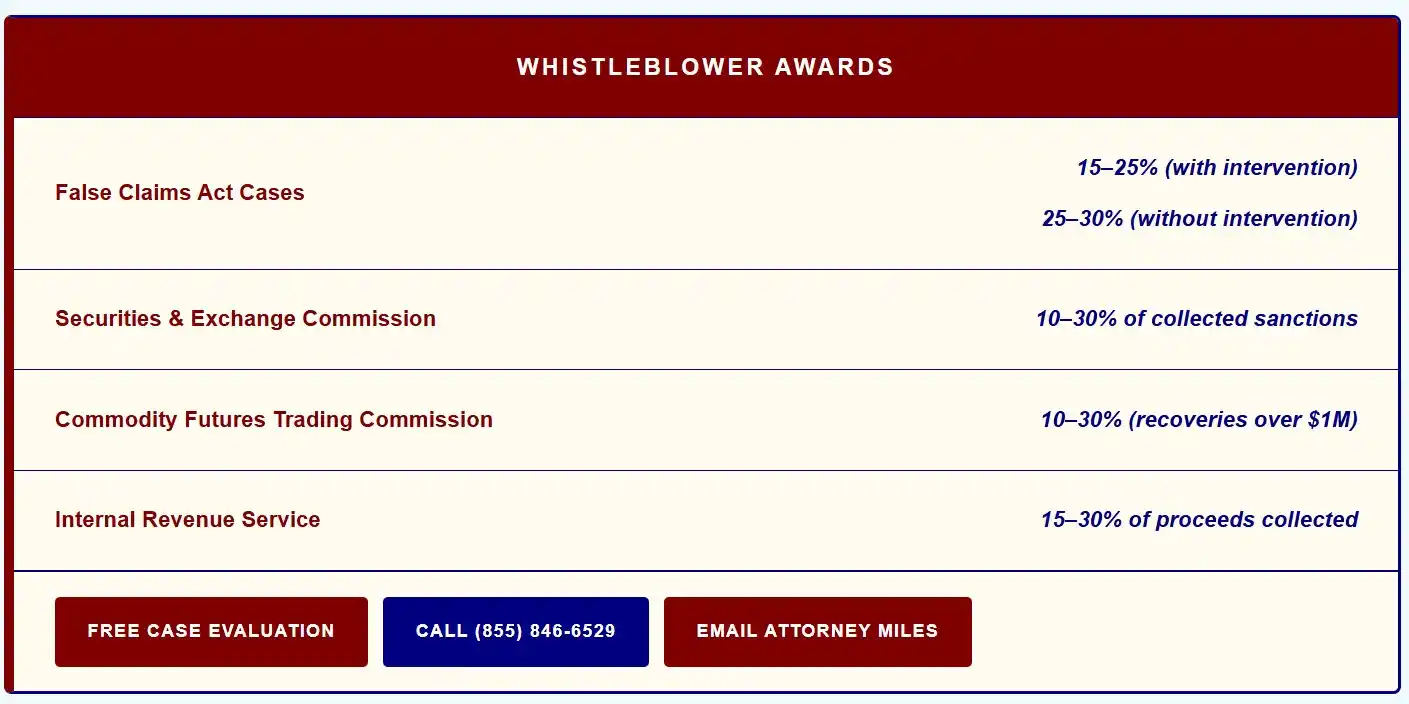
- To encourage whistleblowers to report fraud against the government, the FCA provides substantial financial incentives. If the government recovers funds based on the information provided by the whistleblower, the relator is entitled to a share of the recovery, typically ranging from 15% to 30% of the total amount.
- To encourage whistleblowers to report fraud against the government, the FCA provides substantial financial incentives. If the government recovers funds based on the information provided by the whistleblower, the relator is entitled to a share of the recovery, typically ranging from 15% to 30% of the total amount.
- This incentive system not only rewards whistleblowers for their courage and sacrifices but also serves as a powerful deterrent against corporate fraud and misconduct. By offering a substantial share of the recovery via a whistleblower award, the FCA incentivizes individuals with insider knowledge to come forward and expose wrongdoing
Areas of Fraud Covered by the False Claims Act
The False Claims Act covers a wide range of industries and sectors where fraud against the government may occur, including:
- Medicare and Medicaid fraud
- Defense contractor fraud
- Healthcare fraud
- Pharmaceutical fraud
- Environmental fraud
- Federal crop insurance fraud
- Construction fraud
- Federal student loan fraud
- Securities fraud
By providing a legal framework and financial incentives for whistleblowers, the False Claims Act has proven to be an effective tool in combating fraud, recovering billions of dollars for the government, and promoting accountability within various industries.
The Importance of Coming Forward and Blowing the Whistle Expeditiously Blowing the Whistle
If you have information or knowledge of fraud, it is vital that you act as soon as possible for several reasons.
One, the False Claims Act has a first-to-file rule meaning that if other whistleblowers report the information before you do and the information is the same or consistent, you may not be entitled to a whistleblower award.
And two, the False Claims Act also has a public disclosure bar meaning that if you delay and your information has already been in the public domain, you will not be entitled to a whistleblower award.
Therefore, if you are thinking of blowing the whistle, do not delay and contact Nashville whistleblower attorney Timothy L. Miles today. While you might be hesitant to come forward, remember that blowing the whistle is the right thing to do.(855) Tim-M-Law or [email protected].